4 Or More Shots From 4 Or More Films is just what it says it is, 4 shots from 4 of our favorite films. As opposed to the reviews and recaps that we usually post, 4 Shots From 4 Films lets the visuals do the talking!
Today’s let celebrate life in space!
4 Shots From 4 Intergalactic Films
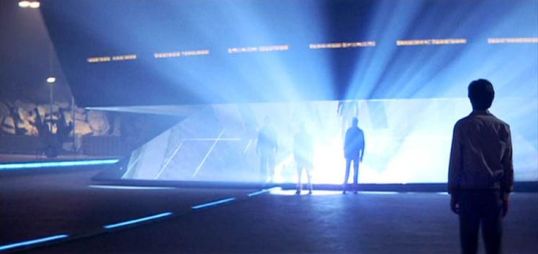
Close Encounters of the Third Kind (1977, dir by Steven Spielberg, DP: Vilmos Zsigmond)
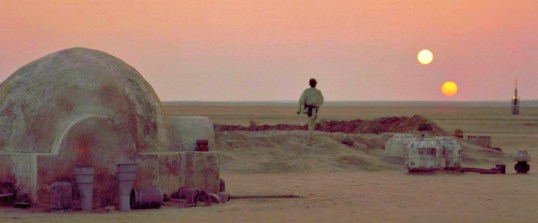
Star Wars: A New Hope (1977, Dir. by George Lucas, DP: Gilbert Taylor)
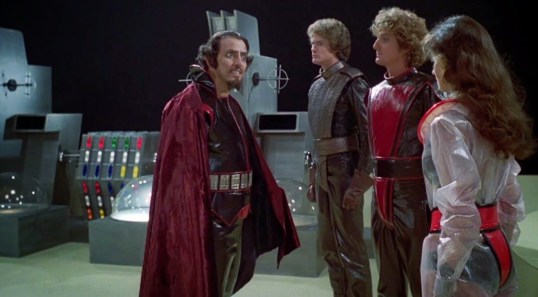
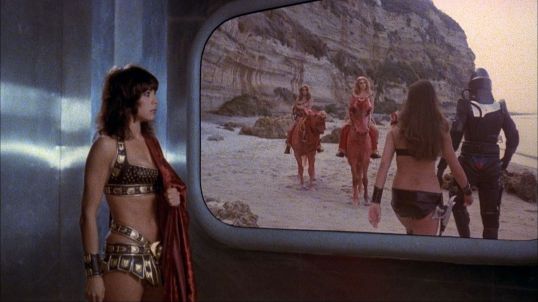
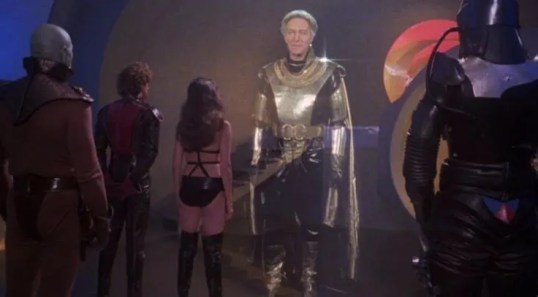
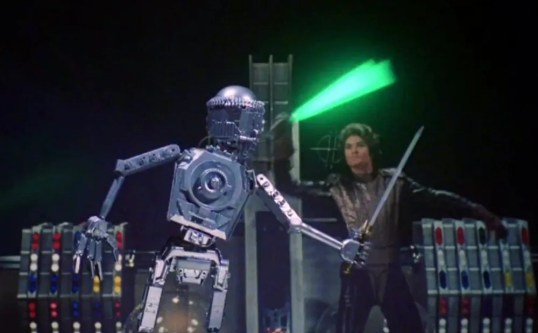
Starcrash (1978, dir by Luigi Cozzi, DP: Paul Beeson and Roberto D’Ettorre Piazzoli)
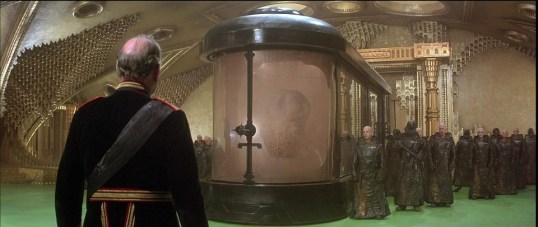
Dune (1984, dir by David Lynch, DP: Freddie Francis)
4 Or More Shots From 4 Or More Films is just what it says it is, 4 shots from 4 of our favorite films. As opposed to the reviews and recaps that we usually post, 4 Shots From 4 Films lets the visuals do the talking!
Today, we pay tribute to the year 1978! It’s time for….
4 Shots From 4 1978 Films
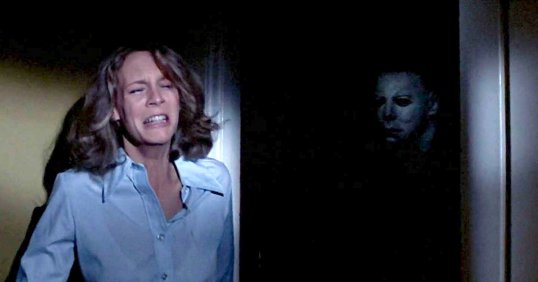
Halloween (1978, dir by John Carpenter, DP: Dean Cudney)
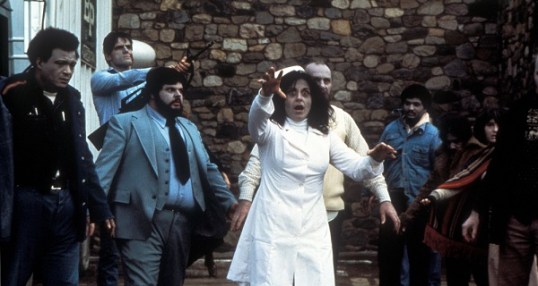
Dawn of the Dead (1978, dir by George Romero, DP: Michael Gornick)
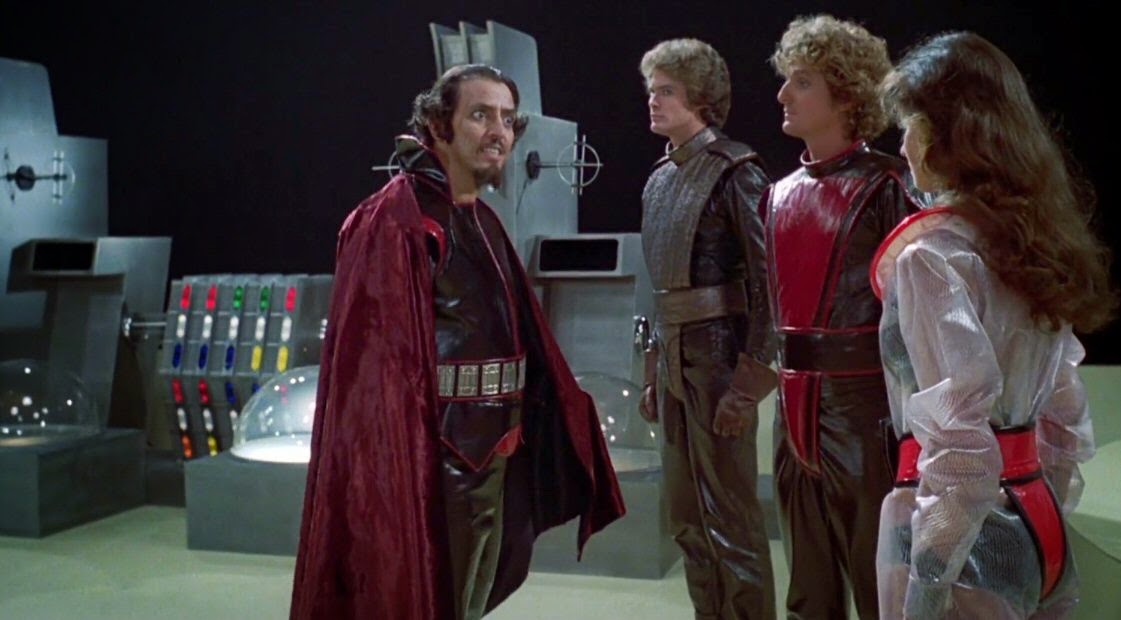
Starcrash (1978, dir by Luigi Cozzi, DP: Paul Beeson and Roberto D’Ettorre Piazzoli)
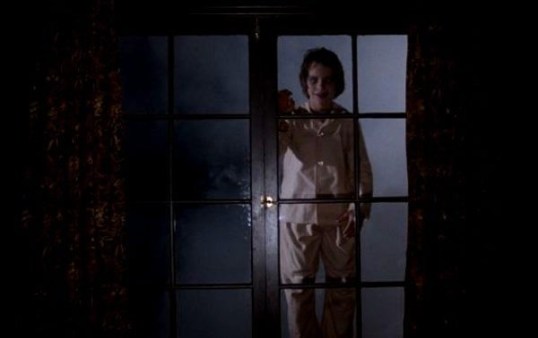
Salem’s Lot (1978, dir by Tobe Hooper, DP: Jules Bremmer)
4 Shots From 4 Films is just what it says it is, 4 shots from 4 of our favorite films. As opposed to the reviews and recaps that we usually post, 4 Shots From 4 Films lets the visuals do the talking.
It’s the Hoff’s birthday! That means that it is time for….
4 Shots From 4 David Hasselhoff Films
Starcrash (1978, dir by Luigi Cozzi, DP: Paul Beeson and Roberto D’Ettorre Piazzoli)
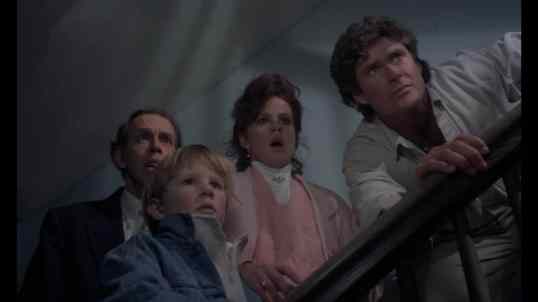
Witchery (1988, dir by Fabrizio Laurenti, DP: Gianlorenzo Battaglia)
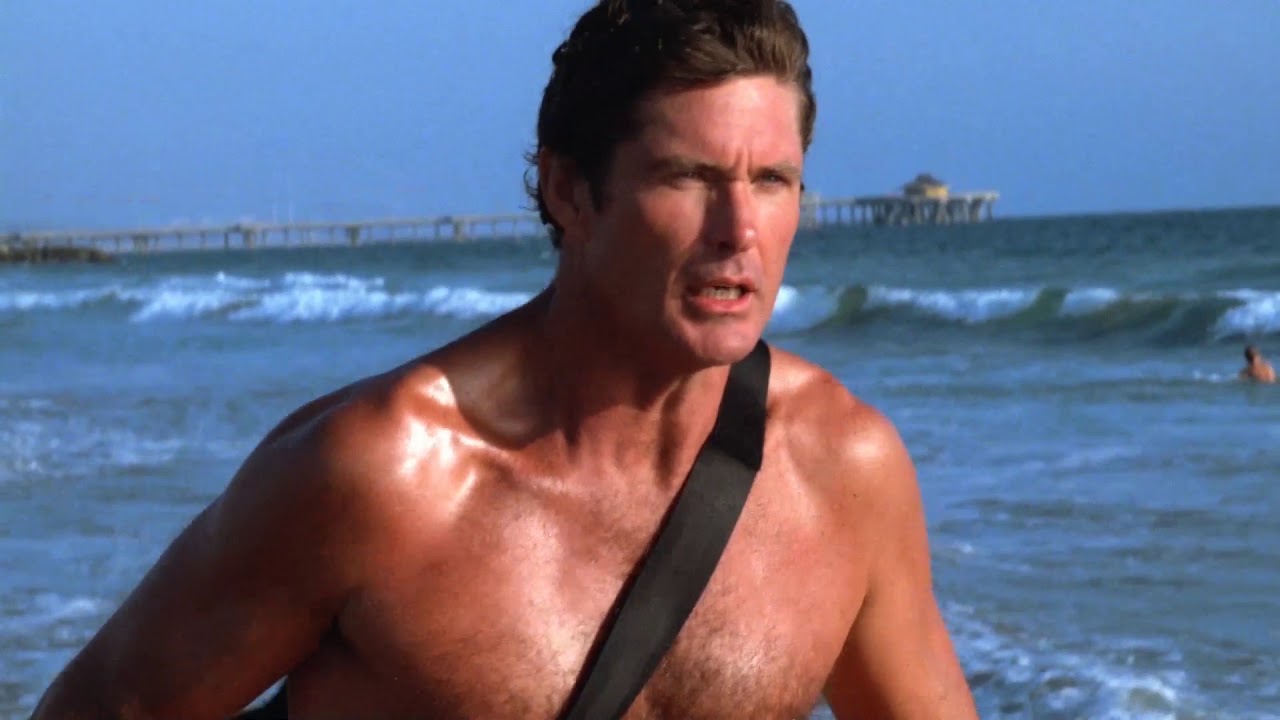
Panic At Malibu Pier (1989, dir by Richard Compton, DP: John McPherson)
Nick Fury: Agent of SHIELD (1998, dir by Rod Hardy, DP: James Bartle)
4 Shots From 4 Films is just what it says it is, 4 shots from 4 of our favorite films. As opposed to the reviews and recaps that we usually post, 4 Shots From 4 Films lets the visuals do the talking.
Today, in honor of National Science Fiction Day, it’s time for….
4 Shots From 4 Science Fiction Films
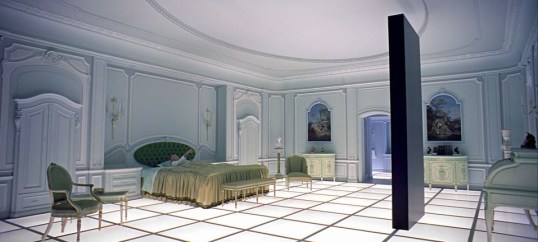
2001: A Space Odyssey (1968, dir by Stanley Kubrick, DP: Geoffrey Unsworth)
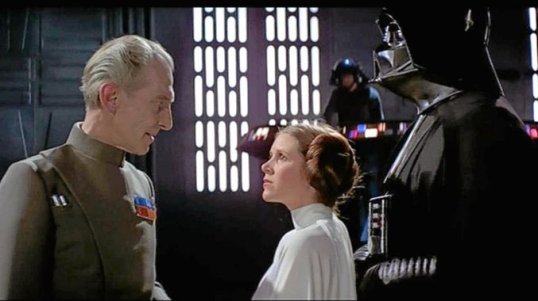
Star Wars Episode IV: A New Hope (1977, dir by George Lucas, DP: Gilbert Talyor)
Starcrash (1978, dir by Luigi Cozzi, DP: Paul Beeson and Roberto D’Ettorre Piazzoli)
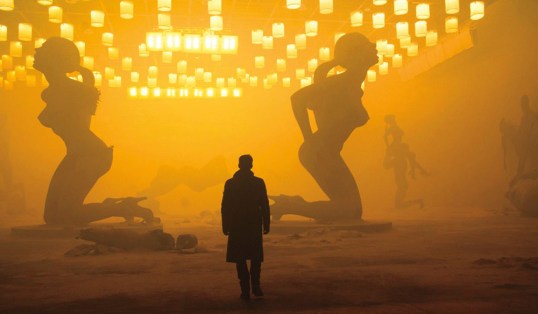
Blade Runner 2049 (2017, dir by Denis Villeneuve, DP: Roger Deakins)
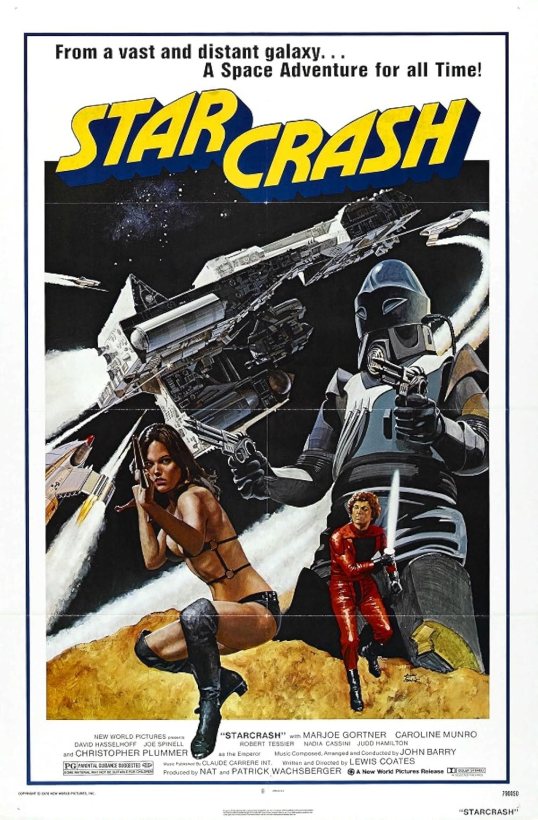
First released in 1978, Starcrash takes place in a galaxy that is probably far, far away. The evil Count Zath Arn (Joe Spinell) is attempting to overthrow the benevolent Emperor (Christopher Plummer). Zath Arn has built a weapon that is so large and so powerful that it can only be hidden inside of another planet. (“Like a Death Star?” you say. Hush, don’t go there….) The Emperor’s son, Prince Simon (David Hasselhoff), led an expedition in search of the weapon but a surprise attack of glowing red lights led to his ship crashing on the unknown planet. Simon is missing and Zath Arn’s power is growing.
Two legendary smugglers — Stella Starr (Caroline Munro) and the enigmatic Akton (Marjoe Gortner) — are released from prison and tasked with tracking down both the weapon and Simon. (Stella was already in the process of escaping when she got the news of her release.) Accompanied by the duplicitous Thor (Robert Tessier) and the loyal Elle (Judd Hamilton), a robot with a thick Southern accent, Stella and Akton set out to explore the haunted stars.
It’s a journey that leads them to …. well, actually, it only leads them to three planets. It turns out that the weapon wasn’t that well-hidden after all. Still, one planet is populated by Amazons and protected by a giant, tin robot. Another planet is populated by cannibals who wear stone masks. And then there’s an ice planet where the clouds race across the sky while Stella and Elle try to make it back to their ship without freezing to death. And if that’s not enough to make things exciting, this film also features David Hasselhoff with a light saber!
There’s no point in denying that Starcrash would never have been made if not for the success of the first Star Wars. Indeed, the film even begins with an opening crawl and features a shot that is almost a recreation of the first scene in Star Wars. However, director Luigi Cozzi doesn’t limit himself to just mining Star Wars for inspiration. The giant tin robot owes a huge debt to the creations of Ray Harryhausen. The judge that sentences Stella and Akton to prison is the same talking head that appeared in Invaders From Mars. A scene in which Stella explores an abandoned spaceship owes more than a little to 2001: A Space Odyssey. Even Akton, with his telepathic powers, seems like he could have stepped out of an episode of Star Trek.
Starcrash makes no secret of its influences but it’s such an energetic and good-natured film that all of the borrowing feels like like a rip-off and more like a very affectionate homage. It’s obvious that director Luigi Cozzi loved the films from which he borrowed and that love is present in every frame of Starcrash. Starcrash is a fast-paced space adventure and it’s a lot of fun. It’s certainly more fun than any of the recent entries in the Star Wars franchise. Working with a low-budget, an energetic cast, and some surprisingly creative special effects, Cozzi crafts a genuinely entertaining movie. Marjoe Gortner was never better than he was in Starcrash. Christopher Plummer, to his credit, brings a truly noble bearing to the role of the Emperor. Joe Spinell obviously understood that his role didn’t require subtlety and he delivers all of his lines like a villain in an old time serial. As for David Hasselhoff …. he’s the Hoff and he brings his trademark earnestness to the role of Simon. Starcrash is the best film that Cozzi ever directed.
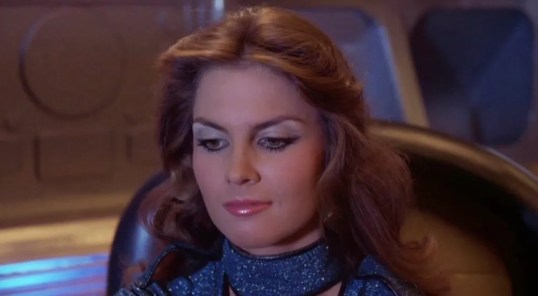
A good deal of the success of Starcrash is due to Caroline Munro, who gives such a committed and likable performance as Stella Starr that it’s hard not to mourn the fact that Cozzi was never able to make any more films about the character. As played by Munro, Stella Starr is a smart, confident, and strong. Stella loves doing what she does and it’s impossible not share her joy when she announces she’s taking the ship into “hyperspace.” Even though Stella spends the majority of the film running around in a leather bikini, Munro brings a definite touch of class to the role. No one is going to push Stella Starr around and certainly, no one is going to destroy the Galaxy on her watch. Thank to Caroline Munro’s fearless performance, Starcrash is one of the most empowering science fictions ever made.
Starcrash ends with hints of a possible sequel but sadly, there never came to be. (Not surprisingly, there was an unrelated film that was advertised as being a sequel but which was actually just a softcore science fiction version of Lady Chatterley’s Lover.) It’s a shame. Stella Starr definitely deserved to have many more adventures.
Today’s scene that I love comes from Luigi Cozzi’s 1983 epic, Hercules!
In this scene, Hercules (Lou Ferrigno, making up for his lack of range with nonstop and likable sincerity) shows us the proper way to deal with a rampaging bear. There have been a lot of film versions of Hercules, some good and some bad. But none were quite as cheerfully weird as the Hercules that was given to us by Lou Ferrigno and Luigi Cozzi.
The year was 1976 and the flamboyant Italian producer, Dino de Laurentiis, was drumming up a lot of publicity for his remake of the monster classic, King Kong. In Italy, the journalist, screenwriter, and director Luigi Cozzi assumed that the King Kong remake would be a huge hit and decided to get in on the action himself. If Italian audiences loved a film about a big monkey, how about a film about a big radioactive lizard?
Cozzi’s original plan was to buy the distribution rights to Gojira but Toho Studios turned him down. They did, however, agree to allow Cozzi to distribute the American cut of Gojira, Godzilla, King of the Monsters. (That’s the version where Raymond Burr appears as American reporter Steve Martin and, through some clever editing tricks, appears to be interacting with the characters from the original Japanese version.)
Cozzi immediately ran into two huge problems when it came to distributing Godzilla, King of the Monsters. First off, the film was in black-and-white and most Italian theater owners refused to show black-and-white films. Cozzi’s solution was to “colorize” the film by putting translucent gel over the frame, resulting in random splotches of color that gave the entire film what could generously be called a radioactive glow. Secondly, the American cut was considered to be too short for theatrical distribution. Cozzi proceeded to re-cut the re-cut, adding in scenes of actual war footage and clips from other 50s monster movies. As a result Cozzi’s film opens not with Tokyo on fire but instead stock footage of Hiroshima before the bomb was dropped. Later, footage of actual victims of the bomb would he used as footage of victims of Godzilla.
Having re-cut the film, Cozzi then decided that the movie could use a synthesizer-heavy soundtrack, which was provided by Vince Tempera, Fabio Frizzi, and Franco Bixio.
The end result …. well, the end result is a mess but it’s a mess that fascinating for fans of Godzilla. The colorization creates an odd effect, in which the images are all familiar but still seem different, as if being viewed in a dream. Often times, the splashes of color are so harsh and random that it makes it difficult to actually see what’s happening in the scene. I had to look away a few times, due to the harshness brightness of some of the yellows. There are a few times — and by that, I mean a very few times –when the color effects oddly work. In those rare moments, Godzilla’s atomic nature seems to be radiating through the entire movie.
As for the “new footage,” it’s thoroughly tasteless to use actual footage from Hiroshima and Nagasaki but, at the same time, it also serves to remind the viewer of the national trauma that inspired the creation of Godzilla in the first place. The footage reminds the viewer of the horrors of war while also leaving viewers wondering they really should be watching it used in the way that it’s used in this movie. (For his part, Cozzi said he used actual war footage because modern audiences would expect more violence and destruction than was present in the original film. It’s reasonable to assume that any subtext was purely accidental.)
Finally, the soundtrack …. actually, I like this version’s score. It’s wonderfully ominous, especially at the start of the film.
Nicknamed Cozilla by Cozzi himself, 1977’s Godzilla is a bizarre experiment that doesn’t quite work but I would say it’s still one that should be seen by anyone who is interested in the history of either Godzilla or exploitation films in general. (And make no mistake, this version of Godzilla is definitely an exploitation film.) For years, the film was impossible to see outside of Italy. Now, of course, you can find a copy on just about every torrent site.
4 Shots From 4 Films is just what it says it is, 4 shots from 4 of our favorite films. As opposed to the reviews and recaps that we usually post, 4 Shots From 4 Films is all about letting the visuals do the talking.
Today the Shattered Lens honors the the underrated Italian filmmaker, Luigi Cozzi!
4 Shots From 4 Luigi Cozzi Films
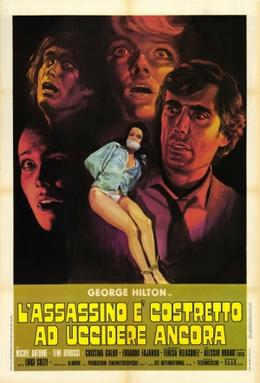
The Killer Must Kill Again (1975, dir by Luigi Cozzi, DP: Riccardo Pallottini)
Starcrash (1978, dir by Luigi Cozzi, DP: Paul Beeson and Roberto D’Ettorre Piazzoli)
Contamination (1980, dir by Luigi Cozzi, DP: Giuseppe Pinori)
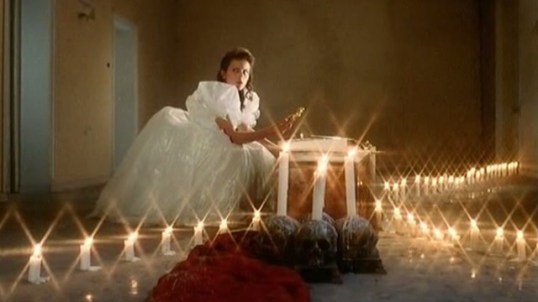
Paganini Horror (1989, dir by Luigi Cozzi, DP: Franco Lecca)
As some of our regular readers undoubtedly know, I am involved in a few weekly live tweets on Twitter and Mastodon. I host #FridayNightFlix every Friday, I co-host #ScarySocial on Saturday, and I am one of the five hosts of #MondayActionMovie! Every week, we get together. We watch a movie. We tweet our way through it.
Tonight, at 10 pm et, #FridayNightFlix has got 1983’s Hercules, starring Lou Ferrigno and Sybil Danning!
If you want to join us this Friday, just hop onto twitter, start the movie at 10 pm et, and use the #FridayNightFlix hashtag! It’s a friendly group and welcoming of newcomers so don’t be shy.
Hercules is available on Prime and Tubi! See you there!
In this twisty Italian thriller from 1975, George Hilton plays one of his signature roles. Hilton is cast as Giorgio Mainardi, a handsome and superficially charming man who is actually a soulless cad. Giorgio is a womanizer who is unhappily married to Norma (Tere Valazquez). Giorgio doesn’t love Norma but he does love her money and he’s eager to get his hands on it.
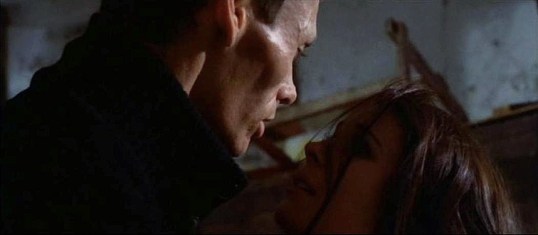
One night, after an argument with Norma, Giorgio goes for a late night drive so that he can call his mistress from an isolated phone booth. While Giorgio is making the call, he witnesses another man pushing his car into the nearby harbor. The man, who is simply identified as the Killer (Antoine Saint-John), is a serial rapist and murderer whose latest victim was in the car. Giorgio approaches the man and the two strike up an unlikely partnership. Giorgio agrees not to go to the police about what he saw if the Killer agrees to kill Norma for him.
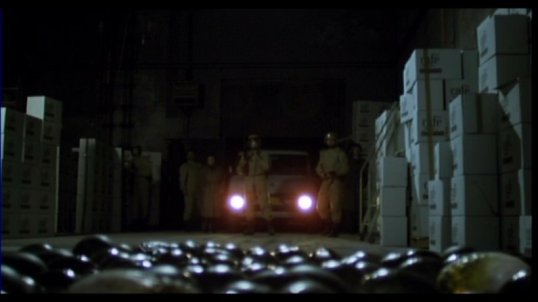
A few days later, while Giorgio is at a party, the Killer drives out to Giorgio and Norma’s house. He breaks into the house and strangles Norma. He then places the body in the trunk of his car. The Killer goes back in the house to make sure that he hasn’t left anything behind. When he comes back outside, his car is gone. Realizing that his car has been stolen, with Norma’s body in the trunk, The Killer steals someone else’s car. Of course, in doing so, he sets off a car alarm and the police are called. By the time Giorgio returns home, both the Killer and the car are gone but the police are waiting for him with the news that Norma has apparently become the latest victim of Rome’s kidnapping epidemic!
(At the time this movie was made, Italy’s terroristic Red Brigades were regularly kidnapping anyone who was considered to be wealthy.)
The Killer’s car has been stolen by Luca (Alessio Orano) and his girlfriend, Laura (Cristina Galbo), who are driving to the beach. Of course, what they don’t know is that there’s a dead body in the trunk and that the Killer is tracking their every move. When they reach the beach, Laura soon finds herself fighting for her life when the Killer manages to track her and Luca down.
The Killer Must Kill Again starts out as a Hitchcock-inspired giallo, with the super-sleazy Giorgio hiring the Killer to kill his wife and apparently assuming that he’ll be able to outsmart anyone who investigates the case. However, once the Killer starts following Luca and Laura, it becomes a thriller with the Killer stalking the two clueless car thieves. Fortunately, director Luigi Cozzi is able to pull off the massive shift in tone without the story falling apart. Cozzi delivers a genuinely suspenseful film, one that will keep you guessing until the final moment. In much the same way that Brian De Palma was often criticized for his obvious love of Hitchcock, Cozzi has often been unfairly dismissed as just being an disciple of Dario Argento’s. But, with The Killer Must Kill Again, Cozzi brings his own unique spin to the giallo genre and shows himself to be a much stronger director than he was often given credit for being.
One final note: The Killer Must Kill Again features one of the scariest psycho killers that you’re ever likely to see. Antoine Saint-John is chilling as the nameless Killer. Later, he would give another excellent performance when he played the doomed painter in Lucio Fulci’s The Beyond.


 Through the Shattered Lens