4 Or More Shots From 4 Or More Films is just what it says it is, 4 shots from 4 of our favorite films. As opposed to the reviews and recaps that we usually post, 4 Shots From 4 Films lets the visuals do the talking!
This October, I’m going to be doing something a little bit different with my contribution to 4 (or more) Shots From 4 (or more) Films. I’m going to be taking a little chronological tour of the history of horror cinema, moving from decade to decade.
Today, we take a look at 2011 and 2012!
6 Shots From 6 Horror Films: 2011 — 2012
Insidious (2011, directed by James Wan, DP: John R. Leonetti)
The Whisperer in Darkness (2011, directed by Sean Branney)
Dracula 3D (2012, dir by Dario Argento, DP: Luciano Tovoli)
Sinister (2012, directed by Scott Derrickson, DP: Christopher Norr)
Silent House (2012, dir by Chris Kentis and Laura Lau, DP: Igor Matrinovic)
The Cabin In The Woods (2012, dir by Drew Goddard, DP: Peter Deming)
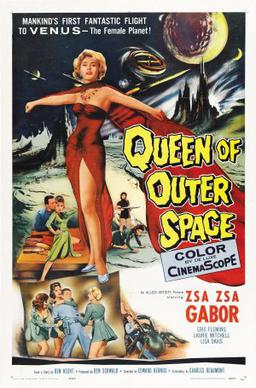
In 1958’s Queen of Outer Space, four rather dumb men take off in a spaceship from Earth.
There’s Lt. Larry Turner (Patrick Waltz) and Lt. Mike Cruze (David Wilcox), both of whom come across like they like to spend the weekend hanging out at their old frat house, playing beer pong. And then there’s Prof. Konrad (Paul Birch), who is smart because he knows what the word “atmosphere” means. And finally, in charge of the flight, is Captain Neal Patterson (Eric Fleming), who is upright and kind of dull.
The four men are supposed to be going to a space station but they get knocked off course by an animated laser beam and the ship crash lands on a mysterious planet that’s covered with cardboard rocks and plastic trees. Prof. Konrad takes one look at the planet and says that they’re on Venus.
Uh-oh! That’s not good! Isn’t Venus like a really bad place for human beings to find themselves?
Well, apparently not, because soon the four men are casually walking around the planet without so much as wearing a space suit or bringing along an oxygen supply. They even stop to get some sleep among the cardboard rocks. That’s when they’re captured by Venus’s inhabitants.
To the men’s shock, they discover that Venus is exclusively populated by women! The men are all like, “Hey, how you doing?” And the women are all like, “Silence, we have ray guns!”
Anyway, long story short, it turns out that Venus is ruled over by a disfigured queen (Laurie Mitchell), who hates men in general and Earth men in specific. She’s built a giant space laser that she’s planning to use to destroy Earth and it’s up to the men to stop her! Fortunately, they’ve got some help from Talleah (Zsa Zsa Gabor), a Venusian courier who has a wardrobe that’s to die for and who has apparently been waiting her entire life for men to come to Venus. When the Queen flirts with the captain, Talleah jealously exclaims, “I hate the Queen!” and that’s pretty much all it takes to start a revolution.
Needless to say, this is an incredibly sexist movie but, at the same time, it’s so goofy (in a 1950s sort of way) that you really can’t get too outraged by it. Instead, you just kinda cringe when Turner and Mike suggest that the captain needs to “turn on some of that old black magic” and invite the Queen out for a midnight stroll. Prof. Konrad quickly adds that Venus actually has several moons, though not all of them can be seen. I mean, it’s dumb but, at the same time, it’s just so 1958.
It’s really is a thoroughly ludicrous movie but, watching it, you get the feeling that the entire cast understood that it was ludicrous and they adjusted their performances accordingly. I mean, this is a movie that features Zsa Zsa Gabor putting on a mask and attempting to imitate the Queen while making absolutely no attempt to hide her trademark Hungarian accent. This is also a movie that features a giant rubber spider that pops up out of nowhere and for nor particular reason. I guess they just had the spider on set for the day and they decided to toss it in.
Queen of Outer Space is an incredibly silly movie but it’s entertaining in it’s own stupid way. Don’t take it too seriously. It’s only 80 minutes. Watch it for the experience.
Have you ever woken up and thought to yourself, “I’d love to see a movie where a youngish Jack Nicholson played a French soldier who, while searching for a mysterious woman, comes across a castle that’s inhabited by both Dick Miller and Boris Karloff?”
Of course you have! Who hasn’t?
Well, fortunately, it’s YouTube to the rescue. In Roger Corman’s 1963 film The Terror, Jack Nicholson is the least believable 19th century French soldier ever. However, it’s still interesting to watch him before he became a cinematic icon. (Judging from his performance here and in Cry Baby Killer, Jack was not a natural-born actor.) Boris Karloff is, as usual, great and familiar Corman actor Dick Miller gets a much larger role than usual. Pay attention to the actress playing the mysterious woman. That’s Sandra Knight who, at the time of filming, was married to Jack Nicholson.
Reportedly, The Terror was one of those films that Corman made because he still had the sets from his much more acclaimed film version of The Raven. The script was never finished, the story was made up as filming moved alone, and no less than five directors shot different parts of this 81 minute movie. Among the directors: Roger Corman, Jack Hill, Monte Hellman, Francis Ford Coppola, and even Jack Nicholson himself! Perhaps not surprisingly, the final film is a total mess but it does have some historical value.
(In typical Corman fashion, scenes from The Terror were later used in the 1968 film, Targets.)
The third part of The Perfect Stranger trilogy finds Nikki Comiskey at a crossroads …. again.
The film begins with Nikki (now played by Julianna Allen) recapping how, many years ago, she was a high-profile attorney who, after having dinner with Jesus (Jefferson Moore), decided to ditch her legal career and devote herself to her family. (Nikki explains that she was a “closet agnostic” before she met Jesus.) Ten years after having dinner with Nikki, Jesus appeared to Nikki’s teenage daughter, Sarah, and encouraged her to not abandon the faith of her parents. However, while Sarah is off thriving at college, Nikki feels like her life is in a rut. Though she still believes, she no longer gets much out of going to church and, once again, her marriage is starting to feel strained.
A visit with her mom doesn’t go well. Mom wants to know why Nikki had to abandon her legal career. Nikki gets annoyed and storms out of the house. She gets in her car and starts to make the long drive home. She calls her husband and explains what happened. Her husband informs her that he’s going to busy working on the roof for a bit. (Hmmm …. I wonder if this seemingly random bit of dialogue is going to come up again towards the end of the film?) While Nikki is driving home, she sees a familiar figure standing on the side of the road.
Yes, it’s Jesus (though he’s currently going by Josh).
Nikki gives Jesus a ride and they discuss why Nikki is feeling so unsatisfied with her life. Along the way, they meet a trucker with a porn addiction and they take him to dinner so that Jesus can encourage him to go to rehab. (At the diner, Nikki tries to order a late night salad. Needless to say, that doesn’t go well.) Finally, Nikki gets a chance to help out a minister named Tony (Matt Wallace), who is a character in another film that Jefferson Moore made in which he played Jesus.
(In fact, I discovered that Moore also starred in a TV series called The Stranger, which was a spin-off of The Perfect Stranger films. So really, there’s an entire Perfect Stranger cinematic universe out there.)
My main impression of Nikki and the Perfect Stranger is that it was surprisingly short. With a running time of 63 minutes, it definitely felt more like an extra long episode of an anthology show than an actual movie. That said, Nikki and the Perfect Stranger doesn’t feel as preachy as the previous Perfect Stranger films. I imagine that’s because the previous two films featured Jesus “educating” an agnostic while this third one features Jesus checking up on an old friend and giving advice. Since he’s a bit less condescending and argumentative in this film, Jefferson Moore is far more likable here than he was in the previous films. As opposed to some of the films that I’ve watched this month, the emphasis is more on helping than on judging. (I can only imagine the tortures to which the Christianos would have subjected that trucker.) By the time the end credits roll, Nikki’s story has been efficiently wrapped up.
The Reluctant Vampire was the 7th episode of the 3rd season of HBO’s Tales From The Crypt! It stars Malcolm McDowell as a vampire who is a little bit too nice for his own good. Seriously, you can’t go wrong with Malcolm McDowell as a vampire.
The Reluctant Vampire originally aired on July 10th, 1991.
At the start of 1980’s The Day Time Ended, the Williams Family has relocated to the desert!
(Why the desert? I have no idea. I’ve been told that the hot air of the desert would be ideal for my asthma but then I’d have to live in the desert and, from what I’ve seen in the movies, bad things always happen in the desert. If it’s not aliens, it’s zombie cowboys.)
Grandpa (Jim Davis), Grandma (Dorothy Malone), Richard (Christopher Mitchum, looking a lot like his father, Robert), Beth (Marcy Lafferty), and their young daughter, Jenny (Natasha Ryan) have moved into a very nice ranch house that appears to be sitting in the middle of nowhere. The house comes with a barn, a few horses, and …. ALIENS!
At first, Jenny is the only one to notice the strange blue light that keeps glowing behind the barn. But soon, the rest of the family is seeing UFOs and weird (but kind of cute) creatures are knocking on the front door and saying hi. Lizard men appear in the distance and beckon for the family to follow them. Soon, the house itself is being zapped through time and space….
This is going to be a short review but, then again, The Day Time Ended is a short movie. With a running time of only 75 minutes (not including the end credits), The Day Time Ended feels less like a movie and more like an extended episode of The Twilight Zone. That said, if it was an extended episode of The Twilight Zone, it would be considered to be one of the more enjoyable episodes of the series. While none of the characters are particularly complex or deeply written, the cast is believable as a family and everyone does a good enough job that the viewer won’t want to see anything bad happen to any of them. (I’m also happy to say that all of those horses are really pretty and — fear not! — for once, no harm befalls any of the animals.) The motives of the aliens are kept ambiguous throughout the film, leaving the viewers as confused and intrigued as the family and the final shot is somehow both silly and tremendously satisfying at the same time. The Day Time Ended is a B-movie but it’s an entertaining B-movie.
Directed by B-movie specialist, John “Bud” Cardos, this is one of those movies where the cheapness of the special effects add to the film’s charm. Initially, the UFOs are represented by lights darting through the sky. (Residents of Texas will immediately think of our beloved and yet unexplained Marfa Lights.) When the UFOs are finally seen in close-up, they are obviously plastic models but, in this age of excessive CGI, there’s something undeniably charming about the idea of going to the trouble to build plastic models. The claymation aliens are adorable! Seriously, there are some films that you just can’t help but kind of love and, for me, The Day Time Ended is one of those films.
Welcome to Retro Television Reviews, a feature where we review some of our favorite and least favorite shows of the past! On Mondays, I will be reviewing Hang Time, which ran on NBC from 1995 to 2000. The entire show is currently streaming on YouTube!
Welcome to Season 2 of Hang Time! Because NBC wasn’t happy with the first season, the 2nd season served as a bit of a reboot for the season. Half the cast left and the show became a bit more broad in its comedy. That’s a polite way of saying that things got a little bit more cartoonish.
The show also got a brand new theme song!
Episode 2.1 “Winning Isn’t Everything”
(Directed by Patrick Maloney, originally aired on September 7th, 1996)
The first episode of the 2nd season starts in the school hallway. “They’re coming!” one kid yells before leading all of his classmates in a chant of “Tornadoes! Tornadoes!”
Yes, the students at Deering High love their basketball team. But where is everyone? We see Julie, Danny, and Mary Beth walking down the hallway. Where’s Chris? Where’s Earl? Where are Michael Maxell and Sam!? Danny orders the students to chase down the one kid wasn’t cheering and then, as if he can hear our thoughts, he says, “I’m really going to miss Earl, Michael, and Chris.”
It turns out that things have changed! Julie broke up with Chris over the summer and then he went off to college. Earl is also at college. And so is Sam. All those people were seniors last year? Why were they so worried about dating a bunch of underclassmen? Mary Beth mentions that she’s no longer a cheerleader and now she’s equipment manager because her Dad thinks it will teach her responsibility. Amy (Paige Peterson) is the new head cheerleader. Everyone acts as if Amy was around last year even though she wasn’t in any of the episodes.
At practice, we meet the new players. Vince D’Amata (Michael Sullivan) is cocky and determined to be a star. Everyone makes fun of Vince for being short but he’s still taller than Danny so I’m not really sure that joke is as effective as the rest of the team thinks it is. Fuller announces that the team has gotten lazy so it’s a good thing that his godson, Teddy Brodis, has transferred to the school. Fuller used to play with Teddy’s father so Teddy is “probably great.” On cue, Teddy enters the gym and …. OH MY GOD, IT’S ANTHONY ANDERSON! Proving that everyone had to start somewhere, future Departed, Law & Order, and Black-Ish star Anthony Anderson did a two season tour as a part of the Hang Time cast. Anderson was in his mid-20s at the time, making him considerably older than the rest of the cast. Coach Fuller is upset to see that Teddy is not particularly tall and a little heavy-set. Hey, Coach, that’s a future Emmy winner you’re talking to! (And, even though he doesn’t got to do much in his first few episodes, it is obvious from the start that Anderson instinctively knew how to play to the camera.)
“Could we possibly be off to a rockier start?” Fuller says and in comes Mary Beth with a box of new uniforms, all of which are the wrong color. Mary Beth explains that they may be wrong but at least they’re “pretty.”
Anyway, the team is looking weak. Can the team recruit Josh Sanders (Kevin Bell) to play for them!? Josh is athletic but he refuses to play team sports because he doesn’t like the competitive aspect of the game. We know that Josh is good and cute because the audience goes, “Woooooo!” whenever he shows up onscreen. The team tries to recruit him by showing him that they don’t believe that winning is everything. Honestly, though, if Josh isn’t into competing, why would you want him on your team? Team sports are about winning!
Josh agrees to try out for the team but then walks out of a practice because of the team arguing with each other. But then he comes to a game and see Fuller bench Vince because Vince wasn’t playing as a part of the team. Josh immediately joins the Tornadoes. I’m getting the feeling that Josh might have issues with impulse control.
Finally, Mary Beth accidentally washes all of the autographs off of one of Fuller’s basketball. Fuller nearly fires her but then Mary Beth brings in some tall guy to re-sign the ball. Judging by the way the audience went crazy and the fact that the guy was like 7’3, I’m going to guess he was a basketball player.
Episode 2.2 “Just One Of The Guys”
(Directed by Patrick Maloney, originally aired on September 14th, 1996)
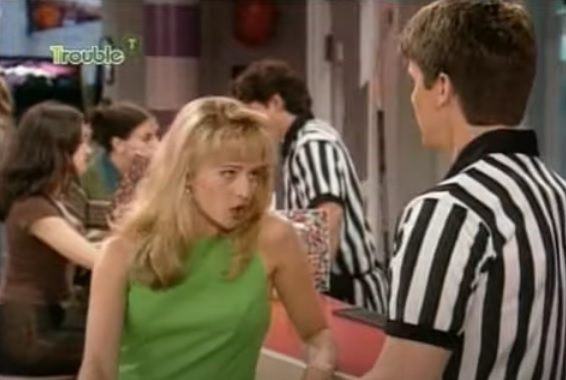
Julie doesn’t understand why Josh doesn’t seem to be attracted to her. Mary Beth and Amy tells her that she should try to be more feminine. Later, during practice, Julie gets upset when Vince gives her a high five and says, “Way to go, man!” “I’m a girl,” Julie replies. Josh, her crush, says, “Don’t take it personally, you’re just like one of the guys.”
OH MY GOD! If I was Julie, I would move to a different state at this point.
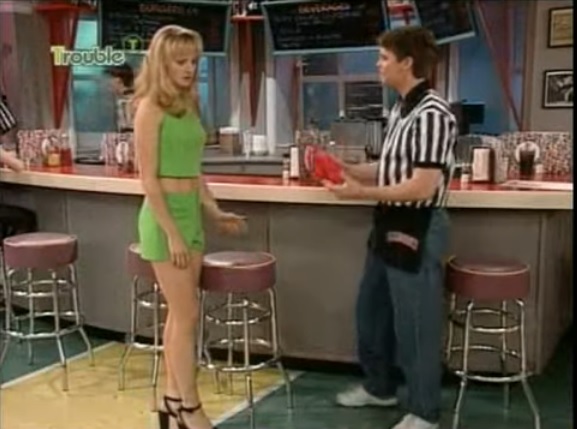
Anyway, Mary Beth and Amy give Julie a makeover, which basically amounts to Julie wearing high heels, not wearing a bra, and tossing her hair back while talking to Josh.
However, Josh just wants to talk about basketball practice.
Pictures alone cannot communicate how awkward this scene was.
After spending all of last season determined to prove that she can play with the guys, Julie quits the team in order to prove that she’s not one of the guys. Mary Beth is shocked. “When I’m upset,” Mary Beth says, “I don’t get a new life. I get new shoes!” “Shoes aren’t a substitute,” Julie says and the only person more horrified by that statement than Mary Beth is me. Mary Beth suggests that Julie try a new look. “How about Janet Jackson?” Mary Beth says. Uhmmm …. this is going somewhere dangerous….
Fortunately, Fuller is friends with an Olympic gold medalist, who just happens to drop by the office and gives Julie a pep talk. Julie rejoins the team and decides to be confident in herself. Is there nothing that an Olympic gold medalist can’t do?
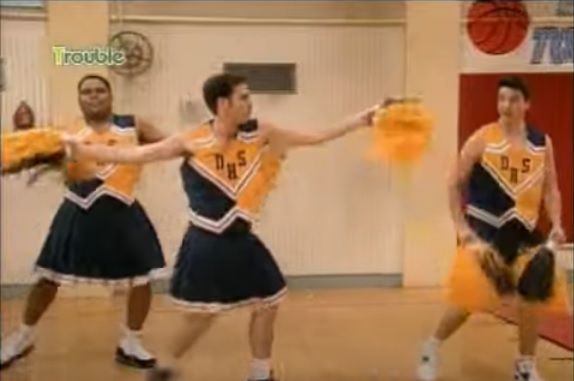
In the B-plot, Vince, Teddy, and Danny make fun of the cheerleaders so the cheerleaders stop talking to them. So, Vince, Teddy, and Danny dress up as cheerleaders.
Anyway, the important thing about this episode is that Daniella Deutscher had more chemistry with Kevin Bell than she with David Hanson and, as such, the Julie/Josh relationship is a lot more entertaining than the Julie/Chris relationship. Here’s hoping everything works out for them!
What would you do if your friend confessed to committing a murder?
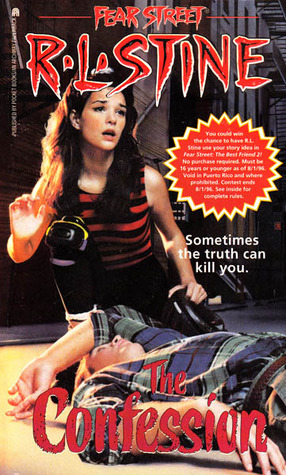
That’s the dilemma that is at the heart of R.L. Stine’s 1996 YA horror novel, The Confession.
No one at Shadyside High likes Al. He used to be kind of nice but, as of late, he’s been dressing in all black, drinking beer, and picking fights. Plus, he’s got a really bad habit of blackmailing his friends. Al is the type who will sell you the answers to a test and then threaten to tell everyone that you were cheating unless you keep him supplied with cash. (Fortunately, my sister was a year ahead of me so I could just go through her old tests if I needed the answers in advance.) Al is a real jerk and no one is that upset when he turns up dead and with a rollerblade stuffed in his mouth!
Who killed Al!? Well, nerdy Sandy tells his friends that he did it. At first, everyone’s okay with the idea of covering for Sandy because it’s not like Al was a nice guy and Sandy did promise not to kill anyone else. But then Julie (who also discovered Al’s body) starts to have nightmares about Sandy and she finds it difficult to keep covering for him every time that she speaks to the police. Julie also notices that Sandy has been acting a little bit differently since confessing to the murder. Sandy seems to be a little bit more aggressive now, almost as if he might want to try to kill someone again….
AGCK!
Listen, if I was in Julie’s shoes …. well, I don’t know what I’d do. On the one hand, I have always been against murder and violence in general. On the other hand, Al was a real jerk and it was kind of obvious that he would have eventually ended up killing someone if someone hadn’t gotten to him first. I would not want to be the person who sent a friend to death row. So, in this case, R.L. Stine came up with a plot that actually made me think. At the same time, he also added a last-minute twist that let almost all of the characters off the hook. I guess that’s to be expected. I mean, we’re talking R.L. Stine here, not Dostoevsky, Still, I was a bit disappointed with the final few pages of the book. Things worked out …. BUT AT WHAT COST?
Again, there was no cost. This is R.L. Stine. All the trauma in the world is worth it as long as you’re dating a cute guy and speaking in quips by the end of the book. That, after all, is the appeal of Fear Street.
Cregar was born in Philadelphia in 1913 and spent a good deal of his youth in England. That was where he first appeared, as a child actor, with the Stratford-Upon-Avon theatrical troupe and it was also where he developed the English accent that would serve him well later in life. Cregar once said that, from the age of eight, all he wanted to do was be on stage.
For most of the years that followed, Cregar never stopped performing. Cregar went from acting on stage to eventually making his way to Hollywood. He first appeared on the big screen in 1940 and he went on to appear in 16 films. He appeared in nearly every genre of film, from comedy to film noir to even a western. As frequent viewers of TCM can tell you, he played a surprisingly charming devil in 1943’s Heaven Can Wait. But he was probably best-known for playing a mysterious man who might be Jack the Ripper in 1944’s The Lodger and for his role as the possibly mad pianist, George Henry Bone, in Hangover Square, obsessively playing the piano while his room burned down around him. Sadly, that will be his final role.
Cregar was an actor who had the talent to be a leading man but, because he weighed over 300 pounds, he found himself used as a supporting player in Hollywood. He was a character actor who yearned to be a romantic star and who feared he would be forever typecast as a villain. Perhaps because Cregar disliked playing villains, his villains often seemed to be conflicted about their actions. (Indeed, there was a vulnerability to Cregar that made it difficult not to feel some sympathy for his characters.) Determined to change his image, Cregar embarked on a crash diet that was aided by amphetamines. He lost over a 100 pounds but he also put his health in jeopardy. On December 9th, 1944, Cregar died after suffering a heart attack. He was 31 years old. His friend Vincent Price delivered the eulogy at Cregar’s story. Cregar’s final film, Hangover Square, was released four months after he died.
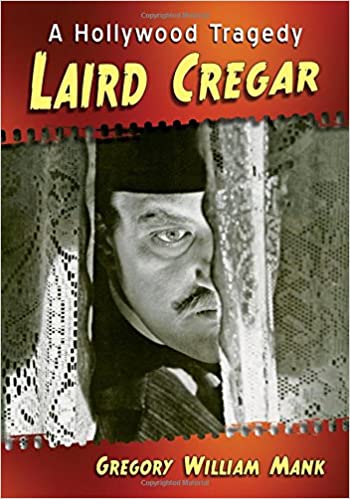
Gregory William Mank’s biography, Laird Cregar: A Hollywood Tragedy, not only tells the story of Cregar’s short life but it also examines how Cregar took his frustrations and his insecurities and used them in his performances. In Mank’s biography, Cregar comes across as being a kind and generous man who wanted so desperately to be a star that it destroyed him. The book serves as not only an examination Cregar and his talent but an indictment of a studio system that set very rigid rules for who could and who couldn’t be a star. The book also features details about Cregar’s extensive and successful stage career. If you’re a history nerd like me, you’ll appreciate all of the detail that Mank goes into while discussing who co-starred with Cregar and their subsequent careers. Mank explores Cregar’s childhood and his career. The resulting biography pays tribute to a star who deserved better.




 Through the Shattered Lens