The Hole of Death: A Personal Story For October


The past two and a half months have been difficult. My mind has been elsewhere. Our loyal readers deserve to know why. Can you handle the horror of the Hole of Death?

It all started at the end of July when the dishwasher here at the house appeared to be leaking water. Not wanting to have a flooded kitchen and feeling that it was perhaps time for a new dishwasher anyways, Erin and I went down to Lowe’s and bought a new one. The day after we purchased it, the deliveryman showed up to drop off our purchase, remove our old dishwasher, and install the new one. Yay!

Except, of course, there was a problem. There’s always a problem, right? When he took out our old dishwasher, he noticed that there was mold behind it. He announced to us that, legally, he could not install our new dishwasher until we got rid of all that mold. I looked in the open space under the kitchen countertop where the dishwasher had once sat. There was definitely some mold on the back wall, the result of the leak that had caused us to get a new dishwasher in the first place. It didn’t look like a lot of mold but, as an asthmatic, I still knew that it could be a problem for me.

When Erin asked him what we could do about the mold, he listed several steps and each one sounded more difficult and time consuming than the last. Later, when my sister and I discussed things, we would both agree that he went out of his way to make mold removal sound like the most complicated process in the world. With every step he listed — from drying out the hole to spraying bleach in the hole to scraping away at the mold — he made it sound like something that two mere homeowners like us would never be able to handle. After he finished explaining all the steps, he then said, “Or you can call these people and they’ll do it for you.” He gave us a phone number. And then he left, taking the old diswasher with him and leaving us with essentially a big empty space under our kitchen counter.

As you can imagine, I was not happy about either the mold or the empty space. But what especially angered me was the dismissive attitude of the deliveryman. His condescending tone did not sit well with me. Later, Erin and I would agree that he went out of his way to make us feel stupid so that we would call the number that he gave us.

And yes, we did call that number. The person on the other end said that he would come out to look at our kitchen in four days. Four days? I wondered. Weren’t we all supposed to be dead from the mold by then?

When he did show up, he was a very good salesman. He took one look at the hole — which Erin and I had christened the Hole of Death — and he announced that we definitely needed to hire him and his company to not only take care of the mold but that we also needed to let him remove every fixture in the kitchen so that he could make sure that there wasn’t any other mold in the house. He told us that, because our house was old, we also needed to hire him to check for and remove any asbestos. We needed to hire him to do a lot but, of course, he couldn’t tell us how much it would cost. He would need to bring in some associates to take a closer look and then he could give us an estimate.

While he was giving his spiel, I noticed that there was fresh water in The Hole of Death. That meant, of course, that there was still a leak and the dishwasher had not been the source. When I mentioned this, the Salesman was very quick to tell me not to call a plumber. He was insistent that only he and his crew were qualified to rip up the kitchen and find the leak. In fact, he told us, there were probably several leaks. He wouldn’t know for sure until the entire kitchen was ripped apart.

The Salesman left but promised to return the following week. When he did, he brought another man with him. They both looked in the Hole and agreed that we should not call a plumber and that we needed to hire them to rip up the entire kitchen. In fact, they would probably need to not only rip up the kitchen but perhaps the nearby bathroom as well. The floor would probably have to be replaced. They informed us that, before they could start working, they would need someone to come in and test the air to make sure it wasn’t toxic. They gave us yet another number to call. As they left, they again assured us that it would be a waste of time and money to call a plumber. When I asked them how high they thought the estimate would be, the Salesman smiled and reminded us that we had homeowner’s insurance.

These meetings raised a few red flags. I couldn’t help but notice that, despite the fact that the mold was apparently going to kill us in a matter of days, no one seemed to be in a hurry to do much much about it. Instead, every meeting and conversation ended with Erin and I being told to call someone else and to have them come out. And, of course, everyone who came out would need to be paid money for their services. Instead of actually doing anything about the mold, it seemed like everyone who came out just wanted to scare us, as if they had decided that we were easy marks. These men seemed to talk a lot without really saying anything. They kept telling horror stories about how mold could kill us but they never told us to leave the house or to stay out of the kitchen. The biggest red flag was their insistence that only they could find and stop the leak and that they could only do that after we had paid them to rip apart our kitchen. If the mold was due to the leak and the mold was going to kill us by the end of the month, shouldn’t the leak have been a bigger concern?

Finally, I did what I probably should have done before doing anything else. I called a plumber. I mean, even if he showed up and said, “I can’t do anything,” I figured that would still be more helpful than just ignoring the leak. Fortunately, he didn’t say that he couldn’t do anything. Instead, he got underneath the sink, found a loose pipe, and took care of it. It took him about twenty minutes. He was calm, courteous, professional, and everything that the other men hadn’t been. He even mopped up the water, for us. By the next morning, the Hole of Death was dry.

I called up the Salesman and told him that we had called a plumber and he had taken care of the leak. The Salesman was not happy with me, snapping that he had told us to wait so that an expert could take a look at it. He said that it was good that we had gotten one leak taken care of but there were probably others. After I pointed out that the Hole of Death was completely dry — which would indicate the leak had been stopped — he told me that I was not an expert on things. He also said that he’d soon have an estimate ready but he needed to drop by the house sometime next week.

I was about ready to tell the Salesman to fuck off but Erin insisted that we go ahead and get the air tested, just to make sure were weren’t in a toxic environment. The man who came out to do the air test was in his 70s and, to my relief, turned out to be almost as nice as the plumber. By nice, I mean that he didn’t talk down to us and he didn’t try to scare us. Instead, he did his test and then he told us to be careful because “a lot of people in this business will try to take advantage of you because they’ll assume girls won’t know any better.” While I would have preferred to have been called a woman instead of a girl, I have to admit that I was actually happy to hear him say that because it meant that someone who didn’t seem to have an ulterior motive had confirmed what Erin and I suspected was happening.

The next day, the Tester called us and told us that air was not toxic. It wasn’t good to have mold in the house, obviously. But it wasn’t going to kill anyone.

The Salesman came by the following week, with two more experts. They took a look at the hole and nodded when we said that it wasn’t toxic. When I mentioned that there hadn’t been any other leaks, they kind of smirked. They said they would email us an estimate. They left.

By now, we were into September. Having gotten tired of worrying about Doc wandering into the hole of death, we had put a trashbag over the hole. It kept the cat out but it just looked so trashy. It was driving me crazy that we had a perfectly good dishwasher in the garage and big ugly bag in the kitchen. Whenever I considered the fact that a trashbag was now a part of our kitchen decor, I wondered how long we had until a car showed up in our front yard, sitting on cinder blocks.

Finally, 10 days after his previous visit, the Salesman sent us his estimate. He wanted $15,000 to remove all the cabinets and take care of any mold that they found. I emailed them back and asked if that estimate included the cost of then rebuilding our kitchen. No, it did not. In fact, the Salesman and his crew would not be rebuilding our kitchen but they would give us a number to call for another company that would come out and give us an estimate and it would probably all be done by December, unless of course they found something else that needed to be fixed….

And this point, my sister announced that she was through with this. Working with Jeff (who, I should add, distrusted the Salesman from the start and who spent this entire ordeal offering to clean up the mold for us), she took a crash course on mold removal. They went down to Home Depot, bought some gloves and goggles and spray bottles. Using a combination of vinegar and water, they spent a few hours spraying and scrubbing and, soon, the mold was gone. At most, it cost about $50 to remove the mold themselves.

And today, finally — we got our dishwasher installed! Yay! I threw away the trashbag that had been covering the now-filled Hole of Death. I have never been happier to get rid of anything. As for the Salesman and his friends, they can get their kickbacks from someone else.

So, why am I telling you this? Because I feel I owe you, our readers, an explanation for where my mind has been during the past few months. You deserve to know why I haven’t reviewed as many movie as usual. You deserve to know why I have occasionally been distracted the point of not noticing glaring typos. (In my defense, I always correct them as soon as I do catch them.) I love writing for this site and I love our October horrorthon the most of all. And, for the past two months, my mind has been elsewhere.

But now, my mind is back here.

And now, I’ve got movies to watch and review and to write about.

Enjoy the rest of October, everyone! It’s going to be great month!
Scenes That I Love: Adam Driver Has Read The Script in The Dead Don’t Die


Jim Jarmusch’s The Dead Don’t Die is a film that has definitely grown on me. When I first watched it, I thought it was intriguing but perhaps a bit too cutesy and enamored with itself. However, I’ve subsequently come to realize that, actually, Jarmusch finds just the perfect tone for his look at our zombie-saturated culture.

In the scenes below, Bill Murray, Chloe Sevigny, and the wonderful Adam Driver all deal with the inevitability of doom that comes with being a character in a zombie film.


Horror on the Lens: Teenagers From Outer Space (dir by Tom Graeff)


Can Earth survive an invason of teenagers?

Watch today’s Horror on the Lens and find out! From 1959, it’s Teenagers From Outer Space! In this film, a bunch of teenage-looking aliens come to Earth so that they can raise lobsters. Things don’t really go as planned, of course. The teens have ray-guns that can transform anyone intto a perfectly preserved skeleton. It’s sad to think that they could come up with the technology to power their ray-guns and to pilot their spaceshiip but not to raise lobsters on their own planet.

It’s a damn shame.

Anyway, I hope you’re ready to cry because it’s time for …. TEENAGERS FROM OUTER SPACE!

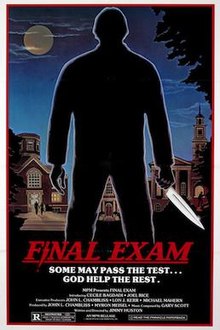
The TSL’s Grindhouse: Final Exam (dir by Jimmy Huston)


The 1981 slasher film, Final Exam, opens with a familiar scene.  A couple is making out in a car.  A man (played by Timothy L. Raynor) comes along and kills them both.

Why does the man do this?  Is he an escaped mental patient, like the killer who always appear in the urban legend about the man with the hook?  Is he an angry father, upset that students have been parking near his farm and corrupting his children with their sinful ways?  Is he an occultist, hoping that a blood sacrifice will bring about the end of the world?  Is he a jilted lover or an unemployed day laborer or a zombie or an international assassin or a former fat boy looking for vengeance on the students who pulled the prank that caused him to drop out of college?  Seriously, what is this guy’s deal!?

We never find out.  That, in itself, makes Final Exam unique.  The Killer is not only not given a motive, he’s not even given a name!  He’s just someone who shows up and starts killing.  No one knows him and he doesn’t appear to know anyone that he kills.  The fact that he’s so anonymous is actually a factor in the film’s favor.  The flamboyant motivations that are given to most slasher villains tend to serve as a distancing device for the audience.  It’s easy, for instance, to dismiss Jason Voorhees because we know that the idea of him drowning and then somehow showing up in the woods just doesn’t make any sense.  The convoluted backstory of Michael Myers (or at least the Myers who was present in the original, pre-reboot Halloween films) eventually became so ludicrous that it made it easier for audiences to say, “Well, it’s just a move.”  Final Exam‘s motiveless killer is actually far more true to life.  In real life, it’s rare that we ever learn the motives behind the crimes.  By making the Killer anonymous, Final Exam takes away one of the tools that the audience can use to assure themselves that it’s only a movie.

Unfortunately, the scenes following the opening murder are so inept that the audience is instantly reminded that they’re just watching a movie and not a particularly well-made one at that.  It’s final exam time on campus but several students aren’t ready to take their Chemistry exam.  So, a fraternity fakes a shooting spree — yes, you read that correctly — and manages to get the exam delayed for a day.  That means that, while all of the other students have gone home, the chemistry students stay on campus so that they can study for their final exam.  And, of course, the killer is on his way to the campus as well….

While the killer makes his way to campus, we sit through several scenes of campus hijinks.  It’s a weird mix of horror and comedy.  We meet a few students who are obviously destined to victims.  Neurotic Radish (Joel S. Rice) is likably nerdy.  Lisa (DeAnna Robbins) is having an affair with one of her professors, but at least she has a great first name.  The frat boys are doing steroids and tying each other to trees.  Apparently, spending the night tied to a tree is some sort of initiation ritual.  That’s not a good situation to find yourself in when there’s a killer stalking the surrounding area.

Yes, the killer does eventually arrive on campus but it seems to take him forever.  Once he does arrive, he starts killing everyone that he meets and, again, his lack of motivation makes him far more disturbing and frightening than he has any right to be.  It really is the ultimate nightmare.  Not only is someone trying to kill you but he’s doing it just because.  There’s no reason for his actions and therefore, there’s no way to talk him out of it.  There’s no secret to distracting or stopping him.  You just have to run and hope you can escape.  Cecile Bugdadi plays Courtney, who is pretty obviously destined to be the final girl.  She gives a good performance and you definitely want her to escape but again, the film is so poorly paced that, by the time she gets her chance to face the Killer, the majority of the audience will probably have checked out, either mentally or physically.

Final Exam has a cult following, which I kind of understand.  It really is the epitome of what people imagine when they imagine a typical, low-budget, early 80s slasher film.  It represents an era.  But for me, it’s just too uneven to work.

Horror On TV: Friday the 13th: The Series 1.12 “Faith Healer” (dir by David Cronenberg)


Tonight’s episode of Friday the 13th is all about fake faith healers but, even more importantly, it was directd by none other than David Cronenberg!

Be sure to keep an eye out for Robert Silverman, a Cronenberg regular who had important roles in The Brood and Scanners and who has appeared in a host of other Cronenberg films over the years.  He also appeared in Prom Night, playing the creepy janitor who is briefly used as a red herring before the identity of the real murdere is revealed.

This episode originally aired on February 13th, 1988.  (Originally, I got excited when I saw that date but, checking with a calendar, I saw that this show aired on a Saturday the 13th and not an actual Friday the 13th.)  Unfortunately, due to budget cuts after the show’s first season, Cronenberg would be Friday the 13th‘s last celebrity director.

(Cronenberg would, however, go on to appear in Jason X.)

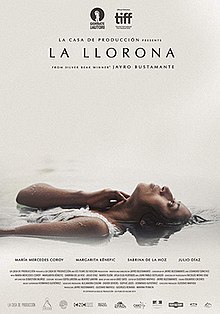
International Horror Review: La Llorona (dir by Jayro Bustamante)


Enrique Monteverde (Jose Diaz) lives in a mansion in Guatemala.  He’s an old man, one who look harmless on first glance.  He always has an Oxygen tank nearby.  His family says that he’s suffering from Alzheimer’s and, therefore, can’t always be held responsible for some of the things that he might say.  He shamelessly leers at the younger woman who work in his home.  His family says that he’s always been a flirt but he doesn’t mean any harm or offense.  His family insists that he’s just an old man with dementia who is hoping to pass away peacefully while surrounded by his loved ones.

The protestors who gather daily outside of Enrique’s mansion have a different opinion of the man.  They chant and hold up signs illustrated with the faces of their missing relatives.  Before he retired, Enrique was a general.  He fought the communist guerillas.  Previously, he was convicted of committing genocide against the indigenous people of Guatemala but his conviction was overturned by a higher court.  There are other retired generals who know that, if Enrique had gone to prison, it would not have been long until they followed him.  Just because people are going on trial and even getting convicted, that’s not guarantee of justice.

Enrique’s wife, Carmen (Margarita Kenefic)m insists that Enrique is innocent and that all of his accusers are lying.  Enrique’s daughter, Natalia (Sabrina De La Hoz), is less sure while his granddaughter, Sara (Ayla-Elea Hurtado), just thinks of Enrique as being her somewhat goofy grandfather.  Meanwhile, his housekeeper, Valeriana (Maria Telon), remains strangely devoted to him.  Even after a scared and confused Enrique fires a gun in the house because he swears he heard someone moving in the darkness, Valeriana stays.  The rest of the household staff quits.  Alma (María Mercedes Coroy), a young woman from Valeriana’s village, comes to the home to work as a maid.

Enrique continues to insist that some sort of curse has been placed over the mansion and that something evil has entered the house.  Is he just suffering, as his family assumes, from dementia or is he correct?  Even as the protests continue outside and the enigmatic Alma hints that she has a secret of her own, Carmen finds herself haunted by nightmares and visions of her husband’s crimes.

La Llorona is a film that combines two horrors, one legendary and one very real.  There is, of course, the legend of the weeping woman.  She is said to haunt the night, crying for her drowned children and, in some cases, killing anyone who tries to help her.  And there’s the very real horror of the war crimes that were committed, by various military dictatorships, against the indigenous people of Central and South America.  Though Enrique may be a fictional creation, the crimes that he and others committed were not.  La Llorona is more than just a haunted house story.  It’s a film about the crimes of the past and how those crimes continue to haunt the present.  Like many prominent men, Enrique is protected not by the loyalty of those he worked with but instead by the knowledge that the minute one guilty war criminal actually pays for his crimes, they’ll all end of paying.  The political and legal establishment will do what it has to do to protect itself by protecting men like Enrique.  But, as this film demonstrates, the sins of the past cannot be escaped in present.

Unfortunately, the premise is a bit more interesting than the execution.  The film’s deliberate pacing often lends La Llorona a dream-like feel but, in other scenes, the film just feels slow.  The idea of the legendary weeping woman acting as a sort of vigiliante is an interesting one but the story itself is a bit predictable.  That said, the cast all give strong and memorable performances and the film uses the horror genre to discuss disturbing truths that many would rather ignore.  Flawed or not, La Llorona is a good example of how the horror genre can be used to comment on the past and the present.

La Llorna was a Guatemala’s submission for the 2020 Oscar for Best International Film.  Though it deserved a nomination for ambition alone, it didn’t make it beyond the 15-film shortlist.  Fortunately, nominated or not, the film can currently be viewed on Shudder.

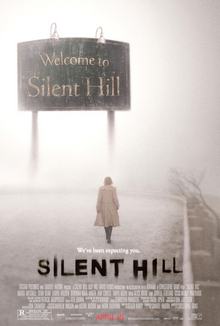
Horror Film Review: Silent Hill (dir by Christophe Gans)


Oh, Silent Hill.

I first saw this movie way back in 2006, when it was first released into theaters.  At the time, I knew nothing about Silent Hill, beyond the fact that it was based on a video game that a lot of my friends seemed to like.  I have to admit that I had a really hard time following the plot and yet the film still totally creeped me out.  The film was one of those movies that created such an atmosphere of impending doom that the real world looked and felt different when I left the theater.  For the rest of that night, I found myself feeling paranoid about any sudden shadows.

I’ve watched Silent Hill or, at the very least, parts of Silent Hill a few more times over the years.  The plot still makes little sense to me, though I am now a bit more familiar with the game that inspired the film.  Over the years, a handful of the special effects have aged a bit poorly, with many of the once-fearsome monsters now looking somewhat cartoonish.  And yet, when the film works, it really, really works. There are certain scenes in this film that still surprise and frighten me, even though I’ve already seen them.  One character, for instance, is burned alive and I still have to look away when the fire consumes them.  The thing is that, even if the CGI now looks a bit cartoonish, the atmosphere remains.  That feeling dread continues to snake its way through every scene in the film and into the consciousness of the viewer.

I rewatched the film earlier today.  I’m feeling nervous tonight.  Maybe it’s just because I’ve got a lot of writing to do and we’ve got some home repair people coming by tomorrow to do some work.  Or maybe, it’s because I’m worried that I’m suddenly going to find myself in some sort of shadow world, being menaced by blind but stabby nurses.

The film opens with Rose (Radha Mitchell) and her husband, Christopher (Sean Bean) trying to figure out why their adopted daughter, Sharon (Jodelle Ferland), is sleepwalking and having nightmares about a town called Silent Hill.  Silent Hill is in West Virginia and was abandoned after a mysterious natural disaster.  Rose decides that visiting the town is the best way to solve the mystery.  However, after an automobile accident, Sharon disappears and Rose finds herself wandering around the town and getting attacked by monsters and occultists.  Meanwhile, Christopher is also wandering around Silent Hill, accompanied by a helpful deputy (Kim Coates), but it’s hard not to notice that his Silent Hill seems to be signifcantly difficult from the Silent Hill that Sharon and motorcycle police officer Cybil (Laurie Holden) have found themselves in.

It’s a confusing plot but director Christopher Gans does such a good job of creating and maintaining the film’s creepy atmosphere that it doesn’t matter that you’re not always sure what’s going on.  And while it’s true that there’s perhaps too many scenes of Sharon walking from place to place, there’s also some truly frightening scenes, like the one with all of those killer nurses.  The film plays out like a dream and, as we all know, you don’t question dream logic.  Instead, you just go with it.

And so, 15 years after the film was first released, I’m usually willing to just go with Silent Hill.  I’m at peace with never quite understanding it.  Instead, I appreciate it for what it is: a creepy and surreal experience that will make you think twice before stepping out into the fog.

Horror Scenes that I Love: The Devil Eats A Soul in L’Inferno (dir by Francesco Bertolini, Adolfo Padovan, and Giuseppe De Liguoro)


Today’s horror scene that I love comes from the 1911 film, L’Inferno. This silent film is not only considered to be the first Italian feature film but it was also the first Italian horror film. Based on Dante’s Divine Comedy, the film took three years to make and was a hit with audiences. It made two million at the box office, an unheard of amount of money in 1911.

In this scene, Dante and Virgil observe the devil eating a sinner’s soul.

Horror Book Review: Switched by R.L. Stine


Oh hell yeah!

Dear readers, I present to you perhaps the greatest book ever written by the one and only R.L. Stine!

Now, I’m not going to spoil too much of this plot because, seriously, this book is crazy. Once the plot twists start, they never stop. Once the first two dead bodies show up, it’s a nonstop parade of bloody corpses. People don’t just die in this book. They get their heads ripped off and then they sometimes show up alive a few pages later. That’s the type of book this is. First published back in 1996, Switched is like the ultimate Fear Street book.

Basically, Nicole is having a really bad day. Her parents are being totally overprotective. Her boyfriend wants to dump her because he says that she’s too much too handle, even though Nicole can’t imagine what he means by that. (Don’t worry, Nicole! I’ve been there!) She didn’t do her class project because she just didn’t feel like it. Nicole’s obviously suffering from a case of terrible ennui.

However, her friend Lucy has a solution! Lucy says that there’s a wall near the cemetery and basically, all you have to do is climb the wall with someone else and then jump off the wall while holding that person’s hand and then — BOOM! — it’s body switch time! Lucy says that they can switch bodies and Nicole can get a chance to live Lucy’s perfect life and maybe make out with Lucy’s boyfriend. Nicole says sure!

So, they jump off the wall and, quicker than you can say Freaky Friday, it works! Unfortunately, no sooner has the body switch occurred than Nicole starts to find dead bodies all over the place! Could Lucy be killing them while using Nicole’s body!? Or is something even stranger happening?

Seriously, this book is a lot of fun. Not only do you get the totally insane body switch plot and a lot of gore and impure thoughts but you also get nonstop twists. And, as opposed to certain other Stine books, the twists all make a strange sort of sense in Switched! I won’t say much else about Switched because I don’t want to spoil it for anyone but, if you ever feel the need to prove that R.L. Stine could tell a good story and keep the reader guessing, Switched is the book to go with!

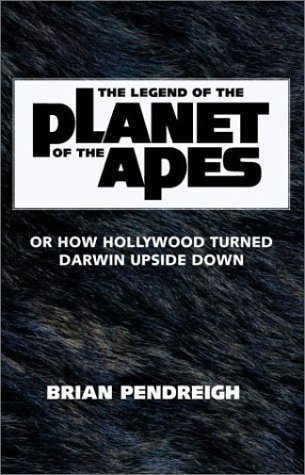
Book Review: The Legend of the Planet of the Apes: Or How Hollywood Turned Darwin Upside Down by Brian Pendreigh


Recently, while going through all the books that I’ve collected over the years, I came across a copy of The Legend of Planet of the Apes: Or How Hollywood Turned Darwin Upside Down.  It’s a book by a Scottish film critic named Brian Pendreigh and it takes a look at the Planet of the Apes film franchise, from the 1968 original all the way to Tim Burton’s now-forgotten remake.  Though I couldn’t find a copyright date in the book, it was obviously written long before the Planet of the Apes franchise was rebooted and sent in an entirely new direction by 2011’s Rise of the Planet of the Apes.

That’s okay, though.  The three recent Planet of the Apes films all had moments of brilliance and Andy Serkis probably deserved an Oscar nomination for his performances in all three of them but they have also tended to overshadow the original Planet of the Apes and its sequels and, as this book points out, the first 5 films were actually pretty good.  (Okay, okay — Battle of the Planet of the Apes isn’t great, even if it is entertaining.  But I defy you not to cry at the end of Escape From The Planet of the Apes.  Beneath the Planet of the Apes is wonderfully subversive with its abrupt and nihilistic ending.  Conquest of the Battle of the Apes is probably even more relevant today than it was in the 70s.)  While the majority of Pendreigh’s book focuses on the production of the original Planet of the Apes, he writes enough about both its sequels and the short-lived Planet of the Apes television show to make a convincing argument that the original franchise itself deserves to be held in higher regard than it often is.

It’s a good book, though I do wish Pendreigh had been a little bit less obvious in his loathing of Charlton Heston.  Certain writers will never forgive Heston for not being a liberal.  Heston, of course, was hardly the only Republican to be a star during the 50s and the 60s.  John Wayne, Jimmy Stewart, Gary Cooper, James Cagney (from the 50s onward), Robert Mitchum, and many others leaned to the right.  However, John Wayne, Gary Coper, Robert Mitchum, and even Jimmy Stewart were largely associated with westerns and war films, two genres that were already considered to be thematically conservative.  Heston, on the other hand, appeared in left-wing dystopian sci-films like Soylent Green, The Omega Man, and Planet of the Apes.  While other Hollywood conservatives were supporting the blacklist, Heston fought to get Orson Welles hired to direct Touch of Evil.  He appeared in film that were critical of capitalism and blind patriotism and fanatical militarism.  He did everything that a left-wing actor was supposed to do but he did it while voting Republican and a lot of film writers will never forgive him for it.  As a result, people far too often tend to act as if Heston’s films were good despite Heston when, in all actuality, Heston’s macho persona and his willingness to subvert it (or at the very least, his willingness to allow his directors to subvert it) is what made so many of his film memorable and important in the first place.  One reason why the endings of both Planet of the Apes and Beneath the Planet of the Apes continue to resonate after all these years is because they featured Charlton Heston, rendered helpless and driven mad.

Admittedly, when it comes to dismissing Heston, Pendreigh is not as bad as some.  He acknowledges the importance of Heston’s performance to the success of the original Planet of the Apes.  And yet, he can’t resist complaining about Heston’s later political activities or his admittedly pompous view of himself.  Anytime an actor is quoted as saying something good about Heston, Pendreigh is sure to also include a quote from someone saying something negative.  It’s a distraction that takes away from discussing the films.  One gets the feeling that the author was deeply troubled by the fact that praising Planet of the Apes would require him to also offer up some praise for the film’s star.

But …. no matter!  Regardless of however he felt about Charlton Heston, Brian Pendreich clearly appreciated the Planet of the Apes films and that genuine appreciation comes through in this book.  In fascinating and rewarding detail, it explores the controversy of who, among the many people who worked on developing the film, deserves the credit for coming up with the original’s classic final scene.  It examines the circumstances that led to Edward G. Robinson leaving the role of Dr. Zaius.  It takes a look at the career of Pierre Boulle, who wrote the somewhat forgotten novel that led to the films in the first place.  And it provides a fair look at what worked (and occasionally didn’t work) about the film’s sequels.

If you’re a fan of the original and its sequels, this book is a must-have.