Hot Shots! (1991, directed by Jim Abrahams)


There are a lot of reasons why it’s hard to take Top Gun seriously but, for me, the biggest problem is that I’ve seen Hot Shots!  Directed by Jim Abrahams, Hot Shots! does for Top Gun what Airplane! did for disaster movies.

Charlie Sheen plays Topper Harley, the hot shot Navy Pilot who is haunted by the death of his father.  (“I’ve even got my father’s eyes,” Topper says before revealing that he carries them around in a cigarette case.)  Topper has left the Navy and is living in a teepee with the Old One.  Command Block (Kevin Dunn) asks Topper to return to the Navy to take part in Operation Sleepy Weasel.  Topper puts on a leather jacket and hops on a motorcycle.  The Old One tells Topper to pick up some batteries for his walkman.

Cary Elwes plays Kent Gregory, who says that Topper is not safe in the air.  Valeria Golino plays Ramada, the psyciatrist who helps Topper deal with his father issues.  Jon Cryer is Washout, who has wall-eyed vision.  Kristy Swanson is Bo, the only female pilot.  William O’Leary is the pilot who has the perfect life and wife but who everyone calls “Dead Meat.”  And finally Lloyd Bridges is Admiral Tug Benson, who has never successfully landed a plane and who has suffered and recovered from almost every war wound imaginable.  Tug is clueless but he loves America and his admiral’s hat.

Hot Shots! is one of the better parody films to come out in the wake of Airplane!  Charlie Sheen’s limitations as a dramatic actor actually made him a good comedic actor and Cary Elwes does a decent Val Kilmer imitation.  Some of the jokes have definitely aged better than others.  In 1991, Valeria Golino singing on a piano automatically brought to mind Michelle Pfieffer in The Fabolous Baker Boys but does anyone remember that film (or that scene) in 2025?  (The 9 1/2 Weeks scene is even more of a distant memory to most but Valeria Golino is so appealing in those scenes that most viewers — well, most male viewers — won’t mind.  In this case, the parody is far more successful than the original.)  Hot Shots! is at its best when imitating Top Gun‘s kinetic, music video-inspired style.  The mix of quick-cut editing and ludicrous dialogue is hard to resist.  After watching Charlie Sheen dance on his motorcycle and Cary Elwes explain what a chafing dish is for, it’s hard to take Top Gun seriously ever again.

Lisa Marie Reviews An Oscar Nominee: Mississippi Burning (dir by Alan Parker)


1988’s Mississippi Burning opens on a lonely Mississippi backroad in 1964.  A car is pulled over by the police.  Inside the car are three young men, one black and two white.  Judging from their nervous expressions and the sound of the people who stopped them and the fact that they’re in Mississippi during the 60s, we can guess what is about to happen to the people in the car.

With the three men, who were civil rights activists who were involved in voter registration efforts, officially considered to be missing, the FBI sends down two agents to find out what happened.  The two agents are Alan Ward (Willem DaFoe) and Rupert Anderson (Gene Hackman).  Ward is a Northerner who does things by the book and who resents having to deal with lax Southern law enforcement.  He is serious-minded and, just in case we need a reminder of how serious he is, he wears bar-rimmed glasses that make him look like the world’s most fearsome IRS agent.  Anderson is from Mississippi.  He’s a talkative good ol’ boy who was a sheriff before he joined the FBI.  “You know what has four eyes but can’t see?” Anderson asks, “Mississippi.”  It’s a tense partnership, as Ward sometimes disapproves of Anderson’s methods and Anderson thinks that Ward doesn’t understand how things work in Mississippi.

From the first minute we meet local law enforcement, we know that they’re the killers.  Just the fact that one of them are played by Brad Dourif is evidence enough.  However, no one in town is willing to say a word against the police or their cronies.  The white citizens are either too intimidated or they agree with what happened to the three civil rights workers.  (The three men are often referred to as being “outside agitators.”)  The black townspeople live in fear of the Klan and have no reason to trust the word of white FBI agents like Ward and Anderson.

Ward and Anderson investigate the case, hoping that they can find some bit of evidence that will prove the guilt of Sheriff Stuckey (Gailard Sartain), Deputy Pell (Brad Dourif), KKK leader Clayton Townley (Stephen Tobolowsky), and maybe even the town’s mayor (R. Lee Ermey).  One advantage that the FBI has is that the murderers are incredibly stupid.  Another is that Deputy Pell’s abused wife (Frances McDormand, giving the film’s best performance) might be persuaded to testify against her husband.

Mississippi Burning is an example of both powerful filmmaking and problematic history.  Like Ridley Scott, director Alan Parker got his start making commercials and he brought the same sensibility to his movies.  He knew what audiences wanted to see and he made sure to give it to them.  Mississippi Burning looks fantastic and is full of memorable performances.  (Both McDormand and Hackman received Oscar nominations).  The action moves quickly and the villains are so hateful that watching them end up getting humiliated really does bring about a sort of emotional release.

At the same time, this is a film about the Civil Rights era that presents the FBI as being the heroes.  And while it’s true that the FBI did investigate the real-life murders that inspired this film, Mississippi Burning leaves out the fact that the FBI was just a rigorous in harassing and wire tapping Martin Luther King as they were in keeping an eye on the leaders of the Klan.  It’s a film about racism in which the heroes are as white as the villains.  Gene Hackman gives a good performance as Rupert Anderson but the film never really delves all that deeply into Anderson’s feelings about racism in the South.  We’re told that he was a sheriff in Mississippi but we never learn much about what type of sheriff Anderson was.  He’s opposed to the Klan but, historically, the same can be said of many segregationists in the 60s, many of whom felt the Klan’s activities brought unwanted federal attention to what was happening in their home states.  By not delving into Anderson’s own history as a member of Mississippi law enforcement or the FBI’s own more problematic history when it comes to the civil rights movement, the film provides viewers with the escape of viewing the bad guys as being aberrations as opposed to being the norm in 1964.  In the end, Mississippi Burning is an effective thriller with strong heroes and hateful villains.  Just don’t watch it for historical accuracy.

Mississippi Burning was nominated for Best Picture but it lost to Rain Man.

Horror Film Review: Godzilla (dir by Roland Emmerich)


There’s a giant lizard rampaging through New York, the result of a mutation that happened as a result of being exposed to radiation.  The military tries to stop the lizard but it turns out that stopping a giant lizard is not that easy.  Scientists try to understand the lizard and how it came to be a destructive giant.  The media breathlessly reports from the scene as two wisecracking cameramen do their best to record every second of the mayhem.  The reporters call this lizard …. GODZILLA!

But is it Godzilla?

No, it’s not.  Oh, it may be called Godzilla.  And the movie itself may be called Godzilla.  But the creature at the center of the 1998 American film Godzilla is definitely not Godzilla.

Godzilla was released with a great deal of fanfare in 1998, with commercials and toys and a lot of hype.  Diddy, back when he was still calling himself Puff Daddy, recorded a song for the soundtrack and upset thousands of Led Zeppelin fans like my Dad who found themselves having to deal with kids who thought Kashmir was called Follow Me.  (Diddy singing, “Follow me?”  AGCK!  How cringey is that!?)  But, like many of the film of Roland Emmerich, it’s been almost totally forgotten in the years since.

And why not?  It’s a forgettable film.  It’s the epitome of an assembly-line action blockbuster, the type of thing that Roland Emmerich is known for.  There’s comic relief, in the form of Hank Azaria.  There’s a nerdy scientist hero in the form of Matthew Broderick.  Broderick’s scientist has an ex-wife and yes, Godzilla’s invasion of New York gives them a chance to get back together.  There’s a mysterious Frenchman who is played, somewhat inevitably, by Jean Reno.  The Mayor of New York is a fat guy named Ebert (Michael Lerner) and he has an assistant named Gene (Lorry Goldman) and they get a lot of screentime because Emmerich wanted to make fun of two films critics who didn’t care much for his work.  In fact, the Mayor and his assistant get so much screentime that it distracts from the rest of the film.  Emmerich was directing a multi-million dollar reboot of a beloved franchise and he was more concerned with a petty feud.

He certainly wasn’t concerned with Godzilla.  Personally, I like the giant lizard and one of the only effective moments in the film is when the lizard discovers that its children have been killed by the military.  But that lizard is not Godzilla and the fact that Emmerich made a Godzilla film without Godzilla indicates that he didn’t really care about the monster or its fans.  This film has no love for its source material and that’s a shame.  The Godzilla films are fun!  And the fact that the majority of the ones made up until the release of this film looked kind of cheap and featured a Godzilla who was obviously a man in a rubber suit only added to the fun.  There’s not much fun to be found in this version of Godzilla.  The movie looks great without ever making much of an impression.

And you know what?  Having gotten this review out of the way, I’m ready to get back to reviewing the true Godzilla films.  They may not have cost as much as Emmerich’s film but they’ve got heart.

Previous Godzilla Reviews:

  1. Godzilla, King of the Monsters (1958)
  2. Godzilla Raids Again (1958)
  3. King Kong vs Godzilla (1962)
  4. Mothra vs. Godzilla (1964)
  5. Ghidorah: The Three-Headed Monster (1964)
  6. Invasion of the Astro-Monster (1965)
  7. Godzilla vs. The Sea Monster (1966)
  8. Son of Godzilla (1967)
  9. Destroy All Monsters (1968)
  10. All Monsters Attack (1969)
  11. Godzilla vs Hedorah (1971)
  12. Godzilla vs Gigan (1972)
  13. Godzilla vs Megalon (1973)
  14. Godzilla vs Mechagodzilla (1974)
  15. The Terror of Mechagodzilla (1975)
  16. Cozilla (1977)
  17. Godzilla 1985 (1985)
  18. Godzilla vs. Biollante (1989)
  19. Godzilla vs King Ghidorah (1992)
  20. Godzilla vs. Mothra (1992)
  21. Godzilla vs Mechagodzilla 2 (1994)
  22. Godzilla vs SpaceGodzilla (1994)
  23. Godzilla vs. Destoroyah (1995)
  24. Godzilla, Mothra, and King Ghidorah: Giant Monsters All-Out Attack (2001)
  25. Godzilla (2014)
  26. Godzilla: Planet of the Monsters (2017)
  27. Godzilla, King of the Monsters (2019)
  28. Godzilla vs Kong (2021)
  29. Godzilla Minus One (2023)

October True Crime: The Frozen Ground (dir by Scott Walker)


In the early 80s, Robert Hansen was a respected businessman in Anchorage, Alaska.  He owned a restaurant.  He was known for being a family man.  He held several local hunting records.  Almost everyone who met him described him as being friendly and good-natured.  In those days before the Internet, it wasn’t as if someone could do a Google search and discover that Hansen had a long criminal record in both Iowa and Alaska.  There was no way to know that Hansen had been a teenage arsonist and that had been arrested and charged with rape in the early 70s.  (The charges were ultimately plea bargained down to assault.)  Even those who did know about his background felt that Hansen had turned his life around and was now an upstanding member of society.

At the same time that Hansen was a respected member of the Anchorage community, he was abducting young women and, after holding them prisoner and raping him at his cabin, flying them into the Alaskan wilderness where he would then hunt them in his own version of The Most Dangerous Game.  It’s known, for sure, that Hansen murdered at least 18 women.  It’s felt that the number is much higher.  Along with his own good reputation, Hansen was protected by the fact that many of his victims were transients and sex workers.  Their disappearances were rarely reported to the police and, when they were, the police didn’t go out of their way to find them.  Much as happened with the Green River Killer in Washington State, Hansen was able to get away with his crimes for over 20 years not because he was particularly clever but because his victims were considered to be on the fringes of society.

The 2011 film, The Frozen Ground, is a fictionalized account of the investigation that led to Hansen’s arrest.  John Cusack plays Robert Hansen.  Nicolas Cage plays Jack Holcombe, a weary Alaskan state trooper who has to deal with uncooperative witnesses and beaurocratic indifference while investigating Hansen’s crimes.  Vanessa Hudgens plays Cindy Paulson, a 17 year-old sex worker who survives her encounter with Hansen but whose story is originally ignored by the police because of what Cindy does for a living.  Both Jack and Hansen comes to realize that Cindy is the only person who can positively identify the killer but Cindy has disappeared into the Anchorage underworld, working as a stripper and being manipulated by her pimp, Clate Johnson (50 Cent).

Taking full of advantage of the chilly atmosphere and the isolation of the Alaskan wilderness, The Frozen Ground is an effective journey into the heart of darkness, featuring excellent performances from Nicolas Cage and John Cusack.  Cusack smoothly alternates between being the arrogant hunter and the desperate prey while Cage’s weary expression captures the psychological toll of investigating the crimes of someone like Robert Hansen.  Of course, when the film came out, it received a lot of attention for featuring Vanessa Hudgens in a dramatic role.  Hudgens’s performance here continues the tradition of former Disney (and Nickelodeon) actresses trying to prove their range by playing an edgy role.  Though there’s a few scenes where she does seem to be trying too hard to make sure that we all know she’s capable of more than High School Musical, Hudgens is convincing for the most part.

As for the real-life Robert Hansen, he was sentenced to spend 461 years in prison for his crimes.  (Alaska has no death penalty.)  In 2014, three years after the release of this film, the 75 year-old Hansen died of natural causes while still incarcerated.

Icarus File No. 11: The Bonfire of the Vanities (dir by Brian De Palma)


In 2021, I finally saw the infamous film, The Bonfire of the Vanities.

I saw it when it premiered on TCM.  Now, I have to say that there were quite a few TCM fans who were not happy about The Bonfire of the Vanities showing up on TCM, feeling that the film had no place on a station that was supposed to be devoted to classic films.  While it’s true that TCM has shown “bad” films before, they were usually films that, at the very least, had a cult reputation.  And it is also true that TCM has frequently shown films that originally failed with audiences or critics or both.  However, those films had almost all been subsequently rediscovered by new audiences and often reevaluated by new critics.  The Bonfire of the Vanities is not a cult film.  It’s not a film about which one can claim that it’s “so bad that it’s good.”  As for the film being reevaluated, I’ll just say that there is no one more willing than me to embrace a film that was rejected by mainstream critics.  But, as I watched The Bonfire of the Vanities, I saw that everything negative that I had previously read about the film was true.

Released in 1990 and based on a novel by Tom Wolfe, Bonfire of the Vanities stars Tom Hanks as Sherman McCoy, a superficial Wall Street trader who has the perfect penthouse and a painfully thin, status-obsessed wife (Kim Cattrall).  Sherman also has a greedy mistress named Maria (Melanie Griffith).  It’s while driving with Maria that Sherman takes a wrong turn and ends up in the South Bronx.  When Sherman gets out of the car to move a tire that’s in the middle of the street, two black teenagers approach him.  Maria panics and, after Sherman jumps back in the car, she runs over one of the teens.  Maria talks Sherman into not calling the police.  The police, however, figure out that Sherman’s car was the one who ran over the teen.  Sherman is arrested and finds himself being prosecuted by a power-hungry district attorney (F. Murray Abraham).  The trial becomes the center of all of New York City’s racial and economic strife, with Sherman becoming “the great white defendant,” upon whom blame for all of New York’s problems can be placed.  Bruce Willis plays an alcoholic journalist who was British in the novel.  Morgan Freeman plays the judge, who was Jewish in the novel.  As well, in the novel, the judge was very much a New York character, profanely keeping order in the court and spitting at a criminal who spit at him first.  In the movie, the judge delivers a speech ordering everyone to “be decent to each other” like their mothers taught them to be.

Having read Wolfe’s very novel before watching the film, I knew that there was no way that the adaptation would be able to remain a 100% faithful to Wolfe’s lacerating satire.  Because the main character of Wolfe’s book was New York City, he was free to make almost all of the human characters as unlikable as possible.  In the book, Peter Fallow is a perpetually soused opportunist who doesn’t worry about who he hurts with his inflammatory articles.  Sherman McCoy is a haughty and out-of-touch WASP who never loses his elitist attitude.   In the film, Bruce Willis smirks in his wiseguy manner and mocks the other reporters for being so eager to destroy Sherman.  Hanks, meanwhile, attempts to play Sherman as an everyman who just happens to live in a luxury penthouse and spend his days on Wall Street.  Hanks is so miscast and so clueless as how to play a character like this that Sherman actually comes across as if he’s suffering from some sort of brain damage.  He feels less like a stockbroker and more like Forrest Gump without the Southern accent.  There’s a scene, written specifically for the film, in which Fallow and Sherman ride the subway together and it literally feels like a parody of one of those sentimental buddy films where a cynic ends up having to take a road trip with someone who has been left innocent and naïve as result of spending the first half of their life locked in basement or a bomb shelter.  It’s one thing to present Sherman as being wealthy and uncomfortable among those who are poor.  It’s another thing to leave us wondering how he’s ever been able to successfully cross a street in New York City without getting run over by an angry cab driver.

Because the film can’t duplicate Wolfe’s unique prose, it instead resorts to mixing cartoonish comedy and overwrought melodrama.  It doesn’t add up too much.  At one point, Sherman ends a dinner party by firing a rifle in his apartment but, after it happens, the incident is never mentioned again.  I mean, surely someone else in the apartment would have called the cops about someone firing a rifle in the building.  Someone in the press would undoubtedly want to write a story about Sherman McCoy, the center of the city’s trial of the century, firing a rifle in his own apartment.  If the novel ended with Sherman resigned to the fact that his legal problems are never going to end, the film ends with Sherman getting revenge on everyone who has persecuted him and he does so with a smirk that does not at all feel earned.  After two hours of being an idiot, Sherman suddenly outthinks everyone else.  Why?  Because the film needed the happy ending that the book refused to offer up.

Of course, the film’s biggest sin is that it’s just boring.  It’s a dull film, full of good actors who don’t really seem to care about the dialogue that they are reciting.  Director Brian De Palma tries to give the film a certain visual flair, resorting to his usual collection of odd camera angles and split screens, none of which feel at all necessary to the story.  In the end, De Palma is not at all the right director for the material.  Perhaps Sidney Lumet could have done something with it, though he would have still had to deal with the less than impressive script.  De Palma’s over-the-top, set piece-obsessed sensibilities just add to the film’s cartoonish feel.

The film flopped at the box office.  De Palma’s career never recovered.  Tom Hanks’s career as a leading man was momentarily derailed.  Bruce Willis would have to wait a few more years to establish himself as a serious actor.  Even the normally magnanimous Morgan Freeman has openly talked about how much he hated being involved with The Bonfire of the Vanities.  That said, the film lives on because  De Palma allowed journalist Julie Salomon to hang out on the set and the book she wrote about the production, The Devil’s Candy, is a classic of Hollywood non-fiction.  (TCM adapted the book into a podcast, which is how The Bonfire of the Vanities came to be featured on the station.)  Thanks to Salomon’s book, The Bonfire of the Vanities has gone to become the epitome of a certain type of flop, the literary adaptation that is fatally compromised by executives who don’t read.

Previous Icarus Files:

  1. Cloud Atlas
  2. Maximum Overdrive
  3. Glass
  4. Captive State
  5. Mother!
  6. The Man Who Killed Don Quixote
  7. Last Days
  8. Plan 9 From Outer Space
  9. The Last Movie
  10. 88

Film Review: All The King’s Men (dir by Steven Zaillian)


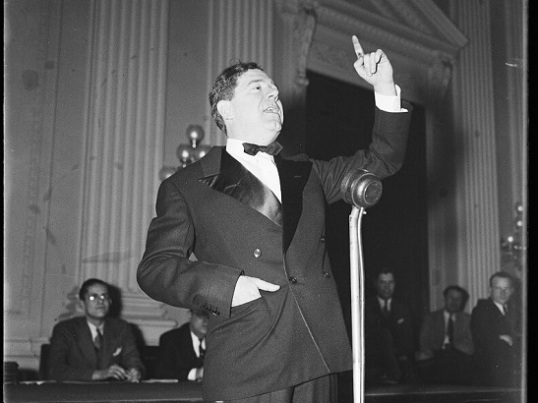
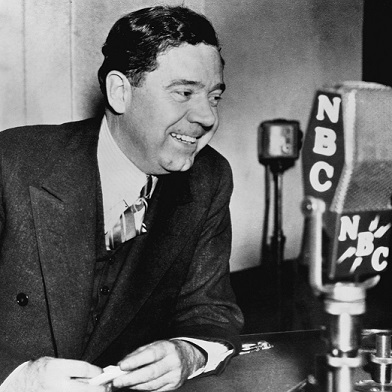
On September 10th, 1935, a Senator named Huey Long was shot and killed at the Louisiana State Capitol in Baton Rogue.

While it’s generally agreed that Carl Weiss, the son-in-law of a political opponent, approached Long, there’s still some debate as to whether or not Weiss was the one who shot Long. Did Weiss fire one shot at Long or was Long himself accidentally shot by his many bodyguards, all of whom opened fire on Weiss? (Weiss died at the scene, having been wounded at least 60 times.) There’s even some who argue that Weiss didn’t even have a gun on him when he approached Long and that Long’s bodyguards misinterpreted Weiss’s intentions. Or, as some more conspiracy-minded historians have suggested, perhaps Long’s bodyguards were themselves paid off by one of Long’s many enemies. With Huey Long, anything was possible.

Huey Long has been described as being an American dictator, a man who ran for office as a populist and who, as governor and then senator, ruled Louisiana with an iron fist. His slogan was “Every man a king,” and he promoted a platform that mixed Socialism with redneck resentment. (In modern terms, he mixed the vapid but crowd-pleasing rhetroic of AOC with the bombastic but calculated personal style of Donald Trump.) He often played the flamboyant buffoon but he also knew how to reward his friends and punish his enemies. At the time of his death, he was planning to run for President against FDR. It’s said that, in typical Long fashion, he planned to run as a third party candidate and draw away enough votes from Roosevelt to allow Republican Alf Landon to win. Then, in 1940, Long would run for the Democratic nomination and send President Landon back to Kansas.
Huey-Long-radio-3000-3x2gty-5c2934d246e0fb00012da4a1

Whether his plan was feasible or not, they came to an end with his death. However, his legacy continued as members of the Long family dominated Louisiana politics for decades to come. Huey’s brother, Earl, served as governor of Louisiana for several contentious terms. Huey’s son, Russell, spent nearly 40 years in the Senate and, as chairman of the Finance Committee, was one of the most powerful men in the country. As late at 2020, Huey’s third cousin was serving in the Louisiana Senate. In the past few years, both Donald Trump and Bernie Sanders have been compared to Huey Long. Of course, if Huey were alive today, he’d probably be very popular online. Political Twitter has never met an authoritarian that it couldn’t make excuses for.

Among those who were fascinated by the life and death of Huey Long was a Southern poet and novelist named Robert Penn Warren. Warren used Long as the basis for Willie Stark, the man at the center of the novel All The King’s Men. In the novel, Stark is a classic and tragic American archetype, the man of the people who loses his way after coming to power. Stark starts the book as an idealist who wants to make life better for the poor but who, as he works his way up the political ladder, loses sight of why he first entered politics in the first place. He goes from fighting for the people to fighting only for himself. The book was controversial but popular and won the 1947 Pulitzer Prize. In later interviews, Warren often said that All The King’s Men was never meant to be a book about politics but instead a book about two men, Willie Stark and reporter Jack Burden, losing their way during the tumult of the Great Depression.  Regardless of Warren’s intentions, most readers and critics have focused on the book as a cynical look at American politics and the authoritarian impulse.

All-the-Kings-Men-1949

Considering the book’s popularity, it’s not surprising that All The King’s Men was turned into a movie just three years after it was published.  Directed by Robert Rossen and starring a perfectly cast Broderick Crawford as Willie Stark, the film won the Oscar for Best Picture of 1949.  Just as with the book, the film was considered to be controversial.  Many claimed that the film’s cynical portrayal of American politics was the equivalent of supporting communism, despite the fact that both the novel and the original film present Stark as being the epitome of the hypocritical Marxist dictator.  Indeed, if any character would have inspired audiences in 1949 to distrust socialism, it would have been a faux populist like Willie Stark.  Still, John Wayne was so offended by the book and the script that he very publicly turned down the role of Willie Stark.  That was all the better for Broderick Crawford, who won an Oscar playing the role.  When seen today, the original All The King’s Men holds up surprisingly well, as does Crawford’s lead performance.  Filmed in harsh black-and-white and featuring a cast of cynical, tough-talking characters, it’s a political noir.

Those who found the 1949 version of All The King’s Men to be dangerously subversive obviously had no idea what was in store for them and the country over the next couple of decades.  There’s a reason why the best-known book about the downfall of Richard Nixon was called All The President’s Men.  By the start of the current century, with all of the political corruption that was happening in the real world, the flaws and crimes of Willie Stark seemed almost quaint by comparison.  In 2006, with George W. Bush serving his second term, America embroiled in two unpopular wars, and the economy looking shaky, it was decided that it was time for a new version of the story of Willie Stark.

This version was directed by Steven Zaillian, the screenwriter whose credits included Schindler’s List, Gangs of New York, Hannibal, and American Gangster.  The role of Willie Stark was played by Sean Penn, who was both an Academy Award winner and an outspoken critic of George Bush.  (And, make no mistake about it, the new version of Willie Stark would be as much based on Bush as he was on Huey Long.)  Jude Law played Jack Burden, the reporter who narrated the story of Stark’s rise and fall.  Kate Winslet, Anthony Hopkins, James Gandolfini, Patricia Clarkson, Mark Ruffalo, Jackie Earle Haley, and Kathy Baker all had supporting roles.  This was a cast full of Oscar nominees and, indeed, the film’s trailer had that portentous, “the movie is very important and award-worthy” feeling to it that studios go with whenever they’re trying to convince audiences that they have an obligation to see a film, regardless of how boring or annoying it may look.  Entertainment Weekly predicted that All The King’s Men would be an Academy Award contender. For nearly two months, one could not see a movie at the Dallas Angelika without also seeing thee trailer for All The King’s Men.  It was a movie that was due to arrive at any minute and it was coming with an awful lot of hype.

And then, the strangest thing happened.  The film itself kind of disappeared.  It arrived and then it promptly got lost.  The reviews were overwhelmingly negative.  Audiences did not turn out to see the film.  It was a box office bomb, one that pretty much ended Steven Zaillian’s career as a director.  The film played for a week in Dallas and then left the city’s movie screens.  Even if I had been planning on seeing the film when it was originally released, I wouldn’t have had the opportunity.  The Gods of cinema, politics, and Southern accents were conspiring to protect me from suffering through a bad movie and I guess I should be thankful.  There’s nothing that makes me cringe more than hearing a bad Southern accent in a movie and the trailer for All The King’s Men was full of them.

Way back in November of last year, I noticed that the 2006 version of All The King’s Men was available on Encore On Demand.  At the time, I had politics on my mind.  The Virginia and New Jersey gubernatorial elections had bee held earlier that week.  Biden’s huge infrastructure bill had passed the House on the very same night that I came across the film.  Hell, I figured, could watching Sean Penn as Willie Stark be any worse than watching Joe Biden try to give a speech from the Oval Office?  So, I decided to give the movie a chance and I quickly discovered that watching Sean Penn’s Willie Stark was a lot worse.

In All The King’s Men, Sean Penn gives the type of bad performance that can only be given by a good actor.  Penn yells and grimaces and barks out order like the villain in a badly dubbed Bollywood movie.  When he watches a dancer, he doesn’t just look at her.  Instead, he stares with all the intensity of a cartoon wolf who has just spotted Little Red Riding Hood.  There’s nothing subtle about Penn’s performance, least of all his overbaked accent.  The only thing wilder than Penn’s accent is his hair, which often seems to be standing up straight as if he’s just removed his fingers from an electrical socket.  It’s a performance that is heavy on technique but empty on substance.  In both the book and the original film, Willie Stark is flamboyant in public but cool and calculating in private.  In the remake, Penn yells and sweats and jumps around and comes across as being so desperate that it’s hard to buy into the idea that anyone would believe a word that he said.  Broderick Crawford’s Willie Stark was believable because Crawford, with his bulky build and his plain-spoken manner, came across as being a real human being.  One could imagine voters looking at Crawford and believing that he was just like them.  Sean Penn, on the other hand, comes across like a rich man’s version of a poor man.  Penn is too obviously condescending to be an effective populist.  Voters will forgive a lot but they’ll never forgive a politician who openly talks down to them.

As for the rest of the cast, they’re a very talented group but not one of them is convincingly cast.  In fact, many of them give career-worst performances.  Anthony Hopkins does his usual eccentric routine but it doesn’t add up too much because the audience never sees him as being anything other than Anthony Hopkins using a rather spotty Southern accent.  When Hopkins’s character dies, it’s not a tragedy because the character himself never feels real.  Instead, you’re juts happy that Hopkins collected a paycheck.  Kate Winslet seems to be bored with the role of Stark’s mistress.  Mark Ruffalo is dazed in the role of Winslet’s brother.  As Jack Burden, Jude Law seems as lost as anyone, which wouldn’t be problem if not for the fact that Jack is the one narrating the film.  When your narrator is lost, you’re in trouble.

There’s really only two members of the cast who escape the film unscathed.  Jackie Earle Haley is properly intimidating as Stark’s devoted bodyguard.  Haley doesn’t get many lines but one look at his disturbed eyes tells you all you need to know about how far he’ll go to protect his boss.  On the other hand, James Gandolfini gets several lines and he does such a good job of delivering them and he plays the role of a corrupt political boss with such a perfect combination of good humor and cold pragmatism that you have to wonder just how much All The King’s Men would have been improved if Gandolfini had played Willie Stark instead of Sean Penn.

Steve Zaillian’s direction involves a lot of soft-focused flashbacks and several visual references to the Nuremberg rallies.  Just as with Penn’s performance, there’s nothing subtle about Zaillian’s direction, despite the fact that the story itself is so melodramatic that it calls for the opposite of a heavy-handed approach.  One wonders what exactly Zaillian was trying to say with his version of All The King’s Men, which presents Willie Stark as being a monster but still as the audacity to end with a clip of him giving a rousing campaign speech.  Again, the problem is that we never buy into the idea that Willie Stark was ever sincere in his desire to help the common man.  Everything about both Penn’s performance and Zaillian’s direction serves to suggest that, from the start, Stark viewed them as just being a means to an end.  Ending the film with a flashback of Willie giving a campaign speech is about as moving as a friend from high school contacting you on Facebook and then trying to get you to take part in a pyramid scheme.  There’s no sincerity to be found in any of it.

In the end, it’s a film of overheated performances and meticulously shot scenes that all add up to very little.  There are a few moments where Sean Penn’s body language and his vocal inflections suggest that he’s trying to channel George W. Bush but there’s nothing particularly shocking or subversive about that.  In 2006, every movie and TV show had to find a way to take a swipe at Bush and Penn’s never been particularly reticent when it comes to broadcasting his politics.  Though All The King’s Men was executive produced by political consultant James Carville, there’s very few moment in the film that feel authentic.  It’s like a high school senior’s view of politics.

All The King’s Men came and went quickly.  Fortunately, everyone was able to move on.  Steven Zaillian has not directed another film but remains an in-demand scriptwriter.  Sean Penn, Anthony Hopkins, and Kate Winslet all won Oscars after appearing in this film (though, it should be noted, none of them won for this film).  Mark Ruffalo and Jude Law went on to join the Marvel Universe.  Jackie Earle Haley continues to be a much-respected character actor.  Tragically, James Gandolfini is no longer with us but his performance as Tony Soprano will never be forgotten.  The second version of All The King’s Men wasted a lot of talent but, fortunately, talent always finds a way to survive.

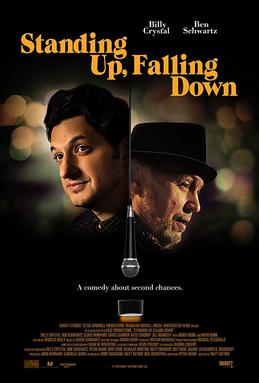
The Films of 2020: Standing Up, Falling Down (dir by Matt Ratner)


Having failed to achieve his dream of becoming a comedy superstar in Los Angeles, 34 year-old Scott (Ben Schwartz) returns home to Long Island.  How bad are things for Scott?  Consider this:

When he left for Los Angeles, he left behind Becky (Eloise Mumford), despite thinking that he was in love with her and despite her asking him to stay.  While he was in L.A., he purposefully chose to not respond to her attempts to get in contact with him because he was determined to move on with his life.  Now, he’s back and he’s wondering what could have been.  As for Becky, she’s now an acclaimed photographer and she’s married to a surfer named Owen (John Behlman).

All of his old friends are now married and have families and don’t really have time to hang out with a 34 year-old who is still struggling with adulthood.

When Scott returns home, he moves back in with his parents.  His mother (Debra Monk) spoils him while his father (Kevin Dunn) barely says a word to him.  Scott announces that, even though he knows he needs a job, there’s no way that he’s going to go to work at his father’s lumberyard.  His father says that’s not a problem because he wasn’t planning on offering Scott a job in the first place.

Scott’s sister (Grace Gummer) is also living at home and is stuck in a less than glamorous job but she’s dating Ruis (David Castaneda), an extremely charming security guard who is loved by everyone who meets him.

And, to top it all off, Scott has developed a rash of some sort in his arm!

In fact, the only positive development in Scott’s life is that he’s made a new friend.  Marty (Billy Cyrstal) is a bit older and he’s an alcoholic but he also has the best weed and he’s full of good advice.  On top of that, Marty’s also a dermatologist and is willing to just give Scott the medicine for his arm free of charge.  Marty becomes a bit of a mentor to Scott.  Of course, Marty has demons of his own.  His first wife committed suicide and his second wife died of stomach cancer.  His own son refuses to speak to him and won’t allow him to see his grandson.  Marty’s drinking isn’t the quirky character trait that it first appears to be.  Instead, it’s what he does to deal with the pain and the guilt that he carries around with him every day.

Standing Up, Falling Down is an occasionally effective and occasionally awkward mix of comedy and drama.  As a character, Scott can occasionally be a bit hard too take.  It’s one thing to have trouble accepting the fact that you’re getting older while it’s another thing to be in your mid-thirties with the maturity level of a 13 year-old.  At times, Scott seems to be so helpless that you find yourself wondering how he survived in Los Angeles for as long as he did.  Fortunately, Ben Schwartz is an appealing actor and the film doesn’t make the mistake of trying to idealize Scott’s lack of direction.  You find yourself sincerely hoping that Scott will finally manage to get his life together, even though you know he probably won’t.

The big surprise of the film is Billy Crystal, who gives a genuinely good and complex performance as Marty.  Like Crystal, Marty is a bit of an attention hog and occasionally seems a bit too satisfied with his jokes.  However, the film also explores why someone like Marty always feels the need to be “on.”  The best moments in the film are the ones where Marty quietly considers why his life has reached the point that it has.  In the film’s quieter moments, there’s a lot of sadness in Crystal’s performance.  The scene where he unsuccessfully tries to get his son to talk to him is absolutely heart-breaking, all the more so because Cyrstal downplays the scene’s potential for sentimentality.  Right when you’re expecting schmaltz, Crystal instead holds back.  With just the slightest change in his facial expression, Crystal immediately tells us everything that’s going on inside of Marty’s head.  It’s a truly good performance.

Standing Up, Falling Down is a low-key, occasionally effective dramedy.  Not all of it works (I could have done without Scott harassing his sister’s co-worker at the pretzel place) but it has a good heart and an unexpectedly great performance from Billy Crystal.

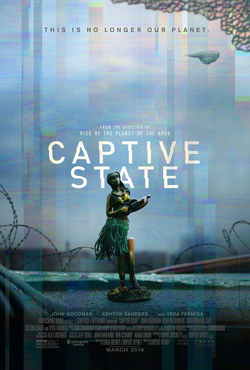
Icarus File No. 4: Captive State (dir by Rupert Wyatt)


Does anyone remember Captive State?

Captive State came out in March and, before it was released, it seemed like it had the potential to be something special.  The trailer looked good.  The cast was impressive.  Perhaps even more importantly, the film was directed by Rupert Wyatt, who did such a good job with Rise Of The Planet Of The Apes.  Surely, if anyone had the talent to create a convincing film about life under an alien dictatorship, it would be Rupert Wyatt!

In fact, my only reason for concern had to do with when the film was being released.  March seemed like a very strange time to be releasing a big “event” film.  Don’t get me wrong.  A March release isn’t as bad as a January or even a February release.  I mean, unless your film is a romantic comedy, you definitely do not want it to be released in either one of those two months.  Those months are where studios dump their worst films so that they can die a quiet death.  March, on the other hand, is when the studio releases films that have the potential to be a success but which they’re still not expecting to set the world on fire.

Of course, there have been exceptions to that rule, as both Wes Anderson (Grand Budapest Hotel) and Jordan Peele (Get Out) can tell you.  So, as Captive State’s release date approached, we were left to wonder.  Would this be another case of a film being better than it’s release date or would this be just another forgettable but not terrible movie that the studio probably spent a bit too much money on?

Captive State, sadly, turned out to be more of a case of the latter than the former.

The film opens with Chicago being invaded in 2019.  Significantly, unlike other recent invasion films, this one doesn’t spend too much time on the invasion itself or Earth’s initial attempts to fight back.  Instead, it jumps forward eight years, to 2027.  The aliens are in control of Earth, though the aliens themselves claim to only be “legislators” who are governing the planet for our own good.  While the majority of Earthlings just seem to be resigned to accepting being conquered as their new normal, there are a few resistors.  There’s also quite a few collaborators.  The tricky part of life in 2027 is figuring out who you can and can not trust.

There’s a lot of characters in Captive State and, at times, it can be difficult to keep track of how everyone’s related and who is working for who.  However, that seems to be intentional on the film’s part.  Rather than telling a conventional tale of alien conquest, Captive State sets out to be a serious exploration of what life would be like for the people living under the thumb of not just an intergalactic dictatorship but actually any dictatorship.  The Legislators rule by fear.  The collaborators have their own individual reasons for collaborating but, now that they’ve declared which side they’re on, there’s no going back for them.  One way or another, they’ve sealed their fate.  The same can be said for those in the rebellion.  Meanwhile, most people are just trying to not get caught in the crossfire.

And the thing is …. you want the film to work.  It’s an intriguing idea and how can you not respect that fact that Wyatt wanted to try to do something a little bit different with his story of alien invasion?  But sadly, the film never works the way that you’re hoping it will.  The film tries to do a lot in just 109 minutes.  In fact, it probably tries to do too much and, as a result, there’s little time to get to know the characters, the majority of whom come across as being underwritten and with murky motivations.  Captive State hinges on the actions of a detective played by John Goodman but the film itself doesn’t seem to be sure of who Goodman’s supposed to be.  Hence, the film’s final twist seems to come out of nowhere.  It’s hard not to feel that the ideal way for Captive State to have told its story would have been as a 10-episode miniseries on HBO.  Trying to stuff all of this into under two hours of running time just doesn’t work.

And it’s a shame, that it doesn’t.  Ambition should never be faulted.  If only the results, in this case, lived up to the ambition.

Previous Icarus Files:

  1. Cloud Atlas
  2. Maximum Overdrive
  3. Glass

Horror Film Review: Stir of Echoes (dir by David Koepp)


It’s blue collar horror!

As the 1999 film Stir of Echoes shows, ghost don’t only haunt the rich and famous.  Sometimes, they haunt ordinary guys who live paycheck to paycheck and just want to be able to take some pride in having a home that’s free of secrets and evil spirits.  “Ghosts, they’re a real pain the ass sometimes, y’know what I’m saying?”

For instance, in Stir of Echoes, Kevin Bacon plays Tom Witzky.  Tom is a phone lineman who lives in Chicago.  Tom wishes that he could have been something more than a phone lineman.  He wishes that his band could have taken off and he could have been a rock star.  But, now Tom’s reached his 40s, he’s got a wife named Maggie (Kathryn Erbe), a son named Jake (Zachary David Kope), and another child on the way.  So, he works hard and then he comes home and he has a beer and sometimes, he might go to a high school football game.  It’s not a glamorous life but at least it’s something with which Tom can be happy.

Of course, then Tom makes the mistake of going to a party that’s being given by his friend, Frank (Kevin Dunn).  When Maggie’s sister-in-law, Lisa (Illeana Douglas), says that she knows how to hypnotize people, Tom scoffs and challenges her to hypnotize him.  Lisa does so and, the next thing that Tom knows, he’s sitting there with tears in his eyes and everyone laughing at him.  Even though it was only a few seconds to Tom, he was apparently under hypnosis for quite a while.  He talked about being bullied as a child.  He stuck a safety pin through his hand.  He even accepted Lisa’s suggestion that he “try to be more open-minded.”  Upset over being revealed to be vulnerable, Tom leaves the party.

Tom soon learns what it means, in his case, to be more open-minded.  Soon, Tom is hearing voices and seeing what appears to be the ghost of a teenage girl in his house.  He starts to have disturbing and violent visions.  When Tom tries to pretend that nothing’s wrong, Jake tells him that it’s okay because he can see the ghost as well.

Growing obsessed with his visions, Tom is soon tearing his own house apart in an attempt to discover what the spirits are trying to tell him.  Is Tom truly seeing ghosts or, as so many in the neighborhood suspect, is he losing his mind?

When I first started rewatching Stir of Echoes for this review, I have to admit that I was a little bit concerned.  Kevin Bacon is one of the most likable actors on the planet and this film is usually cited as featuring one of his best performances but, in the first few scenes, he seemed to be almost going a little overboard with the whole “I’m just a working class guy” routine.  But, as the film progressed, I actually came to realize that Kevin Bacon was giving a brilliant performance.  The fact that he played Tom as being so rational and almost boring during the first half of the movie made it all the more effective when he started tearing his house apart during the second.  During those scenes, Bacon plays Tom as not only someone obsessed with discovering the truth but also as someone who just wants his life to be normal again.  If he has to destroy his life to get it back, that’s what he’s going to do.

(That said, my favorite character in the film was Lisa, mostly because we share the same name and she was played by the brilliant Illeana Douglas.  The thing I loved about Lisa is that, when she was informed that she had messed up Tom’s mind, she was both sorry and proud of herself at the same time.)

Stir of Echoes is still a frightening film, one with plenty of jump scares and a subtext of paranoia as it’s revealed that both the neighborhood and Tom’s friends are full of secrets.  Because they both came out in 1999, it often gets compared to The Sixth Sense.  I like The Sixth Sense but I actually prefer Stir of Echoes, just because it’s not quite as self-important as M. Night Shyamalan’s film.  The makers of Stir of Echoes didn’t set out to change the world.  They just wanted to make a scary ghost story and they succeeded.


Film Review: Ashby (dir by Tony McNamara)


Ashby

At first glance, Ed Wallis (Nat Wolff) seems like your typical nerdy high school student.  An introvert who has a hard time making friends, Ed is a talented writer but what he really wants to do is play for his school’s legendary football team.  One thing that sets Ed apart from cinematic nerds of the past is that he is not lacking in confidence.  He’s shy but he understands what he’s capable of accomplishing.  He knows he’s a good writer.  He also know that he has the potential to be a good football player.  When he crashes the team’s practice and manages to talk Coach Burton (Kevin Dunn) into giving him a shot, Ed proves that he’s the faster than anyone else on the team.  And when one of the other players starts to bully him, Ed has no trouble convincing the quarterback to stand up for him.  After all, as Ed explains it, if Ed’s not in a good mood than he’s not going to catch anything that the quarterback throws.  And if Ed doesn’t make those catches, the quarterback won’t have a good game and, if he doesn’t have a good game, he won’t get any scholarship offers.

At first, Ed’s determination to play football horrifies both his mother, June (Sarah Silverman), and his best (and only) friend, Eloise (Emma Roberts).  June is a single mother who terrifies Ed by openly discussing her sex life with him.  Eloise, meanwhile, is a self-styled misfit who is nicknamed “weird girl” by Ed’s fellow jocks.  It’s only after they see Ed playing on the field (and, not coincidentally, making the winning catch), that June and Eloise start to support Ed’s athletic dreams…

Meanwhile, Ed is getting to know his neighbor, Ashby (Mickey Rourke).  Ashby is a former CIA agent who has just been informed that he has only a few months to live.  Ed needs to talk to an old person for a class assignment.  Ashby needs someone to drive him around town.  At first, Ashby refuses to open up to Ed but slowly, Ashby starts to lower his defenses.  Ashby is soon coming to Ed’s football games, flirting with June, and serving as a substitute father figure.

Of course, Asby is also murdering people.  Though Ed doesn’t know it, the reason that Ashby keeps asking him for a ride is because Ashby is determined to track down and kill three men who he feels betrayed him.  Ashby does this with the full knowledge that eventually, the CIA is going to send somebody to take him out…

Ashby is a mix of genres that don’t really go together.  It’s a gentle coming-of-age comedy that’s also a violent revenge thriller.  The end result is an extremely messy film that never finds a consistent tone.  And yet, at the same time, that inconsistency is a part of the film’s strange charm.  The film is so determined to make its oddball mix of genres work that you actually do find yourself rooting for it, even if it doesn’t quite succeed.  Ashby is one of those films that shouldn’t work and yet, somehow, it does.

Some credit for that has to go to director Tony McNamara.  He directs with a good eyes for detail (the satiric portrayal of both high school and suburbia feels totally authentic) and he keeps the action moving at such a quick pace that you really don’t have time to obsess over the film’s mishmash of themes and tones.

Even more credit, however, I think has to be given to the cast, all of whom show an admirable commitment to bringing their eccentric characters to life.  Mickey Rourke’s plays Ashby as if he might be a distant relation to his character from The Wrestler while Sarah Silverman is so perfectly cast as June that you occasionally find yourself wishing that the entire film could be just about her.  I’ve lost track of how many times Emma Roberts has been cast as a quirky high school girlfriend but she still brings as much depth as she can to her underwritten character.

Ultimately, though, the film belongs to Nat Wolff, who was so good (as was Emma Roberts) in last year’s Palo Alto.  Wolff’s character in Ashby may not have much in common with the sociopath that he played in Palo Alto or the blind friend he played in The Fault In Our Stars, but Wolff brings a sly charm to all three roles and that charm convince the audience to not only accept but even embrace some of the film’s inconsistencies.  Nat Wolff truly holds Asbhy together, helping the film to survive some of its more uneven moments.

Ashby has been given a limited theatrical release and is available through VOD.  It’s definitely an uneven film but it’s worth seeing.