Horror Film Review: The Survivor (dir by David Hemmings)


The 1981 film, The Survivor, opens with a group of school children watching as a plane crashes in the distance.  Of the 301 people on the plane, 300 die.  Somehow, the only survivor is the pilot, David Keller (Robert Powell).  It’s rare for a pilot to be the sole survivor, especially in a crash as severe as the one in this film.  Even more shocking, David walks away without a scratch on him or any memory of what happened in the minutes before the crash.

Though the airline wants to keep David hidden away until after it has determined what caused the crash, David insists on helping with the investigation.  He is haunted by strange visions and the sound of screaming passengers.  He has to know if the crash was his fault or if there was a bomb on the plane.  While the tabloid press tries to take his picture, the families of the victims blame him for the crash.  “There he is,” one angry woman shouts at a funeral service that is overseen by Joseph Cotten (in his last film role), “the pilot who walked away!”

When one of the tabloid photographers gets a little bit too aggressive in his attempts to take David’s picture, he finds himself pursued by a ghostly apparition of a little girl.  The photographer is so frightened of the little girl that he stumbles in front of a train, which has to rank right up there as one of the dumbest ways that someone can die in a horror movie.  Later, the photographer’s girlfriend tries to look at one of the pictures of David and her hand is promptly chopped off by a paper cutter.  That’s not quite as bad as stumbling in front of a train.

As David tries to understand what is happening, he realizes that he’s being followed by a woman named Hobbs (Jenny Agutter).  Hobbs says that she is a medium.  She witnessed the crash and now, she’s in contract with the spirits of the dead.  At one point, David and Hobbs suddenly start trying to strangle each other.  They manage to break free of whatever has possessed them but it’s obvious that these spirits are not fooling around.  (That said, the attack begins and ends so abruptly that, for those of us watching, it inspires more confusion than fright.)

The idea behind The Survivor is an intriguing one.  The film was directed by David Hemmings, the British actor who is probably best-remembered for starring in the 60s classic, Blow Up and in Dario Argento’s classic Deep Red.  Along with co-founding Hemdale Films, Hemmings also directed a handful of movies.  Unfortunately, intriguing premise aside, The Survivor is not one of Hemmings’s better directorial efforts.  There are a few effective visuals and Jenny Agutter is well-cast as Hobbs but the film’s pace is extremely slow and Robert Powell seems to be more bored than enigmatic as the title character.  The film’s plot calls out for an all-out grindhouse approach.  Hemmings’s instead gives us a stately and rather self-important film that ultimately feels like a lesser episode of some obscure 70s anthology show.

That said, this film does feature Joseph Cotten in his final film appearance.  He only has two scenes but he brings a quiet dignity to the role of the Priest.  The film doesn’t really work but Joseph Cotten and Jenny Agutter give performances that survive the wreckage.

Retro Television Review: The Love Boat 4.23 “The Duel/Two For Julie/Aunt Hilly”


Welcome to Retro Television Reviews, a feature where we review some of our favorite and least favorite shows of the past!  On Wednesdays, I will be reviewing the original Love Boat, which aired on ABC from 1977 to 1986!  The series can be streamed on Paramount Plus!

This week, Hollywood royalty boards the Love Boat!

Episode 4.23 “The Duel/Two For Julie/Aunt Hilly”

(Dir by Ray Austin, originally aired on March 14th, 1981)

Who is Aunt Hilly?

She’s Olivia de Havilland!

And who is Aunt Hilly’s latest husband, Col. Von Ryker?

He’s Joseph Cotten, making his final screen appearance before retiring from acting!

Even for a show that was known for featuring stars from Hollywood’s Golden Age, de Havilland and Cotten are welcome additions to this episode of The Love Boat.  They bring a lot of class to the ship, both as themselves and as the characters that they’re playing.  It’s not just all of the wonderful Hollywood history that they bring with them.  It’s also that they both give charming performances, showing that they still had the screen presence that made them stars to begin with.

Hilly is Captain Stubing’s aunt, a wealthy woman who has devoted so much of her life to work that she missed out on spending much time with her family.  She wants to make up for the past by arranging for Vicki to attend an exclusive private school in Switzerland.  Captain Stubing is reluctant but ultimately, he agrees that it would be best for Vicki to be able to have friends her own age and to get a formal education as opposed to just receiving lessons from the occasionally mentioned but never-seen tutor who apparently lives on the Love Boat.

However, Col. Van Ryker knows that Vicki would be happier on the boat and that Hilly is just trying to deal with her own guilt over her strained relationship with her son, Conrad.  With the Colonel’s gentle help, Hilly realizes that it would be better for Vicki to stay with Captain Stubing.

Now, to be honest, I do kind of wonder if it’s a good idea for Vicki to live on the boat.  I mean, does she really have any friends outside of the members of the crew, all of whom are much older than her?  Personally, I think going to school is Switzerland and spending her summers on the Love Boat would have been a great idea.  But no matter!  This was a sweet story.  What I really appreciated is that, even though they were on opposite sides, both the Captain and the Aunt had the best of intentions and motivations.  It would have been easy to just portray Hilly as being a snob who thought living on a cruise ship was beneath the dignity of a Stubing.  Instead, she was a genuinely nice woman trying to do what she felt was the right thing.  Gavin MacLeod, Jill Whelan, Olivia de Havilland, and Joseph Cotten all did wonderful work with this story.

The other two stories were overshadowed by Cotten and de Havilland.  In the sillier of the two, Linda Cristal played a woman who tried to make her husband jealous by flirting with Doc Bricker.  Her husband (Alejandro Rey) reacted by challenging Doc to a duel.  Isaac and Gopher tried to convince the husband that Doc was an experienced and deadly duelist.  Again, it was just as silly as it sounds.

Meanwhile, Julie had two men (Ken Kercheval and Dack Rambo) hitting on her.  The two men were also competing to be the new vice president of Don Ameche’s company.  In the end, Julie remained single and good for her.

One silly story.  One boring story.  And one story that was so good that the other two stories didn’t matter.  This was a great cruise.

Scenes That I Love: Joseph Cotten and Teresa Wright in Shadow of a Doubt


On this date in 1905, the great actor Joseph Cotten was born in Petersburg, Virginia.  A longtime friend and collaborator of Orson Welles, Cotten was one of the most dependable leading men of the 40s and 50s, an actor with the charisma of star and the talent of an artist.

Today’s scene that I love comes from Alfred Hitchcock’s 1943 masterpiece, Shadow of a Doubt, and it features Teresa Wright and Joseph Cotten.  Wright plays Charlie.  Cotten plays her beloved uncle, who is also named Charlie and who might very well be a serial killer.  In this scene, Uncle Charlie drags his niece to a seedy bar, where he confesses that, as she earlier deduced, he is a suspect in a murder investigation.  With a mixture of charm and intimidating, Charlie tries to convince his niece to keep his secret to herself.

Retro Television Reviews: Fantasy Island 3.7 “The Wedding”


Welcome to Retro Television Reviews, a feature where we review some of our favorite and least favorite shows of the past!  On Tuesdays, I will be reviewing the original Fantasy Island, which ran on ABC from 1977 to 1986.  Almost entire show is currently streaming is on Youtube!

This week, Mr. Roarke gets married!

Episode 3.7 “The Wedding”

(Dir by Earl Bellamy, originally aired on November 3rd, 1979)

Helena Marsh (Samantha Eggar) and her son, Jamie (Paul John Balson), return to Fantasy Island!

The last time Helena visited the Island, she and Mr. Roarke ended up falling in love but Helena ended up leaving the Island so that she could return to the clinic that her late husband started in India.  However, Helena has now come back to the Island and she has only one fantasy.  She wants to marry Mr. Roarke!  Mr. Roarke is going to make her fantasy come true.  He’s so happy that he doesn’t even yell at Tattoo during this episode.

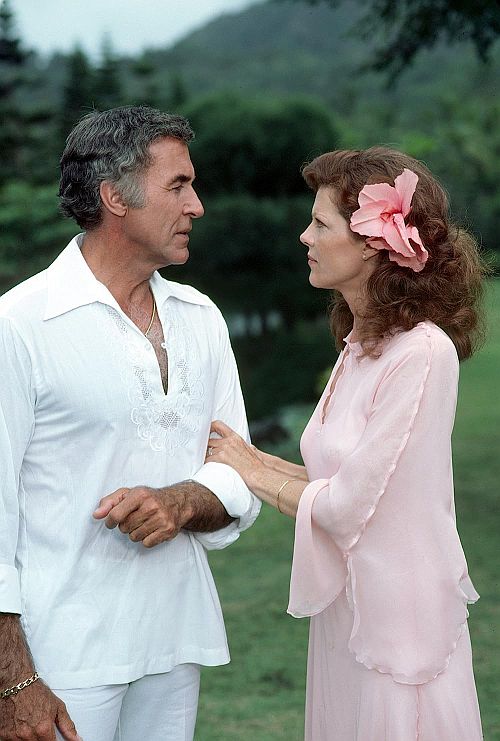
The entire Island is excited about the wedding.  However, Tattoo grows concerned when he hears Helena’s parents (played by Laraine Day and Joseph Cotten) talking about how unfair it is that Helena is dying and probably won’t even survive the honeymoon.  Tattoo goes to Mr. Roarke and discovers that Roarke knows that Helena is dying.  Mr. Roarke assures Tattoo that Helena has one of those television diseases where death comes with little to no suffering.  Unfortunately, Jamie does not yet know that his mother is ill.

The Hawaiian-style wedding goes off without a hitch.  Mr. Roarke and Helena honeymoon on the other side of the island and, for the first time since this series began, Ricardo Montalban actually gets to wear something other than a white tuxedo.  While Jaimie helps Tattoo train Chester the Chimpanzee to stop stealing things, Helena enjoys her last few days with Mr. Roarke.  Unfortunately, the honeymoon is cut short as Helena grows ill.  From his grandfather, Jamie learns that his mother is dying.  “If life were fair,” Mr. Roarke says with tears in his eyes, “there would be no need for Fantasy Island.”

Awwwww!  Seriously, what a terrifically sweet and sad episode this turned out to be.  Ricardo Montalban and Samantha Eggar had fabulous chemistry together and Montalban, in particular, really seemed to be energized by the chance to do something other than act mysterious and enigmatic.  In this episode, Mr. Roarke finally gets to show his emotions and when he cries, you’ll want to cry too.  Helena dies peacefully on the island, in the arms of Mr. Roarke.  Her final fantasy has been granted.

As for Jamie, he decides that he can’t stay on the Island.  He has to go back to school so that, someday, he can become a doctor just like his mother.

Oh my God, I’m like seriously tearing up just writing this recap.

This episode was Fantasy Island at its sentimental and emotional best.  This was a great episode, featuring outstanding performances from Ricardo Montalban and Samantha Eggar.  Would you believe that an episode of Fantasy Island could make a reviewer cry?  Well, this episode did.

The TSL Grindhouse: Guyana: Crime of the Century (dir by Rene Cardona, Jr.)


In the late 1970s, the Rev. Jim Jones was a very powerful man.

The leader of the California-based People’s Temple, Rev. Jones had made a name for himself as a civil right activist.  As a minister, he made it a point to reach out to the poor and to communities of color.  (It was said, largely by Jones, that he had been forced to leave his home state of Indiana by the Ku Klux Klan.)  Local politicians eagerly sought not only Jones’s endorsement but also the donations that he could easily raise from the members of the People’s Temple.  Though there were rumors that he was more of a cult leader than a traditional preacher, Jones was appointed chairman of the San Francisco Housing Authority.  Everyone from Governor Jerry Brown to San Francisco Mayor George Moscone appeared with Jim Jones at campaign events.  Among the national figures who regularly corresponded with Jim Jones were First Lady Rosalyn Carter and Vice President Walter Mondale.

Of course, what actually went on behind the closed doors of the People’s Temple was a bit of secret.  Jones was a self-proclaimed communist who claimed to have had visions of an upcoming nuclear war between the U.S. and Russia.  In his sermons, he often claimed that it would be necessary for both him and the rest of the People’s Temple to eventually leave the United States.  Jones spoke of enemies that were trying to destroy him, like the reporters who investigated Jones’s claim of being a faith healer and who followed up on reports that Jones was sexually exploiting both the women and the men who followed him.  Jones secretly started to make plans to leave the United States in 1973 but it would be another four years before he and a thousand of his followers arrived in Guyana.  The People’s Temple Agricultural Project sat in the jungle, isolated from oversight.  It was informally known as Jonestown.

Over the next year, Jonestown did not exactly thrive.  Rev. Jones demanded that his people work hard and he also demanded that they spend several hours a day studying socialism and listening to him preach.  Jones ran his commune like a dictator, refusing to allow anyone to leave (for their own safety, of course).  Anyone who questioned him was accused of being an agent of the CIA.  In the U.S, the families of Jonestown’s citizens became concerned and started to petition the government to do something about what was happening in Guyana.  A few people who did manage to escape from Jonestown told stories of forced labor, suicide drills, rape, and torture.  The People’s Temple claimed that those people were all lying and, because Jones still had his government connections, he was largely left alone.

Finally, in 1978, Congressman Leo Ryan, a Democrat who had a history of opposing the political establishment, flew down to Guyana so that he could see Jonestown for himself and also bring back anyone who wanted to leave.  Despite the efforts of Jones to disguise the truth about life in Jonestown, several people did ask to leave the colony with Rep. Ryan.  Jones sent his most loyal men to meet and open fire on Rep. Ryan’s entourage at a nearby airstrip.  Rep. Ryan and four others were shot and killed, making Ryan the first Congressman to be assassinated since 1868.  Nine others, including future Rep. Jackie Speier, were wounded in the attack.

Back at Jonestown, Jim Jones announced that his prophecy was coming true and that the imperialists would soon descend on Jonestown.  Though 85 of Jones’s followers managed to escape into the jungle, the other 909 residents of Jonestown subsequently died.  Though some showed signs of having been murdered by Jones’s followers, the majority committed suicide by drinking poisoned Flavor-Aid.  Jim Jones shot himself in the head.

The world was horrified and the term “drinking the Kool-Aid” entered the discourse.  And, of course, many filmmakers were inspired by the horrific events that happened in Jonestown.  Ivan Rassimov, for instance, played a Jim Jones-style cult leader in Umberto Lenzi’s Eaten Alive.  Meanwhile, Powers Boothe would win an Emmy for playing Jim Jones in a 1980 television miniseries called Guyana Tragedy.

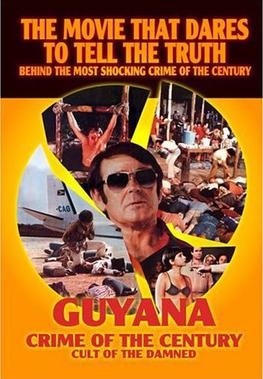
Guyana Tragedy is often described as being the definitive film about Jim Jones.  However, a full year before Guyana Tragedy aired, the Mexican director, Rene Cardona Jr., was in theaters with his own version of the Jim Jones story.  To anyone who is familiar with Cardona’s style of filmmaking, it’s perhaps not surprising that 1979’s Guyana: Crime of the Century did not win any awards.

Cardona’s film opens with a rather odd title card, explaining that, though the film is based on Jonestown, the names of certain characters “have been changed to protect the innocent.”  But if you’re going to start the film by announcing that it’s about the biggest news story of the past year, what’s the point of changing anyone’s name?  And for that matter, why is Jim Jones renamed James Johnson and his colony rechristened Johnsontown?  Jones was hardly one of the innocents, not to mention that he was dead and in no position to sue when the film came was released.  Why is Leo Ryan renamed Lee O’Brien, especially when the film portrays Ryan as being the type of hard-working and honest congressman that anyone would be happy to vote for?

The film opens with Rev. James “Johnson” (played by Stuart Whitman) giving a lengthy sermon about how it’s time for the congregation to move to Guyana, which he describes as being a Socialist paradise.  Oddly, in the film, the People’s Temple is portrayed being largely white and upper middle class whereas, in reality, the opposite was true.  Indeed, Jones specialized in exploiting communities that were largely marginalized by American society.  One reason why Jones’s claim of government persecution was accepted by the members of his church is because the People’s Temple was made up of people who had very legitimate reasons for distrusting the American government.

A few scenes later, Johnson is ruling over “Johnsonville.”  Since this is a Cardona film, the viewers are shown several scenes of people being tortured for displeasing Johnson.  A child is covered in snakes.  Another is shocked with electricity.  A teenage boy and girl are forced to kneel naked in front of Johnson as he announce that their punishment for trying to run away is that they will be forced to have sex with someone of Johnson’s choosing.  Once the torture and the nudity is out of the way, the film gets around to Congressman O’Brien (Gene Barry) traveling to the Johnsontown.  Since the audience already knows what’s going to happen, the film becomes a rather icky game of waiting for O’Brien to announce that he’s ready to go back to the landing strip.

Because the film has been released under several different titles and with several different running times, Guyana: Crime of the Century has gotten a reputation for being one of those films that was supposedly cut up by the censors.  I’ve seen the original, uncut 108-minute version of Guyana and I can tell you that there’s nothing particularly shocking about it.  Instead, it’s a painfully slow film that doesn’t really offer much insight into how Jim Jones led over 900 people to their deaths.  While Gene Barry make for a convincing congressman, Stuart Whitman gives a stiff performance as the Reverend Johnson.  There’s very little of the charisma that one would expect from a successful cult leader.  One gets the feeling that Whitman largely made the film for the paycheck.

Of course, Whitman was hardly alone in that regard  The film features a host of otherwise respectable actors, including  Yvonne DeCarlo, Joseph Cotten, John Ireland, Robert DoQui, and Bradford Dillman.  As well, Cardona regular Hugo Stiglitz appears as a photographer.  (Stiglitz is perhaps best known for starring in Nightmare City and for lending his name to a character in Tarantino’s Inglourious Basterds.)  Of the large cast, I appreciated the performances of Cotten and Ireland, who play Johnson’s amoral but well-connected attorneys.  (The characters are based on the Temple’s real-life attornes, Charles Garry and Mark Lane.  Lane also wrote the first JFK conspiracy book, Rush to Judgment.)  I also liked Yvonne DeCarlo’s performance as the most devoted of Johnson’s followers.  Even Bradford Dillman’s natural blandness was used to good effect as his character comes to represent the banality of evil when it comes time for him to start administering the Flavor-Aid.  But those good performances still can not overcome the film’s slow pace and the fact that the film didn’t bring any new insight to the tragedy.

The film sticks fairly close to what is believed to have actually happened at Jonestown but, in the end, it barely even works as an example of shameless grindhouse filmmaking.  It’s not even offensive enough to be enjoyable on a subversive level.  Instead, it was just a quick attempt to make some money off of the crime of the century.

Retro Television Reviews: The Screaming Woman (dir by Jack Smight)


Welcome to Retro Television Reviews, a feature where we review some of our favorite and least favorite shows of the past!  On Sundays, I will be reviewing the made-for-television movies that used to be a primetime mainstay.  Today’s film is 1972’s The Screaming Woman!  It  can be viewed on YouTube!

In this made-for-tv movie from 1972, the great Olivia de Havilland plays Laura Wynant. Laura is a wealthy woman who has just been released from a mental institution. She goes to her country estate to recuperate but, as soon as she arrives, she starts to hear a woman’s voice in the back yard.

“help me …. help me….” the voice cries.

Laura looks around and she soon realizes that the voice is coming from the ground! A woman has been buried alive in the backyard and will soon die if not rescued! At first Laura tries to dig up the woman on her own but her hands are crippled by arthritis. An attempt to get a neighborhood child to help her dig just leads to Laura being confined to her home, under doctor’s orders. No matter how much Laura tries to get the people around her to listen for the sound of the woman crying for help, everyone just assume that Laura must be imagining things.

Further complicating things is the fact that the person who put the woman in the ground is still out there. And, when he discovers that Laura has been hearing voices, he decides that maybe he needs to do something about both Laura and the screaming woman….

The Screaming Woman is an effective psychological thriller and, considering that it was made for early 70s network television, surprisingly suspenseful. If the film were remade today, I imagine it would try to keep us guessing as to whether or not Laura was hearing an actual woman or if it was all in her mind.  However, by revealing early on that Laura actually is hearing what she thinks she’s hearing, The Screaming Woman puts us right into Laura’s shoes and we share her frustration as she desperately tries to get someone — anyone — to take her seriously. It helps that Laura is played by Olivia de Havilland, who gives a very sympathetic and believable performance. De Havilland, who started her career appearing in Errol Flynn movies back in the 30s and who most famously played Melanie in Gone With The Wind, was one of the longest-lived stars of Hollywood’s Golden Age, living to the age of 104 and winning two Academy Awards for Best Actress.

The film is based on a short story by Ray Bradbury. In the story, it’s a little girl — as opposed to an old woman — who hears the voice. I haven’t read the short story so I don’t know how else it compares to this adaptation but, as a film, The Screaming Woman is an entertaining and creepy thriller and, when viewed today, it serves as a reminder of what a good actress Olivia De Havilland truly was.  She takes a simple thriller and turns it into a meditation on aging and the one person’s determination to do the right thing even when the entire world seems to be against her.

12 Oscar Snubs From the 1950s


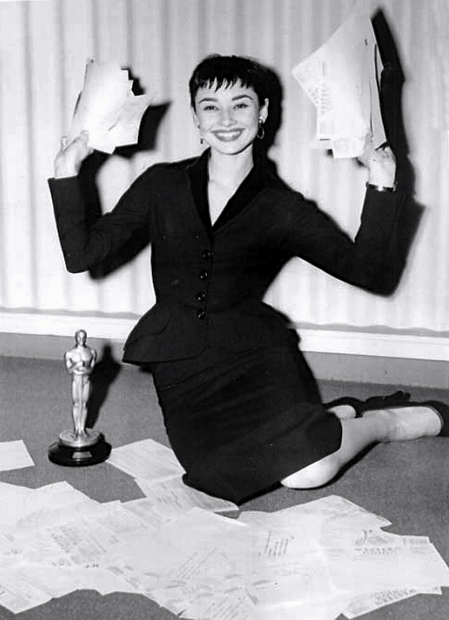
Audrey Hepburn and her Oscar.  At least the Academy didn’t snub her!

Continuing our look at the Oscar snubs of the past, it’s now time to enter the 50s!

World War II was over. Eisenhower was President. Everyone was worried about communist spies. And the Hollywood studios still reigned supreme, even while actors like Marlon Brando and James Dean challenged the establishment.  There were a lot great film released in the 50s.  There were also some glaring snubs on the part of the Academy.  Here’s twelve of them.

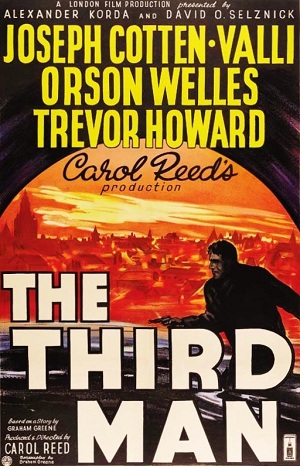
1950: The Third Man Is Not Nominated For Best Picture

….and Orson Welles was not nominated for Best Supporting Actor!  The Third Man received three Oscar nominations, for Director, Cinematography, and Editing.  The fact that Welles, Joseph Cotten, Alida Valli, and the film’s score were not nominated (and that King Solomon’s Mines was nominated for Best Picture instead of The Third Man) remains one of the more surprising snubs in Oscar history.

1952: Singin’ In The Rain Is Not Nominated For Best Picture

What the Heck, Academy!?  This was the year that The Greatest Show On Earth won the Best Picture Oscar.  Personally, I don’t think The Greatest Show On Earth is as bad as its reputation but still, Singin’ In The Rain is a hundred times better.

1953: Alan Ladd Is Not Nominated For Best Actor For Shane

How could Shane score a nomination for Best Picture without Shane himself receiving a nomination?

1954: Rear Window Is Not Nominated For Best Picture

Rear Window was not totally ignored by the Academy.  Alfred Hitchcock received a nomination for directing.  It also received nominations for Best Adapted Screenplay, Cinematography, and Sound.  However, Rear Window was not nominated for Best Picture and James Stewart, Grace Kelly, Raymond Burr, and Thelma Ritter all went unnominated as well.  Today, Rear Window is definitely better-remembered than the majority of 1954’s Best Picture nominees.  Certainly, it deserved a nomination more than Seven Brides For Seven Brothers and Three Coins in The Fountain.

1955: Ralph Meeker Is Not Nominated For Best Actor For Kiss Me Deadly

I guess I shouldn’t be surprised.  If the Academy wasn’t going to nominate Rear Window for Best Picture, there was no way that they would have nominated Ralph Meeker for playing a sociopathic private detective who, even if inadvetedly, helps to bring about the end of the world.

1955: Rebel Without A Cause Is Not Nominated For Best Picture or Best Actor

The 1955 Best Picture lineup was a remarkably weak one.  The eventual winner was Marty, a likeable film that never quite escapes its TV roots.  Picnic has that great dance scene but is otherwise flawed.  Mister Roberts was overlong.  Love Is A Many-Splendored Thing and The Rose Tattoo are really only remembered by those of us who have occasionally come across them on TCM.  Perhaps the best-remembered film of 1955, Rebel Without A Cause, received quite a few nominations but it was not nominated for Best Picture.  And while the Rebel himself, James Dean, was nominated for Best Actor, it was for his performance in East of Eden.  1955 was a strange year.

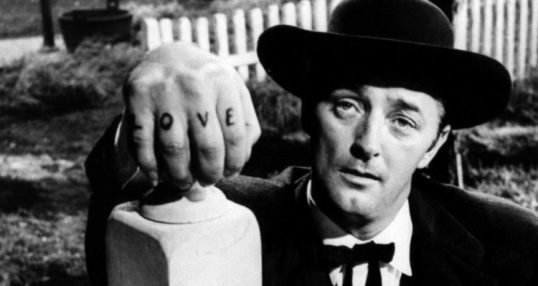
1955: Robert Mitchum Is Not Nominated For Best Actor For The Night of the Hunter

Robert Mitchum only received one Oscar nomination over the course of his entire career, for 1945’s The Story of G.I. Joe.  He deserved several more.  His performance as the villainous preacher in The Night of Hunter made Reverend Harry Powell into one of the most iconic film characters of all time.

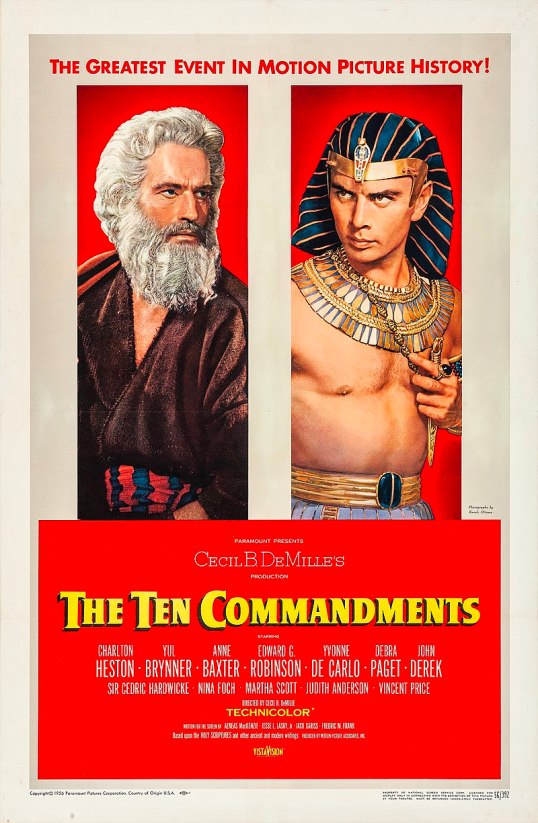
1956: Cecil B. DeMille Is Not Nominated For Best Director For The Ten Commandments

Cecil B. DeMille was only nominated once for Best Director, for 1952’s The Greatest Show On Earth.  DeMille, however, deserved to be nominated for The Ten Commandments.  As campy as DeMille’s films can seem today, he was an expert storyteller and that’s certainly evident when one watches The Ten Commandments, a film that holds the viewer’s attention for nearly four hours.  DeMille deserved a nomination for the Angel of Death scene alone.  The screams in the night are haunting.

1957: Henry Fonda Is Not Nominated For Best Actor For 12 Angry Men

With 12 Angry Men, Fonda did something that very few actors can.  He made human decency compelling.  One gets the feeling that, much like Tom Hanks in Captain Phillips, Fonda made it look so easy that the Academy took him for granted.

1958: Touch Of Evil Is Totally Ignored

Anyone who had researched the history of the Academy knows that there was no way that the 1950s membership would have ever honored Orson Welles’s pulp masterpiece, Touch of Evil.  That said, it still would have been nice if they had.  Touch of Evil has certainly go on to have a greater legacy than Gigi, the film that won Best Picture that year.

1958: Vertigo Is Almost Totally Ignored

Vertigo did receive nominations for Art Direction and Sound but Alfred Hitchcock, James Stewart, and the film itself were snubbed.

1959: Some Like It Hot Is Not Nominated For Best Picture or Best Actress

Some Like It Hot received 6 Oscar nominations, including nominations for Best Director, Best Actor, and Best Adapted Screenplay.  It did not receive a nomination for Best Picture and, sadly, Marilyn Monroe did not receive a nomination for Best Actress.  Much as with Henry Fonda in 12 Angry Men, one gets the feeling that the Academy took Monroe for granted.  It’s sad to realize that, while two actresses have been nominated for playing Marilyn Monroe, Monroe herself would never be nominated.

Agree?  Disagree?  Do you have an Oscar snub that you think is even worse than the 12 listed here?  Let us know in the comments!

Up next: Things get wild with the 6os!

Night of the Hunter (United Artists 1955; D: Charles Laughton)

10 Oscar Snubs From the 1940s


Ah, the 40s! For most of the decade, the world was at war and the Academy’s nominations reflected that fact. The best picture lineups alternated between patriotic films that encouraged the battle against evil and darker films that contemplated both the mistakes of the past and what threats might be waiting in the future.  With the Academy being even more aware than usual that films and awards could be used to send a message, the snubs continued.

1940: John Carradine Is Not Nominated For The Grapes of Wrath

John Carradine’s first credited film appearance was in 1930 but Carradine himself claimed that he had appeared as an uncredited extra in over 70 films before getting that first credit.  Carradine would continue to work until his death 58 years later.  John Carradine did so many films that he was still appearing in new releases in the 90s, years after his death.  He appeared in over 234 films and in countless television shows.  He was a favorite of not only Fred Olen Ray’s but also John Ford’s.

Unfortunately, Carradine was never nominated for an Oscar, despite the fact that he did appear in some classic films.  (He also appeared in a lot of B-movies, which is perhaps one reason why the Academy was hesitant to honor him.)  Personally, I think Carradine most deserved a nomination for playing “Pastor” Jim Casy in John Ford’s The Grapes of Wrath.  Carradine is ideally cast as the former preacher turned labor activist.  When he’s alive, he gives the Joads hope.  When he dies, both the Joads and the audience start to realize how difficult things are truly going to be.

1942: Ronald Reagan Is Not Nominated For Best Supporting Actor For Kings Row

Kings Row is an enjoyably over-the-top small town melodrama and future President Ronald Reagan is fantastic in the film, with his natural optimism providing a nice contrast to the truly terrible things that happen to him and his loved ones over the course of the film.  Reagan was not nominated for this performance, the one that both he and the most of the critics agreed was his best, but he should have been.

1943: Hangmen Also Die Is Not Nominated For Best Picture

Fritz Lang’s anti-Nazi classic was not nominated for Best Picture and only received two nominations (for Sound and Score).  That year, the Best Picture winner was another anti-Nazi classic, Casablanca.

1943: Shadow Of A Doubt Is Ignored

Today, it is recognized as one of Hitchcock’s best but, in 1943, Shadow of a Doubt couldn’t even score a nomination for Joseph Cotten’s wonderfully diabolical turn as Uncle Charlie.  One gets the feeling that the film’s satirical jibes at small town America and its theme of evil hiding behind a normal façade were not what the Academy was looking for at the height of World War II.  It’s a shame because, in many ways, Cotten’s Uncle Charlie was the perfect symbol of the enemy that the Allies were fighting.

1944: Tallulah Bankhead In Not Nominated For Best Actress For Lifeboat

Unlike Shadow of a Doubt, Hitchcock’s Lifeboat received several Oscar nominations.  However, Tallulah Bankhead was not nominated for Best Actress.  Perhaps the Academy was scared of what she might say if she won.

1944: Fred MacMurray and Edward G. Robinson Are Not Nominated For Double Indemnity

For all the nominations that this classic noir received, somehow neither Fred MacMurray nor Edward G. Robinson were nominated for their roles.  Both actors are brilliantly cast against type in this film.  MacMurray uses his trademark casual glibness to portray Walter Neff as being an arrogant man who is hardly as clever as he thinks that he is.  Meanwhile, Robinson’s more introspective performance leaves you with little doubt that, if anyone can solve this case, it’s him.  While Barbara Stanwyck was (rightfully) nominated, it’s had to believe that both MacMurray and Robinson were snubbed.

1946: Thomas Mitchell and Lionel Barrymore Are Not Nominated For Best Supporting Actor For It’s A Wonderful Life

As wonderful as James Stewart and Donna Reed are, it just wouldn’t be Bedford Falls without Uncle Billy and Mr. Potter!  Thomas Mitchell breaks your heart in the scene where he tries to remember what he did with the lost money.  And, for audiences who had just lived through the Great Depression, Lionel Barrymore represented every businessman who cared more about money than people.  It’s impossible to imagine the film without them …. or without Henry Travers, for that matter!  Seriously, very few films have received three best supporting actor nominations but It’s A Wonderful Life deserved to be one of them.

1948: Humphrey Bogart Is Not Nominated For Best Actor For The Treasure of the Sierra Madre

The Treasure of the Sierra Madre received four Oscar nominations.  Somehow, not one of those nominations was not for Humphrey Bogart.

1948 and 1949: Red River, Fort Apache, and She Wore A Yellow Ribbon Are Not Nominated For Best Picture

The public may have loved Westerns but the Academy largely shied away from them, with a few notable exceptions.  Howard Hawks’s Red River and John Ford’s Fort Apache and She Wore A Yellow Ribbon are today all recognized as being classic Hollywood films.  However, the Academy, then at the height of its bias towards “genre” films, didn’t honor any of them.

1949: James Cagney Is Not Nominated For Best Actor For White Heat

“Top of the world, ma!”  Maybe so, but not top of the Oscars.  The Academy was always more interested in honoring Cagney for being a song-and-dance man than for honoring him for his iconic gangster roles.

Agree?  Disagree?  Do you have an Oscar snub that you think is even worse than the 10 listed here?  Let us know in the comments!

Up next: Get ready to hate the commies and to love Ike because the 50s are coming!

International Horror Film Review: Baron Blood (dir by Mario Bava)


Directed by the great Mario Bava, the 1972 Italian film, Baron Blood, tells a story of gothic horror.

During the 19th century, there was no one as feared in Austria as Baron Otto Von Kleist.  Much like the infamous Gilles de Rais, the Baron was a sadist who used his noble background as a cover for his macabre activities.  In his castle, he murdered hundreds of villagers and, for that, he was nicknamed Baron Blood.  He also had an accused witch burned at the stake.  As she died, she cursed the Baron, saying that he would continually rise from the dead just so he could be killed again and again.  When you think about it, that’s actually a pretty badass curse.

One hundred years later, the Baron’s American descendant, Peter Kleist (Antonio Cantafora), arrives in Austria to check out the family castle.  The castle is being converted into a tacky hotel where tourists can stay in the same rooms where the Baron used to kill his victims.  However, Peter is not particularly concerned with what’s about to happen to the castle.  Instead, he’s in Austria because he’s discovered a parchment that contains an incantation that will bring the Baron back to life.  He wants to give it a try, more for his own amusement than anything else.  Neither her nor Eva (Elke Sommer), a college student who is studying the hotel’s architecture, really think that they are going to bring the Baron back to life by reading the incantation at midnight.  Of course, they’re wrong.

It’s easy to make fun of Peter and Eva for being so naïve as to think that it wouldn’t be a big deal to cast a magic spell but it’s not like they realize that they’re characters in an Italian horror film.  They don’t know that their lives are being directed by Mario Bava.  To be honest, if I was there, I probably would have joined them in reading the spell.  Sometimes, it can be fun to tempt fate.

That said, in the case, fate should not have been tempted.  People are soon dying.  When the man behind the hotel project is murdered, a wheelchair-bound millionaire named Alfred Becker (Joseph Cotten) shows up and purchases the castle for himself and announces plans to restore it.  Will restoring the castle bring peace to the village or is the witch’s curse too powerful to defeat?

Baron Blood is often described as being one of Bava’s lesser films and is it true that it feels a bit conventional, particularly when compared to the subversive and satiric Bay of Blood and the surreal Lisa and the Devil.  Baron Blood was a film that Bava himself was reportedly not enthused about making, one that he took on only because his last few films had struggled at the box office and he didn’t feel he would get any better offers.  Perhaps that’s why a definite strain of melancholy and disillusionment runs through Baron Blood, a film in which a beautiful castle is destined to be turned into a tacky tourist trap by a businessman who could hardly care less about either history or aesthetics.

Though the story is a bit predictable (and you’ll have little trouble guessing which character is the Baron in disguise), I actually like Baron Blood.  Not surprisingly, considering that it was a Bava film, Baron Blood is heavy on gothic atmosphere, so much so that it feels almost like an extra-bloody Hammer film.  Both the castle and the village are full of shadows, from which anyone or anything could emerge at any moments and the cold grandeur of the castle is nicely contrasted with the garishness of 70s Europe.  A visually striking scene where Eva flees from an attacker is especially well-directed and the film ends on a properly macabre note, one that once again feels as if it’s putting a distinctly Italian spin on a situation one would usually expect to find in a Hammer production.

Antonio Cantafora is a bit of a stiff but Elke Sommer gives an energetic and committed performance as someone who is torn between preserving the past and embracing the modern world.  She doesn’t get to do as much in this film as she did in Lisa and the Devil but she’s still a sympathetic lead and someone to whom most viewers will be able to relate.  We care about her character and, as a result, we care about discover just what exactly the Baron has in store for her.

Baron Blood may not have been a critical or a box office success when it was originally released but it has achieved a certain immortality.  In a development that could have been lifted from one of Bava’s films, the sounds of the Baron’s victims screaming were later lifted from this film, remixed, and sold as being a recording that had apparently been made of sinners screaming from behind the gates of Hell.  To this day, there are sites that insist that this recording is genuine.  One hopes that Bava would have appreciated the admittedly dark humor of it all.

30 More Days of Noir: The Killer Is Loose (dir by Budd Boetticher)


Film noir comes to the suburbs!

The Killer is Loose opens with the robbery of a savings and loan.  At first, it seems like meek bank teller Leon Poole (Wendell Corey) behaved heroically and kept the robbery from being far worse than it could have been.  How meek is Leon Poole?  He’s so meek that his nickname has always been Foggy.  People have always made fun of him because of his glasses and his bad eyesight.  Everyone assumes that Poole is just one of those quiet people who is destined to spend his entire life in obscurity.

However, the police soon discover that Leon Poole is not the hero that everyone thinks that he is.  Instead, he was involved in the robbery!  When Detective Sam Wagner (Joseph Cotten) leads a group of cops over to Poole’s house to arrest the bank teller, Poole’s wife is accidentally shot and killed.  At the subsequent trial, Poole swears that he’ll get vengeance.  And then he’s promptly sent off to prison.

Jump forward three years.  Leon Poole is still in prison.  He’s still deceptively meek.  He still wears glasses.  Everyone still assumes that he’s harmless.  Of course, that’s what Poole wants them to believe.  He’s still obsessed with getting his vengeance.  Meanwhile, Detective Wagner and his wife, Lila (Rhonda Fleming), are living in the suburbs and have a somewhat strained marriage.  Lila wants Wagner to find a less dangerous and less stressful job.  Wagner wants to keep busting crooks.

When Poole see a chance to escape from prison, he does so.  That’s not really a shock because even the quietest of people are probably going to take advantage of the chance to escape from prison.  What is a shock is that Poole ruthlessly murders a guard while making his escape.  He then kills a truck driver and steal the vehicle.  He then tracks down his old army sergeant and guns him down while the man’s wife watches.  Always watch out for the quiet ones, as they say.

Now, Poole has just one more target.  He wants to finish his revenge by killing Lila Wagner.

The Killer is Loose is a tough and, considering the time that it was made, brutal film noir.  (Seriously, the scene where Poole kills his former sergeant really took me by surprise.)  While both Rhonda Fleming and Joseph Cotten give good performances in their roles, it’s Wendell Corey who really steals the film.  Corey plays Poole not as an outright villain but instead as a man who has been driven mad by years and years of taunts.  After spend his entire life being told that he was a loser, Poole finally decided to do something for himself and, as a result, his wife ended up getting killed by the police.  Now that Poole’s managed to escape from prison, he’s willing to do anything just as long as he can get his final revenge.  Corey plays Poole with a smoldering resentment and the performance feels very real.  (If the film were made today, it’s easy to imagine that Poole would be an anonymous twitter troll, going through life with a smile on his face while unleashing his anger online.)  It brings a very real spark and feeling of danger to a film that would otherwise just be a standard crime film.

The Killer Is Loose also makes good use of its suburban setting, suggesting that both Fleming and Cotten have allowed themselves to get complacent with their life away from the obvious dangers of the big city.  You can buy a new house, the film seems to be saying, but you can’t escape the past.