Retro Television Review: Decoy 1.8 “Escape Into Danger”


Welcome to Retro Television Reviews, a feature where we review some of our favorite and least favorite shows of the past!  On Thursdays, I will be reviewing Decoy, which aired in Syndication in 1957 and 1958.  The show can be viewed on Tubi!
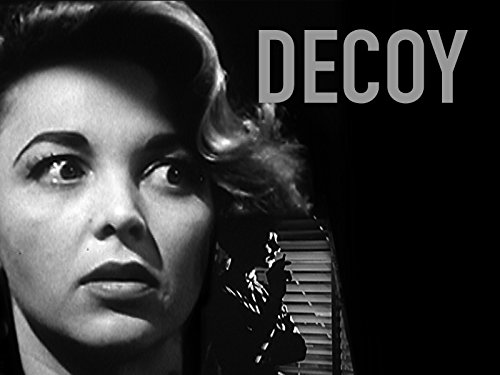
This week, Casey pursues her neighbor and nearly dies.

Episode 1.8 “Escape Into Danger”

(Dir by Teddy Sills, originally aired on December 2nd, 1957)

Casey Jones (Beverly Garland) returns home from a night shift, hoping to get some rest so that she can get over a bad cold.  (I’ve had enough bad colds that I’m fairly confident that Garland herself was suffering from a cold when she filmed this episode and it was written into the script.)  She discovers that her neighbor, Mary (Madeline Sherwood), has hit her abusive and drunken husband across the back of his head.  Mary is convinced that she’s killed her husband and is terrified that she’ll go to jail.  When Casey informs her that her husband is just knocked out and that everything is going to be okay, Mary doesn’t believe her because Casey is a cop and a cop will say anything to make an arrest.  While Casey is in her apartment calling for an ambulance, Mary flees the scene.

Mary’s husband does die but he dies of acute alcohol poisoning so Mary’s off the hook.  (Apparently, this episode take place in a world where assault isn’t a crime.)  Despite her cold, Casey takes to the streets and searches for Mary.  Knowing that Mary is masseuse, Casey checks out all the massage parlors.  In a move that kind of makes me wonder if Casey is really that good at her job, she decides that she might as well get a massage as well.

The woman who gives Casey the massage is Katy Olin (Virginia Kaye), who is Mary’s sister and a bitter ex-con who hates all cops.  While Katy massages Casey, Mary hides in the changing room.  When Casey says that she’s looking for Mary, Katy has Mary sneak out of the dressing room and choke Casey into unconsciousness.  Mary steals Casey’s gun and then makes her escape.

A few thoughts:

First off, after years of being spoiled by shows like Law & Order, I have to say that I was initially surprised that Casey didn’t know that Mary had a sister or that the sister was an ex-con.  But then I remembered that this episode was filmed in 1957, back before all of that information was available at just the touch of a key.

That said, what type of police officer is going to get a massage while on duty?  Even if Casey had looked up from the massage table and seen Mary trying to escape the room, what was Casey going to do?  Chase her through the streets of New York while wearing a towel?  Also, Casey often seems to just drop her purse anywhere, despite the fact that her purse contains a loaded gun.

Third, Katy mentions to Mary that there’s no way for her to leave the room without walking right past Casey.  So, how did Mary get into the room in the first place and how come Casey didn’t notice her when she first arrived?

Fourth, once Casey wakes up, she takes Katy down to the police station.  Katy’s interrogated and refuses to answer any questions.  She asks if she’s being charged with anything and, because she’s not, she’s allowed to go.  Is she not an accessory for hiding Mary and then just standing by while Mary attempted to murder a police officer?

Katy decides that the best thing for Mary to do would be to hide out in her old apartment, the one that is next door to the police officer who Mary just tried to strangle.  (Neither Katy nor Mary appear to be that smart.)  Casey, of course, discovers that two of them hiding there.  She and the neighborhood priest (John McLiam) talk Mary into putting down the gun.  They assure her that she did not kill her husband.  Mary finally believes that Casey is telling the truth….

….which is all good and well except Mary ASSUALTED A POLICE OFFICER!  Indeed, one could argue that what Mary did to Casey counts as attempted murder.  So, really, it seems like Mary should be going to jail regardless.  Unfortunately, we never learn about what happened to Mary after she stop pointing the gun as Casey.  If I was Casey, I would prefer a neighbor who hasn’t tried to kill me.

This episode didn’t really make sense but I’m glad that Casey got over her cold by the end of it.

October True Crime: In Cold Blood (dir by Richard Brooks)


In 1959, the Clutter Family was murdered in Holcomb, Kansas.

Herbert Clutter was a farmer and was considered to be prosperous by the standards of small-town Holcomb.  Neither he nor his wife nor his teenage son and daughter were known to have any enemies.  The brutality of their deaths took not just the town but the entire state by surprise.  People like the Clutters were not supposed to be brutally murdered.  They certainly weren’t supposed to be brutally murdered in a tight-knit community like Holcomb or in a state like Kansas.

The Clutters

The author Truman Capote traveled to Holcomb with his friend Harper Lee, looking to write a story about how the heartland was dealing with such a brutal crime.  Six weeks after the murders, while Capote and Lee were still conducting their interviews, two small-time criminals named Dick Hickock and Perry Smith were arrested for the crime.  Capote’s proposed article about Holcomb instead became the basis for his best-known book, In Cold Blood.  Capote followed the case from the initial investigation to the eventual execution of both Hickok and Smith.  He examined the backgrounds of the two criminals, especially Perry Smith’s.  (Indeed, there were some who felt that Capote saw something of himself in the mentally-fragile Smith.)  In Cold Blood was Capote’s most successful book and it also launched the entire “true crime” genre.  It also may have been Capote’s downfall as Capote reportedly spent the rest of his life haunted by the feeling that he would never top the book and that he had potentially exploited Perry Smith while writing it.  In Cold Blood may be critical of the death penalty but, if Smith and Hickok hadn’t gone to the gallows, Capote would never have had an ending for the book.

(The writing of In Cold Blood and Capote’s subsequent struggles are dramatized in the excellent Capote.)

When it was published in 1965, In Cold Blood shot up the best seller lists.  A film version was an inevitability.  Otto Preminger —  who had already made films out of Anatomy of a Murder, Exodus, Advice and Consent, and The Cardinal — was eager to turn the book into a film and one can imagine him churning out some epic version with his usual all-star cast.  (Sal Mineo as Perry Smith?  Peter Lawford as Dick Hickok?  With Preminger, anything was possible.)  However, Capote sold the rights to Richard Brooks, an independent-minded director who was also an old friend.  Brooks decided to duplicate Capote’s “non-fiction novel” approach by actually shooting his film in Holcomb and having several residents of the town play themselves.  He also rejected Columbia’s suggestion that Smith and Hickok should be played by Paul Newman and Steve McQueen.  Instead, he cast former child actor Robert Blake as Perry Smith and an up-and-coming character actor named Scott Wilson as Dick Hickok.  The only “star” who appeared in the film was television actor John Forsythe, who played the Kansas detective who was placed in charge of the investigation.

The story plays out in deliberately harsh black-and-white.  (Legendary cinematographer Conrad Hall made his debut with this film.)  The opening contrasts scenes of Smith and Hickok, both recently released from prison, meeting up in Kansas with scenes of the Clutter family innocently going about their day.  Perry Smith is neurotic and quick to anger, a wannabe tough guy who wears a leather jacket and whose greasy hair makes him look less like a cunning criminal and more like an understudy in a regional production of West Side Story.  Dick Hickok is friendly and slick, a compulsive shoplifter who claims that his smile can get him out of anything.  In jail, Hickok heard a story that suggested that Mr. Clutter kept a lot of money hidden away in a safe on his farm.  Hickok’s plan is to tie up and rob a family of strangers, with the assumption being that, by the time the Clutters get loose and call the police, he and Smith will already be far out of town.  Neither he nor Smith seem like natural-born murderers.  Smith seems to be too sensitive.  Hickok seems like the epitome of someone who brags but doesn’t follow through.  And yet, the morning after the robbery, four of the Clutters are discovered murdered in their own home.

The film delves quite a bit into Perry Smith’s background.  Throughout the film, he has flashbacks to his abusive father and his promiscuous mother.  When Alvin Dewey (played by John Forsythe) investigates Smith’s family, the recurring theme is that Perry never really had much of a chance to become anything more than a criminal.  We learn less about Dick Hickok’s background, beyond the fact that he was a popular high school jock who turned mean after a car accident.  And yet, despite the fact that the film is clearly more interested in Perry Smith than Dick Hickok, it’s Scott Wilson who dominates the film.  It’s not that Robert Blake gives a bad performance.  It’s just that Perry is such a neurotic mess and Blake gives a performance that is so method-y that occasionally, you’re reminded that you’re just watching a movie.  Scott Wilson, on the other hand, gives a very natural performance as Dick Hickok.  There’s nothing particularly showy about his performance and that makes Hickok all the more disturbing as a criminal and a potential murderer.  If you’ve spent any time in the country, you’ve met someone like Dick Hickok.  He’s the friendly guy who always knows that right thing to say but there’s something just a little bit off about him.  He’s likable without being trustworthy.

A few years ago, when I saw that In Cold Blood was going to be airing on TCM, I told my aunt that I was going to watch the film.  She replied that I shouldn’t.  She saw the film when it was originally released and she described it as being incredibly disturbing.  Despite her warning, I watched the film and I have to admit that she was right.  Even though it’s nearly 60 years old and not particularly explicit when compared to the true crime films of today, In Cold Blood is still a disturbing viewing experience.  Towards the end of the film, we finally see the murders in flashback and the image of Smith and Hickok emerging from the darkness of the farmhouse will haunt you.  There’s not a lot of blood.  The camera often cuts away whenever the actual murders occur (we hear more gunshots than we see) but the Clutters themselves are sympathetic and innocent victims and their deaths definitely hurt.  Indeed, considering that the film falls on the more liberal side of the question of root causes, In Cold Blood deserves a lot of credit for not shying away from the brutality of the crimes.  After spending 90 minutes emphasizing Perry Smith’s terrible childhood, it was important to remind the audiences of what he and Dick Hickok actually did.

The murder scene is so nightmarish that it actually makes it a bit difficult to buy into the film’s anti-death penalty argument.  The film may end with Smith remorseful and a reporter (Paul Stewart) talking about how revenge is never the answer but the film’s liberal talking points feel hollow after witnessing the murder of four innocent people.  (Ironically, it turned out there was no safe so those four people died so Smith and Hickok could steal about forty dollars.)  A few years ago, I probably would have been very moved by the film’s anti-death penalty message.  While I’m still opposed to the death penalty because I think there’s too much of a risk of a wrongly convicted person being executed, I’m long past having much personal sympathy for the Perry Smiths of the world.

Overall, In Cold Blood remains a powerful and disturbing movie. It was a film that was nominated for several Oscars, though it missed out on Best Picture due to 20th Century Fox’s huge campaign for Dr. Dolittle.  Neither Blake nor Wilson were nominated, which is evidence that they were perhaps too convincing as Smith and Hickok for the Academy’s taste.  While Robert Blake would go on to have the more storied career, Scott Wilson was a dependable character actor up until his death in 2018.  A whole new generation of fans knew him not as Dick Hickok but instead as The Walking Dead‘s beloved Herschel Greene.

One final note: Both the book and the film present the murders as being an aberration, something that neither Smith nor Hickok originally planned.  In 2013, new evidence was released that revealed the Smith and Hickok were the number one suspects in the murder of Christine and Cliff Walker and their two children, a crime that occurred in Florida shortly after they fled Kansas.  The two of them were questioned at the time and given a polygraph test, which they both passed.  The bodies of Smith and Hickok were exhumed for DNA testing,  The tests came back inconclusive.

Retro Television Review: Decoy 1.2 “The Red Clown”


Welcome to Retro Television Reviews, a feature where we review some of our favorite and least favorite shows of the past!  On Thursdays, I will be reviewing Decoy, which aired in Syndication in 1957 and 1958.  The show can be viewed on Tubi!

This episode, Casey searches for a man who has abandoned his daughter so he can pursue a career as a painter of clowns.

Episode 1.2 “The Red Clown”

(Dir by Teddy Sills, originally aired on October 21, 1957)

Mike Foley (John McLiam) has quit has job and left his New York home.  His wife (Barbara Barrie) suspects that Mike has returned to Greenwich Village so that he can pursue his dream of being a painter.  Normally, this wouldn’t be a police manner but Mike has also left behind his daughter, Bobby (Barbara Myers), and is facing charges of child abandonment unless he starts paying child support.  Policewoman Casey Jones (Beverly Garland) works undercover, pretending to be a bourgeois art collector who wants to buy one of Mike’s horrid clown paintings.

This episode featured some wonderful on-location footage of New York City in the 1950s.  The history nerd side of me loved that.  I have to admit, though, that I found myself wondering whether or not Casey is actually that good at her job.  Bobby managed to follow Casey all the way to Greenwich Village without Casey noticing.  When Casey did notice, she did the whole thing where she went to a phone booth and told Bobby, “Stay here while I make a call.”  Well, of course, Bobby didn’t stay there.  Bobby went running off to look for her father.

(Was Bobby’s mother not concerned that her daughter was basically wandering around the city?)

Of course, if Bobby hadn’t followed Casey to Greenwich Village, they never would have found Mike.  Mike, it turned out, was living in a shabby building and spending all of his time painting.  He was pursuing his dream.  When Bobby asked him to come home, Mike replied that he had no interest in his old life and that he didn’t want anything to do with his family.  Mike’s harsh words left Bobby in tears.  The episode ended with Bobby playing in a playground a few wees later, with Casey watching her and telling us, “I think she’ll be okay.”  Yeah, I don’t think so, Casey.

The episode was depressing!  But I have to give the show a lot of credit for not having Mike have a sudden change of heart.  The truth of the matter is that he left his family because he was self-centered.  He didn’t become any less self-centered when he was confronted by his daughter.  After listening to Mike’s self-serving crap, Bobby dropped the clown doll that she carried with her as she searched for Mike, saying that she didn’t like clowns anymore.  It’s a painful lesson and a sad one but at least Bobby now knows that truth about her father.  Other than that playground coda, this episode had the guts not to give into false hope.

Next week: Casey deals with an obscene phone caller!

Late Night Retro Television Review: Highway to Heaven 3.6 “Love at Second Sight”


Welcome to Late Night Retro Television Reviews, a feature where we review some of our favorite and least favorite shows of the past!  On Thursdays, I will be reviewing Highway to Heaven, which aired on NBC from 1984 to 1989.  The entire show is currently streaming on Freevee and several other services!

Let’s get back on the highway!

Episode 3.6 “Love At Second Sight”

(Dir by Michael Landon, originally aired on November 5th, 1986)

Jonathan and Mark are working as recreation directors at a retirement community and….

Again?

Actually, I can’t really remember if Jonathan and Mark have worked as a recreation director at a retirement community before but I do know that this is not the first time that they’ve been assigned to work at such a place.  And, if I remember correctly, both Mark and Jonathan have been assigned to work as a coach at other places.  In other words, Jonathan and Mark have a specific set of skills and they seem to center around athletics and the elderly.

Mark thinks that this assignment is going to be easy but then again, Mark thinks that about every assignment.  He might have a point here as he and Jonathan are only supposed to be helping out another angel named Ted (John McLiam).  Ted’s assignment is to help Roy (Harvey Vernon) and Laura (Martha Scott) fall in love and find happiness in their twilight years.  The complication is that Laura is Ted’s widow!  Ted doesn’t want to help his widow fall in love with another man so, instead, he goes out of his way to sabotage Roy and Laura’s relationship.  In fact, Ted starts to romance Laura himself and even proposes marriage to her.

Jonathan confronts Ted and tells him that “the Boss” isn’t going to let this happen.  Jonathan then takes Ted into the future, where he discovers that Laura has died of a broken heart and that their daughter, Margaret (Nana Visitor), is now heading in the same direction.  Realizing that he was being selfish and that he has a responsibility to help Laura move on, Ted returns to the present and pretends to be a jerk and a conman so that Laura will fall out of love with him and instead fall in love with Roy.  Ted even gets Roy to punch him so that Laura will be impressed with him.  Back to the Future, anyone?

That’s the power of love!

I have two issues with this episode.  The lesser of the two is that Ted pretending to suddenly be a jerk seems like the sort of thing that would make Laura even more hesitant about trusting another man as opposed to something that would automatically make her fall in love with Roy.  However, my main issue with this episode is that it all felt very familiar.  Last season, Jonathan was assigned to help his widow move on and he had mixed feelings about it.  (As I would think any angel would.)  This season, God gives the same assignment to another angel and again, it nearly backfires on everyone.  It actually seems a bit mean-spirited on the part of the Boss to continually give this assignment to the very people that it would most hurt, though I understand that the idea is that Ted and Jonathan both needed to move on as well.  That said, at no point does Jonathan say, “Hey, the exact same thing happened to me!”  (This was a rare episode that Landon didn’t write so it’s always possible that the actual writer wasn’t aware that he was repeating a storyline from the show’s past.)  This episode felt like a missed opportunity.

Retro Television Review: If Tomorrow Comes (dir by George McCowan)


Welcome to Retro Television Reviews, a feature where we review some of our favorite and least favorite shows of the past!  On Sundays, I will be reviewing the made-for-television movies that used to be a primetime mainstay.  Today’s film is 1971’s If Tomorrow Comes!  It  can be viewed on YouTube.

If Tomorrow Comes tells the story of a forbidden marriage.

In 1941, Eileen Phillips (Patty Duke) meets David Tayanaka (Frank Liu) and the two of them quickly fall in love.  David asks Eileen to marry him and Eileen says yes, even though they both know that it won’t be easy.  Eileen’s father (James Whitmore) and her brother, Harlan (Michael McGreevey), are both prejudiced against the Japanese and David’s parents (played by Mako and Buelah Quo) would both rather than David marry someone of Japanese descent.  Eileen and David decide to elope first and tell their parents afterwards.

On December 7th, Eileen sneaks out of the house and joins David at his church.  They are married by Father Miller (John McLiam), who agrees to keep their secret.  Eileen and David then drive over to the church attended by Eileen’s family but no sooner have they arrived than the local sheriff (Pat Hingle) pulls up and announces that the Japanese have bombed Pearl Harbor.  The sheriff instructs everyone to return home and to listen to their radios.  David slips his wedding ring off his finger.  Telling the parents will have to wait.

Eileen’s father and brother are convinced that every Japanese person in town, even though the majority of them were born in America and have never even been to Japan, is a subversive.  David and his family are harassed by government agents like the oily Coslow (Bert Remsen).  One morning, they discover that all of their farm animals have been killed and someone has written “REMEMBER PEARL HARBOR” with their blood.  When Franklin D. Roosevelt orders the internment of the Japanese, David’s father is among those taken away.  When Harlan continues to harass David, it eventually leads to not just one but two tragedies.

If Tomorrow Comes is a real tear-jerker, one that features a great performance from Frank Liu and a good one from Patty Duke.  Though it may seem a tad implausible that David and Eileen would get married just an hour before Japan attacked Pearl Harbor (and considering the attack occurred on a Sunday morning, I’m a little curious how they found a priest who was free to secretly marry them), the film does a good job of showing how fear can lead to otherwise good people doing terrible things.  One of the film’s strongest moments comes as David’s father is taken away to an internment camp and the Japanese prisoners try to prove their loyalty by spontaneously singing America, The Beautiful.  It’s a moment that reminds us of the danger of letting our fear destroy our humanity.

It’s a film that still feels relevant today, with its portrayal of heavy-handed government agents searching for subversives and ignoring the Constitution in order to save it.  When David visited his father at the internment camp, I thought about how, at the heigh of the COVID pandemic, it was not unusual to see people demanding that the unmasked and the unvaccinated by interned away from the rest of the world.  If Tomorrow Comes is a love story and a melodrama and tear-jerker but, above all else, it’s a warning about the destructive power of fear and prejudice.

Late Night Retro Television Reviews: Highway To Heaven 1.16


Welcome to Late Night Retro Television Reviews, a feature where we review some of our favorite and least favorite shows of the past!  On Thursdays, I will be reviewing Highway to Heaven, which aired on NBC from 1984 to 1989.  The entire show is currently streaming on Tubi and several other services!

This week, Mark has a near-death experience.

Episode 1.16 “Going Home, Going Home”

(Dir by Michael Landon, originally aired on January 23rd, 1985)

While driving through Oklahoma at night, Mark mentions to Jonathan that they are near the location of his grandfather’s old farm.  Jonathan suggests that they stop off to see the farm and see if any of Mark’s old friends are around but Mark explains that he had no friends when he lived with his grandfather.  As Mark puts it, he was sent to live with his grandfather after his mother died and he spent the whole time complaining about how much he would have rather stayed back in California.  Mark says that his greatest regret is that he never told his grandfather that he loved him.

Awwwww!  That’s so sad!

Suddenly, a cow appears in the middle of the road.  Mark swerves to avoid it and the car ends up in a ditch.  Jonathan, being an immortal angel, is not injured.  Mark, however, hits his head on the steering wheel and goes into a coma.  A local farmer rushes Jonathan and Mark to the town doctor.  When Jonathan tells the comatose Mark that it’s not his time to die, the doctor replies that the time of Mark’s death is up to God.

Yikes!

Mark does eventually wake up.  Feeling much better, he goes for a walk around the town with Jonathan.  Mark is surprised to see that the town has not changed at all since he lived there.  The cars are all vintage.  1930s swing music is playing from the radios.  And, on the bridge near the location of his grandfather’s farm, Mark meets a 9 year-old boy (Sean De Veritch) who is reading a copy of Superman #1.  The boy says that his name is Mark Gordon.

Jonathan explains that Mark has not woken up at all.  He’s still in his coma and now, he’s getting a chance to tell his grandfather that he loves him.  But, Jonathan explains, old Mark cannot reveal his true identity so he’ll have to get Young Mark to say the words.  Good luck with that, seeing as Young Mark is obsessed with going back to Oakland.

Soon, Mark and Johnathan are working on the farm and helping Carl Fred Simms (John McLiam), who is also Mark’s grandfather, keep his land from falling into the hands of a greedy land developer.  To the show’s credit, it doesn’t take much for Old Mark to convince Young Mark to start treating his grandfather with more respect.  Old Mark explains that Young Mark will always regret not appreciating his grandfather and that’s all it takes for Young Mark to shape up.  Young Mark even finds a the location of an underground well but, by that point, old Carl is already on the verge of death.

This is one of those extremely sentimental and earnest episodes that are pretty much this show’s trademark.  It’s not subtle but it is extremely sincere and, as a result, it’s hard not to get caught up in the episode’s emotions.  There’s a lot about this episode that would normally bring out my snarky side but everyone seems to be so committed to the story that they’re telling that one has to appreciate their efforts.

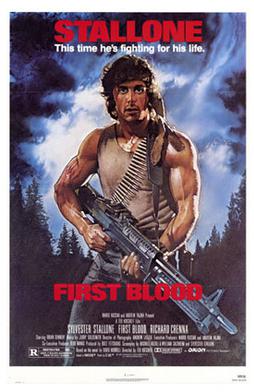
Film Review: First Blood (dir by Ted Kotcheff)


First Blood was not what I was expecting.

From everything that I had heard and seen over the past few years, I was under the impression that this 1982 film was the ultimate in mindless action.  I figured that the film was basically just two hours of Sylvester Stallone hiding in the woods, firing a machine gun, riding a motorcycle, and eventually blowing up a small, bigoted town.  It wasn’t a film that I was in any particular hurry to experience but I knew it was one that I would have to watch eventually, if just because of how many filmmakers have cited the film as an influence.  On Sunday night, First Blood aired on the Sundance Channel and, for the first time, I watched it all the way through.  What I discovered is that there’s a lot more to First Blood than I had been led to believe.

Now, don’t get me wrong.  It’s definitely an action film.  Stallone spends a lot of time hiding in the woods, firing a machine gun, riding a motorcycle, and blowing up a town.  Somewhat improbably, only one character actually dies over the course of the film, though quite a few end up getting maimed and wounded.  There’s even a close-up of Stallone stitching up a nasty gash on his arm, which totally made me cringe.  But, even with all the gunfire and explosions, First Blood has more on its mind than just carnage.  It’s a brooding film, one that angrily takes America to task for its treatment of its veterans and outsiders.  In its way, it’s an action film with a heart.

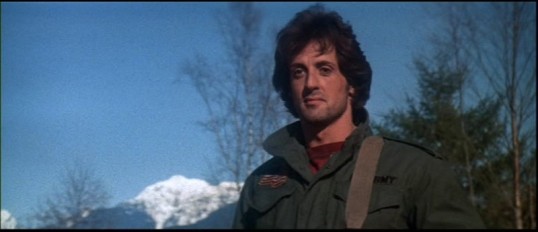
Sylvester Stallone plays John Rambo, a troubled drifter who is still haunted by not only his experiences in Vietnam but also by the feeling that his own country doesn’t want him around.  When Rambo, with his unkempt hair and wearing a jacket with an American flag patch prominently displayed, shows up in the town of Hope, Washington, it’s not to cause trouble.  He just wants to see an old friend, a man with whom he served.  Unfortunately, his friend has died.  The man’s bitter mother says that he got cancer from “that orange stuff they were spraying around.”  Even though the war is over, it’s still killing the only people who can possibly understand how Rambo feels about both his service and his uncertain place in American society.

As Rambo walks through the town, he’s spotted by Sheriff Will Teasle (Brian Dennehy).  Rambo just wants to get a cup of coffee and relax.  Teasle, however, views Rambo as being a stranger and, therefore, a possible threat to his town.  Teasle wants Rambo to leave.  Rambo wants to know why, after everything that he’s sacrificed for his country, he’s being told that he needs to get a haircut.  From this simple conflict — a misunderstanding really, as Teasle doesn’t know that Rambo is mourning the death of his friend and instead interprets Rambo’s sullen silence as being a threat — an undeclared and unwinnable war soon breaks out.

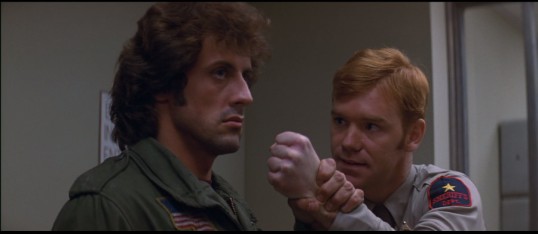
Technically, Teasle is the film’s villain.  He’s the one who arrests Rambo for vagrancy.  It’s his abusive deputies who cause Rambo to have the flashbacks that lead to him breaking out of jail.  It’s Teasle’s arrogance that leads to him ignore the warnings of Rambo’s former commanding office, Sam Trautman (Richard Crenna).  And yet, Teasle himself is never portrayed as being an evil man.  Instead, Dennehy plays Teasle as being well-meaning but stubborn.  It’s been written that the most compelling villains are the ones who don’t realize that they’re the villain and that’s certainly true in Teasle’s case.  Teasle’s job is to protect the town and its citizens and that’s what he’s determined to do.  If his actions become extreme, it has less to do with any deliberate cruelty on his part and everything to do with the fact that, towards the end of the film, he finally figures out that he’s in way over his head.

Once Rambo has disappeared into the woods and maimed (but not killed) all of Teasle’s deputies, he only has one request and that’s to be left alone.  He simply wants to stay in the woods, hunting for food and free from a society that has nothing to offer him during peacetime.  What’s interesting is that, at the start of the film, everyone wants Rambo to just disappear.  He’s a reminder of not just the turmoil of the Vietnam era but also the fact that Vietnam was the first war that America lost.  Rambo’s presence is viewed as being like an ugly scar that you wish would just fade away.  However, once Rambo does actually vanish, people won’t stop looking for him.  As opposed to the later films in the franchise, the Rambo of First Blood doesn’t want to fight anyone.  Rambo just wants to be left alone in solitude and considering the way that he’s treated by the town of Hope, it’s hard to blame him.

And so, you end up sympathizing with this John Rambo.  Even thought he’s blowing up a town during the Christmas season and there’s a few scenes where he’s kind of scary, it’s impossible not to feel that he has a right to his anger.  You find yourself wishing that the Sheriff had just left him alone or that maybe Rambo had just taken Teasle’s earlier advice and left town.  Because, as you watch the film, you know that 1) there was no good reason why any of this had to happen and 2) things probably aren’t going to end well for either John Rambo or Will Teasle.

First Blood was based on a novel that was first published in 1972.  The film spent nearly a decade in development, as various directors, screenwriters, and actors circled around the project.  At one point, First Blood was envisioned as an anti-war film that would have been directed by Sidney Lumet and which would have featured a bearded Al Pacino lurking through the wilderness and killing not only Teasle but also several deputies and national guardsmen.  When Stallone agreed to star in the film, he also rewrote the script, transforming Rambo into a sympathetic outsider who goes out of his way not to kill anyone.  The end result was an underdog story that audiences could embrace.

Seen today, it’s interesting to see how many familiar faces pop up in First Blood.  For instance, a young and really goofy-looking David Caruso pops up and totally overacts in the role of the only sympathetic deputy.  A less sympathetic deputy is played by Chris Mulkey, who would go on to play other unsympathetic characters in a huge number of movies and TV shows.  Interestingly enough, the most sadistic of the deputies was played by Jack Starrett, who directed a several classic B-moves in the 70s.  (One of Starrett’s films was The Losers, in which a bunch of bikers were sent to Vietnam to rescue an American diplomat.)

As opposed to many of the films that it subsequently inspired, First Blood holds up surprisingly well.  It may be violent but it’s violence with a heart.

Playing Catch Up: First Daughter, Ice Girls, Raising The Bar, Walk Like A Man


So, this year I am making a sincere effort to review every film that I see.  I know I say that every year but this time, I really mean it.  Unfortunately, over the past two weeks, real life has interfered with my movie reviewing, if not my move watching.

So, in an effort to catch up, here are four quick reviews of some of the movies that I watched over the past two weeks!

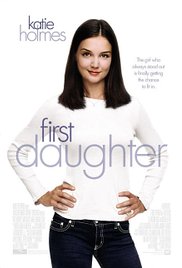
  • First Daughter
  • Released: 2004
  • Directed by Forest Whitaker
  • Starring Katie Holmes, Marc Blucas, Amerie, Michael Keaton, Margaret Colin, Lela Rochon

Michael Keaton as the President of the United States!?  Now, that’s a great idea.  Michael Keaton plays President Mackenzie.  First Daughter was made long before Birdman so Michael Keaton doesn’t really have a huge part but, whenever he does appear, he is totally believable as a world leader.  You buy the idea that this guy could win an election and that he’d probably be a good (if not necessarily a great) President.  Someone really needs to make another movie where Michael Keaton plays the President.  Maybe President Birdman.  Just don’t give it to Inarritu to direct because he’ll make it too political…

Anyway, the majority of the film is about Katie Holmes as the President’s daughter, Samantha.  Samantha has been accepted to a college in California.  She’s excited because it means that she’ll finally be able to have a life outside of the White House.  The President is concerned because he loves his daughter and he knows that, if she makes any mistakes in California, his political opponents will try to use her against him.  Samantha goes off to college and tries to have a good (but rather chaste) time.  Making that somewhat difficult is her secret service entourage.  Fortunately, Samantha meets a guy (Marc Blucas) who loves her for who she is and not because her father is the President.

It’s all pretty silly and shallow but I have to admit that I get nostalgic whenever I see this movie.  Much like From Justin To Kelly, it’s definitely a film from a more innocent and less angry time.  To date, it’s also the last film to be directed by actor Forest Whitaker.

  • Ice Girls
  • Released in 2016
  • Directed by Damian Lee
  • Starring Michaela du Toit, Lara Daans, Arcadia Kendal, Sheila McCarthy, Taylor Hunsley, Shane Harte, Elvis Stojko

Struggling financially, Kelly (Lara Daans) is forced to move back to her hometown and move in with her sister (Sheila McCarthy).  Until she got married and gave up that part of her life, Kelly was once an up-and-coming figure skater.  Fortunately, her daughter, Mattie (Michaela du Toit), has inherited her mother’s talent.  However, a serious injury shook Mattie’s confidence.  Now, she says she doesn’t want to skate anymore.  Still, she’s willing to accept a job from Mercury (Elvis Stojko) at the local rink and it’s not too long before, under Mercury’s guidance, Mattie is skating once again.  Mattie also befriends another skater, Heather (Taylor Hunsley).  Heather happens to be the daughter of Rose (Natasha Henstridge), who was once in love with Kelly’s father…

It sounds like the set-up of a melodramatic Lifetime movie but actually, Ice Girls is a sweet-natured film about two ice skaters, one who has a mother who is too protective and the other who has a mother who is too driven.  In the end, both of them end up skating for themselves and not their mothers and that’s a good message for the film’s target audience of young skate fans.  The majority of the cast is made up of actual ice skaters, so the skating footage is pretty impressive.  It’s a predictable movie but I enjoyed it when I watched it on Netflix.

  • Raising the Bar
  • Released in 2016
  • Directed by Clay Glen
  • Starring Kelli Berglund, Lili Karamalikis, Tess Fowler, Emily Morris, Peta Shannon

I also watched this one on Netflix, a day after I watched Ice Girls.  (I was in an Olympics sort of mood, even though neither film took place at the Olympics.)  Raising the Bar feels a lot like Ice Girls, except that the ice skaters were now gymnasts and instead of relocating to Toronto, the family in Raising the Bar relocates all the way to Australia.  Once in Australia, Kelly (Kelly Johnson) finds the courage to re-enter gymnastics and ends up competing against her former teammates.

Kelly Johnson gives a good performance in the lead role.  Though it may be predictable, Raising the Bar is an effective and sweet-natured family film.  Perhaps the most interesting thing about watching the film was that I quickly found myself rooting against the American team.  Australia all the way!

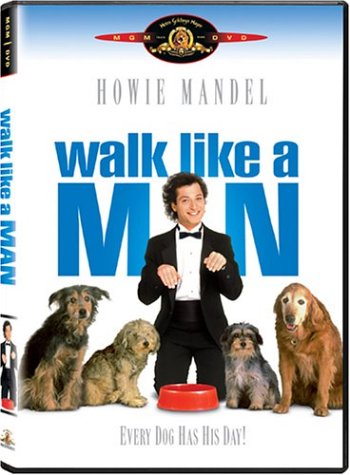
  • Walk Like A Man
  • Released 1987
  • Directed by Melvin Frank
  • Starring Howie Mandel, Amy Steel, Cloris Leachman, Christopher Lloyd, Colleen Camp, Stephen Elliott, George DiCenzo, John McLiam, Earl Boen

Oh, what sweet Hell is this?

Okay, I’m going to try to explain what happens in this movie.  You’re not going to believe me.  You’re going to think that I’m just making all of this up.  But I swear to a God … this is an actual movie.

When he was a baby, Boba Shand (Howie Mandel) got separated from his family.  His mother and his father assumed that he was gone forever but what they didn’t know was that Bobo was found and raised by a pack of wild dogs.  For twenty years, Bobo lives as a dog.  Then he’s discovered by Penny (Amy Steel), an animal researcher who tries to teach Bobo how to be a human.  However, as time passes, Penny comes to realize that maybe she’s making a mistake trying to change Bobo.  Bobo is innocent and child-like and obsessed with chasing fire engines.  When he has too much to drink, he runs around on all fours.  And … PENNY’S IN LOVE WITH HIM!

Seriously, she’s in love with a man who thinks he’s a dog.

However, Bobo stands to inherit a fortune and his evil brother (Christopher Lloyd) is planning on having him committed.  Penny has to prove that Bobo is human enough to manage his own affairs while also respecting his desire to continue living like a dog.

I’m serious.  This is a real movie.

Anyway, making things even worse is the performance as Howie Mandel.  Mandel has always been a rather needy performer and the role of a man who thinks he’s a dog only serves to bring out his worst instincts.  Remember when Ben Stiller played Simple Jack in Tropical Thunder?  Well, Mandel’s performance is kinda like that only worse.  At one point, Bobo walks up to a mannequin in a mall and says, “I have to go pee pee.  Come with me,” and I nearly threw a shoe at the TV.  Oh my God, it was so bad.

The main problem with Walk Like A Man is that it wants to have it both ways.  It wants to be a wild comedy about Howie Mandel chasing fire engines but it also makes us want to tear up when Penny explains why Bobo should be allowed to live as a dog.

All in all, it’s a really bad movie.  And yes, it does actually exist.

A Movie A Day #245: The Missouri Breaks (1976, directed by Arthur Penn)


After Tom Logan (Jack Nicholson) and his gang of rustlers (played by Randy Quaid, Frederic Forrest, and Harry Dean Stanton) rob a train, Logan uses the money to buy a small ranch.  Their new neighbor is Braxton (John McLiam), a haughty land baron who considers himself to be an ambassador of culture to the west but who is not above hanging rustlers and hiring gunmen.  One such gunman is the eccentric Robert E. Lee Clayton (Marlon Brando), a “regulator” who speaks in a possibly fake Irish brogue, is a master of disguise, and uses a variety of hand-made weapons.  Braxton hires Clayton to kill Logan and his men, despite the fact that his daughter (Kathleen Lloyd) has fallen in love with Logan.

A flop that was so notorious that it would be five years before Arthur Penn got a chance to direct another film, The Missouri Breaks is best remembered for Marlon Brando’s bizarre performance.  Brando reportedly showed up on the set late and insisted on largely improvising his part, which meant speaking in a comical Irish accent, singing an impromptu love song to his horse, and disguising himself as an old woman for one key scene.  (According to Patrick McGilligan’s Jack’s Life: A Biography of Jack Nicholson, co-star Harry Dean Stanton grew so incensed at Brando’s behavior that he actually tried to rip the dress off of Brando, saying that he simply would not be “killed’ by a man wearing a dress.)  Brando’s later reputation for being a disastrously weird performer largely started with the stories of his behavior on the set of The Missouri Breaks.

I had heard so many bad things about Brando and The Missouri Breaks that I was surprised when I finally watched it and discovered that it is actually a pretty good movie.  For all of his notoriety, Brando does not enter this leisurely paced and elegiac western until after half a hour.  The majority of the movie is just about Jack Nicholson and his gang, with Nicholson giving a low-key and surprisingly humorous performance that contrasts well with Brando’s more flamboyant work.  While Arthur Penn may not have been able to control Brando, he still deftly combines moments of comedy with moments of drama and he gets good performances from most of the supporting cast.  Quaid, Stanton, Forrest, and Nicholson are all just fun to watch and the rambling storyline provides plenty of time to get to know them.  Whenever Brando pushes the movie too close to self-parody, Nicholson pulls it back.   The Missouri Breaks may have been a flop when it was released but it has aged well.

A Movie A Day #164: Split Decisions (1988, directed by David Drury)


Craig Sheffer seeks symbolic revenge and Gene Hackman picks up a paycheck in Split Decisions!

Ray McGuinn (Jeff Fahey) is a contender.  Ever since he let his father’s gym and signed with a sleazy boxing promoter, Ray has been waiting for his title shot.  His father, an ex-boxer turned trainer named Dan (Gene Hackman), has never forgiven Ray for leaving him.  Meanwhile, his younger brother — an amateur boxer and Olympic aspirant named Eddie (Craig Sheffer) — worships Ray and is overjoyed when Ray returns to the old neighborhood to fight “The Snake” Pedroza (Eddie Velez).  But then Ray is told that if he doesn’t throw the fight, he’ll never get a shot at a title bout.  When Ray refuses, The Snake and a group of thugs are sent to change his mind and Ray gets tossed out of a window.

Eddie is determined to avenge his brother’s death.  Does he do it by turning vigilante and tracking down the men who murdered his brother?  No, he turns pro and takes his brother’s place in the boxing ring!  Dan reluctantly trains him and Eddie enters the ring, looking for symbolic justice.  Symbolic justice just doesn’t have the same impact as Charles Bronson-style justice.

The idea of a barely known amateur turning professional and getting a chance to fight a contender feels just as implausible here as it did in Creed.  The difference is that Creed was a great movie so it did not matter if it was implausible.  To put it gently, Split Decisions is no Creed.  The boxing scenes are uninspired and even the training montage feels tired.  Look at Craig Sheffer run down the street while generic 80s music plays in the background.  Watch him spar in the ring.  Listen to Gene Hackman shout, “You’re dragging your ass out there!”  In the late 80s, Gene Hackman could have played a role like Dan in his sleep and he proves it by doing so here.  Underweight pretty boy Craig Sheffer is actually less convincing as a boxer than Damon Wayans was in The Great White Hype.

Split Decisions is another boxing movie that should have taken Duke’s advice.