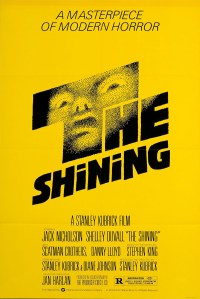
Horror Film Review: The Shining (dir by Stanley Kubrick)


The Shining is one of the few horror movies that still scares me.

I say this despite the fact that I’ve lost track of the number of times that I’ve watched Stanley Kubrick’s 1980 adaptation of Stephen King’s third novel.  It’s a film that I watch nearly every October and it’s a film that I’ve pretty much memorized.  Whenever I watch the film, I do so with the knowledge that Jack Torrance (Jack Nicholson), the caretaker of the Overlook Hotel, is eventually going to start talking to ghosts and he’s going to try to kill his wife Wendy (Shelley Duvall) and his son, Danny (Danny Lloyd).  Whenever I watch this film, I know what Jack is going to find Room 237.  I know about the blood pouring out the elevator like the Tampax commercial from Hell.  I know what Danny means when he says, “Redrum….”  I know about the twins and their request of “Come play with us, Danny.”  And, of course, I know about the film’s famous ending.

Whenever I start watching this film, I know everything that is going to happen.  And yet, as soon as I hear the booming beat of of Wendy Carlos’s theme music and I see the overhead shot of the mountain roads leading to the Overlook Hotel, I start to feel uneasy.  Whenever Barry Nelson (played the hotel’s general manager) starts to blandly explain that a previous caretaker got cabin fever and chopped up his twin daughters, I smile because Nelson delivers the lines so casually.  But I also get nervous because I know Charles (or is it Delbert) Grady is going to show up later.

(Incidentally, Barry Nelson never gets enough credit for his brilliant cameo as the friendly but guarded hotel manager.  In Stephen King’s original novel, the character was a stereotypically unsympathetic middle manager, a martinet who existed largely to be told off.  In Kubrick’s film, the manager is one of the most fascinating of the supporting characters.)

I still get nervous when I see Wendy and Danny, sitting in their disturbingly sterile Colorado home while Jack interviews for the caretaker job.  Wendy smokes and Danny talks about how his imaginary friend, Tony, doesn’t want to go to the hotel.  With her unwashed her and her tentative voice, Shelley Duvall is a far cry from the book’s version of Wendy.  However, Duvall’s Wendy is also a far more compelling character, an abused woman who finds her strength when her son is put in danger.  Duvall is the perfect choice for Wendy because she seems like someone who you might see in the parking lot of your local grocery store, trying to load the bags in her car and keep an eye on her young child at the same time.  She seems real and her reactions remind us of how we would probably react if we found ourselves in the same situation.  Wendy makes the mistakes that we would all probably make but she refuses to surrender to her fear.

Why does The Shining remain so powerful and so frightening, even after repeated viewings?  Most of the credit has to go to Stanley Kubrick.  Stephen King has been very vocal about his dislike of the film, claiming that The Shining was more Kubrick’s version than his.  King has a point.  Film is a director’s medium and few directors were as brilliant as Stanley Kubrick.  (Along with The Shining, Kubrick also directed Paths of Glory, 2001, Barry Lyndon, Dr, Strangelove, Spartacus, Lolita, The Killing, A Clockwork Orange, Eyes Wife Shut, and Full Metal Jacket.  Stephen King directed Maximum Overdrive.)  From the minute we see the tracking shots that wind their way through the desolate mountains and the empty hallways of the Overlook, we know that we’re watching a Kubrick film.  Those tracking shots also put us in the same role as the spirits in the Overlook.  We’re watching and following the characters, observing and reacting to their actions without being able to interact with them.  King has complained that Kubrick’s version of The Shining offers up no hope.  But, honestly, what kind of hope can one have after discovering that ghosts are real and they want to kill you?  Once Jack Torrance finally accepts that drink from Joe Turkel’s Lloyd and meets Phillip Stone’s Grady, there is no more room for hope.  King’s book ends with the Overlook destroyed and Jack Torrance perhaps redeeming himself in his last moments.  Kubrick’s film suggests that Jack Torrance never cared enough about his family to be worthy of redemption and that the evil that infected the Overlook is never going to be destroyed.  In the end, not even the kindly presence of Scatman Crothers in the role of Dick Halloran can bring any real hope to the Overlook.

The Shining is unsettling because, more than being a ghost story, it’s a film about being tapped.  Physically, the Torrances are trapped by the blizzard.  Mentally, Jack is trapped by his addictions and his resentments.  One gets the feeling that he’s deeply jealous of Danny, viewing him as someone who came along and took away all of Wendy’s attention.  Wendy is trapped in a bad and abusive marriage and there’s something very poignant about the way Duvall both captures Wendy’s yearning for outside contact (like when she uses the radio to communicate with the local rangers station) and her hope that, if she’s just supportive enough, Jack will get his life together.  Danny’s trapped by his psychic visions and his knowledge of what’s to come.  The victims of the Overlook appear to be trapped as well.  Grady’s daughters are fated to always roam the hallways, looking for someone to play with them.  The Woman in 237 will always wait in her bathtub.  Were these spirits evil before they died or were the twisted by the Overlook?  It’s an unanswered question that sticks with you.

As I mentioned earlier, Stephen King has been very vocal about his dislike of both The Shining and its director.  (King once boasted about outliving Kubrick, a comment that showed a definite lack of class on the part of America’s most commercially successful writer.)  Why does King hate the Kubrick film with such a passion?

I have a theory.  Both King’s second novel, Salem’s Lot, and The Shining feature a writer as the man character.  In both cases, King obviously related to the main character.  Ben Mears in Salem’s Lot is charming, confident, articulate, and successful.  He’s a writer that everyone respects and he’s even well-known enough to have a file with the FBI.  Jack Torrance, on the other hand, is a struggling writer who has a drinking problem, resents authority figures (like the hotel manager), and has issues with his father.  Torrance is a much more interesting character than Ben Mears, precisely because Torrance is so flawed.  (King, and I give him full credit for this, has been open about his own struggles with substance abuse and how he brought his own experiences to the character of Jack Torrance.)  I’ve always suspected that, at the time that King wrote Salem’s Lot and The Shining, Ben Mears was King’s idealized version of himself while Jack Torrance, with all of his struggles and flaws, reflected how King actually felt about himself.  (That the Wendy Torrance of the novel is a beautiful blonde who sticks with her husband despite his drinking problem feels like a bit of wish fulfillment on the part of King.)  When Stanley Kubrick made his version of The Shining and presented Jack Torrance as essentially being a self-centered jerk who, even before arriving at the hotel, had a history of abusing his wife and son, it’s possible King took it a bit personally.  Since King had poured so much of himself into Jack Torrance, it was probably difficult to see Kubrick present the character an abusive narcissist whose great novel turned out to be literally a joke.  And so, Stephen King has spent the last 45 years talking about how much he hates Kubrick’s film.

King’s opinion aside, Kubrick’s The Shining is probably the most effective Stephen King adaptation ever made, precisely because Kubrick knew which parts of the book would work cinematically and which parts were best excised from the plot.  As opposed to later directors who often seem intimidated by King’s fame, Kubrick was able to bring his own signature style to the story.  Stanley Kubrick’s The Shining is a masterpiece and one that I look forward to revisiting this October.

Retro Television Review: Miami Vice 4.15 “Indian Wars”


Welcome to Retro Television Reviews, a feature where we review some of our favorite and least favorite shows of the past!  On Mondays, I will be reviewing Miami Vice, which ran on NBC from 1984 to 1989.  The entire show can be purchased on Prime!

This week, Castillo goes undercover!

Episode 4.15 “Indian Wars”

(Dir by Leon Ichaso, originally aired on February 26th, 1988)

The Vice Squad is trying to take down Colombian drug dealer Acosta (Joe Lala).  Acosta does not trust gringos so Crockett can’t pretend to be Burnett this week.  Instead, he’s temporarily promoted to head of the Vice Squad while Castillo goes undercover.  Castillo explains to his bosses that, as a Latino, he’s the only one who can do it.  I’m not sure that I really buy Castillo’s argument.  Do you mean to tell me that, in Miami, there’s only one Latino detective working Vice?  If that’s true, someone really needs to talk to whoever is in charge of giving the detectives their assignments.

Acosta is soon taken out of the picture and replaced by the even more evil Levec (played by the great character actor, Joe Turkel).  Castillo discovers that both Acosta and Levec are being attacked by a paramilitary force that is made up of Native Americans.  Tubbs goes undercover as an anthropologist and discovers that the local Indian chief has made a deal with the drug dealers and his son (Patrick Bishop) is not happy about it.  However, it turns out that the chief’s son is actually an aspiring drug lord himself and that his whole vigilante act is really just his way of getting rid of the competition.

This was not a bad episode, particularly when compared to some of the other episodes that aired during the fourth season.  Joe Turkel made for a great villain and the scenes of the Indians attacking the drug dealers were properly atmospheric.  The episode even includes a small homage to the final showdown from Scarface.  Philip Michael Thomas was mildly amusing when he pretended to be a nerdy anthropologist.  Meanwhile, Don Johnson was barely in this episode at all.  This episode was all about Edward James Olmos’s smoldering intensity as Castillo.

Again, it wasn’t a bad episode but it still felt like it was missing something.  As with so much of season 4, it felt like the show was just growing through the motions.  In this case, it went through those motions with a bit more skill than it did in some of the season’s other installments.  This episode didn’t feature any aliens or any bull semen.  That made it a definite improvement over at least two season 4 episodes.  Still, this episode largely felt like Miami Vice on autopilot.

Scenes That I Love: Jack Meets Lloyd in The Shining


The scene below is, of course, from Stanley Kubrick’s 1980 masterpiece, The Shining.

In this scene, Jack Torrance (Jack Nicholson) stumbles into the Overlook Hotel’s ballroom, still fuming over having been accused of abusing his son.  A recovering alcoholic, Jack sits at the bar and thinks about how he would give up his soul for just one one drink.  And, on cue, Lloyd (Joe Turkel) appears.

As I was watching this scene, it occurred to me that, way back in 1980, there probably was some guy named Lloyd who saw this movie in a theater and was probably totally shocked when Jack suddenly stared straight at him and said, “Hey, Lloyd.”

The brilliance of this scene is that we never actually see Lloyd materialize.  We see him only after Jack has seen him.  So, yes, Lloyd could be a ghost.  But he could also just be a figment of Jack’s imagination.  Jack very well could just be suffering from cabin fever.  Of course, by the end of the movie, we learn the truth.

Everyone always talks about Jack Nicholson’s performance as Jack.  Some people love it and some people hate it.  (I’m in the first camp.)  However, let’s take a minute to appreciate just how totally creepy Joe Turkel is in this scene.  Turkel was a veteran character actor and had appeared in two previous Kubrick films, The Killing and Paths of Glory.  Two years after appearing in The Shining, Turkel played what may be his best-known role, Dr. Eldon Tyrell in Blade Runner.  Today, incidentally, would have been Joe Turkel’s 98th birthday.

From Stanley Kubrick’s The Shining, here’s Jack Nicholson and Joe Turkel:

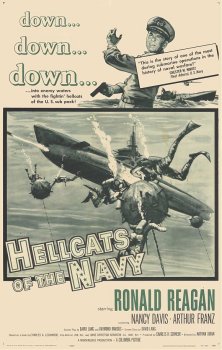
Hellcats of the Navy (1957, directed by Nathan Juran)


At the height of World War II, Commander Casey Abbott (Ronald Reagan) breaks up with nurse Helen Blair (Nancy Davis, the future first lady) and takes command of a submarine that has been tasked with mapping out Japanese mine fields.  Abbott struggles at first with commanding his submarine.  After a popular diver — and Helen’s new boyfriend — is killed during a mission, much of the crew holds Abbott responsible.  While Abbott is able to win back the respect of the crew, he still struggles with his second-in-command, Don Landon (Arthur Franz).  Landon wants to command his own submarine but when Abbott gives him a negative recommendation, Landon is forced to consider his past actions.  Landon eventually discovers just how difficult it is to be in charge.

Full of stock footage and chintzy special effects, Hellcats of the Navy was the movie that Ronald Reagan considered to be so bad that it led to him retiring from feature films and devoting himself to mastering the emerging medium of television.  Gene Hackman had his Welcome To Mooseport.  Ronald Reagan had his Hellcats of the Navy.  It’s definitely on the cheap and predictable side but, when I watched it earlier today, I discovered it wasn’t as bad as I had heard.  Reagan actually gives a pretty good performance as Abbott and the film does show that even a good commander will make mistakes.  The main problem is that it’s just not a very exciting film and a good deal of the undersea footage was clumsily lifted from other movies.

Hellcats of the Navy was the one movie that co-starred both Ronnie and Nancy and it’s worth watching for curiosity’s sake.  Nancy isn’t in much of the movie and it’s really a role that anyone could have played.  There’s not a lot of romantic chemistry between Ronnie and Nancy, they’re both too reserved for that.  This film still shows the likability and the natural authority that led to Ronald Reagan launching a second career in politics.

Just think, if Hellcats of the Navy had been a better movie, the past 45 years might have been very different.

Horror Film Review: Tormented (dir by Bert I. Gordon)


“Tom Stewart killed me!” shouts the spirit of Vi Mason (Juli Reding).

Technically, it’s debatable whether or not Tom Stewart (Richard Carlson) actually killed Vi.  As is seen during the opening moments of 1960’s Tormented, Vi actually slipped and was clinging onto the lighthouse’s balcony for dear life before she fell to her death on the rocks below.  Tom didn’t push her and he didn’t force her to fall.  However, Tom did refuse to pull her up.  After she fell, he ran into the ocean and thought he had dragged back to safety.  But then it turned out that he was just dragging around a bunch of seaweed.

To a certain extent, Tom is glad to be done with Vi.  Vi was his ex-girlfriend and she was determined to keep Tom from marrying the rich and innocent, Meg (Lugene Sanders).  Meg’s father (Harry Fleer) already hates Tom because he’s not only a pianist but he’s also a jazz pianist!  Still, Meg loves Tom and, in a somewhat disturbing way, Meg’s little sister, Sandy (Susan Gordon), seems to be kind of obsessed with Tom as well.  “Why can’t I get married!?” Sandy demands.  BECAUSE YOU’RE LIKE TEN, YOU LITTLE BRAT!

Still, it’s not helping Tom that he keeps hearing Vi’s voice and seeing her ghost.  Everyone in the village think that Tom is acting strangely but they dismiss it as pre-wedding jitters.  (And, of course, his future father-in-law just assumes that Tom is being weird because he’s one of those jazz pianists.)   If it wasn’t bad enough that Tom is having to deal with Vi’s ghost, he’s also got a hepcat blackmailer named Nick (Joe Turkel).  Nick was hired to take Vi out to the island where Tom lives.  When Vi doesn’t return to pay him, Nick goes to Tom for the money.  When Nick overhears that Tom is about to marry a rich woman, Nick decides that he needs even more money.

Joe Turkel was one of the great character actors.  A favorite of Stanley Kubrick’s, he appeared in Paths of Glory and later played Lloyd the Bartender in The Shining,  Turkel also played Eldon Tyrrell in Blade Runner, in which he made the mistake of talking down to Rutger Hauer’s Roy.  In the role of Nick, Tukel is the best thing to be found in Tormented.  Turkel delivers all of his dialogue with a wonderfully insolent attitude.  He’s the type of character who, in the style of Robert Mitchum in Cape Fear, refers to everyone he meets as “Dad.”  He’s a lowlife and criminal but he’s got the spirit of Kerouac and Cassady in him and it doesn’t take him long to see straight through Tom.

Tormented was directed by Bert I. Gordon, who was best-known for his movies about giant monsters.  There aren’t any monsters in Tormented but there is a really shrill ghost and a truly unlikable protagonist.  There’s a lot flaws to be found in this film but Joe Turkel makes up for a lot of them.  And the scene where Vi’s ghost objects to Tom’s wedding is a lot creepier than it really has any right to be.  This is probably the best film that Bert I. Gordon ever directed, which does not necessarily mean its a good film.  Bert I. Gordon was still Bert I. Gordon.  But Tormented is definitely entertaining.

Horror on TV: One Step Beyond 3.19 “The Gift” (dir by John Newland)


On tonight’s episode, a fake fortune teller appears to develop actual psychic abilities, just in time to see her son committing an unspeakable crime in the future.

This one has an interesting cast.  Mario is played by Scott Marlowe, who was Italian despite his name and who was apparently a major contender for the role of Michael Corleone in The Godfather, back when the film was still envisioned as being a low-budget B-crime film.  Also keep an eye out for Joe Turkel as Mario’s friend.  Turkel later played both Lloyd the Bartender in The Shining and Eldon Tyrrell in Blade Runner.

The episode originally aired on January 31st, 1961.

Retro Television Reviews: Fantasy Island 4.1 “The Devil and Mandy Breem/The Millionaire”


Welcome to Retro Television Reviews, a feature where we review some of our favorite and least favorite shows of the past!  On Tuesdays, I will be reviewing the original Fantasy Island, which ran on ABC from 1977 to 1986.  Almost the entire show is currently streaming is on Youtube, Daily Motion, and a few other sites.

This week, season 4 begins with …. THE DEVIL!

Episode 4.1 “The Devil and Mandy Breem/The Millionaire”

(Dir by Vince Edwards, originally aired on October 25th, 1980)

The fourth season of Fantasy Island opens with Mr. Roarke and Tattoo once again upset with each other.

When a man named Fred Catlett (Arte Johnson) wrote to Mr. Roarke and said that his fantasy was to become an instant millionaire, Roarke turned down his fantasy for …. reasons, I guess.  Seriously, becoming an instant millionaire sounds like a typical fantasy and I seem to remember that it’s one that Roarke has granted for other guests on the series.  I’m not sure why Roarke decided that poor, meek Fred Catlett was somehow unworthy of his fantasy.

For whatever reason, though, Roarke does turn down the fantasy.  So, imagine his surprise when Fred shows up on the island!  Tattoo explains that he decided to give Fred his fantasy.  Roarke tells Tattoo that he’ll receive no help and no money from him.  Tattoo is shocked and I’m wondering if this means that Fred will get a refund.  I mean, Fantasy Island is not cheap.  Actually, if Fred already had enough money to come to Fantasy Island, that does make his fantasy seem a little bit weird.  It seems like you have to be a millionaire to get your fantasy in the first place.

Roarke, I should add, is a hypocrite because he totally suspends the rules for this week’s other guest.  Mandy Breem (Carol Lynley) has come to the Island with her fantasy being that she wants the Island to save her life.  However, Mandy refused to explain all of the details of her fantasy until she came to the Island.  Roarke allows her to come, despite not knowing what she wants.  If Tattoo did something like that, Roarke would never let him hear the end of it.

So, what is Mandy’s fantasy?  A year ago, Mandy’s husband (Adam West) underwent a surgery.  Fearful of his life, Mandy made a deal with …. THE DEVIL!  She agreed that, if he saved her husband’s life, she would give up her soul in a year’s time.  Well, that year is coming to a close and Mandy has come to Fantasy Island, hoping that she can somehow get out of the deal.  The Devil (played by a dapper Roddy McDowall) has followed her and soon, Roarke must confront the Lord of Darkness for the sake of Mandy’s soul.

This is a really fun story, largely because the performance of Roddy McDowall as the devil.  Wearing a black suit and a white tie and delivering all of his lines with just the right mix of menace, sarcasm, and camp McDowall is the ideal trickster.  The smoky confrontation between Roarke and the Devil is the highlight of the episode, with both Montalban and McDowall both seeming to relish they drama of the moment.  Ricardo Montalban once said that, while the show’s producers wanted to keep Roarke as enigmatic as possible, he always envisioned Roarke as being a fallen angel who was doing his penance on Fantasy Island.  And, indeed, there is a hint of that in his confrontation with the Devil, with the show suggesting that this is neither the first nor the final time that the two shall meet.

As for the other fantasy, Tattoo’s solution is to steal a magic lamp and give it to Mike.  Mike rubs the lamp and wishes for a million dollars.  A briefcase full of money flies through the sky and lands in front of him.  Mike is convinced the magic worked but actually the briefcase was tossed out of a moving car and now, three thieves (Arlene Golonka, Ross Martin, and Joe Turkel) want their money back!  It all works out in the end.  Despite Roarke’s earlier refusal to grant Fred his wish, this was ultimately a typical Fantasy Island fantasy.  While it really couldn’t compete with Mr. Roarke facing off against the Devil, it did, at least, give Tattoo something to do.  One gets the feeling that this episode was specifically conceived so that both Ricardo Montalban and Herve Villechaize could get their chance in the spotlight without having to actually interact with each other.  And it works out wonderfully, with Tattoo’s silly antics providing a nice balance to the more dramatic stuff involving Mr. Roarke.

All in all, even if it’s obvious that Ricardo Montalban and Herve Villechaize were still not getting along behind the scene, this was a fantastic start for season 4!

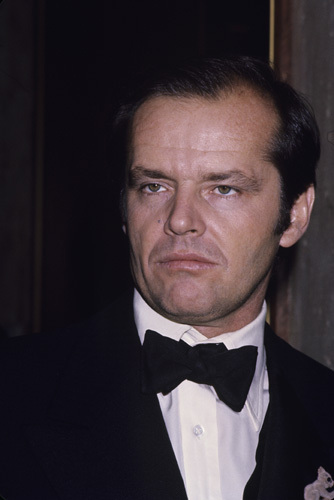
Horror Scenes That I Love: Jack Nicholson in The Shining


Today’s actor really needs no introduction.  While Jack Nicholson started his career as a part of the Roger Corman stock company and appeared in the original Little Shop of Horrors while also being strongly considered for the role of Guy Woodhouse in Rosemary’s Baby, Nicholson has not appeared in many horror movies.

But the horror movie in which he did appear is such a classic that it’s made Nicholson a horror icon, even if he didn’t appear in as many horror films as a Christopher Lee or a Boris Karloff.

In this scene from 1980’s The Shining, Nicholson’s Jack Torrance has a drink with a ghost.  Nicholson does a wonderful job in this scene, especially when he’s playing off the wonderfully sinister Joe Turkel.

https://www.youtube.com/watch?v=tmY4k85_XEE&pp=ygUWSmFjayBOaWNob2xzb24gU2hpbmluZw%3D%3D

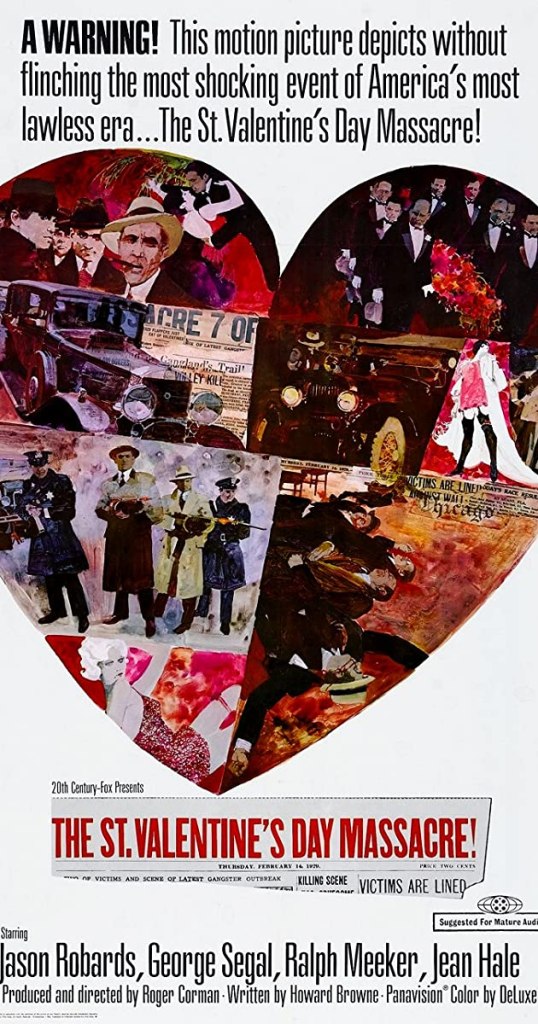
An Offer You Can’t Refuse #18: The St. Valentine’s Day Massacre (dir by Roger Corman)


On February 14th, 1929, seven men were murdered in a garage in Chicago, Illinois.  Five of the seven men were known to be associates of gangster George “Bugs” Moran.  The other two men were considered to be innocent bystanders, a mechanic and a dry cleaner who just happened to enjoy hanging out with gangsters.  Though no one was ever convicted of the crime, it was well-known that the murders were carried out on the orders of Al Capone.

In many ways, the St. Valentine’s Day Massacre was a turning point in America’s relationship with organized crime.  Before the massacre, Capone had become a bit of a folk hero.  He knew how to talk to the press and he was viewed as merely breaking a law (in this case, prohibition) that most people opposed in the first place.  However, after the murders, public opinion soured on Capone.

Some of it was the brutality of the crime.  It’s been said that over five hundred bullets were fired in that garage, all to kill seven defenseless men who were lined up against a wall.  Grisly pictures of the victims were released to the press.  Perhaps if the seven men had been carrying weapons and had been involved in a shootout with their murderers, the public’s reaction would have been different.  But this was a cold-blooded execution.

Personally, I think the fact that the killers disguised themselves as cops also played a role in the public’s outrage.  It was a very calculated move on the part of the killers and it highlighted just how much planning went into the St. Valentine’s Day Massacre.  As well, it undoubtedly made people paranoid.  If a bunch of killer could dress up like cops, who knew who else they could dress up as?

Finally, I think that Capone’s biggest mistake was carrying out the crime on Valentine’s Day.  You don’t murder people on a holiday.  Anyone should know that.  If Capone had waited until February 20th, he probably could have gotten away with it.

The 1967 film, The St. Valentine’s Day Massacre, details the rivalry between Capone and Moran, starting with them fighting for control over the Chicago rackets and ending with the title event.  Moran is played by Ralph Meeker while Jason Robards plays Capone.

Now I know what you’re probably thinking.  Perennial WASP Jason Robards as Al Capone?  That may sound like odd casting and, let’s just be honest here, it is.  However, it actually kind of works.  Robards may not be convincingly Italian but he is convincingly ruthless.  Add to that, one of the major subplots of the St. Valentine’s Day Massacre is that, even as the head of the Chicago Outfit, Capone still feels like an outsider in the world of organized crime because, while he is Italian, he isn’t Sicilian.  Capone feels as if Lucky Luciano and all of the major New York crime bosses look down on him and one reason why he’s so ruthless about taking over Chicago is that wants to show Luciano that he can be just as effective a crime lord as any Sicilian.  Capone feeling out of place in the Mafia is reflected by Robards initially seeming to be out of place in a gangster film.  By the end of the movie, of course, Capone has proven himself and so has Jason Robards.

Robards isn’t the only familiar face to be found in The St. Valentine’s Day Massacre.  Though this film was released by 20th Century Fox, it was directed by Roger Corman and Corman fills the production with members of his stock company.  Dick Miller, Jonathan Haze, and Jack Nicholson all have small roles as gunmen.  Bruce Dern plays the unlucky mechanic who enjoys hanging out with gangsters.  Buck Taylor, Leo Gordon, and Joe Turkel all have small roles.  John Agar plays Dion O’Bannon and is gunned down in his flower store.  Though not members of the Corman stock company, George Segal and David Canary plays brothers who work for Moran.  There’s a lot of characters wandering through this film but Corman makes sure that everyone gets a chance to make an impression.

It’s a good gangster film.  Though he was working with a larger budget than usual, Corman still brought his exploitation film aesthetic to the material and the end result is a violent, melodramatic gangster film that looks really impressive.  The film’s recreation of 1920s Chicago is a visual delight and looking at the well-dressed and stylish gangsters walking and driving down the vibrant city streets, you can understand why organized crime would have such a draw for some people.

The St. Valentine’s Day Massacre is a classic gangster film and a classic Corman film.  It’s an offer you can’t refuse.

Previous Offers You Can’t (or Can) Refuse:

  1. The Public Enemy
  2. Scarface
  3. The Purple Gang
  4. The Gang That Could’t Shoot Straight
  5. The Happening
  6. King of the Roaring Twenties: The Story of Arnold Rothstein 
  7. The Roaring Twenties
  8. Force of Evil
  9. Rob the Mob
  10. Gambling House
  11. Race Street
  12. Racket Girls
  13. Hoffa
  14. Contraband
  15. Bugsy Malone
  16. Love Me or Leave Me
  17. Murder, Inc.


An Offer You Can’t Refuse #3: The Purple Gang (dir by Frank McDonald)


The 1960 gangster film, The Purple Gang, really took me by surprise.

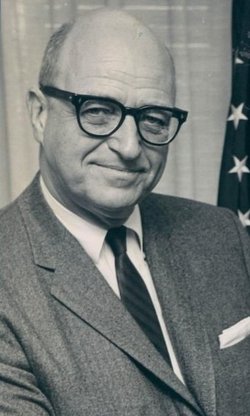
The film opens with U.S. Rep. James Roosevelt standing in front of his desk.  James Roosevelt was the son of President Franklin D. Roosevelt.  He was a notoriously shady businessman who, before entering politics, dabbled a bit in Hollywood.  That probably explains how he eventually came to be standing in his congressional office, filming the introduction for a low-budget B-movie about Detroit gangsters.  Roosevelt tells us that he’s already watched the movie that we’re about to see and that he can assure us that it is an accurate portrayal of not just the history of The Purple Gang but also of how 1920s bootlegging led to a host of other crimes.  Roosevelt goes on to compare bootleggers to modern day drug pushers.  The most interesting thing about the speech is that it almost sounds like a defense of prohibition, the law that FDR famously opposed.

To use a term from the film’s era, it’s kind of a square opening.  James Roosevelt comes across as being so vacuously earnest that it’s almost as if Beto O’Rourke got his hands on a time machine and went back to 1960.  At the same time, there’s something oddly charming about how awkward it is.  One can only imagine how audiences would react if a film today opened with a speech from a congressperson.  I guess some parts of the country would love it.  Down here in Texas, the theater would probably get set on fire.

Now, based on that less than edgy opening, you might be justified in expecting that The Purple Gang will just be your standard 1960s crime thriller but it most definitely is not.  The Purple Gang is a tough and violet movie, one that is full of shadowy and sometimes disturbing imagery.  A very young Robert Blake plays Honeyboy Willard, a teenage hoodlum who, through pure sociopathic ruthlessness, takes over the rackets in Detroit.  Barry Sullivan is Lt. Harley, the police detective whose quest to bring down the Purple Gang leads to him losing almost everything that was important to him.

Our first impression of Lt. Harley comes when he skeptically listens to a liberal social worker, Joan McNamara (Jody Lawrance), explain that criminals are not born but are instead made by their circumstances.  Harley obviously doesn’t agree.  Later, while Joan is walking around Detroit at night, she is attacked, rape,d and then murdered by the same criminals that she was earlier defending.  With the city outraged over Joan’s murder, Lt. Harley steps up his efforts to bring down the gang so Honeyboy murders Harley’s pregnant wife.

While Harley seeks revenge, Honeyboy is busy making deals with Canadian liquor distributors and building the Purple Gang into the biggest criminal enterprise in the northern midwest.  When a group of distraught businessmen, upset at being extorted by the Purple Gang, turns to the Mafia for help, Honeyboy declares war….

Of course, despite James Roosevelt’s assurance at the start of the film and the semi-documentary approach that director Frank McDonald takes to the material, the truth is far different from the movie.   In real life, The Purple Gang was predominantly made up of the children of recent immigrants from Russia and Poland.  It was run not by Honeyboy Willard but by the four Bernstein brothers.  The Purple Gang did not go to war with the Mafia but instead, they were allied with Lucky Luciano and Meyer Lansky in their attempts to create a national crime syndicate.  They were also closely allied with Al Capone, to the extent that it’s been suggested that Capone used Purple Gang gunmen to carry out the St. Valentine’s Day Massacre.  The Purple Gang eventually fell apart due to infighting and the end of prohibition, with the majority of the members who weren’t in jail simply joining other gangs.

So, no, The Purple Gang is not historically accurate but it’s still an effective and surprisingly brutal gangster film.  The noirish photography makes certain scenes seem almost as if they’ve been lifted straight out of a nightmare and, historically accurate or not, the film does do a good job of showing how organized crime came to exist in the United States.  It’s a quick-paced and energetic film and it features a great performance from Robert Blake as the chillingly sociopathic Honeyboy.  The Purple Gang is a low-budget B-movie that packs a punch.

Plus, James Roosevelt did ask you to watch.  Are you going to say no to James Roosevelt?

James Roosevelt, film critic

Previous Offers You Can’t Refuse:

  1. The Public Enemy
  2. Scarface