Retro Television Review: Fantasy Island 6.17 “King of Burlesque/Death Games”


Welcome to Retro Television Reviews, a feature where we review some of our favorite and least favorite shows of the past!  On Tuesdays, I will be reviewing the original Fantasy Island, which ran on ABC from 1977 to 1984.  Unfortunately, the show has been removed from most streaming sites.  Fortunately, I’ve got nearly every episode on my DVR.

“Smiles, everyone, smiles!”  It’s time for another two fantasies.

Episode 6.17 “King of Burlesque/Death Games”

(Dir by Cliff Bole, originally aired on March 12th, 1983)

I’m going to deal with the first of this week’s fantasies very quickly because, quite frankly, it’s not every interesting.  Rich Little is Tom Vail, a wall street accountant who wants to be a burlesque comedian.  He gets his fantasy.  He performs at the Fantasy Island Burlesque Revival.  He wears a hideous suit with a big bowtie.  He falls in love with a dancer.  The always likable Red Buttons appears as a Burlesque veteran.  It’s not a bad fantasy but it’s not terribly interesting.

Meanwhile, Vanessa Walgren (Joanna Pettet) has come to the Island to compete in the “First Annual Fantasy Island Pentathlon.”  However, Mr. Roarke knows that she’s there for another reason.  She wants to kill him!  A year ago, Vanessa’s husband was lost at sea while on his own fantasy.  (He wanted to retrace the route of the Kon Tiki.)  Vanessa blames Roarke and she’s put a bounty on his head.  Roarke sighs and says, “Fine, but if you don’t kill me by the end of the weekend, you have to leave the Island and never bother me again.”  Vanessa agrees….

WHAT!?  What type of vengeance is that!?  Seriously, if you’re obsessed with vengeance, you don’t just shrug and accept an arbitrary rule from the person you’re trying to kill.

Anyway, Roarke is the judge for the Pentathlon so he’s got various athletes trying to kill him over the course of the entire weekend.  He even gets cut during a fencing match!  (“If you can bleed, you can die!” Vanessa declares in a wonderfully over-the-top moment.)  Whenever anyone fails to kill him, Roarke says, “Get off my Island!,” which is rally cool.  Tattoo wonders why Roarke is allowing this to happen.  Why doesn’t Roarke order Vanessa to get off the Island.  Roarke is all like, “I can’t tell you, just trust me.”  The final event is a skydiving competition and I’m not really sure how you compete at that but whatever.  Despite Vanessa’s efforts to sabotage his parachute, Roarke lands safely.

Vanessa then offers him two glasses of wine.  One glass is poisoned!  Can Roarke pick the right glass?  Roarke is like, “Screw this,” and finally reveals that Vanessa’s husband is not dead.  Instead, he’s a secret agent who had to fake his own death but who is now ready to be reunited with Vanessa….

Again, WHAT!?  Seriously, that came out of nowhere.

Reunited with her husband, Vanessa apologizes for trying to murder Roarke.  Roarke says it’s fine because Mr. Roarke is very forgiving.

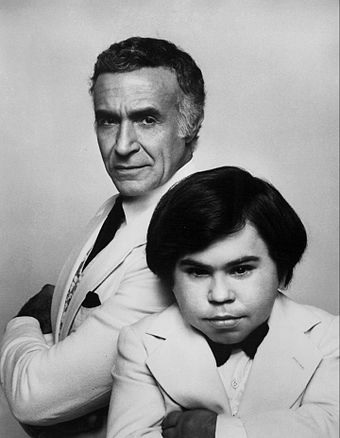
The burlesque fantasy was boring (loved the costumes, though!) but the revenge fantasy made up for it.  I love it when Fantasy Island embraces the melodrama.  Plus, this fantasy actually gave Ricardo Montalban and Herve Villechaize quite a bit to do.  All in all, this was a good trip to the Island!
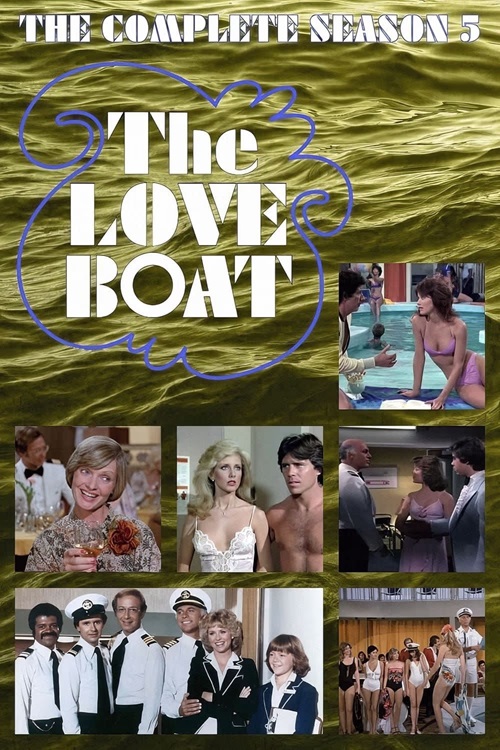
Retro Television Review: The Love Boat 5.25 “Burl of My Dreams/Meet the Author/Rhymes, Riddles, and Romance”


Welcome to Retro Television Reviews, a feature where we review some of our favorite and least favorite shows of the past!  On Wednesdays, I will be reviewing the original Love Boat, which aired on ABC from 1977 to 1986!  The series can be streamed on Paramount Plus!

This week, someone needs to call Family Services.

Episode 5.25 “Burl of My Dreams/Meet the Author/Rhymes, Riddles, and Romance”

(Dir by Richard Kinon, originally aired on March 27th, 1982)

Poor Vicki!

Here she is, living on the Love Boat, surrounded by the middle-aged crew and the largely elderly passengers, and without a single friend her own age.  (Seriously, how does Captain Stubing get away with this?)  She’s excited when an old school friend, Scott Nelson (Rad Daly), boards the boat but Scott, being 14 and a boy, is totally clueless about the fact that 1) Vicki is no longer a tomboy and 2) Vicki totally has a crush on him.

Gopher sees that Vicki is upset so he tries to cheer her up by telling her that she deserves better than Scott and also sending her flowers.  Gopher may have had good intention but now Vicki is convinced that she’s in love with Gopher and that Gopher is in love with her!  Captain Stubing is not amused.  And Vicki is also not amused when she overhears Gopher explaining that he was just trying to make Vicki feel better.  And then she’s truly, truly unamused when Scott kisses her and then reveals that Gopher paid him to do so.

Seriously, poor Vicki!  I relate to Vicki more than to Julie because I’ve never been a cruise director but I have been a teenager.  I will never understand how the Captain is getting away with raising his daughter on a cruise ship.  I can see where it would sometimes for fun for Vicki but doesn’t she miss having friends her own age?  Doesn’t she wish she could explore something other than the Aloha Deck?  This storyline once again reminded the viewer that Vicki really deserves a life on the mainland.

As for the other two stories, Paul Reese (Jared Martin) is a publishing executive who wants to sign an author named Gus Dolan (Alan Hale, Jr.).  Gus is known for his tough crime novels.  In order to get close to Gus, Paul strikes up a romance with Gus’s daughter, Kathy (Georgia Engel).  Kathy is upset when she discovers that Paul works in publishing but, when Paul throws away the contact that he just got Gus to sign, she realizes that Paul does love her.  And then Paul discovers that Kathy is the one who is actually writing Gus’s books.  This storyline featured a good performance from Alan Hale, Jr. but there was next to zero romantic sparks between Jared Martin and Georgia Engel.

Meanwhile, Brian (Paul Williams) and Lenore (Joanna Pettet) searched the ship for a secret treasure and fell in love.  Isaac’s cabin got ransacked twice.  This was a pretty boring story and one of the biggest parts of it — Captain Stubing telling Brian and Lenore not to disturb anyone else’s cabin — took place off-screen.

So, this cruise left me feeling very sorry for Vicki and also for poor Gus Dolan.  Vicki wants friends her own age.  Gus wants to be a real writer.  Not all dreams come true, even on the Love Boat.

Retro Television Review: Fantasy Island 5.19 “Face of Love/Image of Celeste”


Welcome to Retro Television Reviews, a feature where we review some of our favorite and least favorite shows of the past!  On Tuesdays, I will be reviewing the original Fantasy Island, which ran on ABC from 1977 to 1984.  Unfortunately, the show has been removed from most streaming sites.  Fortunately, I’ve got nearly every episode on my DVR.

This week …. hey, where’s Tattoo!?

Episode 5.19 “Face of Love/Image of Celeste”

(Dir by Don Chaffey, originally aired on March 20th, 1982)

Once again, as I did with Miami Vice and CHiPs, I am going to save time by doing this review bullet-point style.  It’s the holidays, after all.

  • After two (or was it three) weeks of just Roarke and Tattoo, this episode features only Julie as Roarke’s assistant.  Apparently, Tattoo has been busy helping a guest fulfill a “Cinderella fantasy” but things have gone wrong.  The carriage turned back into a pumpkin.  The horses turned back into mice and are now running all over the Island.  Tattoo is not seen in this episode, which is a shame because the last few episodes (featuring only him and Roarke) really did feel like a throw-back to the first two seasons of the show.
  • It’s been kind of weird during this season, continually hearing that various fantasies are going wrong.  That’s not the Fantasy Island that we all know.  Fantasy Island has previously been portrayed as a place where Roarke would never allow anything to truly go wrong.
  • Julie doesn’t really do anything as Roarke’s assistant in this episode.  Roarke tells her who each guest is and gives her the details of their fantasy but that’s pretty much it.
  • Laura Jensen (Erin Gray) has spent her life with a face that was scarred during a housefire.  She’s grown up to be bitter and angry.  She’s just gotten out of prison and she’s brought to the Island by her parole officer, Ron  (Monte Markham).  Ron’s fantasy is for Laura’s scars to go away so that Laura can let go of her anger and live a norma;l life.
  • Though initially weary, Laura is amazed when Roarke gives her a magical cream that causes her scars to temporarily vanish.  In fact, Laura appears to be ready to get on with her life and accept that she and Ron are in love.  But then Laura’s sleazy ex (Larry Manetti) shows up and tempts her back to her old ways.  Don’t worry.  It all works out in the end and Ron and Laura leave as a couple.  However, I get the feeling that Ron’s going to lose his job as a parole officer.  Falling in love with a parolee and taking a tropical vacation with her seems like something that would go against every rule in the book.
  • The other fantasy was slightly more interesting, if just because it featured Paul Gauguin.  When Celeste Vallon (Joanne Pettet) discovers that Roarke owns a Gauguin portrait of a woman who looks just like her, Celeste requests to go back to the past and be that woman.  Roarke agrees, even though he warns her that she will also have to make a very serious decision, one that could change history.
  • Right away, this fantasy ran into a major stumbling block.  The Gauguin painting looked absolutely nothing like something that Gauguin, one of the great post-impressionists, would have painted.  Instead, it’s a very conventional painting.
  • The second stumbling block is that the legendary and charismatic Gauguin is played by the handsome but mild-mannered Robert Goulet.
  • What Celeste discovers is that she is directly descended from the woman in Gauguin’s painting.  The woman was Gauguin’s mistress and was engaged, against her will, to marry a soldier (Christopher Stone).  If Celeste agrees to remain with Gauguin, then Gauguin will never paint another painting.  If Celeste agrees to return to France, her ancestor will lose the love of her life but Gauguin will continue to paint.
  • Celeste chooses not to change history.  Good for her!  Of course, that’s kind of an easy decision to make when Celeste isn’t the one who is actually going to have to live the rest of her life in Paris, dreaming of returning to Tahiti and Gauguin.
  • I wanted to like this episode more than I did.  The parole officer bringing one of his parolees to the Island felt strange to me and the Gauguin story would have worked if the painter had been anyone other than the Paul Gauguin.  If they had come up with a fictional painter, perhaps Goulet would have seemed more appropriate in the role.  As it was, this episode felt bland and miscast.
  • Herve Villechaize was an accomplished painter so it’s a shame he wasn’t present for the Gauguin story.  It’s previously been established that Tattoo is quite a painter himself so this episode definitely feels like a missed opportunity.

Retro Television Review: The Love Boat 4.22 “Sally’s Paradise/I Love You, Too, Smith/Mama and Me”


Welcome to Retro Television Reviews, a feature where we review some of our favorite and least favorite shows of the past!  On Wednesdays, I will be reviewing the original Love Boat, which aired on ABC from 1977 to 1986!  The series can be streamed on Paramount Plus!

This week, Gopher finds love!

Episode 4.22 “Sally’s Paradise/I Love You, Too, Smith/Mama and Me”

(Dir by Earl Bellamy, originally aired on March 7th, 1981)

Occasionally, on The Love Boat, a member of the crew would happen to find love.

It seemed to happen most often to Julie.  Having watched three and three-quarters seasons of The Love Boat, I’ve lost track of the number of times that I’ve seen Julie tear up while saying goodbye to a passenger with whom she had fallen in love.  Isaac also seems to have had his share of shipboard romances.  Doc is almost always seen escorting someone to his cabin.  The Captain is usually busy running the ship but he’s found a few opportunities to fall in love.

And then there’s Gopher.  Poor, goofy Gopher.  He’s had a handful of cruise romances but, compared to his co-workers, they tend to be few and far apart.  This week, however, Gopher finally gets to have another romance.  (Perhaps not coincidentally, the Gopher storyline was co-written by Fred Grandy.)

Angelina Blenderman (Joanna Pettet) is the by-the-book customs agent who always takes her time checking people’s luggage when they disembark from the ship.  Blenderman and Gopher have an antagonistic relationship, with her making fun of him for wearing shorts with his uniform and Gopher complaining that Blenderman is a humorless scold.  But when Blenderman boards the ship and Gopher discovers that her boyfriend, Ray (Christopher Pennock), is a total cad who is cheating on her, Gopher and Blenderman fall in love.

And you know what?  It’s actually really sweet.  Fred Grandy and Joanna Pettet had a lot of chemistry and they made for a cute couple.  Pettet did an especially good job of capturing the insecurity lurking beneath the abrasive surface.  My heart really broke for her when she first discovered Ray cheating on her.  (Grandy himself had a nice moment where he shyly revealed to Blenderman that his little-used first name was actually “Burl.”  “Stick with Smith,” Blenderman replies.)  I was happy to see that Blenderman and Gopher were still together at the end of the cruise.

As for the other (less interesting) stories, Sally (Juliet Mills) is the manager of the ship’s gift shop.  When Julie hears that Sally’s fiancé, Donald (Gary Conway), is boarding the ship, she is excited for Sally.  Then Sally’s other fiancé, Ricardo (Pedro Armendariz, Jr.), unexpectedly boards the ship.  And then Henry (Kenneth Kimmins) boards the ship and Julie learns that Sally has gotten engaged to a third man!  None of the men know about each other.  Sally explains to Julie that she loves something different about all three of them.  When Donald, Ricardo, and Henry all stop by the gift shop at the same time, Sally’s secret is revealed.  Realizing that she has to choose and having been assured by the men that they will respect her choice, Sally decides to remain single and continue to date all three of the men.  Good for Sally!  On the one hand, her actions are very manipulative, regardless of how much she loves each man.  On the other hand, she is right when she says she has the right to explore different things and enjoy her life.  Somehow, Juliet Mills makes Sally into a likable character.  (One can only imagine how cringey this episode would have been if Hayley had played the role.)

Finally, Natalie Corson (Sylvia Sidney) boards the ship with her son, Stanley (Eddie Mekka).  Natalie wants Stanley to marry a woman that he’s not in love with.  Stanley would rather marry his childhood friend, Jill (Joan Prather).  Natalie accuses Jill of being a nudist because she wears a bikini but eventually, Natalie comes to realize that she’s not being fair and her son deserves to be happy.  The problem with this story was that Stanley was such a wimp that you couldn’t help but feel that Jill deserved better.

With the exception of the third story, this was a fun cruise.  I’m glad Gopher found love and Sally found lust.  It was an enjoyable trip on the boat that offers something for everyone.

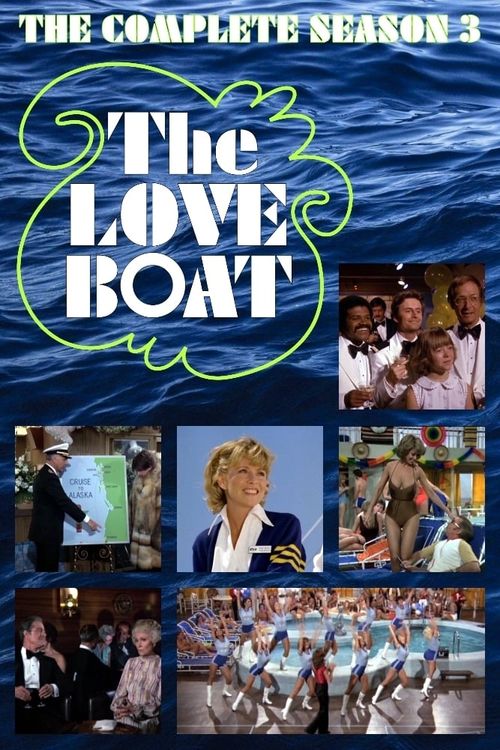
Retro Television Reviews: The Love Boat 3.15 “The Harder They Fall/The Spider Serenade/Next Door Wife”


Welcome to Retro Television Reviews, a feature where we review some of our favorite and least favorite shows of the past!  On Wednesdays, I will be reviewing the original Love Boat, which aired on ABC from 1977 to 1986!  The series can be streamed on Paramount Plus!

This week, Gopher falls in love.  Yes, Gopher.

Episode 3.15 “The Harder They Fall/The Spider Serenade/Next Door Wife”

(Dir by Richard Kinon, originally aired on December 8th, 1979)

After three seasons of being goofy comedic relief, Gopher finally got his heart broken in this episode.  He fell in love with a passenger named Claire Dalrymple (Jill St. John), who is on the boat by herself because she has recently separated from her husband, Nelson (Robert Sampson).  And Claire eventually fell in love with Gopher, especially after he dressed up like a mariachi singer and serenaded her with a song about the time that she asked him to kill a spider that was in her cabin.  This time, it was Gopher who ended up waking up in a cabin with a passenger.

(I’m sure some would say it was a bit unrealistic that Claire, upon seeing a spider in her cabin, would run out into the hallway, screaming while wearing only a towel.  I’ve done the exact same thing at a hotel because spiders are scary!)

But does Claire really love Gopher or if she just looking for someone to feel the void left by her separation.  When her husband shows up on the boat, he turns out to be a pretty reasonable and polite guy.  He tells Gopher that, while Gopher can give Claire anything she wants at sea, Nelson can give her everything she needs on land.  Is Nelson suggesting some sort of special arrangement here?  Well, if he is, it totally goes over Gopher’s head.  At the end of the cruise, Claire decides to leave with Nelson and Gopher can only sadly watch as she leaves.

Awwwwwww!  Poor Gopher!

It’s kind of weird to see Gopher in a sad story.  That’s not the fault of Fred Grandy, who always likable and did a pretty good job with the role.  Instead, it’s just that Gopher is such a goofy character that it takes a bit of adjustment to suddenly see him being sincere.  His storyline here worked well-enough, once you got used to the idea of Gopher being serious.  If anything, Gopher was so sad by the end of it that it suddenly made sense why he’s always telling jokes and trying to avoid any sort of emotional commitment.  He’s hurting inside!

The other two storylines were goofy enough to make up for Gopher’s serious turn.  Chet Hanson (James McArthur) is on the cruise with his girlfriend, Kim (Susan Buckner).  Chet’s wife, Carol, (Joanna Pettet) also shows up on the cruise and gives Chet the papers to sign for their divorce.  Chet and Carol are fairly friendly for a divorcing couple but Chet is still upset when Carol buys a ticket for the cruise and ends up staying in the cabin across the hall from him and Kim.  Soon, Carol is stopping by constantly and telling Chet about a man that she’s been flirting with.  Eventually, Chet realizes that he doesn’t want to get a divorce and he and Carol get back together.  That really sucks for Kim, who is surprisingly tolerant of being followed around by her boyfriend’s wife.  This storyline really did leave a sour aftertaste.  Chet was a jerk and Kim deserved better.

Finally, Ed “Flash” Taylor (Milton Berle) and Jack McTigue (Alan Hale, Jr.) were both boxers in their youth.  They fought one legendary fight, in which they not only beat the Hell out of each other but also knocked out the referee.  Now, they are both cruise line executives and they both end up on their boat at the same time.  As soon as they see each other, their rivalry reignites and they prepare for a rematch on the boat.  When Captain Stubing tries to stop the fight, he is accidentally knocked out by the two boxers.  Somehow, this leads to peace between Ed and Jack and not to Captain Stubing suing his bosses for punching him.  Seriously, the Love Boat is floating HR nightmare.

This was an okay episode, largely due to Gopher’s unexpectedly sad story.  The other two stories were just goofy but, when it comes to The Love Boat, the goofiness is the point.

Retro Television Reviews: Fantasy Island 3.20 “Nona/One Million B.C.”


Welcome to Retro Television Reviews, a feature where we review some of our favorite and least favorite shows of the past!  On Tuesdays, I will be reviewing the original Fantasy Island, which ran on ABC from 1977 to 1986.  Almost entire show is currently streaming is on Youtube!

This episode features a trip to the past and a surprisingly good turn from Peter Graves.

Episode 3.20 “Nona/One Million B.C.”

(Dir by Earl Bellamy, originally aired on March 1st, 1980)

This week, we have another episode of Fantasy Island in which a somewhat effective fantasy is matched with an incredibly dumb one.

The dumb fantasy involves two women (Phyllis Davis and Jo Ann Pflug) who want to go back to a time when men took care of everything and women didn’t have to do anything.  They’re sick of all that women’s lib stuff!  Mr. Roarke explains that their fantasy is rather vaguely worded and then sends them back to the time of dinosaurs and cavemen.  (Of course, dinosaurs and cavemen didn’t exist at the same time but whatever.)  After the two women are nearly killed by a Claymation dinosaur, they are taken in by a tribe of cavemen.  Since their modern clothes were ruined in all the excitement, they are given fashionable fur outfits to wear.  Despite the fact that they’ve gone back to One Million B.C., the new animal skins outfits have built-in bras, showing that the cave people were more advanced than anyone realized.

Anyway, living in a cave sucks but, fortunately, it turns out that tribe’s leader (Neville Brand) is actually just Mr. Roarke in disguise.  Just as the cavemen find themselves in a battle with another tribe of cave dwellers, Roarke reveals himself and ends the fantasy.  Yes, it was dumb.

The other fantasy was significantly better.  Ned J. Scott (Peter Graves) is a former Chicago cop who is now blind but still obsessed with finding the whereabouts a missing actress named Nona (Joanna Pettet).  Roarke gives Scott one of his magic potions, which briefly returns his ability to see.  Fortunately, Nona is on Fantasy Island, being held prisoner by a knife-wielding pimp (Edd Byrnes).  Scott saves her from the pimp, encourages her not to be so critical of herself, and reunites Nona with her family before losing his eyesight once again.  Nona, having fallen in love with Scott, declares that she loves him whether he can see or not.  They leave the Island together.  Awwwwww!

The second fantasy had its flaws, not the least of which was that Nona certainly got over being a sex slave in record time.  But, almost despite itself it still worked.  A lot of that is due to Peter Graves.  Graves, who we normally think of as being something of a stiff actor, gives a very emotional performance here and the viewer never doubts for a second his love for Nona.  Graves especially does a good job in the scenes where Scott realizes that his vision is starting to fade and that he will soon be blind again.  He gives a fully committed performance, one that elevates the fantasy.

Finally, this episode features one brief scene of Roarke and Tattoo banter.  (Roarke and Tattoo banter used to be one of the show’s trademarks but it was rarely seen during the third season.)  Roarke tricks Tattoo into thinking that he’s just taken an invisibility serum.  It’s a bit cruel but at least they were speaking to each other again.

Retro Television Reviews: The Weekend Nun (dir by Jeannot Szwarc)


Welcome to Retro Television Reviews, a feature where we review some of our favorite and least favorite shows of the past!  On Sundays, I will be reviewing the made-for-television movies that used to be a primetime mainstay.  Today’s film is 1972’s The Weekend Nun!  It  can be viewed on YouTube!

By day, Marjorie Walker (Joanna Pettet) is a probation officer who, some might say, cares just a little too much.

By night and on the weekends, she’s Sister Mary Damian, a nun who has taken the three vows of poverty, chastity, and obedience.

Mother Bonaventure (Ann Sothern) isn’t sure that she’s happy about Sister Damian working as a probation officer.  And the tough and cynical Detective Chuck Jardine (Vic Morrow) certainly isn’t happy when he discovers that the reason why Marjorie has never invited him into her home for a drink is because she lives at a convent.  But Marjorie is determined to make a difference, especially in the life of a troubled teen runaway named Audree (Kay Lenz).

Now, this may sound like the premise of a socially relevant sitcom and, indeed, The Weekend Nun is one of those titles that might lead some to expect wacky hijinks and an intrusive laugh track.  However, The Weekend Nun is not only loosely based on a true story but the film also takes itself very seriously.  From the minute that Sister Damian agrees to take part in a program that would allow her to work a real job during the day while returning to the convent at night, she’s exposed to the harsh realities of the world.  She goes from being sheltered to dealing with distraught parents, drug addicts, teen prostitutes, and violent criminals.  Because Captain Richardson (James Gregory) doesn’t want anyone to feel uncomfortable, he hides the fact that she’s a nun.  Of course, this leads to be people like Chuck Jardine wondering why Marjorie is so shocked when she witnesses the thing that he has to deal with a day-to-day basis.

And, indeed, the film’s biggest flaw is that Marjorie is often portrayed as being ridiculously naïve.  The film acts as if spending time in a convent is somehow the equivalent of spending a decade hiding out in a bomb shelter or something.  (Speaking as a Catholic school survivor, nuns are usually some of the least naïve people around.)  Marjorie is portrayed as being such a wide-eyed innocent that it’s hard not to wonder why she was hired to work as a probation officer in the first place.  Of course, Marjorie quickly gets an education on just how dangerous and unforgiving life on the streets can be and she soon has to make a choice between being a nun or being a probation officer.  Will she give her life to God or will she potentially give it to Vic Morrow?

Joanna Pettet overplays Marjorie’s innocence but that’s more the fault of the script than anything else.  James Gregory, Vic Morrow, and Ann Sothern are all believable as the authority figures in Marjorie’s life and Kay Lenz has a few good scenes as the teenage runaway who Marjorie tries to save.  Beverly Garland has a small but brief role as Lenz’s horrifically unconcerned mother.  It’s a well-acted film, regardless of any other flaws.

The Weekend Nun is not perfect but it’s still preferable to The Flying Nun.  It’s a sincerely heartfelt film, one that’s earnest in a way that can seem a bit quaint but which is still likable when watched today.  For better or worse, there’s not a hint of snark to be found.

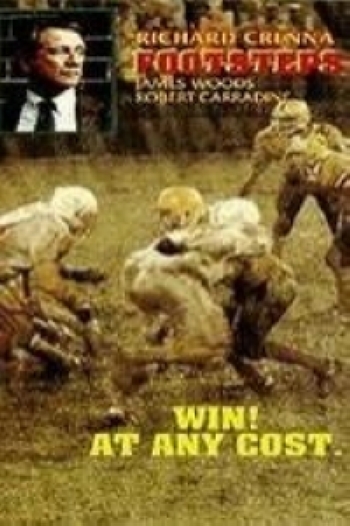
Footsteps (1972, directed by Paul Wendkos)


Paddy O’Connor (Richard Crenna) is a former football player-turned-coach whose record of success has been overshadowed by his own arrogance and heavy drinking.  O’Connor has such a bad personal reputation that he’s found himself unemployable.  Only one man is willing to give him a chance.  Jonas Kane (Clu Gulager) played football with Paddy and he’s now coaches for a small college.  Kane may not like O’Connor but he knows that O’Connor might be the key to turning around his team’s fortunes and, at the same time, saving Kane’s job.  Kane hires O’Connor to serve as a his defensive coordinator.

At first, O’Connor’s cockiness rubs people the wrong way.  It’s not until O’Connor moves offensive player J.J. Blake (Bill Overton) to defense that the team starts to win.  And once the team stars to win, everyone’s problems with O’Connor disappear.  Kane can only watch helplessly as O’Connor moves in on his girlfriend (Joanna Pettet), knowing that he owes his job to O’Connor remaining at the school.

However, when Blake gets a concussion, O’Connor is forced to decide whether or not to let him play.  Boosters like Bradford Emmons (Forrest Tucker) want Blake to play, regardless the risk.  The NFL scouts, who are looking for the next number one pick, want to see Blake on the field.  Blake says he wants to play but O’Connor can tell that he’s lying about the extent of his injury.  With everyone breathing down his neck and a syndicate of gamblers pressuring O’Connor to shave points so that the spread pays off, O’Connor has to decide what to do.

Though this made-for-TV movie may not be as well-known as some other films, it’s one of the best movies ever made about college football.  Though it may be short (only 74 minutes), it still examines all of the issues that have always surrounded college football.  Despite not getting paid for their efforts, the players risk serious and permanent injury during every game, just on the slight hope that they might someday make it to the NFL.  The coaches, who are supposed to be looking after the players, are more interested in padding out their win-loss record and hopefully moving onto bigger and better-paying jobs.  Meanwhile, aging alumni and boosters demand that the team win at all costs, regardless of what happens to the men on the field.  Footsteps intelligently explores all of those issues and suggests that the risks are ultimately not worth the rewards.

Along with an intelligent script, Footsteps is helped by a talented cast.  Crenna and especially Gulager both give excellent performance as the two rival coaches.  Al Lettieri (Sollozzo from The Godfather) plays one of the gamblers.  Beah Richards plays Blake’s mother, who makes the mistake of believing O’Connor when he says that he’s going to always have Blake’s best interests at heart.  Ned Beatty has a small role as another assistant coach who is forced to make an important decision of his own.  Keep an eye out for Robert Carradine and James Woods, both of whom have tiny roles.

As far as I know, Footsteps has never officially been released on DVD.  I saw it late one night on the Fox Movie Channel.

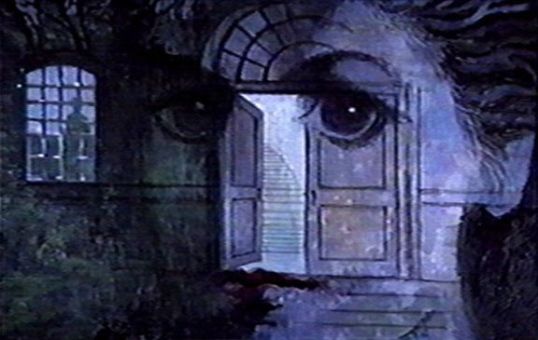
TV Review: Night Gallery 1.3 “The House/Certain Shadows on the Wall”


The third episode of Night Gallery aired on December 30th, 1970.  While Americans were undoubtedly finalizing their plans for a wild New Year’s Eve (because, after all, Nixon was president and every day was a party), NBC and Rod Serling invited viewers to take a tour through a darkened museum, one where every painting told a story.

This episode of Night Gallery featured two stories:

The House (dir by John Astin, written by Rod Serling)

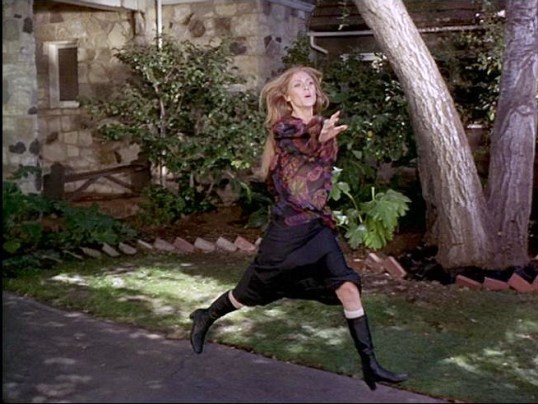
The House opens with Elaine Latimer (Joanna Pettet) talking about a recurring dream.  She’s driving her car through the countryside when she comes across a large house.  Though she’s never seen the house, she finds herself drawn to it, as if she somehow belongs in the house.  As Elaine describes her dream, we come to realize that she’s talking to a psychiatrist (Steve Franken) and that Elaine is recovering from mental breakdown.  Her doctor tells Elaine that the dream is nothing to worry about.

However, when Elaine is driving home, she realizes that the countryside looks familiar.  Soon, she’s pulling up in front of the house from her dreams!  When Elaine gets out of the car, she’s greeted by a real estate named Peugeot (Paul Richards) who asks her if she’s interested in buying the house.  As Peugeot gives her a tour of the estate, he mentions that the house is thought to be haunted….

I liked The House.  It was an atmospheric little tale and, from the minute that Elaine started talking about her dream, the story captured my attention.  (I should admit that I also have recurring dreams about a house that I’ve never actually seen before.)  Admittedly, the story does play out at a very deliberate pace and requires a bit of patience but the dream sequences are effectively surreal and Joanna Pettet gives an empathetic performance in the lead role.

Certain Shadows On The Wall (dir by Corey Allen, written by Rod Serling)

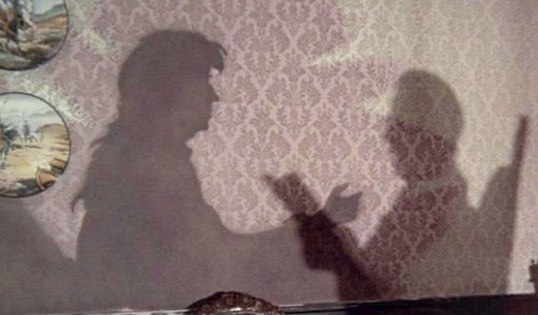
This segment features Agnes Moorehead as the sickly Emma, who is poisoned by her own brother, the despicable Stephen (Louis Hayward).  After Emma’s death, Stephen is shocked to discover that, even though Emma is gone, her shadow remains on the wall.  While Stephen is trying to make sense of that, his other two sisters (played by Grayson Hall and Rachel Roberts) have plans of their own for how to deal with their duplicitous brother.

Like The House, Certain Shadows On The Wall is appropriately atmospheric.  The ending is a bit weak as Stephen gets what he deserves but the shadow itself doesn’t have much to do with his actual fate.  Just when you’re waiting for Agnes Moorehead to make a sudden, ghostly appearance, the story comes to an end.  Still, this is an effective segment and it features excellent work from its ensemble.  I especially liked the performance of Grayson Hall, which features one of the most frightening glares that I’ve ever seen.

The third episode of Night Gallery was a definite improvement over the two that came before it.  Both segments tell intriguing stories, though it’s obvious that the show was still better at coming up with good premises than effective endings.

Previous Night Gallery Reviews:

  1. The Pilot
  2. The Dead Man/The Housekeeper
  3. Room With A View/The Little Black Bag/The Nature of the Enemy

A Movie A Day #33: Two-Minute Warning (1976, directed by Larry Peerce)


mpw-8771

For the longest time, I thought that Two-Minute Warning was a movie about a gang of art thieves who attempt to pull off a heist by hiring a sniper to shoot at empty seats at the Super Bowl.  As planned by a master criminal known as The Professor (Rossano Brazzi), the sniper will cause a riot and the police will be too busy trying to restore order to notice the robbery being committed at an art gallery that happens to be right next to the stadium.

I believed that because that was the version of Two-Minute Warning that would sometimes show up on television.  Whenever I saw the movie, I always through it was a strange plan, one that had too many obvious flaws for any halfway competent criminal mastermind to ignore them.  What if the sniper was captured before he got a chance to start shooting?  What if a riot didn’t break out?  The sniper spent the movie aiming at empty seats but, considering how many people were in the stadium, it was likely that he would accidentally shoot someone.  Were the paintings really worth the risk of a murder charge?

Even stranger was that Two-Minute Warning was not only a heist film but it was also a 1970s disaster film.  Spread out throughout the stadium were familiar character actors like Jack Klugman, John Cassevetes, David Janssen, Martin Balsam, Gena Rowlands, Walter Pidgeon, and Beau Bridges.  It seemed strange that, once the shots were fired and Brazzi’s men broke into the gallery, all of those familiar faces vanished.  When it comes to disaster movies, it is an ironclad rule that at least one B-list celebrity has to die.  It seemed strange that Two-Minute Warning, with all those characters, would feature a sniper shooting at only empty seats.  For that matter, why would there be empty seats at the Super Bowl?

That wasn’t the strangest thing about Two-Minute Warning, though.  The strangest thing was that Charlton Heston was in the film, playing a police captain.  In most of his scenes, he had dark hair.  But, in the scenes in which he talked about the art gallery, Heston’s hair was suddenly light brown.

Recently, I watched Two-Minute Warning on DVD and I was shocked to discover that the movie on the DVD had very little in common with the movie that I had seen on TV.  For instance, the television version started with the crooks discussing their plan to rob the gallery.  The DVD version opened with the sniper shooting at a couple in the park.  In the DVD version, there was no art heist.   The sniper had no motive and no personality.  He was just a random nut who opened fire on the Super Bowl.  And,  in the DVD version, he did not shoot at empty seats.  Several of the characters who survived in the version that I saw on TV did not survive in the version that I saw on DVD.

What happened?

The theatrical version of Two-Minute Warning was exactly what I saw on the DVD.  A nameless sniper opens fire and kills several people at the Super Bowl.  In 1978, when NBC purchased the television broadcast rights for Two-Minute Warning, they worried that it was too violent and too disturbing.  There was concern that, if the film was broadcast as it originally was, people would actually think there was a risk of some nut with a gun opening fire at a crowded event.  (In 1978, that was apparently considered to be implausible.)  So, 40 minutes of new footage was shot.  Charlton Heston even returned to film three new scenes, which explains his changing hair color.  The new version of Two-Minute Warning not only gave the sniper a motive (albeit one that did not make much sense) but it also took out all of the violent death scenes.

Having seen both versions of Two-Minute Warning, neither one is very good, though the theatrical version is at least more suspenseful than the television version.  (It turns out that it was better to give the sniper no motive than to saddle him with a completely implausible one.)  But, even in the theatrical version, the potential victims are too one-dimensional to really care about.  Ultimately, the most interesting thing about Two-Minute Warning is that, at one time, an art heist was considered more plausible than a mass shooting.

tmw