The Films of 2025: F1 (dir by Joseph Kosinski)


“Do they have the car?”

“We have the driver.”

Those two lines of dialogue, uttered towards the end of the film, pretty much sums up F1, a terrifically entertaining movie about Formula One racing.

Brad Pitt stars as Sonny Hayes, a former FI prodigy who, in the early 90s, suffered a traumatic crash at the Spanish Grand Prix.  The crash nearly killed him and it temporarily ended his career as an F1 driver.  Sonny has spent the past thirty years as a drifter, gambler, and as a race car driver for hire.  He lives in a van and is haunted by nightmares of his crash.  When he wakes up in the morning, he groans as he stretches his tattooed, beat-up, but still muscular body.  He dunks his face in a sink full of ice.  He’s aging but he hasn’t surrendered just yet.  The film opens with Sonny helping to win the 24 Hours of Daytona race.  After his victory, he’s approached by his former teammate, Ruben (Javier Bardem).  Ruben is in charge of the APEXGP F1 team.  He needs a driver to partner with the young and arrogant Joshua Pearce (Damson Idris).  Sonny agrees, though only after Ruben asks if Sonny wants a chance to show that he’s the best in the world.  Sonny may be one of the oldest guys on the track but he’s still got something to prove.

If F1 came out in 80s, the 90s, or even the Aughts, it would be viewed as a well-made but predictable racing film, one in which a fairly by-the-numbers script was held together by Brad Pitt’s overwhelming charisma and Joseph Kosiniski’s kinetic direction.  And that certainly is a legitimate way to view the film in 2025.  On the other hand, coming after both the scoldy Woke Era and the authoritarian COVID Era, a film that celebrates competing without guilt, that says that it’s more fun to win than to lose, and which doesn’t apologize for embracing a culture of driving fast and breaking the rules feels almost revolutionary.  Just as he did with Top Gun: Maverick, director Joseph Kosinski reminds the audience that it’s okay to be entertained.  Not everything has to be a struggle session.  Not everything has to be a rejection of the things that once made you happy.  F1 is a film that invites you to cheer without guilt or shame.

It’s a good film, one that is full of exciting racing scenes and gasp-inducing crashes.  After both this film and Top Gun: Maverick, there’s little doubt that director Joseph Kosinski knows how to harness the power of Hollywood’s few true movie stars.  That said, as good as Brad Pitt is, Damson Idris is equally impressive, playing Joshua, a young driver who learns that there’s more to being a great driver than just getting good press.  When we first meet Joshua, he’s young and cocky and arrogant and one thing that I respect about the film is that, even after Joshua learns the importance of teamwork and trust, he’s still more than a little cocky.  He never stops believing in himself.  He doesn’t sacrifice his confidence on the way to becoming the best.  Though the film is definitely on Sonny’s side when it comes to their early conflicts (one can practically here the film saying, “Put down your phone, you young whippersnapper!”), it’s smart enough to not make Joshua into a caricature.  Instead, he’s just a young man trying to balance celebrity and talent.  Kerry Condon also gives a good performance as APEX’s technical director, though her romance with Sonny does feel a bit tacked on.  (Far too often, whenever a female character says that she’s not looking for a relationship, movies refuse to take her word for it.)

When I first heard about F1, I have to admit that I wondered if Kosinski was deliberately following up the Top Gun sequel with a remake of Days of Thunder.It is true that F1 does have a lot in common with other racing films but, in the end, it doesn’t matter.  Brad Pitt’s star turn and Joseph Kosinski’s direction makes F1 into an absolutely thrill ride and one of the best of 2025.

Scenes That I Love: The Underground Chaos From Skyfall


Today, the Shattered Lens wishes a happy birthday to director Sam Mendes!

Now, it’s true that Sam Mendes won an Oscar for directing American Beauty and he probably came close to winning a second one for his work on 1917.  However, my favorite Mendes film remains Skyfall.  Skyfall is one of the best of the Bond films and I say this as someone who was never really a fan of Daniel Craig’s mopey interpretation of the character.  Based on his previous films, Sam Mendes may not have been the first name that come to mind when people talked about someone who could make a great Bond film but, with Skyfall, he did just that.

Here, in a scene that I love, James Bond pursues Silva (Javier Bardem) through the London Underground.  It’s very suspenseful, very droll, and, most importantly, very British.

April Noir: Collateral (dir by Michael Mann)


In 2004’s Collateral, Jamie Foxx stars as Max, a taxicab driver who is hoping, in those days before Uber, to start his own limousine company.  When we first see him, he’s giving a ride to a federal prosecutor named Annie (Jada Pinkett Smith) and he’s even getting her phone number after he drops her off at work.  Unfortunately, for Max, his next passenger is a bit less friendly.

Vincent (Tom Cruise), with his gray hair that matches his suit, is polite, quiet, and direct when he speaks.  He carries a briefcase with him everywhere that he goes and anyone who tries to take the briefcase soon discovers just how far Vincent will go to hold onto it.  Vincent pays Max $600 to drive him around Los Angeles for the night.  Vincent has a lot of business that he needs to attend to.  Max agrees, not realizing until it’s too late that Vincent is a hired assassin and that his business is killing people.  Vincent has been hired to wipe out a collection of crooks and lawyers and, though Vincent is careful not to reveal his emotions, it’s obvious that he’s looking forward to the challenge.

To his credit, Max doesn’t really have any interest in being a part of Max’s killing spree but he soon finds himself unable to escape from Vincent and being forced to drive from location to location.  Along the way, Vincent and Max engage in debates of both morality and philosophy.  Vincent sees death as just being a part of the job.  Max is horrified, especially when people who haven’t done anything wrong end up as collateral damage in Vincent’s killing spree.  The truth of the matter is that, even if Max hadn’t picked up Vincent, there’s no guarantee that he wouldn’t have picked up some other madman.  As a taxi driver, Max surrenders his control once he unlocks the door and allows someone to get in the backseat.  Sometimes, he gets a passenger like Annie.  Other times, he’s going to get a passenger like Vincent.  Somewhat improbably, Vincent and Annie turns out to be connected and Max’s chance encounter with her becomes even more important.

Because this is a Michael Mann film, Los Angeles is as much a character in this film as Max and Vincent.  Mann captures the shadowy darkness of the city at the night and the feeling that both opportunity and danger could lurk around every corner.  Claustrophobic scenes in the taxi cab are mixed with scenes in an equally claustrophobic (though for different reasons) club.  The film’s haunting final image takes place not in the cab but instead on a train.  Everyone is heading somewhere and, at some point during the film, both Vincent and Max deal with the feeling of having no control over where they’ll end up.

When Collateral first came out in 2004, I remember that a lot of people were shocked to see Cruise playing a villain.  Cruise does give one of his best performances here, playing yet another one of Mann’s cool and efficient professionals.  Strangely enough, Jamie Foxx is the one who was nominated for an Oscar, even though he’s actually a little on the boring side as Max.  (In all fairness, Max is meant to be the conventional member of the film’s involuntary partnership.)  The film is dominated by Cruise and his performance is still powerful to this day.

Scenes That I Love: The Underground Chase From Skyfall


Today, the Shattered Lens wishes a happy birthday to director Sam Mendes!

Now, it’s true that Sam Mendes won an Oscar for directing American Beauty and he probably came close to winning a second one for his work on 1917.  However, my favorite Mendes film remains Skyfall.  Skyfall is one of the best of the Bond films and I say this as someone who was not really a fan of Daniel Craig’s mopey interpretation of the character.  Based on his previous films, Sam Mendes may not have been the first name that come to mind when people talked about someone who could make a great Bond film but, with Skyfall, he did just that.

Here, in a scene that I love, James Bond pursues Silva (Javier Bardem) through the London Underground.  It’s very suspenseful, very droll, and, most importantly, very British.

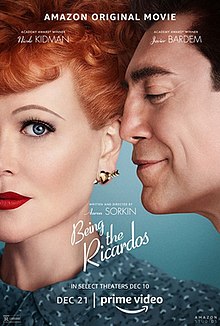
Film Review: Being the Ricardos (dir by Aaron Sorkin)


Has Aaron Sorkin ever met anyone who doesn’t sound like Aaron Sorkin?

That was the question that I found myself considering as I watched Sorkin’s latest film, Being the RIcardos.  The film may present itself as being a film about Lucille Ball (Nicole Kidman) and Desi Arnaz (Javier Bardem) but neither Lucy nor Desi ever come across as being actual human beings or even celebrities trying to be human.  Instead, they both come across as Sorkin stock characters.  Lucy is the socially maladjusted genius who demands a lot from the people working for her and who struggles with apologizing.  Desi is irresponsible but a hard worker, a man who makes a lot of mistakes but who should never be underestimated.  They speak in quips and they instinctively understand what the people in their audience want to see.  Who can keep up with Lucy and Desi?  Certainly not the suits from the network!  Trial of the Chicago 7 had Tom Hayden and Abbie Hoffman taking on the military industrical complex.  Being the Ricardos has Lucy and Desi taking on both the entertainment industry and the McCarthy era.

The film claims to tell the story of the week that Lucy and Desi’s show, I Love Lucy, was nearly destroyed.  The week started with columnist Walter Winchell revealing that, when she was in her 20s, Lucy was briefly registered as a member of the Communist Party.  (Lucy explains that she did it as a favor for her grandfather, who “cared about the working man.”)  The day after learning that her subversive past has been exposed, Lucy and Desi tell the show’s writing staff that Lucy is pregnant and they expect the writers to write her pregnancy into the show regardless of what the uptight studio execs declare.  Meanwhile, Lucy has to deal with rumors of Desi’s infidelity while Desi struggles with being overshadowed by his wife.  Lucy’s co-star, Vivian Vance (Nina Arianda), resents having to play a frumpy character while her other co-star, William Frawley (J.K. Simmons), spends most of the movie drunk off his ass.  If anything Frawley and Vance come across as being more interesting than either Lucy or Desi but, just as in real life, this is the Lucy show.  Frawley makes a few drunken comments about a seven year-old communist.  Vance sits in her dressing room and fumes.  In real life, when she learned Lucy was pregnant, she reportedly yelled, “I’d tell you to go fuck yourself but apparently Desi already did that!”  That line isn’t in the film, which is a shame.

The film skips around in time.  There’s an odd framing device, taking place in what I presume is meant to be the 80s and featuring the surviving members of the production staff are being interviewed for a documentary.  Why Sorkin decided to use this documentary device is odd.  It seems like he could have just used real archival footage if he wanted to go for a documentary approach as opposed to staging a fake documentary where older actors playing real people still sound like relentlessly quippy supporting characters in a Sorkin film.  We also get the occasional flashback to the early days of Lucy and Desi’s relationship, none of which are particularly interesting.  One of the people being interviewed for the documentary tells us that, before she met Desi, Lucy was being groomed to become a serious dramatic actress.  “She could have starred in All About Eve and blown the doors off!” we’re told and that’s great but is that the opinion on the fictionalized person being interviewed for the documentary or is that something that Aaron Sorkin came up with to try to create some dramatic tension?  I mean, saying that Lucy would have been the equal of Bette Davis is quite a statement but the film doesn’t show us any scenes of Lucy being a particularly skilled dramatic actress so it just comes across as being kind of overly dramatic thing to say.

We do get several scenes of Lucy explaining why jokes are funny.  Nicole Kidman gets a very serious look on her face while Sorkin shows us what’s happening inside her mind.  Lucy pictures herself, in black-and-white, stepping on grapes in Italy.  Dramatic music swells as we snap back to Lucy declaring what the scene needs to truly be funny.  (“I lose an earring,” she says, as if she’s just figured out how to resolve Gatsby’s obsession with Daisy.)  It’s the sort of thing that makes you wonder if Aaron Sorkin has ever actually told a joke that he didn’t spend a few hours thinking about ahead of time.  The film’s portrayal of what went on behind-the-scenes of I Love Lucy is so portentous and overdramatic that it really only makes sense if you accept the idea of creating television being some sort of religious ritual, with showrunners and producers taking the place of God.  God needed 6 days to create the world but Lucy only needs 5 to create classic television comedy.  Take that, God!

Aaron Sorkin is a writer who desperately needs a cynical collaborator.  With The Social Network and Moneyball, Sorkin was fortunate to be paired with David Fincher and Bennett Miller, two directors with notably dark views of humanity and who served to temper Sorkin’s sanguine excesses.  When Sorkin directs his own material, the audience ends up with scenes like Joseph Gordon-Levitt standing in protest at the end of The Trial of the Chicago 7 or Desi Arnaz calling J. Edgar Hoover from the set of I Love Lucy in Being The Ricardos.  These are deeply silly scenes that did not happen in real life and which, even more importantly, should never have gotten past a first draft.  Sorkin’s need to end everything with a “big hero” moment is his most glaring flaw as both a writer and a director.

For the record, Lucille Ball did register as a communist when she was younger.  And, indeed, it is true that she did it as a favor for her grandfather.  It was briefly a news story but Lucy was quickly cleared.  Before shooting that week’s episode, Desi told the audience that “The only thing red about Lucy is her hair and even that is not legitimate.”  That was a good line and no, Desi didn’t need the help of J. Edgar Hoover to sell it.

Here’s The Trailer for Being The Ricardos


Javier Bardem and Nicole Kidman play Lucille Ball and Desi Arnaz in a film written and directed by Aaron Sorkin …. well, I was excited until I typed that last part. I love Javier and Nicole but this seems like the type of story that will just bring out all of Sorkin’s worst instincts. Sorkin desperatey needs a director like David Fincher to help him reign in his more earnest and preachy tendencies.

But, you know what? Let’s give it a chance! Enough with a negativity, Bowman! I hope this is a good movie. Oscars for everyone!

Here’s the trailer:

The Sleeper Awakens with the new Dune Trailer


Just about everyone’s waiting for Denis Villeneuve’s remake of Frank Herbert’s Dune. Having grown up on the David Lynch version (and making my way through the novel), it has some big shoes to fill. Thankfully, what we’ve seen of it so far seems interesting. Villeneuve should have an easy time with the source material, though the movie has had its share of reshoots and dealing with the pandemic. We’ll see how it goes.

We finally have a trailer and some Wormsign!!. I’m liking the look of it. Chalamet’s Paul Atreides has some attitude to him, and I’m curious to see what Stellan Skarsgard does with the Baron Harkonnen.

Enjoy.

<- Artwork of the Day: A Bloody Business Artist Profile: Stewart Rouse ->

Here’s The Teaser for Mother!


Here’s the teaser for Mother!  The full trailer drops on the 8th.

No one seems to be really sure what Mother! is about.  It appears to be a horror/thriller sort of thing but, with Darren Aronofsky directing, it’s safe to assume that there will be all sorts of layers of meaning.  Along with starring Jennifer Lawrence (who, after Joy and Passengers, could really use a movie that’s worthy of her talents), Mother! also features Javier Bardem, Michelle Pfeiffer, and Ed Harris.  Judging by how the majority of this teaser goes out of it’s way to portray Jennifer Lawrence as being isolated in a big house, I wouldn’t be surprised to discover that Bardem, Pfieffer, and Harris all plays figments of Lawrence’s imagination.

Who knows?  We’ll find out on September 15th!

Embracing the Melodrama Part II #107: No Country For Old Men (dir by the Coen Brothers)


No_Country_for_Old_Men_posterI love my home state of Texas and I love movies. Therefore, it has always upset me that most movies set in Texas get the state totally wrong.  That’s not exactly shocking.  Unlike the rest of the states, there’s actually a lot of variety to Texas.  We’re a big state and we’re home to a lot of people.  Unlike some place like Vermont, Texas is a world all its own and it’s not surprising that most outsiders are incapable of getting their mind around that and instead find themselves embracing simple-minded clichés and stereotypes.  That’s perhaps why the best films about Texas tend to be ones that were actually made by Texans.  If you want to see the real Texas — flaws and all — than I suggest watching the films of Richard Linklater or perhaps Wes Anderson’s Rushmore.

And yet, it took two outsiders to write, produce, and direct one of the best films ever made about Texas.  The 2007 best picture winner No Country For Old Men was largely the work of two brothers from Minnesota, Joel and Ethan Coen.  It’s not only one of the best films about my home state but it’s also one of the best films of the past decade.

Based on a novel by Cormac McCarthy, No Country For Old Men tells the story of three determined men in South Texas whose lives are interconnected despite the fact that three of them spend almost the entire movie one step behind each other.  In fact, despite a few brief encounters where their paths meet, it can be argued that, at no point, do any of them truly interact with each other face-to-face.

Llewelyn Moss (Josh Brolin) is the type of person that anyone who has ever lived in Texas will have met.  He’s a hard-working, plain-spoken man, the type who drives a pickup, owns a gun, and likes to begin and end the day with a beer.  He lives in a trailer with his wife, Carla Jean (Kelly MacDonald, who may be Scottish but speaks here with an almost flawless Texas accent).  Llewelyn’s not a bad guy but he’s not as smart as he thinks and, like a lot of folks down here, he doesn’t like the idea of being told what to do.  In fact, he’d almost rather die for his trouble than admit to making a mistake.  When Llewleyn comes across the aftermath of a drug deal turned violent, he takes off with a suitcase that contains $2,000,000.  After barely escaping the remaining drug dealers (and the scene where Llewelyn is chased by a pit bull is a classic), Llewelyn sends Carla Jeans to stay with her sick mother and then he grabs the suitcase and heads over to the next county.  It quickly becomes apparent, to the viewers at least, that Llewelyn has absolutely no idea how to get out of the mess that he’s found himself in.

And it’s quite a mess because Anton Chigurh (Javier Bardem) has been hired to track down the money.  Perhaps one of the greatest movie villains of all time, Chigurh is an almost unstoppable force of death and destruction.  Chigurh pursues Llewelyn across Texas, killing almost everyone who he meets along the way.  Interestingly enough, just as Llewelyn continually makes excuses for his own greed, Chigurh also makes excuses for his murderous activities, seeming to obsess over the role of fate and chance.  Whereas Llewelyn refuses to give up the suitcase, even though it means that he’s putting his own wife in danger, because he insists that he can figure out a way to keep the money, Chigurh occasionally dodges responsibility for his own actions by flipping a coin and putting the blame on fate.

And finally, there’s Sheriff Ed Tom Bell (Tommy Lee Jones), who is both the most decent and the most ineffectual male character to be found in the film.  He’s an old-fashioned lawman, the type who, had this film been made in the 50s or the 60s, would have been played by Gary Cooper and would have both vanquished Chigurh and given Llewelyn and Carla Jean marriage advice as well.  In the world of No Country For Old Men, however, Ed is almost always one step behind both Chigurh and Llewelyn.  Instead of saving the day, Ed spends most of the movie shocked and saddened by the violence around him.  As the film draws to its conclusion, he’s left to wonder whether any one man can make a difference.  He’s left to literally wonder whether his area of South Texas has truly become no country for old men.

I recently rewatched No Country For Old Men on TCM and I was surprised to discover just how well this film holds up, even after repeat viewings.  If anything, the film actually improves on repeat viewings.  Once you know how the story is going to end (and, in a fashion typical of both the Coens and Cormac McCarthy, No Country For Old Men does not have a traditional ending), it’s easier to see all of the things that you may have been too overwhelmed to appreciate the first time, like Kelley McDonald’s performance as Carla Jean and Stephen Root’s cameo as Chigurh’s shady employer.

However, for me, the main reason that I appreciate No Country For Old Men is because it is one of the few films that actually manages to get South Texas right.  My mom was born and grew up in South Texas, in the town of Benavides to be exact.  I’ve spent a lot of time down there.  The portrait that No Country For Old Man paints of South Texas is not always flattering but it is largely accurate.  No County For Old Men captures both the region’s terrifying violence and its natural beauty.  It’s honest about the fact that there are men like Anton Chigurh but, at the same time, you occasionally meet an Ed Tom Bell as well.  And, of course, there’s a Llewelyn Moss in every town.  He’s the one who you meet and you hope — often against your better instincts — that he won’t get in over his head.

The Academy named No Country For Old Men the best film of 2007.  For once, the Academy was right.

6 Other Films That I Saw in 2014: The Best Offer, Borgman, Illiterate, In Secret, Scorpion in Love, and Tercera Llamada


http://www.youtube.com/watch?v=6GFej_UGqNg

The Best Offer (dir by Guiseppe Tornatore)

Virgil (Geoffrey Rush, giving a very Geoffrey Rush type of performance) is the owner of a prestigious auction house.  He’s hired by the mysterious Claire (Sylvia Hoeks) to auction off all of her dead parent’s possessions.  Virgil finds himself growing obsessed with Claire and, with the help of his assistant Robert (Jim Sturgess), finally manages to strike up a tentative relationship with her.  However, it quickly turns out that there’s more to Claire and Robert than Virgil originally assumed.

The Best Offer is a disappointing film.  It’s not terrible but it moves far too slowly for its own good and most of the cast seems to be going through the motions.  The one exception is Donald Sutherland, who is a lot of fun as a sleazy con artist.  Sutherland managed to partially redeem Fierce People, another bad film that I recently reviewed, and he comes close to doing the same for The Best Offer.

http://www.youtube.com/watch?v=Bg65TbeHtCE

Borgman (dir by Alex van Warmerdam)

Borgman is a disturbing and dark film from the Netherlands that was released over here in U.S. by Drafthouse Films.  This summer, Jeff and I saw it at our local Alamo Drafthouse with the usual group of self-styled cinema experts. Nobody quite knew what they were about to see and, after the film ended, an uneasy air descended over the theater as we all wondered what we had just watched.

Jan Bijvoet plays Camiel Borgman, a homeless man who is first seen living in the woods, hidden away in an underground cavern.  When he’s chased out of the woods by a priest and two men, Borgman eventually finds himself at the home of the arrogant and wealthy Richard (Jeroen Perceval).  Richard refuses Borgman’s request to enter the home for a bath and then physically attacks him.  When Borgman returns to the house the next day, Richard’s wife, Marina (Hadewych Minis), allows him to stay in the garage.  Though Borgman originally says he’s only going to stay a day, he is soon living in the garage.  Everyone — Marina, her children, and the nanny — is aware that Borgman is now a part of their household.  Everyone, except for Richard who remains blissfully unaware.  Soon, Marina is having violent nightmares while Borgman crouches over her and more and more of Borgman’s followers are showing up at the house…

Borgman is a horrific fable with a dark sense of humor.  (As frightening as Borgman is, it’s impossible not to be amused by just how clueless Richard turned out to be.)  In the best tradition of Michael Haneke, it all leads to an inevitable and unsettling conclusion.

http://www.youtube.com/watch?v=HGVz02iH2c4

Illiterate (dir by Moisés Sepúlveda)

Now this is a special film.

In this Chilean film, Ximena (Paulina Garcia) is an angry and sarcastic woman who is secretly ashamed to be illiterate.  When Jackeline (Valentina Muhr) volunteers to teach Ximena how to read, she has to deal with both Ximena’s stubborn nature and her own anger over the years that she’s lost, imprisoned by her inability to understand the written word.  And while this may sound like the basis of a typical Lifetime movie, the story takes on a special significance if you know something about the history of Chile and you understand that Ximena is a part of the generation that was previously held prisoner by a military dictatorship.  Ximena’s attempt to learn how to read mirror the attempt of a country to learn how to be free.

Garcia and Muhr both give excellent performances.  The film is a bit stagey but ultimately, it’s very touching.

In Secret (dir by Charlie Stratton)

How do you not enjoy a film like In Secret?  Taking place in 19th century Paris, In Secret tells the story of Therese (Elizabeth Olsen), who is forced by her haughty aunt (Jessica Lange) to marry her sickly cousin Camille (Tom Felton).  However, Therese does not love Camille and, bored with life in general, she ends up having an affair with Camille’s friend, the libertine Laurent (Oscar Isaac).  Soon, Camille has been murdered, Theresa and Laurent are married, and how can you not love all of this melodrama?

In Secret is over-the-top but enjoyable, like a Lifetime movie with explicit sex and costumes to die for.  It’s just a lot of fun.

Scorpion In Love (dir by Santiago Zannou)

In this Spanish film, Julian (Alex Gonzalez) is a young Neo Nazi who attempts to achieve redemption through boxing but who fears that his violent past will catch up with him.  It’s not, by any means, a bad film.  It’s just an extremely predictable one.  Javier Bardem shows up playing a Nazi leader and he’s just as dangerously charismatic as you might expect but, otherwise, the film doesn’t offer much insight into what exactly would lead someone like Julian to become a Nazi in the first place.

Tercera Llamada (dir by Francisco Franco Alba)

This comedy from Mexico tells the story of an attempt by a theater company to put on a production of Albert Camus’s Caligula.  The film is full of the usual types — the dedicated director, the craven producer, the innocent ingenue, and the difficult diva.  It’s predictable but likable.  If you’ve ever been involved in a community theater production that you just knew was going to probably be a disaster, you’ll find a lot to appreciate in Tercera Llamada.