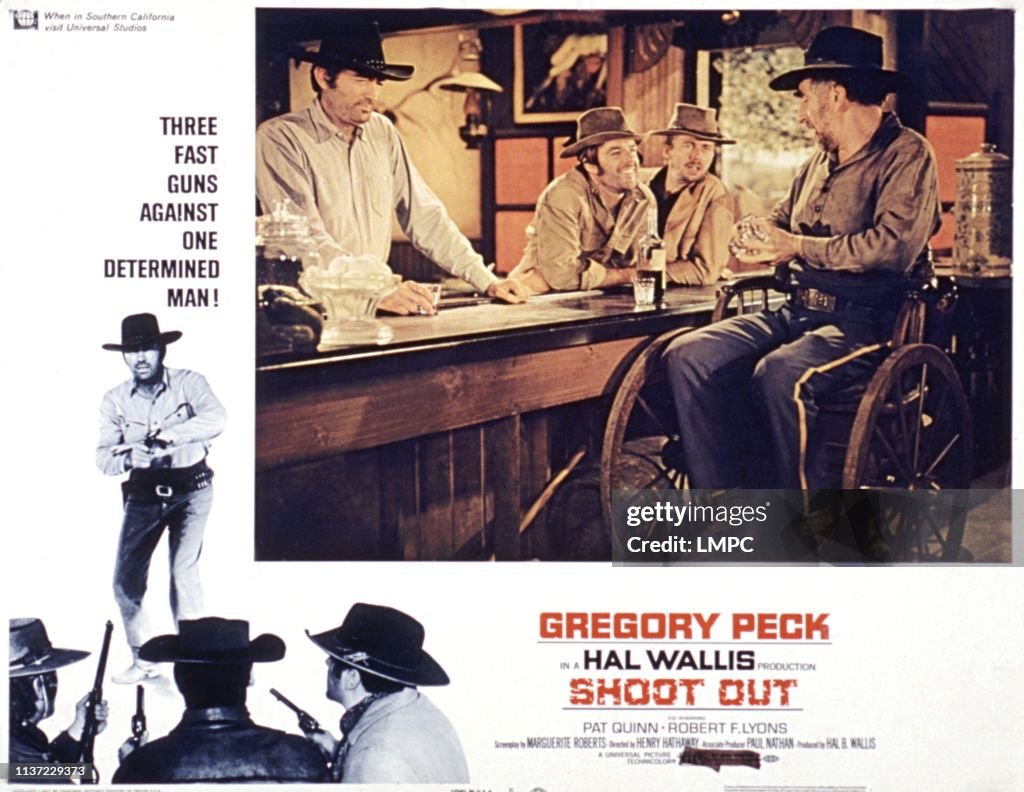
Brad reviews SHOOT OUT (1971), starring Gregory Peck & Robert F. Lyons! 


After serving a stretch at the Canon City penitentiary, Clay Lomax (Gregory Peck) gets out with only one thing on his mind… revenge on his former partner Sam Foley (James Gregory), who shot him in the back during a bank robbery, leaving him to take the rap. Foley isn’t a fool, though, so he’s hired a trio of young punks, Bobby Jay (Robert F. Lyons), Skeeter (John Davis Chandler), and Pepe (Pepe Serna) to surveil Lomax and let him know if he’s heading to his home in Gun Hill with payback on his mind. These guys are about as crazy as it gets, and they make two major mistakes. First, they kill Lomax’s friend Trooper (Jeff Corey) who lets him know where Foley is with his dying breath. Second, they kidnap the prostitute Alma (Susan Tyrell) just because they want to treat her like crap and have fun with her, which turns out to be a dumb move. Interrupting Lomax’s quest for revenge, he finds himself being forced to care for a young child named Decky (Dawn Lyn), who just may be his daughter with a lady back in Kansas City who used to be his “friend.” Looking after Decky, and then meeting and falling for the widow Juliana Farrell (Patricia Quinn), Lomax is soon facing off against his most dangerous foe, the crazed Bobby Joe, as he attempts to protect all these new people that he loves so he can move on with his life. But is it all too late?!!

I love westerns, but I must admit that I’m not the biggest fan of director Henry Hathaway’s SHOOT OUT. Hathaway has directed some of my favorite actors and movies, like Charles Bronson’s debut film with Gary Cooper, YOU’RE IN THE NAVY NOW (1951), along with the Jimmy Stewart film CALL NORTHSIDE 777 (1948) and John Wayne’s Oscar winning TRUE GRIT (1969). Unfortunately, it seems his best years are behind him, and he would only direct one more film after this, the less than excellent black action film HANGUP (1974). This isn’t exactly Gregory Peck’s best work either. Coming nine years after his Oscar winning performance in TO KILL A MOCKINGBIRD (1962), this is definitely not even close to that kind of level. Don’t get me wrong, I do enjoy his turn as Lomax when he’s the wronged outlaw looking for revenge, but I don’t really care at all for his part as the reluctant father figure trying to deal with the six-year-old Decky. I found Dawn Lyn to be more annoying than cute in the role, and this storyline distracted me from the revenge plot that I actually enjoyed. As a co-host of the “This Week in Charles Bronson Podcast,” we had the opportunity to interview Robert F. Lyons, who plays the bad guy, Bobby Jay Jones. I specifically asked him about this film and what it was like working with Gregory Peck. While he enjoyed working with Peck, his response about the film itself was telling…. “The work in there is not my work.” If you’ve watched much of the excellent actor’s work before, you can immediately understand what he means. Lyons goes so over-the-top as the spying outlaw Bobby Jay Jones, that his performance is inconsistent with the bulk of his career. Lyons told us that his performance was orchestrated by Hathaway in a way that he disagreed with, and he essentially disowns his work in the film. You can see a similar vibe with his “gang” that includes the actors John Davis Chandler and Pepe Serna. 

While I’m not a huge fan of the overall direction of the storyline or the focus of some of the main performances in SHOOT OUT, I am appreciative of the genre and the classic western stars that Hathaway cast in supporting roles. I especially enjoy seeing Jeff Corey in the small but pivotal role as the wheelchair bound Trooper, Paul Fix as the train brakeman who delivers Decky and a stack of cash to Lomax, and Arthur Hunnicutt as the ranch owner who barters with Lomax over the price of a pony. Hunnicutt is a particular favorite of mine although his role here is very small. Nominated for an Oscar for his performance in Howard Hawks’ THE BIG SKY (1952), Hunnicutt is from the small town of Gravelly, Arkansas, which is not far from where my own family is from. He even attended the same college that I graduated from, the University of Central Arkansas, which was known as the Arkansas State Teachers College when he (and my dad) went there. And then there is the setup of the revenge scenario at the beginning and the final showdown at the end, classic staples of the western genre. These are enjoyable and satisfying moments as Lomax settles his scores and the bad guys get their comeuppance.

Overall, SHOOT OUT is best enjoyed by fans of old school westerns and star Gregory Peck. It veers aways from the best storylines of the genre and wastes a lot of time with uninteresting melodrama, but it does offer us another chance to see some of our great character actors doing what they do. That means something to me. 

I’ve included our podcast episode with Robert F. Lyons below. He discusses SHOOT OUT at around the 1:00:30 mark.
Film Review: X-15 (dir by Richard Donner)


James Stewart, Charles Bronson, and Mary Tyler Moore!?  All in a film directed by Richard Donner!?

Well, kind of.

James Stewart does not actually appear onscreen in 1961’s X-15.  However, he does provide the narration, explaining to us the origins of the NASA’s X-15 project and why it’s important that America be the first to explore and conquer space.  He talks about the men who risked their lives to test the rocket and the women who supported them and who started every day with the knowledge that they might never see their husband again after he left for work.  There’s something undeniably comforting about hearing Stewart’s voice in this film.  It’s the voice of an idealized America.  It’s a little weary.  There’s definitely a bit of age in the voice.  It’s the voice of a man and a country that has had to survive a lot, especially over the past few years.  But it’s also an incurably optimistic voice.  You hear that voice and you know that everything is going to be okay.

Richard Donner’s directorial debut, X-15 is a docudrama that often plays out like a commercial for the X-15 and America’s young space program.  The film mixes actual footage of the X-15 with scenes of the pilots returning (and sometimes not returning) home.  The emphasis is on each man doing what needs to be done to make the program a success and each woman doing what she has to do to support her man.  Throughout the film, there are scenes where the wives and the girlfriends of the pilots hear sirens and explosions and silently hope that they won’t be the one getting the call.

Making her film debut, Mary Tyler Moore plays Pamela, the girlfriend of pilot Matt Powell (played, in rather dull fashion, by David McLean).  When Pamela first arrives at the base, the wives warn her about overreacting to every explosion.  Major Rinaldi (Brad Dexter) warns her to not even try to get pregnant because that would take Powell away from the program.  (When Rinaldi talks to Pamela, he comes across as more than just being a 50s-style sexist.  That would be expected, considering that the film was made in 1961.  Instead, Rinaldi actually comers across as being rather threatening.  It’s kind of disturbing, to be honest.)  Pamela comes to understand the importance of Matt’s work and Matt …. well, Matt’s kind of dull.

Actually, despite being played by wonderful character actors like James Gregory and Kenneth Tobey, just about every man in this film is kind of boring.  This is one of those films that celebrates the idea of cold, hard professionalism.  No one shows much emotion, even when one of the pilots is killed in an accident.  No one is blamed.  No one is shouted at.  It’s just something that happens and everyone understands the risks.  It’s actually an admirable attitude and one reason why I have a thing for pilots.  But the deliberate blandness of the pilots in X-15 makes it difficult to keep track of who’s who.  The only male actor who makes a real impression is Charles Bronson, playing Lt. Col. Brandon.  Bronson’s incredible screen presence makes up for the fact that his character doesn’t have much of a personality.

That said, it’s a bit of a disappointment that Jimmy Stewart is not onscreen and Mary Tyler Moore has to share her scenes not with Bronson but instead with the dull David McLean.  When the film was released in 1961, it was providing audiences with something that they hadn’t seen before and I imagine it was truly exciting to see a rocket fly, however briefly, into space.  However, modern audiences have seen Top Gun and Top Gun: Maverick.  I’ve seen The Right Stuff, which covers much of the same material as X-15.  As a result, when viewed today, X-15 is a bit dull and features little of the flair that would characterize Richard Donner’s later directorial efforts.  Today, the main reason to watch the film is for Stewart, Moore, and Bronson.  Not having them acting opposite each other feels like a huge missed opportunity.

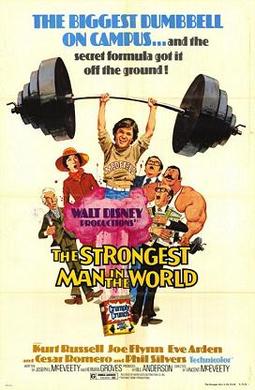
I Watched The Strongest Man In The World (1975, Dir. by Vincent McEveety)


Dexter Riley (Kurt Russell) is back, again!  He still hasn’t graduated from Medfield College and Medfield is still on the verge of going broke.  Dean Higgins (Joe Flynn) discovers that the reason Medfield can never get out of the red is because the science class and students like Dexter are spending so much money on their experiments.  The Dean fires the science professor and threatens to expel Dexter!  But when Dexter’s latest experiment develops a type of milk that gives the drinker super strength, the Dean might have to change his mind.

A cereal company wants to buy the supermilk, which would get Medfield out of the hole.  But a rival cereal company just wants to steal the formula for the milk so they hire disgraced businessman and gangster A.J. Arno (Cesar Romero) to once again try to thwart the best laid plans of Medfield College.  Meanwhile, Dexter competes in a contest to prove that the supermilk has truly made him into the strongest man in the world.

The plot of the last Dexter Riley movie somehow manages to be even dumber than the first two and it was high time for Dexter to graduate and get on with his life but The Strongest Man In The World did make me laugh a few times.  Because this entry in the series involved super strength instead of invisibility or merging with a computer, it allowed for more physical comedy and it felt less dates than the other two movies.  The action is pretty much nonstop, as Dexter gets into one scrape after another and the cast is likable even if they all were getting a little old to still be playing college students.  Like the other Dexter Riley films, The Strongest Man In The World is too innocent and good-natured not to enjoy on some level.

I guess Dexter finally graduated after this movie.  Both he and Kurt Russell went on to better things.

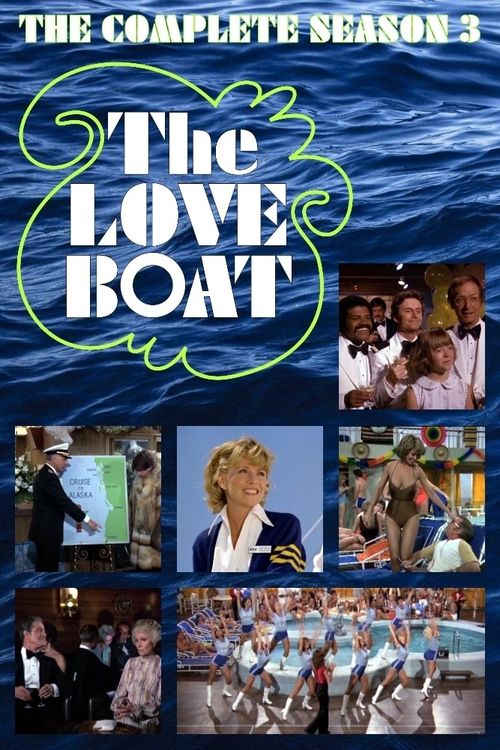
Retro Television Reviews: The Love Boat 3.24 “Dumb Luck/Tres Amigos/Hey, Jealous Lover”


Welcome to Retro Television Reviews, a feature where we review some of our favorite and least favorite shows of the past!  On Wednesdays, I will be reviewing the original Love Boat, which aired on ABC from 1977 to 1986!  The series can be streamed on Paramount Plus!

The week, the crew is surprisingly incompetent.

Episode 3.24 “Dumb Luck/Tres Amigos/Hey, Jealous Lover”

(Dir by Roger Duchowny, originally aired on March 15th, 1980)

The members of the crew really disappointed me this week.

For instance, Gertrude (Jayne Meadows) and Milton Benson (James Gregory) are on the cruise.  Gertrude is friendly and tries to talk to everyone.  Whenever Milton sees any man talking to his wife, he flies into a jealous rage and threatens them.  The crew reacts to this not by telling Milton to calm down but instead, by hiding whenever they see Milton or Gertrude on the boat.  They’re terrified of Milton and yet, somehow, members of the crew keep ending up in the cabin with Gertrude.

Finally, at the end of the cruise, Milton shows up at the captain’s cabin and …. OH MY GOD, HE’S GOT A GUN!  Goper, Doc, Isaac, and Stubing all end up diving to the floor.  Milton explains that he acts jealous because he wants his wife to still feel as if she’s as desirable as the day they first met.  He also says that he’s giving the gun to Stubing as a gift to thank him for the enjoyable cruise.

Later, as she prepares to leave the ship, Gertrude tells Gopher and Isaac that she knows that Milton can be jealous so she specifically dresses as drably as possible so that he won’t have to worry about any other men hitting on her.  In the name of love, she tries to look ugly and he acts like a homicidal lunatic.  Well, whatever works for them!  They seemed to be happy together.  Still, it must be said that the crew could have handled the whole situation better.  Hiding in hallways and under desks is not what I expect from an experienced group of sailors.

Meanwhile, Julie’s friend, Carol Ketay (Shelley Hack), is on the cruise.  Carol is a nuclear physicist and a member of a think tank.  Julie is worried that men are intimidated by Carol being too smart.  Julie also mentions that she’s never had that problem.  Julie takes Carol aside and tell her that she needs to learn how to “talk dumb” if she wants to get a man.  After borrowing a dress from Julie, Carol goes out of her way to sound like an idiot and she immediately catches the attention of Chris (Kevin Tighe).  Chris and Carol have a great time on the ship but Carol is shocked to learn that Chris doesn’t want to date her on dry land because he thinks she’s too dumb.  Carol reveals that she’s actually a nuclear physicist and they leave the boat arm-in-arm.  Good for them!  Julie really gave terrible advice but then again, I think she just wanted her friend to get laid.  She wasn’t really that concerned with Carol getting a long-term relationship.

Finally, Vicki gets to do something this cruise.  She befriends Keith (Ronnie Scribner), the young son of Alice (Jennifer Darling) and Floyd Gaines (John Gabriel).  While exploring the ship, Vicki and Keith meet a young stowaway named Luis (Tony Ramirez).  Though Vicki is not enthused about hiding a stowaway from her father, she still takes a blood oath and promises to protect Luis.  (This would be ground for Vicki being fired if she was actually a paid member of the crew as opposed to just someone who pretends tp have a job.)  As for Keith, he steals $200 from his parents and gives it to Luis.  His parents freak out when they can’t find the money and they accuse the crew of robbing them!  (The crew can’t even handle a jealous husband.  How are they going to steal $200?)  While searching for the money, Gopher and Julie discover Luis.

So, I guess Luis is going into the juvenile justice system, right?  No, not on The Love Boat!  Keith’s parents allow Luis to have the money and Stubing and Vicki pay for Luis’s ticket so Luis is no longer a stowaway.  This storyline was okay.  All of the kids were natural actors so things never got overly cutesy.  That said, I can’t help that notice that a lot of people have stowed away on the ship over the years.  Captain Stubing might want to talk to his crew about that.

Next week …. an agent of Child Protective Services takes a cruise.  Look out, Vicki!

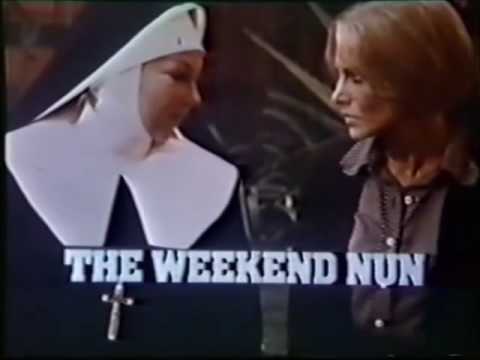
Retro Television Reviews: The Weekend Nun (dir by Jeannot Szwarc)


Welcome to Retro Television Reviews, a feature where we review some of our favorite and least favorite shows of the past!  On Sundays, I will be reviewing the made-for-television movies that used to be a primetime mainstay.  Today’s film is 1972’s The Weekend Nun!  It  can be viewed on YouTube!

By day, Marjorie Walker (Joanna Pettet) is a probation officer who, some might say, cares just a little too much.

By night and on the weekends, she’s Sister Mary Damian, a nun who has taken the three vows of poverty, chastity, and obedience.

Mother Bonaventure (Ann Sothern) isn’t sure that she’s happy about Sister Damian working as a probation officer.  And the tough and cynical Detective Chuck Jardine (Vic Morrow) certainly isn’t happy when he discovers that the reason why Marjorie has never invited him into her home for a drink is because she lives at a convent.  But Marjorie is determined to make a difference, especially in the life of a troubled teen runaway named Audree (Kay Lenz).

Now, this may sound like the premise of a socially relevant sitcom and, indeed, The Weekend Nun is one of those titles that might lead some to expect wacky hijinks and an intrusive laugh track.  However, The Weekend Nun is not only loosely based on a true story but the film also takes itself very seriously.  From the minute that Sister Damian agrees to take part in a program that would allow her to work a real job during the day while returning to the convent at night, she’s exposed to the harsh realities of the world.  She goes from being sheltered to dealing with distraught parents, drug addicts, teen prostitutes, and violent criminals.  Because Captain Richardson (James Gregory) doesn’t want anyone to feel uncomfortable, he hides the fact that she’s a nun.  Of course, this leads to be people like Chuck Jardine wondering why Marjorie is so shocked when she witnesses the thing that he has to deal with a day-to-day basis.

And, indeed, the film’s biggest flaw is that Marjorie is often portrayed as being ridiculously naïve.  The film acts as if spending time in a convent is somehow the equivalent of spending a decade hiding out in a bomb shelter or something.  (Speaking as a Catholic school survivor, nuns are usually some of the least naïve people around.)  Marjorie is portrayed as being such a wide-eyed innocent that it’s hard not to wonder why she was hired to work as a probation officer in the first place.  Of course, Marjorie quickly gets an education on just how dangerous and unforgiving life on the streets can be and she soon has to make a choice between being a nun or being a probation officer.  Will she give her life to God or will she potentially give it to Vic Morrow?

Joanna Pettet overplays Marjorie’s innocence but that’s more the fault of the script than anything else.  James Gregory, Vic Morrow, and Ann Sothern are all believable as the authority figures in Marjorie’s life and Kay Lenz has a few good scenes as the teenage runaway who Marjorie tries to save.  Beverly Garland has a small but brief role as Lenz’s horrifically unconcerned mother.  It’s a well-acted film, regardless of any other flaws.

The Weekend Nun is not perfect but it’s still preferable to The Flying Nun.  It’s a sincerely heartfelt film, one that’s earnest in a way that can seem a bit quaint but which is still likable when watched today.  For better or worse, there’s not a hint of snark to be found.

Film Review: Al Capone (dir by Richard Wilson)


The year is 1919 and a brutish young man named Al (played by Rod Steiger) has just arrived in Chicago.  He’s got a new job, working for the city’s top mobster, Johnny Torrio (Nehemiah Persoff).  Torrio is the second-in-command to Big Jim Colosimo (Joe De Santis) and is impressed enough by the young Al to take him under his wing.

It’s an exciting time to be a gangster in Chicago because prohibition is about to become the law of the land.  Alcohol is about to become illegal, which means that there will soon be an unregulated underground of people smuggling booze into the United States and selling it in speakeasies across the land.  Those speakeasies are going to be need men to watch the door and to toss out troublemakers and it turns out that’s a perfect job for someone who isn’t afraid of violence.

Someone like Al, for instance.

It’s while Al is working as bouncer that he receives a long and deep gash across his face.  When the wound heals, it leaves him with the scar that will come to define him for the rest of his life.  As much as he hates the nickname “Scarface,” it’s what Al Capone will be known as.

The 1959 film, Al Capone, follows Capone as he works his way up the ladder of the Chicago underworld until he eventually finds himself sitting atop an empire of corruption and crime.  Along the way Capone kills the majority of his rivals and finds the time to fall in love with Maureen Flannery (Fay Spain), the widow of one of his victims.

Well, perhaps love is the wrong word.  As played by Rod Steiger, Al Capone isn’t really capable of loving anyone but himself.  This film does not provide us with the superslick or diabolically clever Capone that has appeared in other gangster movies.  Instead, Steiger plays Capone as almost being a caged animal.  Capone comes to power through violence and betrayal and he uses the same techniques to hold onto power.  The film suggests that the secret of his success was his complete lack of conscience but that the same arrogant stupidity that makes him so fearsome also leaves him doomed to failure.  There’s really nothing subtle about Steiger’s performance but then again, there was probably nothing subtle about Al Capone, either.  Steiger’s tendency to overact every moment works well in the role of a man who constantly seems to be striking out at anyone who makes the mistake of getting too close to him.

Though many films had featured characters based on Capone, Al Capone was the first biographical film to actually be made about the infamous leader of the Chicago Outfit.  (Up until the mid-50s, the Hollywood Production Code expressly forbade anyone from portraying a “real” gangster in a movie.)  With the exception of the character of Maureen Flannery (who was a heavily fictionalized stand-in for Capone’s then-living widow), Al Capone is fairly faithful to the know facts of Capone’s life.  The film not only includes most of Capone’s violent acts (i.e., the St. Valentine’s Day Massacre) but it also explores both how Capone was protected by Chicago’s corrupt political establishment and how prohibition actually enabled the activities that it was meant to prevent.  Director Richard Wilson directs in a semi-documentary style and the film’s harsh black-and-white images capture the idea of a shadowy world hidden away from “respectable” society.  It’s a fast-paced film and fans of classic character acting will be happy to see James Gregory as an honest cop and Martin Balsam as a not-at-all honest reporter.

If you’re looking to put together a quick cinematic history lesson about the origins of the Mafia before you watch Martin Scorsese’s The Irishman later this year, Al Capone is a worthwhile addition to your curriculum.

Horror on TV: Kolchak: The Night Stalker 1.3 “They Have Been, They Are, They Will Be….” (dir by Allen Baron)


On tonight’s episode of Kolchak, Carl investigates a series of mysterious thefts which could very well be connected to a series of mysterious murders.

Needless to say, it’s all very mysterious.

Kolchak is often cited as having been an influence on The X-Files and you can certainly see why in this episode.  While I don’t want to spoil the nature of this episode’s monster, I will say that this episode will be enjoyed by conspiracy fans everywhere.

Enjoy!

http://www.youtube.com/watch?v=7PxeNM5soIc

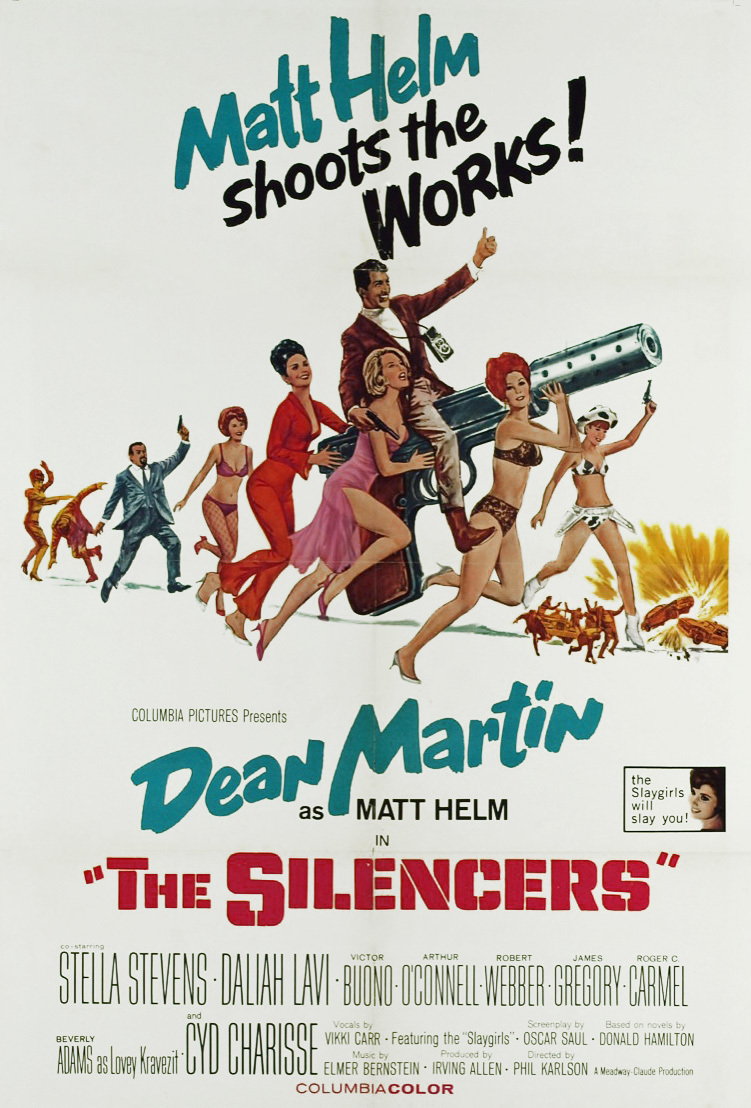
Secret Agent Double-O Dino: THE SILENCERS (Columbia 1966)


gary loggins's avatarcracked rear viewer

silence1

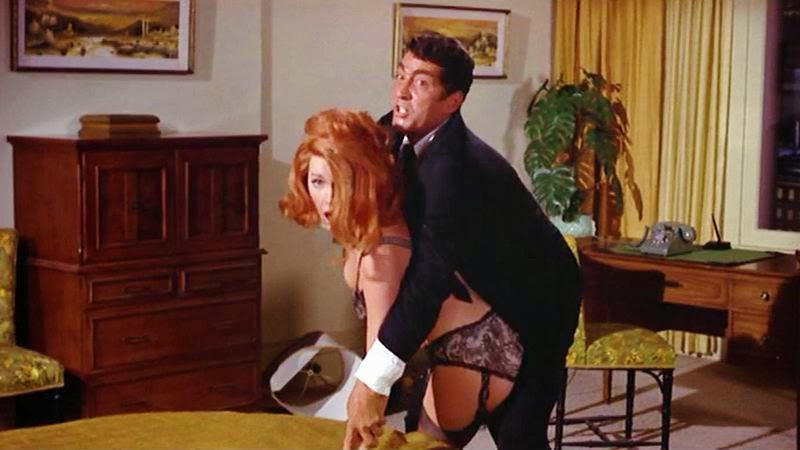
Out of all the James Bond-inspired spy spoofs made in the Swingin’ 60’s, one of the most popular was Dean Martin’s Matt Helm series. Based on the novels of Donald Hamilton, the films bore little resemblance to their literary counterparts, instead relying on Dino’s Booze & Girlies Rat Pack Vegas persona. First up was 1966’s THE SILENCERS, chock full of gadgets, karate chops, and beautiful babes, with sexual innuendoes by the truckload.

lovey

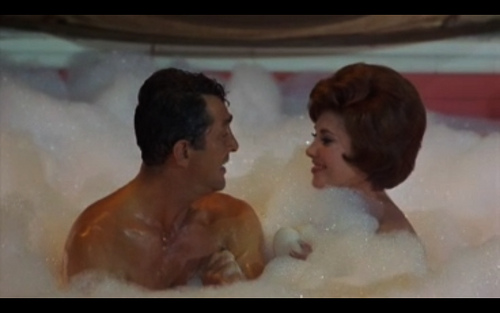
Our Man Matt is a semi-retired agent of ICE (Intelligence and Counter-Espionage) living in a Playboy Mansion-style pad, and working as a globe-trotting photographer. He’s luxuriating in his bubble bath pool with sexy secretary Lovey Kravezit (“Lovey Kravezit? Oh that’s some kinda name!”) when former boss Mac Donald calls. Evil spy organization Big O (Bureau for International Government and Order) is once again plotting world domination, and the reluctant Helm is pulled back into service.

silence3

Matt is teamed with his former partner Tina…

View original post 747 more words

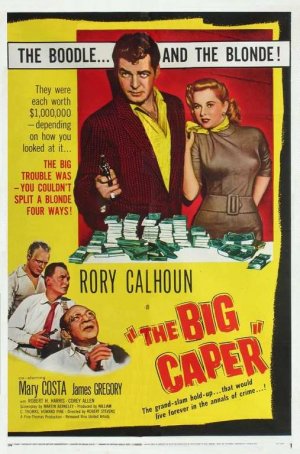
Netflix Noir #2: The Big Caper (dir by Robert Stevens)


The Big Caper Poster

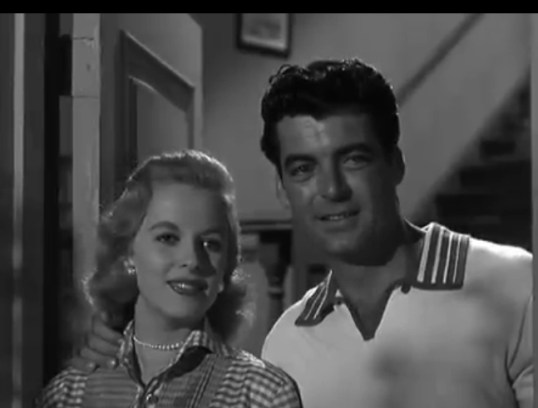
For our next Netflix Noir, we take a look at a heist film from 1957, The Big Caper.

Frank (Rory Calhoun) is a small time criminal with a plan.  He knows that there’s a Marine base near the small town of San Felipe, California and he also knows that, during the weekend before payday, the San Felipe bank will be holding a million dollar payroll for those Marines.  He proposes  to Flood (James Gregory), a wealthy crime boss whom Frank idolizes, that they should find a way rob that bank over the weekend.  Flood agrees to the plan.

While Flood recruits some help for the robbery, Frank and Flood’s girlfriend, Kay (Mary Costa), move into the town and set themselves up as a part of the community.  Using Flood’s money, Frank buys a gas station and he and Kay move into a nice suburban house.  At first, Frank resents being forced to live like a “square.”  He bitterly complains that the local San Felipe newspaper doesn’t even tell him “how the horses did.”

But then something odd happens.  Frank starts to enjoy being a member of the community.  Soon, the gas station is making a profit and Frank is even thinking about buying a second one.  Oddly enough, his becomes best friends with the local cop.

As for Kay, she transitions to respectability even before Frank does.  As she eventually confesses to Frank, she’s tired of being treated like Flood’s property.  She wants to stay in San Felipe and make a life for herself.  Wearily, Frank tells her that she better hope that Flood doesn’t find out…

Meanwhile, Flood has recruited together his gang and they’re not exactly the most impressive bunch of criminal masterminds.  There’s Roy (Corey Allen), a physical fitness fanatic who is almost childlike in his devotion to Flood.  There’s Harry (Paul Picerni), who demands that his girlfriend Doll (Roxanne Arlen) be a part of the scheme.

And then there’s Zimmer (Robert H. Harris), a bald, sweating pyromaniac who spends most of his time begging for alcohol and lighting matches.  Zimmer arrives at Frank’s house unannounced and Frank is forced to pretend that Zimmer is his uncle.

Once Flood and the rest of the gang arrive, Frank starts to prepare for the robbery but he soon discovers that he’d rather be barbecuing with the neighbors.

The Big Caper is a clever little film, one that features excellent performances (especially from Gregory, Calhoun, Allen, and Harris) and tons of hard-boiled dialogue.  What makes this film especially memorable is the way that it contrasts the fake respectability of the wealthy Flood with the newfound, but genuine, respectability of Frank and Kay.

If The Big Caper was made today, it would probably be directed by the Coen Brothers and Ben Affleck and Ray Liotta would play Frank and Flood respectively.  However, the film works just as well with Rory Calhoun and James Gregory and is totally worth seeing.

The Big Caper

44 Days of Paranoia #40: The Manchurian Candidate (dir by John Frankenheimer)


With only five entries left in the 44 Days of Paranoia, now seems like the perfect time to look at one of the best conspiracy films ever made.  First released in 1962, this film is not only one of the most influential thrillers ever made but it’s also a fiercely sardonic political satire that remains just as relevant today as when it was first released.  It was also remade in 2004 and, while we’ll get to the remake, today we’re focusing on the original.

I’m speaking, of course, of the John Frankenheimer-directed classic, The Manchurian Candidate.

The Manchurian Candidate tells the story of Raymond Shaw (Laurence Harvey).  The son of the wealthy and ambitious Eleanor (Angela Lansbury) and the stepson of the moronic Senator Johnny Iselin (James Gregory), Raymond is also a decorated war hero who has been credited with saving an entire platoon during the Korean War.  When asked about Shaw, all of the members of the platoon respond with: “”Raymond Shaw is the kindest, bravest, warmest, most wonderful human being I’ve ever known in my life.”

Of course, that’s not true.  It only takes a few minutes of screen time for the audience to realize that Raymond Shaw is none of those things.  Instead, he’s a rather depressed loner who is full of resentment towards his mother and his stepfather.  Shaw is so socially awkward that even he is shocked when he manages to successfully tell a joke.  (“I just told a joke, didn’t I?” Shaw says in amazement.)

While Shaw pursues a career as a journalist, the fellow members of his platoon — including Maj. Marco (Frank Sinatra) — start to have disturbing nightmares, in which they find themselves observing a genteel garden show, during which Raymond is ordered to strangle one soldier and shoot another one in the head.  Marco comes to suspect that the platoon may have been captured and brainwashed with communists.  With the backing of Army Intelligence, Marco starts to investigate.

Meanwhile, Sen. Iselin has come to national prominence by claiming to have information about a communist conspiracy deep within the U.S. government.  As becomes obvious in some of the film’s best scenes, Iselin is less concerned with fighting communists and more focused on keeping Raymond’s mother happy.  Eleanor has decided that her husband is going to be the next President and her brainwashed son is going to help make it happen.

I think sometimes we tend to assume that, up until 1967, all movies were safe and predictable.  The Manchurian Candidate, however, proves that is simply not true.  In fact, with its cynical view of politics and its cast of fragile and damaged characters, The Manchurian Candidate is one of the most subversive films ever made.  Rejecting the boring partisanship that typifies most politically themed films, The Manchurian Candidate presents us with a world where both the left and the right are equally corrupt and ultimately equally meaningless.  It’s a political satire that transcends ideology and that’s certainly something of which America could use more.

It’s also an amazingly entertaining film.  George Axelrod’s screenplay is full of wonderfully snarky moments while John Frankenheimer’s directs with an appreciation for both absurdity and melodrama.  Angela Lansbury is both hilarious and chilling as one of the worst maternal figures to ever appear in the movies and she more than deserved the Oscar nomination that she received for this film.  However, the entire film is brilliantly acted.  Laurence Harvey is both sympathetic and off-putting as Raymond while Frank Sinatra (who previously appeared in another entry of the 44 Days of Paranoia, Suddenly) brings a wonderful blue-collar humanity to the role of Marco.  Janet Leigh has a small role as Marco’s lover and the scene where they first meet on a train and have a charmingly nonsensical conversation is wonderfully odd and romantic.  Finally, James Gregory gives a hilarious performance as the type of stupid but bombastic politician who will be familiar to anyone who has ever watched C-Span.

If you’ve never seen the original Manchurian Candidate, drop everything you’re doing and go watch it now.

Other Entries In The 44 Days of Paranoia 

  1. Clonus
  2. Executive Action
  3. Winter Kills
  4. Interview With The Assassin
  5. The Trial of Lee Harvey Oswald
  6. JFK
  7. Beyond The Doors
  8. Three Days of the Condor
  9. They Saved Hitler’s Brain
  10. The Intruder
  11. Police, Adjective
  12. Burn After Reading
  13. Quiz Show
  14. Flying Blind
  15. God Told Me To
  16. Wag the Dog
  17. Cheaters
  18. Scream and Scream Again
  19. Capricorn One
  20. Seven Days In May
  21. Broken City
  22. Suddenly
  23. Pickup on South Street
  24. The Informer
  25. Chinatown
  26. Compliance
  27. The Lives of Others
  28. The Departed
  29. A Face In The Crowd
  30. Nixon
  31. The Hunger Games: Catching Fire
  32. The Purge
  33. The Stepford Wives
  34. Saboteur
  35. A Dark Truth
  36. The Fugitive
  37. The Day of Jackal
  38. Z
  39. The Fury