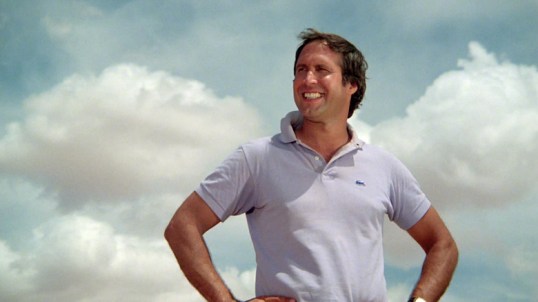
Chevy Chase as Indiana Jones?


Was Chevy Chase considered for the role of Indiana Jones in Raiders of the Lost Ark?

According to the internet, he was. While I was doing research into the casting process that led to Harrison Ford being cast as the iconic archaeologist, I came across several trivia sites that claimed that Chase was one of the many actors considered for the role of Indiana Jones. This struck me as being rather odd. Even though Raiders of the Lost Ark was produced at a time when Chase was still a legitimate film star, it was hard to imagine anything about his screen persona that would make producer George Lucas or director Steven Spielberg view him as being a potential Indiana Jones. The idea of Chase as Indiana Jones struck me as being so strange that I started to search for the source of the rumor. I read post after post about the lost roles of Chevy Chase. I clicked on link after link. And what I discovered is that the main source for Chase being considered for Indiana Jones was an anonymous, unsourced piece of trivia on the IMDb. In fact, according to the IMDb, Steve Martin and Bill Murray were also considered for the role.

I’m just going to say it. I don’t buy it. I don’t think any of those people were considered for Indiana Jones. For that matter, I don’t think John Belushi was considered for the role of Dr. Loomis in Halloween, and I also don’t think Chase was seriously considered for the role of Han Solo.

With that in mind, the idea of Chevy Chase playing Han Solo reminded me of just how important Harrison Ford was to the success of the first three Indiana Jones films. Even if Chase wasn’t one of them, a lot of actors not named Harrison Ford were considered for the role of Jones. Jeff Bridges has said that he was considered for the role, but he also denies having ever gotten a firm offer. According to Spielberg, Peter Coyote’s audition for the role led to Spielberg later casting him in E.T. the Extra-Terrestrial. Tim Matheson, Nick Mancuso, and John Shea have all been confirmed as having been, at the very least, officially considered. Sam Neill said that he auditioned for the role. Was David Hasselhoff a contender for Indiana Jones? I’ve seen Hasselhoff’s name mentioned on several sites, but it seems that this is another case where the ultimate source is the same anonymous piece of trivia that included Chase, Martin, and Murray as contenders. But the idea of the Hoff as Indiana Jones amuses me to no end, so I’m going to go ahead and say that he actually was considered. Yeah, I’m a hypocrite. So what?
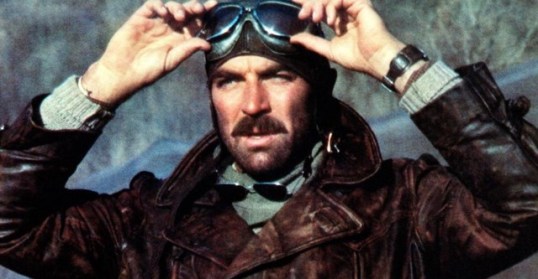
George Lucas has said that he was initially hesitant about casting Harrison Ford because he (1) felt the star should be a relative unknown and (2) didn’t want the critics to say that he wasn’t capable of making a movie without Ford in the cast. Marcia Lucas famously felt that Tom Selleck would have been the perfect Indiana, and George agreed with her. It appeared, at the time, that CBS was going to pass on producing Magnum, P.I., a show for which Selleck had been signed to star. When Lucas and Spielberg asked CBS to release Selleck from his contract so that he could do Raiders, CBS instead put the show into production because Selleck was now “in demand.” With Selleck out of the running, Harrison Ford was finally cast in the role that he was born to play.

I’ve always loved Harrison Ford as Indiana Jones but, to be honest, who doesn’t? What always enchanted me about Ford’s performance is that he wasn’t afraid to be intelligent. No matter what adventures Indiana Jones found himself in, Ford always played him as an academic first and an adventurer second. In the first three films, Indiana seemed just as excited as the audience to see what he would discover in his travels. As for the final two films, they failed because they both tried to bring in a replacement. Audiences didn’t want to see Harrison Ford replaced by Shia LaBeouf. They sure as hell didn’t want to see him being put in his place by Phoebe Waller-Bridge. It doesn’t matter how old he gets or how grouchy he may be. Audiences love Harrison Ford, and they love it when he says that it belongs in a museum.
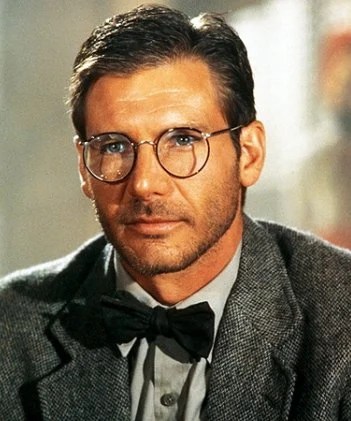
As for who was considered for the rest of the Raiders ensemble, here are the names that I’ve seen mentioned as having been considered. As always, take these names with a grain of salt.

Marion: Debra Winger was not available. Neither was Spielberg’s girlfriend, Amy Irving. (By most accounts, Irving didn’t think much of any of her future husband’s films.) Sean Young screen-tested with Tom Selleck. Wendie Malick has talked about auditioning for the role while hungover. Jane Seymour, Mary Steenburgen, Michelle Pfeiffer, Stephanie Zimbalist, and Barbara Hershey were reportedly also considered, but the role was offered to Karen Allen.

Brody: Apparently, only Denholm Elliott was considered for Brody, and it is impossible to imagine anyone else in the role.

Sallah: Danny DeVito was actually offered the role, but he was appearing in a television show and couldn’t get out of his contract. John Rhys-Davies was cast instead.

Belloq: Jonathan Pryce, who would have been a great choice, read for the role. Giancarlo Giannini and French singer Jacques Dutronc are frequently mentioned as being other possibilities. The role went to Paul Freeman.

Toht: In his autobiography, Klaus Kinski wrote about turning down the role because it didn’t pay enough. Some sites say that Roman Polanski was offered the role. (If that’s true, one imagines that Spielberg is probably happy in retrospect that Polanski turned him down.) Ronald Lacey was cast in the role, and personally, I think he was perfect for it. As intriguing as the idea of Harrison Ford vs. Klaus Kinski might be, the role of Toht didn’t need a familiar face. It just needed someone who could be menacing.

(Actually, the idea of Chevy Chase vs. Klaus Kinski is even more intriguing! That would have been an interesting set to visit.)

In the end, Raiders of the Lost Ark is one of the few films that one can say is perfectly cast, from Harrison Ford to Karen Allen to John Rhys-Davies and Denholm Elliott. And we’re all the luckier for it!


VGM Entry 24: Metal Gear and More


VGM Entry 24: Metal Gear and More
(Thanks to Tish at FFShrine for the banner)

Notice: Square Enix have apparently deemed one of my soundtrack reviews a copyright infringement and demanded I remove it. I have complied, and I kindly encourage you to boycott all Square Enix products in the future. Since their games are terrible these days anyway I am probably doing you a favor. (Their complaint involved brief audio samples from only one video game–amusingly out of print today–so I have left my other reviews intact.)

At the same time that RPG/adventure game music was coming into its own on the Nintendo, a lot of solid action soundtracks followed in the wake of Castlevania. Metal Gear (Konami, 1987) kicked off a series that would not really rise to major prominence until 1998, but its history of good scores dates back to the originals.

Metal Gear called for a lot of spy work and sneaking around, and its original soundtrack captured precisely that. Not the music you were expecting to hear? Well, two versions of Metal Gear were released in 1987. The first, released in July, was for the MSX2, and it contained a completely different soundtrack from the NES version that followed it in December. It’s not entirely clear who composed it; Wikipedia lists Iku Mizutani, Shigehiro Takenouchi, and Motoaki Furukawa as the composers for Metal Gear without distinguishing between ports. That’s pretty shady business, as Kazuki Muraoka’s NES score contained a number of original compositions and was much more popular, at least in the western world. Most sites only list Iku Mizutani for the MSX2 and Kazuki Muraoka for the NES, while the only official release of the MSX2 soundtrack simply credits Konami Kukeiha Club.

Well, I watched the actual ending credits of the MSX2 version, and Konami lists it as:

Main Sound Effect:
Iku Mizutani

Sub Sound Effect:
Shigehiro Takenouchi
Motoaki Furukawa

The same bad translation persists on the NES version, where Kazuki Muraoka is responsible for all “Sound Effect”. So that’s enough to sort it out, right? All evidence suggests that Mizutani composed the MSX2 version (with a little help from Takenouchi and Furukawa) and Muraoka composed the NES version.

Of course these indecisive credits always leave room for speculation. Here’s one for you: The PC88 visual novel Snatcher (Konami, 1988) contains an arrangement of the song “Theme of Tara” (1:49). The game offers very thorough credits, and it expressly states that the song was composed by Masanori Adachi and arranged by Masahiro Ikariko and Kazuhiko Uehara. If it’s just an arrangement of the MSX2 original, then… wait a minute…

But Adachi isn’t even credited in Metal Gear. Did Konami perhaps forget who wrote the MSX2 music and credit Adachi by mistake? Here’s the real kicker. Snatcher was ported to the MSX2 shortly after its release, and for the port Iku Mizutani is credited with arranging Masanori Adachi’s composition, which was, if our credits all add up, a copy of Iku Mizutani’s original Metal Gear composition.

Oh well. We are at least pretty sure Kazuki Muraoka wrote the NES one. In the very least he’s the only name appearing in the credits in association with sound. His score was a mix of arrangements from the MSX2 and new songs, and as far as I’m concerned the new material was almost always an improvement. Generally this consisted of replacing the weaker tracks, but Muraoka did take the risk of replacing “Red Alert!” (0:16 in the previous video), perhaps the best song in the MSX2 mix, with a completely new track under the same name (2:03). The decision paid off.

If you would like to hear some comparisons between the original MSX2 compositions and Muraoka’s ports, look for “Mercenary” (4:21 on the MSX2 video, 2:55 on the NES) and “Return of Fox Hounder” (6:52 on the MSX2 and 4:25 on the NES). Unless I overlooked something, the rest of this NES compilation consists of original compositions. The whole Metal Gear sound as established on the MSX2 turned out to be excellently suited for the NES–a system on which speed and catchiness served well to compensate for a lack of much bass or distortion. Even so, my favorite Muraoka addition is a slow one. I have no idea why “Password Entry” (3:37) was put to such petty use. It would have made a fine ending credits theme.

Castlevania II: Simon’s Quest (Konami) also made its first appearance in the summer of ’87. By this time Kinuyo Yamashita had moved on to other projects, and Kenichi Matsubara picked up the job. Like Kinuyo Yamashita in the original, it would be his only contribution to the series.

And what a contribution it was. His efforts to maintain stylistic consistency with the first game are commendable, and he did so while writing equally catchy and memorable songs. Obviously his most famous work (and probably the most famous song in the series) is “Bloody Tears”, appearing second in the video. But I was really quite surprised to encounter tracks like “Dwelling of Doom” (2:10), which could just as easily have become series staples had future writers chosen to retain them. Kenichi Matsubara arguably surpassed the original Castlevania with this soundtrack, and it wouldn’t be the last time that the series stood at the forefront of video game music.

In the meantime, Kinuyo Yamashita had by no means fallen by the wayside. Her work on Arumana no Kiseki (Konami, 1987) is really outstanding, taking advantage of the Family Computer Disk System’s enhanced capabilities to produce a very clean, crisp sound. (The FDS was an extension of the Famicom released only in Japan. Its early titles included The Legend of Zelda and Metroid.) I have to imagine the only reason Arumana no Kiseki never got much praise is because fewer people heard it. Konami seem to have gotten around the copywrite challenges of making an Indiana Jones ripoff by simply never releasing the game outside of Japan, although they may have been better off paying up and releasing it. The first licensed series game for the NES, Indiana Jones and the Temple of Doom (Mindscape), released some time in 1987 or 1988, was a gameplay disaster on par with E.T. the Extra-Terrestrial, and its soundtrack is a lame attempt to preserve the original John Williams score.

explod2A03 on youtube provides a nice collection of music from Arumana no Kiseki, available here, along with a number of other forgotten soundtracks from the era.

Of course we all know what the most important video game music series on the NES was, and Capcom, not Konami, get the credit this time. Known as Rockman in Japan, the original Mega Man was unleashed upon the world in December 1987. Manami Matsumae did not compose for the Mega Man series for long. After scoring Mega Man and contributing to Takashi Tateishi’s work in Mega Man 2, she sort of dropped off the face of the earth, not to resurface in the series again until Mega Man 10‘s massive collaborative effort in 2010. But the legacy she began is one of the finest in gaming history.

Here’s a track list for the compilation, in case you’re interested:
(0:00) Epilogue
(1:40) Stage Select
(1:57) Robot Intro
(2:04) Cutman
(2:52) Fireman
(3:28) Elecman
(4:22) Gutsman
(4:57) Iceman
(6:00) Dr. Wily’s Castle 1
(6:44) Dr. Wily’s Castle 2
(7:20) Robot Battle
(7:49) Dr. Wily Battle
(8:17) Bombman
(9:02) Victory!

Of course the series did not find massive commercial success until Mega Man 2 the following year, but from the beginning it was as intimately tied to its score as the Final Fantasy series. It isn’t nostalgia that leads modern-day rock bands and chiptune artists to cover “Cutman”, “Fireman”, and “Bombman”, just to name a few. It’s because the music is outstanding. I mean, I think the samples speak for themselves. Manami Matsumae established a standard of quality which Capcom would strive to maintain for many years to come. Takashi Tateishi would soon raise the bar higher, but it may well be argued that, without Manami Matsumae’s original concept of what Mega Man music ought to sound like, none of the future improvements would have ever been possible.