As week 1 of the 2023 Horrorthon comes to a close, it’s time for me to admit that I am absolutely, 100% exhausted. Hopefully, this latest edition of Lisa Marie’s Favorite Grindhouse Trailers will help to keep me awake!
Nightmare on Elm Street (1984)
Here’s a trailer that’s as good as any when it comes to giving you a reason to try to stay awake!
2. Bad Dreams (1988)
Freddy isn’t the only person haunting the dream world.
3. Dreammaniac (1986)
Actually, there’s a lot of dangerous things out there in Dream Land.
4. The Cell (2000)
Even Jennifer Lopez and Vince Vaughn know better than to get lost in someone else’s dream.
5. Phantasm (1979)
And, of course, we can’t talk about sleep and dreams and nightmares without including the classic trailer for Phantasm.
6. Dreamscape (1984)
Fear not, though! If things get too intense in the dreamworld, we can always call Dennis Quaid.
If you’re suffering from anxiety, it is nothing to be ashamed of. As today’s music video of the day shows, even Pat Benatar can get nervous! Of course, when your dentist is named Dr. Pain, who can blame you for getting nervous?
This video was directed by Mark Robinson, who also did videos for The Pretenders, Tina Turner, and Eddie Money.
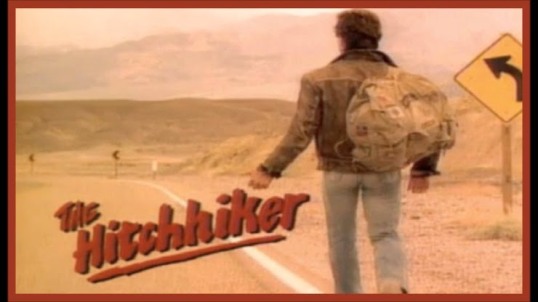
On tonight’s episode of The Hitchhiker, Michael Woods plays a cocky gigolo who spends the weekend at a cabin with an alcoholic director (Jerry Orbach) and his sultry wife (Season Hubley). When Hubley suggests that Woods murder her husband, it seems like a standard noir-situation but it become obvious that Orbach is not quite as clueless as Woods assumed. Who is playing which game?
This is an enjoyable episode, largely due to the performance of the wonderful Jerry Orbach. This episode originally aired on May 12th, 1987.
An all-women motorcycle gang called the Cycle Sluts roars through the desert. Why are they called the Cycle Sluts? As their leader puts it, they know what people are going to call them so they’re reclaiming the term for themselves. Nobody tells the Cycle Sluts what to do and nobody but the Cycle Sluts decides or defines who the Cycle Sluts are. They’re rebels and they’re singers, making music and fighting the patriarchy as they make their way through the dusty corners of America. Go, Cycle Sluts, go!
When the Cycle Sluts drive into the small desert town of Zariah, the residents are not happy to see them. Zariah is a peaceful and boring town and the citizens would like to keep it that way. The citizens are happy having a town where there’s only a few buildings, next to no businesses, and only a few residents. It’s a town where not much happens and everyone can live in peace, far away from all the evil temptations of the big city and corrupt civilization. However, the town becomes a lot less peaceful when the local mortician starts to bring the dead back to life. Soon, zombies are wandering through the desert on their way back to their former home and only the Cycle Sluts and a bus full of stranded blind kids can save the town!
That slight plot description probably tells you all you really need to know to get a feel for what type of film 1989’s Chopper Chicks in Zombietown is. It was released by Troma, which means that the humor is crude, the zombie attacks are bloody, and the film’s aesthetic is undeniably cheap. That said, the film itself is enjoyable when taken on its own dumb terms. The action moves quickly, the members of the cast perform their silly roles with an admirable amount of dedication, and the whole thing ends with a message of peace and equality. The townspeople learn how to be tolerant and the Cycle Sluts learn how to trust other people. It’s about as dumb as a movie about about bikers fighting zombies can be but it’s a surprisingly fun movie. It’s hard not to cheer a little when the Cycle Sluts and the towns people and the blind kids finally set aside their differences and do what has to be done. They even manage to save the life of a baby and anyone who has seen any other Troma films knows how rare that can be. In its way, Chopper Chicks in Zombietown serves as a reminded that not every Troma film is as bleak as Combat Shock or Beware! Children at Play. The Cycle Sluts do a good job and so does the film.
Speaking of doing a good job, keep an eye out for Billy Bob Thornton, making an early appearance as the unfortunate boyfriend of one of the residents of Zariah. Billy Bob seems to be having fun with this early job and his appearance here serves as a reminder that everyone started somewhere.
Marvel’s Tomb of Dracula #49 (October, 1976) finds Dracula in a foul mood. Not only does he have the pesky vampire hunters still chasing him but also the leader of his cult, Anton Lupeski, is obviously plotting against him. Dracula just wants to spend some time with his wife but instead, he finds himself suddenly transported to the mansion of Angie Turner.
Angie is a recluse who has the ability to bring fictional characters into existence. She spends her time with the Frankenstein’s Monster, D’Artagnan, Tom Sawyer, and Injun Joe. Her favorite fictional character, though, is the title character from Bram Stoker’s Dracula. The real Dracula is stunned and angered to discover that he’s been summoned by a woman who thinks that he’s the same as what calls the “inferior” who is featured in Stoker’s novel. Angie watches as Dracula not only kills all of her companions but also kills Robin Hood and Zorro when she summons them. Angie realizes that Dracula is not the tragic figure that she imagined but instead a vicious monster.
Dracula, who truly was a monster in Tomb of Dracula, taunts Angie and prepares to attack her, just to suddenly find himself back in his lair. Dracula may have claimed to have been real but Angie was not only able to wish him out of her mind but, as the final panels show, she was also able to bring back to life all of her other companions. The story ends by revealing that Angie is a mental patient who has been in a padded room ever since losing her family.
If this issue just featured Dracula dismissing Stoker’s novel, it would be an important part of Marvel’s vampire mythology. What makes the issues a classic is the suggestion that even the “real” Dracula is just a figment of Angie’s imagination. Since Tomb of Dracula regularly featured guest appearances by other Marvel character, one could argue that this one issue suggests that the entire Marvel Universe might just be an elaborate fantasy in the mind of a woman mourning the loss of her husband and children. Either way, this issue is a strong portrait of the power and comfort of imagination. Angie stands in for every comic book reader over the years.
Tomb of Dracula #49 (October, 1976)
“And With The Word Shall Come Death”
Writer — Marv Wolfman Penciler — Gene Colan Inker — Tom Palmer Colorist — Michele Wolfman Letterer — John Costanza Editor — Marv Wolfman
When you get a weird text from an unknown number saying that all of your secrets will soon be revealed, you assume that it is your brother Matt, pulling another stupid prank while traveling around Europe.
But what if it isn’t?
That’s the question at the heart of Weird Texts From An Unknown Number, a short but creepy Interactive Fiction game in which how you respond to the texts can lead to five completely different but equally disturbing endings.
This is a short game that can be played in under five minutes but, because each answer leads to an entirely different ending, it is also a game that can frequently be replayed. I found myself replaying this well-written game several times because I not only wanted to see every ending but also just how bad things could get the for the main character. The answer is very bad. The lesson? Some numbers are best left unknown.
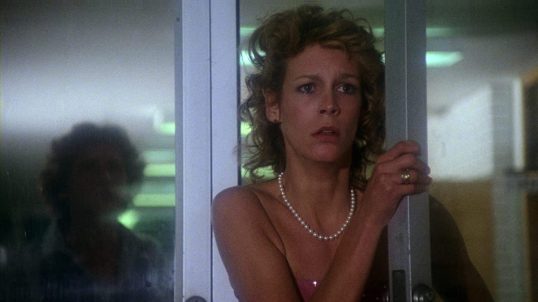
The great Jamie Lee Curtis is, of course, beloved by horror fans for starring as Laurie Strode in the original Halloween. Myself, I’ve always felt that her best horror performance was actually in 1980’s Prom Night.
Just watch her, during the film’s final minutes, when she discovers that the killer who has spent the entire day killing all of her friends is someone from her own family. This is great acting and one can see why the Canadians gave her a Genie nomination for Best Foreign Actress. Let’s hope David Gordon Green never decides or gets the chance to mess this one up.
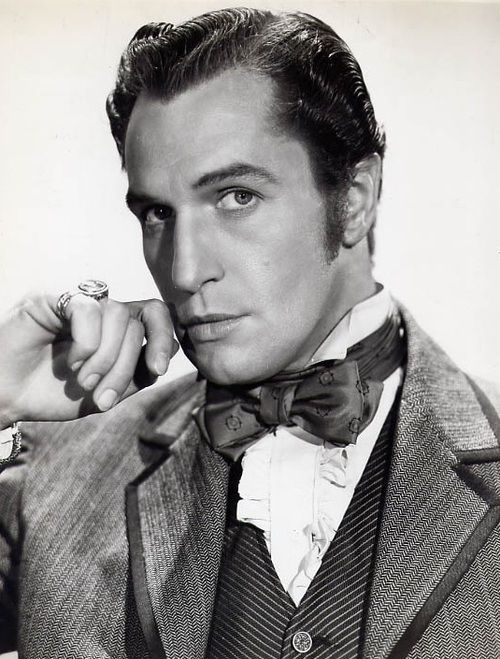
That may sound strange today, the idea of horror icon Vincent Price playing the courtly and handsome Ashley Wilkes in Gone With The Wind. But, when Price came to Hollywood in the late 30s, it actually seemed like ideal casting. Before he became known as a horror actor, the Missouri-born Price was known for being a handsome stage actor who specialized in playing romantic parts. Though Price would become best-known for his horror films, he was capable of much more and he also appeared in much more.
Here are just six of Vincent Price’s memorable non-horror performances!
Robert Wade in Service de Luxe (1938)
At the age of 27, Vincent Price made his film debut in this romantic comedy, playing Robert Wade. Robert Wade is a young man from Albany who comes to New York City because he is trying to raise money that he can then use to build and perfect a new tractor. It’s in New York that he meets and eventually falls in love with a life coach named Helen Murphy (Constance Bennett). Helen is relieved to discover that the earnest Robert is someone who doesn’t need a life coach to tell him how to live his life …. or design a tractor as the case may be! This is a rather slight film but, in his film debut, Price is charming and handsome.
2. Vital Dotour in The Song of Bernadette (1943)
In this Oscar-nominated film, Price has a key role as the prosecutor who looks into the claims that a girl named Bernadette (Jennifer Jones) has experienced visions of the Blessed Virgin Mary. Though the role does carry some hints of the type of work that lay in Price’s future, it’s still a far cry from his later horror roles and Price brings some needed nuance to a characters who, in lesser hands, could have just been a flat-out villain.
3. Shelby Carpenter in Laura (1944)
Perhaps the best-known and most-regarded of all of Price’s non-horror films, Laura features Price in the role of the good-for-nothing, wealthy boyfriend of Laura (Gene Tierney). When Laura is (incorrectly) believed to have been murdered, Shelby Carpenter is one of the more obvious suspects. Price is wonderfully sleazy in the role of Shelby.
4. William Gibbs McAdoo in Wilson (1944)
Vincent Price doesn’t really get to do much in this epic biopic of America’s worst President but it’s still amusing to see the instantly recognizable Price as Wilson’s son-in-law and wannabe successor, William G. McAdoo.
5. Baka In The Ten Commandments (1956)
Perhaps the worst of all the villains to be found in The Ten Commandments, Baka’s cruelty ends only when he’s killed by Charlton Heston’s Moses. Price truly does a wonderful job turning Baka into a villain who can be despised by all viewers.
6. Nicholas Maranov in The Whales of August (1988)
In one of his final roles, Price played a charming Russian who visits two elderly sisters (Lillian Gish and Bette Davis) at the seaside vacation home in Maine. After decades of being typecast as a horror actor, Price showed off his considerable charm and wit in this role and received a nomination for Best Supporting Actor from the Independent Spirit Awards.
In 1983, a one-eyed, illiterate drifter named Henry Lee Lucas was arrested by the Texas Rangers. Lucas was arrested for unlawful possession of a firearm but, once in custody, he confessed to murdering 82 year-old Kate Rich and his 15 year-old girlfriend, Becky Powell. Upon being transferred to the Williamson County Jail, Henry Lee Lucas confessed to one murder and then another and then another and then …. well, soon, ol’ Henry Lee Lucas had confessed to over 300 murders. According to Lucas, he had spent the past decade traveling the country with his friend and lover, Ottis Toole, and killing just about everyone they met. (Ottis, who was already in prison in Florida, was Becky’s uncle.) He claimed that he was a member of a nationwide Satanic Cult. At one point, he even confessed to killing Jimmy Hoffa.
Soon, cops from across the county were traveling down to Texas and asking Lucas if he had killed anyone in their state. Lucas’s confessed to almost every murder that he was asked about and often times, he provided details that were considered to be close enough to what happened that his confessions were considered to be credible. The police were happy because they got to take a lot of unsolved murders off the books. Lucas was happy because he was getting to travel the country, he was getting a lot of media attention, and he was being kept out of the general prison population. Indeed, many of the Texas Rangers who escorted Lucas from crime scene to crime scene would testify that, the murders aside, Henry Lee Lucas was usually polite, soft-spoken, and genial company. They would buy him a milkshake. He would confess to a murder.
It was only after Lucas had confessed to so many murderers that he had gained a reputation for being the most prolific serial killer in history that people started to take a good look at all of Lucas’s confessions. What quickly became apparent was that it would have been next to impossible for Lucas to have been everywhere that he claimed to be when he claimed to be there. Many of Lucas’s confessions fell apart under closer investigation. Lucas may have dropped out of the sixth grade but he was very good at picking up on details and manipulating people. He told the police what they wanted to hear. Even worse, it soon turned out that some of the cops were letting him look at their case files before getting his formal confession, allowing Lucas to learn details that only the killer would know. When confronted with this, Lucas recanted all of his confessions.
How many people did Lucas kill? It’s know that he killed his abusive mother when he was a teenager. And, even after he recanted, most legal observers agreed that he killed Kate Rich and Becky Powell. While some continue to insist that Lucas killed hundreds, it’s actually more probable that Lucas, as sick as he was, only killed three people. That didn’t stop Henry Lee Lucas and his confessions from serving as the basis of John McNaughton’s terrifying classic, Henry: Portrait of a Serial Killer.
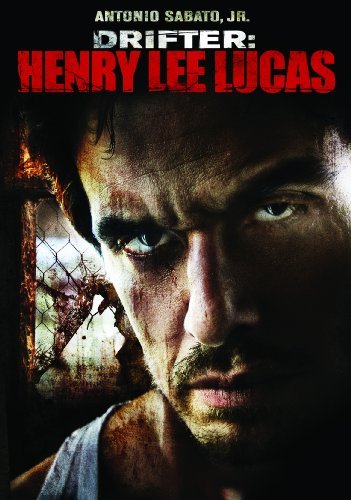
2009 saw the release of another film loosely based on the confessions of Henry Lee Lucas. Drifter: HenryLee Lucas opens with Lucas (played by Antonio Sabato, Jr.) being interrogated as to why he confessed to so many murders that he didn’t commit. The movie then flashes back to Lucas killing Becky Powell (Kelly Curran) before then flashing forward to Lucas confessing to a murder and asking for a milkshake in return and then, once again, it flashes back to Lucas’s Hellish childhood in West Virginia. That’s a lot of time jumps for just the start of the movie and it’s an early indication of just how jumbled the narrative of Drifter turns out to be. To a certain extent, the jumbled narrative is appropriate. It captures the feeling that, in many ways, Lucas is simply making up his life story as he goes along.
Physically, Henry Lee Lucas and Ottis Toole were two incredibly ugly people. Drifter casts Antonio Sabato as Henry and Kostas Sommer as Ottis, both of whom are notably better-looking than the two men that they’re playing. Sommer, in particular, is a hundred-time more handsome that Ottis Toole. (The real Toole looked like one of the toothless hillbillies from Deliverance.) Even if one overlooks their looks, both Sabato and Sommer are a bit too articulate to be believable as two backwoods murderers. Sabato does a good job of capturing Lucas’s one-eyed squint but never once do you buy that he’s someone who grew up in the backwoods of West Virginia. Meanwhile, as Becky, Kelly Curran is shrill and a bit annoying. A lot of that is due to how Becky is written but still, it doesn’t make any easier to deal with her character.
Narratively, the film avoids taking a firm position on whether or not Lucas was lying. We do see Lucas commit a few murders but they’re all told as a part of his narration, leaving open the possibility that Lucas could be lying. Unfortunately, Henry’s stories aren’t that interesting. What was interesting was that so many people chose to believe his stories, despite the fact that the majority of them fell apart under even the slightest amount of scrutiny.
In the end, Drifter reminded me that Henry Lee Lucas is far less interesting than how people reacted to Henry Lee Lucas and his willingness to confess to every crime that he was asked about. There’s a great film to be made about the people who enabled Henry Lee Lucas’s lies. Henry, himself, was far less interesting.



 Through the Shattered Lens