2009 Fantastic Fest had one specific film which had a visceral effect on that film festival’s attendees. The fact that it won that festival’s Best Picture in the horror category gave it a boost in the buzz department. I am talking about the film directed by Tom Six titled simply, The Human Centipede: First Sequence.
Just watching the trailer and the sample clip below would be enough to sell the film for someone or just outright make them run straight to the bathroom. Either way it looks like this is one film which will not have a middle-ground when it comes to people’s reactions. If this film was released 25-30 years ago it definitely would be an example of what makes a grindhouse flick.
I’ve decided to share my love of grindhouse films by posting periodical daily grindhouse choices. To inaugurate this new feature I’ve chosen a favorite early 80’s grindhouse flick straight from the mind of the maestro himself, Lucio Fulci.
The New York Ripper is one of Fulci’s contribution to the Italian cinema genre of gialli films. Giallo (gialli – plural) films have a colorful, no pun intended, history in Italian filmmaking and it’s Golden Age last from the 70’s all through the mid-80’s when the public’s appetite for them started to wane. This Lucio Fulci entry into the giallo genre was not his first but it was one of his most infamous one’s for the fact that many people thought it’s depiction of women and their deaths on-screen was labeled as extremely misogynistic and cruel. The New York Ripper wasn’t even one of the better films in Fulci body of work, but the label of misogynism and having been banned from many countries or being shown only as a X-rated feature film brought it attention and made it a staple in the so-called “grindhouse” cinemas that were prevalent in the 70’s and 80’s.
The film liberally lifts its ideas from the famous “Jack the Ripper” true-crime investigation and transplants it, where else, but New York City. The killings were brutal to the point that I understood the outrage many had over them. What made this film a favorite of mine is not the controversy revolving over calls of misogynism or the near-pornographic scenes of violence, but the killer himself. As you shall see in the attached trailer for the film the duck voice and quacking you will hear is not a joke added into the trailer but part of the film’s titular character’s personality.
Yes, ladies and gents…Donald Duck is the New York Ripper!
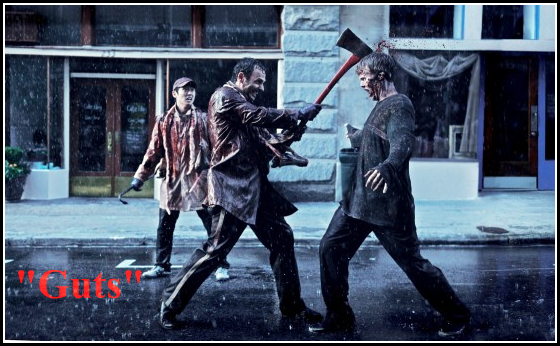
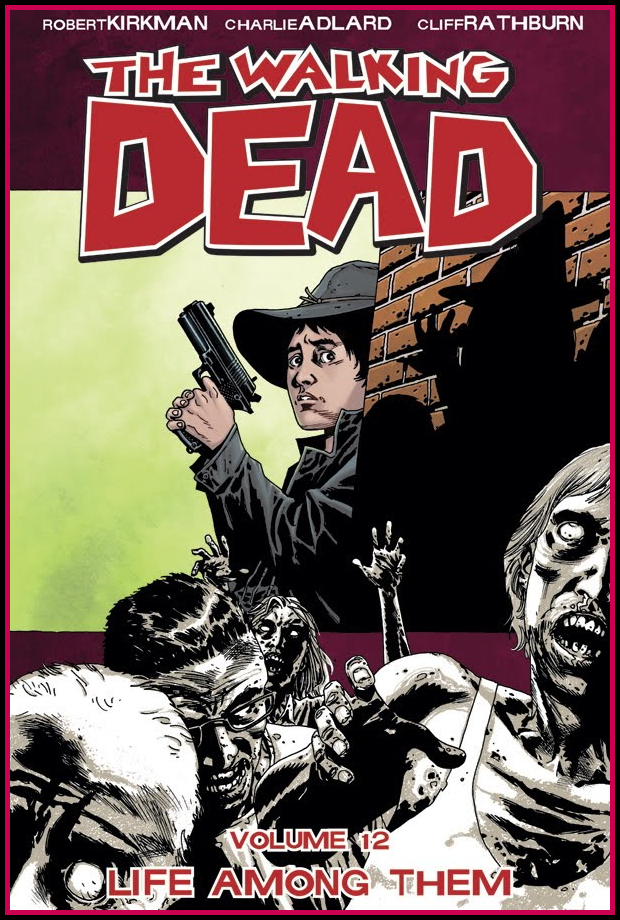
It looks like Frank Darabont’s TV adaptation of Robert Kirkman’s award-winning comic book title, The Walking Dead, just got closer to it’s production start. Shock Till You Drop has confirmed with Greg Nicotero of KNB EFX will be part of the AMC horror tv series. Nicotero (w/ co-founder Howard Berger) and the KNB visual effects house has done many of the horror, sci-fi and action films of the past decade. They last worked with Frank Darabont in the 2007 film-adaptation of Stephen King’s novella, The Mist. They’ve also been the premiere visual effects house when it comes to bringing the classic Romero zombie look and gore on the big-screen. Romero’s last three zombie films having been done by KNB.
This news makes me even more hyped to see how The Walking Dead translates onto the small-screen. With zombie films starting to reach a plateau when it comes to quality (Romero’s latest Survival of the Dead being mediocre at best) it will be interesting how a series centered around a zombie apocalypse and the travails of the survivors would be seen by the general audience. Having KNB EFX will at least appease the zombie fans who will flock to see this series. The question now is whether AMC will allow enough of the graphic violence from the comic book series to be shown. I’m guessing they will if their other critical-darling drama series Breaking Bad is a way to measure how far AMC will go.
Here are some of the films KNB EFX have worked on.
Kill Bill, Vol. 1-2
Land of the Dead
Hostel
Chronicles of Narnia: The Lion, The Witch and The Wardrobe
While remakes of older films have a tendency to fail in terms of storytelling and just overall quality, for some reason most remakes of George A. Romero’s films seem to do quite well. The Tom Savini-directed remake of the original Night of the Living Dead wasn’t better than the first but was very entertaining and stood on its own merits. The next Romero film to be remade was another of his horror classics, Dawn of the Dead. Another first time director in Zack Snyder handled this remake (despite howls of protests about the attempt to remake a film many consider one of the greats) and what he ended up making didn’t disappoint and has become of the the last decade’s best horror entries. While the remake of Day of the Dead ended up becoming a huge pile of crap I am happy to say that the remake of Romero’s bio-terror flick, The Crazies, under the directing work of Breck Eisner ended up better than I expected and, in my opinion, surpassed the original.
The film adheres pretty close to the original with just the setting having changed from Evans City, PA to Ogden Marsh, Iowa. Using this Midwest backdrop the film quickly establishes that Ogden Marsh is the prototypical Middle America town with everyone in the town of 1260 knowing everyone. They town even celebrates itself as the friendliest town in America. This all changes when a seemingly random and tragic event at a high school baseball game shatters the thin edifice of the town’s neighborly facade. The town’s sheriff (played by Deadwood’s Timothy Olyphant) knows that something is not right when another inexplicable murder happens the following day. The final clue which reinforces this hunch of his is when a trio of local hunters stumble upon the decomposing body of a pilot who died attempting to parachute and landing in a creek marsh close to town. The plane of the said dead pilot is later found. Not knowing what exactly was being ferried (later discovered to be a bio-weapon code-named “trixie”) on this plane the sheriff and his deputy (played by Joe Anderson) soon find the town’s phone lines, cellphone signal and network connection down.
The middle section of the film happens occur with the arrival of “help” in the form of biohazard-suited soldiers forcibly taking all accounted for townspeople from their homes and herding them in the local high school. It is in this section of the film where the remake deviates somewhat from the original. The story never truly establishes just exactly why the soldiers were using extreme tactics and protocols to contain the town and the surrounding area. The film seem to set the military as a faceless machine doing things by-the-book to the detriment of the town and it’s population. The original had the infected and uninfected civilians trapped between the military apparatus trying to contain the outbreak by any means necessary and the scientists flown in to try and find a cure. Writers Kosar and Wright keeps the film centered on the Sheriff Dutton, his pregnant wife (played by Radha Mitchell), his deputy and the his wife’s assistant.
By keeping the film focused on these four individuals the film loses the epic, grand-scale Romero was trying to do with the original and instead we get a more intimate, personal film about survival in a world that suddenly has gotten apocalyptic overnight for these four. It helped the film and Eisner that his two leads in Olyphant and Mitchell were up to the task of giving their husband and wife characters some gravitas in what could’ve easily been just a paycheck performance for them. Olyphant as Sheriff Dutton was especially good in his performance. He kept his character grounded throughout most of the film. Never did he play his character false in that one-minute we get a confused, desperate husband searching for his wife and then next minute we get a badass action hero who can’t get hurt and always coming up aces. Joe Anderson as Deputy Russell Clank who added just a tad bit of levity to an otherwise very tense film from beginning to end.
The infected townsfolk were not zombies as others might like to say. They have a certain similarity to Danny Boyle’s “Rage-infected” but while those seem to get a boost in strenght and speed in The Crazies those who become infected seem to just go all nutfuck crazy. While physical changes occur the longer a person was infected (veins beame inflamed and show up visibly) the “trixie” bioweapon does to those infected what the title says: crazy. Some behave in a crazy non-violent manner with uncontrollable giggling. Some would start rambling for no apparent reason while others become homicidal. It’s the last example which becomes the film’s second danger to the film’s leads in their attempt to survive the night and find safe haven.
It’s from the viewpoint of these four individuals that the audience experiences the night when Ogden Marsh must survive not just the “crazies” but also the government sent in to “help” contain the situation. As stated earlier this time around we do not know the motivations of those sent in to help. The government and the military force sent in are not just faceless, but mechanical in their handling of the situation. People were gathered en masse from their homes and paraded through a series of checkpoints to be checked, prodded and separated from those infected. We hear random bits and pieces of radio communication amongst the soldiers and the scientists controlling the situation, but not enough to know what their true agendas.
As the film progresses the danger posed by the “crazies” themselves seem to pale in comparison when we finally see the final solution the military and the government has come to in dealing with the outbreak. An outbreak caused by an accident and one which happens to occur near this small Iowa town. Just like in Boyle’s own 28 Days Later the solution which the military has come up with to deal with both infected and uninfected ends up being the craziest and horrific action by any and all in the film. There’s a sense of detached horror in how the government decided to truly contain the trixie outbreak.
The film was by no means a great one, but director Breck Eisner does a good job of keeping the film moving forward at a brisk pace right from the start then turning things up the farther in the film we get. By the time The Crazies hit the midway point the film the pacing has gone from brisk to unrelenting. There’s barely a chance for the audience to take a breather from the tension and terror before another one comes along. The decision by the filmmakers to just show the film from the point of view of the sheriff, his wife, the deputy and the assistant keeps some of the moral questions brought up by Romero in the original. Just like with Snyder’s remake of Dawn of the Dead, Eisner goes for the easier route and concentrates on making a thriller instead of trying to push complex social and moral commentaries. While this might disappoint some fans of the original in the end it makes the film more accessible for the wider audience.
In the hands of a more capable filmmaker and writers would this compromise to simplify the film have been avoided. Sure it could’ve but for what Eisner and company ended up creating was still quite engaging and entertaining. In the end, The Crazies was a remake of a horror master’s earlier film that more than hold it’s own against the original and actually surpasses it despite a storyline which had been simplified. It’s not one of the best films in the early part of 2010, but it definitely wasn’t the trainwreck may think horror remakes always end up being.
Capcom’s Dead Rising stands as one of the most fun titles to come out for the Xbox 360 since its initial release in late 2005. From the makers of the Resident Evil series for past console systems, Capcom has taken a new approach in adding to their growing library of zombie titles. Dead Rising is a semi-freeroaming action-horror game which takes the classic premise of George A. Romero’s Dawn of the Dead — survivors trapped in the mall teeming with flesh-eating zombies — and makes a fun and exciting game.
The game takes place Willamette, Colorado, population 53,594 where nothing exciting happens in town outside of visiting the local mega-mall which seems to dominate the entire town. Dead Rising uses a time-based mission system and the intro cutscene in the beginning of the game hints at this. You play as freelance photojournalist Frank West, who never fails to mention that he’s covered riots, wars, and all sorts of dangerous events, who gets a tip from an unknown source that something big is happening in little old Willamette. The intro both introduces Frank West, flying over the town to bypass the military blockade and cordon of the town, and the controls for the photography mechanics of the gameplay. It’s in this hands-on tutorial part of the intro that we see a bird’s eye view of the crisis that has befallen Willamette. From there you’re dropped onto the roof of the Willamette Mall where you meet one of the few survivors of the town. The rest of the game moves on from there at a very frantic pace.
It’s the game itself that shines for Dead Rising. Despite a save system that could’ve been done much better (more on that later), Dead Rising‘s gameplay mechanics has quite a bit in common with Rockstar’s Grand Theft Auto series. From the get-go the player as Frank can just go down into the mall and begin killing zombies left and right, and everyway from Monday through Sunday. All manner of items stocked in the mall walkways and stores can be picked up and used either as a weapon, a change in clothing attire, and/or food. This is where Dead Rising will get most of its mention for being fun. When Capcom programmers decided to allow the player to use anything that could be picked up as a weapon they meant it. There’s over 200 useable items to be picked up as a weapon. These items range from the gore-inducing lawnmower (an homage to Peter Jackson’s Dead Alive zombie film), chainsaws, and excavators (a garden tool that has one of the bloodiest and funniest killing animation) to the ridiculously funny use for CDs, shower-heads, novelty masks, teddy bears and skateboards. There’s also the more traditional weapons such as a pistol, shotgun, submachine gun, machine-gun, swords and axes. Being a game developed by Capcom, Dead Rising has more than a few wink-wink acknowledgement to other Capcom games such as Mega Man and Resident Evil.
One could spend all their time just killing zombies, but the strict time-based missions in the game might make zombie-killing take a backseat to actually solving the mystery of what’s caused the zombie outbreak in the town. There’s two types of missions Frank could try solving. There’s the mandatory “Case Missions” which deal directly with him trying to solve the mystery within the 72-hour time limit. Each case mission must be solved in a linear order to open up the next case. The second set of missions are named “Scoops” and act more as sub-missions that can be taken on and accomplished or ignored. They really don’t affect the availability of further case missions. What they do give Frank are prestige points that can go a long way to levelling him up to gain more skills and abilities. Most scoop missions usually entail finding scattered survivors within the mall and leading them back to the safety of the security office near the roof. Some survivors could be armed with extra weapons Frank carries and defend themselves when attacked, and some survivors are so incapacitated that Frank must carry them to safety. While carrying a survivor Frank will be unable to use a weapon so this type of mission usually takes several tries before the player figures out the best path to safety. Like most game AI, the survivors need a bit of constant attention from the player to make sure they’re actually following you and not stopping every second to fight the closest zombie. It’s not a gamebreaker but the survivor AI could’ve used some more tweaking to make them follow much better.
As mentioned above, Frank can level up to a level cap of 50 by acquiring prestige points (called PP in the game). Prestige points can be acquired through many different ways within the game. Taking pictures of different nature and quality will give Frank prestige points as high as several tens of thousand. Shots with poses that follow a certain genre gives more points than those that are just generic poses. Such genres that shots can be taken of are shots of burtality, horror, outtakes, drama and erotica. Erotica shots are pretty much just photographs taken of survivors and zombies (creepy) in sexually-suggestive poses. Brutality shots are usually pictures where extreme violence and fighting poses are framed and photographed. Horror is pretty much self-explanatory. Drama shots usually involve pictures with survivors and main npc characters in dramatic poses. Outtakes usually entail photographs taken of survivors and zombies involved in any sort of funny situations. Usually them slipping and falling down or wandering around aimlessly with novelty masks over their heads.
Other ways to gain prestige points will be to finish case missions and scoop missions. The PP reward for finishing part or all of each mission usually range from several thousand to as high as 50,000 PP. The high amount of PP reward for taking on and accomplishing these two types of missions go a long way to levelling up Frank. The most fun way of getting PP, though not as much and takes a long time, will be to kill zombies. For every 50 zombies killed Frank gets 500 PP and everytime Frank reaches 1000 zombies killed he gains 20,000 PP. It’s a much slower path to gaining PP but it’s surely the most fun of the three ways.
The main storyline in Dead Rising is actually a very good one. Like most games outside of the role-playing game genre, storylines were usually the weakest of all the games had to offer. In Dead Rising, Capcom was able to create an intriguing storyline that didn’t rip-off the Dawn of the Dead story that the game will always be compared to. There’s conspiracies, betrayals and just outright weirdness to help tie together the mystery of why Willamette, Colorado has suddenly gone zombiefied and why the U.S. military and government were quick to quarantine the whole area.
The game itself leans more towards comedic horror than outright horror. There were some cutscenes and plot developments that were downright creepy and scary, but most of the time you’ll just laugh in glee at all the carnage you’re causing within the mall. The characters of Frank West and those npcs he has to deal with in the context of the case missions were pretty well drawn both in animation and personality. As the game progressed and certain characters were put in danger it was hard not to feel saddened by such tragic events. It helps that the voice-acting in Dead Rising was pretty high quality. The spoken dialogue during the cutscenes were pretty well done and one could sense that Capcom wanted to really capture the cinematic tone they were going for with Dead Rising.
Now to the one glaring negative in Dead Rising. The save system in this game could be called unforgiving and that’s saying it lightly. The game only allows for one save per memory unit. This means that you can only save the game once if you only have the 360 HDD as your memory unit. This means that once you save over a previous save then thats it. If you’re current save doesn’t give you the chance to finish your current case mission then you pretty much have to start the game over. This would sound terrible if not for one saving grace. Dead Rising allows the player to start the game over with all skills, abilities, levels and PP acquired to be transferred over to the new game. This lessens the impact of having to start the game over. It also helps in power-levelling Frank to a level high enough that you can breeze through the case missions. Starting the game over and over with stats and skills included also gives the player a chance to try different methods of solving a case until finding the one thats easiest to do. I know of players who have done nothing but just kill zombies and try on a few case and scoop missions to gain PP to level up then start the game over then repeat the cycle again. This makes the game much easier in the long run, but also takes time.
The graphics in Dead Rising is good to above-average. Capcom went away from making the best-looking graphics and instead opted to go for just good with most of the 360’s power under the hood set aside for the zombies. The game has lots and lots of zombies on-screen and when I say lots I mean in the hundreds, if not thousands. There’s barely any slowdown in frame-rate as the action on the screen gets heavy and crowded. The look of the mall itself was also well done. Each store and utilitarian room has their own unique look with most items rendered with enough detail to be recognized as either weapon, sustenance, etc.
Overall, Capcom has created a great game with their action-horror/comedy Dead Rising. With a choice to either play the game in the free-roaming style of Grand Theft Auto to a more time-based, linear mission-style of an action game this game more than makes up for unforgiving save system its developers decided to give it. Outside of the save system which keeps this game from reaching excellent status, Dead Rising is a great and fun game that should remain fun to pick up long after the player has finished its main mission. With a sequel already set to be released on the tail-end of summer 2010, this game is a good way for one to reacquiant themselves with some zombie-killing.
The Hollywood Reporter blog has reported that Mary Elizabeth Winstead has been cast in the lead role of the soon-to-be filming prequel of the classic scifi/horror The Thing. Slashfilm has picked up on this story and I have confirmed with someone involved in the casting process that she has been cast who I trust explicitly.
She will play the role of Kate Lloyd, the paleontologist chosen to travel to Antarctica to help the research team in the Norwegian camp which has found something buried in the Antarctic ice. The casting of Joel Edgerton in the male lead role of Sam Carter, the American helicopter pilot tasked with bringing the character Kate Lloyd to the Norwegian base, rounds out the news on lead casting.
Ms. Winstead has had her share of being part of a genre production (Final Destination 3 and Grindhouse) so she will not be out of place in such a production. She has enough acting skills to balance out her good looks. With the relatively young look of both leads there’s a chance that writer Eric Heisserer may include a romantic subplot between the two characters. I sure hope that is not the case since this film doesn’t really need it to appeal to the audience. Would I be averse to having some sort mutual attraction, even if just hinted at, between the two character? Not at all, but a fullblown romance just for the sake of having it in the story would be the wrong way to go about it.
Manga (Japanese comic books) has become a major form of entertainment for me. This wasn’t too surprising being that I have been a huge fan and reader of comic books both American and European. While my own collection of comic books have waned in the last decade my appetite for manga has increased in its place. I find them to be actually cheaper to buy and collect than American comics nowadays.
One of the current manga titles (unfortunately not licensed to be translated and sold in the US…yet) is the very popular zombie apocalypse title from Monthly Dragon Age (a monthly manga magazine similar to the Western comic magazine Heavy Metal). This zombie apocalypse manga is known quite appropriately as Highschool of the Dead. The series (was on hiatus for a little over a year, but has started up once more) was started in September 2006 by mangaka Daisuke Sato and Shouji Sato (the former doing writing duties while the latter the illustrations).
The manga takes the usual zombie conventions begun by George A. Romero and expanded by many others since and wraps it with a heavy dose of ecchi. For the uninitiated the Japanese term ecchi is commonly used for manga and anime which contains very sexualized (though not to mean full nudity and explicit sex) imagery and characterization. Let’s just say that the artists of manga and anime with ecchi themes will liberally use panty shots, huge bouncy breasts and scantily clad women in almost every other scene.
Highschool of the Dead can almost be the manga version of the cheesy Troma zombie films which combined horror with scantily-clad women running and bouncing every which way. While the manga is quite violent and gory the black and white illustrations keep it from becoming gratuitious. I can’t say the same for the boobs and panty shots. The fact that the manga is published through a manga magazine aimed at teenage boys and young adult males wasn’t an accident. The author and illustrator really know who their readers are and more than glad to give them what they want.
Some of the sample full-color pin-up illustrations should really emphasize my point.
News was made just recently that the manga was going to be adapted into an anime series. The anime was to make it’s premiere episode available to Japanese tv around early February of 2010. Here’s to hoping that the anime doesn’t abandon what made the manga series so popular. I am also hoping and confident that one of the licensing companies who brings over manga and anime to the US shores will do the same for Highschool of the Dead. Until that happens the only way to experience this series is to buy the original manga magazine issues each chapter of the series has shown up in and read it in Japanese. Or one can read unofficial scanlated versions (the last resort since it is not actually kosher to do so). If one was to settle on the latter then only one site really do the series justice with its translation and that is the site [XLG].
So, I highly recommend this manga. For those who will be interested enough to check it out I hope you enjoy it as much as I have. I mean what’s not to like: zombies, guns, boobs and even more boobs.
Werewolf films have always felt like they’ve been given the short end of the stick when it comes to quality and artistry. In horror cinema, vampires tend to be the ones treated with glamour—getting richly developed lore, elegant aesthetics, and narratives that weave romance with menace. Werewolves, by contrast, are too often relegated to playing second fiddle, treated more as brutish monsters than complex characters. This isn’t to say there haven’t been standout entries in the genre—classics such as An American Werewolf in London, The Howling, and Wolfen proved that werewolf tales could be inventive, atmospheric, and even poignant. Unfortunately, many modern werewolf films still feel stuck emulating the aesthetics and narrative beats of the 1940s Universal Wolf Man formula, unwilling to evolve past its roots.
That’s why Dog Soldiers, Neil Marshall’s 2002 action-horror film, came as a breath of fresh air. Marshall, then an up-and-coming director from the UK, took the basic premise of a werewolf story and infused it with the pacing, intensity, and tone of military survival thrillers. In doing so, he leaned into genre hybridity, crafting something closer to Aliens meets Zulu, peppered with elements from siege films like Assault on Precinct 13 and even hints of Night of the Living Dead. This fusion not only differentiates Dog Soldiers from typical werewolf fare, it also helps the film sidestep some of the genre’s usual narrative pitfalls.
The plot is refreshingly straightforward and tightly executed. A squad of British soldiers is dispatched to the Scottish Highlands on what appears to be a routine training exercise. However, the mission is actually part of a covert operation led by Captain Ryan (Liam Cunningham) from British special operations. The higher-ups believe there is an unidentified creature prowling the remote wilderness—something worth capturing and experimenting on. Naturally, plans unravel almost immediately when the soldiers stumble upon the very real threat: a pack of predatory werewolves. In quick order, both the military squad and Ryan’s covert team suffer heavy casualties, forcing the handful of remaining survivors to retreat to the relative safety of an isolated country cottage.
At this point, Dog Soldiers shifts from a creature-hunt narrative to a tense siege story. The soldiers, along with Megan (Emma Cleasby), a young anthropologist who happens upon them while driving along a desolate road, barricade themselves inside the cottage. It’s a familiar setup to horror fans—a small, heavily outnumbered group defending themselves against a monstrous threat—but Marshall handles it with sharp pacing and escalating stakes. The werewolves never attack in full force right away; instead, they probe the survivors’ defenses, testing weaknesses, thinning numbers, and forcing improvisation. The incremental nature of these assaults keeps the tension high and recalls the strategic pacing of Aliens and Zulu. By the final act, the film’s momentum surges into a frenetic, revelation-laden climax, where buried secrets between the survivors come to light, confirming that the encounter in the Highlands was anything but accidental.
The performances are one of the film’s strongest assets. Kevin McKidd anchors the story as Private Cooper, a grounded, quick-thinking soldier with a contentious past involving Captain Ryan. McKidd brings a combination of sharp competence and understated emotional weight, keeping the film from tipping into camp even when the gore and action turn exuberant. Liam Cunningham’s Ryan complements this dynamic by embodying the archetype of the cold, mission-focused officer—aloof, calculating, and ultimately morally questionable.
Sean Pertwee’s Sergeant Wells deserves special mention for his portrayal of a gruff but paternal squad leader. Despite being wounded early on, Wells remains a symbol of resilience, offering the squad guidance and resolve amid desperate circumstances. Emma Cleasby’s Megan strikes a balance between being a narrative catalyst and a functional participant in the group’s survival. As the siege wears on, she lets slip fragments of information about the nature of their attackers, deepening the mystery and tension without leaning on clumsy exposition.
Then there’s Darren Morfitt as Private “Spoon.” His performance injects the film with a lively combat bravado that stands out from the rest of the ensemble. Spoon isn’t just a trigger-happy soldier—he revels in the absurdity and extremity of their plight, seeing it as an ultimate test of British military skill against impossible odds. His confidence and gallows humor recall Bill Paxton’s Hudson in Aliens, but with less overt panic and more disciplined enthusiasm. Spoon references historic battles like Rorke’s Drift—famously depicted in Zulu—as touchstones of courage, further cementing Marshall’s homage to siege war films.
For a production with limited resources, the effects work is impressively convincing. With a budget far below that of major Hollywood horror films, Marshall and his crew leaned into practical effects and selective creature reveals. Some critics have accused the werewolf suits of looking like men in costumes, but in execution the designs work well within the film’s framework. The creatures are tall, lean, and menacing without relying on heavy CGI. Importantly, Marshall applies a “less is more” philosophy reminiscent of Spielberg’s handling of the shark in Jaws. Full, lingering views of the werewolves are reserved for the final act, allowing the audience’s imagination to do much of the work until the climax. This restraint helps sustain suspense while ensuring that, when the creatures finally take center stage, viewers are already fully invested in the world of the film.
When the action does explode, Marshall doesn’t shy away from gore. Dog Soldiers takes a hard-R approach, delivering violent set pieces that are as visceral as they are functional to the narrative. Bodies are torn apart, entrails spill onto floors, and dismembered remains are devoured on-screen—a rare choice for werewolf films, which often cut away from feeding scenes. Yet the gore never overshadows the horror elements; rather, it complements them, reinforcing the brutality of the attackers and the hopelessness of the situation.
At its core, what makes Dog Soldiers so memorable and effective is its clever blend of genre DNA, drawing inspiration and structure from both Aliens and Zulu. Much like James Cameron’s Aliens, Marshall’s ensemble of soldiers must depend on each other to survive, facing off against an external threat in an environment where resources and options dwindle by the hour. The tension is ramped up through a progressive siege, with monsters probing at the group’s defenses, forcing rapid adaptation—an approach that maintains the audience’s suspense and empathy. The way the squad’s camaraderie is tested amid escalating shock and violence feels akin to the Colonial Marines in Aliens, with Spoon and Wells providing flashes of humor and heroism reminiscent of Paxton’s Hudson and Biehn’s Hicks.
Meanwhile, the homage to Zulu manifests in the setting and the sense of a last stand. The cottage becomes not just a shelter, but a makeshift fortress, echoing Rorke’s Drift in Zulu, where British defenders held out against overwhelming odds. Spoon’s direct references to the historic battle, coupled with strategic use of terrain and improvisational defense, strengthen the film’s identity as a genre junction—a supernatural thriller rooted in military siege drama. The sense of camaraderie, tactical ingenuity, and resilience facing certain death is palpable throughout, elevating the intensity far above ordinary monster fare.
By fusing these influences, Dog Soldiers revitalizes the werewolf genre and offers a reminder that horror doesn’t have to retreat into soft scares or ironic pastiche. Its hybrid approach creates a kinetic, emotionally resonant narrative, where supernatural terror and military heroism collide. The suspense not only builds from the threat outside, but also from the evolving relationships and secrets inside, giving the film depth and dimension.
In summary, Dog Soldiers succeeds not only as a visceral werewolf film but also as a smart genre blend, marrying elements of action-horror and siege war drama to make something memorable and genuinely thrilling. For fans of both horror and action cinema—especially those that crave suspense, teamwork, and practical effects—it’s an exemplary demonstration of how fresh vision can rejuvenate even the most familiar legends. Neil Marshall proves with his debut that he understands exactly what makes horror gripping, and with Dog Soldiers, he gives audiences a wild, unrelenting ride they won’t soon forget.
In what may well be John Carpenter’s finest film—greater even than Halloween and Escape from New York—the director boldly remakes Howard Hawks’ 1950s sci‑fi classic The Thing from Another World and, incredibly, surpasses the original. Unlike Hawks’ version, steeped in Cold War anxiety, Carpenter draws more directly from John W. Campbell Jr.’s short story Who Goes There?, shifting the focus to paranoia festering within an isolated group of men. His setting, an American scientific station buried deep in the frozen desolation of Antarctica, becomes the perfect pressure cooker for suspicion, distrust, and barely contained madness.
Carpenter’s vision announces itself immediately. The film begins with an overhead shot of jagged, snow‑capped mountains—an endless expanse of icy barrenness. This stark imagery is paired with Ennio Morricone’s minimalist score, a low, pulsating bass throb that mimics a heartbeat. In just these opening moments, Carpenter and Morricone establish the film’s defining tone: desolation, unease, and a creeping inevitability. Carpenter never lets this sense of dread relent; the unease initiated in the opening frames lingers throughout, until the final note of the end credits.
Where the 1951 film wasted no time showing an alien in the flesh, Carpenter follows Campbell’s original concept more faithfully: the creature hides, assimilates, and imitates. It kills and replicates members of the Antarctic crew, transforming everyday interactions into moments of terror. This conceit allows Carpenter to stage his film not just as a monster movie, but as a psychological exercise in tension. Each man is a potential threat. Each argument, however trivial, is laced with suspicion. The audience feels trapped alongside the crew, caught in their spiral of mistrust. At its core, the film is less about the monster’s abilities than about what happens when trust is stripped away from a community forced to live in isolation. The most chilling moments often occur not during the creature’s violent reveals, but in quiet exchanges where fear and doubt spread faster than the Antarctic cold.
The special effects remain legendary, an enduring benchmark even decades later. In the early 1980s, CGI was not a viable option, so Carpenter entrusted Rob Bottin, then in his early 20s, with designing the creature effects. Puppetry, animatronics, latex, and rivers of stage blood combined to create some of the most grotesque and imaginative transformations ever put on film. The kennel scene—when the alien first erupts from the body of a sled dog—remains a horrifying pinnacle of practical effects, unsettling in its creativity and biological plausibility. Bottin’s work is still studied in film schools as a triumph of practical ingenuity. The tactile, slimy, unpredictable reality of these effects would be nearly impossible to replicate with CGI. If any film demonstrates why computer graphics can feel cold and weightless compared to visceral practical effects, The Thing is it.
Anchoring the film is Kurt Russell as helicopter pilot R.J. MacReady, equal parts rugged pragmatist and reluctant leader. Russell’s performance gives the film its center of gravity, portraying a man forced into command when order collapses. Keith David brings an equally commanding presence as Childs, his wary, confrontational energy making him a perfect foil to Russell. The ensemble cast is one of Carpenter’s great strengths here. Each character is distinct, each performance meaningful; there are no throwaway roles. Even smaller parts resonate, as every man crumbles at his own pace under the weight of fear. One of the film’s most unsettling turns comes from Wilford Brimley, whose genial, trustworthy persona makes his gradual descent into paranoia and violence all the more disturbing.
The music deserves as much recognition as the visuals. Rather than scoring the film himself, as he had done in his earlier works, Carpenter handed the task to legendary composer Ennio Morricone. The gamble paid off. Morricone’s spare, throbbing motifs mesh seamlessly with Carpenter’s minimalist style, complementing the stark visuals rather than overwhelming them. The score is skeletal, almost primal—music that feels less composed than unearthed, vibrating with dread. It remains one of the finest examples of how sound can serve as a force multiplier for tension.
The Thing is not for the squeamish. The violence is graphic, the gore extreme, and the imagery deeply unsettling. Yet for those who admire masterful filmmaking, it stands as essential viewing: a perfect marriage of vision, execution, and atmosphere. For students of cinema, it offers a lesson in how genre filmmaking can transcend cliché and attain something close to pure, operatic terror. In the end, Carpenter’s The Thing is more than a remake—it is a redefinition. It strips away the veneer of mid‑century optimism and replaces it with a stark meditation on distrust, survival, and the alien within us all. Few horror films hold up this well or manage to stay this scary for fans old and new.
I must begin this entry by thanking Phil Edwards over at Live for Films for introducing me to this particular piece of awesome. Check out his very extensive blog on practically anything about films. It was there that I first saw this trailer for a zombie film that’s stuck between concept and development. The trailer is for A.D. and while it hasn’t been made into a feature-lenght film this trailer should convince studio heads everywhere to seriously make this into one. If 9 can go from a short cgi-animated film into a full blown feature-leght one then I definitely think A.D. should get the same chance. I mean it’s CGI zombie apocalypse and does it ever look great.
The only thing I hope doesn’t happen is for a place like Lionsgate to end up as the studio to get this film up and running. They may like horror and genre films, but they’ve been very sloppy in handling those same types of film (ex: Midnight Meat Train and Punisher: War Zone). I think A.D. is definitely the type of project Peter Jackson’s production company could get behind on.
So, all horror and genre fans need to spread the word concerning A.D. This is a film that needs to get made and he sooner the better.