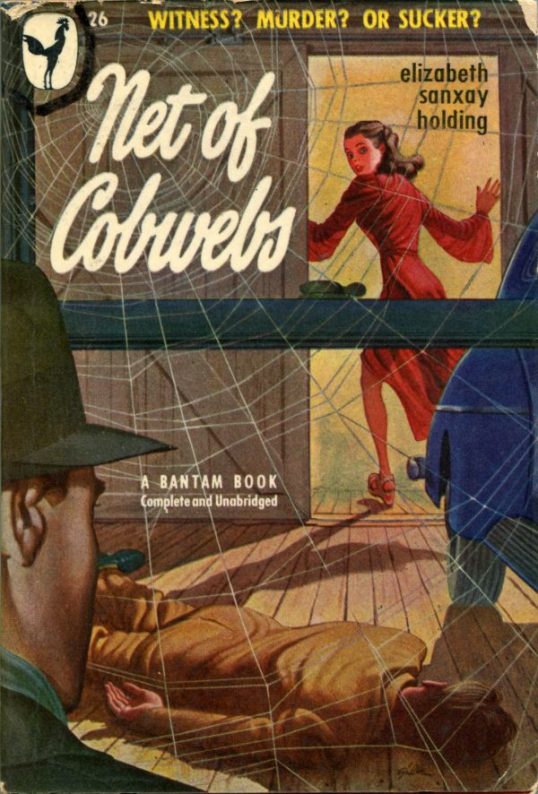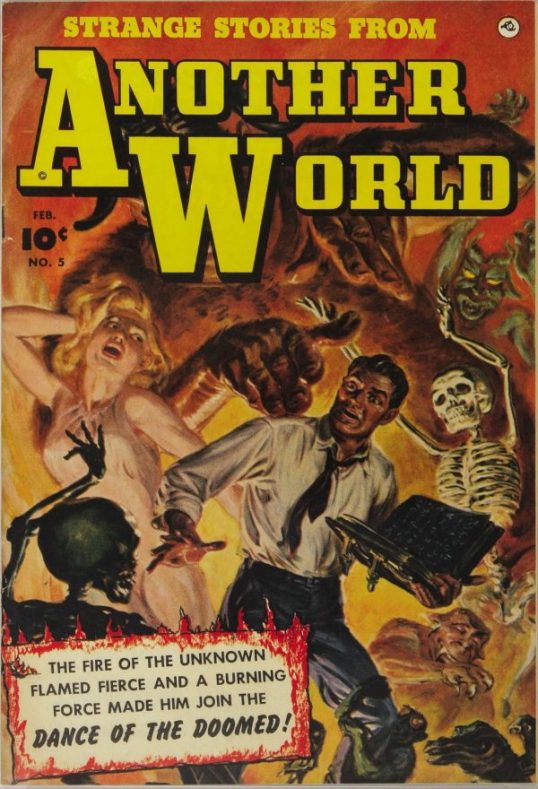
In this work of Interactive Fiction, the recent death of your mother forces you and your father to come to terms with Babyface, a semi-legendary bogeyman who haunted you in the past and who may still be living in his old house, watching as people walk by.
Babyface is more of a short story than an actual game. There are things for you to click in order to move the story forward but there really aren’t any decisions for you to make. If you’re looking for a traditional IF experience, with you explore locations on your own and it’s up to you to figure out what the clues mean and how to solve all the puzzles, Babyface is not it.
Instead, it’s a story that puts you right in the head of the main character. Even though you don’t really control her actions, you still see the story through her eyes. It’s both well-written and well-designed (using Twine) and it uses both audio and photographs to create and maintain a spooky atmosphere. Inspired by a nightmare, this story does a good job of capturing dream logic and keeping the player off-balance. It may not be a traditional game but it is a good read for fans of horror.
Since it’s Guillermo Del Toro’s birthday, it just seems appropriate that today’s horror scene that I love should be one of my favorite scenes from one of my favorite Del Toro movies.
Here’s the opening of 2015’s haunting (and, in my opinion, underrated) Crimson Peak!
Seriously, that’s kind of my go-to reaction to almost any of Christopher Pike’s YA thrillers. As an author, Pike has never allowed the fact that he was writing for a young audience get in the way of coming with some truly gruesome death scenes and some macabre scenarios.
Take the 1991 novel, Die Softly. Now, technically, this is not a horror novel. There aren’t any ghosts or vampires or anything like that. Instead, this book centers on a bunch of murderous but nonparanormal high school hijinks. Herb is an awkward 18 year-old who can take amazing pictures but who has no idea how to talk to people. His best friend, Theo, is a drunk who spends his time shooting guns in the backyard. (Admittedly, Theo only went downhill because of the death of his bother Roger in a mysterious car accident.) Theo wonders if he and Herb will ever find love. Herb imagines that they’ll both find someone to marry but they probably won’t ever have the courage to actually approach anyone that they actually love. I mean, this is dark!
Anyway, Herb dreams of becoming a director in Los Angeles so he sets up a secret camera in the high school locker room so he can get a picture of the cheerleaders showering and …. wait a minute. What? Uhmmm …. what? Techically, Herb does feel guily about it but …. agck! Of course, the idea wasn’t originally Herb’s. His childhood friend Sammie suggested it because of her own general hatred for cheerleaders. Still, Herb didn’t necessarily have to go along with the idea. Even he assumed Sammie was joking when she first suggested it. But Herb, for all of his attempts to be a nice guy, is driven by crush on Alexa and his fear that he’ll never even get kissed, let alone see anyone naked. (If this book had been written today, Herb would be an incel hanging out on Reddit.)
Anyway, long story short: when Herb develops his film, he thinks that he may have accidental photographed a murder.
And things get only crazier from there! Die Softly is an enjoyably over-the-top little book, one that fully embraces the melodrama while taking a journey into the heart of high school darkness. The plot has to do with cocaine and threesomes and Herb’s own rampaging insecurity, one that ultimately makes him something of a sympathetic character, even if he is someone whom most readers will have mixed feeling about. It also ends on a far darker note than anything you’d expect to find in a book by R.L. Stine.
Die Softly is a teenage nightmare, a book about dreams that suggests that the best plan of action is abandon all hope, ye who enter here. It’s also a lot of fun. For the most part, Pike wisely eschews anything resembling subtlety. Just because you’re taking a nihilistic journey into the heart of darkness, that doesn’t mean that you can’t be entertained.
I’ll be the fist to admit that it’s probably open for debate whether or not the 2018 South Korean film, Burning, is really a horror film. On the one hand, it could be a murder mystery or perhaps a film about a poor farm boy who meets an upper class sociopath. On the other hand, it could all be a big misunderstanding. By the end of the movie, you’re not even sure that all of these characters even existed. Though there are no ghosts nor any other paranormal monsters to be found in Burning, it’s still a deeply unsettling film. In fact, it’s one of the most unsettling films that I’ve seen in a while. It’s a film that sticks with you, as any good horror film should.
Lee Jong-su (Yoo Ah-in) is an aspiring writer who makes a meager living by doing odd jobs in Seoul. His family owns a farm and his father has been accused of murder, though the details as to what happened are left deliberately opaque. When Jong-su runs into an old classmate named Shin Hae-mi (Jeon Jong-seo) in downtown Seoul, he doesn’t recognize her at first. She cheerfully explains that she’s had plastic surgery. She also says that she has spent years training in the art of pantomime. She pantomimes eating invisible food and she does such a good job at it that you’d swear she was actually holding something in her hand and chewing something in her mouth. After they have sex, Hae-mi says that she’s going on a trip to Africa and she asks Jong-su to look after her cat. Jong-su agrees.
And yet, we never see the cat. After Hae-mi leaves, Lee goes to her apartment and searches for the cat but never finds it. He finds evidence that the cat does exist. Food is eaten. The litter box is used. And yet, the entire time that Jong-su is supposed to be taking care of it, the cat is never seen. Jong-su spends so much time searching for the cat in that apartment that it’s hard not to wonder if the cat even existed. For that matter, Hae-mi’s story about going to Africa is remarkably vague. Why is she going to Africa? Why has she entrusted someone she barely knows with taking care of her cat? Are the cat and the visit to Africa just another pantomime, something that seems real yet only exists in Jong-su’s mind?
When Hae-mi finally does return from her trip, she brings with her a story about being stranded in the Nairobi Airport for three days as the result of a terrorist attack. Returning with Hae-mi is Ben (Steven Yeun). Ben is a handsome and rich and confident and everything that Lee is not. Ben alternates between being superficially friendly and chillingly cold. At one point, he suggests that he at least cared enough about Hae-mi to be jealous of her relationship with Jong-su and yet it’s hard not to notice that Ben always seems to be slightly annoyed with her whenever they’re together. When the three of them go up to Jong-su’s farm and a stoned Hae-mi dances in the night, Jong-su watches enraptured while Ben smirks. (It would be easy to assume that Jong-su is the good guy while Ben is the bad guy if not for a scene where Jong-soo angrily reprimands Hae-mi for her behavior around other men, showing that Ben is not only person in the film with control issues.) At one point, Ben casually tells Jung-so about his interesting habit. He sets fire to greenhouses. He destroys the beauty that others have grown. He tells Jong-su that he’s noticed a lot of greenhouses near his family’s farm….
Burning is a deeply unsettling film. It’s not just that Steven Yeun gives a chilling performance as a man who appears to have no soul. (The film makes very good use of Yeun’s natural likability so show how someone like Ben can not only survive in the world but also thrive in it.) At the same time that we’re trying to figure out Ben, we’re also struggling to get a read on Jong-su as well. We spend a lot of time with Jong-su and yet, by the end of the movie, we’re still not sure that we know him at all. He says he wants to be a writer and speaks vaguely of Faulkner and Fitzgerald but it still seems as if he’s hiding secrets of his own. It’s tempting to read a lot (perhaps too much) into Jong-su’s admiration of Faulkner and Fitzgerald. Faulkner wrote novels that took place in the heads of his characters, much as how Burning, at times, seems to be taking place completely in the head of Jong-su. Fitzgerald’s best-known novel was about a man who was obsessed with money and a woman whom he had idealized beyond reality. Jong-su, at one point, refers to Ben as being Gatsby but we’re left to wonder if perhaps it’s the other way around. Perhaps Jong-su is Gatsby, the poor man who is constantly trying to reinvent his reality.
It all leads to a mystery that may not be a mystery and clues that could just as easily by coincidences. It also leads to an act of sudden violence, one that leaves you wondering whether or not we knew any of these people. As I said, it’s a deeply unsettling film but, at the same time, it’s not one that can be ignored. It has a 148-minute running time and it’s deliberately paced and yet, due to the strength of the performers and the intriguing enigma of the plot, you don’t get bored. You don’t look away. You watch this story and you search for answers that you know you’ll probably never find.
Burning is on Netflix right now so be sure to watch it before they drop it to make room for another season of American Horror Story.
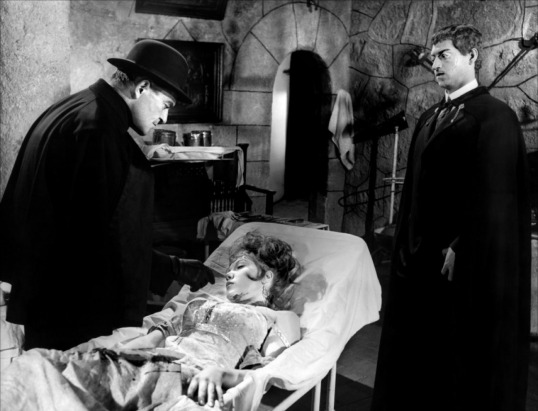
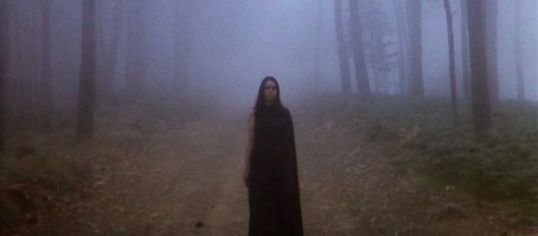
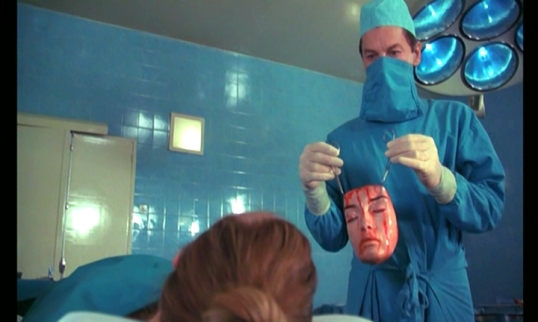
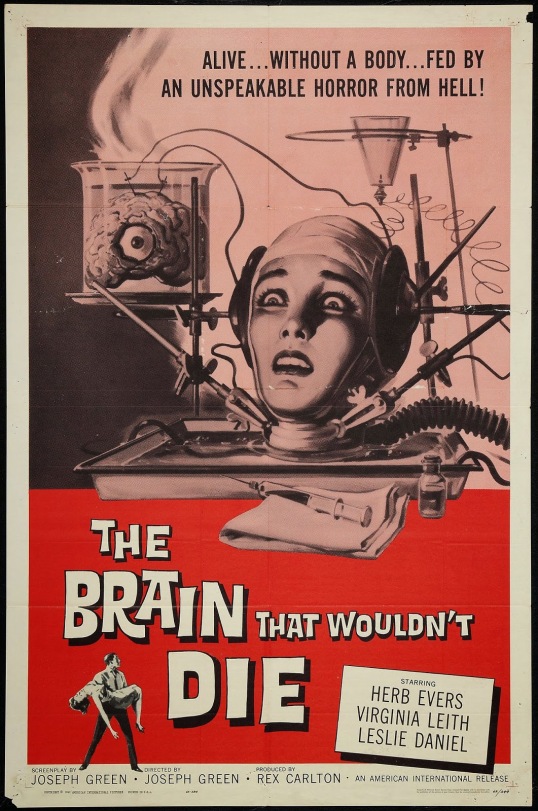
4 Shots From 4 Films is just what it says it is, 4 shots from 4 of our favorite films. As opposed to the reviews and recaps that we usually post, 4 Shots From 4 Films lets the visuals do the talking!
This October, we’ve been using 4 Shots From 4 Films to pay tribute to some of our favorite horror directors! Today we recognize not only the talent of Guillermo Del Toro but we wish him the happiest of birthdays as well!
4 Shots From 4 Films
Cronos (1993, dir by Guillermo Del Toro)
The Devil’s Backbone (2001, dir by Guillermo Del Toro)
The 2001 film, Wendigo, tells the story of a family in the Catskills. Some families go to upstate New York and they hang out with the dance people and learn a lesson about tolerance, class conflict, and dirty dancing. Others leave New York City and head up north because they’re trying to get away from the stress that comes from being a New Yorker. The film is about the latter and, to be honest, I don’t blame them for leaving the city. While it’s true that I don’t live in New York, I’ve seen enough clips of Bill de Blasio speaking to know that I also would want to get away from that 8 foot monster.
Of course, there are monsters in upstate New York as well. Just as South Texas has to deal with chupacabras, it would appear that Upstate New York has a Wendigo problem. According to the film, the Wendigo is a man who turned into a monster after committing cannibalism. The Wendigo can assume any shape and …. well, it’s basically just a real bitch to be around, I guess.
At least, that’s how it inititally appears when George (Jake Weber) and his wife Kim (Patricia Clarkson) and their son Miles (Erik Per Sullivan) are just starting out their trip upstate. George accidentally crashed into a deer and gets into with a local hunter named Otis (John Speredakos). Otis is really upset that George took out that deer before he got a chance to. George apologizes but it doesn’t seem to do much good. Later, when the family reach their cabin …. well, things just continue to get out of hand. Are they being harassed by the hunters or is it the Wendigo?
Or could it be both!?
As you may have guessed, I had a bit of a mixed reaction to Wendigo when I saw it. On the one hand, I appreciated the way the film captured the feeling of isolation and there’s a few nicely surreal dream sequences. If you’ve been reading this site for a while, you know how much I appreciate an effective and surreal dream sequence. However, Wendigo is also a rather slowly-paced film. It’s only 91 minutes long but it felt much longer and Otis is such a total caricature that it made it difficult for me to take his character seriously as either a hunter or, for that matter, a legitimate threat to anyone’s safety. As a viewer, I took one look at Otis and I thought to myself, “There better be an actual monster in the film because if this guy is the villain, it’s going to be a long 90 minutes.”
As for the cast, Patricia Clarkson and Jake Weber were believable if not terribly interesting as the parents. It was especially interesting to see Clarkson in a horror film, as this isn’t a genre with which one really associates her. (Jake Weber at least has Medium on his resume.) Erik Per Sullivan also did an okay job as Miles. I was glad that he wasn’t as annoyingly precocious as a lot of a child actors tend to be. The supporting cast is a mixed collection of performers who try too hard and those who don’t seem to be trying at all.
Wendigo has got some effective, Shining-influenced visuals and it ends on an appropriately ambiguous note. The film has its moments but, ultimately, it was a bit too slow-paced and uneven for me.
For today’s horror on the lens, we have a low-budget apocalypse film from 1962. The film follows Deputy Colter (Seamon Glass), a deputy who tries to take charge of the formation of a shelter and who quickly reveals himself to be a mentally unstable fascist. Though this film undoubtedly gets off to a rough start, it soon develops a convincingly ominous and almost dream-like atmosphere.
So, technically, this is not a horror-themed video. As much as I want to devote every day in October to horror-themed music videos, there aren’t quite as many out there as you might think and we’ve been doing this for a few years now. (Actually, I guess I should say that it’s not so much a case of finding a horror-themed music video as much as it’s finding a good horror-themed video. There’s maybe a thousand videos out there featuring a singer going on about murder while his drummer plays his practice solo but that doesn’t mean all of them are worthy of being a music video of the day.)
That said, this video definitely has an October vibe to it. Between the soulful voice of the singer and the shadowy images, it’s a haunting video. This song is about looking for love in a cold world and certainly, that’s what a lot of paranormal beings spend October doing. One could imagine this song being sung by a ghost and that’s good enough for me!
On tonight’s episode of Baywatch Nights, Mitch investigates the disappearance of two lifeguards. Could it have something to do with an automotive accident from the past? When a third lifeguard goes missing, Mitch’s investigation goes into overdrive because this latest lifeguard is a co-star and if something happen to her, they’ll have to redo the show’s opening credits.
This episode takes a break from the usual paranormal stories that were featured for most of Baywatch Night‘s second season. But the underwater cage is still pretty creepy!
This episode originally aired on November 17th, 1996.