Holiday Film Review: Jingle All The Way (dir by Brian Levant)


Whatever else one may want to say about it, 1996’s Jingle All The Way is a cute film.

It’s necessary to point that out because Jingle All The Way has a terrible reputation and, if we’re going to be honest, it deserves a lot of the criticism that it has gotten over the years.  In many ways, it epitomizes the way a Hollywood studio can take an interesting idea and then produce a film that seems to have no understanding of what made that idea so interesting in the first place.  Arnold Schwarzenegger plays Howard Langston, an overworked mattress store manager who waits until Christmas Eve to try to buy his son a Turbo Man action figure.  (In the film, they call it a “doll,” which is one of the film’s false moments.)  The only problem is that the Turbo Man action figure is the most popular gift of the year and everyone is looking for one.  What starts out at as a satire of commercialism ultimately becomes a celebration of the same thing as Howard ends up dressed up as Turbo Man and taking part in his town’s Christmas parade.   The film becomes a comedy without any sharp edges.

That said, it’s a cute film.  It’s not cute enough to really be good but it is cute enough that it won’t leave you filled with rage.  Arnold Schwarzenegger is in True Lies mode here, playing a seemingly boring and suburban guy who is secretly a badass.  (In True Lies, Schwarzenegger was secretly a spy who had killed man people, though all of them were bad.  In Jingle All The Way, he’s just a parent who has waited too long to go Christmas shopping.)  Schwarzenegger’s main strength as an action star — even beyond his physique — was that he always seemed to have a genuine sense of humor and he’s the best thing about Jingle All The Way.  This film finds him acting opposite actual comedic actors like Jim Belushi and Phil Hartman and holding his own.  (The film also features Sinbad as another dad trying to get the Turbo Man action figure but Sinbad comes across as being more of a stand-up comedian doing bits from his routine than an actual character.)  The film’s set pieces grow increasingly bizarre and surreal as Howard searches for his Turbo Man and the film actually becomes less effective the stranger that it gets.  A scene of Howard fighting a crowd in a toy store works far better than a later scene where Howard battles a bunch of men dressed as Santa Claus and his elves.  (It doesn’t help that, after an intelligent and well-edited opening thirty minutes, the film seems to lose all concept of comedic timing.)  But there’s a sincerity to Schwarzenegger’s performance that keeps you watching.

Of course, today, Jingle All The Way feels like a relic from a different age.  All the kids want a Turbo Man and you’re so busy at work that the stores are closed by the time you get home?  Fine.  Hop on Amazon at three in the morning and order one.  Christmas shopping is a lot easier nowadays.

It’s just not as much fun.

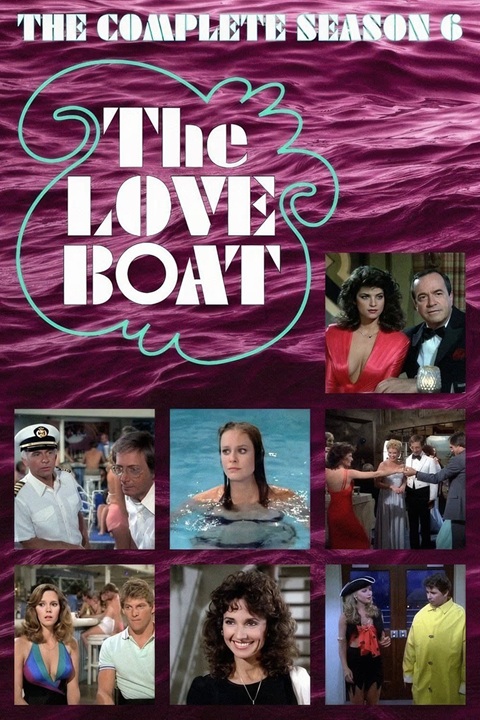
Retro Television Review: The Love Boat 6.7 and 6.8 “The Spoonmaker Diamond/Papa Doc/The Role Model/Julie’s Tycoon”


Welcome to Retro Television Reviews, a feature where we review some of our favorite and least favorite shows of the past!  On Wednesdays, I will be reviewing the original Love Boat, which aired on ABC from 1977 to 1986!  The series can be streamed on Paramount Plus!
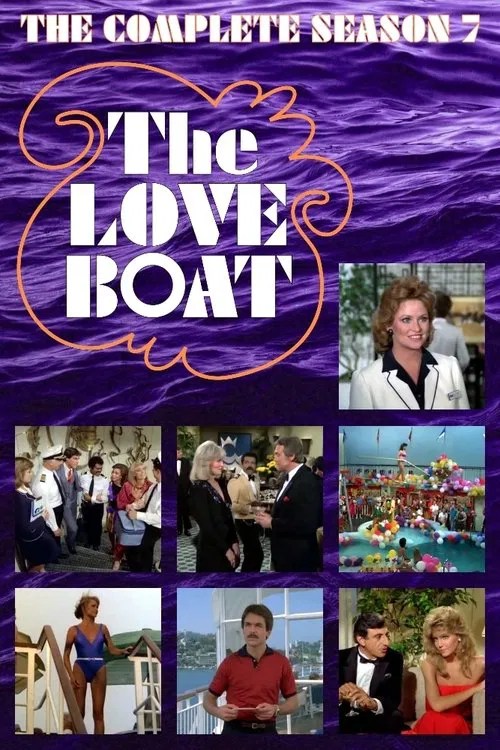
Come aboard, we’re expecting you….

Episodes 6.7 and 6.8 “The Spoonmaker Diamond/Papa Doc/The Role Model/Julie’s Tycoon”

(Dir by Robert Scheerer, originally aired on November 13th, 1982)

The Love Boat is going to Greece and Turkey!

Well, actually, it’s the Love Boat crew that is going to Greece and Turkey.  They’ve been asked to temporarily take over another ship and, of course, Captain Stubing said yes.  This is one of those two-hour Love Boat episodes where the action was actually shot on location and on a real cruise ship.  As such, it’s more of a travelogue that anything.  We get to see the sights of both Greece and Turkey and no one makes any jokes about Midnight Express.

The majority of the storylines revolve around the Spoonmaker Diamond, a very valuable diamond that has been stolen by someone on the ship.  Was the diamond stolen by Emmett and Ellen Stokes (Harvey Korman and Nancy Dussault)?  Was the diamond stolen by Mark Hayward (Mike Connors)?  That’s what Inspector Sadu (Jamie Farr) is trying to figure out!  Of course, regardless of who stole it, it ultimately ends up in the unknowing possession of travel agent Dana Pierce (Polly Bergen).  Will Mark steal the diamond or will he fall in love with Dana?  Why can’t he do both?  This was an odd story because you had the goofiness of Harvey Korman and Jamie Farr and then you had the grouchy intensity of Mike Connors.  Connors seemed to be under the impression that he was appearing on a hard-boiled crime show as opposed to an enjoyably silly comedy about a cruise ship.

Meanwhile, Sabrina Drake (Jan Smithers) is a young heiress who is traveling with her mother, Amanda (Alexis Smith).  Amanda is not happy when she sees that tabloid reporter Joe Novak (Kiel Martin) is also on the cruise.  She’ll probably be even less happy when she discovers that Amanda is 1) secretly seeing Joe and 2) is pregnant.  When Doc finds out that Sabrina is pregnant, he offers to marry her.  Why not?  He’s known her for two days and he’s in love.  Fortunately, Joe talks to Amanda and wins Amanda’s blessing for his relationship with Sabrina.  Doc remains single.

Speaking of marriage, Greek tycoon Gregori Pananopolis (Lorenzo Lamas) asks Julie to marry him.  Julie is stunned and says she needs some time to think it over.  She tells Captain Stubing that she’s not sure if she’s ready to get married.  Uhmm …. Julie, this like the third or fourth guy who had asked you to marry him on this show.  You’ve nearly gotten married twice.  It’s odd how the show always acts as if marriage proposals aren’t a recurring theme when it comes to Julie.  Fortunately, Julie stays single because we all know she’s destined to eventually marry Doc.  Or Gopher, maybe.

Fashion photographer Cliff Jacobs (David Hedison) runs into his ex-wife, model Monica Brandon (Linda Evans).  He lies about having landed a job with a magazine in order to get her to pose for him.  He also takes some pictures of Vicki posing amongst the ruins of Greece.  Later, a magazine contacts him and offers to make Vicki into a star but he and Monica decide not to tell Vicki because they don’t want her to have to deal with pressure of being a model.  Hey Cliff and Monica, that’s really not your decision to make.  I’m sure being a model would be no less detrimental to Vicki than spending her entire youth on a cruise ship with people who are several decades older than her.

As I said at the start of the review, this episode worked best as a travelogue.  None of the stories were particularly intriguing but the scenery was lovely.  Even Turkey looked like a nice place to visit!

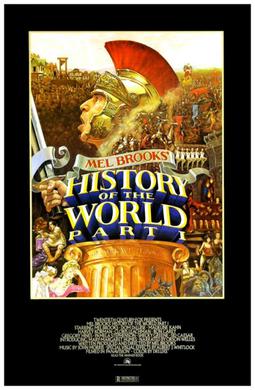
The History of the World, Part I (1981, directed by Mel Brooks)


Overlong, wildly uneven, gimmicky too a fault, and often laugh out loud funny with a mix of jokes that range from the crude to the sublimely clever to the surprisingly sentimental, The History of the World, Part I is the ultimate Mel Brooks films.

Narrated by Orson Welles and featuring five historical stories and a collection of coming attractions, The History of the World Part I follows man from his caveman origins to the French Revolution and the thread that ties it all together is that humanity always screws up but still finds a way to survive.  Moses (Mel Brooks) might drop and break one of the three tablets listing the 15 Commandments but he’s still able to present the other ten.  Stand-up philosopher Comicus (Mel Brooks) might make the mistake of poking fun at the weight of Emperor Nero (Dom DeLuise) but he still makes his escape with Josephus (Gregory Hines), Swiftus (Ron Carey), and Miriam the Vestal Virgin (Mary-Margaret Humes) and ends up serving as the waiter at the Last Supper.  (“Jesus!”)  The Spanish Inquisition may have been a catastrophe but it also gave Torquemada (Mel Brooks) a chance to show off his performance skills.  The French Revolution may have been a bloodbath but the future still held promise.  Ask for a miracle and he’ll show up as a white horse named Miracle, no matter what era of history you’re living in.

The humor is very Mel Brooks.  During the Roman Empire sequence, Madeline Kahn plays Empress Nympho.  Jackie Mason, Harvey Korman, Cloris Leachman, Spike Milligan, Jan Murray, Sammy Shores, Shecky Greene, Sid Caesar, Henny Youngman, and Hugh Hefner all make cameo appearances.  Carl Reiner is the voice of God.  John Hurt plays Jesus.  The film ends with the promise of a sequel that will feature “Jews in Space.”  Not every joke lands.  The entire caveman sequence feels forced.  But when the film works — like during The Inquisition production number — it’s hard not get caught up in its anything-goes style.  The entire Roman Empire sequence is probably more historically accurate than the typical Hollywood Roman epic.  That’s especially true of Dom DeLuise’s naughty performance as Emperor Nero.

Mel Brooks is 99 years old today and he says that he has at least one more film to give us, a sequel to Spaceballs.  I’m looking forward to it!  I’m also looking forward to rewatching and enjoying all of the films that he’s already given us.  The History of the World, Part I may not have initially enjoyed the critical acclaim of his earlier films but, in all of its anarchistic glory, it’s still pure Mel Brooks.

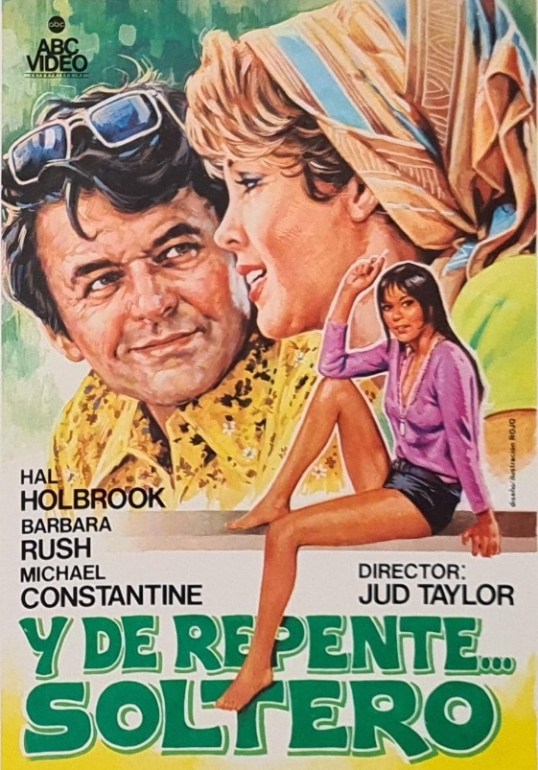
Retro Television Reviews: Suddenly Single (dir by Jud Taylor)


Welcome to Retro Television Reviews, a feature where we review some of our favorite and least favorite shows of the past!  On Sundays, I will be reviewing the made-for-television movies that used to be a primetime mainstay.  Today’s film is 1971’s Suddenly Single!  It  can be viewed on YouTube.

Suddenly Single opens with middle-aged Larry Hackett (Hal Holbrook) loading his suitcases into the back of his car.  His neighbors (David Huddleston and Pamela Rodgers) come over to say goodbye.  Larry has just gotten divorced and, as a result, he’s lost his perfect house in the suburbs.  Now, he’s going to have to move into the city and start a new life but he assures his neighbors that he’ll be okay and that there aren’t any hard feelings between him and his ex, Joanne (Cloris Leachman).  Sometimes, marriages just don’t work out….

Then Joanne shows up….

With her new husband, Ted (Fred Bier)!

While Larry can only watch, Ted insists on picking up Joanne and carrying her over the threshold of what used to be Larry’s house.  As it dawns on him that Joanne was having an affair during the final days of their marriage, Larry is understandably miffed.

Larry just isn’t ready to find himself in the world of the early 70s.  He’s an extremely conservative pharmacist who will now have to deal with hippies and the single scene.  His co-worker (Harvey Korman) encourages Larry to hit the bars.  Marlene (Agnes Moorehead) encourages him to figure out what he wants to do with his life.  His new and much younger neighbor, Jackie (Margot Kidder), tells him that he needs to get a gym membership and be more open-minded.  At first, Larry pursues a relationship with the classy Evelyn Baxter (Barbara Rush) but then he’s drawn to Jackie.  And Jackie, oddly enough, is drawn to him….

Quicker than you can say Breezy, Larry is dating the much younger Jackie and he’s starting to wear hip clothes and hang out with cool, long-haired people.  When he runs into his old neighbors on the street, he discovers that he no longer has much in common with them.  However, Larry still finds himself becoming jealous and possessive of Jackie, who is not the type of to give up her freedom for a relationship.  In the end, Larry is forced to admit that, while he has become more open-minded following his divorce, he still can’t magically change who he is.

Suddenly Single has a great cast and it’s not surprising that it’s a well-acted film.  At the same time, Larry can be a bit of a jerk.  Evelyn is the nicest person in the entire movie and Larry basically breaks her heart so that he can pursue an obviously doomed relationship with the younger Jackie.  It’s a bit sad to watch because everyone but Larry can see what he’s doing.  Larry may be wiser by the end of the film but that’s small solace to Evelyn.  Suddenly Single is about flawed characters and, as such, it can be easy to get annoyed with Larry and Jackie while also appreciating the fact that, like all of us, they’re just trying to figure out life as they go along.

Suddenly Single acts as a bit of time capsule and watching it is as probably as close as one can get to 1971 without a time machine.  It’s a trip to the past with some of the best actors of the era.

A Moment of Comedy Bliss with Tim Conway and Harvey Korman


gary loggins's avatarcracked rear viewer

As the world still mourns the loss of Doris Day yesterday, another great has left us  – TV comedy genius Tim Conway, who died today at age 85. Tim rightfully deserves a tribute post of his own, and he’ll get it, but until then, enjoy this classic bit of comedy gold from THE CAROL BURNETT SHOW (and watch Harvey Korman try to keep a straight face!):

Tim Conway (1933-2019)

View original post

Celebrate Life Day With The Star Wars Holiday Special!


Happy Life Day!

The Star Wars Holiday Special was first aired in 1978 and, over the years, it has achieved a certain amount of infamy.  Some people say that it’s the worst thing to ever be made for TV.  To those people, I say that 1) that’s not a good attitude to have on Life Day and 2) have you seen Disco Beaver From Outer Space?

Anyway, this is a musical Star Wars extravaganza.  One thing that makes it interesting is that Harrison Ford, Mark Hamill, and Carrie Fisher were all ordered to appear in it.  Seeing as how Harrison Ford tends to come across as being grumpy on a good day, I can only imagine how he reacted to filming The Star Wars Holiday Special.

Also, a few years ago, Val reviewed the Hell out of this thing.  Be sure to check out her review.

And now, for those of you looking to experience a dubious piece of pop culture history on this Christmas, we present to you …. The Star Wars Holiday Special!

Flat Broke In The ’70s: Americathon (1979, directed by Neal Israel)


The year is 1998 and America is flat broke.  Paper currency is now worthless and, to the joy of Ron Paul supporters everywhere, all transactions are done in gold.  After the country ran out of oil, people started using skateboards and bicycles for transportation and many turned their cars into homes.  While the citizenry spends their time consuming a steady diet of sitcoms and reality television, the government tries to figure out how to pay back the loan that it took from Sam Birdwater (Chief Dan George), a Native American who made billions after buying Nike.  Birdwater wants his money back and he is prepared to foreclose on the entire country.
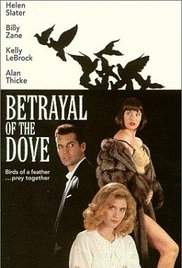
Newly elected President Chet Roosevelt (John Ritter) is not helping.  A combination of Jack Tripper and Jerry Brown (who was gearing up to challenge Jimmy Carter in the Democratic primaries when Americathon was first released), Chet Roosevelt is a spaced-out former governor of California who speaks in 70s self-help slogans and who is more interested in getting laid than leading the country.  Roosevelt governs out of The Western White House, a condo in California.  When an ad exec named Eric McMerkin (Peter Reigert) suggests a month-long telethon to raise the money to pay off the loan, Roosevelt leaps at the chance.

Hosted by Harvey Korman, the telethon (which is called, naturally, the Americathon) features a wide variety of acts.  There’s a ventriloquist.  Jay Leno boxes his grandmother.  Meat Loaf destroys a car.  Even Elvis Costello and Eddie Money make brief appearances.  While Chet falls in love with one of the performers, his chief-of-staff (Fred Willard) plots, with the leaders of a new Middle Eastern superstate, to sabotage the telethon.

Based on a play by the Firesign Theater, Americathon has a big, talented cast that is let down by Neal Israel’s uncertain direction and a script that is only rarely funny.  The idea of America hosting a tacky telethon to pay its debts sounds like a good SNL skit (especially if Bill Murray played the host) but the premise is too thin for a feature film.  Like Airplane! or The Naked Gun films, Americathon is a movie that tosses every joke it can against the wall to see what will stick.  If the jokes are good, like in Airplane!, that formula can lead to a comedy classic.  If the jokes are bad, not even John Ritter, Harvey Korman, and Fred Willard can make them funny.

Today, if Americathon is remembered, it’s because it supposedly predicted several future events.  Americathon does take place in a future where China is an economic superpower, Nike is a huge conglomerate, and reality game shows are very popular.  But, even with those correct predictions, Americathon is a such a film of its time that it was probably dated from the minute that it was released.  Just the sight of John Ritter in a condo permanently marks Americathon as a film of and about the ’70s.

George Carlin does score a few laughs as the narrator and Elvis Costello performs both Crawlin’ To The USA and (I Don’t Want To Go To) Chelsea.  Eagle-eyed viewers might want to keep an eye out for the tragic Playboy playmate, Dorothy Stratten, who has a brief non-speaking role.  Otherwise, Americathon is as hopeless as the country it’s trying to save.

A Movie A Day #192: Betrayal of the Dove (1993, directed by Strathford Hamilton)


Stop me if you’ve heard this one before.
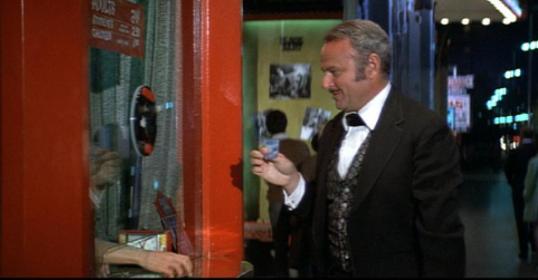
Ellie West (Helen Slater) has a 7 year-old daughter (Heather Lind), a sleazy ex-husband (Alan Thicke), a vampy best friend (Kelly LeBrock), and a pair of inflamed tonsils that need to come out.  When she goes in the hospital for what should be a routine procedure, she nearly dies on the operation table.  Something went wrong with the anaesthesia.  But what, why, and how?  Fortunately, Doctor Jesse Peters (Billy Zane) was there to save Ellie’s life.  Even as Ellie, with the encouragement of her best friend, starts to go out with Jesse, she still suspects that someone is trying to kill both her and her daughter.

While the title may sounds like an early 90s Merchant Ivory production, Betrayal of the Dove is actually just another “erotic” thriller, the type that used to show up exclusively on late night Cinemax.  The only thing that distinguished Betrayal of the Dove was the cast, which mixed B-movie stalwarts like Kelly LeBrock and Billy Zane with actors who usually did not appear in movies like this.  Alan Thicke was surprisingly good as a sleazy, abusive alcoholic and both Stuart Pankin and David L. Lander were cast in serious roles.

Perhaps the most surprising casting was that of veteran television comedian and Mel Brooks regular, Harvey Korman.  In the role of Ellie’s boss, Harvey not only played a serious role here but, at the end of the movie, he also got to save the day.  I’m not sure if Harvey did his own stunt work but if you have ever wanted to see Harvey Korman as an action hero, Betrayal of the Dove is as close as you’re going to get.

Or you could just watch Blazing Saddles again.


A Movie A Day #20: First Family (1980, directed by Buck Henry)


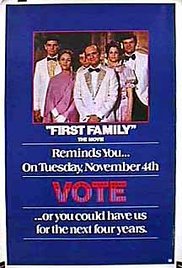
first-familyLike any newly inaugurated President, Manfred Link (Bob Newhart) faces many new challenges.  The biggest challenge, though, is keeping control of his family and his White House staff.  His wife (Madeline Kahn) is an alcoholic.  His 28 year-old daughter (Gilda Radner) is so desperate to finally lose her virginity that she is constantly trying to sneak out of the White House.  General Dumpson (Rip Torn) wants to start a war.  Press Secretary Bunthorne (Richard Benjamin), Ambassador Spender (Harvey Korman), and Presidential Assistant Feebleman (Fred Willard) struggle and often fail to convince everyone that all is well.
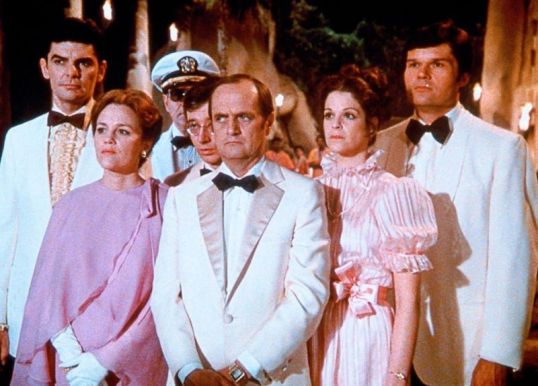
President Link needs to form an alliance with the African country of Upper Gorm, a country that speaks a language that only one man in America, Prof. Alexaner Grade (Austin Pendleton), can understand.  The President of Upper Gorm (John Hancock) orders that the kidnapping of Link’s daughter.  Holding her hostage, he demands that Link send him several white Americans so that the citizens of Upper Gorm can know what it is like to have a minority to oppress.

First Family not only featured a cast of comedy all-stars but it was also directed by one of the funniest men in history, Buck Henry.  So, why isn’t First Family funnier?  There are a few amusing scenes and Newhart can make a pause hilarious but, for the most part, First Family feels like an episode from one of Saturday Night Live‘s lesser seasons.  Reportedly, Henry’s first cut of First Family tested badly and Warner Bros. demanded that certain scenes, including the ending, be reshot.  Perhaps that explains why First Family feels more like a sitcom than a satire conceived by the man who wrote the script for The Graduate and whose off-center perspective made him one of the most popular hosts during Saturday Night Live‘s first five seasons.  Famously, during one SNL hosting gig, Henry’s head was accidentally sliced open by John Belushi’s samurai sword.  Without missing a beat, Henry finished up the sketch and performed the rest of the show with a band-aid prominently displayed on his forehead.  Unfortunately, there’s little sign of that Buck Henry in First Family.

first-family-2


Back To School Part II #3: Lord Love A Duck (dir by George Axelrod)


Lordloveaduck

For my third Back to School review, I watched the 1966 satire, Lord Love A Duck!

Hey hey hey!

I have to admit that, because I’m writing this review in a hurry and because the D and the F key are located right next to each other, I keep accidentally calling this film Lord Love A Fuck.  Somehow, that seems appropriate because Lord Love A Duck is a very odd and subversive little movie that deals with people who are largely motivated by lust and I’m pretty sure that, at one point, Roddy McDowall is seen saying, “Fuck off!” but, of course, we don’t actually hear him say it.  But seriously, Lord Love A Duck is a weird movie.

Hey hey hey!

Roddy McDowall plays Alan Musgrave, a student at a “progressive” high school in California.  Roddy was about 37 years old when he played a high school senior and he doesn’t look like a teenager at all but somehow, it’s appropriate.  After all, Alan is no ordinary teenager!  He’s smarter than everyone else.  He’s wittier than everyone else.  He’s more clever than everyone else.  He’s also totally obsessive and willing to do just about anything to get what he wants.  And you can be sure of one thing: whenever Alan does something borderline insane, you’ll hear a group of singers harmonizing, “Hey hey hey!” in the background.

Hey hey hey!

See, it’s happening already.  It doesn’t matter what Alan’s doing.  He could be kicking a skateboard in the way of a romantic rival.  He could be interrupting the graduation ceremony with a tractor.  He could be going to prison for life.  No matter what it is, it will always be accompanied by:

Hey hey hey!

Anyway, Alan is in love with the innocent, sweet, and constantly flirtatious Barbara Anne Greene (Tuesday Weld).  In fact, almost everyone in the film is in love with (or, at the very least, turned on by) Barbara.  The only person who doesn’t seem to be in love with Barbara is her mother (Lola Albright), a former-beauty-turned-cocktail-waitress whose world-weary cynicism seems to offer a depressing hint of what’s in store for Barbara once she gets older.

Hey hey hey!

But everyone else loves Barbara.  Especially Alan!  In fact, Alan is so in love with her that he swears that he’s going to make sure that she gets everything that she wants.  When she needs 12 cashmere sweaters so that she can join an exclusive girl’s club, Alan helps her to convince her father (Max Showalter) to pay for them.  When Barbara needs a job after dropping out of school, Alan helps her get one as a secretary for the high school’s progressive principal (Harvey Korman).  When Barbara decides she wants to marry the boring but respectable Christian youth leader, Bob (Martin West), Alan keeps Bob’s mother (Ruth Gordon) so drunk that she doesn’t get a chance to reprimand her son for falling in love with a girl from a divorced family.  (As Bob’s mother explains it, she doesn’t believe in divorce.  “We don’t leave our husbands.  We bury them.”)  Eventually, a movie producer decides that he wants Barbara to star in his beach films but Bob says no.  No wife of his is going to be a movie star!  So, of course, Alan decides to murder Bob so that Barbara can again have what she wants…

Hey hey hey!

Lord Love A Duck is a manic comedy that satirizes everything that mainstream audiences in 1966 would have held sacred.  Teenagers, conservatives, liberals, love, hate, murder, justice, marriage, divorce, morality, sex, religion, television, movies — it’s all thoroughly ridiculed in this film.  (It’s not surprising that the film’s director also wrote the script for The Manchurian Candidate, a satire disguised as a thriller.)  To be honest, it’s probably a little bit too manic for its own good.  At times, the film run the risk of becoming exhausting.  But then there’s even more times when the film is absolutely brilliant.

Hey hey hey!

Speaking of absolutely brilliant, Lord Love A Duck makes brilliant use of Roddy McDowall’s eccentric screen presence but, even better, it features one of Tuesday Weld’s best performances.  Weld was a talented actress whose performances often revealed that a fragile soul is often the price that is payed for great beauty.  (There’s no greater insecurity than wondering whether people are responding to who you are or to how you look.  Would you still care if I was ugly is not a question we’re supposed to ask but it’s one that we’ve all wondered.)  It would have been far too easy to make Barbara either totally innocent or totally manipulative.  Wisely, the film does neither.  Barbara may occasionally be manipulative but she always means well.  It’s not her fault that everyone around her is either idiotic or insane.

Hey hey hey!

Though Lord Love A Duck is obviously a time capsule of the culture of mid-60s, it’s also a film that remains relevant even today.  Culturally, we’re still obsessed with fame, youth, and beauty.  In many ways, the satire of Lord Love A Duck still feels more extreme that anything that any contemporary filmmaker would dare to attempt.  I can only imagine what audiences in 1966 thought as they watched this subversive teen film.

Hey hey hey!