Sci-Fi Film Review: The Hunger Games: Mockingjay — Part 2 (dir by Francis Lawrence)


Mj

It’s finally over!

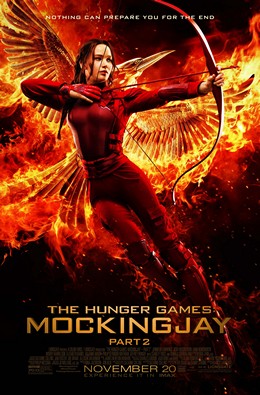
It probably sounds like I’m really excited that the final Hunger Games adaptation has been released.  It may sound like I’m happy that the saga of Katniss Everdeen and her life in Panem has finally come to an end.  And, to a certain extent, I am.  After everything that Katniss has been through, she deserves some peace and, fortunately, the series has ended before Jennifer Lawrence got bored with playing the role.  (To see what happens when actor gets bored with an iconic role, check out Daniel Craig in Spectre.)  Even though I think it can be argued that Mockingjay Part Two is the weakest of all the Hunger Games films, it still allows both Katniss and the actress who brought her to life to go out on a high note.

There’s a part of me that cringes a little when I think about all of the films that were released as a direct result of the success of The Hunger Games.  The Giver, The Maze Runner, Divergent, Tomorrowland, the list goes on and on.  I’ve reached the point where I can now say that I am officially sick of sitting through adaptations of Young Adult dystopian fiction.  And yet, I was still excited to see The Hunger Games: Mockingjay Part Two (even if that title is way too long and unwieldy).  Regardless of the number of mediocre films that it may have inspired, The Hunger Games franchise has always remained compelling.

So, how was Mockingjay Part Two?  Obviously, it doesn’t work as a stand-alone film.  The pacing is totally off, characters appear and disappear almost at random, and it’s all rather confusing.  If you haven’t seen the film that came before Mockingjay Part Two, I imagine that you would be totally confused by this film.  But, when viewed as the fourth part of one gigantic epic story, the whole thing is rather brilliant.

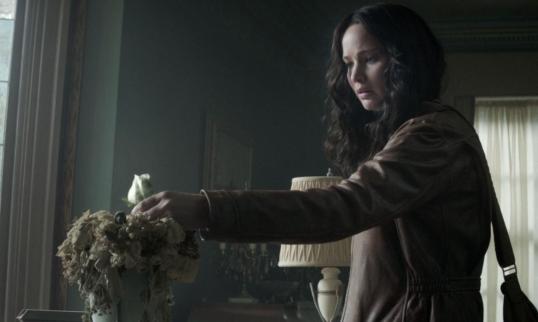
When the film opens, Katniss is still being used a prop in Alma Coin’s (Julianne Moore) revolution.  The majority of the film deals with her journey into and through the capital.  She wants to track down and assassinate President Snow (the wonderfully evil Donald Sutherland) whereas Coin just wants to use her as a symbol to solidify her authority.  As Katniss quickly realizes, there’s not much difference between Snow and Coin.  However, it takes one great tragedy for Katniss to truly understand the truth about the Alma Coin and her revolution.  If you’ve read the book, you’ll already know about and be prepared for that tragedy but it’s still a heart-breaking moment.

It’s also the most important moment in the franchise, one that reminds us that The Hunger Games has always been far more politically sophisticated (and thematically darker) than all of the films, books, and fan fic that has been inspired by it.  This is a seriously dark and, some would say, cynical movie and, as a student of history, I appreciated that.  I appreciated that Mockingjay didn’t try to force a happy ending on us and I also appreciated the fact that Mockingjay didn’t buy into the simplistic Manichaen worldview that is currently ruining worlds both real and cinematic.  The film’s final scene may be hopeful but it’s never naive.

It’s a bit unfortunate that Mockingjay had to be split into two separate films.  Mockingjay Part Two is full of exciting moments but there’s also a lot of scenes that feel like filler.  You get the feeling they were included to make sure that Mockingjay Part Two’s running team was equal to the other films in the franchise.  This is a film that features a lot of genuinely exciting action and some truly emotional moments.  It’s also a film that features a lot of speeches.  If only both parts of Mockingjay could have been released as one six hour film.  I would have watched it!

The film also features the final performance of Philip Seymour Hoffman, playing the rule of Plutarch.  Hoffman is not in many scenes and reportedly, he died before filming two of his biggest scenes.  Those scenes were rewritten and his dialogue given to other actors.  At one point, Woody Harrelson starts to read a letter that was written by Plutarch and it’s a sad scene because you’re aware that, originally, Hoffman was meant to deliver those lines in his trademark style.  As it is, Hoffman only appears in a few minutes of Mockingjay Part Two and he doesn’t do much.  But, when the film briefly features his bemused smile, you’re reminded of what a great actor the world lost when Philip Seymour Hoffman died.

Of course, the entire Hunger Games franchise has been full of great actors.  Jennifer Lawrence brought Katniss to wonderful and empowering life and one of the joys of Mockingjay Part Two is getting to see her bring the character’s story to a close.  But even beyond Jennifer Lawrence’s rightly acclaimed work, the entire cast of the franchise deserves a lot of credit.  I’ve always loved Donald Sutherland’s interpretation of President Snow and he’s at his best here.

For that matter, if there ever is another Hunger Games film or a Hunger Games spin-off, why not make it about Jena Malone’s Johanna Mason?  The way that Malone delivered her angry and frequently sarcastic dialogue was definitely one of the film’s highlights.

Regardless of whether there are any future films, The Hunger Games: Mockingjay Part Two is a worthy conclusion to a great story.

(By the way, as you may have guessed from the title of this post, December is science fiction month here at the Shattered Lens!  We hope you enjoy it!)

Previous Hunger Games Reviews:

  1. Quick Review: The Hunger Games (dir by Gary Ross)
  2. Review: The Hunger Games
  3. 44 Days of Paranoia: The Hunger Games: Catching Fire
  4. For Your Consideration: Jennifer Lawrence in The Hunger Games Mockingjay Part One

For Your Consideration #6: Jennifer Lawrence in The Hunger Games: Mockingjay Part One


Mockingjay

Of the three The Hunger Games films released so far, Mockingjay Part One is definitely the weakest.  That does not, however, mean that it’s a bad film.  It’s just that it doesn’t quite reach the grandeur of the first film, nor does it have the same political immediacy as the second one.  However, there’s a lot of good things to be said about Mockingjay.  Julianne Moore is perfectly cast as the charismatic but faintly sinister Alma Coin.  Philip Seymour Hoffman’s performance reminds us of what a towering talent we lost earlier this year.  Donald Sutherland continues to transform President Snow into a villain for the ages.  Even though he’s only in the film for a few minutes, Stanley Tucci is perfectly vapid as Caesar Flickerman.

In fact, the only real problem with Mockingjay is that it’s so obviously a prologue to something bigger.  Much as with The Maze Runner, we watch Mockingjay with the knowledge that it’s only part one and that the majority of the issues raised by the film will not be settled until next year.  The film itself knows this as well and, as such, it lacks the immediacy and much of the excitement of the first two Hunger Games films.

But yet, with all those flaws in mind, Mockingjay still works and it’s largely because of Jennifer Lawrence’s performance as Katniss Everdeen.  Whereas the first two Hunger Games films featured a Katniss who was always at the center of the action and always taking charge of any situation that she found herself in, Mockingjay features a Katniss who has far less control over her fate.  (One of the neater ironies of the series is that Katniss was actually more independent as a prisoner of President Snow than as a “guest” of Alma Coin.)  In Mockingjay, Katniss finds herself forced — with more than a little reluctance — to become the figurehead for the entire revolution and the film’s best moments are the ones in which others debate how to best “market” her.  These scenes are all about how Katniss — who is now not only a celebrity but a political icon as well — deals with losing control over her own public image.  Considering that Jennifer Lawrence’s rise to fame and acclaim occurred just as abruptly as Katniss’s, it’s probable that — even more so than in the previous films — the actress brought a lot of herself to the character.

So, yes, I would argue that Jennifer Lawrence does perhaps deserve some awards consideration for her performance in Mockingjay.  However, she truly deserves it for the consistent quality of her performance throughout the entire Hunger Games franchise.  From the very first film, Jennifer Lawrence’s performance has been iconic.  Fiercely independent without giving into the usual cinematic clichés that come with that, Katniss Everdeen has provided an alternative role model for a generation of girls who, otherwise, might have only had the likes of Bella Swan to look up to.

If that’s not worthy of being honored, then I don’t know what is.

Trailer: The Hunger Games: Catching Fire


PCAS

I am currently in the process of catching up on all of the news that I missed out on during last week’s unplanned vacation from posting.  Indeed, one of the biggest events last week was the release of this trailer for The Hunger Games: Catching Fire.  The Hunger Games was one of the best films of 2012 and Jennifer Lawrence provided a role model for girls who, otherwise, might be tempted to mistake Bella Swan for a strong woman.

Is it any wonder that Catching Fire is one of the most anticipated films of 2013?

Catching Fire, starring Jennifer Lawrence and directed by Francis Lawrence, is scheduled to be released on November 22nd.

Trailer: The Hunger Games: Catching Fire (Exclusive Teaser)


CatchingFire

The next installment in The Hunger Games series, Catching Fire, looks to return later this year with a new director taking over the reins. Gary Ross began the series as director of the first film and the film enjoyed massive success and very positive reception from the critics-at-large. So, it was surprising news that Ross wouldn’t be returning to continue the series and instead Lionsgate replacing him with Francis Lawrence (Constantine, I Am Legend).

This sequel brings back everyone who survived the first film and adds some new faces in the cast such as Philip Seymour Hoffman, Toby Jones, Jena Malone and Jeffrey Wright.

The Hunger Games: Catching Fire is set for a November 22, 2013 release date.

Catching Fire Has A Director


After two weeks of speculation, Catching Fire (the sequel to The Hunger Games) has a director and the winner is…

Francis Lawrence!

Francis Lawrence is known for directing music videos, Constantine, I Am Legend, and Water For Elephants.

I’ve never seen Constantine, I thought I am Legend was boring, and I enjoyed Water For Elephants but it’s hard not to feel that, after considering names like David Cronenberg, Alfonso Cuaron, Bennett Miller, and Duncan Jones, Lionsgate selected the most generic candidate in the mix.  

I’m sure that there will be a lot of people complaining about the selection but, to be honest, it’s not like Gary Ross was all that inspiring a director before Hunger Games.  In the end Catching Fire’s success is going to be more about Jennifer (as opposed to Francis) Lawrence.

Two weeks ago, we did a poll to see who you thought should direct Catching Fire and Hanna’s Joe Wright won a fairly easy victory.

6 Quickies With Lisa Marie: Atlas Shrugged, Beautiful Boy, Crazy Stupid Love, The Devil’s Double, Sarah’s Key, and Water For Elephants


For my first post-birthday review post, I want to take a look at 6 films that I saw earlier this year but, for whatever reason, I haven’t gotten a chance to review yet.  My goal has been to review every single 2011 release that I’ve seen this year.  So far, I’ve only seen 106 2011 films and I still need to review 21 of them.  So, without further ado, let’s “gang bang this baby out” as a former employer of mine used to say. (*Shudder*  Seriously, what a creepy thing to say…)

1) Atlas Shrugged, Part One (dir. by Paul Johansson)

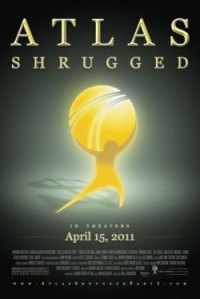
What to say about Atlas Shrugged, Part One?  When I recently rewatched it OnDemand with a friend of mine who had just gotten back from Occupying somewhere, he threw a fit as soon as he heard wealthy 1 percenter Graham Beckel declaring, “I am on strike!”  When I first saw it earlier in the year, in a theater full of strangers, they broke out into applause when they heard the same line.  Atlas Shrugged is a wonderfully divisive film.   If you’re a political person, your enjoyment of this film will probably come down to which news network  you watch. If you enjoy those MSNBC spots where Rachel Maddow won’t shut up about the freakin’ Hoover Dam, you’ll probably hate Atlas Shrugged.  If you truly believe that Fox News is “fair and balanced,” chances are you’ll enjoy it.  But what if you’re like me and the only politics you follow are the politics of film and you only bow at the altar of cinema?  Well, I enjoyed Atlas Shrugged because the film really is a grindhouse film at heart.  It’s an uneven, low-budget film that has a few good performances (Beckel and Taylor Schilling), several bad performances, and ultimately, it goes totally against what establishment films have conditioned us to expect when we go to the movies.  Ultimately, the film is a big middle finger extended at both the film and the political establishments and who can’t get behind that?  Add to that, Roger Ebert hated it and when was the last time he was right about anything?

2) Beautiful Boy (dir. by Shawn Ku)

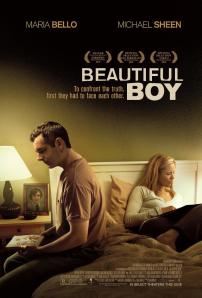
I’ve read a lot of rapturous reviews of this film online and my aunt Kate loved it when she saw it at the Dallas Angelika earlier this year.  So, admittedly, when I watched this film via OnDemand, I had pretty high hopes and expectations but, unfortunately, none of those expectations came anywhere close to being met.  In the film, two of my favorite performers — Michael Sheen and Maria Bello — play the middle-class parents who have to deal with the consequences (both emotional and physical) of a terrible crime perpetrated by their son.  The film is based on the Virginia Tech massacre and both Sheen and Bello give excellent performances but overall, the film feels like a thoroughly shallow exploration of some various serious issues.  Ultimately, the film’s refusal to provide an explanation for the crime feels less like a brave, artistic choice and more like a cop-out.  The film is less abstract than Gus Van Sant’s Elephant and Denis Villeneuve’s Polytechnique but it’s also a lot less effective.

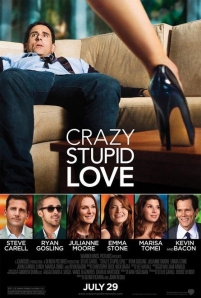
3)Crazy, Stupid Love (dir. by John Requa and Glenn Ficarra)

I don’t know if I’ll ever forgive Steve Carell for abandoning The Office and forcing upon me the current, almost painful season of the show.  Still, I can’t totally blame him because the guy is totally a film star and he proves it in Crazy, Stupid Love by holding his own with other certifiable film stars like Ryan Gosling, Kevin Bacon, Marisa Tomei, Julianne Moore, and Emma Stone.  In the film, Julianne Moore plays Carell’s wife who leaves him for a coworker (played by Kevin Bacon, doing his charming jerk routine).  The depressed Carell is taken under the wing of womanizer Gosling who teaches Carell how to be more confident and appealing.  Things seem to be working out well until Gosling starts going out with Carell’s daughter (played by Emma Stone).  The movie, itself, isn’t anything special and it’s really kind of a mess but it’s saved by a massively appealing cast.  And, by the way, Ryan Gosling —très beau!  Seriously.

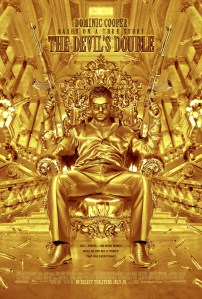
4) The Devil’s Double (dir. by Lee Tamahori)

Taking place in pre-Desert Storm Iraq, The Devil’s Double claims to tell the true story of Latif Yahia, an Iraqi who was forced to serve as the double for the sociopathic young dictator-in-training Uday Hussien.  I’ve read that there’s some debate as to how faithful The Devil’s Double is to the facts of the story and it is true that Latif is portrayed as being almost too good to be true but no matter.  The Devil’s Double is a compelling and oddly fascinating little gangster film, one that manages to show the dangerous appeal of the excessive lifestyle of a man like Uday Hussien without ever actually being seduced by it.   The film is dominated by Dominic Cooper, who gives a great performance playing both the tortured Latif and the cheerfully insane Uday. 

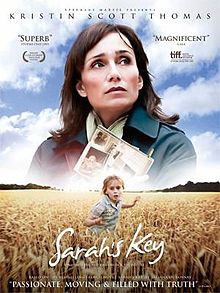
5) Sarah’s Key (dir by Gilles Paquet-Brenner)

Sarah’s Key tells two stories at once and, the result, is a film that feels very schizophrenic in quality.  The better part of the film deals with Sarah, a 10 year-old Jewish girl living in Nazi-occupied France.  When Sarah and her parents are sent to a concentration camp, her younger brother is left behind in Paris.  Sarah eventually manages to escape and desperately tries to get back to Paris to rescue her brother.  Meanwhile, in the modern-day, a journalist (Kristen Scott Thomas) researches Sarah’s story and discovers that her French husband’s family has a connection of their own with Sarah’s story.  The film is compelling and heart-breaking as long as it concentrates on Sarah but, unfortunately, the modern-day scenes feel forced and predictable and the end result is a film that’s never quite as good as it obviously could have been.

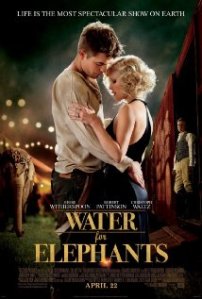
6) Water For Elephants (dir. by Francis Lawrence)

Look, I make no apologies — I freaking loved this movie.  Yes, plotwise, this film feels almost like a parody and yes, so much of this film was over-the-top and kinda silly but I don’t care.  I loved this film for the old-fashioned, melodramatic, and rather campy spectacle that it is.  Robert Pattinson plays a Depression-era Ivy League college student-turned-hobo who ends up joining the circus and falling in love with Reese Whitherspoon, the wife of insane circus owner, Christoph Waltz.  Pattinson isn’t much of an actor but he’s easy on the eyes and he and Whitherspoon have just enough chemistry to remain watchable.  The film, however, is totally dominated by Waltz who is both charming and scary.  The next time your man makes you sit through anything starring Jason Statham, you make him watch Water for Elephants.