Brad reviews THE LAST STAND (2013), starring Arnold Schwarzenegger!


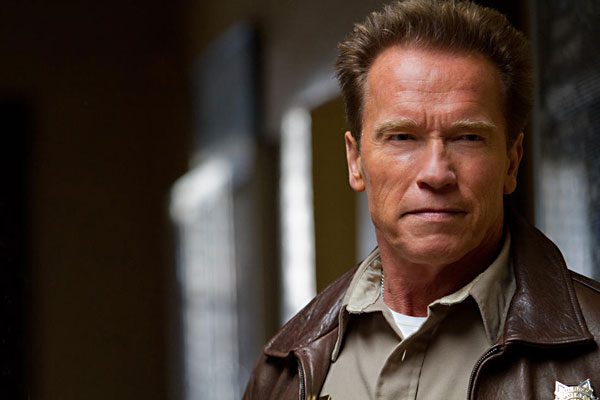
After eight years of serving as Governor of California, Arnold Schwarzenegger made his big comeback as an action movie star in director Kim Jee-woon’s THE LAST STAND (2013). Sure, he put in a little work on the first two EXPENDABLES movies, but those were really just glorified cameos. Here, Arnold was front and center for the film’s 107 minute running time. This was an exciting time for me, because like most action movie fans, I loved him and had truly missed seeing him consistently kicking butt and taking names on the big screen. I gladly made my way to the movie theater in January of 2013  for a large tub of ‘corn, a big Mr. Pibb, and the true return of an action megastar!!

In THE LAST STAND, Schwarzenegger plays Ray Owens, a former LAPD narcotics officer who chose to leave the big city and take a job as the sheriff of the quiet, southern border town of Sommerton, Arizona. It won’t be quiet for long after notorious drug kingpin Gabriel Cortez (Eduardo Noriega) makes a daring escape from FBI custody. Cortez immediately heads towards the border in a souped up Corvette where an advanced group of highly trained gunmen, led by Burrell (Peter Stormare), are waiting to help him cross. Cortez and his small army of mercenaries appear to be on a collision course with Sheriff Owens and his ragtag group of deputies, including Mike (Luis Guzman), Jerry (Zach Gilford), and Sarah (Jaimie Alexander). Knowing they’re outgunned and outmanned, Sheriff Owens asks for additional help from ex-military man and current drunk Frank Martinez (Rodrigo Santoro), as well as the crazy local gun nut Lewis Dinkum (Johnny Knoxville). Add to this mixture, FBI agent John Bannister (Forest Whitaker) and his team’s attempts to try to stop Cortez before he gets to Sommerton, and the stage is set for lots of action! 

I really liked THE LAST STAND when I saw it at the movie theater in 2013, and I really liked it again when I revisited the film this week. I made it a habit many years ago to not read reviews of a film before I go see it at the theater. I had found that reading potential negative comments could affect my viewing of a film, so I cut that out. As such, after totally enjoying myself with THE LAST STAND, I was surprised that the film wasn’t received very strongly by the audience or critical community, and I was even more surprised that it completely flopped at the box office, only bringing in a total of $12 million in the United States during its run. For me, the film delivered what I was looking for… Arnold Schwarzenegger kicking ass, spouting off some good one-liners, and outsmarting and outmuscling his much younger adversaries! No critic or keyboard warrior can take that away from me, as THE LAST STAND is an entertaining movie with a good cast. Heck, even the great Harry Dean Stanton pops in for a surprise cameo at the beginning of the action. 

I also appreciate the fact that THE LAST STAND is the American directorial debut of the great South Korean director Kim Jee-woon, who has directed some of my favorite South Korean films, including A BITTERSWEET LIFE (2005) and I SAW THE DEVIL (2010). His direction brings some Asian flair that results in stronger, more graphic violence, as well a penchant for jarring changes in tone between humorous character interplay and sometimes violent tragedy. In a movie designed primarily as a piece of entertainment, I appreciate those more over-the-top touches that lift it above the norm. 

Overall, I easily recommend THE LAST STAND to fans of Arnold Schwarzenegger and old-school action movies. It’s not a Schwarzenegger classic in the same way as movies like PREDATOR (1987), TERMINATOR 2 (1991), and TRUE LIES (1994), but it’s still a fun ride! 

Film Review: Battlefield Earth (dir by Roger Christian)


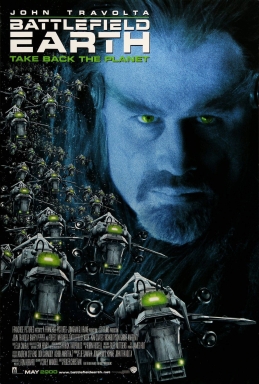
After avoiding it for 25 years, I finally watched the infamous 2000 fiasco, Battlefield Earth, last night.

Battlefield Earth, based on a superlong novel by creepy cult guru L. Ron Hubbard, was a longtime passion project of John Travolta’s.  Travolta, a Scientologist, had long wanted to make a movie out of Hubbard’s science fiction epic and, on a hot streak following films like Pulp Fiction and Get Shorty, he finally did so in 2000.  He played Terl, a member of a giant alien race called the Psychlos.  The Psychlos have conquered Earth and humanity has regressed back to an almost prehistoric standard of living.  When a brave human, Johnnie Goodboy Tyler (Barry Pepper), defies his elders and proceeds to venture out into the ruins of Denver, he’s captured by Terl.  Eventually, Johnnie is shown a copy of the Declaration of Independence and it inspires him to lead a revolution against the Psychlos.

Battlefield Earth turned out to be just as bad as I had heard, a charmless wannabe epic that used far too many Dutch angles and relied on slow motion to try to create a heroic (or, in some cases, tragic) feel to the action.  The plot of the film felt like something recycled from an old 1930s serial, which makes sense when you consider that L. Ron Hubbard was a pulp writer before he decided to become a guru.  What I was not prepared for was just how mind-numbingly dull Battlefield Earth is.  Most bad movies can at least make the claim of being entertaining in their badness.  If nothing else, you can often admire them for their ambition.  Take a film like Plan 9 From Outer Space.  Plan 9 From Outer Space is often derided as being the worst film of all time but it’s still terrifically entertaining and there’s a likable earnestness at the heart of it.  Director Ed Wood may not have had a budget and his main star may have been present only through stock footage but, dammit, Wood was determined to make a science fiction epic that would double as a plea for world peace and he did just that.  There’s a heart at the center of Plan 9 From Outer Space and that makes it a film that you can mock but you never quite dislike.  For all the talk of Battlefield Earth being a passion project for Travolta, the end result is an empty and rather soulless film.

(I nearly listed Battlefield Earth as being one of our Icarus Files but then I remembered that Icarus at least managed to get close to the sun.  Battlefield Earth can’t even get out of Denver.)

Travolta’s career has never really recovered from Battlefield Earth.  He is an actor who can claim to have appeared in two of the biggest, most influential films of all time — Pulp Fiction and Saturday Night Fever — but his legacy appears to be walking around on stilts in Battlefield Earth.  As for Barry Pepper, he does probably about as well as anyone could with the role of Johnnie Goodboy Tyler but still, it’s sad to see a good actor wasted in such a bad movie.  (In fact, there’s quite a few good actors — Forest Whitaker, Kim Coates, Richard Tyson — wasted in this movie.)  From what I understand, the movie only covered the first 400 pages of Hubbard’s 1100-page novel.  Travolta had hopes to do a sequel but that’s not going to happen.

It’s for the best.  If people need to see a movie about L. Ron Hubbard’s belief system, they can always rewatch The Master.


The Color of Money (1986, directed by Martin Scorsese)


ÀW

If you grew up in the 80s or 90s, you probably had at least one friend whose father kept a pool table in the garage.  This movie was probably the reason why.

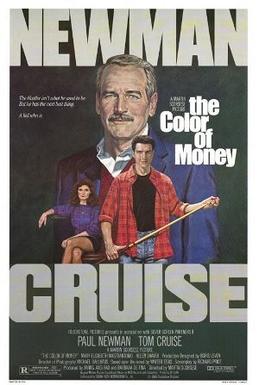
Fast Eddie Felson (Paul Newman) was once The Hustler, the legendary pool player who recovered from having his fingers broken with a bowling ball and went on to defeat the legendary Minnesota Fats.  That was a long time ago.  Now, Fast Eddie is a slick liquor salesman in Chicago.  Eddie stills hangs out at the pool halls, despite his bad memories of the game.  When he sees a cocky young player named Vincent (Tom Cruise) and his girlfriend Carmen (Mary Elizabeth Mastrantonio), he takes them under his wing and teaches them how to hustle.  It’s not always easy because Vincent doesn’t like to lose, even if it means a chance to score an even bigger victory later on.  Eddie finds himself being drawn back into the game, even as he starts to wonder who is hustling who.

I always forget that The Color of Money is a Martin Scorsese films.  It’s a film that Scorsese made at a time when he had a reputation for only being able to make art films that critics loved but audiences stayed away from.  After the box office failure of The King of Comedy and his abortive first attempt to make The Last Temptation of Christ, Scorsese took The Color of Money to prove that he could work with a studio.  This is a Disney Scorsese film, with his signature camera moves but not much of his religious torment.  Even if it’s not one of his personal films, Scorsese makes pool look exciting, a battle that is as much about psychology as physicality.  Watching The Color of Money, you can smell the chalk on the tip of the pool cue.

Scorsese brings the seedy pool halls to life but it’s Paul Newman’s performance that dominates.  The Color of Money won Newman his first and only Oscar and he deserved it.  Newman had first played Fast Eddie Felson in 1961, in The Hustler.  Returning to the role twenty-five years later allowed Newman to show what would eventually happen to the angry young men that he played in the 60s.  Eddie has grown up and he’s got a comfortable life but he’s not content.  He finally has stability but he misses the game.  He needs the thrill of the hustle.  Newman is at his best in The Color of Money, building on The Hustler but also revealing new sides of Eddie Felson.

Newman is so good that Tom Cruise often gets overlooked but both Cruise and Mastrantonio hold their own against Paul Newman.  Cruise especially does a good job as Vincent, playing him as someone who is too cocky for his own good but also not as dumb as he looks.  Just when you think you’ve got Vincent figured out, Cruise surprises you.  The Color of Money came out the same year as Top Gun and Cruise’s Vincent feels like a commentary on the talented, troubled, but cocky characters that Cruise was playing at that time.  Cruise, Scorsese, and Newman make a good team in this more-than-worthy sequel.

Bird (1988, directed by Clint Eastwood)


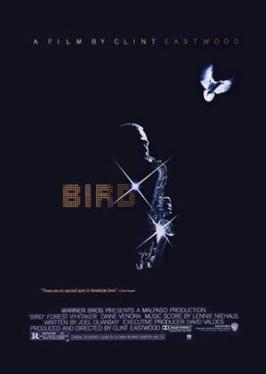
Forest Whitaker stars as the legendary saxophonist Charlie “Bird” Parker.  The film, which is structured around flashbacks and time jumps and features some of the most beautifully-done transitions that I’ve ever seen, follows Parker as he plays his saxophone, challenges the jazz purists who his own individual style, and looks for work in both America and France.  Along the way, we watch as he befriends and learns from Dizzy Gillespie (Samuel Wright), mentors a young trumpet player named Red Rodney (Michael Zelniker), and has a complex relationship with a white jazz lover named Chan Parker (Diane Venora).  Throughout his life, Charlie Parker struggles with his addiction to heroin and alcohol, occasionally getting clean to just then fall back into his habit.  To its credit, the film avoids most of the biopic cliches when it comes to portraying Parker’s addiction.  Parker accepts that he’s an addict, just as he accepts that he has a talent that is destined to revolutionize American music.

Director Clint Eastwood has always been a fan of jazz and he actually saw Charlie Parker perform when he was a young man.  His love of jazz had been present in almost every modern-era film that he has directed, staring with Play Misty For Me’s lengthy trip to the Monterey Jazz Festival.  Bird was a passion project for Eastwood, the first film that Eastwood directed without also appearing in.  (Eastwood doesn’t star in his second directorial effort, Breezy, but he does have a brief and silent cameo as a man standing on pier.)  Eastwood takes a nonlinear approach to telling the story, eschewing the traditional bopic format and instead putting the focus on Parker’s music.  Eastwood was able to get several never bef0re-released recordings of Parker performing and, when Whitaker is blowing into his saxophone in the film, we’re actually hearing Parker.  Eastwood’s direction captures the smoky atmosphere of the jazz clubs where Parker and Gillespie made their name while the nonlinear style reflects the feeling of just letting a song take you to wherever it’s going.  This is a movie about jazz that plays out like a jazz improvisation.

Forest Whitaker gives an amiable and charismatic performance as Charlie Parker, playing him as someone who has found both an escape and peace in his music, even as he physically struggles with the ravages of his drug addiction.  Whitaker won the Best Actor at Cannes for his performance in Bird.  Eastwood received the Golden Globe for Best Director.  Bird feels like it was labor of love for both of them.  Bird may not have set the box office on fire when it was originally released but it remains one of the best jazz films.

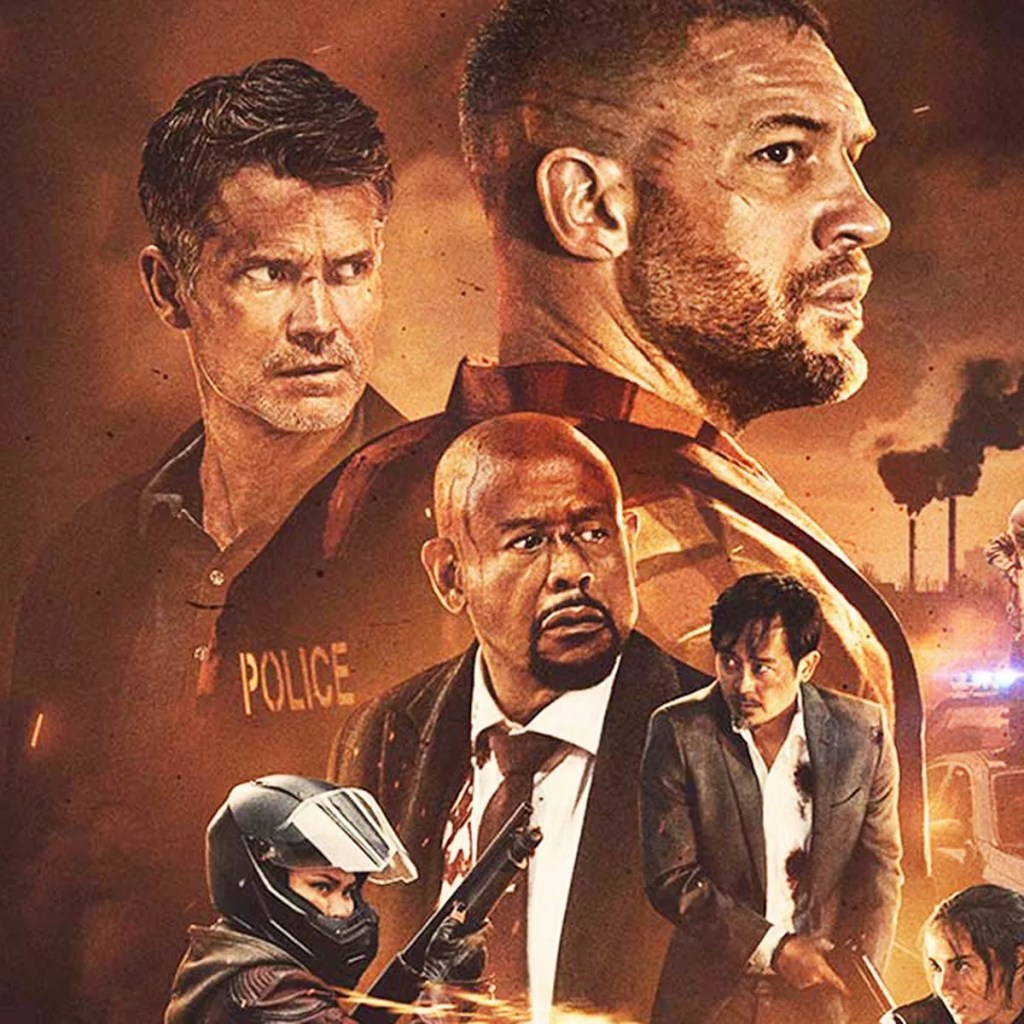
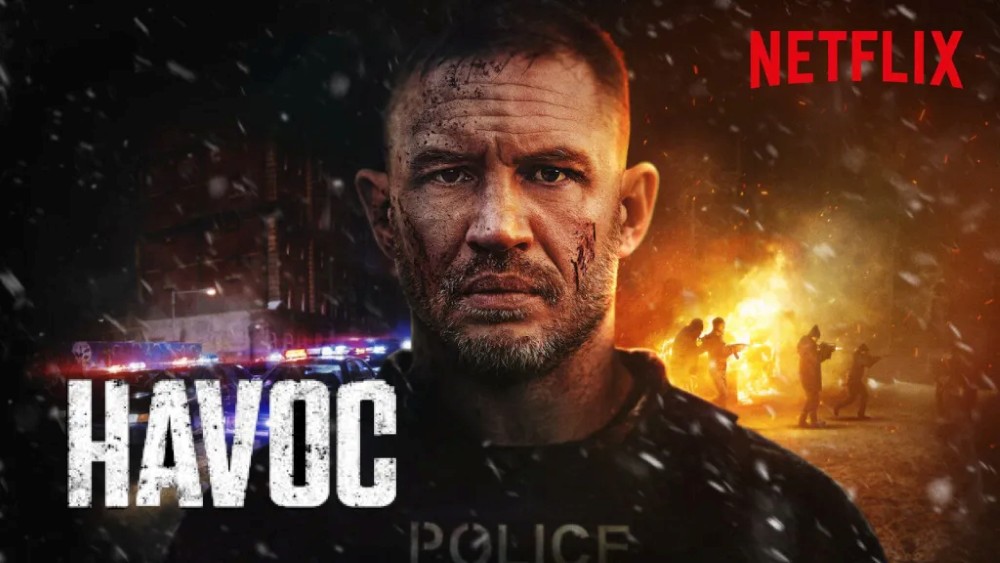
HAVOC (2025) review – Director Gareth Evans returns to action cinema! 


If you enjoy bone-crunching action filmmaking, Gareth Evans’ films THE RAID (2011) and THE RAID 2 (2014) are as good as it gets in the 21st century. When I saw that Evans had a new film coming to Netflix that stars a badass looking Tom Hardy, I have to admit I got excited. The trailer only increased my anticipation with its promise of stylized, intense action, as well as a cast that includes personal favorites like Timothy Olyphant (JUSTIFIED T.V. Series) and Forest Whitaker (GHOST DOG). I settled in front of my TV and hit play, with high hopes for HAVOC!

The film opens with conflicted police detective Walker (Tom Hardy) sharing words of regret via voiceover, and then immediately shifts to a high speed chase between an 18 wheeler and a bunch of cops. It is an intense scene that ends with washing machines filled with cocaine being thrown onto a trailing cop car! We soon learn that the big truck was being operated by Mia (Quelin Sepulvida) and Charlie (Justin Cornwell), the son of ethically challenged businessman Lawrence Beaumont (Forest Whitaker). It seems Charlie and Mia stole the drugs to pay off her debts to Chinese triads. When they go to a club to deliver the drugs, a group of masked men proceed to interrupt the drop and kill everybody, including the beloved son of the triad’s leader Tsui (Yann Yann Yeo). When Walker sees Charlie on security footage from the club, he goes to Beaumont, a man who knows his dirty secrets, and makes a deal. He’ll get his son back, and they’ll be square for life. Soon the triads are in town ready to hunt down and kill Charlie and Mia, who they believe are responsible for the massacre. Add to that a group of corrupt cops, led by Vincent (Timothy Olyphant), who also want Charlie and Mia dead, and detective Walker and his new partner Ellie (Jessie Mei Li) have their hands full on Christmas Eve! 

Here are some observations after my first viewing of HAVOC. First, Tom Hardy is a badass in the central role as Walker. I’ve been a fan of Hardy ever since he started breaking out in America after his performance in BRONSON (2008). I really loved him as Mad Max in FURY ROAD (2015). I’d never really envisioned him as this kind of action lead, but he definitely brings a certain gravitas to the role. Second, this movie feels like a bone crunching super hero movie at times, as it’s chock full of special effects. I found the action sequences featuring gunplay and hand to hand combat to be brutally awesome, but the car chase scenes aren’t quite up to the same standard. I mentioned the 18 wheeler chase in the plot description. As the scene plays out it’s a lot like watching an unrealistic chase scene from a later sequel to THE FAST AND THE FURIOUS franchise. It’s an exciting scene in a lot of ways, but it doesn’t seem set in the real world, which is a slight subtraction for me. Third, the movie is set on Christmas Eve, and I enjoy films that take place on holidays. We have a scene early in the film where “Father of the Year” Walker is buying his daughter’s Christmas gifts at a local convenience store. A little later, there’s a cool abduction scene that plays out to the sound of Bing Crosby singing “O Holy Night.” That’s good stuff. Fourth, director Evans seems to be trying to channel the spirit of 80’s and 90’s John Woo, as his film features an endless arsenal of weaponry, coupled with high emotions, and even a little classic music from an iconic scene in Woo’s own A BETTER TOMORROW (1986). No matter how many rounds are fired, there’s always more bullets or guns to be found as the last half of the film is almost nonstop action spread out over two amazing sets, first in a club and then at a cabin. And both of our featured parents, murderous triad leader Tsui and corrupt businessman Beaumont, get a chance to show their human sides by illustrating their sacrificial love for their children. Although HAVOC most certainly does not compare favorably to Woo’s HARD-BOILED, I can also see that Hong Kong classic being referenced here. Fifth, I’m a big fan of Timothy Olyphant, especially of his character Raylan Givens in the TV series JUSTIFIED. I had to forget Raylan on this night because his character here is an irredeemable piece of crap. Of course, Olyphant is excellent and delivers his evil with a smile on his face. 

Overall, I enjoyed HAVOC, but I don’t think it’s quite as good as either of the director’s RAID films, and that’s okay. I’d probably go with a solid 7 stars out of 10 for a rating. I love Hardy and Olyphant, who both bring their tremendous charisma to the table. I also enjoyed the many cool moments throughout the film leading to the action extravaganza that plays out at the end. It will be interesting to see how often I want to go back to this film in future years. I do know that if you enjoy action movies, you should definitely watch this film. Just don’t expect another RAID 2.

Trailer: Havoc


Chad Stahelski has gotten a large share of kudos for reinvigorating the action genre the last ten years (deservedly so). Yet, one director seems to have been forgotten despite having directed two of the most action-packed and brutal action film of the last 15 years.

I am talking about Welsh-filmmaker Gareth Evans of The Raid and The Raid 2 fame. His work on these Indonesian martial arts action films have been celebrated for years, yet Evans hasn’t really been given a chance by the major studios with any major projects.

Since leaving Indonesia and going back the UK, Evans has made one film (The Apostle) and an action series (Gangs of London). The former was distributed by Netflix and its through them that Evans returns to the scene with another film that looks to be as brutal and action-packed as any he has made in the past.

Havoc stars Tom Hardy who may be competing with Gerard Butler for anti-hero of the 2020’s as he sports such a grizzled and beaten down look as a detective who must navigate his through the corrupt underworld and politics of the city in order to save a politician’s son.

The official and final trailer for Havoc is now out just weeks before it premieres on Netflix on April 25, 2025.

Lisa Marie Reviews An Oscar Winner: The Crying Game (dir by Neil Jordan)


Directed by Neil Jordan and first released in 1992, The Crying Game opens at a fair in Northern Ireland.  A black British soldier named Jody (Forest Whitaker) meets a flirtatious woman named Jude (Miranda Richardson).  Jude leads Jody away from the fairground.  Jody thinks that they’re going to have sex but instead, he ends up getting kidnapped by Fergus (Stephen Rea) and Peter Maguire (Adrian Dunbar).  As Peter explains it after Jody is taken to an abandoned cottage, the soldier is now a prisoner of the Irish Republican Army.

Jody is left in a dark room, tied to a chair and with a canvas bad over his head.  Fergus is often left to guard him.  Despite Peter’s explicit orders, Fergus talks to Jody and the two men strike up an uneasy friendship.  Fergus removes the bag from Jody’s head.  He even reveals his name.  Jody and Fergus talk about their lives.  Jody says he joined the Army and was immediately sent to the most racist part of the UK.  Fergus replies that his only issue with Jody is that “you shouldn’t be over here.”  Jody talks about his love of cricket.  Fergus talks about his love of hurling.  Fergus sees a picture of Jody with his lover, Dil (Jaye Davidson).  Fergus comments that Dil is attractive.  “She’s not your type,” Jody replies.

Peter warns Fergus not to become friends with Jody because there’s a good chance that they’re going to have to execute him.  And when the British refuse to exchange prisoners, the order does come down to carry out the execution.  Fergus demands that he be allowed to carry out the shooting.  However, as he leads Jody out of the cottage, Jody breaks free.  Fergus chases him but, as they reach a nearby road, Fergus realizes that he can’t bring himself to kill Jody.  Unfortunately, Jody is still killed when he’s run over by a British army truck.

Fergus flees to London and, after getting a job as a construction worker, he tries to lay low and track down Dil.  Dil, however, turns out to be not quite was Fergus was expecting.  It turns out that Jody didn’t reveal every aspect of his life while he was trapped in that cottage.  Meanwhile, Jude and Peter both show up in London and demand that Fergus help them execute “some judge.”

The Crying Game is a twisty and engaging thriller, one that is best known for the twist involving Dil’s identity but which is also a thought-provoking look at the assumptions we make about each other and the roles that people feel forced to play.  Fergus doesn’t really have it in him to be a terrorist or an assassin but it’s the role that he feels he’s been forced into by his desire to see the British leave Northern Ireland.  Jody turns out to have a few secrets of his own and, once their revealed, his eagerness to go off with Jude is seen in an entirely new light.  Jude and Peter present themselves as being honorable freedom fighters but their actions often seem to suggest the opposite.  In the end, the only character who is truly comfortable with their nature is Dil.  Both Stephen Rea and Jaye Davidson more than deserved their Oscar nominations.  Their chemistry goes a long way towards making this a thriller that sticks with you.

The Crying Game was nominated for several Oscars but lost the majority of them to Unforgiven.  (Both Stephen Rea and Clint Eastwood lost Best Actor to Al Pacino for Scent of a Woman.)  However, Neil Jordan did win an Oscar for his clever screenplay.  Rea has continued to act.  Davidson, who reportedly hated the fame that came with appearing in The Crying Game, appeared in one more film before retiring.

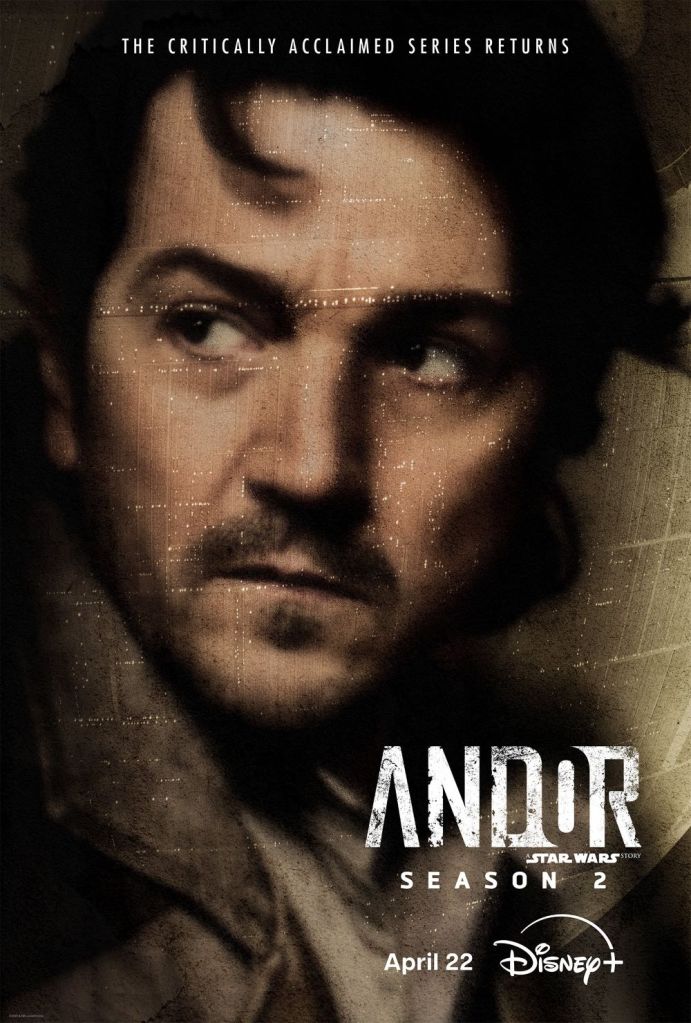
Trailer: Andor Season 2


The revolution starts…now.

Star Wars fans have been very critical of Disney’s stewardship of the franchise since Star Wars: The Last Jedi landed with a monumental thud with the hardcore fanbase. There hasn’t been much to celebrate anything Star Wars under Disney with a few exceptions like Star Wars: Rogue One, The Mandalorian and Skeleton Crew. One Star Wars series that drew critical acclaim from fans and critics alike was Tony Gilroy’s series looking at the origins of one of the main characters from Rogue One and that would be the series Andor.

It was series that no one really wanted since it didn’t involve any of the legacy characters. Yet, under Tony Gilroy’s masterful hands it turned into one of the best shows on Disney+ and, if I daresay, one of the best on tv the year it came out.

It’s going to be almost three years since the first season premiered and, even though the long wait could’ve been a detriment, the second season has been one of the most-anticipated by Star Wars fans. Season 2 of Andor just got it’s first trailer it fetures a very non-Star Wars’y kind of music but very appropriate considering what the season will be about.

I, for one, never thought Steve Earle’s song of rebellion, “The Revolution Starts…” would be the clarion call to start the revolution.

Andor: Season 2 is set for an April 22, 2025 release.

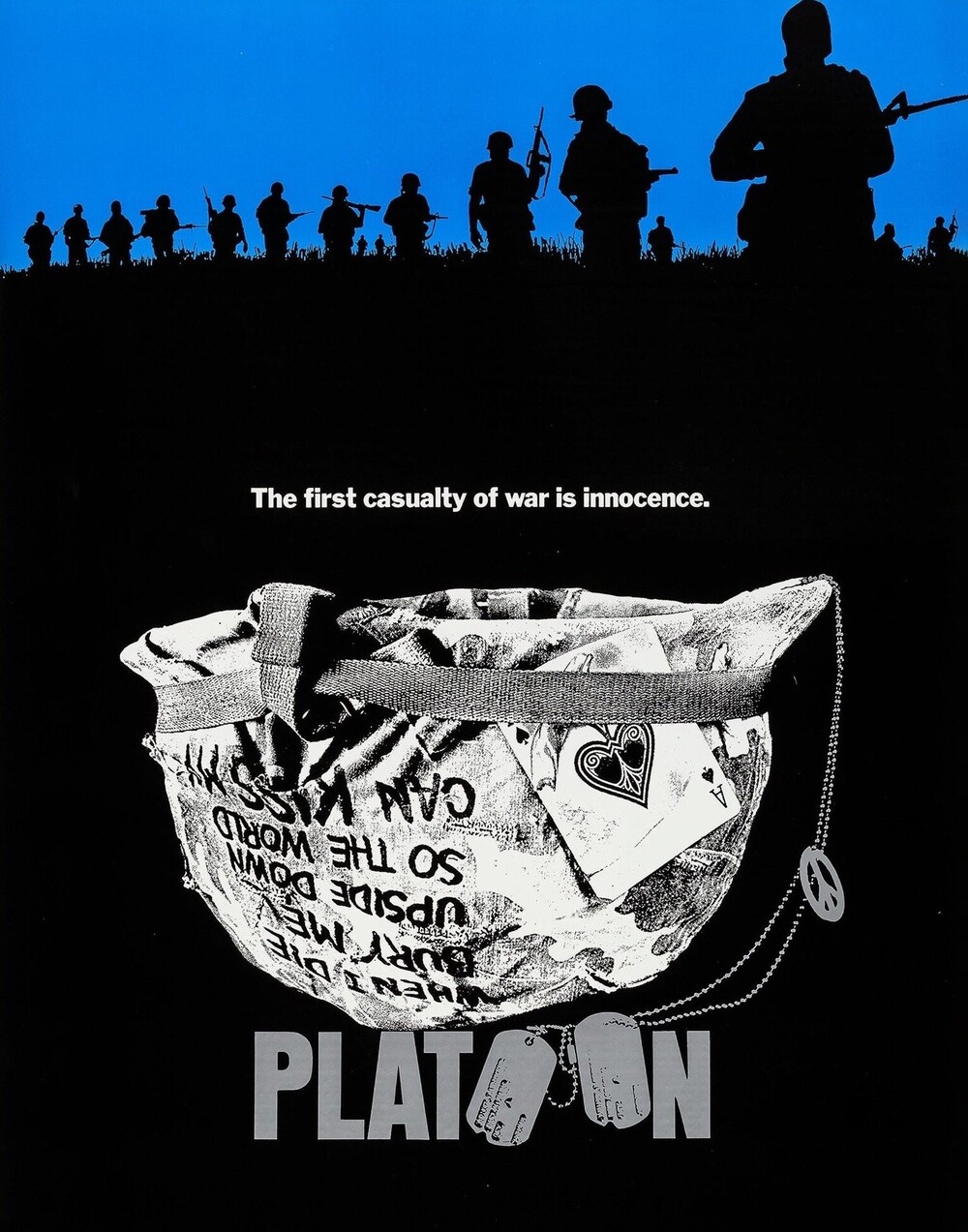
Lisa Marie Reviews An Oscar Winner: Platoon (dir by Oliver Stone)


One of my favorite scenes from TV’s King of the Hill occurs in an episode in which Hank and Peggy are celebrating their wedding anniversary.  They’ve sent Bobby and Luanne away for the weekend.  They have the house to themselves but, after their anniversary party, Peggy is feeling depressed.  She tells Hank that, for the first time ever, she feels old and she regrets all the dreams that she had that have yet to come true, like inventing and selling her own barbecue sauce.

Trying to cheer her up, Hank says, “C’mon, Peg.  We got the house to ourselves for weekend …. and I rented an R-rated movie!”

Peggy looks up, briefly hopeful that Hank did something romantic.  “What movie?” she asks.

Hank hesitates, glances down at the floor, and says, “Uhmm …. Platoon.”

It’s funny because it’s true.  Just about every man that I know loves Platoon.  First released in 1986 and reportedly based on Oliver Stone’s own experiences as an infantryman in Vietnam, Platoon is often cited as being one of the greatest war films ever made.  Oddly enough, the film has an anti-war and anti-military message but, in my experience, those who love it talk more about the battle scenes than any message that Stone may have been trying to impart about the futility of war.  Pauline Kael once wrote that Oliver Stone had left-wing politics but a right-wing sensibility and I think you can definitely see that in Platoon.  Despite all of the characters talking about how pointless the war is and how much they resent being forced to risk their lives for no apparent purpose, the film’s energy comes from the scenes of Chris Taylor (Charlie Sheen) stalking through the jungle and, towards the end, losing his mind and giving himself completely over to the adrenaline that comes from being trapped in the middle of a battle.  Throughout the film, we hear Taylor’s rather pedantic thoughts on the military and his fellow soldiers but it’s hard not to notice that his actions and his dialogue are usually far less eloquent.  Taylor may be a rich intellectual (and wow, is Charlie Sheen ever unconvincing when it comes to portraying that part of Taylor’s personality) but when he’s in the jungle, he’s just fighting for survival.

The film’s plot centers around the conflict between two sergeants, the peace-loving Elias (Willem DaFoe) and the war-loving Barnes (Tom Berenger).  Taylor has to decide which one of the two to follow.  The pot-smoking Elias loves his men and goes out of his way to protect them.  The beer-drinking Barnes has a much harsher view of the world but, at the same time, he’s the type of scarred warrior who seems immortal.  One gets the feeling that he’ll never be defeated.  The rest of the platoon is full of familiar faces, with everyone from John C. McGinley to Francesco Quinn to Tony Todd to Forest Whitaker to Johnny Depp to a baby-faced Kevin Dillon showing up.  (Dillon is especially frightening as a psycho who has, for some reason, been nicknamed Bunny.)  The majority of the platoon is dead by the end of the film.  Even with the leadership of Elias and Barnes, the soldiers are stuck in a winless situation.  As Taylor points out, the Americans aren’t just fighting the enemy.  They’re also fighting each other.

Platoon is certainly not my favorite of the film nominated in 1986.  I would have gone with A Room With A View.  (Blue Velvet, which is as influential a film as Platoon, was not even nominated.)  That said, I can’t deny the power of Platoon‘s combat scenes.  Though Stone’s script is didactic and Taylor’s narration is awkwardly deployed throughout the film, Stone’s direction definitely captures the fear and dread of being in a strange place with no idea of whether or not you’re going to survive.  Stone is critical of the military (at one point, an officer calls an air strike on his own men) but seems to love the soldiers, even the ones who have pushed over to the dark side.

Platoon was not the first Best Picture nominee to be made about the Vietnam War.  The Deer Hunter, Coming Home, and Apocalypse Now were all released first.  But both The Deer Hunter and Apocalypse Now are surreal epics that seem to take place in a dream world.  Coming Home, which has a script that somehow manages to be even more didactic than Platoon‘s, focuses on the war back home.  Platoon is far more gritty and personal film.  Watching Platoon, you can smell the gunpowder and the napalm and feel the humidity of the jungle.  I can understand why it won, even if I prefer to watch Helena Bonham Carter and Julian Sands fall in love.

STAKEOUT (1987) – Richard Dreyfuss and Emilio Estevez stakeout the beautiful Madeline Stowe!


What were those years in your life where movies really became something special to you? I’d say mine began in around 1984 and extended all the way through about 1991, when I headed off to college and the realities of the world started kicking in. Our family got our first VCR around 1984, and this is when I first truly began to fall in love with the cinema. These are the years when I would spend every moment I could in our local video stores inspecting every film in their stock. So many of my favorite movies came out during this time and hold a sense of nostalgic value in my life even now. One of those movies is STAKEOUT, an action comedy from 1987 starring Richard Dreyfuss and Emilo Estevez. 

STAKEOUT begins with Richard “Stick” Montgomery (Aidan Quinn) escaping from prison, where he has been sent for killing an FBI agent a year earlier. Enter Seattle police detectives Chris Lecce (Richard Dreyfuss) and Bill Reimers (Emilio Estevez). They are assigned to stakeout the home of Montgomery’s beautiful ex-girlfriend Maria (Madeleine Stowe). In order to listen to her phone conversations, Chris impersonates a telephone repairman and meets her when he goes into her home to install the “bugs.” As fate would have it, he runs into Maria again at the local grocery store when he’s gone out to buy some supplies and donuts. She asks him to give her a ride home when she discovers she has a flat tire on her bike. He reluctantly gives her a ride home, but once he’s there, he puts up her groceries, she makes him a spicy dinner, and then he not so reluctantly makes love to her… all while his partner Bill is across the street waiting for his donuts. As you might imagine, this complicates the entire situation. And meanwhile, “Stick” Montgomery keeps making his way Seattle and Maria’s house where he stashed his cash before going away to prison.

STAKEOUT is one of those movies that our family rented in the late ‘80’s, and I immediately fell in love with. It’s my favorite kind of movie, the buddy cop film. Richard Dreyfuss and Emilio Estevez have a really nice chemistry together, and they come across as old friends. Even though there’s quite a bit of violence, the movie has a playful streak that I enjoy. There’s a series of running gags where Chris and Bill play practical jokes back and forth with the cops who relieve them on the stakeout each day, played by Dan Lauria and Forest Whitaker. The movie even throws in a little self-referential humor. In order to relieve the boredom of the stakeout, Estevez’ character is asking Dreyfuss movie trivia questions. He asks him to identify the movie where the line “this is no boating accident!” is from! Dreyfuss’ character has no idea. These are fun moments for me.

Another thing I love about STAKEOUT is the presence of the gorgeous Madeleine Stowe, who was making her first major film appearance. Seeing the film for the first time as a teenager of 14 years old made me a fan of hers for life. I’m not saying the movie was made specifically for 14-year-old boys, but it certainly wasn’t trying to push us away with its ad campaign that prominently featured the lovely Ms. Stowe. I’ll also point out that Aidan Quinn is effective and intimidating as the escaped murderer Richard “Stick” Montgomery. The fact that his character really does seem dangerous helps to make the film even more exciting when everything finally comes to a head. Veteran Director John Badham has made some really good movies in his career, including SATURDAY NIGHT FEVER (1977), BLUE THUNDER (1983), THE HARD WAY (1991), and NICK OF TIME (1995), to name a few. He knows what he’s doing, and I really started following his work based on how much I enjoyed STAKEOUT.

As much as I enjoy STAKEOUT, it’s one of those movies I don’t hear that much about these days even though it was a substantial box office hit. There was a misguided sequel made in 1993, ANOTHER STAKEOUT, that brought back Dreyfus, Estevez, and director Badham. I remember watching the sequel in the 90’s, but I honestly don’t remember anything about it. One of the reasons I enjoy writing about movies is because it gives me an opportunity to share a part of who I am, the things I enjoy, and maybe even serve as a reminder to others of films like STAKEOUT. I don’t think of these movies often myself, but when I was looking at my DVD collection earlier today, I smiled when I saw it and happily pulled it off the shelf to watch it again for the first time in several years!

I’ve included the trailer below: