Horror Scenes I Love: Udo Kier in Suspiria


Today would have been the 82nd birthday of the great German actor, Udo Kier.

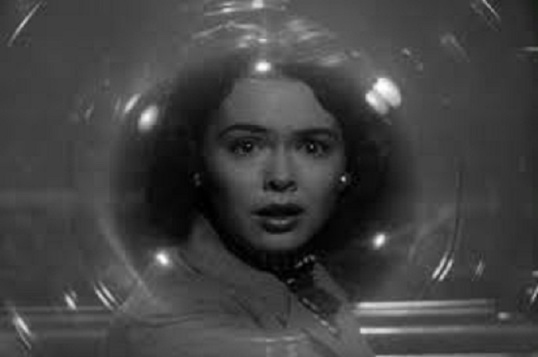
Today’s scene that I love features Kier in the only version of Suspiria that matters, the original one directed by Dario Argento.  In this scene, Kier discusses witchcraft with Jessica Harper.

4 Shots From 4 Horror Films: Special Jack Arnold Edition


4 Shots From 4 Films is just what it says it is, 4 shots from 4 of our favorite films. As opposed to the reviews and recaps that we usually post, 4 Shots From 4 Films lets the visuals do the talking!

110 years ago today, future director Jack Arnold was born in Connecticut.  Arnold started his film career making documentaries and he ended it directing episode of The Brady Bunch and The Love Boat.  In between all of that, he directed some of the best-remembered “creature” films of the 1950s.  Anytime you see a movie featuring giant monsters, you’re seeing a film that owes a debt to the work of Jack Arnold.  Arnold also directed the classic Creature of the Black Lagoon.

Today, in honor of Jack Arnold, TSL is proud to present….

4 Shots From 4 Jack Arnold Films

It Came From Outer Space (1953, dir by Jack Arnold, DP: Clifford Stine)

Creature From The Black Lagoon (1954, dir by Jack Arnold, DP: William E. Snyder)

Tarantula (1955, dir by Jack Arnold, DP: George Robinson)

The Incredible Shrinking Man (1957, dir by Jack Arnold, DP: Ellis W. Carter)

October Positivity: One More Round (dir by Chip Rossetti)


2015’s One More Round tells the story of Jack “The Jackhammer” Taylor (played by Tommy Lee Thomas).

Once upon a time, Jack Taylor was a big-time boxer, a contender to be worldwide champ.  But eventually, he burned out on boxing.  On the night of the “big fight,” he failed to show up.  Now, he works at a furniture store.  He spends most of his time sleeping and having dreams of the life he once had.  When he makes a big sale, his boss tries to steal Jack’s commission.  That’s not a good thing because Jack really needs that commission.  His wife is getting frustrated with Jack’s inability to get his life together.  His scheming mother-in-law all sorts of lies about him.  Jack’s in trouble!

Finally, Jack does the one thing that he swore he would never do again.  He returns to boxing.  He steps into the gym that is owned by his uncle (Kevin Sorbo) and asks for another chance.  He trains with Franco Turelli (Franco Columbu).  He prepares for the fight against the fearsome B.A. Fontana (T.C. Stallings), a fighter who is so aggressive that he even takes a swing at a referee at one point.  Throughout it all, Jack prays and feels that God is leading him back into the ring.

Along with Kevin Sorbo, there are some familiar faces in One More Round.  Jeremy London appears as Brock Thornhill (now there’s a villainous name!), a man who courts Jack’s wife during their separation.  Donald James Parker of Gramps Goes To College fame appears as one of Jack’s co-workers.  It’s actually interesting to see Parker here because this is one of the few Donald James Parker performances in which he’s not playing a character who comes across as being super-aggressive and bitter.  Instead, he just comes across as being a nice old man who reads the Bible and offers up spiritual advice.  Parker’s character here comes across as who Parker was trying to play in Gramps Goes To College before that film became about Gramps telling off all the pointy-headed, liberal intellectuals who make up the academic world.  This film features the nice version of Gramps!

That said, the majority of this movie is taken up with boxing.  I actually like most boxing films.  There’s something thrilling about watching two men punch each other until one of them collapses.  I mean, it’s the type of thing to which I should probably object on humanitarian grounds but I can’t help myself.  Boxing is (usually) exciting.  The best boxing films present the fight as being modern-day gladiatorial combat.  Unfortunately, the boxing scenes in One More Round aren’t particularly impressive.  The low-budget is obvious as the film cuts from scenes inside the ring to shots of people in the audience, all pretending to be watching a boxing match.  Neither one of the actors playing the boxers is particularly believable as a professional fighter.

In the end, I always have my doubts about any film that suggests that God picks sides when it comes to sports.  I’d like to think that God would be like me and just hope that both teams have fun.

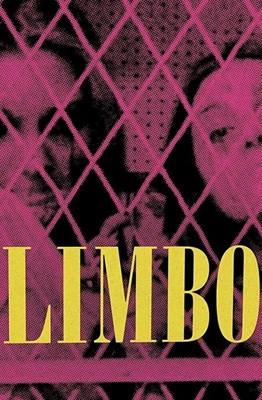
SOV Horror Review: Limbo (dir by Tina Krause)


In 1999’s Limbo, Katherine (Jessica Krause) is a young woman who lives in a city, perhaps in an abandoned warehouse. At night, she goes to the bar, where the regulars eye her with a mix of suspicion and lust. Sometimes, she takes someone home with her. Every night, she appears back at the bar and almost the same dialogue is repeated by those who see her. She takes someone home. She kills them… or does she? The waitress (Tina Krause, who also directed) appears at Katherine’s home. Voices are heard. Sped-up images are randomly spliced through the film. The camera tracks down empty hallways and through desolate alleys. Sometimes, the images are so dark that you can’t even make out what’s happening onscreen. Voices are heard, but it’s not always easy to tell who is speaking or why. The imagery becomes increasingly bizarre. Are we seeing the inside of Katherine’s head, or are we seeing something else? The viewer will have to decide that for themselves…

Actually, for all of the bizarre imagery and strange dialogue, it’s not that hard to figure out what’s happening with Katherine. The film itself is called Limbo, and the film’s final twist isn’t really a surprise. But I also think it’s fairly obvious that this is a film that’s more about visuals and style than anything else. The story is less about what happens and more about how it’s all visualized. The film plays out in a frenetic, dream-like fashion, with the dream sometimes crossing the line and becoming a nightmare. The film’s visual style captures the feeling of being overwhelmed by sensation and giving yourself over to the chaos of everyday life. The film doesn’t always make sense because it takes place in a world that doesn’t particularly make sense. I’ve read a few online reviews that have compared this film’s imagery with the work of David Lynch. I wouldn’t go that far. Lynch may have been a surrealist, but regardless of how odd his films got, there was always a feeling that he was in control and that each image reflected something he wanted to say. Limbo, on the other hand, always feels like it’s one scene away from spinning away from both the cast and the director. Occasionally, that’s kind of exciting.

In many ways, Limbo represents everything I like about SOV filmmaking. It’s a passion project, one made free from the constraints of having to please the biggest possible audience. The stark images capture the grunginess of life on the outskirts of society, and the imperfect sound design fits in perfectly with the bizarre visuals. It’s a film that keeps you off-balance. When Jessica walks along city streets, more than a few passersby stop to stare straight at the camera. It gives the entire production a raw authenticity. Director Tina Krause was herself a veteran of many SOV horror films. For her directorial debut, she took the SOV format to its logical, self-indulgent extreme. The resulting film is occasionally compelling, occasionally annoying, sometimes shallow, and sometimes insightful. It’s a chaotic mess, but it’s also the type of statement that could never be made by a mainstream studio. It’s Limbo.


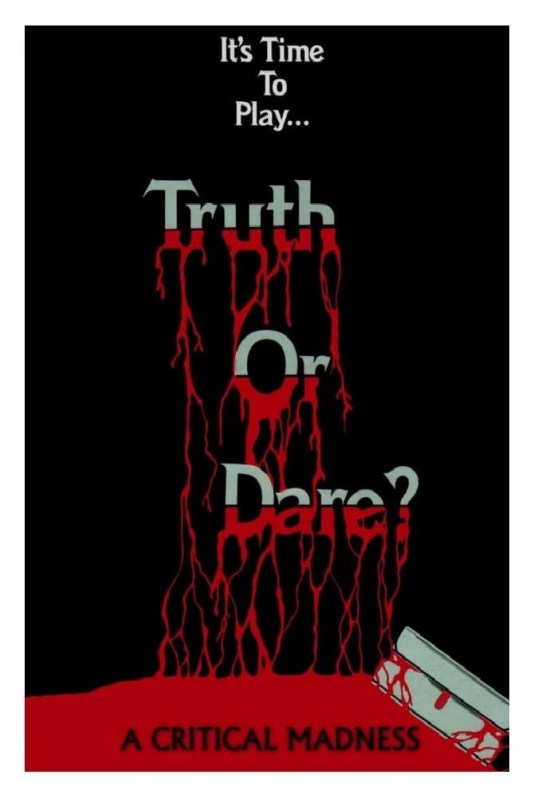
October Hacks: Truth or Dare? — A Critical Madness (dir by Tim Ritter)


The 1986 direct-to-video epic Truth or Dare tells the story of Mike Strauber (John Brace). One day, Mike came home from work and discovered his wife (Mary Fanaro) having sex with his best friend, Jerry (Bruce Gold). Needless to say, Mike is not happy about this development. Mike wanders aimlessly around town, thinking about his past with Sharon and also remembering a childhood game of Truth or Dare. (In the flashbacks, young Mike is played by AJ McLean, who would grow up to be a Backstreet Boy.) Mike considers suicide but, instead, he picks up a hitchhiker and then spends a while mutilating himself at her request.

This pretty much sets up the pattern that dominates the rest of the film. Mike mutilates himself and gets sent to a mental hospital. Mike gets released from the mental hospital and immediately does something that gets him sent back. Mike has hallucinations that lead to him mutilating more and more of himself. He cuts off his face and is soon walking around with a copper mask. Mike gets released due to overcrowding and budget cuts. Mike gets sent back to the asylum. Mike goes on a rampage. Eyes are poked out of their sockets, people are run over by Mike’s car, and—in the film’s most infamous scene—Mike drives around while holding a bloody chainsaw right out the driver’s side window. Surprisingly, people are more than willing to stand still and wait for Mike to reach them. This is definitely a case where maybe they shouldn’t have been so polite.

This is one of those independent horror films that wins points on the basis of pure audacity. One gets the feeling that writer/director Tim Ritter was eager to see just how far he could push things and things do indeed get pushed very far. At the same time, the film is so amateurish in its execution that it’s impossible to really get offended by it. Despite some decent self-mutilation effects, you never get the feeling that the movie is trying to trick you into thinking that you’re watching anything that could be considered realistic. It’s an elaborate and, at times, rather juvenile joke. It’s about as pure a film as you can get, one that was made with absolutely no consideration given to what most would consider to be in good taste. Films like this could never be made by a studio but they could be made by someone who had access to a video camera. That was the whole appeal of indie horror filmmaking.

That said, I should note that Tim Ritter has said that he was actually replaced a day into filming by producer Yale Wilson. So, how much of the film’s vision is due to Ritter and how much of it is due to Wilson is anyone’s guess. Tim Ritter was seventeen when he wrote and sold the script and 18 when the film went into production. He’s still making films to this day. The unique aesthetic of Tim Ritter lives on!

The TSL’s Horror Grindhouse: Amityville 3-D (dir by Richard Fleischer)


In 1983’s Amityville 3-D, Tony Roberts plays John Baxter, a journalist who is a professional skeptic. He made his fame by exposing con artists who pretend to have had supernatural experiences. He doesn’t buy that the famous house in Amityville is haunted. In fact, he’s so confident that there are no such things as evil spirits that he buys the house and moves in with his teenage daughter, Susan (Lori Loughlin). Soon, Susan and her best friend Lisa (Meg Ryan)—HEY! THAT’S MY NAME!—are fooling around with a Ouija board and people close to John are dying.

Now, I wish I could tell you that this Amityville film featured either Lori Loughlin or Meg Ryan getting possessed by the Amityville demon, because that probably would have made for a cool movie and it would also give me a chance to make some jokes about why Loughlin was later cursed to appear on Full House. (No, I would not have made any jokes about the college acceptance scandal because, as far as I’m concerned, Loughlin did nothing wrong.) Playing a teenager possessed by a demon would have also been quite a way for Meg Ryan to make her film debut. Unfortunately, neither one of them gets possessed. Instead, the evil in the Amityville house all has to do with a haunted well in the basement. A lot of people do die in this film. The deaths, though, tend to be a bit random. None of them are as disturbing as the deaths from the second film. That’s probably a good thing, as Amityville II is one of the few horror films that I really have a hard time watching.

When Amityville III went into production, Orion Pictures was being sued by George and Kathy Lutz, the two people who lied about the house being possessed in the first place. The Lutzes claimed they owned the term “Amityville.” Eventually, a court ruled that you can’t own the name of a town, especially one that you fled because the Devil was after you. Still, because of the lawsuit, Amityville III was specifically written to avoid mentioning anything specific that happened in the previous films. I guess the studio did this so that the film could be sold as just another haunted house film if the court ruled in favor of the Lutzes. As a result, Amityville III feels rather generic. There’s really only one scene that works, in which the ghost of a character who has just died makes a sudden appearance and smiles sadly before going on their way. Otherwise, things are pretty dull. Not even the presence of Robert Joy can liven things up.

Realizing that they would need a gimmick to get audiences to sit through another Amityville film, Orion decided to shoot this film in 3-D! Just imagine that Amityville Realty sign swinging back and forth and nearly taking off someone’s head in the audience. Scary! This movie came out around the same time as Friday the 13th 3-D and Jaws 3-D. Wow! I hope everyone kept those cardboard glasses that they used back in the day. It’s good to have a souvenir.

The third Amityville film was panned by critics and, while it made money, it didn’t make that much money. Still, the Amityville franchise continued. There are now probably over a hundred Amityville films out there and, God help me, I’m going to watch every one of them.

Previous TSL Amityville Reviews:

  1. The Amityville Horror (1979)
  2. Amityville II: The Possession (1981)
  3. The Amityville Cure (1990)
  4. The Amityville Haunting (2011)
  5. Amityville Death House (2015)
  6. Amityville Toolbox (2016)
  7. Amityville: The Awakening (2017)
  8. The Amityville Murders (2018)
  9. Amityville Cop (2021)
  10. Amityville Emanuelle (2023)
  11. Amityville A.I. (2024)
  12. Amityville La Llorona (2025)

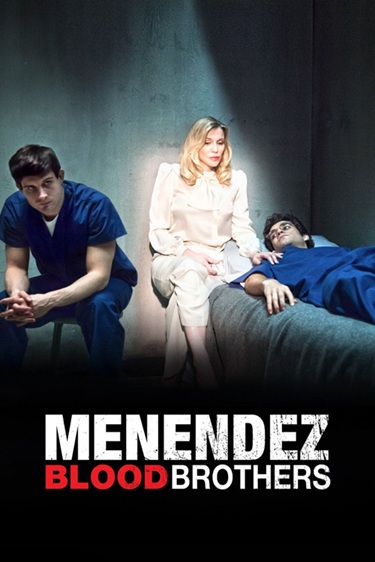
October True Crime: Menendez: Blood Brothers (dir by Fenton Bailey and Randy Barbato)


Hollywood is stunned when entertainment executive Jose Menendez (Benito Martinez) and his wife Kitty (Courtney Love) are brutally gunned down in their Beverly Hills home. Hollywood is shocked a second time when Jose and Kitty’s two sons, Erik (Myko Oliver) and Lyle (Nico Tortorella), are arrested and charged with the crime. A third shock comes when Erik and Lyle admit to killing their parents but claim that it was done in self-defense. They tell a harrowing story of being physically and sexually abused by their father, and they portray their mother as being his enabler. High-powered defense attorney Leslie Abramson (Meredith Scott Lynn) is hired to defend Erik in his trial. A final shock comes when it’s discovered that 20-something Lyle is bald and has been wearing a wig since he was a teenager.

Menendez: Blood Brothers aired on Lifetime in 2017, several years before the better-known Menendez brothers miniseries aired on Netflix. However, both Blood Brothers and Monsters: The Lyle and Erik Menendez Story suffer from the same problem. On the one hand, the Menendez brothers are obviously guilty and, while everyone seems to agree that Jose could be a harsh taskmaster when it comes to his sons, not everyone agrees that he was abusive. (And indeed, it’s interesting to note that, while both parents were shot at close range, Kitty was the one that the brothers really seemed to be obsessed with punishing.) On the other hand, no one wants to admit that someone could lie about being abused and, as a result, many people feel like they have almost an obligation to believe the claims of the Menendez brothers. Monsters handled this issue by refusing to take a definite side. The first half of the series was devoted to the brothers telling their story while the second half dealt with the lives of Jose and Kitty. Blood Brothers deals with this issue by focusing on Erik as the more sympathetic of the two brothers and essentially suggesting that anything bad that happened was totally the fault of Lyle. Erik just wants to be a good son, a good defendant, and ultimately a good prisoner. But dangit, arrogant old Lyle with his bald head and his smug smirk just keeps getting in the way!

That said, Blood Brothers is definitely on the side of Lyle and Erik. Jose is portrayed as a tyrant and the brothers are portrayed as being two somewhat spoiled rich kids who were ultimately pushed to murder by the abuse that they suffered. The ghost of Kitty shows up throughout the film and, for the most part, she seems to be sympathetic to her sons. At the very least, she doesn’t give them a hard time about killing her. (If I were her, I would never stop making them feel guilty about it.) Love gives a fairly good performance in the role and keeps you guessing as to whether or not she’s really a ghost or just a figment of the brothers’ imagination. It’s a well-made film, even if its biases are pretty clear from the start. I’d recommend it over Monsters if only because Blood Brothers gets the job done in 90 minutes and there’s something to be said for not wasting time.

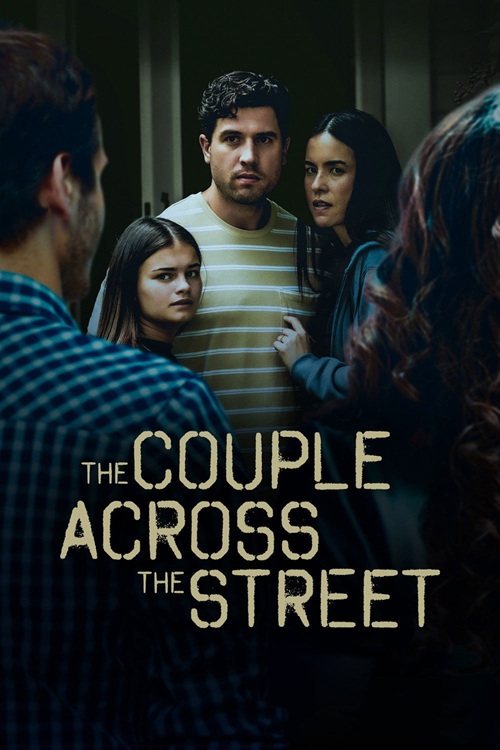
Lifetime In October: The Couple Across The Street (dir by Anjali Nayar)


The Lawsons—Amy (Jenny Raven), Brett (Nate Lawson), and their teenage daughter Lily (Presley Allard)—have just moved into a new home in the country. It’s a nice house and, for Amy, it’s a chance to get away from the city and her former life as a high-priced lawyer. Amy spends a lot of time repeating to herself that she’s strong and she can survive. Of course, all the self-help mantras in the world don’t change the fact that Brett is kind of goofy and Lily is at that age where she really doesn’t want to spend too much time hanging out with her mother.

Living across the street are Rachel (Ellen David) and Tom Sullivan (William MacDonald). Rachel and Tom are an older couple. Tom used to work in military intelligence, which leads to a bit of awkwardness when he admits that he ran a background check on Amy and Brett before they even moved into their new house. Rachel and Tom are also doomsday preppers, complete with an underground bunker and bear traps on their property. Amy takes an almost instant dislike to Tom and Rachel, but Brett seems to enjoy their company. “They’re fun,” Brett puts it.

And they are fun… until a police helicopter flies overhead and Rachel and Tom learn that there’s a killer on the loose. They take Lily, Brett, and Amy into their underground bunker. Rachel and Tom claim that they’re just trying to keep them safe, but Amy has her doubts. Why are Tom and Rachel always whispering to each other? Why do they seem so interested in Amy’s marriage to Brett and whether or not the two of them ever fight? When Amy hears Brett talking to someone and saying that he doesn’t have enough information, what is he talking about? Brett keeps saying that Amy is being paranoid, but Amy comes to suspect that there’s something Tom and Rachel aren’t telling her…

This turned out to be one of the best Lifetime films that I’ve recently seen. When the film started, I didn’t think I was going to like it. It seemed like Rachel and Tom were a heavy-handed representation of every delusion that blue staters have about red staters. Amy seemed so suspicious and so instantly judgmental that I wondered if the film’s director realized that she was kind of unlikable. It seemed as if she was going to spend the whole film complaining about the fact that people enjoyed hanging out with Brett more than they did with her.

Luckily, the film turned out to be a lot smarter and far more self-aware than I gave it credit for. There’s a twist that occurs during the final fourth of the film that totally changes the entire film and forces you to reexamine everything that you originally assumed about the characters. This film is actually a pretty clever look at how we allow our own prejudices to affect our thinking without even realizing it. Both the film’s characters and the audience are forced to reconsider how they originally reacted to each other.

This was a good Lifetime film. The bunker was a fascinating location and all five members of the main cast gave excellent performances. There were a few solid jump scares as well, making this a good pick if you’re looking to watch a Lifetime film for October

Guilty Pleasure No. 134: Teen Witch (dir by Dorian Walker)


In 1989’s Teen Witch, Robyn Lively plays Louise Miller, a 15-year-old who is not particularly popular in high school. While all of the popular girls sing a song called “I Like Boys” and perform an impromptu dance number in the locker room, Louise can only watch and wish she had the courage to ask her crush, Brad Powell (Dan Gauthier), to prom. Later, after Brad nearly runs over Louise in his car, Louise stumbles into the home of palm reader Madame Serena (Zelda Rubinstein). Serena reveals that Louise is a witch who will be gaining her powers as soon as she turns sixteen. Hey, Louise’s birthday is only a few days away!

Suddenly, Louise has the power to make her wishes come true! She turns her brother (Joshua Miller) into a dog! She gets Brad to break up with his girlfriend! She gets the locker room girls to argue! She helps her friend Polly (Mandy Ingber) win a rap battle against Rhet (Noah Blake). “Look how funky he is!” Polly says about Rhet. Well, Rhet may be funky, but soon Louise is the most popular girl at school. She’s so popular that Polly starts to feel left out. Why didn’t Louise wish for Polly to be popular? I mean, the solution was right there.

It’s difficult to put into words just how weird and tonally mixed-up Teen Witch is. There’s the “Top That” rap battle between Polly and Rhet. There’s the “I Like Boys” production number. There’s Zelda Rubinstein sitting on Robyn Lively’s lap and both of them laughing at how awkward it all is. There’s Joshua Miller, playing Louise’s younger brother in much the same way that he played the vampire kid in Near Dark. There’s Dick Sargent and Caren Kaye as Louise’s parents, Marcia Wallace as her teacher, and there’s also the fact that Brad turns out to be a nice guy even though he nearly ran over Louise. There’s the scene where Louise tells the star of the school play to “break a leg” and you can guess what happens. Louise spends the movie worrying about accidentally hurting someone with her powers and then uses a voodoo doll to torment a teacher. Reportedly, the film’s producer added some scenes after production initially wrapped. That explains why Louise abruptly goes from being innocent and naive to being a music video vixen and back again.

It’s a silly mix of tones and style that makes no sense and that’s why it’s the perfect film about being a teenager. There’s a sweetness in the center of Teen Witch’s chaos and it makes for an enjoyably weird film to which almost everyone can relate. Who hasn’t wanted to have magical powers? Who hasn’t looked at three guys dancing in the middle of the street and said, “I will never be hip.” And, in the end, what’s important is that Louise ultimately learns that she doesn’t need the magic to get the cute boy and to star in the school play. She just has to be herself.

Seriously, I’ll take Teen Witch over this new version of Carrie any day.

Previous Guilty Pleasures

  1. Half-Baked
  2. Save The Last Dance
  3. Every Rose Has Its Thorns
  4. The Jeremy Kyle Show
  5. Invasion USA
  6. The Golden Child
  7. Final Destination 2
  8. Paparazzi
  9. The Principal
  10. The Substitute
  11. Terror In The Family
  12. Pandorum
  13. Lambada
  14. Fear
  15. Cocktail
  16. Keep Off The Grass
  17. Girls, Girls, Girls
  18. Class
  19. Tart
  20. King Kong vs. Godzilla
  21. Hawk the Slayer
  22. Battle Beyond the Stars
  23. Meridian
  24. Walk of Shame
  25. From Justin To Kelly
  26. Project Greenlight
  27. Sex Decoy: Love Stings
  28. Swimfan
  29. On the Line
  30. Wolfen
  31. Hail Caesar!
  32. It’s So Cold In The D
  33. In the Mix
  34. Healed By Grace
  35. Valley of the Dolls
  36. The Legend of Billie Jean
  37. Death Wish
  38. Shipping Wars
  39. Ghost Whisperer
  40. Parking Wars
  41. The Dead Are After Me
  42. Harper’s Island
  43. The Resurrection of Gavin Stone
  44. Paranormal State
  45. Utopia
  46. Bar Rescue
  47. The Powers of Matthew Star
  48. Spiker
  49. Heavenly Bodies
  50. Maid in Manhattan
  51. Rage and Honor
  52. Saved By The Bell 3. 21 “No Hope With Dope”
  53. Happy Gilmore
  54. Solarbabies
  55. The Dawn of Correction
  56. Once You Understand
  57. The Voyeurs 
  58. Robot Jox
  59. Teen Wolf
  60. The Running Man
  61. Double Dragon
  62. Backtrack
  63. Julie and Jack
  64. Karate Warrior
  65. Invaders From Mars
  66. Cloverfield
  67. Aerobicide 
  68. Blood Harvest
  69. Shocking Dark
  70. Face The Truth
  71. Submerged
  72. The Canyons
  73. Days of Thunder
  74. Van Helsing
  75. The Night Comes for Us
  76. Code of Silence
  77. Captain Ron
  78. Armageddon
  79. Kate’s Secret
  80. Point Break
  81. The Replacements
  82. The Shadow
  83. Meteor
  84. Last Action Hero
  85. Attack of the Killer Tomatoes
  86. The Horror at 37,000 Feet
  87. The ‘Burbs
  88. Lifeforce
  89. Highschool of the Dead
  90. Ice Station Zebra
  91. No One Lives
  92. Brewster’s Millions
  93. Porky’s
  94. Revenge of the Nerds
  95. The Delta Force
  96. The Hidden
  97. Roller Boogie
  98. Raw Deal
  99. Death Merchant Series
  100. Ski Patrol
  101. The Executioner Series
  102. The Destroyer Series
  103. Private Teacher
  104. The Parker Series
  105. Ramba
  106. The Troubles of Janice
  107. Ironwood
  108. Interspecies Reviewers
  109. SST — Death Flight
  110. Undercover Brother
  111. Out for Justice
  112. Food Wars!
  113. Cherry
  114. Death Race
  115. The Beast Within
  116. Girl Series
  117. Gone in 60 Seconds
  118. Swordfish
  119. Marked For Death
  120. The Internship
  121. The Angry Red Planet
  122. 2012
  123. Old School
  124. No Escape
  125. In Death Series
  126. Alligator
  127. Little Annie Fanny
  128. Wicked Wanda
  129. Congo
  130. The 13th Warrior
  131. Sudden Death
  132. The Convent of Hell
  133. Covent of Sinners

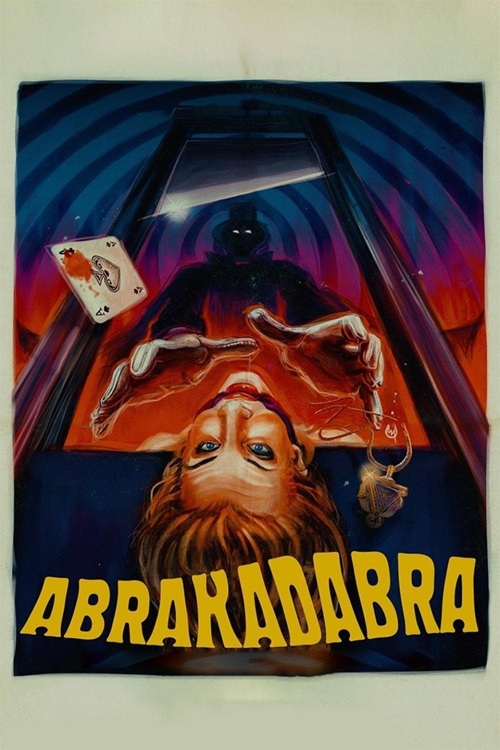
Horror Film Review: Abrakadabra (dir by Luciano Onetti and Nicolás Onetti)


First released in 2018, the Argentine film Abrakadabra is a sweet, loving, short, and wonderfully bloody tribute to the giallo genre.

When he was a little boy, Lorenzo Manzini (German Baudino) watched as his magician father was shot while demonstrating a magic trick. Despite having seen magic go terribly wrong, Lorenzo grows up to be a traveling magician. Accompanied by his mysterious companion, Antonella (Maria Eugenia Rigon), Lorenzo travels from one Italian town to another. His stage is notably macabre, featuring a guillotine amongst other things. It’s obvious that Lorenzo has grown up to be obsessed with death. He also appears to be an alcoholic who doesn’t have much impulse control. His demons have made him self-destructive, but have they turned him into a murderer? After a woman is found dead with her head in one of Lorenzo’s magic boxes, that’s what the police would like to know.

The majority of the film is shown from Lorenzo’s point of view and, visually, the film does a great job of putting us in the middle of Lorenzo’s paranoid mind. Is the bald man with the cigarette who keeps showing up a true threat, or is Lorenzo just letting his own fears and traumas get the better of him? When Antonella appears to be watching him, is her stare really that intense, or is it just Lorenzo’s imagination? Lorenzo makes his living fooling other people and tricking them into seeing things that aren’t really there, but what if he’s the one being tricked? What if he’s the victim of the illusion?

Clocking in at a brisk and enjoyably sordid 65 minutes, Abrakadabra is ultimately more of an experiment than a traditional film. Luciano Onetti and Nicolas Onetti set out to pay tribute to the great giallo films of the past, and they did exactly that. It’s not just the film’s twisty story that captures the feel of a great giallo. It’s also the film’s visual style, from the unsettling close-ups to the use of color to the imagery that is frequently sordid in the way that only someone from a Catholic background can fully appreciate. It’s in the fact that, like the best giallo films, the majority of the dialogue was dubbed, and occasionally the words we hear do not quite fit with the movement of the lips that are saying them. Yes, the film carries hints of Mario Bava, Dario Argento, and Lucio Fulci. But the film also pays tribute to Sergio Martino, Luciano Ercoli, Umberto Lenzi, Luigi Cozzi, and all of the other directors who brought the genre to life. This is a film made by people who clearly appreciate all giallo, even the films that haven’t been “rediscovered” by critics looking to prove their cult bona fides.

Abrakadabra ends with a clever twist, one that is just flamboyant enough to feel true to the film’s giallo heritage. German Baudino does a good job as the paranoid magician, and my fellow redhead Maria Eugenia Rigon is perfectly cast as the assistant. This Argentine film is a perfect homage to a quintessential Italian genre.