Film Review: Tom & Jerry (dir by Tim Story)


Kayla Forester (Chloe Grace Moretz) has recently arrived in Manhattan, fleeing her go-nowhere hometown in Pennsylvania.  She’s determined to finally do something with her life, spurred on by the feeling that there are other people who are just as young as she is but who have already managed to get their lives together.  She doesn’t have much work experience but she has endless ambition and she’s also willing to lie, cheat, and steal if it means finding a better life.

Tom Kat (played by himself) is an aspiring pianist and creator of ludicrously elaborate mouse traps who finds his ambitions hampered by the fact that he’s a cartoon cat who can’t talk and who has a habit of getting involved in elaborate mishaps.  Even his attempts to make a meager living by playinf piano in Central Park are continually thwarted by all of the other cartoon animals that are lurking around New York City.  (“Look!” a little boy announces, “that cat’s playing a piano!”  His father explains that it’s common to see all sorts of strange things in New York.)

Jerry Mouse (playing himself) is Tom’s longtime rival.  A cartoon mouse who is also a plucky kleptomaniac, Jerry has recently arrived in Manhattan.  He’s looking for a home and he wastes no time in reigniting his decades old feud with Tom and, of course, engaging in countless acts of petty thievery.

Together, they solve crimes!

Well, no, actually, they don’t.  Instead, they commit a few.  Kayla gets things started by stealing someone else’s resume and getting a job working at a luxury hotel.  Under the mistrustful eye of event manager Terence Mendoza (Michael Pena), Kayla tries to make sure that two celebrities, Ben (Colin Jost) and Preeta (Pallavi Sharda ), have the perfect wedding in the hotel’s ballroom.  Despite being in no way qualified for her job, Kayla proves to be a quick learner and she even manages to deal with the hotel’s temperamental head chef, Jackie (played, somewhat inevitably, by Ken Jeong).  The only problem is that Jerry has moved into the hotel as well.  Realizing that a mouse could ruin the entire wedding, Kayla hires Tom to track the little rodent down.  Tom and Jerry better work out their differences before the wedding because Ben and Preeta are scheduled to ride two cartoon elephants down the aisle and you know how elephants feel about mice!

Tom & Jerry is a hybrid film, a mix of live action and animation.  New York City is real.  All of the human characters are played by actual humans.  However, every single animal — from the title characters to the elephants to Ben’s bulldog to the pigeons that fly over Central Park and provide a chorus to the action — is a 2D cartoon character.  It’s actually a pretty cute idea and, to the film’s credit, it doesn’t waste anyone time with elaborate excuses for why this is.  Everyone in the film simply accepts that they live in a world with cartoon animals.  No one is particularly surprised with Kayla hires a cartoon cat to take care of the cartoon mouse problem.

Tom & Jerry works whenever it focuses on the title characters.  It’s actually a lot of fun to watch the two of them chasing each other through a live action New York City and never suffering any injuries regardless of how many mallets they hit each other with.  Unfortunately, the film slows down whenever it focuses on the human characters.  Chloe Grace Moretz is one of the best actresses of her generation and it’s always nice to see her playing a character who isn’t being stalked or having to deal with some sort of unimaginable tragedy but still, Kayla’s story is never really interesting enough to justify taking the focus away from Tom and Jerry.  For most of the movie, poor Michael Pena gets stuck playing the film’s designated villain, even though Terrence is basically just doing his job.  In the end, of course, everyone learns an important lesson and they’re all the better for it but most viewers would probably trade the lesson for more of the mouse and the cat.

Still, whenever it’s just Tom and Jerry doing their thing, this is a cute movie.  I just wish the movie hadn’t gotten bogged down with everything else.

The NAACP Image Awards Honor Bad Boys For Life


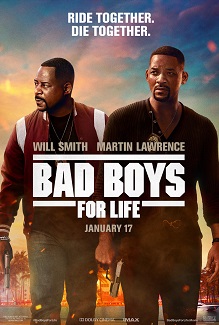
The winners of the 2020 NAACP Image Awards were announced last night, during a ceremony that was aired on BET.  Personally, I think Bad Boys For Life was a pretty good movie so I’m glad it won.  Sometimes, I think we forget that an entertaining film can also be a good (or, in this case, “outstanding”) film.

Here are the film winners:

Outstanding Motion Picture
Bad Boys For Life 
Da 5 Bloods
Jingle Jangle: A Christmas Journey
Ma Rainey’s Black Bottom
One Night In Miami…

Outstanding Directing in a Motion Picture
David E. Talbert – Jingle Jangle: A Christmas Journey
George C. Wolfe – Ma Rainey’s Black Bottom
Gina Prince-Bythewood – The Old Guard
Radha Blank – The Forty-Year-Old Version
Regina King – One Night In Miami…

Outstanding Actor in a Motion Picture
Anthony Mackie – The Banker
Chadwick Boseman – Ma Rainey’s Black Bottom
Delroy Lindo – Da 5 Bloods
Forest Whitaker – Jingle Jangle: A Christmas Journey
Will Smith – Bad Boys For Life

Outstanding Actress in a Motion Picture
Issa Rae – The Photograph
Janelle Monáe – Antebellum
Madalen Mills – Jingle Jangle: A Christmas Journey
Tracee Ellis Ross – The High Note
Viola Davis – Ma Rainey’s Black Bottom

Outstanding Supporting Actor in a Motion Picture
Aldis Hodge – One Night In Miami…
Chadwick Boseman – Da 5 Bloods
Clarke Peters – Da 5 Bloods
Colman Domingo – Ma Rainey’s Black Bottom
Glynn Turman – Ma Rainey’s Black Bottom

Outstanding Supporting Actress in a Motion Picture
Anika Noni Rose – Jingle Jangle: A Christmas Journey
Gabourey Sidibe – Antebellum
Nia Long – The Banker
Phylicia Rashad – Jingle Jangle: A Christmas Journey
Taylour Paige – Ma Rainey’s Black Bottom

Outstanding Writing in a Motion Picture
David E. Talbert – Jingle Jangle: A Christmas Journey
Kemp Powers – One Night In Miami…
Lee Isaac Chung – Minari
Pete Docter, Kemp Powers & Mike Jones – Soul
Radha Blank – The Forty-Year-Old Version

Outstanding Independent Motion Picture
Emperor
Farewell Amor
Miss Juneteenth
The 24th
The Banker

Outstanding International Motion Picture
Ainu Mosir
His House
Night of the Kings
The Last Tree
The Life Ahead

Outstanding Breakthrough Performance in a Motion Picture
Dayo Okeniyi – Emperor
Dominique Fishback – Project Power
Jahi Di’Allo Winston – Charm City Kings
Jahzir Bruno – The Witches
Madalen Mills – Jingle Jangle: A Christmas Journey

Outstanding Ensemble Cast in a Motion Picture
Da 5 Bloods
Jingle Jangle: A Christmas Journey
Ma Rainey’s Black Bottom
Soul
The Banker

Outstanding Animated Motion Picture
Onward
Over the Moon
Scoob!
Soul
Trolls World Tour

Outstanding Character Voice-Over Performance – Motion Picture
Ahmir-Khalib Thompson aka Questlove – Soul
Angela Bassett – Soul
Chris Rock – The Witches
Jamie Foxx – Soul
Phylicia Rashad – Soul

Outstanding Short Form (Live Action)
Baldwin Beauty
Black Boy Joy
Gets Good Light
Home
Mr. & Mrs. Ellis

Outstanding Short Form (Animated)
Canvas
Cops and Robbers
Loop
The Power of Hope
Windup

Outstanding Breakthrough Creative (Motion Picture)
Loira Limbal – Through the Night
Melissa Haizlip – Mr. Soul!
Nadia Hallgren – Becoming
Radha Blank – The Forty-Year-Old Version
Remi Weekes – His House

Outstanding Documentary (Film)
All In: The Fight For Democracy
Coded Bias
John Lewis: Good Trouble
Soul!
On the Record

Entertainer of the Year
Viola Davis
Regina King
D-Nice
Trevor Noah
Tyler Perry

Social Justice Impact
Stacey Abrams
Debbie Allen
Lebron James
Tamika Mallory
April Ryan

President’s Award
LeBron James

Hall of Fame Award
Eddie Murphy

Chairman’s Award
Rev. James Lawson

Spring Breakdown: Deadly Excursion: Kidnapped From The Beach (dir by Brian Skiba)


When last we checked in with the McCarthy family, Samantha (Samaire Armstrong) and her daughter Ellie (Alexandria DeBerry) were kidnapped while on vacation and ended up getting stranded on a remote beach.  Fortunately, they were saved by the combined efforts of the FBI and Samantha’s husband, David (Corin Nemec).  One of the kidnappers, Ian (Jonathan Bouvier), managed to escaped and a few people got shot but, fortunately, it appeared that everyone was safe.

That all occurred in the 2019 Lifetime film, Deadly Excursion.

Deadly Excursion: Kidnapped From The Beach checks in with the McCarthy family a year or two later and we discover that 1) David and Samantha’s marriage is now a lot stronger and 2) the family apparently didn’t learn much from their last time they got kidnapped while on vacation.  This time, ignoring the warnings of the FBI, Samantha and David go to Florida to support Ellie as she leads her beach volleyball team to a national championship.  Unfortunately, Samantha and David are also followed by Cesar Rodriguez (Matt Cedeno) and Cesar’s son, Miguel (David Meza).  Cesar and Miguel have plans to kidnap the entire family.  Meanwhile, Ian is still wandering about and looking for a chance to redeem himself, despite the fact that he’s currently #15 on the FBI’s Most Wanted List.

Got all that?

The question is, “How many times can the same thing happen to the same family?” and the answer here seems to be “At least twice.”  Indeed, it may require a certain suspension of disbelief to buy that the McCarthys could actually learn so little from their last vacation but, then again, suspension of disbelief is what Lifetime movies are all about.  As I’ve said many times, you don’t necessarily watch a film like this because you’re looking for a realistic film about kidnapping.  You watch a film like this for the beach scenery and the melodrama and for the familiar faces of the likable actors who play the film’s lead roles.  Say what you will about David McCarthy and his decision-making abilities, it’s always fun to watch Corin Nemec play a role like this.  Nemec always throws himself into it, delivering his lines with just the right mix of drama and humorous self-awareness.  And, again, he’s a likable actor.  You like David because it’s impossible not to like Corin.  You hope that he’ll get back together with his family because the three of them just seem like they belong together.

Of course, there are a few differences between the first Deadly Excursion and the second.  The first Deadly Excursion found the family being held hostage on an island.  This time, they’re held hostage in a luxury hotel and I have to say that the hotel is really quite impressive.  If I was going to be held hostage, I’d want to be held hostage there.  It also leads to an interesting scene where one of the family members manages to briefly escape, just to discover that even the people who aren’t involved in her kidnapping don’t necessarily want to get involved.  Sadly, that’s probably very true to life.  You can be just as isolated in a city as you can be on a deserted island.

Deadly Excursion: Kidnapped From The Beach won’t take you by surprise but the beach scenery is gorgeous and the cast is likable and sometimes, that’s all you need.

Previous Spring Breakdown 2021 Entries:

  1. The Beach Girls and the Monster
  2. Top Secret!
  3. Jaws: The Revenge
  4. Hunk
  5. Love In A Goldfish Bowl
  6. Eureka


Scenes That I Love: Cliff Booth Beats Up Clem Grogan in Once Upon A Time In Hollywood


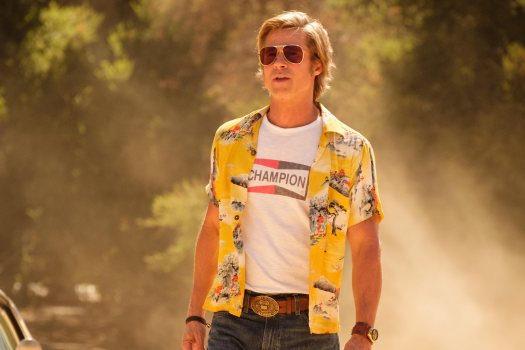
Today is Quentin Tarantino’s 59 birthday.  In order to celebrate the occasion, here’s Brad Pitt beating up a hippie.

This scene, of course, is from my favorite Tarantino film, 2019’s Once Upon A Time In Hollywood.  While some may say that Cliff goes overboard on the hippie, you should understand that this is no ordinary hippie.  This hippie is meant to be Steve “Clem” Grogan, a real-life member of the Manson Family who, in 1969, murdered an actor and stuntman named Donald “Shorty” Shea.  Shea, who worked on the Spahn Rannch, had apparently once taken Grogan under his wing but, when it was decided the Shea knew too much about Manson’s crimes and that he was a threat to Manson’s control of ranch owner George Spahn, the order apparently went out that Shea had to die.  While Manson, Grogan and Manson’s second-in-command, Bruce Davis, were the only three people convicted of Shea’s murder, it’s felt that they were probably aided by Tex Watson (played by Austin Butler in Once Upon A Time In Hollywood).  In real life, Grogan was sentenced to death for Shea’s murder, though his sentence was later commuted to life imprisonment, with the judge reportedly saying that Grogan was obviously too stupid and too stoned to decide to murder Shea on his own.

The 18 year-old Grogan was a high school drop out and was also nicknamed Scramblehead, due to even the members of the Manson Family considering him to be abnormally dumb.  Grogan, reportedly, wrecked several cars, including one owned by Dennis Wilson of the Beach Boys and, shortly before the murders, he was arrested for exposing himself.  That said, it’s also been suggested that Grogan was never as dumb as he pretended to be.  According to Ed Sanders’s book, The Family, Grogan did turn his life around once he was locked far away from the rest of the Family and free from Manson’s influence.  A model prisoner, he eventually led the police to the location of Shea’s body and he was paroled in 1985.  To date, he is the only one of the Manson murderers to have been released from prison.  (Bruce Davis, who was also convicted of killing Shea, has been ruled suitable for parole six times over the past ten years but, each time, the decision has been overturned by California’s governor.  He was mostly recently ruled suitable for parole on January 22nd of this year but Governor Newsom has yet to announce whether he will be blocking the decision.)  Grogan is 69 years old now and, as of a few years ago, he was working as a musician in the Los Angeles area.  Regardless of whether Clem Grogan turned his life around or not, considering what happened to Shorty Shea, it does seem appropriate that Once Upon A Time In Hollywood sees Clem getting his ass kicked by a stuntman.

In fact, Cliff’s entire visit to the Spahn Ranch is one of the best moments in Tarantino’s entire filmography.  It plays out like a combination of a horror flick and a western and there’s just enough odd humor tossed in to keep the audience especially nervous.  Given just how creepy the entire sequence is, there’s something very cathartic about Cliff’s refusal to play any games with Clem and the other hippies.  Cliff’s refusal to even let Clem wipe the blood off his face feels especially satisfying, in an odd sort of way.

Anyway, a happy birthday to Quentin Tarantino!  Last year, I observed Tarantino’s birthday by ranking all of his film, in order from worst to best.  You check that out by clicking here!

Here’s The Red Band Trailer For The Suicide Squad


Earlier today, the red band trailer for The Suicide Squad was released!

It’s always kind of funny to me how excited some people get over red band trailers, when essentially red band trailers are just the same as regular trailers.  The main difference is that you get to hear people curse but is that really that exotic?  Red band trailers always remind me of a little kid trying to impress everyone by dropping the f-bomb.  I mean, we all already knew that The Suicide Squad was R-rated, right?  Maybe it’s just that I’ve seen so many Italian horror trailers that everything now seems tame by comparison.  I mean, once you’ve seen the trailer for Zombie Holocaust, it’s hard to be shocked.

Anyway, people with far more knowledge of The Suicide Squad than me are excited about this trailer so I will refrain from being too critical.  I mean, the trailer gets the job done.  If you were excited to see The Suicide Squad, I imagine that you’re still excited.  I think the only recent trailers that actively turned people from seeing a films that they might otherwise see were the trailers for Ghostsbusters and Cats.

Myself, I’m just looking forward to seeing what James Gunn does with the material.

Anyway, here’s the trailer!

The Unnominated: Auto Focus (dir by Paul Schrader)


Though the Academy of Motion Picture Arts and Sciences claim that the Oscars honor the best of the year, we all know that there are always worthy films and performances that end up getting overlooked.  Sometimes, it’s because the competition too fierce.  Sometimes, it’s because the film itself was too controversial.  Often, it’s just a case of a film’s quality not being fully recognized until years after its initial released.  This series of reviews takes a look at the films and performances that should have been nominated but were,for whatever reason, overlooked.  These are the Unnominated.

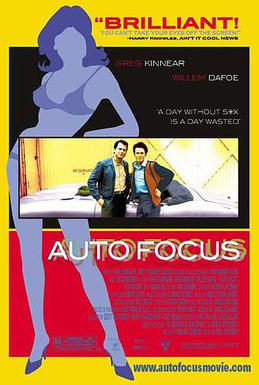
The 2002 film Auto Focus start out as almost breezy satire of the perfect all-American life and it ends with an act of shocking violence.  It’s based on a real-life mystery, a murder that revealed a secret life.

When we first see Bob Crane (Greg Kinnear), he’s a disc jockey and a drummer living in the suburbs of Los Angeles in the mid-60s.  He’s got what would appear to be the ideal life.  He’s got a nice house.  He and his wife (Rita Wilson) seem to be devoted to each other.  His children are adorable.  He goes to church.  He tells corny Dad jokes.  He’s got a quick smile and a friendly manner and it’s impossible not to like him.  When he gets offered the lead in a sitcom, his happiness and enthusiasm feels so generous that it’s impossible not to be happy for him.

Of course, the show is a comedy that takes place in World War II POW camp, which doesn’t really sound like a surefire hit or really anything that should be put on the air.  (“Funny Nazis?” Crane says in disbelief when he’s first told about the project.)  Still, with Crane in the lead role, Hogan’s Heroes becomes a hit and, for a while, Bob Crane becomes a star and it seems like it couldn’t have happened to a more deserving guy.

The problem, of course, is that Crane seems like he’s too good to be true and we all know what they say about things like that.  From the start, there are hints that Crane may be hiding another side of his personality.  His wife, for instance, is not happy when she discovers his stash of pornographic magazines in their garage.  (“They’re photography magazines!” Crane protests with a smile that’s a bit too quick.)  Crane obviously enjoys the recognition that comes from being the star of a top-rated show.  He starts hanging out at strip clubs, occasionally playing drums with the club’s band and watching the dancers with a leer that’s really not all that different from the smile that he flashes whenever he asks anyone if they want an autograph.

Crane also meets John Carpenter (Willem DaFoe), an electronics expert who introduces him to the then-expensive and exclusive world of home video.  As opposed to the clean-cut and smoothly-spoken Crane, Carpenter is so awkward that it’s sometimes painful to watch him move or listen to him speak.  He’s the epitome of the Hollywood hanger-on, the type who has deluded himself into thinking that his celebrity clients genuinely like him and enjoy his company.  He and Crane become fast friends, though it’s always obvious that Crane considers himself to be better than Carpenter.  However, Carpenter is the only person with whom Crane can share the details of his secret life.

The film covers several years, from the late 60s to the mid-70s.  Crane goes from being so clean-cut that he neither drinks nor curses to being so addicted to sex that he can stop himself even when it starts to destroy his career and leads to him losing everything that he loves.  Carpenter and Crane’s friendship becomes progressively more and more self-destructive until the film ends in violence and tragedy.

Auto Focus begins on a light and breezy note but, as Crane’s addiction grows, the film grows darker.  By the time the movie enters the 70s, the camerawork becomes more jittery and the once soft-spoken Crane seems to be drowning in his own anxiety.  He becomes the type who causally goes from talking to Carpenter about how he wants to direct the world’s greatest sex film to cheerfully announcing that Disney has decided to cast him in a film called SuperDad.  Auto Focus‘s key scene comes towards the end, when Crane is a guest on a silly cooking show and shocks the audience by harassing a woman sitting in the front row.  When the audience boos, Crane flashes his familiar smile and it becomes obvious just how much of Crane’s life has been spent hiding behind that smile.  By the end of the film, not even Crane himself can keep track of whether or not he’s a wholesome comedy star or a self-destructive sex addict.

Both Greg Kinnear and Willem DaFoe gave Oscar-worthy performance in Auto Focus, performances that hold your interest even after their characters sink to some truly low depths.  The film makes good use of Kinnear’s amiable screen presence and Kinnear convincingly creates a man who wishes that he could be the person that he’s fooled everyone into thinking that he is.  By the time he’s reduced to begging his agent (well-played by Ron Leibman) to find him a game show so that he can finally stop doing dinner theater, it’s hard not to have a little sympathy for him, even if the majority of his problems are self-created.  As Carpenter, DaFoe is convincingly creepy but, at times, he’s also so pathetic that, again, you can’t help but feel a little sorry for him.  At his worst, Carpenter is the 70s equivalent of the twitter user who stans a celebrity by sending them adoring tweets and then picking fights with anyone who disagrees.

Unfortunately, the Academy nominated neither Kinnear for Best Actor nor DaFoe for Best Supporting Actor.  The competition for Best Actor was fierce that year, with Nicolas Cage, Michael Caine, Daniel Day-Lewis, and Jack Nicholson all losing to Adrien Brody in The Pianist.  While Kinnear deserved a nomination, it’s hard to say who I would drop from that line-up to make room for him.  As for DaFoe, I would argue that he was more deserving of a supporting actor nomination than The Hours‘s Ed Harris or The Road To Perdition’s Paul Newman.  Perhaps DaFoe was just too convincing as the type of clingy groupie that most members of the Academy probably dread having to deal with.

Nominated or not, Auto Focus is a disturbing and ultimately sad look at the darkness that often hides behind a perfect facade.


The Producers Guild Honors Nomadland


The Producers Guild announced its picks for the best of 2020-2021 last night and, not surprisingly, the winner for Best Film was Nomadland.  Nomadland now pretty much how a clear road to winning the Academy Award for Best Picture at the end of April.  I have to admit that I have yet to see it, even though I’ve got Hulu.  I don’t know …. I just can’t work up any enthusiasm for the prospect of sitting through it.

Anyway, here are the PGA’s winners:

The Award for Outstanding Producer of a Feature Theatrical Motion Picture
Borat Subsequent Moviefilm
Judas and the Black Messiah
Ma Rainey’s Black Bottom
Mank
Minari
Nomadland
One Night in Miami
Promising Young Woman
Sound of Metal
The Trial of the Chicago 7

The Award for Outstanding Producer of Animated Theatrical Motion Pictures
The Croods: A New Age
Onward
Over the Moon
Soul
Wolfwalkers
 
The Award for Outstanding Producer of Documentary Motion Pictures 
David Attenborough: A Life on Our Planet
Dick Johnson Is Dead
My Octopus Teacher
Softie
A Thousand Cuts
Time
The Truffle Hunters

Spring Breakdown: Eureka (dir by Nicolas Roeg)


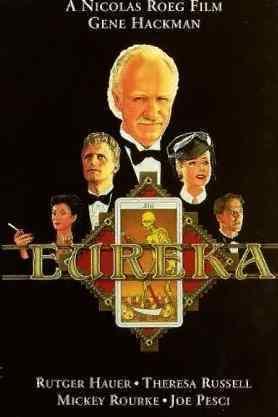
In this 1983 film, Gene Hackman plays Jack McCann, a prospector who is determined to either get rich or freeze to death as he wanders around Alaska in the 1920s.  When he’s not having sex and philosophical discussions with the local witch, Freida (Helena Kallianiotes), Jack desperately searches for gold.  Jack is convinced that gold is all that he needs to be happy, though Freida counsels him that it’s also important to pursue more Earthly delights.  Everywhere Jack looks, he sees people dying in the snow.  In fact, Jack nearly dies himself until he stumbles across a mountain full of gold.  As gold dust pours down on him, he celebrates while having flashbacks to Freida writhing in ecstasy.  It’s just that type of film.  When Jack tells Freida about his claim, he asks what’s going to happen next.  Freida tells him that it’s both the end and the beginning.  Once again, it’s just that type of film.

At this point, Eureka jumps ahead 20 years.  The year is 1945.  World War II is coming to an end.  Jack is no longer freezing and starving to death in Alaska.  Now, he is one of the world’s richest men.  He even owns his own island in the Caribbean.  Jack has a huge house, a beautiful view of the ocean, and all the money in the world.  One could even say that his life has become an exclusive beach vacation, an eternal Spring Break, if you will.  And yet, even with all of his money, Jack has fallen victim to ennui.  He was happier when he was poor and starving and seeking warmth from Freida.  Now, he’s got an alcoholic wife (Jane LaPotaire) and his daughter, Tracy (Theresa Russell), is in love with a dissolute aristocrat named Claude (Rutger Hauer), to whom Jack takes an instant dislike.  Claude claims that Jack has stolen his wealth from the Earth.  Claude is the type who eats gold and then promises to return it to Jack as soon as he can.  That’s something that actually happens.  It’s kind of silly but Rutger Hauer is such a charmer that he nearly pulls it off.

Claude and Tracy aren’t the only thing that Jack has to worry about.  An American gangster named Mayakofsky (Joe Pesci) wants to take over Jack’s island so that he can build a casino on it.  However, despite the best efforts of Mayakofsky’s attorney (Mickey Rourke), Jack is still not willing to sell.  When hitman Joe Spinell shows up outside the estate, are Jack’s days of ennui numbered?

Of course, they are!  That’s not really a spoiler.  Eureka is (loosely) based on the real-life murder of Sir Harry Oakes, an American-born prospector who was thought to be one of the world’s richest men when he was brutally murdered in the 40s.  Jack is, of course, a stand-in for Oakes while Mayakofsky is based on Meyer Lansky, the mobster who many people suspect ordered Oakes’s murder.  Lansky was never charged with the crime.  Instead, Oakes’s son-in-law, Count Alfred de Marigny, was arrested and charged with the crime.  After a trial that made international news and was described as being “the trial of the century,” de Marigny was acquitted and the murder of Harry Oakes remains officially unsolved.

It’s an interesting story and it seems like one that should perfectly translate to film.  Surprisingly though, Eureka doesn’t really do it justice.  The film was directed by one of the masters of cinematic surrealism, Nicolas Roeg.  Roeg, of course, is probably best remembered for films like Performance, Don’t Look Now, Walkabout, and The Man Who Fell To Earth.  As one might expect from a Roeg film, Eureka is visually stunning but, as a director, Roeg can’t seem to decide whether he’s more interested in Jack’s ennui or in all the soapy melodrama surrounding Jack’s murder.  As such, neither element of the film gets explored with any particular depth and the resulting film, while always watchable, still feels rather shallow and disjointed.  (After taking forever to reach the end of Jack’s story, Eureka then turns into a rather conventional courtroom drama.  Theresa Russell does get to utter the immortal line, “Did you cut off my father’s head?” but otherwise, it’s kind of dry.)  The film is at its strongest when Jack is just a prospector in Alaska.  The harsh landscape and the crazed dialogue is perfect for Roeg’s dream-like style.  Once the film moves to the Caribbean, it suffers the same fate that befell Jack when he become rich.  It loses its spark.

That said, Eureka has its moments.  Any film that features Gene Hackman, Mickey Rourke, Joe Pesci, Rutger Hauer, and Joe Spinell all acting opposite of each other is going to have at least a few scenes worth watching.  I particularly liked Pesci’s surprisingly subdued performance as Mayakofsky.  With everyone else in the film chewing every piece of scenery on the island, Pesci wisely underplays and is all the more menacing for it.  While Eureka ultimately doesn’t add up too much, it’s worth watching at least once for the cast.

Finally, my personal theory is that Harry Oakes’s murder had more to do with the Duke and Duchess of Windsor (formerly King Edward VIII and Wallis Simpson) than it did with Meyer Lansky.  (The Duke was the governor of the Bahamas at the time of Oakes’s murder.)  But that’s just my opinion.

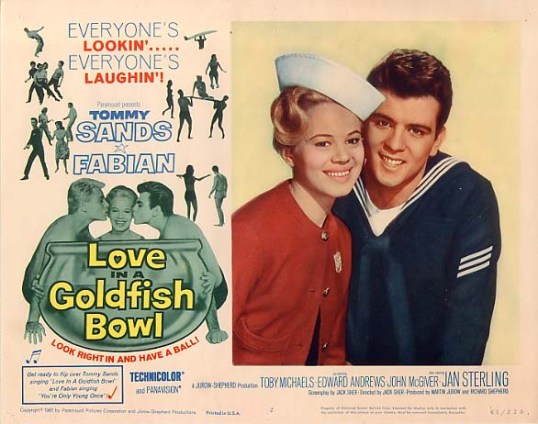
Spring Breakdown: Love In A Goldfish Bowl (dir by Jack Sher)


The 1961 film, Love in a Goldfish Bowl, tells the story of two college students.

Gordon Slide (Tommy Sands) and Blythe Holloway (Toby Michaels) are best friends.  Their relationship is strictly platonic, though everyone at the college assumes that they’re more than just friends.  Gordon and Blythe both share the common bond of coming from broken but wealthy families and they both want to do something more with their lives than just following the rules.  Blythe is a good student, the daughter of a senator.  Gordon is styles himself as being a cynic, or at least what was considered to be a cynic by the standards of 1961.  (James Dean would have probably called him a phony.)  The school’s headmaster (John McGiver) suspects that 1) Gordon and Blythe are more than just friends and 2) that Gordon is a bad influence on Blythe.  He even orders them to stop seeing each other, which I guess is something that headmasters could get away with in 1961.

Still, it’s going to take more than some stuffy authority figure to keep Gordon and Blythe for enjoying their Spring Break!  Especially when Gordon’s mother happens to own a beach house, which would be the perfect place for the two of them to hang out.  Despite knowing that each of their parent probably wouldn’t approve of them spending the break together, Gordon and Blythe decide to do just that.  Blythe even gets permission for her father, albeit by duplicitous means.  (Gordon imitates the headmaster on the phone.  Wow, that wild and crazy Gordon.)

At first, the beach house seems like the perfect place for Gordon and Blythe to unwind.  But when they meet Giuseppe La Barba (Fabian Forte), things start to change.  A member of the Coast Guard, Giuseppe plots to steal Blythe away from Gordon, with his schemes causing Gordon and Blythe to reconsider their feelings for each other.

Considering that this film is 60 years old, it’s perhaps not surprising that Love In A Goldfish Bowl often feels like it’s a rusty time capsule that someone buried in the sand on a California beach.  Everything from the intrusive headmaster to the scandal of divorce to the domestic routine that both Gordon and Blythe naturally slip into as soon as they arrive at the beach house makes this film feel almost as if it comes from another planet.  While the film is critical of adults who don’t understand what it’s like to be young and idealistic, it also ultimately ends with the suggestion that the adults might not be so clueless themselves.  It’s a bit of a wishy-washy approach to what little conflict the film has to offer up.

My point here is that Love In A Goldfish Bowl is an amazingly innocent little film, the type of Spring Break movie that would cause even your grandma to say, “Those kids really need to loosen up and live a little.”  Usually, I kind of like time capsule films like this, just because I’m a history nerd and I’m always interested in seeing how people used to live and communicate.  Unfortunately, Love In A Goldfish Bowl is a remarkably slow 88 minutes and neither Tommy Sands nor Toby Michaels have enough chemistry to be interesting as friends, let alone as a chaste couple waiting for their wedding night.  Fabian has a little bit more screen presence than Tommy Sands but overall, this is a pretty bland affair.

Ultimately, this film is mostly interesting as an example of what beach movies were like before AIP reinvented the genre with the Frankie and Annette beach party films.  Thank goodness people finally learned how to celebrate being young and on the beach.

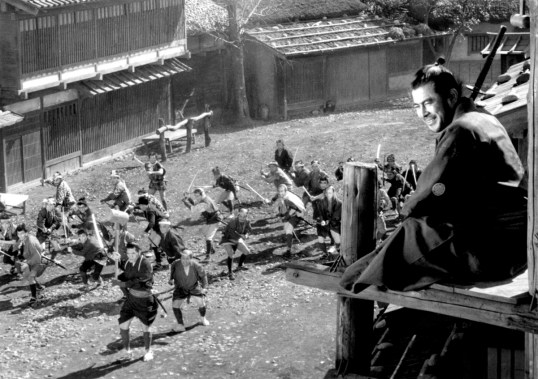
Scene that I Love: The Finale of Akira Kurosawa’s Yojimbo


Yojimbo (1961, directed by Akira Kurosawa)

The great filmmaker, Akira Kurosawa, was born 111 years ago today, in Tokyo.  Kurosawa would go on to become one of the most influential directors of all time, making 30 films over a career that lasted 57 years.  Though Kurosawa is often cited as an influence on westerns (Seven Samurai became The Magnificent Seven, Yojimbo inspired Serigo Leone to create The Man With No Name), Kurosawa’s influence goes for beyond just one genre.  He directed action films.  He directed gangster films.  He directed social problem films.  He directed historical epics.  Kurosawa taught an entire generation of future film film directors the language of cinema.

In honor of the anniversary of Akira Kurosawa’s birth, here is a scene that we all love from his 1961 masterpiece, Yojimbo.  Playing the lead role of the lone swordsman is, of course, Kurosawa’s frequent star, Toshiro Mifune.