Film Review: In The Line of Fire (dir by Wolfgang Petersen)


Earlier today, it was announced that director Wolfgang Petersen had passed away.  He was 81 years old and had been suffering from pancreatic cancer.  Though Petersen started his career making films in his native Germany (and his 1981 film, Das Boot, remains the most Oscar-nominated German film of all time), Petersen eventually relocated to Los Angeles and established himself as a very successful director of thrillers and star-filled action films.

Last month, I watched one of Petersen’s films.  First released in 1993, In The Line of Fire stars Clint Eastwood as Frank Horrigan.  Frank is a veteran member of the Secret Service, still serving at a time when almost all of his colleagues have either retired or died.  When we first meet Frank, he and his new partner, Al (Dylan McDermott), are arresting a gang of counterfeiters and Frank (and the then 63 year-old Eastwood) is proving that he can still take down the bad guys.

But is Frank still up to protecting the President?  Of the agents that were with President Kennedy when he was assassinated in 1963, Frank Horrigan is the last one standing.  He’s the only active secret service agent to have lost a president and he’s haunted by what he sees as being his failure to do his job and the feeling that America has never recovered from Kennedy’s death.  Also obsessed with Frank’s history is a mysterious man who calls himself Booth.  Booth (played by John Malkovich, who received an Oscar nomination for his performance) starts to call Frank.  He informs Frank that he’s planning on assassinating the president, who is currently traveling the country as a part of his reelection bid.  Booth views Frank as being a worthy adversary and Frank, looking for redemption, requests to be returned to the Presidential Protective Division.

While Frank struggles to keep up with both the President and the younger agents, Booth slowly and methodically puts his plan in motion.  He builds his own wooden gun and tries it out on two hunters who are unfortunate enough to stumble across him.  Making a heart-breaking impression in a small role, Patrika Darbo plays the bank teller who, unfortunately, comes a bit too close to uncovering Booth’s secret identity.  Booth is friendly and sometimes apologetic and he quickly shows that he’s willing to kill anyone.  It’s a testament to both the skill of Malkovich’s performance and Petersen’s direction that the audience comes to believe that there’s a better than average chance that Booth will succeed.  He just seems to have such a strong belief in himself that the audience knows that he’s either going to kill the President or that he’s going to willingly die trying.

Meanwhile, no one believes in Frank.  The White House Chief of Staff (Fred Dalton Thompson, later to serve in the Senate and run for President himself) views Frank as being a nuisance.  The head of the detail (Gary Cole) thinks that Frank should be put out to pasture.  Only Lilly Raines (Rene Russo), another agent, seems to have much faith in Frank.  While Frank is hunting Booth, he falls in love with Lilly and she with him.  (Fortunately, even at the age of 63, Eastwood still had enough of his old Dirty Harry charisma that the film’s love story is credible, despite the age difference between him and Russo.)  The hunt for Booth reawakens something in Frank.  Just as Booth has a psychological need to be pursued and challenged, Frank needs an enemy to which he can re-direct all of his guilt and self-loathing.  Frank becomes a stand-in for everyone who fears that, because of one particular incident or tragedy, America will never regain the strength and promise that it once had.  (In Frank’s case, that strength is symbolized by his idealized memories of JFK.)  Defeating Booth is about more than just saving America.  It’s about redeeming history.

It all makes for an very exciting thriller, one in which Eastwood’s taciturn style of acting is perfectly matched with Malkovich’s more cerebral approach.  Just as the two characters are challenging each other, Eastwood and Malkovich also seem to challenge each other as actors and it leads to both men giving wonderful performances.  Wolfgang Petersen not only does a good job with the action scenes but also with generating some very real suspense.  The scene in which Malkovich attempts to assemble his gun under a table is a masterclass in directing and evidence that Petersen had not only watched Hitchcock’s films but learned from them as well.

As directed by Petersen and performed by Malkovich and Eastwood, In The Line of Fire emerges as a film that was more than just an exciting thriller.  It was also a mediation on aging, guilt, love, redemption, and the national traumas of the past.  It’s a film that stands up to multiple rewatches and as a testament to the talent of the man who directed it.


4 Shots From 4 Films: Special Nicolas Roeg Edition


4 Or More Shots From 4 Or More Films is just what it says it is, 4 shots from 4 of our favorite films. As opposed to the reviews and recaps that we usually post, 4 Shots From 4 Films lets the visuals do the talking!

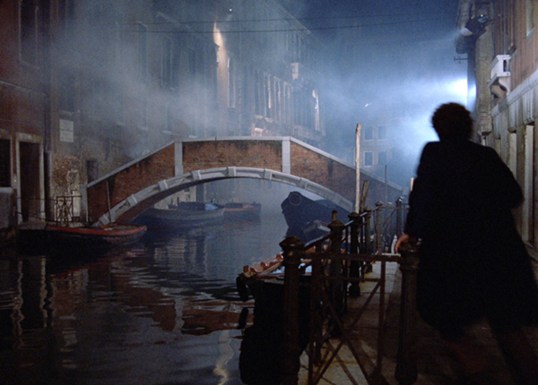
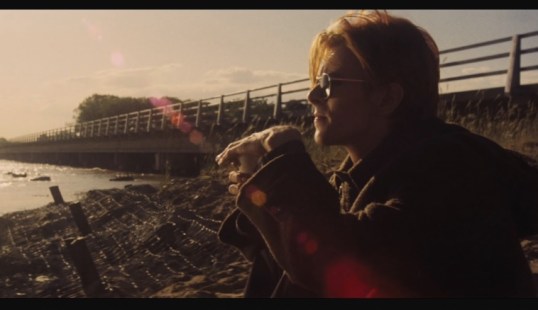
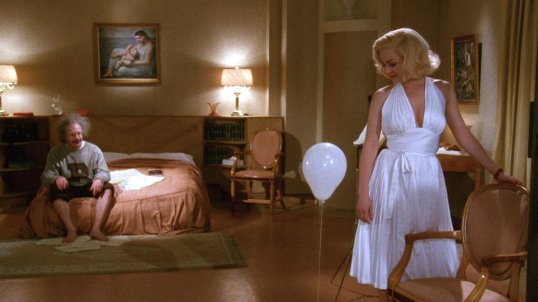
Today would have been the 94th birthday of the great and enigmatic director, Nicolas Roeg.  As both a cinematographer and a director, Roeg was responsible for some of the most visually striking films ever made.  Today, we honor his legacy with….

4 Shots From 4 Nicolas Roeg Films

Walkabout (1971, dir by Nicolas Roeg, DP: Nicolas Roeg)

Don’t Look Now (1973, dir by Nicolas Roeg, DP: Anthony Richmond)

The Man Who Fell To Earth (1976, dir by Nicholas Roeg, DP: Anthony Richmond)

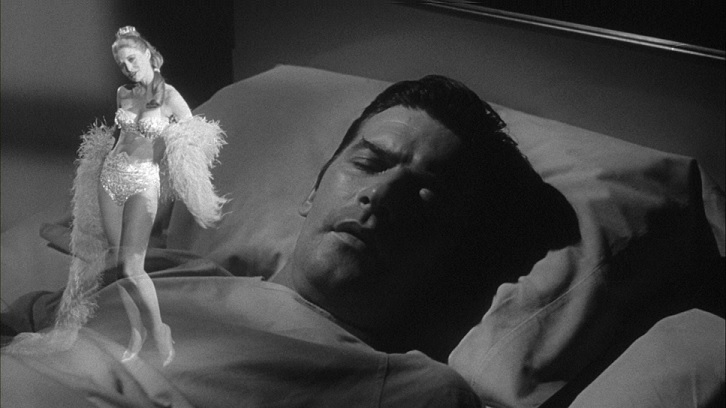
Insignificance (1985, dir by Nicolas Roeg, DP: Peter Hannan)

Live Tweet Alert: Come Watch Steele Justice With #MondayActionMovie


As some of our regular readers undoubtedly know, I am involved in a few weekly live tweets on twitter.  I host #FridayNightFlix every Friday, I co-host #ScarySocial on Saturday, and I am one of the five hosts of #MondayActionMovie!  Every week, we get together.  We watch a movie.  We tweet our way through it.

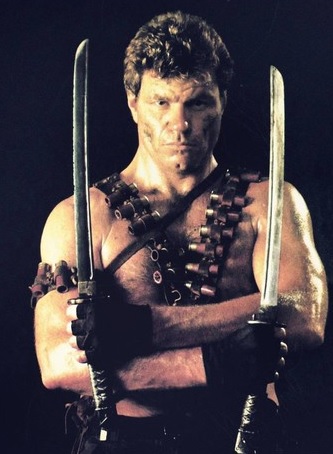
Tonight, for #MondayActionMovie, we are watching Steele Justice!  Selected and hosted by @Bunnyhero, Steele Justice features the one and only Martin Kove as John Steele!  According to the film’s poster, “you don’t recruit him, you unleash him!”  Also according to the poster, John Steele has been unleashed to take on the Vietnamese mafia.  The film co-stars Sela Ward and Ronny Cox.  That means that the film features at least three actors who have appeared in films nominated for Best Picture!  So, it has to be good, right?  

That’s really all I know about Steele Justice.  I plan to find out more tonight and I invite you to join me.  If you want to join us, just hop onto twitter, start the film at 8 pm et, and use the #MondayActionMovie hashtag!  I’ll be there tweeting and I imagine some other members of the TSL Crew will be there as well.  It’s a friendly group and welcoming of newcomers so don’t be shy.  And a review of this film will probably end up on this site at some point this week.

Enjoy!

6 Shots From 6 Films: Special Wim Wenders Edition


4 Or More Shots From 4 Or More Films is just what it says it is, 4 shots from 4 of our favorite films. As opposed to the reviews and recaps that we usually post, 4 Shots From 4 Films lets the visuals do the talking!

Today, the Shattered Lens wishes a happy 77th birthday to the great German director, Wim Wenders!  It’s time for….

6 Shots From 6 Wim Wenders Films

Kings of the Road (1976, dir by Wim Wenders, DP: Robby Muller)

The American Friend (1976, dir by Wim Wenders, DP: Robby Muller)

Paris, Texas (1984, dir by Wim Wenders, DP: Robby Muller)

Wings of Desire (1987, dir by Wim Wenders, DP: Robby Muller)

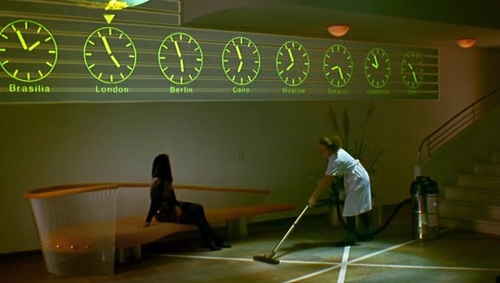
Until the End of the World (1991, dir by Wim Wenders, DP: Robby Muller)

Pina (2011, dir by Wim Wenders)


Scenes I Love: Steve Martin performs Maxwell’s Silver Hammer in Sgt. Pepper’s Lonely Hearts Club Band


Today, the Shattered Lens wishes actor and comedian Steve Martin a happy 77th birthday.  Originally from Texas, Martin has been a cultural mainstay for longer than I’ve been alive.  He’s a master of both comedy and drama, as anyone who has watched Only Murders In The Building can tell you.

And he can sing too!

Here he is, performing Maxwell’s Silver Hammer in 1978’s Sgt. Pepper’s Lonely Hearts Club Band.  Though this was not Martin’s film debut, it was his first “big” role.  Steve Martin was 33 years old here.  Remarkably, he only seems to have aged a few years in the decades since appearing in this film.

Happy birthday, Steve Martin!

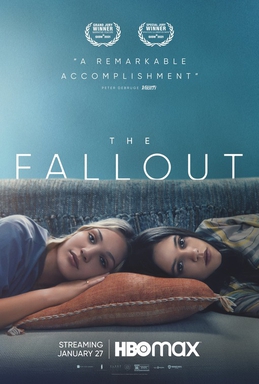
Film Review: The Fallout (dir by Megan Park)


The Fallout, which premiered on HBOMax way back in January, opens with a scene of a sandwich being made.  It’s a peanut butter sandwich but the person making it is putting way too much peanut butter on the bread.  The kitchen counter is a mess.  The knife looks dirty.  To be honest, it’s kind of sickening to watch.

No, the film is not about the sandwich.  In fact, the sandwich never appears again.  But I have to admit that sandwich represents the entire film to me.  That scene, I think, is meant to tell us that we’re watching a film about real people and sometimes, real people prepare disgusting food in a cluttered kitchen.  And that’s true.  Then again, sometimes they don’t and that’s something that some filmmakers don’t want to acknowledge.  Indeed, there’s something rather condescending about the cinematic belief that being authentic is the equivalent of being a slob.  It’s an interesting phenomena how a film can try so hard to be “real” that it instead becomes the opposite.

The Fallout certainly deals with an important subject.  Vada Cavell (Jenna Ortega) goes to high school on a day like any other day and, without warning, finds herself in the middle of a school shooting.  The shooting itself is handled well.  We don’t see the shooter nor do we learn anything about him.  We just hear the gunshots while Vada, Mia Reed (Maddie Ziegler — yes, of Dance Moms fame), and Quinton (Niles Fitch) hide in a bathroom stall.  It’s a terrifying scene and it immediately reminded me of what it was like when I was in high school and I would see stories about school shootings and wonder if my school was going to be next.

The rest of the film deals with the emotional, political, and mental fallout of the shooting.  Quinton struggles with the death of his brother.  Vada’s best friend, Nick (Will Ropp), becomes a self-righteous David Hogg type.  And Vada starts spending all of her time with Mia, a dancer and influencer whose Dads are in Europe and apparently can’t even be bothered to come back to the States even after their daughter is involved in a school shooting.  Vada, who has a total crush on Mia, starts hanging out at Mia’s mansion.  Mia is happy to finally have a friend that she can talk to, even if Vada is kind of annoying.

(The whole thing with the Dads being in Europe and Mia living alone in her mansion feels a bit too convenient, to be honest.)

The film is dealing with important issues, which is one reason why it’s gotten so many good reviews.  This is one of those films that many people feel obligated to like because otherwise, they might run the risk of being told that they don’t care about school shootings.  But, honestly, the film doesn’t really have that much to say.  It hits all of the expected beats and, as much as the film tries to make everything messy and real, it often seems like it’s trying too hard.  Of course, Vada is going to use drugs to get through her first day back at school.  Of course, Vada’s father is going to encourage her to shout out her frustrations at the top of her lungs.  Of course, Vada’s mother is going to be remote and controlling.  Of course, her little sister is going to have a breakdown.  Of course, her best friend is going to get mad at her for not wanting to get involved with his nascent political career.  Of course, there’s going to be an absolutely cringey moment where Vada starts talking a mile a minute just because she smoked one joint.  To be honest, I’ve never seen anyone react to weed quite the way that Vada does.  She’s like the person who gets drunk off half a beer and then won’t stop talking.  It’s freaking annoying.  Throughout the film, there are occasional moments that work but, ultimately, it’s never quite as insightful as it obviously believes itself to be.

Jenna Ortega does give a good performance as Vada.  As written, the character is often annoying but, then again, the same can be said of most people and one can only imagine what Vada would have been like without Ortega’s likable screen presence.  The film is pretty much stolen, though, by Maddie Ziegler.  Ziegler reveals the lonely reality behind the influencer façade.  Since Ziegler is herself a dancer and an influencer, she brings a lot of her own persona to Mia but, at the same time, she also makes Mia into a believable character who has a life and an existence that’s separate from the actress playing her.  After The Book of Henry and Music, The Fallout actually gives Ziegler a chance to prove that she can act as well as she can dance.

As opposed to Gus Van Sant’s Elephant or Fran Kranz’s Mass, which both that the courage to acknowledge that violence and its consequences can never be truly understood or easily defined, The Fallout tries too hard to find definitive meaning in an incomprehensible tragedy.  For all of its good intentions and its attempts to be realistic, there’s a shallowness at the heart of The Fallout that keeps it from working.

6 Shots From 6 Films: Special Alfred Hitchcock Edition


4 Or More Shots From 4 Or More Films is just what it says it is, 4 shots from 4 of our favorite films. As opposed to the reviews and recaps that we usually post, 4 Shots From 4 Films lets the visuals do the talking!

123 years ago, the master of suspense was born in England.  Today, we honor the career and legacy of the great Alfred Hitchock with….

6 Shots From 6 Alfred Hitchcock Films

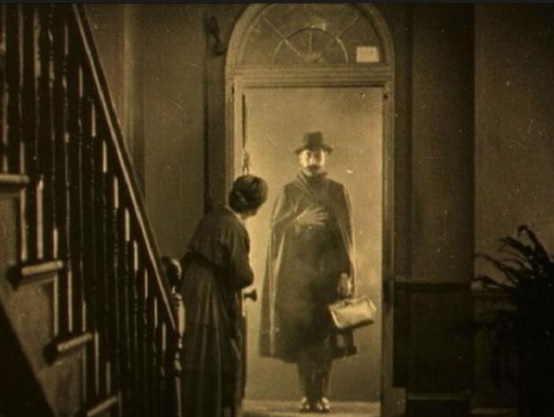
The Lodger (1926, dir by Alfred Hitchcock, DP:Gaetano di Ventimiglia )

Shadow of a Doubt (1943, directed by Alfred Hitchcock, DP: Joseph A. Valentine)

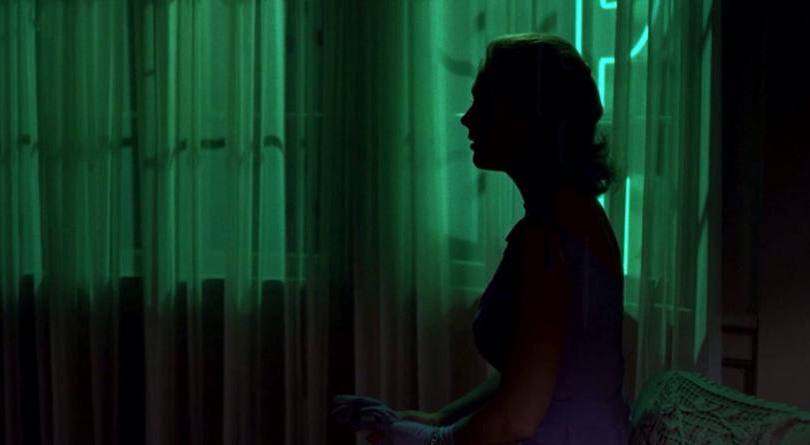
Vertigo (1958, dir by Alfred Hitchcock, DP: Robert Burks)

North by Northwest (1959, dir by Alfred Hitchcock, DP: Robert Burks)

Psycho (1960, dir by Alfred Hitchcock, DP: John L. Russell)

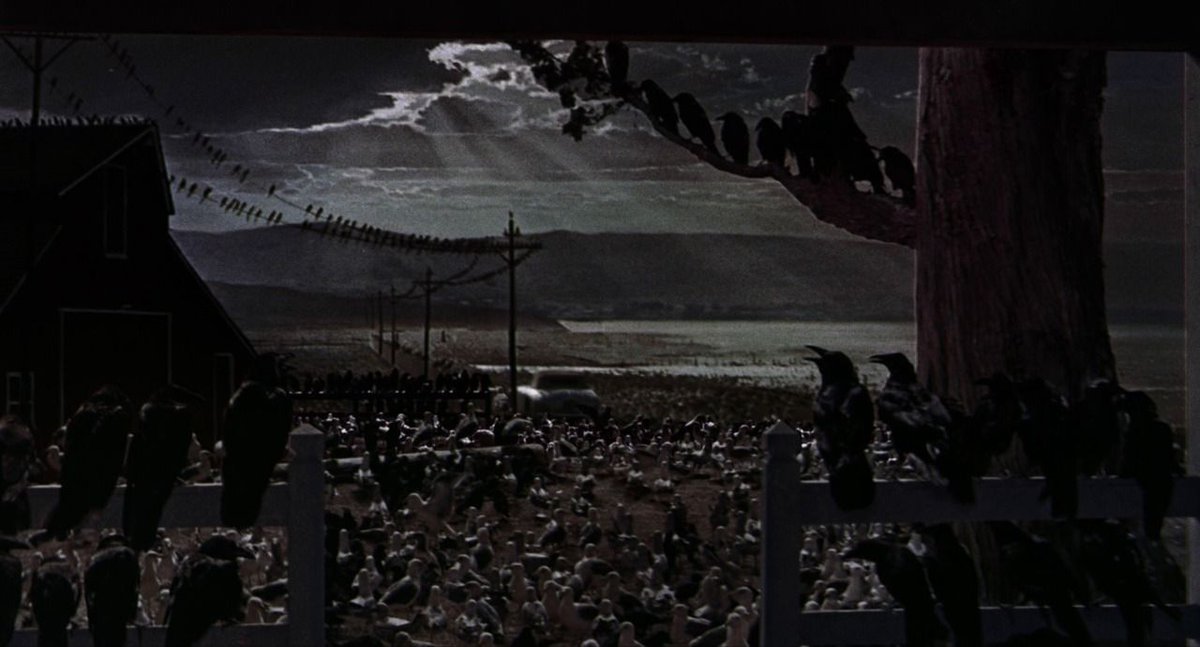
The Birds (1963, dir by Alfred Hitchcock, DP: Robert Burks)

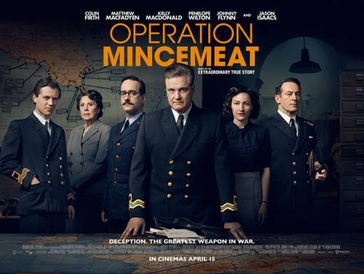
Film Review: Operation Mincemeat (dir by John Madden)


Based on a true story, Operation Mincemeat takes place in 1943, during the second World War.  The British are planning an invasion of Sicily, both to break Hitler’s hold on Europe and to also knock Italy out of the war.  The problem is that the attack on Sicily makes so much strategic sense that the Germans have spent months preparing for it and, even if successful, the invasion will cost an untold number of British lives.  Somehow, British intelligence must trick the Germans into thinking that the British are planning to invade Greece instead.

With the help of Lt. Commander Ian Fleming (Johnny Flynn), Ewen Montagu (Colin Firth) and Charles Cholmondeley (Matthew McFayden) come up with the plan to fool the Germans.  A dead body will be disguised as a British officer.  The body will be transported, via submarine, to Spain, which was technically neutral during the war.  The body will wash up on shore and, when the body is examined, a note detailing Britain’s invasion of Greece will be discovered and passed along to the Germans.  Because the Germans have been fooled by a similar trick in the past, Montagu and Cholmondeley create a fake backstory for “Maj. William Martin” and soon start to think of him as being a someone who truly did live.  Joining them to create a life for Major Martin is Jean Leslie (Kelly MacDonald), a secretary in the office who volunteers a photo of herself to be placed in Martin’s wallet.

Of course, things get complicated.  While plotting out the operation, Jean starts to fall in love with Montagu, whose marriage is currently strained by Montagu’s obsession with his work.  (Because he knows what will happen to a Jewish family in the UK if Germany invades, Montagu has sent his wife and his children to the U.S.)  Cholomondeley is in love with Jean and soon finds himself growing jealous of the man that he’s been assigned to work with.  Meanwhile, the head of British Intelligence (Jason Isaacs) wants to investigate Montagu’s brother for being a communist.  As for Ian Fleming, he keeps himself busy by writing a book.  In fact, so many members of British Intelligence are identified as being aspiring novelists that it becomes a bit of a running joke.

I have always appreciated a good World War II film and I enjoyed Operation Mincemeat.  It’s a bit of an old-fashioned film, of course.  The F-word is used exactly once (which makes this a rarity amongst modern British films) and there’s one scene in which a member of British intelligence discreetly gives an informant a handjob in return for information.  Otherwise, this is pretty much a film that you could safely show your grandma without having to worry about her getting depressed over how much movies have changed since her day.  Old-fashioned or not, it’s a well-made film, full of good performances and sharp dialogue.  It’s not a flashy film but it’s very nicely put together and it’s hard not to admire the craftsmanship responsible for it.  Operation Mincemeat is all the more interesting for being, more or less, true.  While the love triangle was invented for the film, it is true that Ian Fleming was a part of Operation Mincemeat and the film’s use of him as a character works surprisingly well.  The scene where a young Fleming tours the World War II version of Q Branch provides some nice comic relief, particularly when Flemings comes across a wristwatch that doubles as a mini-saw.

What elevates Operation Mincemeat is its theme of loss.  Almost all of the major characters have lost someone or something to the war.  Jean Leslie is a widow.  Cholomendely’s brother was killed in action and his body is still in Europe.  Montagu has had to send his family away for their own safety.  For them, the Major Martin becomes a stand-in for all of the people that they’ve lost.  The effort to make Martin into a real person allows all of them one final chance to honor their loved ones.  Major Martin becomes a stand-in for all British soldiers and civilians who sacrificed their lives to battle Hitler’s war machine.  Operation Mincemeat becomes about more than just fooling the Germans.  It becomes about being worthy of the sacrifice that it took to defeat them.

As is shown in the film, the real Major Martin was a vagrant named Glyndwr Michael, who died after eating rat poison.  The film suggests that Michael deliberately killed himself but no one will ever know for sure what led to him eating that poison.  After his death, he was given the uniform of a British officer and his pockets were filled with things that would identify him as being Major William Martin.  Though he never knew it, Glyndwr Michael become one of the greatest heroes of World War II.  Operation Mincemeat serves a worthy tribute to both Glyndwr Michael and Major William Martin.

Scenes That I Love: Norma Desmond visits Cecil B. DeMille in Sunset Boulevard


Today, the Shattered Lens observes the 141st birthday of filmmaker Cecil B. DeMille.

Today, if Cecil B. DeMille is known at all, it’s for directing Biblical epics like The Ten Commandments.  However, there was much more to DeMille’s career than just that one film.  DeMille got his start during the early silent era and he quickly established himself as one of Hollywood’s first superstar directors.  Unlike many of his contemporaries, he survived the transition to sound and he remained a force in Hollywood at a time when many of the other silent directors were fading into obscurity.  DeMille played a key role in the founding of what would become the American film industry.  He began his career in 1914 and he made his last film in 1958.  That’s quite a legacy.

In 1950, when filming Sunset Boulevard, Billy Wilder needed someone to play the key role of one of Norma Desmond’s former directors.  Who better to represent the old style of Hollywood than Cecil B. DeMille?  In the scene below, DeMille plays himself.  Norma Desmond is, of course, played by Gloria Swanson, an actress whom DeMille had directed in the past.

From Sunset Boulevard, here’s a scene that I love.

4 Shots From 4 Films: Special Sam Fuller Edition


4 Or More Shots From 4 Or More Films is just what it says it is, 4 shots from 4 of our favorite films. As opposed to the reviews and recaps that we usually post, 4 Shots From 4 Films lets the visuals do the talking!

On this date, 110 years ago, Samuel Fuller was born in Massachusetts.  Before he became a filmmaker, Fuller was a crime reporter and a pulp novelist.  His films were often melodramatic and unapologetically sordid.  They were also often dismissed when they were initially released but almost all of them were subsequently rediscovered by audiences who appreciated Fuller’s striking visuals and the often subversive subtext to be found underneath the surface of his genre films.

Today, we celebrate Fuller’s legacy with….

4 Shots From 4 Sam Fuller Films

Pickup on South Street (1953, dir by Samuel Fuller, DP: Joseph MacDonald)

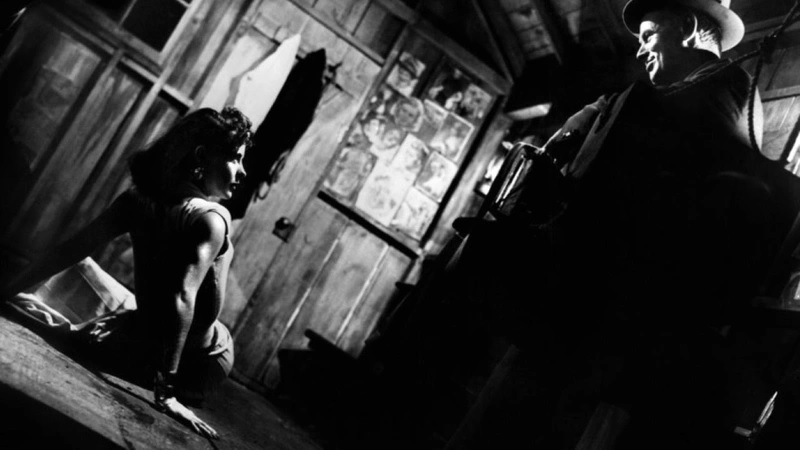
Shock Corridor (1963, dir by Samuel Fuller, DP: Stanley Cortez)

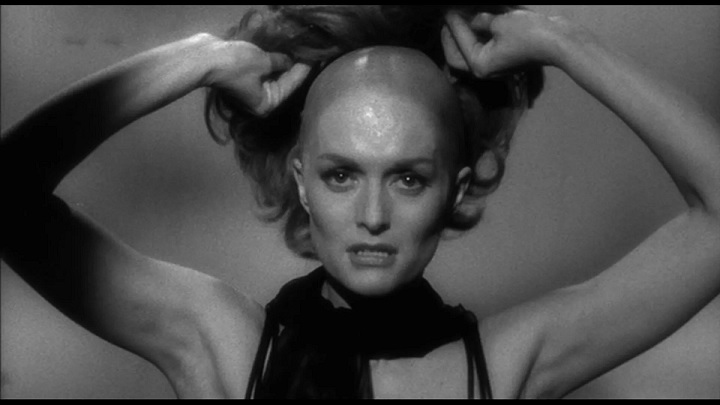
The Naked Kiss (1964, dir by Samuel Fuller, DP: Stanley Cortez)

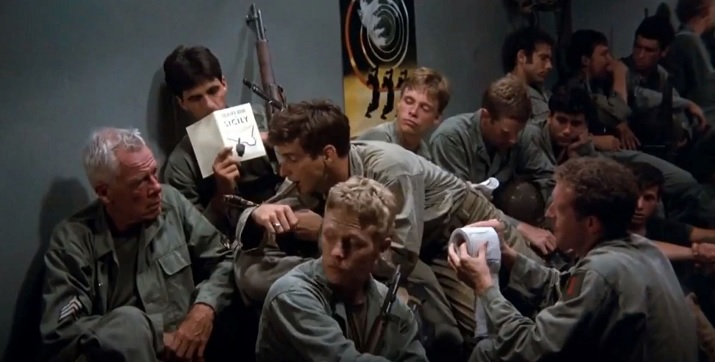
The Big Red One (1980, dir by Samuel Fuller, DP: Adam Greenberg)