Film Review: Martha Marcy May Marlene (directed by Sean Durkin)


Martha Marcy May Marlene was, for me, one of the most surprising films of 2011.  I wasn’t expecting much when I went to see it because so much of the film’s publicity centered on the fact that it starred Elizabeth Olsen, the younger sister of the Olsen Twins.  Needless to say, we don’t usually associate the Olsen Twins with challenging and mature filmmaking and, even though they had nothing to do with Martha Marcy May Marlene, it was impossible to read or hear about the film without them being mentioned.  For a lot of people, this led to Martha Marcy May Marlene being dismissed by association.  That’s really not fair to the film or Elizabeth Olsen (or the Olsen Twins, for that matter).  Martha Marcy May Marlene is a haunting and disturbing little psychological thriller and one of the best films of 2011.

Olsen plays Martha, a young woman who, one day, shows up at the home of her older sister and her husband (played by Sarah Paulson and Hugh Dancy).  Though the film never gets into the specific details, it becomes apparent that Paulson and Olsen are the products of a dysfunctional background.  Olsen escaped by running away from home while Paulson found her exit by marrying the rather arrogant Dancy.  Hoping to repair their own strained relationship, Paulson agrees to let Olsen stay with them, despite both the objections of Dancy and Olsen’s refusal to say where she’s been.  No sooner has Olsen moved in then it starts to become apparent that she’s not the same person that Paulson remembers. When Paulson asks Olsen if she wants to take a swim in the nearby lake, Olsen responds by stripping off her clothes in front of Dancy and when Paulson and Dancy are trying to conceive their first child, Olsen sees nothing wrong with casually walking into the room and laying down on the bed beside them.  More ominously, Olsen soon reveals herself to be paranoid of strangers.  As Paulson struggles to understand her sister, we see flashbacks of a much more open (and trusting) Olsen joining a cult-like group, led by a magnetic John Hawkes.

Director Sean Durkin makes an assured debut with this film, subtly shifting between the present and the past and filling the screen with beautifully placid images that somehow manage to leave the audience with an unshakeable sense of menace and foreboding.  As a storyteller, Durkin keeps the audience guessing and wondering about both who Martha once was, who she eventually became, and who she’s going to be in the future.  Wisely Durkin doesn’t provide any easy solutions as much as he poses questions and then suggests a possible answer. 

If you’re like and you’re a true crime and/or exploitation junkie (I’m both), you’ll realize immediately that the character played by John Hawkes is pretty blatantly based on Charles Manson and his followers are the equivalent of Manson’s “family.”  What’s interesting is how Hawkes manages to keep his character both threatening and intriguing even after this become apparent.  Hawkes radiates such charisma in the beginning of the film that the scenes where he eventually reveals his true colors are shocking, despite the fact that you know they’re coming.  It’s a performance that proves that Hawkes is one of the best character actors working today and Durkin skillfully contrasts Hawkes’s more subtle form of domination with Hugh Dancy’s more obvious technique with the film ultimately suggesting that both of these patriarchal characters are just two sides of the same coin.

Ultimately, though, the film is dominated by Elizabeth Olsen who gives a performance that is simply brilliant.  Alternatively innocent and calculating, Martha is a fascinating character and Olsen brings her to haunting life.  As a result of Olsen’s brave performance, Martha Marcy May Marlene joins with Hanna and Shame as a great modern film about the search for identity.  This has been a year full of strong female performances and Olsen gives one of the strongest.  The next time some shyster tries to sell you on the idea that Rooney Mara is the actress of the future, tell them to go see Martha Marcy May Marlene.

A Quickie With Lisa Marie: Melancholia (dir. by Lars Von Trier)


Let us take a moment to consider the career of film director Lars Von Trier.  Is Von Trier a visionary?  Is he a genius?  Is he an artist who forces us to look at the world in a different way?  Is he one of the major voices working in the world of cinema today?  Or is he just full of crap?  This is the debate that always seems to come up whenever one talks about Lars Von Trier and a pretty good case can be made that the man is both a genius and an idiot, an artist and a charlatan.  How, we ask ourselves, do we reconcile the fact that this man who has directed so many memorable films is also the same man who goes to Cannes and hints that he might be sympathetic to Hitler.  As a result, Von Trier’s films seem to act as both aesthetic statements and as evidence in the never-ending trial to determine whether or not Lars Von Trier is worth all the trouble.  Melancholia — which is currently both playing at theaters and available OnDemand — is the latest exhibit in a long trial.

Melancholia is both the story of the relationship of two sisters (played by Charlotte Gainsbourg and Kirsten Dunst, who deservedly won best actress at Cannes for her performance here) and the story of what happens when a new planet called Melancholia appears in the sky and then promptly starts to move closer to the Earth.

The film is divided into two parts.  The first part takes place over the course of one long night.  Justine (Dunst) and her new husband Michael (Alexander Skarsgard who looks so amazing in a tux) attend a wedding reception at a mansion owned by Justine sister Clare (Gainsbourg) and Clare’s well-meaning but condescending husband John (Kiefer Sutherland).  While Justine and Michael, at first, appear to be the perfect couple, it slowly becomes apparent that the truth is far more complex.  The first part of the film takes its time establishing the characters and how they relate to each other but it never drags, largely because of the chemistry between Dunst and Skarsgard but also because Von Trier proves himself to be far more subtle director here than he’s usually given credit for being.  The first half of the film is full of details — some small and some not — that make us believe that these very familiar actors actually are the characters that they are portraying.  While Von Trier never explicitly show us what’s at the heart of Skarsgard and Dunst’s trouble relationship, he includes enough details that we, as the viewer, can figure it out.  Under Von Trier’s skilled direction, even such little things as Dunst’s constant struggle to keep her dress up take on an added and poignant significance.

In the second half of the film, a depressed Dunst is now living in the mansion with Gainsbourgh and Sutherland.  Despite the fact that Dunst is nearly catatonic, Sutherland has little sympathy for her and makes no secret of the fact that he’s not happy to have her living in his home.  However, things change rather quickly once it is learned that the new planet Melancholia is on a collision course with Earth.  While Sutherland insists that the two planets will not actually collide and Gainsbourgh panics, Dunst starts to find herself oddly rejuvenated by the prospect that the world might end…

If you were dismissive of Von Trier before this movie came out, I doubt watching Melancholia will change your mind.  In many ways, this film epitomizes everything that people tend to hate about his movies.  However, I loved Melancholia.  Visually, it’s beautiful and the film student in me loved the film simply for the many homages to Last Year at Marienbad.  Von Trier gets excellent performance from the entire cast but really, this is Kristen Dunst’s film and she proves that she’s capable of a lot more than just being a Manic Pixie Dream Girl.  Speaking of someone who has battled depression all of her life, I have to say that Dunst gets it right, capturing not only the pain of permanent sadness but also the odd moments of clarity that seem to come with it.  Finally, this is a unique film and it’s unique because Von Trier is a director that’s not afraid to be an egocentric asshole when it comes to telling the story that he wants to tell. 

I could spend hours debating what exactly Melancholia means and I’d probably change my mind several times during the conversation.  However, one thing is for sure: Melancholia is one of the best of films of 2011.

Why Lisa Marie Wasn’t Going To Review David Fincher’s The Girl With The Dragon Tattoo


Originally, I wasn’t even going to write up a review of David Fincher’s rehash of The Girl With The Dragon Tattoo because, quite frankly, if you follow me on twitter or if you’ve read any of the GWTDT-related articles that I’ve written on the site, then you already knew that I was going to hate this film.  I knew I was going to hate it.  So, I figured — what’s the point of me repeating what you already know about how I feel? 

So, don’t call this a review because I’m certainly not going to.  This is just how I, as an individual viewer with my own oft-stated prejudices, reacted towards Fincher’s remake.  Take it for what it’s worth.

I knew that I would hate this film because I so loved the Swedish original and, unlike the people who write for sites like AwardsDaily.com, I am willing to be open and honest about my prejudices.  AwardsDaily.com is one of the many sites that decided that the remake would be one of the best films of the year solely because it was being directed by David Fincher and, in their eyes, Fincher can do no wrong.  These are the folks who declared that Rooney Mara was going to give the performance of the year before even seeing the film.  Why?  Once again, the key is Fincher. 

See, that’s the dirty little secret about most film reviewers and cinematic bloggers.  For the most part, they don’t so much critically review a film as they just jump on the bandwagon.  Right now, the bandwagon says that you must love Fincher and, by God, that means you’re going to love Fincher even if the last truly challenging film he made was Zodiac.  To his credit, in interviews, David Fincher comes across as being a lot more level-headed and honest than those who are currently insisting that you must love every movie that he directs simply because he directed it.

Now, don’t get me wrong.  This is not an attack on David Fincher.  David Fincher is a talented director and his films are always watchable.  He’s a director who deserves to be seen and his version of The Girl With The Dragon Tattoo is certainly watchable but, at the same time, is it one of the best films of the year as so many of the Fincherites out there are currently declaring?

Not hardly.

If anything, this is David Fincher on auto-pilot.  This is Fincher being dark because that’s what Fincher does and not because of any sort of sincere artistic impulse on his part.  This is a well-directed film but it’s a dreadfully insincere one.  If you want to a sincerely dark film, see Zodiac.  If you want to see a film specifically designed to appeal to an audience that wants to brag about how brave they are for going to the movies, go see Fincher’s remake of Girl With The Dragon Tattoo.

The big question, of course, is who is the better Lisbeth — Rooney Mara or Noomi Rapace.  Ever since Fincher was first announced as the director of this film, there has been a steady conspiracy to 1) shove Rooney Mara down our collective throats and 2) make us forget that it was Noomi Rapace that made the original film special and that she was truly the only reason to see the two sequels.  At times, the conspiracy was almost ludicrously obvious.  For instance, as soon as Mara was cast in the role, the editors of AwardsDaily.com suddenly decided that Mara was a lock to get a best supporting actress nomination for The Social Network.  Because, the bandwagon logic went, she had to be the greatest actress of her generation or else why would Fincher pick her?

Well, you know what?  Rooney Mara does fine playing a girl who happens to have a dragon tattoo but she’s not Lisbeth Salander.  She is a male fantasy, a tough girl who needs a man to come through for her.  Rapace’s Lisbeth was a true outsider.  Mara is a little girl lost and all of you Fincherites out there can watch her and fantasize about rescuing her.  Rapace’s Libseth was almost defiantly  asexual.  Mara looks at the camera and silently asks the male viewer to guess what she looks like without all those piercings.  The difference between the two Lisbeths is that Rapace truly doesn’t need a man but Mara is secretly begging to be rescued.  One of the strongest and most independent female characters in film history has been reinterpreted as a male fantasy.  They should have just called this film The Girl With Rooney Mara’s Face.

I suppose that makes the film easier for patriarchal American audiences to swallow.  Perhaps that explains why the audience I was with found it so hilarious when Mara got raped.  Nobody laughed when Rapace got raped but then again, that’s because the rape in the original film was a true violation where the rape in Fincher’s version is just further fuel for male fantasies.

As for the rest of the cast — well, can we just be honest and admit that Daniel Craig isn’t that interesting of an actor?  His version of Mikael is certainly a lot more aggressive than the character is portrayed in either the books or the original movie.  Then again, Daniel Craig’s a big star.  Daniel Craig is James Bond.  You can’t just expect Daniel Craig to play passive.  Daniel Craig’s the man, after all.  As for Stellan Skarsgard and Christopher Plummer — they’re both great actors but how many times they are going to keep playing the exact same freaking characters?

Ultimately, the only real reason for Fincher’s film to exist is so American audiences can watch the story of Libseth Salander without having to read subtitles.

Enjoy it, America!

As I said before, this isn’t a proper review of the film because I’m prejudiced and you know what — if you didn’t enjoy the original Swedish films, you might love Fincher’s remake and more power to you.  You are free to sincerely disagree with me and I will not hold that against you as long as you’re not a condescending toadsucker about it.

A Quickie With Lisa Marie: The Adventures of TinTin (dir. by Steven Spielberg)


Originally, this was supposed to be the year of Steven Spielberg.  After all, Spielberg had two major films open within days of each other and, earlier this year, various know-it-all pundits declared that both of these films (along with David Fincher’s dumbed down version of Girl With The Dragon Tattoo) would be major awards contenders.  This was, of course, before films like Hanna, The Artist, Drive, and The Tree Of Life came out and made Spielberg’s trademark suburban cinematic vision seem almost quaint.  Spielberg’s two films — The Adventures of TinTin and War Horse — both very much remain in the hunt for nominations but few seem to be expecting them to actually win anything.  Oddly enough, it’s as if Spielberg’s films somehow went from being overrated to underrated before they were even released.

I haven’t seen War Horse yet (and the commercials don’t fill me with hope) but, in the case of TinTin, this is unfortunate because I saw the film on Friday and it’s a perfectly enjoyable animated film that, while never reaching the intertextual heights of Rango or matching the “awww” factor of Puss in Boots , is still a bit more memorable than Pixar’s Cars 2.  Based on a Belgian comic book, (which I had never heard of before so don’t expect me to get into the whole debate about whether Spielberg does the original justice) The Adventures of TinTin is about a “boy reporter” named TinTin (voiced by the always likable Jamie Bell) who, along with his adorable dog Snowy, ends up going on a quest for lost treasure.  The film plays out like an old-fashioned adventure film with TinTin and Snowy’s quest taking them from one exotic locale to another.  Continually, they find themselves getting captured by various bad guys and having to escape in some properly exciting manner.  Along with the way, they meet an alcoholic sea captain (voiced by Andy Serkis) and a whole variety of flamboyant characters.  My favorite characters were the two well-meaning but inept police detectives, Thompson and Thompson.  Thompson and Thompson are voiced by Simon Pegg and Nick Frost and the two of them have so much chemistry and play off each other so well that they’re even fun to just listen to.

When I saw The Adventures of TinTin, I was sincerely surprised by how quickly the film moved.  Usually, I find that the majority of Spielberg films tend to drag in the middle.  Whenever there’s nothing to blow up or an excuse to fill the scene with soaring music conducted by John Williams, Spielberg seems to lose his way as a filmmaker and can almost seem desperate in his attempts to convince us that he’s a serious artist.  However, it almost seemed as if The Adventures of TinTin was over before it even started.  This is not a film that drags but instead one that cheerfully leaps from one action sequence to another.  It’s as if working on an animated film freed Spielberg up from his inherent need to remind us that he’s a respectable filmmaker.  For once, he’s willing to just have fun without trying to justify it.  Since I was seeing the film with two hyperactive children (my nephew who is five and my niece who is three), I was happy and relieved that the film didn’t have any slow spots.  The movie, as a matter of fact, held their attention better than it held mine and all three of us loved Snowy.  An important lesson for all aspiring filmmakers: If you’re ever in doubt, always cut to a small animal doing something cute.

Ultimately, TinTin is an enjoyable little film that really doesn’t add up too much.  This isn’t another Toy Story 3 or a How To Train Your Dragon.  This is not a film to bring tears to your eyes but it’s enjoyable enough and it’s a rare Spielberg film that seems to be unashamed of simply being message-free entertainment.

Happy Holidays From The Shattered Lens (And Especially Lisa and Erin!)


Hi, everyone!  Now, I know that some of you may be saying, “It’s Saturday.  Where are the trailers, Ms. Bowman?”  Well, rest assured, a new entry in Lisa Marie’s Favorite Grindhouse and Exploitation Trailers will be posted next week.  However, today, me and the one and only Dazzling Erin are in Ft. Worth, hanging out with our family and trying to get those final few presents wrapped before Christmas morning. 

(Luckily, we live in America and not Europe or else it already would be Christmas and then we’d really be in a spot.)

So, again, the trailers will resume next week.  For today, however, I’d rather share with you one of my favorite movie endings of all time.  Yes, you’ve seen it a hundred times and you might be watching it on TV right now.  But I don’t care.  The ending of It’s a Wonderful Life always brings a tear to my eye.

Happy Holidays!

Here are the 39 songs eligible for a Best Original Song nomination


Yesterday, the Academy announced that the following 39 films are eligible to nominated for the Oscar for Best Original Song of 2011.  Considering how the awards season has gone so far, I guess I shouldn’t be surprised that few of the songs that I truly enjoyed hearing this year are eligible.  Still, it is nice to see that Capt. America will have a chance to score a nomination for “Star-Spangled Man.”

Then again, it would also be nice to see something from The Muppets win because I’m sure Bret McKenzie would give a perfectly charming acceptance speech.

One final reaction to this list: there’s a movie called White Irish Drinkers?  

Yay!

  • “The World I Knew” from “African Cats”
  • “Lay Your Head Down” from “Albert Nobbs”
  • “Star Spangled Man” from “Captain America: The First Avenger”
  • “Collision of Worlds” from “Cars 2”
  • “Dakkanaga Dugu Dugu” from “DAM999”
  • “DAM999 Theme Song” from “DAM999”
  • “Mujhe Chod Ke” from “DAM999”
  • “Rainbird” from “Dirty Girl”
  • “Keep On Walking” from “The First Grader”
  • “Where the River Goes” from “Footloose”
  • “Hello Hello” from “Gnomeo & Juliet”
  • “Love Builds a Garden” from “Gnomeo & Juliet”
  • “Bridge of Light” from “Happy Feet Two”
  • “The Mighty Sven” from “Happy Feet Two”
  • “Never Be Daunted” from “happythankyoumoreplease”
  • “Hell and Back” from “Hell and Back Again”
  • “The Living Proof” from “The Help”
  • “Coeur Volant” from “Hugo”
  • “It’s How We Play” from “I Don’t Know How She Does It”
  • “When the Heart Dies” from “In the Land of Blood and Honey”
  • “Ja Nao Estar” from “José and Pilar”
  • “The Keeper” from “Machine Gun Preacher”
  • “Life’s a Happy Song” from “The Muppets”
  • “Man or Muppet” from “The Muppets”
  • “Pictures in My Head” from “The Muppets”
  • “Summer Song” from “The Music Never Stopped”
  • “Imaginary Friends” from “Olive”
  • “Sparkling Day” from “One Day”
  • “Taking You With Me” from “Our Idiot Brother”
  • “The Greatest Song I Ever Heard” from “POM Wonderful Presents The Greatest Movie Ever Sold”
  • “Hot Wings” from “Rio”
  • “Let Me Take You to Rio” from “Rio” 
  • “Real in Rio” from “Rio”
  • “Shelter” from “Take Shelter”
  • “Gathering Stories” from “We Bought a Zoo”
  • “Pop” from “White Irish Drinkers”
  • “Think You Can Wait” from “Win Win”
  • “The Backson Song” from “Winnie the Pooh”
  • “So Long” from “Winnie the Pooh”

Film Review: Sherlock Holmes: A Game of Shadows (dir. by Guy Ritchie)


One of my favorite films of 2009 was Guy Ritchie’s Sherlock Holmes.  I saw the first (of probably many) sequels to that film this weekend.  Now, I have to admit that I was kinda worried about Sherlock Holmes: A Game of Shadows.  As much as I loved the first film, it definitely had the feeling of being a happy accident.  There were so many obvious ways to screw the film up that I found myself suspecting that that’s exactly what would happen with the sequel and I worried that a bad sequel would make it impossible for me ever to really enjoy the first film.  Well, having seen Game of Shadows, I can see that no, it’s not as good as the first film.  However, it’s still  pretty good.

Game of Shadows picks up the story a bit after the end of the first film.  Sherlock Holmes (Robert Downey, Jr.) is still doing cocaine and solving mysteries in London.  Dr. Watson (Jude Law) is still his best friend and is still planning on getting married and, not surprisingly, Holmes is still not happy about the idea of losing him.  Holmes is also still investigating the mysterious criminal mastermind, Dr. James Moriarty (Jared Harris).  Holmes discovers that Moriarty is behind a series of world-wide anarchist bombings and, with the world on the verge of war, Holmes and Watson attempt to both figure out why and to thwart Moriarty’s scheme.  While I haven’t read enough Sherlock Holmes to say for sure (I read the Hound of the Baskervilles in high school and that’s about it), I get the feeling that, plotwise, this film was probably more James Bond than traditional Sherlock Holmes.  But no matter, it’s an intriguing enough plot and director Ritchie wisely doesn’t spend too much time trying to hammer home that similarities between Moriarty’s scheme and certain modern-day conspiracy theories.

If the first Sherlock Holmes was a comedy with some action scenes, this sequel is definitely an action film with a lot of comedic relief.  Whether or not this increases or diminishes your enjoyment of the sequel really depends on how you feel about the action genre in general.  To be honest, most big budget action films bore me several shades of silly and Game of Shadows pulls out all the usual tricks — slow motion explosions, fist fights full of jump cuts so quick that it becomes impossible to really keep track of who is actually fighting who, and the whole zooming into the barrel of a gun just as the trigger is pulled routine.  And yet these action sequences didn’t inspire my usual eye rolling, if just because it was obvious that the film itself understood just how over-the-top and silly all of it was.  The film has the decency not to demand that I take it seriously and for that, I’m more willing to accept the predictable parts than I would be with a film like Battle L.A.

Besides, even with the increased emphasis on action, the filmmakers still understand that what made the first Sherlock Holmes work was the chemistry between Robert Downey, Jr. and Jude Law.  Seriously, Downey and Law have some of the strongest chemistry in the movies today.  Certainly, there a more believable couple than Natalie Portman and Ashton Kutcher.  (It’s probably not a coincidence that the film, very early on, establishes that Watson is getting married and that Holmes is still mourning Rachel McAdams from the previous film.)  You buy their friendship and it’s just fun to watch these two actors bouncing lines off of each other.  Downey still comes across more like Robert Downey. Jr. than Sherlock Holmes (and that’s just fine with me) but Jude Law actually gets a chance to act in this film and he brings a lot of life to a character who, on paper, would just seem to be the prototypical sidekick. 

Joining the cast in this installment as Jarded Harris as the evil Dr. Moriarty and Noomi Rapace as the gypsy fortune teller who gets caught up in Moriarty’s latest scheme.  Now, you may be surprised to hear this with the current efforts to brainwash us all into being Rooney Mara-compliant but Rapace was the original Girl With the Dragon Tattoo and, regardless of the film establishment’s attempts to revise history, she is the one who made Lisbeth Salander into an icon.  Unfortunately, Rapace doesn’t get to do much here but I was happy to see her if just to know that the Hollywood establishment hadn’t succeeded in erasing her from history.  As Moriarty, Jared Harris doesn’t have a lot of scenes but he still totally dominates the entire film.  Harris’s Moriarty is truly serpent-like, outwardly smooth and calm but, on the inside, always ready to strike.  He makes Moriarty into such a memorable, genuinely threatening villain that he ends up giving the film an extra dimension that otherwise wouldn’t be there.  It’s a great performance and hopefully, when the inevitable third Sherlock Holmes film is made, Moriarty will be back and Harris will be playing him.

Lisa Marie Is Too Annoyed To Show Off Her Golden Globes


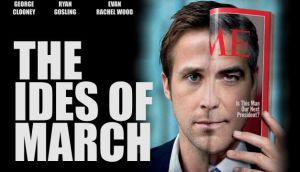
I would offer to show you a pair of  golden globes but, quite frankly, looking at this year’s Golden Globe nominations from the Hollywood Foreign Press Association has filled me with a soul-crushing sense of ennui.  The other critics groups and the SAG have at least been interesting and unpredictable.  The Golden Globe nominations, however, appear to be the result of the usual combination of Bandwagon hopping and celebrity ass kissing.  Seriously — the Ides of March for best film?  And George Clooney for best director?  I guess they were really anxious for him to show up.  And don’t even get me started on Rooney Mara’s nomination.  (Seriously, I’m sure Rooney Mara is very sweet for a girl who has never had to actually work a day in her life.)

And, for that matter, just who the Hell is actually in the Hollywood Foreign Press Association and how did they get to be the big Oscar precursors? 

Anyway, here’s the major nominations with some short, vaguely angry commentary from yours truly:

BEST PICTURE: DRAMA

“The Descendants”

“The Help”

“Hugo”

“The Ides of March”

“Moneyball”

“War Horse”

(I haven’t seen War Horse or the Artist yet so obviously, my big angry complaint here is the nomination of The Ides of March.  Seriously, what total BS.)

BEST PICTURE: COMEDY OR MUSICAL

“50/50”

“The Artist”

“Bridesmaids”

“Midnight in Paris”

“My Week With Marilyn”

(I’m happier with these nominees, despite the fact that I think Midnight in Paris was way overrated.)

BEST DIRECTOR

Woody Allen (“Midnight in Paris”)

George Clooney (“The Ides of March”)

Michel Hazanavicius (“The Artist”)

Alexander Payne (“The Descendants”)

Martin Scorsese (“Hugo”)

(Really?  So, if you’re a celebrity, you can get a best director nomination even if the film you made was a turgid, sexist, condescending mess of a movie.)

BEST ACTOR: DRAMA

George Clooney (“The Descendants”)

Leonardo Dicaprio (“J. Edgar”)

Michael Fassbender (“Shame”)

Ryan Gosling (“The Ides of March”)

Brad Pitt (“Moneyball”)

(Was the HFPA so determined not to show any love for Drive that they had to nominate Ryan Gosling for The Ides of March instead?)

BEST ACTRESS: DRAMA

Glenn Close (“Albert Nobbs”)

Viola Davis (“The Help”)

Rooney Mara (“The Girl With the Dragon Tattoo”)

Meryl Streep (“The Iron Lady”)

Tilda Swinton (“We Need to Talk About Kevin”)

(I hate to say it but I’m really starting to resent the fact that I’m going to have to actually sit through The Iron Lady.)

BEST ACTRESS: COMEDY OR MUSICAL

Jodie Foster (“Carnage”)

Charlize Theron (“Young Adult”)

Kristen Wiig (“Bridesmaids”)

Michelle Williams (“My Week With Marilyn”)

Kate Winslet (“Carnage”)

(I’ve been hearing terrible things about Carnage but I guess if the Ides of March is one of the best of the year, than Carnage must be pretty good.)

BEST ACTOR: COMEDY OR MUSICAL

Jean Dujardin (“The Artist”)

Brendan Gleeson (“The Guard”)

Joseph Gordon-Levitt (“50/50”)

Ryan Gosling (“Crazy, Stupid, Love”)

Owen Wilson (“Midnight in Paris”)

(At least someone finally showed Brendan Gleeson some love.)

BEST SUPPORTING ACTRESS

Berenice Bejo (“The Artist”)

Jessica Chastain (“The Help”)

Janet McTeer (“Albert Nobbs”)

Octavia Spencer (“The Help”)

Shailene Woodley (“The Descendants”)

(So, I guess it’s official now?  We’ve decided to honor Jessica Chastain for The Help as opposed to her better performance in Take Shelter? Then again, Michael Shannon wasn’t nominated for Take Shelter either.  Well, when you’re dealing with a cinematic masterpiece like The Ides of March, what hope does a little film like Take Shelter or Drive have?  Seriously, good job, HFPA.)

BEST SUPPORTING ACTOR

Kenneth Branagh (“My Week With Marilyn”)

Albert Brooks (“Drive”)

Jonah Hill (“Moneyball”)

Viggo Mortensen (“A Dangerous Method”)

Christopher Plummer (“Beginners”)

(Odd.  The HFPA missed a chance to toss out another nomination to the Ides of March here.  Still, at least they gave some attention to Hill’s performance, which was the only thing that really made Moneyball a memorable film to me.)

BEST ANIMATED FILM

“The Adventures of Tintin”

“Arthur Christmas”

“Cars 2”

“Puss in Boots”

“Rango”

(Good thing that George Clooney didn’t direct a cartoon this year.)

Here’s the full list of nominees from the Toadsuckers themselves.


And Finally The AFI


Finally, to close out a busy day on the awards front, the American Film Institute today announced their picks for the 10 best films and the 10 best television shows of 2011.  As anyone who knows me can tell you, I love lists.  Especially when they end in even numbers like 10.

Here are the AFI’s top 10 films, listed in alphabetical order:

1) Bridesmaids (Yay!  Girl power!)

2) The Descendants (Overrated)

3) The Girl With The Dragon Tattoo (Bleh)

4) The Help (Crowd pleaser)

5) Hugo (Yay!)

6) J. Edgar (Forgettable)

7) Midnight in Paris (Overrated)

8 ) Moneyball (Crowd pleaser)

9) The Tree of Life (Haunting)

10) War Horse (Spielberg)

Here are the top 10 television series:

1) Boardwalk Empire (Yay!)

2) Breaking Bad (I don’t eat, I don’t sleep, but I got the cleanest house on the street!  Yay meth!)

3) Curb Your Enthusiasm (Consider it curbed)

4) Game of Thrones (Yay!)

5) The Good Wife (I’m watching it right now!)

6) Homeland (Yay!)

7) Justified (Olyphant!)

8) Louie (I once lived next door to someone named Fred C. K.  Maybe he was a relative?)

9) Modern Family (Never got into it but all of my gay friends love it so I’ll say yay!)

10) Parks and Recreation (I would love this show if not for Amy Poehler.)


Film Review: Santa Claus Conquers The Martians (dir. by Nicholas Webster)


As our longtime readers may have noticed, I’m running behind on getting my weekly exploitation and grindhouse trailer post together.  I apologize for the delay and this week’s post should be up either tomorrow or on Monday.  However, until I finally manage to get my act together, why not enjoy a classic holiday film that just happens to be in the public domain?

You may think that you know everything about Santa but did you know that he’s also a super hero who is capable of interstellar conquest?  Did you know that he’s not only needed on Earth but on Mars as well? Did you know that apparently some people known him as “Santy Claus?”  And most importantly, did you know that Santa is actually kind of a creepy old man whose trademark laugh can actually sound quite disturbing in certain circumstances?

Okay, maybe that’s not true about the actual Santa Claus.  But it’s certainly true about the Santa Claus who turns up in the 1964 film Santa Claus Conquers The Martians.  This film, an obvious labor of love from director Nicholas Webster, presents us with a universe where the children of Mars are so stricken with ennui that the King of Mars has no choice but to go down to Earth and kidnap Santa.  Santa, however, manages to conquer those Martians while bringing holiday goodness and cheer to children all over the universe.  Santa, by the way, is played by John Call and … well, it’s a performance that has to be seen.

In fact, Santa Claus Conquers The Martians itself is a film that simply must be seen.  Everything from the cardboard robot to the cardboard South Pole to the cardboard cast to the painfully catchy theme song “Hooray for Santy Claus” simply demands that you watch this film at least once.  Santa Claus Conquers The Martians has earned its reputation for being one of the worst films ever made but you know what?  It’s also a lot of fun and it’s still better than Avatar.

Seriously, Avatar sucks.

So, please, sit back with your computer and enjoy Santa Claus Conquers The Martians.  Hopefully, next year at this time, it will be rereleased in 3-D.  And, if you’ve seen this film before, you know what the means.  That’s right — Dropo right in your face!