Lisa Goes Back To College: Zabriskie Point (dir by Michelangelo Antonioni)


1970_Zabriskie Point_03

After watching Getting Straight, I decided to watch another student protest film from 1970, Michelangelo Antonioni’s Zabriskie Point.  Much like Otto Preminger’s Hurry Sundown, Zabriskie Point is a film that frequently gets mentioned when film bloggers are trying to list the worst films of all time.  Unlike Hurry Sundown, Zabriskie Point is not quite as terrible as some reviewers seem to think.

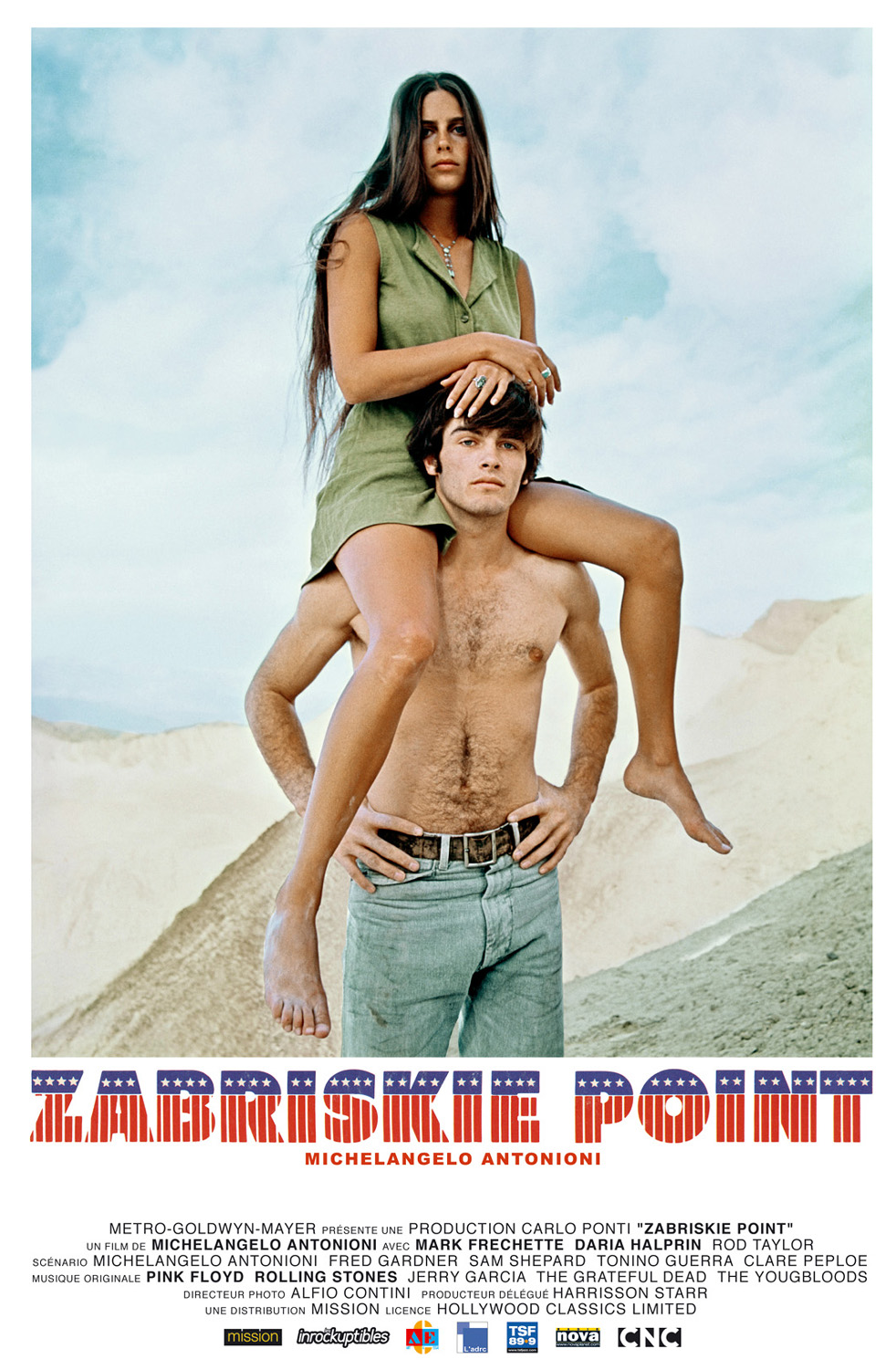
It’s probably a mistake to describe Zabriskie Point as being as a college film.  Only one of the main characters — Mark (played by Mark Frechette) — is a college student and he drops out early in the film.  The film’s other main character — Daria (played by Daria Halperin) — is a secretary who may (or may not) be the mistress of venal real estate developer Lee Allen (played by Rod Taylor, the sole professional actor out of the starring cast).  However, the film does start on a college campus, it deals with political protest (which was apparently the only thing happening on campuses back in 1970), and the movie’s message and style was obviously meant to appeal to campus radicals.

Mark Frechette, star of Zabriskie Point

Mark Frechette, star of Zabriskie Point

Zabriskie Point opens with the type of lengthy scene that will be familiar to anyone familiar with counter-culture filmmaking.  A bunch of very serious college students sit in a conference room and have a very long conversation about how to best bring about the revolution.  All of the white, middle class students argue for petitions, manifestos, and civil disobedience.  A black woman with a gigantic afro replies that all of the white students are phonies who aren’t truly committed to the revolution.  Some of the students cheer.  Some of the students boo.  The meeting goes on for an eternity and, for the most part, it served to remind me of why I could never stand hanging out with any of the student activists back at the University of North Texas.

Yet, at the same time, it’s an effective scene because it’s one of the rare moments in the film that feels authentic.  For the most part, Antonioni cast this film with nonactors.  (Though apparently — just like in Getting Straight — a young Harrison Ford can be seen in the background of some of the scenes.)  Watching the opening, I got the feeling that I was experiencing what a political gathering in the 70s was truly like.  And, by the end of it, I was happy to have been born long after the 70s were over.

The scene ends when a student named Mark announces that he’s prepared to die for the revolution and then walks out of the meeting.  Mark proceeds to drop out of school, buy a lot of guns, and set up an apartment safe house.  When he gets arrested at a protest, Mark gives his name as “Karl Marx,” which the booking officer proceeds to spell as “Carl Marx.”  Eventually, Mark ends up shooting a police officer.  (Or maybe he didn’t — the film is deliberately vague about whether Mark actually fired his gun or if the officer was shot by somebody else.)  He then steals an airplane, flies out to the desert, and meets Daria.
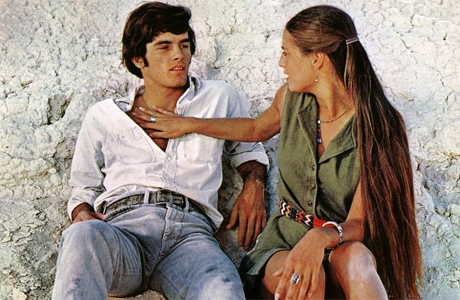
Mark and Daria

Mark and Daria

In the film’s most famous scene, Daria and Mark walk around the desert and talk about — well, nothing in particular.  One of the most frequent criticisms of Zabriskie Point is that neither Mark nor Daria were particularly good actors and that’s certainly true.  However, that’s only a problem if you assume that Antonioni means for you to view these characters as individuals.  As becomes clear during their desert walk, Mark and Daria are meant to be archetypes.  Mark Frechette and Daria Halperin may have been terrible actors but they had the right look and they had the right attitude.  You may not care about them as individuals but Mark and Daria work perfectly as symbols for alienation.  Mark and Daria stand in for everyone who has reached the point where they have to decide whether to join the establishment (represented by Lee Allen and the university) or whether to overthrow it.  In the scenes in the desert, Antonioni presents Mark and Daria less as being people and more as being parts of the American landscape, as permanent as the mountains that surround them.

Mark and Daria end up making love in the middle of the desert and, as they have sex, they are suddenly surrounded by hundreds of other hippie couples having sex and it all becomes one big orgy in the middle of Death Valley.  And yes, this scene is totally over-the-top, pretentious, and ludicrous but yet, how can you condemn something so gloriously silly?
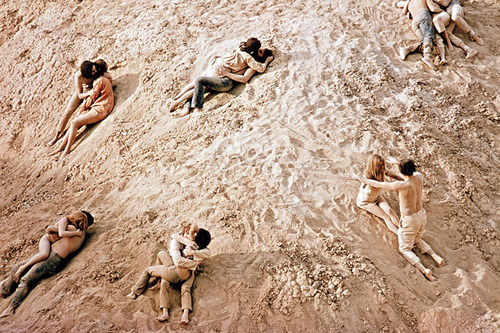
Orgy in the desert

Orgy in the desert

Anyway, after the orgy, Mark and Daria paint his plane and then go their separate ways.  Mark tries to return the plane.  Daria stares at a house in the mountains and imagines it exploding over and over again.

Zabriskie Point is an interesting misfire.  Michelangelo Antonioni (who is best known for directing the classic Blow-Up) originally intended for the film to end with an airplane skywriting “Fuck you, America.”  However, MGM made him cut that from the film.  That Antonioni meant for this film to be an attack on America is pretty obvious.  Antonioni, after all, was a committed Marxist and the film goes out of its way to try to present businessman Lee Allen as being the epitome of capitalist evil.  (Unfortunately, Rod Taylor is such a likable actor that I know, if I had to make a choice between the two, I’d rather spend a day with Lee Allen than Mark Frechette).
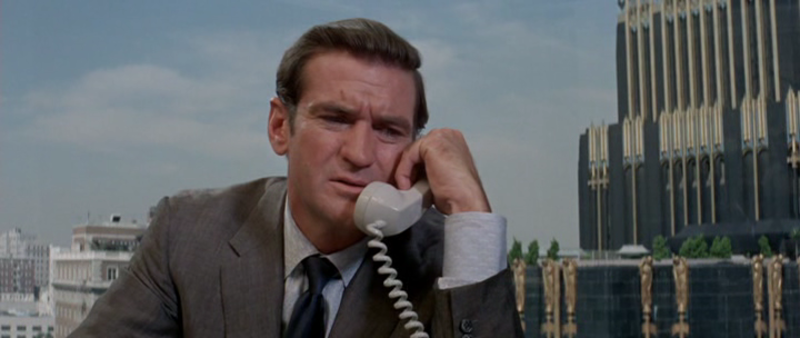
Rod Taylor as Lee Allen

Rod Taylor as Lee Allen

However, at the same time, Antonioni appears to have been fascinated and confused by the material excesses of America as well.  In the first half of the film, as Mark walks through the small town setting, the camera lingers on the billboards that dot the landscape and, as a result, those billboards take on a beauty of their very own.  Even when Daria is walking through Lee Allen’s mansion, the camera can’t help but linger over every opulent detail, almost as if it can’t decide whether it is seeking to condemn or celebrate.  In many ways, Zabriskie Point reminded me of Lars Von Trier’s Dogville.  Both films attempts to condemn America just to end up accidentally celebrating it.
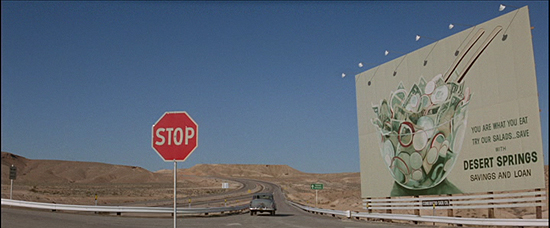
Celebrating America While Condemning It

Celebrating America While Condemning It

Zabriskie Point may not be a good film but it’s an endlessly fascinating and visually beautiful one.  If nothing else, it serves as a record of the time when it was made.  And, as such, it deserves better than to be dismissed as one of the worst.
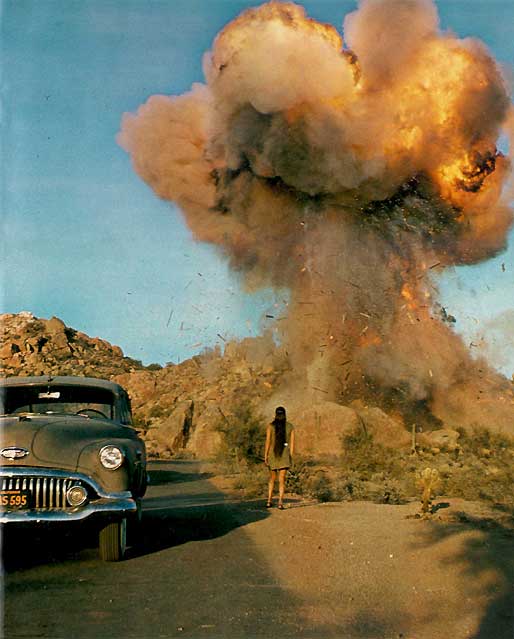
Boom
Boom

Lisa Goes Back To College: Getting Straight (dir by Richard Rush)


Am I too young to start feeling nostalgic for the past?

It’s been 6 years since I graduated from the University of North Texas and, as much as I enjoy officially being an adult and all that good stuff, I have to admit that there’s a part of me that misses being in college.  Even though I know that I will be returning to school to work on my master’s, there’s a part of me that really regrets that I’ll never again get to be an undergrad with the rest of my life in front of me.

Fortunately, I review movies so, whenever I start to feel nostalgic for the past, I can just watch and review a movie.  Last week, I was missing college.  So, I watched a few films about college.  The first film that I watched was from 1970 and it was called Getting Straight.

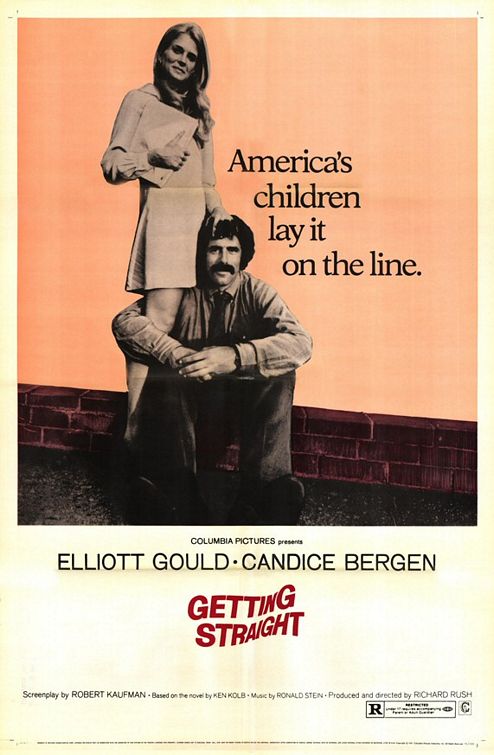
Getting Straight

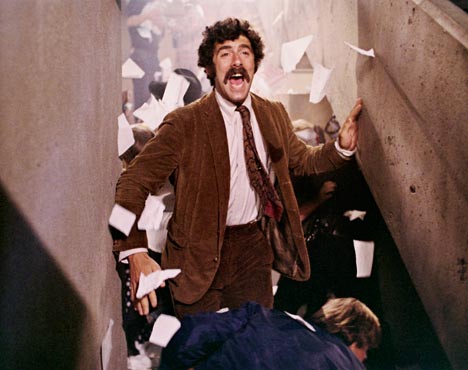
One of the first things that you notice while watching Getting Straight is that director Richard Rush apparently made the decision to film nearly the entire movie in extreme close-ups.  When Nick, a spaced-out hippie played by Robert F. Lyons, steps into a room and starts laughing, the camera zooms in so close that you can practically see down the back of his throat.  When Jan (played by a very young Candice Bergen) breaks down into tears after getting beaten up at a political demonstration, the camera so obsessively lingers over her tear-stained face that the viewer is left with little choice but to consider just how terrible a performance Bergen is actually giving.  When Harrison Ford shows up in an early role, the camera zooms into his face, as if to force us to say, “Hey, that’s Harrison Ford!”  Meanwhile, the star of the film, Elliott Gould, is in almost every scene and, thanks to Rush’s love of extreme close-ups, it’s hard not to focus on the fact that his thick sideburns and his walrus mustache looks like they are threatening to devour his entire face.

Elliott Gould plays Harry Bailey, a grad student at an unnamed California university.  In his undergraduate days, Harry was a political activist who, we’re told, marched for civil right as Selma.  Then he served in Viet Nam and not as some conscientious objector either (though that would have made sense, considering his political beliefs).  No, Harry saw combat.  And, while doing all of that, Harry also somehow found time to be in Paris during the 1968 student strike.  However, Harry is now back in America and all he wants to do is get his master’s in education so that he can teach the underprivileged.

Along with his prominent facial hair and his colorful past, the main thing that you notice about Harry is that he yells.  A lot.

Elliot Gould in Getting StraightHarry yells because his professors expect him to show up for classes that he doesn’t care about.  When those same out-of-touch professors expect Harry to take a test that he doesn’t consider to be important, he gets his friend Nick to take it for him.  Nick, being an idiot, signs his name to the test but then marks it out and writes down Harry’s name instead.

Harry yells because a bunch of student activists expect him to join their protests.  Harry tells them that they’re shallow and the only reason they care about politics is because “protests are sexy.”  Despite his condescending attitude, the rest of the student body continues to look up to Harry.  I imagine it has something to do with the hypnotic power of his mustache.

Harry yells because a professor suggests that F. Scott Fitzgerald might be gay.  Harry also says that Arizona is the best state of the union because it has the lowest occurrence of homosexuality.  If nothing else, all of this serves to remind us that this film was made in 1970.

Mostly, however, Harry just yells at his girlfriend, Jan.  Jan lies about being pregnant and Harry yells.  Jan says that she’s thinking about getting married.  Harry yells that she is a “dumb broad.”  Jan says she’s on her period.  Harry yells that she’s lying and that he’ll be over later that night.  Harry yells when Jan breaks up with him.  Harry yells when Jan introduces him to her new boyfriend, despite the fact that Harry has been screwing — in extreme close-up — every other undergrad on campus.  Harry yells at her that she might as well just be a “man with a hole.”

In other words, Harry is a self-righteous jerk.  Harry is a misogynist.  Harry is a hypocrite.  Harry is an asshole.  And yet — probably because this film was made in 1970 — Harry is also supposed to be the film’s hero.  Harry is supposed to be the character that we sympathize with and, indeed, every other character in the film is totally charmed by Harry and his behavior.  Even poor abused Jan continues to come to Harry, despite the fact that her next door neighbor is Harrison Ford!

Harrison Ford in Getting Straight

Harrison Ford in Getting Straight

Yes, there are many very valid criticisms to be made about Getting Straight.  Harry is unlikable.  Candice Bergen gives an amazingly bad performance.  Richard Rush’s direction shows an overdependence on close-ups and rack focus shots, techniques that he uses so frequently that they eventually lose all meaning but instead simply come across as being nervous tics.  Like so many of the counter cultural films of the early 70s, Getting Straight is an excruciatingly sexist film.  That’s one thing that the films of both the counter-culture and the establishment had in common, a deep disdain and fear of women in general.  Harry may claim that the student protestors are only into politics because they want to get laid but it’s hard to see how he’s any better.  The middle stretch of Getting Straight could have just as easily have been called Harry Must Get Laid.

However, Getting Straight does get one thing right.  It perfectly captures the atmosphere of college.  From the pompous and out-of-touch professors to the creepy old grad students (that would be Harry) to the portentous seriousness of the student activists, Getting Straight captures all of that perfectly.  As such, Getting Straight might not really work as a dramatic film but it’s definitely worthwhile as a record of a specific time and place.  Much of what today seems annoying about a film like Getting Straight is really nothing more than a recording of what was once considered to be culturally acceptable.

Getting Straight is a portrait of 1970 that makes me glad that I was born in 1985.

And you can watch it below!

What Lisa Watched Last Night #104: Petals on the Wind (dir by Karen Moncrieff)


Last night, I watched the Lifetime original film, Petals On The Wind.

Why Was I Watching It?

It’s the sequel to one of the greatest Lifetime films of all time, Flowers in the Attic.  How could I not watch it?

What Was It About?

10 years have passed since the Dollanganger children escaped from the attic.  Christopher (Wyatt Nash) is a medical student who, despite being engaged, is still attracted to his sister, Cathy (Rose McIver).  Cathy is a dancer who finds herself trapped in an abusive relationship with the handsome but controlling Julian (Will Kemp).  And finally, Carrie (Bailey Buntain) is still struggling with her memories of being held prisoner.  After several tragedies occur outside of the attic, Cathy returns to Foxworth Hall, looking to get revenge on both her grandmother (Ellen Burstyn) and her mother (Heather Graham).

What Worked?

Heather Graham and Ellen Burstyn reprised their roles from Flowers in the Attic and both of them gave Emmy-worthy performances.  Burstyn, in particular, managed to invoke some sympathy for a potentially monstrous character while Graham brought a great combination of immaturity and evil to her character.

On a personal level, I appreciated all of the dancing.  It brought back a lot of good memories.

What Did Not Work?

Watching Petals On The Wind really made me appreciate Flowers in the Attic, which was great for Flowers but not so good for Petals.  As I sat there, trying to figure out why Petals just wasn’t working for me, it occurred to me that the strength of Flowers in the Attic was that the attic itself became as much a character as any of the Dollangangers.  Even more importantly, being trapped in that attic, gave all of the characters a link that went beyond family and sex.  For the viewer, that attic allowed us to know when the story had truly begun (when the kids were first locked up there) and when the story was over (when they finally got to leave).  In Petals, without the attic, the story of Dollangangers often felt formless and random.  As a result, the film may have been watchable but it was rarely compelling.

Since Petals was supposed to take place ten years after the end of Flowers, all of the Dollanganger children were recast.  And while Rose McIvar and Wyatt Nash are both talented, they didn’t have much chemistry when they were on screen together (especially when compared to their predecessors in Flowers).  That lack of chemistry made all of the incest even ickier than it would normally be.

“Oh my God! Just like me!” Moments

All of the dancing, of course!  I also have to admit that, like Cathy, I’ve known a few Julians.

Lessons Learned

From a narrative point of view, it is sometimes better to just stay in the attic.

Petals on the Wind

The Eternally Frustrating Nicolas Cage


actor-nicolas-cage-discusses-his-2014-movie-left-behind

Just put yourself in my 4 inch heels for a moment.

You’re a film blogger who, though her tastes may be quirky, can usually defend her opinions fairly well.  You make an effort to see films that others may have missed and you pride yourself on your willingness to take and defend unpopular positions.

And let’s say that you’ve defied the conventional wisdom of so many of your fellow bloggers by declaring that Nicolas Cage is still a good actor and he still has something to offer the film world, beyond bad movies and weird performances.  You’ve even reviewed a film called Joe and triumphantly declared that this film proves that Nicolas Cage is a “great actor.”

And maybe, when certain people on Facebook laughed at you for using the terms “great” and “Nicolas Cage” in the same sentence, you argued that Cage is about to make a Matthew McConaughey-style comeback.  How?  By playing challenging roles in intelligent indie films.  You might have even said, “McConaughey had his Killer Joe and Nicolas Cage has Joe.”

And then this trailer for an upcoming film is released:

Nic, I still believe in you but, oh my God, you do test me sometimes.


Trailer: The Book of Life


The trailer for The Book of Life, an animated film produced by Guillermo Del Toro, was released earlier today and oh my God, I am in love with it.

I love this trailer so much that I’m not even going to waste your time trying to be clever about it.  Instead, I’m just going to invite you to watch.

Trailer: Kill the Messenger


Here’s the official trailer for Kill The Messenger, a film that has been getting some early Oscar buzz.

Apparently based on a true story, Kill The Messenger is about a reporter (played by Jeremy Renner) who writes a story accusing the government of selling cocaine in order to fund right-wing guerillas in Central America.  Some awards bloggers have predicted that Jeremy Renner will be nominated for best actor, largely because he’s Jeremy Renner.   Judging from the trailer, it looks like Renner gets to be intense and deliver a lot of passionate monologues, which is usually a pretty good strategy as far as getting Academy recognition is concerned.

That said, the trailer feels just a little bit generic.  In fact, as I watched it, I was reminded of last year’s ill-fated box office bomb, The Fifth Estate.  Every year, there’s an overtly political film that’s expected to change the world and win a lot of awards that then ends up sinking into obscurity because most people don’t go to the movies to learn a lesson.  They go in order to escape from the very world being detailed in films like The Fifth Estate and, possibly, Kill The Messenger.

Will Kill The Messenger be this year’s Fifth Estate?

We’ll find out in October.

Film Review: Burn! (dir by Gillo Pontecorvo)


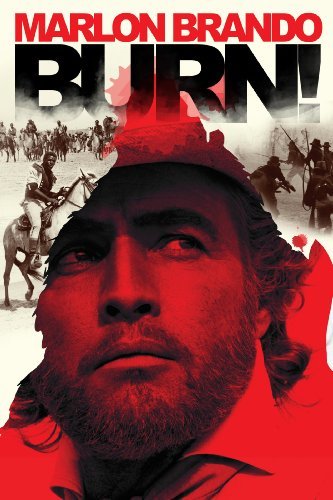
Burn!Earlier, I criticized Otto Preminger’s Hurry Sundown for taking a rather timid approach to the politics of race and class.  To see just how politically safe Hurry Sundown was, one need only compare it to 1969’s Burn, an Italian film that is perhaps one of the most politically radical films ever made.

Though the story told in Burn is a fictional one, it will still be familiar to anyone who has studied the history of South America.  Set in the 19th century, Burn takes place on the island of Quiemada, a colony of Portugal that is largely populated with black slaves who are forced to work on sugar plantations.  As the film makes clear, sugar was as economically valuable in the 19th century as oil is today.  So, it really shouldn’t be surprising that, as the film opens, Sir William Walker (Marlon Brando) has been sent to the island on a mission to overthrow the colonial government and replace it with one that will be friendly to British sugar companies.

Walker does this by inspiring the slaves to revolt.  To serve as a figurehead leader for the revolution, he selects a porter named Jose Delores (played by Evaristo Marquez, a nonactor who was both illiterate and working as a herder when he was selected for the role and who made up for his lack of experience and training by bringing a raw authenticity to the role).  Under Walker’s direction, Jose quickly becomes known as a fearsome and great leader.  Along the way, the two of them develop a paternalistic relationship with Jose looking up to Walker and Walker openly taking pride in Jose’s transformation from slave to general.

When the Portuguese eventually leave the island, the British set up a corrupt puppet government.  When Jose argues for more of a role in the new government, Walker explains that none of the former slaves have the education necessary to lead a country.  As Jose quickly realizes, the entire revolution was actually fought to benefit the British.  Walker leaves the island and Jose and the former slaves return to working on the sugar plantations.  They may no longer be slaves but they’re definitely not free.  (Or, as Jose puts it towards the end of the film, one cannot be given freedom.  Instead, freedom has to be grabbed.)

10 years later, Jose is leading another revolution, this time against the British-backed government.  Walker is sent back to the island with a new mission, to track down and defeat Jose.  When Walker first arrives back at the island, he assumes that, despite his earlier betrayal, he and Jose are still friends.  As quickly becomes obvious, Jose doesn’t feel the same way…

Now, I have to admit that I didn’t see Burn under the best of circumstances.  Not only did I see it on TV with regular commercial interruptions for that Risperdal lawsuit but, upon doing some online research, it also became obvious that I had watched a version of the film that was heavily edited prior to its American release.  20 minutes of footage was crudely taken out of Burn before it played in American theaters.  As a result, the version of Burn that I saw had a jagged and rather crude feel to it.  It was obvious that important scenes had been dropped and the end result felt disjointed.

And yet, despite all of this, Burn was still a powerful and memorable film.  I say this despite the fact that rigidly political films (which this one definitely is) usually tend to bore me to tears.  Even in its crudely edited form, Burn was full of powerful scenes that both made a political point and also displayed enough humanity to transcend the limits of ideology.  Consider the scene where, after having just learned that his revolution has accomplished nothing, Jose is hailed as a hero by his fellow revolutionaries.  In a matter of minutes, Jose goes from feeling like a failure to feeling triumphant to again feeling like a failure as he realizes that their freedom is going to be short-lived.  Or how about the scene where William Wallace crudely but effectively explains how the economy works by comparing a housewife to a prostitute?  And finally, there’s the film’s final scene, which is one of the most powerful that I’ve ever seen.

And then there’s Brando.

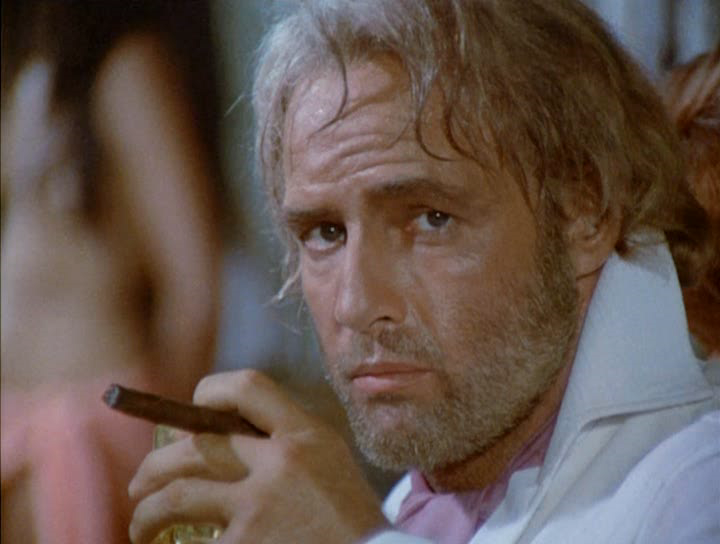
As played by Marlon Brando, William Walker comes to epitomize both cynicism and self-loathing.  Reportedly, director Gillo Pontecorvo wanted to portray Walker as being a much more obvious villain and Brando fought for a more ambiguous approach to the character.  What’s interesting is that, by hinting that Walker does what he does despite his guilty conscience, Brando makes the character into a much more loathsome monster than he would have been if he had been played as an unrepentant villain.  Brando’s best moments come towards the end of the film, when Walker struggles to understand how Jose could be willing to sacrifice himself for a greater cause.

Whenever we discuss Brando nowadays, its to talk about his eccentricities and his weight.  We talk about the fact that he was known for being difficult and that he eventually reached the point where he openly boasted about no longer caring.  What should be discussed is that, regardless of what he became later in his life, Marlon Brando was a great actor.  A film like Burn reminds us of that fact.

Marlon

Scenes That I Love: William Shatner Deals With The Explosive Generation


101440_1020_A

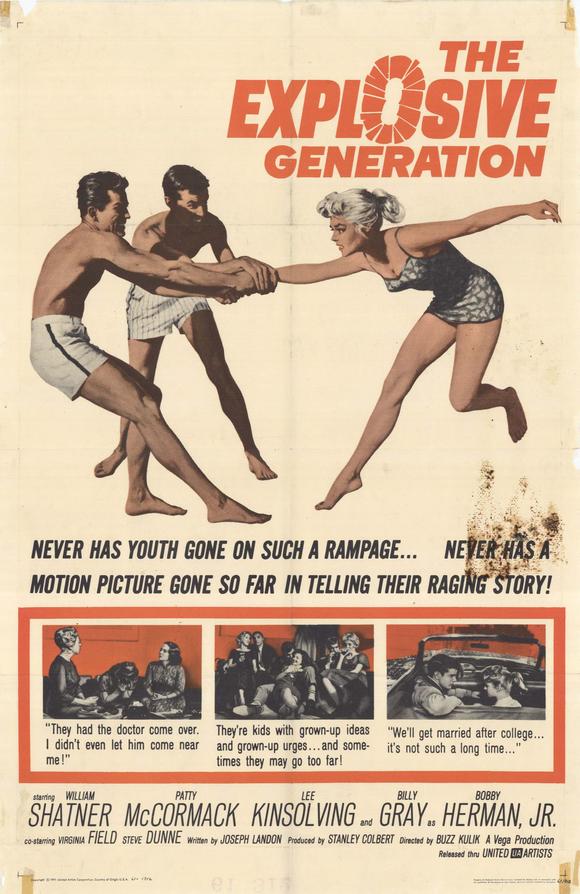
Ever since I first saw it on TCM last year, The Explosive Generation has been a favorite of mine.

This 1961 film deals with sex, peer pressure, censorship, juvenile delinquency, and civil disobedience.  The Explosive Generation is one of those films that was made to try to understand the wild and crazy youth of the early 60s, with their crazy rock and roll music, hip way of talking, and their habit of occasionally showing up for high school in a coat and tie.  As is typical of low-budget youth films of the period, the film is occasionally clueless and occasionally insightful.  In short, it’s a lot of fun and, if you’re a history nerd like I am, it’s a valuable time capsule for the way the world used to be (or, at the very least, the way that people used to think the world was).

Even better, it stars a youngish, intense, and slim William Shatner as an idealistic high school teacher who encourages his students to have a frank and honest discussion about sex.  If The Intruder (which was made roughly around the same time) is a film that proves that Shatner was capable of being an intelligent and insightful actor, The Explosive Generation is all about Shatner being Shatner.  This performance is everything that you’ve probably come to expect from William Shatner and, as a result, it transcends mundane concepts like good and bad.

Below are two scenes of William Shatner dealing with the Explosive Generation.  Be sure to keep an eye out because I’m sure The Explosive Generation will show up on TCM again at some point in the near future!

Were the critics right? A Review of Otto Preminger’s Hurry Sundown


It seems like whenever film bloggers and reviewers are making out a list of the worst films of all time, somebody always mentions Hurry Sundown.

Now, don’t get me wrong.  It doesn’t get mentioned as often as Battlefield Earth or Adam Sandler’s latest comedy.  And, when it does get mentioned, it’s done with little of the warmth that’s given to Troll 2, The Room, or Birdemic.  Instead, one gets the impression that Hurry Sundown is a film so bad that even those of us who appreciate bad films would find little to love about it.

But y’all know me.  I’m the type that prefers to judge for herself and I’m also someone who rather enjoys being a contrarian.  There’s a reason why one of my most read posts on this site is entitled 10 Reasons Why I Hated Avatar.  Add to that, Hurry Sundown was directed by Otto Preminger who also directed one of my favorite films of all time, Anatomy of a Murder.  How, I asked myself, could the man who made Anatomy of a Murder possibly also direct one of the worst films of all time?  As a result, every time that I saw someone claiming that Hurry Sundown was one of the worst films of all time, I grew more and more determined to someday see the film and judge for myself.

Well, I finally got my chance this weekend.  Hurry Sundown was on one of my newest favorite channels, The MOVIES! TV Network.  And I proceeded to watch it.  I sat through all four hours of this film (that’s including commercials and, oh my God, was I thankful for the distraction that those commercials provided).  I watched Hurry Sundown and …. wow.  Was it ever bad.

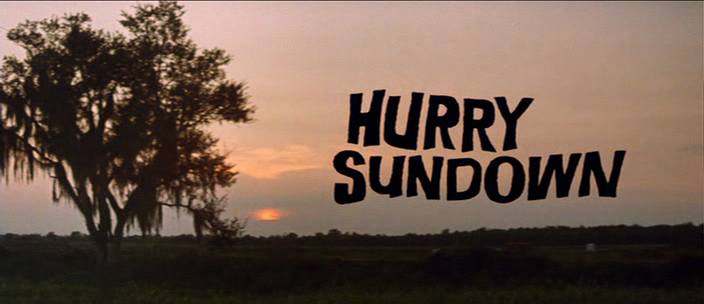
Hurry SundownReleased in 1967, Hurry Sundown was Otto Preminger’s attempt to take a look at race relations in the deep south.  It’s a film full of good, liberal intentions and an apparent lack of knowledge about — well, about everything.  As I watched this slow, almost formless blob of a film, I found myself wondering how the director who gave us Laura and Anatomy of a Murder could have possibly directed a film with a gigantic cast but absolutely no interesting characters.  I wondered how the director who had been willing to challenge the racist assumptions of 1950s Hollywood by directing Carmen Jones could have been responsible for the corny and subtly condescending look at race relations that was Hurry Sundown.

Hurry Sundown takes place in 1946 and is set in rural Georgia.  The war is over, the soldiers are coming home, and nobody in the film can maintain a convincing Southern accent for more than a line or two.  (Seriously — I’ve heard a lot of really bad Southern accents in a lot of really bad films but none of those accents were as bad as what I heard in Hurry Sundown.)  It’s a brand new world but the South is clinging to the old ways of racism and classism.

Preminger slowly (and clumsily) introduces us to the huge cast of characters who populate the slice of Hollywood Georgia.

There’s the sheriff (George Kennedy) who is so stupid that he can be distracted by an offer of fried chicken.  Kennedy actually gives a good comedic performance but his character seems like he belongs in another movie and you have to wonder how civil rights activists in 1967 — many of whom had undoubtedly been arrested and harassed by Southern sheriffs much like this one — reacted to Kenendy’s character being presented as harmless comic relief.

There’s the racist judge (Burgess Meredith) who, much like the sheriff, is presented as being a comedic buffoon as opposed to an actual threat.  The judge uses the n-word in every other sentence, which should be shocking and infuriating but, as a result of Meredith’s over-the-top delivery, instead simply comes across as being gratuitous and tasteless.

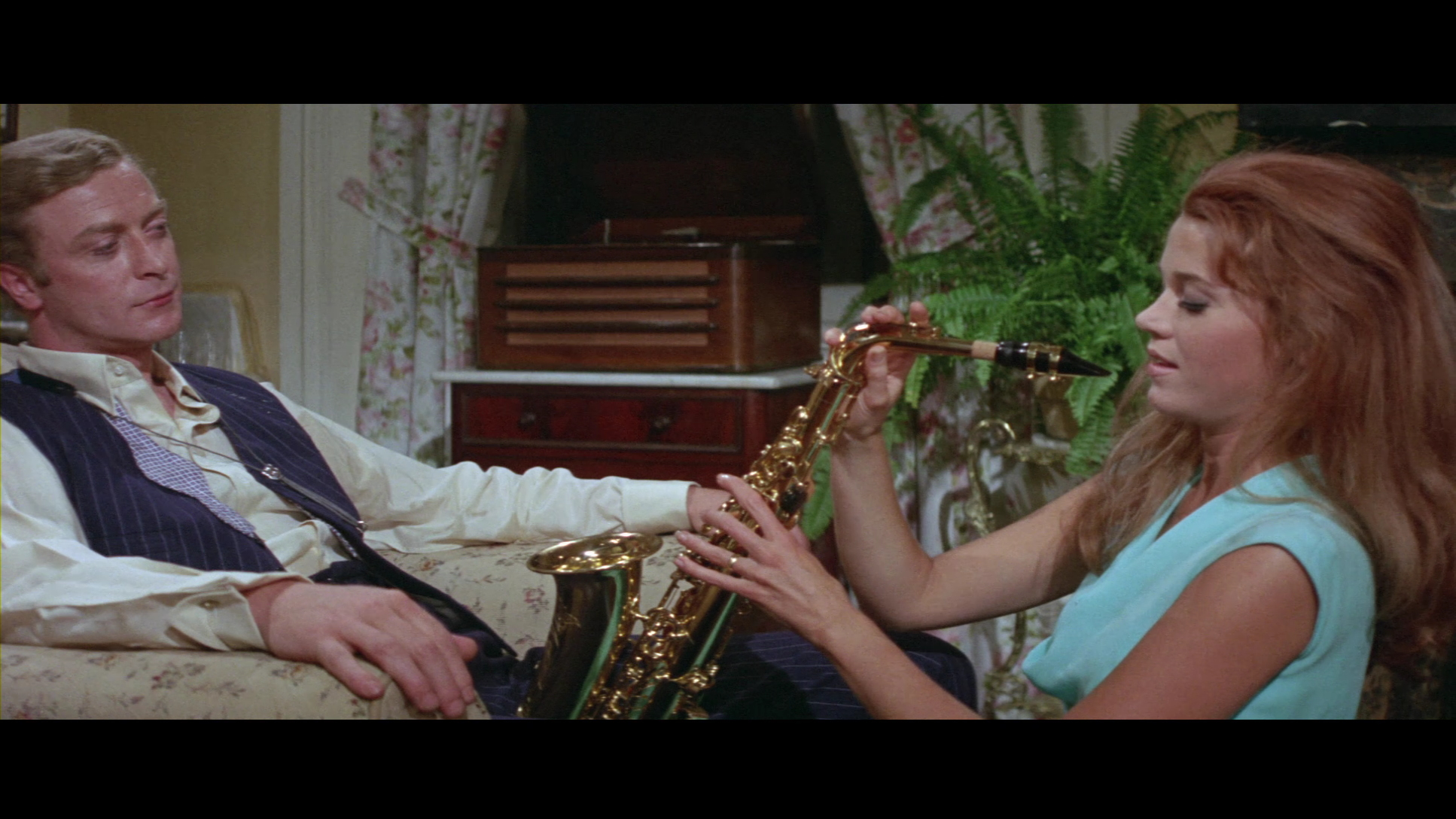
Then there’s Henry.  Henry is a businessman who dodged the draft, cheats on his wife, and who has a son who literally spends the entire movie screaming at the top of his lungs.  (Whenever that kid was on-screen, I imagined Preminger standing behind the camera and going, “More!  More!  Scream more!”)  Henry is also a racist, though for some reason he loves jazz and often plays the saxophone.  I kept waiting for someone in the movie to point out to him that jazz was created by black musicians but nobody did.  (If Henry had appeared in Anatomy of a Murder, someone would have.)

Did I mention that Henry is played by Michael Caine?  And did I also mention that Caine is the most cockney-sounding Southerner that I’ve ever heard?  Because he totally is.

Henry’s wife is named Julie and is played by Jane Fonda.  At one point, she suggestively blows on Henry’s saxophone.  One can only imagine how audiences in the 60s reacted to that.  (Actually, they probably didn’t.  They probably just said, “Good thing she’s pretty because she ain’t no musician…”)

Michael Caine and Jane FondaAnyway, Harry wants to buy up some farmland but half of that land is owned by Henry’s poor cousin Rad (John Phillip Law) and Rad doesn’t want to move.  Rad has just returned from fighting in the war and he views Harry as being a cowardly draft dodger.  Rad is married to Lou (Faye Dunaway) and wow, are they ever a boring couple!  Dunaway was under a five-picture contract to Preminger when she made this film and apparently, she had such a terrible time on the set of Hurry Sundown that she sued to get out of ever having to make another movie with Otto.  Dunaway’s misery comes through in every scene.

The other half of the farmland is owned by Reeve (Robert Hooks), a black farmer whose mother (played by Beah Richards) is Julie’s former mammy.  Julie goes down to the farmhouse to convince Reeve to sell and Reeve’s mother responds by having the most (over)dramatic heart attack in the history of cinema.  Saddened by death of his mother, Reeve is definitely not going to sell.  When he’s not chastely romancing the local teacher (played by Diahann Carroll, who appears to have wandered over from a different, far more glamorous movie), Reeve is singing sprituals and working out in the fields.

One of the things that Reeve does not do — no matter how many times he gets called the n-word or is treated unfairly — is get mad.  Rad gets mad.  Julie gets mad.  A liberal white preacher (Frank Converse) gets mad.  But Reeve and the other black characters in the film are never really allowed to get mad or do anything that might make the film’s white audience feel nervous.  Watching a film like Hurry Sundown, you can understand why — in just a few more years — Blaxploitation films would suddenly become so popular.  It was probably the first time that black film characters were actually allowed to not only get angry over the way they were being treated but to fight back, as opposed to reacting in the Hurry Sundown-way of passive acceptance.

Anyway, Rad and Reeve come together to protect their land and Henry and the evil judge conspire to cheat them out of their land and — well, let’s just say that Hurry Sundown is one of those films that has a lot of plot and very little action.  Preminger directs with a stunning lack of pace or grace, the actors deal with a poorly written script by either engaging in histrionics or going catatonic, and Michael Caine’s attempt at a Southern accent will amuse anyone who has ever been south of the Mason-Dixon.

I have to admit that I was really hoping that Hurry Sundown would turn out to be a sordid and tawdry little masterpiece, the type of overheated misfire that you love despite your better instincts.  But, no.  Hurry Sundown is just boring.  The film is such a misfire that it doesn’t even work as a piece of history.  The critics were right.  Hurry Sundown sucks.

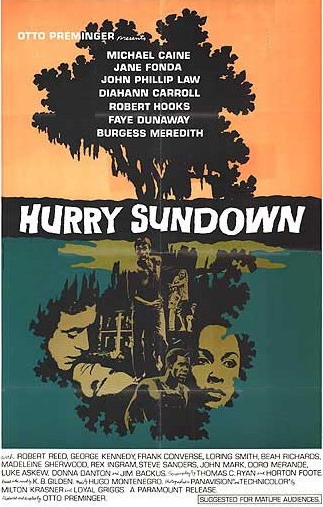
Hurry_sundown_moviep


Teaser: Big Hero 6


I really can’t claim to have the slightest idea what’s going on in this trailer but I still think it’s adorable, nonetheless.  This film is scheduled to be released in November and it’ll be interesting to see how it compares to its potential Oscar rivals, The Lego Movie and How To Train Your Dragon 2.