In this 1990 made-for-TV movie, a little girl wishes for a mom for Christmas. So, of course, a mannequin played by Olivia Newton-John comes to life and serves as her mother. The only catch is that she goes back to being a mannequin on Christmas Eve! Can Olivia’s new family find a way to make her into a real person or will she go be forced to back to decorating a department store as soon as the holidays end?
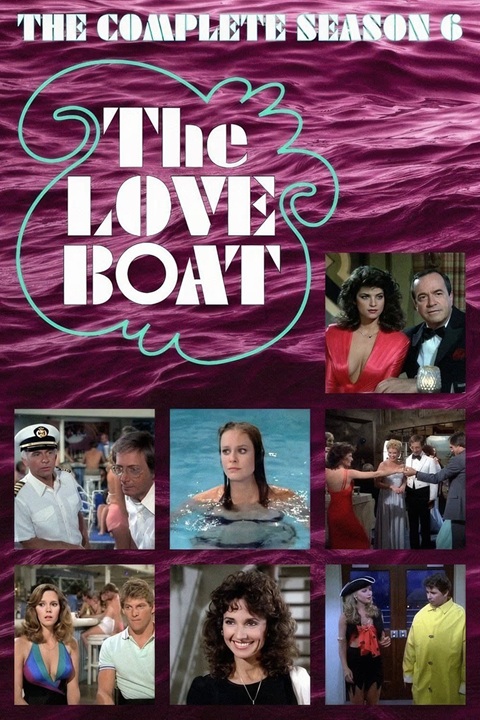
Welcome to Retro Television Reviews, a feature where we review some of our favorite and least favorite shows of the past! On Wednesdays, I will be reviewing the original Love Boat, which aired on ABC from 1977 to 1986! The series can be streamed on Paramount Plus!
Come aboard! Love is life’s sweetest reward….
Episode 6.17 “Gopher’s Daisy/Our Son, The Lawyer/Salvaged Romance”
(Dir by Richard Kinon, originally aired on January 29th, 1983)
Gopher has a new exercise machine but only he and the Captain know about it. All through the cruise, Gopher and Stubing disappear into Gopher’s cabin, put out the “Do Not Disturb” sign and then groan and moan while using the exercise machine.
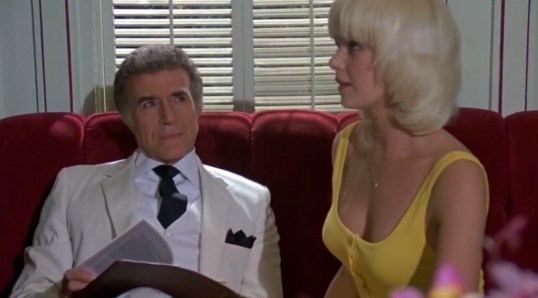
At the same, the ship has a stowaway. As a part of her sorority initiation, Jennifer Canfield (Chanelle Lea) has to take a cruise without paying for it. (That’s an odd initiation ritual.) Having figured out Gopher’s schedule, Jennifer secretly stays in his room whenever he’s doing his duties. Julie and Isaac both spot Jennifer sneaking in and out of Gopher’s cabin and they quickly decide that both Gopher and Stubing must have brought her aboard to be their — what? Their personal sex slave? That seems to be the implication. Strangely, neither Isaac nor Julie seem to be too upset about that implication. Julie has a cocaine problem so I guess I can understand her attitude but Isaac …. well, I expect more from Isaac.
Eventually, Jennifer is caught. Instead of having her arrested, the Captain allows Julie and Isaac to pay for Jennifer’s fare on the boat. So, does this mean that Jennifer’s not going to be allowed to join the sorority?
(Myself, I’m just considering the amount of people who have stowed away on the Love Boat over the past few seasons. Seriously, taking a cruise without paying for it appears to be the easiest thing in the world.)
Meanwhile, James Coco and Doris Roberts play Harriet and Lou, a married couple who board the boat with their son, Jonathan (Adam Arkin). Now that Jonathan has graduated law school and passed the bar, he thinks that it might be time for him to move into a place of his own. Harriet is so traumatized at the thought of Jonathan moving out that she demands a divorce from Lou. Both Harriet and Lou want to be represented by Jonathan. Run, Jonathan, run! In the end, the marriage is saved and everything get worked out but seriously, Jonathan needs to do more than just get an apartment of his own. He needs to move to another state or maybe even another country.
(Also, in the past, there’s no way Julie would have ignored a handsome, single lawyer on the ship. Unfortunately, Julie now seems to be more concerned with finding her next fix than finding a husband.)
Finally, Allison Newman (Joan Rivers) is a recently divorced woman who starts a tentative shipboard romance with passenger Max Glutovsky (Alex Rocco). However, when Max tries teacher her how to play shuffleboard and puts his hands around her waist, Allison yells for him to leave her alone and runs away. Max thinks that Allison is rejecting him because he’s not as rich as she is. Max, you dumbass! Allison has just had a mastectomy, Her husband left her after the operation and now, she’s feeling insecure about getting close to anyone. Of the three stories, the one worked the best, due to the performances of Rivers and Rocco.
The Rivers/Rocco story was effective. The storyline with Roberts, Coco, and Arkin was rather shrill and left me feeling sorry for Adam Arkin’s character. (Casting Doris Roberts as an overly possessive mother made this story feel like an unsuccessful dry run for Everybody Loves Raymond.) Isaac and Julie thinking Gopher was sex fiend? That was just silly. In other words, this was a pretty uneven cruise.
Next week, hopefully things will look up with a two-hour episode set in Greece!
Welcome to Retro Television Reviews, a feature where we review some of our favorite and least favorite shows of the past! On Fridays, I will be reviewing St. Elsewhere, a medical show which ran on NBC from 1982 to 1988. The show can be found on Hulu!
This week’s episode made me cry.
Episode 1.4 “Cora and Arnie”
(Dir by Mark Tinker, originally aired on November 23rd, 1982)
While orderly Luther (Eric Laneuville) practices his karate moves in the hallway and anesthesiologist Vijay (Kavi Raz) composes a letter to his family in India and Dr. Fiscus continues his sex-only relationship with Kathy Martin, four patients learn about life and death at St. Eligius.
One of them is an unnamed man (Lionel Mark Smith) who comes in with a complaint of backpain. Fiscus examines him and discovers that the man has been shot in the back. The man announces that he’s on parole and he doesn’t feel like going back to prison. Fiscus offers to admit him under an assumed name but the man says he already gave his real name to the front desk. The man tries to leave the hospital but collapses from pain and blood loss. Later, when the man wakes up, Fiscus tells him that the bullet has been removed and he’ll be fine. The man says he won’t be fine because he’s going to go back to prison as soon as he leaves the hospital.
Meanwhile, Kathleen McAllister, who has been in a coma ever since Andrew Reinhardt set off a bomb at a bank, finally dies. Reinhardt, when he’s informed of the news, sneers. He doesn’t care that she died. He’s all about the class struggle. (If this show was made today, he’d have thousands of followers on Bluesky.) When Dr. Beale tries to examine him to determine if he’s mentally ill, Reinhardt spits in his face. Reinhardt is convinced that nothing will ever happen to him but, after Kathleen dies, he’s informed that he’s being taken to prison. As Reinhardt is rolled out of his hospital room, Kathleen’s husband (Jack Bannon) appears in the hallway and shoots him dead.
George (Bernard Behrens) and Lillian Rogers (Anne Gerety) are tourists who are visiting Boston. When Lillian faints in her hotel room, George rushes her to the hospital. Lillian says she’s feeling fine but she still goes through a series of tests to determine why she fainted. In the end, the tests are inconclusive. No one can figure out why she fainted so she’s told to just see her family doctor when she returns home. When George and Lillian check out of the hospital, they are presented with the bill for all the tests. George freaks out when he sees that he’s being charged …. $1,380.90!
Now, admittedly, that is $1,380.90 in 1982 money. If George received the same bill today, it would be for $4,517.10. Still, considering all the tests that Lillian had done, that seems remarkable cheap, even by today’s standards. My father died in August and the majority of his medical costs were covered by insurance but his estate is still receiving bills from various hospitals, specialists, and ambulance services. I’ve been told that the same thing happened when my mom passed away in 2008. (Personally, I think if someone dies while in your care, you’ve forfeited your right to be paid.) By today’s standards, having to pay less that $5,000 feels like a bargain!
Finally, and most heart-breakingly, Dr. Morrison takes care of a homeless woman named Cora (Doris Roberts), who comes into the hospital with her companion, Arnie (James Coco). Due to a head injury, Arnie is almost childlike. While Cora learns that a case of gangrene is going to kill her unless she gets her foot amputated, Arnie repeatedly asks, “Can we go now?” In the end, Cora chooses not to have the surgery, leaving the hospital with Arnie. As she explains to Dr. Morrison, someone has to take care of Arnie and she can’t do that with just one foot. When Morrison tells Cora that she’s probably going to die in a year, Cora shrugs and says it won’t be any great loss.
OH MY GOD! Seriously, I was in tears at the end of this episode. The Cora and Arnie story had the potential to be a bit too schmaltzy for its own but Doris Roberts and James Coco both gave such incredibly moving performances that I couldn’t help but get emotionally involved in their plight. And I understood why Cora made the decision that she did. Having been rejected by both her family and society, Cora knew that there wouldn’t be anyone around to take care of her after the operation. So, she decided to accept things the way that they were and spend her last year with the one person who didn’t judge her, Arnie. (I’m getting teary-eyed just writing about it.) Playing out against all the other petty dramas going on at the hospital, this storyline was emotionally devastating.
This was a powerful episode. Watching it, I understood why St. Elsewhere is so often described as being one of the best medical shows of all time.
Welcome to Retro Television Reviews, a feature where we review some of our favorite and least favorite shows of the past! On Tuesdays, I will be reviewing the original Fantasy Island, which ran on ABC from 1977 to 1984. Almost the entire show is currently streaming on Daily Motion.
Smiles, everyone, smiles!
Episode 4.20 “Delphine/The Unkillable”
(Dir by Cliff Bole, Originally aired on April 11th, 1981)
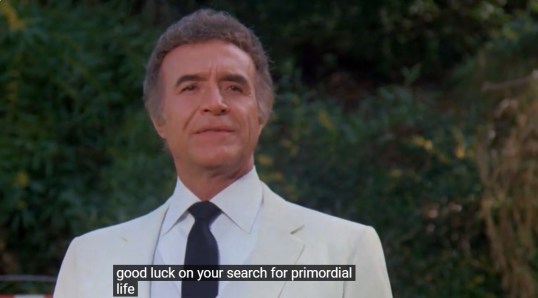
For our first fantasy, Dr. Paul Todd (Randolph Mantooth) is a paleontologist who feels that the first life on Earth was silicon-based and that the missing link lives underneath a volcano on Fantasy Island. He comes to the Island with his girlfriend, Liz (Annette Funicello) and his assistant, Kyle (Alex Cord). With Roarke’s weary approval, they head off to the volcano to search for proof of Todd’s theory.
And they do find proof! After Kyle attempts to sexually assault Liz, she falls through a crevice and finds herself in the lair of …. well, it appears to be someone who is waring a rubber suit but Paul and Kyle are convinced that they’ve found their silicon man! (Kyle attempting to force himself on Liz is seemingly forgotten.) The Silicon Man appears to be immortal, which proves to be a bit of problem when it decides to carry of Liz. But then the Silicon Man falls in a pool of lava and dies so I guess he wasn’t immortal. At the end of the show, Tattoo suggests that the The Silicon Man was made of lava and that’s why he was vulnerable to it but …. what?
Mr. Roarke doesn’t seem to be that worried about the Silicon Man or the fact that one of the island’s volcanoes is spewing lava. He’s more concerned with his goddaughter, Delphine (Ann Jillian).
According to Roarke, Delphine is the daughter of one of the Island’s oldest families. She has spent the last few years off the Island, working as an assistant for a magician named The Great Zachariah (Carl Ballantine). Delphine’s secret is that she actually does have magical powers! She’s the one who does all of Zachariah’s tricks for him. However, Delphine now wants to marry Greg (Don Galloway) and she doesn’t want him to know that she can move stuff with her mind and make people materialize out of thin air. Her fantasy is to lose her powers.
Zachariah, not happy about the prospect of losing his assistant, comes to the Island and teams up with fortune-telling Madame Cluny (Doris Roberts) to trick Delphine into revealing her powers and driving Greg away. Myself, I’m not really sure I understand why her magic powers would be a deal-breaker. I mean, Delphine can literally do anything! And, as we see in this episode, she only uses her powers for good. Why would Greg have a problem with that?
On the plus side, Ann Jillian (who starred in another show that I reviewed on this site, Jennifer Slept Here) gives a good performance as Delphine and it’s easy to imagine an alternate version of the show where she played Roarke’s sidekick. On the negative side, the rest of the show and both of the fantasies are just silly and never make any sense.
This was not a memorable trip to the Island. Seriously …. silicon?
Welcome to Retro Television Reviews, a feature where we review some of our favorite and least favorite shows of the past! On Wednesdays, I will be reviewing the original Love Boat, which aired on ABC from 1977 to 1986! The series can be streamed on Paramount Plus!
This week, come aboard for season 4!
Episode 4.1 “Sergeant Bull/Friends and Lovers/Miss Mother”
(Dir by Roger Duchowny, originally aired on October 25th, 1980)
Well, it’s time for the fourth season of The Love Boat and let’s see who is going to be taking a cruise this week….
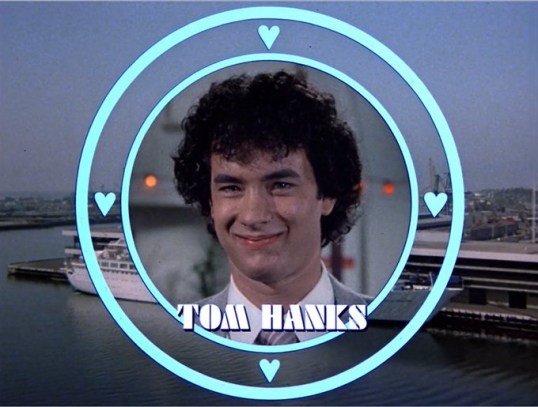
Hey, we know that guy!
Yes, it’s a young Tom Hanks, making one of his first television appearances on The Love Boat. Tom had a sitcom coming out so ABC decided to promote the then-unknown actor by giving him a guest role on one of their most popular series.
Who does Tom play? He plays a complete a total douchebag named Rick Martin, a former fraternity brother of Gopher’s who enjoys giving Gopher a hard time about his reputation for being “Strike-Out Smith.” Rick makes Gopher feel so uncomfortable that Gopher impulsively claims that Julie is his girlfriend. Julie plays along with Gopher. This not only leads to sleazy Rick trying to steal Julie away from Gopher but it also causes Julie and Gopher to have real feelings for each other.
Yes, it is interesting to watch Tom Hanks play a sleaze but what is even more interesting, for longtime watchers of the show, is that Julie and Gopher make a surprisingly credible couple. They actually do have a very likable chemistry together and it never seems improbable that they might end up together. Of course, in the end, they decide to just stay friends because anything else would have upset the balance of the show.
Tom’s presence overshadows the rest of the show but there are two other stories to deal with. Vic Tayback plays a former dill sergeant who reunites with his former recruits (Nipsey Russell, Harvey Lembeck, and Jack Somack) and who turns out to still be such a hardass that they bribe their cabin stewardess (Doris Roberts) to pursue a romance with him. Of course, the two of them fall in love for real. This was all a bit silly and Tayback’s drill sergeant was a bit annoying but it was nice to see him drop his guard around Doris Roberts and admit that he was only acting like a drill sergeant because that was all he had ever been.
Finally, Gwen Hutchins (Shelley Smith) boards the boat and tells Doc Bricker that she is two-months pregnant.
“Your husband must be very proud!” Doc replies, without missing a beat.
No, Gwen explains, she’s not married. Once again, we are reminded that Doc is a walking HR nightmare.
Anyway, Gwen falls for a guy named Dennis (Dennis Cole) but she worries how Dennis will react to learning that she’s pregnant. At first, Dennis does not react well, even asking her if she considered getting an abortion. (She explains that she doesn’t support abortion, which definitely would not fly if this episode were made today.) It all works out in the end but, seriously, I think she deserves better than Dennis. Dennis Cole is an actor who I have seen in quite a few of these shows and he always seem kind of lost. That was certainly the vibe that he gave off here.
This was an entertaining-enough episode, though almost all of the credit for that goes to the presence of Tom Hanks and the likable chemistry between Fred Grandy and Lauren Tewes. It was definitely a good way to start off the fourth season.
The 1970 film, The Honeymoon Killers, takes place in the late 40s. Martha Beck (Shirley Stoler) is an overweight nurse who lives in Alabama with her senile mother (Dortha Duckworth) and her best friend, Bunny (Doris Roberts). Knowing that Martha is lonely, Bunny signs Martha up for a “lonely hearts club,” which was basically the Tinder and Craig’s List of the pre-Internet age. Though Martha is initially reluctant, she soon starts to receive letters from a conman named Ray Fernandez (Tony Lo Bianco). Ray specializes in swindling the women who respond to his letters. After Ray travels to Alabama and tricks Martha into giving him a “loan,” Ray sends her a letter telling him that he can no longer correspond with her. Martha responds by getting Bunny to call Ray and tell him that she attempted suicide.
Recognizing Martha as a fellow con artist, Ray invites Martha to his home in New York. He shows her the pictures that he’s received from other women and reveals how he makes his money. Martha soon becomes Ray’s partner in crime, traveling across the country with Ray and meeting the women, most of whom are elderly, that Ray has corresponded with. Ray claims that his name is Charles Martin and that Martha is his sister. He also swears to Martha that he won’t sleep with any of the women while he’s swindling them. Even though Martha knows that Ray is a pathological liar, she chooses to believe him whenever he swears that he’s actually in love with her.
The first murder occurs when Martha realizes that one of Ray’s victims is determined to sleep with him. Martha gives her an overdose of sleeping pills and then Martha and Ray dump her on a bus, where she subsequently dies. More murders occur, usually due Martha and Ray making sloppy mistakes that reveal their actual plans to their victims. At first, Ray claims that he’s disgusted with killing and he says that Martha is the one who has to do it because she’s a nurse. But eventually, Ray shows his true colors.
When talking about The Honeymoon Killers, one has to start by mentioning that this film was nearly Martin Scorsese’s second feature film. (Fresh out of film school, Scorsese had previously turned a student film, Who’s That Knocking At My Door?, into his feature debut.) Scorsese was fired from the film because the film’s producers felt that he was taking too long to set up the shots and, according to Scorsese himself, he was only shooting master shots. That said, there are a few Scorsese-directed scenes to be found in The Honeymoon Killers and they’re pretty easy to spot. The film opens with a tracking shot of Shirley Stoler walking through her hospital and reprimanding two interns. I was not surprised to learn that was one of the Scorsese scenes. After Scorsese left the project, he was replaced by Leonard Kastle, who wrote the script. The Honeymoon Killers was both Kastle’s directorial debut and his swan song.
The film’s harsh and grainy black-and-white cinematography gives the film a documentary-style feel and while there are moments of dark humor, The Honeymoon Killers is overall a grim movie. It plays out like a creeping nightmare, one where the viewer knows that there’s something terrible waiting right around the corner. The bickering between Martha and Ray may occasionally inspire a chuckle, but there’s nothing funny about the murders and the film, to its credit, it totally on the side of Martha and Ray’s victims. Martha and Ray may look down upon them but the film itself portrays them as being lonely people who are struggling to adjust to a changing world. (In the role of the couple’s second victim, Mary Jane Highby is just heartbreaking.) Ray is a bit of ludicrous figure, with his swagger and his exagerated accent but he’s been able to get away with his crimes because people want him to be the charming gentleman that he claim to be. Even after Martha discovers who he really is, she still finds herself under the spell of Ray’s con.
Shirley Stoler and Tony Lo Bianco both give excellent performances as Martha and Ray, with Stoler especially doing a good job in the role of Martha. At first, it’s easy to feel sorry for Martha. At the start of the movie, she’s just as lonely as any of Ray’s victims. At the film progresses, Martha’s true self is revealed and yet, as soulless as she can be, her love for Ray is strangely sincere. As Ray, Tony Lo Bianco is all swagger and charm until he loses control of the situation and he reveals just how spineless he actually is.
The film presents Martha Beck and Ray Fernandez as a couple who became murderers after they found each other. In reality, it’s suspected that Ray Fernandez murdered at least one woman before he met Martha and it’s also been suggested that Martha killed a few patients while she was working as a nurse. Ray and Martha were both executed on the same day, going to electric chair on March 8th, 1951.
Welcome to Retro Television Reviews, a feature where we review some of our favorite and least favorite shows of the past! On Tuesdays, I will be reviewing the original Fantasy Island, which ran on ABC from 1977 to 1986. The entire show is currently streaming on Tubi!
This week, Tattoo is nice and Mr. Roarke is understandably suspicious.
Episode 3.2 “Goose For The Gander/Stuntman”
(Dir by Cliff Bole, originally aired on September 14th, 1979)
This episode opens with Tattoo being very nice and polite to Mr. Roarke and asking if there is anything that he can do to help Roarke as they head out to meet the plane. It says a lot about how much Roarke hates his assistant that Roarke’s immediate reaction is to suspect that Tattoo has done something wrong and is trying to escape being punished as a result. By the end of the episode, Roarke learns that Tattoo is freaking out because Tattoo saw a classified ad announcing that Roarke was looking for a new “assistant manager,” and Tattoo feared he was going to be fired. Mr. Roarke has a good laugh over that. Roarke enjoys anything that makes Tattoo’s life miserable.
As for the fantasies, this is another week where we get one silly fantasy and one serious fantasy.
The silly fantasy involves Marjorie Gibbs (Doris Roberts), who owns a truck stop in Arizona. A new highway is being put in and all of Marjorie is going to have to relocate her diner. Unfortunately, that is going to cost money that Marjorie does not have. All of Marjorie’s customers tipped in and raised enough money to send Marjorie to Fantasy Island so that she can compete in a cooking contest and win a huge cash prize.
Can Marjorie win the contest? It’s not going to be easy, as one of her competitors is a sneaky French chef (Vito Scotti) and the judge (Hans Conried) is one of those food snobs. Fortunately, Marjorie strikes up a friendship with another diner owner, Joe Lange (Abe Vigoda). Joe supports Marjorie and helps her to win, even after the French chef steals one of Marjorie’s recipes! They also fall in love and save a goose from becoming a meal. Awwwwww! This was a silly but sweet fantasy. Doris Roberts and Abe Vigoda made for a good comedic team.
As for the serious fantasy, it’s all about stunts. Retired stuntman Peter Rawlings (Dale Robertson) comes to the island with his wife, Norma (Dana Wynter). Norma thinks this is just a normal vacation but Peter actually wants to come to the island because his son, Bill (Grant Goodeve), is the stunt coordination for a film that is shooting there. Bill has lived his whole life in his father’s shadow and Peter fears that Bill’s desire to pull off the biggest stunt of all time will lead to his death. Peter also discovers that Bill’s insecurity has led to him becoming a tyrant on the set. In fact, as soon as Peter shows up, Bill is fired and Peter is named the new stunt coordinator. Can father and son set aside their differences and pull off a truly spectacular stunt?
Of course they can. This is Fantasy Island.
This was one of those episodes that pretty much succeeded on the charm of the cast alone. Neither one of the fantasies was particularly interesting. We were told that Marjorie and Joe’s food was the best but, since we couldn’t taste it, we had no way of knowing for sure. And the big stunt really didn’t look all that special. But Doris Roberts, Dale Robertson, and Abe Vigoda all gave charming performances so, in the end, I was happy everything worked out.
Next week: Tattoo gets a fantasy! Roarke better watch out!
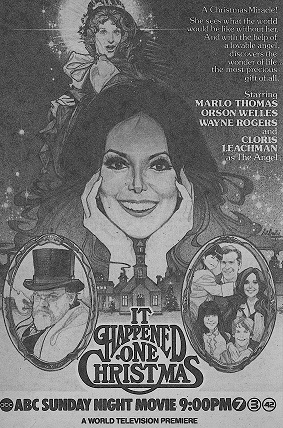
The 1977 made-for-TV movie, It Happened One Christmas, opens in Heaven. We hear the voice of Joseph (Charles Grodin), one of the top angels. Joseph has noticed that, in the town of Bedford Falls, a lot of people seem to be praying and all of their prayers concern one person. They are all worried about Mary Bailey Hatch (Marlo Thomas).
He requests that an angel be sent down to Earth to help Mary with her problems. Unfortunately, the only angel available is Clara (Cloris Leachman) and Clara, despite her optimistic outlook and upbeat personality, is not considered to be a particularly smart angel. She hasn’t even gotten her wings yet! However, Joseph promises her that, should she convince Mary Hatch not to toss away her life on Christmas Eve, Clara will get her wings.
But first, Joseph shows Clara all of the important events in Mary’s life. Clara watches as young Mary saves the life of her brother, Harry. A few weeks later, Mary manages to keep Dr. Gower from accidentally poisoning a patient. Though Mary dreams of leaving Bedford Falls and pursuing a career as a writer, she instead ends up taking over her late father’s old Building and Loan company. With the help of her husband, George (Wayne Rogers), she helps hundreds of people move into affordable housing. She is also one of the few people in town willing to stand up to Old Man Potter (Orson Welles)….
What was that?
Yeah, I know. Just hold on. I’m getting to that.
Anyway, everything is going great in Mary’s life until her irresponsible Uncle Willie (Barney Martin) accidentally loses a deposit on Christmas Eve. Facing embezzlement charges and having yelled at her family, Mary considers jumping off a bridge. Fortunately, Clara is there to show her what her life would be like if she had never been born….
Excuse me? Did you say that this sounds familiar?
Yes, It Happened One Christmas is a remake of It’s A Wonderful Life. The main difference is that the genders are swapped. Jimmy Stewart’s role is played by Marlo Thomas. Wayne Rogers plays the Donna Reed role. This leads to a few changes in the story. For instance, Mary still yells at ZuZu’s teacher but she doesn’t get sucker punched as a result. Whereas the original Mr. Potter treated George Bailey with outright hostility, the remake’s Mr. Potter tends to use a tone of condescending concern when talking to Mary. Since George Hatch doesn’t lose his hearing in one ear, he’s able to serve in World War II and he returns on crutches. In the world where Mary was never born, George still never marries but, instead of working at the library, he becomes a boorish auto mechanic. Violet is no longer an important character and Mary never tries to blame her visions of Pottersville on “bad liquor.” These are cosmetic differences but, otherwise, it’s pretty much the exact same story.
To be honest, it probably sounds more interesting than it actually is. It’s not that It Happened One Christmas is a poorly made or a badly acted film. It’s fine, really! But it’s not It’s A Wonderful Life. Marlo Thomas plays her role with a lot of energy but she’s still no Jimmy Stewart. Stewart, who was still dealing with his own World War II experiences, played up the haunting sadness behind George’s mild-mannered facade and that’s something that Thomas never accomplishes. If Stewart’s George seems like he’s been beaten down by one lost dream after another, Marlo Thomas’s Mary just seems like she’s having a really bad night. By that same token, Wayne Rogers is likable a the love of Mary’s life but he’s no Donna Reed. Even the great Orson Welles can’t escape the shadow of Lionel Barrymore. Barrymore’s Mr. Potter was a pure misanthrope who was at his happiest mocking the dead and approving men for the draft. Oddly, Orson Welles brings an almost avuncular style to Mr. Potter. One gets the feeling that Welles simply couldn’t resist winking at the audience and assuring them that he was still the bigger-than-life showman that they had grown up with.
So, you may be wondering ….. why remake It’s A Wonderful Life in the first place? I was wondering about that so I did a little research and thanks to an obscure web site called Wikipedia (not many people have heard of it), I discovered that It Happened One Christmas was actually made before It’s A Wonderful Life started to regularly air during the holidays. At the time it was made, it was aactually remake of a classic film that was no longer regularly watched. Frank Capra angrily denounced It Happened One Christmas as being “plagarism” but, in 1977, it was enough of ratings success that it was re-aired in both 1978 and 1979. But, by that time, It’s A Wonderful Life had started to regularly air during the holiday season and was being rediscovered by audiences young and old. As a result, the okay remake was soon overshadowed by the vastly superior original.
And really, that’s the way it should be. It Happened One Christmas isn’t a bad movie but it just no replacement for Capra’s Wonderful film.
In this 1990 made-for-TV movie, a little girl wishes for a mom for Christmas. So, of course, a mannequin played by Olivia Newton-John comes to life and serves as her mother. The only catch is that she goes back to being a mannequin on Christmas Eve! Can Olivia’s new family find a way to make her into a real person or will she go be forced to back to decorating a department store as soon as the holidays end?
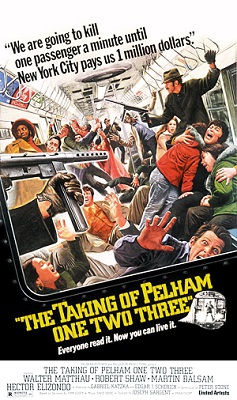
Welcome to New York in the 1970s! While the intellectuals flock to the latest Woody Allen movie and the wealthy throw radical chic parties in Manhattan and disturbed young men drive taxis at night and pray for a real flood to clear away all the vermin, most of the city’s citizens are just trying to make it through the day. For many of them, that means spending an hour or two riding the subway. In some ways, the subway is the great equalizer. The minute that you sit down on a filthy train car, it doesn’t matter how old you are or how you vote or the color of your skin. All that matter is finding a way to avoid making eye contact with anyone else.
Four men, all wearing obvious disguised, board the downtown Pelham 1-2-3 train. They all look suspicious but, this being New York, no one wants to make eye contact. Everyone just wants to reach their next stop. The men — who are known as Mr. Blue (Robert Shaw), Mr. Green (Martin Balsam), Mr. Grey (Hector Elizondo), and Mr. Brown (Earl Hindman) — have other plans. Revealing that they’re armed, they take the 18 passengers of the first car hostage. Their leader, Mr. Blue, has a simple demand. He wants a million dollars to be delivered to the car within an hour. If the money’s late, he will kill one hostage every minute, until he receives what he wants.
While the cold-stricken mayor (Lee Wallace) tries to figure out how to 1) raise a million dollars and 2) handle the situation without losing any potential votes in his reelection campaign, Lt. Zach Garber (Walter Matthau) communicates with Mr. Blue via radio. With Mr. Blue underground and Zach above ground, the two of them establish a cautious rapport. Robert Shaw plays Blue as being efficient, polite, but ruthless while Walter Matthau plays Garber with his usual rumpled but intelligent style. As embodied by Matthau, Garber is New York City in human form while Shaw is perfectly cast as the outsider who, for at least an hour or two, has managed to bring the city to its knees.
Even though the original The Taking of Pelham One Two Three is often described as being a Walter Matthau film or a Robert Shaw film, the film’s main character actually is the city of New York City. The film portrays the city as being chaotic, angry, and unpredictable but, at the same time, also resilient and strong. Yes, Garber may spend a lot of time bickering with his co-workers but, in the end, he and Lt. Rico Patrone (Jerry Stiller, another great New York figure) work together to do what has to be done to resolve the situation. For all the time that’s spent on how Mr. Blue and his compatriots take that train hostage, just as much time is spent focusing on how the police, the politicians, and the Transit Authority react to what’s happened. Not having any firsthand knowledge of the New York subway system (beyond being told not to use it when I was in NYC a few years ago), I can’t say whether or not the film is realistic but what’s important is that it feels realistic. Even though the film is full of familiar character actors, it still seems as if you’re just watching a bunch of New Yorkers having a very long day. Though guns are fired and there is a runway train, The Taking of Pelham One Two Three takes a refreshingly low-key approach to its story. There’s no huge action set pieces. The film’s classic final shot hinges not on Garber’s marksmanship but instead on his ability to remember the small details.
The Taking of Pelham One Two Three is one of my favorite heist movies. It’s well-acted. It’s got an interesting plot. It’s got a few moments of unexpected humor. Robert Shaw is a great (and, at times, almost compelling) villain while Walter Matthau and Jerry Stiller make for a great detective team. The great Martin Balsam also turns in a wonderful turn and, even though he’s playing a bad guy, it’s hard not to sympathize him. You need only see his apartment to understand why exactly he felt the city of New York owed him more than it had given him. Best of all, The Taking of Pelham One Two Tree is a tribute to a great American city. The Taking of Pelham One Two Three celebrates New York City in all of its rude, messy, and brilliant glory.

 Through the Shattered Lens