The Pumaman (1980, directed by Albert De Martino)


Dr. Kobras (Donald Pleasence) has got an evil scheme.  He’s going to use an ancient gold mask to take over people’s mind and eventually take over the world.  Only the Pumaman, a man who has inherited God-like powers, can defeat Dr. Kobras and keep the mask from falling into the wrong hands.  Unfortunately, Prof. Tony Farms (Walter George Alton) doesn’t understand that he’s the Pumaman.  Vadinho (Miguel Angel Fuentes), an indigenous shaman, travels to London to convince him.

Perhaps the worst super hero movie ever made, Pumaman was an attempt to cash in on the popularity of the Superman movies.  Pumaman didn’t start out in a comic book.  He was created directly for the screen and his first movie was obviously meant to be the start of many adventures.  It didn’t work out that way.  Pumaman has plenty of fantastic powers but he’s not sure how to use them and he spends a lot of the movie complaining.  He might as well just be called Whinyman.  From the minute that he meets Tony, Vadinho has an expression on his face that reads as, “I’ve made a terrible mistake.”  Beyond Pumaman just being plain unlikable, the movie also features some of the worst special effects that I’ve ever seen.  The success of a film like that depends on whether or not you believe that a man can fly.  Pumaman flies but he looks really stupid doing it.  That was the failure of Pumaman.

How bad is Pumaman?  Even Donald Pleasence looks embarrassed.  Pleasence always made a good villain.  He set the standard for Bond villains in You Only Live Twice.  Pleasence also had the right sensibility for a good super hero film.  If he had been born a decade or two later, he would have been equally well-cast as either Professor X or Magneto in the first X-Men film.  In Pumaman, he rolls his eyes while delivering his lines.  Not even he can believe this movie.

Pumaman saved the day and then disappeared.  Earth already had enough heroes.

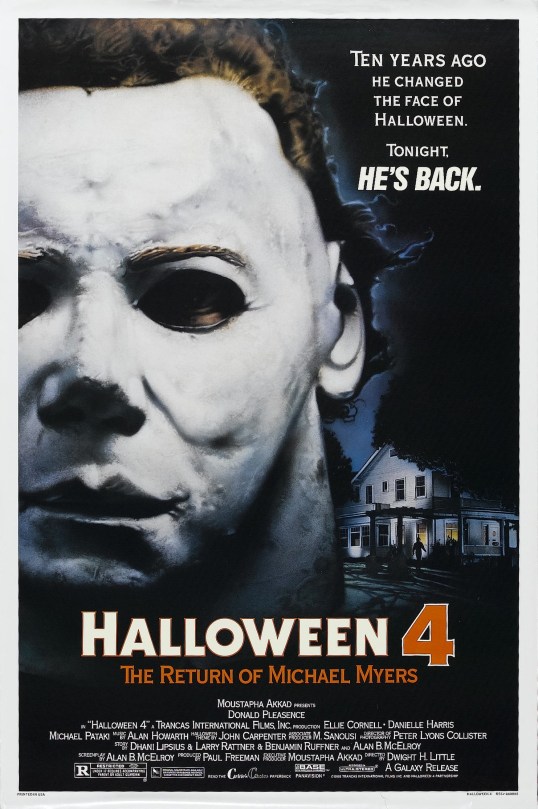
Horror Scenes That I Love: Dr. Loomis Gets A Ride in Halloween 4


Donald Pleasence was born in the UK on October 5th, 1919, the son of a railway station manager.  Pleasence briefly tried to follow in his father’s footsteps before, at the age of 20, realizing that he would much rather be a professional actor.  With his intense demeanor, Pleasence soon became an in-demand character actor and remained one for the rest of his life, only taking a break from acting when he served in World War II.  (A devout Methodist, Pleasence originally registered as a conscientious objector but changed his stance once the Blitz began.)   When he was taken prisoners by the Germans and sent to a POW camp, he organized plays among his fellow prisoners as a way to keep everyone’s spirits up as they waited for the war to end.

Pleasence’s experience as a POW led to him being cast in The Great Escape.  His ability to play villains led to him being cast as the original Blofeld in You Only Live Twice.  He appeared in classic horror films like Death Line and Wake In Fright.  In 1978, he was offered the role of Dr. Loomis in Halloween, after it had been turned down by both Christopher Lee and Peter Cushing.  Pleasence played Loomis with a righteous intensity that seemed to grow a bit more unhinged with each subsequent sequel.  Though he was, by his own admission, not a huge fan of the genre, Pleasence became a horror icon to a whole new generation of film goers.

1998’s Halloween 4 does not have a great reputation but it does have one of my favorite Loomis scenes.  In this scene, a hitchhiking Dr. Loomis is picked up by an old man (Carmen Filipi) who is on a mission of his own.  It’s hard not to regret that these two didn’t get their own spin-off.

Warrior Queen (1987, directed by Chuck Vincent)


The place is Pompeii in the year 79 A.D.

One of the jewels of the Roman Empire, Pompeii is overseen by the decadent Clodius Flaucus (Donald Pleasence).  Despite the warning that the statues of the Temple of Jupiter have been crying salt and that a goat was recently born with the head of a human, Clodius refuses to believe that anything bad could happen to Pompeii.  (“I’d like to see the cow!” Clodius exclaims with  a laugh.)

In the arena, the gladiator Goliath (Marco Tullio Cau) throws deadly frisbees and demands slave girls as his reward for victory.  In the streets, all the women adore Marcus (Rick Hill) but he has eyes only for one of the new slaves, the comely virgin Vespa (Tally Chanel).  Vespa has been purchased by Berenice (Sybil Danning), a former mistress of Caesar who is secretly working to free the slaves.

Warrior Queen was directed by Chuck Vincent.  Vincent was a veteran of the adult film industry and was considered to be one of the best hardcore directors around.  His X-rated films were even positively written up in the New York Times.  In the 80s, he tried to go mainstream and ended up making movies like this one.  Produced by British B-movie impresario Harry Alan Towers and filmed largely in Italy, Warrior Queen was an attempt to capitalize on the minor sword-and-sorcery revival that followed the success of Conan the Barbarian.  There’s plenty of nudity and violence but there’s not much plot and the film feels much longer than its 70-minute run time.  When the volcano does erupt, it’s represented by stock footage and someone shaking the camera while filming the extras.  Pompeii has never looked so cheap.

The main attraction here is Sybil Danning and Donald Pleasence.  Pleasence gives it his all and earns however much he made for this movie.  Danning is only in a handful of scenes and can be seen yawning at several points in the movie.  I think she’s supposed to be the title character but she’s actually neither a warrior nor a queen.  Rick Hill (of Deathstalker fame) and Tally Chanel are at least appealing as the leads, even if Chanel looks more like a lost cheerleader than a Roman slave girl.

The main thing that I learned from watching this film is that the lava that hit Pompeii wasn’t actually that thick, wide, or deep and everyone should have been able to just hop over it and escape.  Anyone who died at Pompeii has no one but themselves to blame.

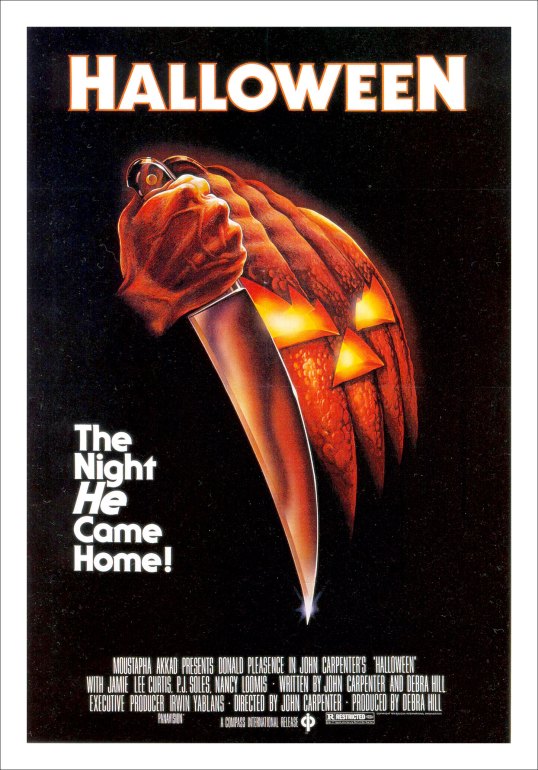
Horror Scenes That I Love: Dr. Loomis Explains Michael Myers in the original Halloween


We’ve talked a bit about Donald Pleasence today.  Pleasence is one of my favorite actors, an intense performer with an eccentric screen presence who always gave it his all, even in films that didn’t always seem like they deserved the effort.  Pleasence was a character actor at heart and he appeared in a wide variety of films.  He’s absolutely heart-breaking in The Great Escape, for instance.  However, it seems that Pleasence is destined to be best-remembered for his horror roles.  For many, he will always be Dr. Sam Loomis, the oracle of doom from the original Halloween films.

In this scene from the original Halloween, Dr. Loomis (Donald Pleasence) attempts, as best he can, to explain the unexplainable.  I’ve always felt that Pleasence’s performance in the first film is extremely underrated.  People always tend to concentrate on the scenes where he gets angry and yells or the later films where an obviously fragile Pleasence was clearly doing the best he could with poorly written material.  But, to me, the heart of Pleasence’s performance (and the film itself) is to be found in this beautifully delivered and haunting monologue.

In this scene, we see that Dr. Loomis is himself a victim of Michael Myers.  Spending the last fifteen years with Michael has left Loomis shaken and obviously doubting everything that he once believed.  Whenever I watch both Halloween and its sequel, I always feel very bad for Dr. Loomis.  Not only did he have to spend 15 years with a soulless psychopath but, once Michael escapes, he has to deal with everyone blaming him for it.  Dr. Loomis was literally the only person who saw Michael for what he was.

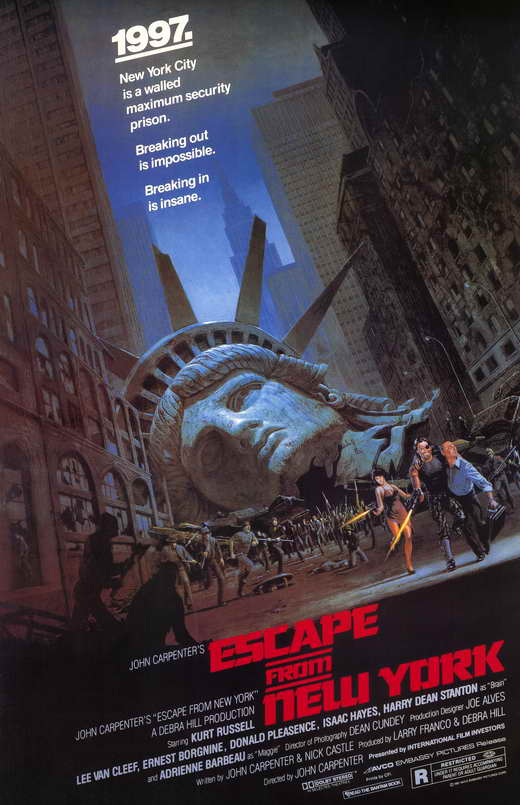
Incidentally, Donald Pleasence nearly turned down the role of Sam Loomis.  He didn’t think there was much to the character.  (The role had already been offered to Christopher Lee and Peter Cushing, neither of whom were interested.)  It was his daughter, Angela Pleasence, who persuaded Donald to take the role.  At that year’s Cannes Film Festival, Angela saw John Carpenter’s Assault on Precinct 13 and she assured her father that Carpenter was a talented filmmaker.  Taking his daughter’s advice, Donald Pleasence accepted the role and, by all accounts, was a complete gentleman and a professional on set.  After making horror history as Dr. Sam Loomis, Pleasence would go on to appear in two more Carpenter films, Escape from New York and Prince of Darkness.

October True Crime: Dr. Crippen (dir by Robert Lynn)


Dr. Hawley Harvey Crippen

In 1910, a homeopath named Dr. Hawley Harvey Crippen was executed by hanging in the UK.

An American by birth, Dr. Crippen had come to London in 1897 with his second wife.  (His first wife died of a stroke and Crippen sent his only son to live with his grandparents.)  Cora Crippen was a former music hall singer who hope to continue her career in London and who did manage to make friends with several prominent members of the city’s theatrical community.  Dr. Crippen was widely regarded as a meek man who was dominated by his rage-prone wife.  Crippen struggled to hold down a regular job and eventually ended up as a manager at the Druet Institute for the Deaf.  By at least 1905, Dr. Crippen was having an affair with a young typist named Ethel Le Neve.

Cora disappeared in early 1910.  When her friends stopped by the house to ask for her, Dr. Crippen said that his wife had left him for another man and had returned to America.  Later, he claimed that Cora had subsequently died in California.  When Ethel was spotted wearing Cora’s jewelry, the London police launched their own investigation into Cora’s disappearance.  After Crippen was interviewed by the police, he and Ethel fled to Brussels and then boarded an ocean liner heading for Canada.  After Crippen and Ethel disappeared, the police searched Crippen’s home and found a torso buried in the basement.  It was assumed that the torso was all that was left of Cora.

(As some have pointed out, it didn’t seem to make much sense for Crippen to dispose of Cora’s head, legs, and arms but to keep her torso.  Apparently, at that time, it was common for human torsos to show up in the Thames, the result of people jumping in the river and then having their body split apart by the current.  As such, the Thames also became a popular place to dump murder victims.  One wonders why Crippen wouldn’t have done the same.)

Meanwhile, on the ocean liner heading to Canada, the captain noticed that one passengers looked like a freshly shaven Dr. Crippen and that the “boy” he was traveling with was obviously a young woman in disguise.  The captain sent a wireless telegram to London.  Chief Inspector Walter Dew boarded a faster liner and actually managed to reach Canada before Crippen.  When Crippen and Ethel arrived in Canada, Walter Dew was waiting for them.

Fate simply wasn’t on Crippen’s side.  If Crippen had bought third class tickets instead of sailing first class, it’s probable the captain would have never seen him during the voyage.  If Crippen had taken a boat to his native United States instead of Canada (which was then still a British dominion), Dew would not have been able to take him back to the UK without an extradition hearing and it’s entirely possible that the evidence would have been ruled insufficient.  Instead, Crippen was promptly returned to London and put on trial for murdering his wife.

During the heavily-covered four-day trial, Crippen’s defense was that Cora had returned to America and that there was no way to prove that the torso was Cora’s.  Though the jury found Crippen guilty in just 22 minutes and he was hanged a month later, there were many who felt that Crippen was innocent or, at the very least, that his guilt had not been proven.  I imagine that one reason why so many people doubted Dr. Crippen’s guilt was because he just didn’t look or act like a murderer.  He wasn’t Jack the Ripper, a shadowy figure moving through the night.  Instead, he was a short, balding, and rather owlish looking man who wore glasses and who, in most photographs, has a quizzical expression on his face.

In short, Dr. Crippen seems as if he was literally destined to eventually be played by Donald Pleasence.

The 1963 film, Dr. Crippen, takes a rather straight-forward approach to telling the story of the doctor.  It opens with Crippen (Donald Pleasence, naturally) on trial for the murder of his wife and it largely tells the story through flashbacks.  Cora (Coral Browne) is portrayed as being a no-talent narcissist who regularly cuckolds her husband while Ethel Le Neve (Samantha Eggar) is portrayed as being a naive young woman who truly loves Dr. Crippen.  The film leaves open the question of whether or not Crippen killed his wife, though it seems to strongly suggest that Crippen was innocent of the crime and the only reason he fled London was because he wanted to be with Ethel.  Donald Pleasence is excellent as Dr. Crippen, playing him with just enough ambiguity that the viewer is left to wonder whether he did it or not.  Pleasence turns Crippen into a sympathetic figure while still holding back just enough to suggest that emotional darkness that could have led even the meek Dr. Crippen to becoming a murderer.  Nicolas Roeg’s black-and-white cinematography captures both the harshness of Crippen’s life in prison and the fleeting romance of his brief time with Ethel.

As for the real life Crippen, both his guilt and his subsequent execution continue to be controversial, with some claiming that DNA testing proved that the torso did not belong to Cora.  (Other have quite reasonably pointed out that the sample used had degraded quite a bit over a hundred years.)  There have been many attempts to win Dr. Crippen a posthumous pardon but all have failed and will probably continue to fail unless Cora’s remains are somehow discovered in a grave somewhere in California.

Shortly before his execution, in his final letter to Ethel Le Neve, Crippen wrote, “Face to face with God, I believe that facts will be forthcoming to prove my innocence.”  After Crippen was hung, Ethel spent three years in Canada before returning to London.  She changed her name, worked as a typist, and eventually married and had two children.  She died in 1967, fifty-seven years after Dr. Crippen.

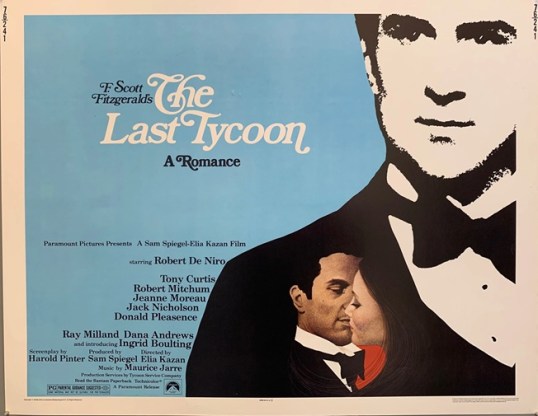
Icarus File No. 23: The Last Tycoon (dir by Elia Kazan)


Based on the final (and unfinished) novel by F. Scott Fitzgerald, 1976’s The Last Tycoon tells the story of Monroe Stahr (Robert De Niro).

Monroe Stahr is the head of production at a film studio during the early days of Hollywood.  Stahr is an unemotional and seemingly repressed man who only shows enthusiasm when he’s talking about movies.  He may not be able to deal with real people but he instinctively knows what they want to see on the big screen.  Stahr is a genius but he’s working himself to death, ignoring his health concerns while trying to create the perfect world through film.  He’s haunted by a lost love and when he meets Kathleen Moore (Ingrid Boulting, giving a remarkably dull performance), he tries to find love with her but, naturally, he doesn’t succeed.  Meanwhile, he has to deal with his boss (Robert Mitchum), his boss’s daughter (Theresa Russell), a neurotic screenwriter (Donald Pleasence), an impotent actor (Tony Curtis), and a lowdown dirty communist labor organizer (Jack Nicholson)!  Sadly, for Stahr, McCarthyism is still a few decades away.

There’s a lot of talented people in The Last Tycoon and it’s undeniably interesting to see old school stars — like Mitchum, Curtis, Dana Andrews, Ray Milland — acting opposite a Method-driven, 30-something Robert De Niro.  This is one of those films where even the minor roles are filled with name actors.  John Carradine plays a tour guide.  Jeff Corey plays a doctor.  This is a film about Golden Age Hollywood that is full of Golden Age survivors.  It’s a shame that most of them don’t get much to do.  The Last Tycoon is a very episodic film as Stahr goes from one crisis to another.  Characters show up and then just kind of disappear and we’re never quite sure how Stahr feels about any of them or how their existence really shapes Stahr’s worldview.  Robert De Niro may be a great actor but, as portrayed in this film, Monroe Stahr is a boring character and De Niro’s trademark tight-lipped intensity just makes Stahr seem like someone who doesn’t have much to offer beyond employment.  This is one of De Niro’s least interesting performances, mostly because he’s playing a not-particularly interesting person.  Mitchum, Pleasence, and the old guard all make an impression because they’re willing to coast by on their bigger-than-life personalities.  De Niro is trapped by the Method and a total lack of chemistry with co-star Ingrid Boulting.

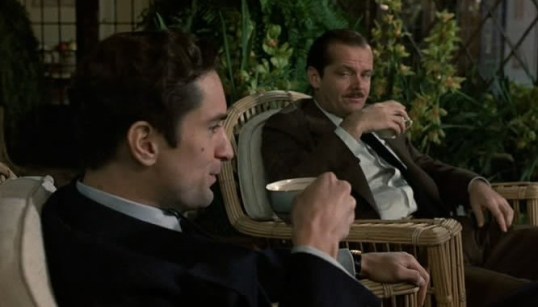
Still, this is the only film to feature both De Niro and Jack Nicholson.  (The Departed was originally conceived as a chance to bring De Niro and Nicholson together, with De Niro being the original choice for the role eventually played by Martin Sheen.)  Nicholson’s role is small and he doesn’t show up until the film is nearly over.  He and De Niro have an intense table tennis match.  Nicholson doesn’t really dig deep into Brimmer’s character.  Instead, he flashes his grin and let’s the natural sarcasm of his voice carry the scene.  It’s nowhere close to being as emotionally satisfying as the De Niro/Pacino meeting in Heat.  That said, Jack Nicholson at least appears to be enjoying himself.  His natural charisma makes his role seem bigger than it actually is.

Why was The Last Tycoon such a disappointment?  Though unfinished, the book still featured some of Fitzgerald’s best work and there’s a huge amount of talent involved in this film.  The blame mostly falls on Elia Kazan, who came out of retirement to direct the film after original director Mike Nichols left the project.  (Nichols reportedly objected to casting De Niro as Stahr.  While it’s tempting to think that Nichols realized that De Niro’s intense style wouldn’t be right for the role, it actually appears that Nichols and De Niro sincerely disliked each other as Nichols also abandoned the next film he was hired to direct when he was told that De Niro wanted the lead role.  Nichols choice for Monroe Stahr was Dustin Hoffman, which actually would have worked.  If nothing else, it would have provided a Graduate reunion.)  Kazan later said that he did the film solely for the money and it’s obvious that he didn’t really care much about the film’s story.  The film has some good scenes but, overall, it feels disjointed and uneven.  Kazan doesn’t really seem to care about Monroe Stahr and, as a result, the entire film falls flat.

Previous Icarus Files:

  1. Cloud Atlas
  2. Maximum Overdrive
  3. Glass
  4. Captive State
  5. Mother!
  6. The Man Who Killed Don Quixote
  7. Last Days
  8. Plan 9 From Outer Space
  9. The Last Movie
  10. 88
  11. The Bonfire of the Vanities
  12. Birdemic
  13. Birdemic 2: The Resurrection 
  14. Last Exit To Brooklyn
  15. Glen or Glenda
  16. The Assassination of Trotsky
  17. Che!
  18. Brewster McCloud
  19. American Traitor: The Trial of Axis Sally
  20. Tough Guys Don’t Dance
  21. Reach Me
  22. Revolution

The TSL Grindhouse: Casablanca Express (dir by Sergio Martino)


First released in 1989, Casablanca Express takes place during World War II.

The three leaders of the Allied nations — Franklin D. Roosevelt, Joseph Stalin, and Winston Churchill — are scheduled to meet in Casablanca to plan the Allied strategy for the next phase of the war.  Churchill insists that he will take a train from Algiers to Casablanca, despite the danger that might put him in.  Even though everyone advises him against it, Churchill is determined.  He makes it clear that he will be traveling by train.

When Major Valmore (Jean Sorel), Colonel Bats (Donald Pleasence), and Maj. Gen. Williams (Glenn Ford) learn that the Germans are aware that Churchill will be on the train and that they will be sending their own intelligence agents to try to kidnap or even assassinate him, they assign three intelligence agents to travel with Churchill.  The agents are Alan Cooper (Jason Connery), Captain Franchetti (Francesco Quinn), and Lt. Lorna Fisher (Jinny Steffan) and they are under orders to do whatever is necessary to protect Churchill’s life.  Unfortunately, Cooper gets so busy chasing after a French double agent that he misses the train’s departure time.  When Otto van Tiblis (Manfred Lehmann) makes his move to take over the train, it falls to Franchetti and Lorna to stop him.  Despite their best efforts, they fail.  Now, it appears that Churchill’s only hope is that Cooper will not only be able to reach the train but also defeat the army of Germans who have taken it over.

Directed by Sergio Martino, Casablanca Express is an Italian film that owes quite a bit to the legacy of writers like Ian Fleming and Jack Higgins.  The plot to capture Churchill owes more than a bit to The Eagles Has Landed, right down to one of the film’s final twists and Donald Pleasence making a cameo appearance as an authority figure.  Alan Cooper is a combination of James Bond and Indiana Jones.  He’s just as comfortable in a suit and tie as he is riding a camel across the desert.  Sergio Martino was one of the best directors of Italian genre films.  He dabbled in everything, from giallo films to Hercules films to crime films to cannibal films to action films like this one.  As a filmmaker, he was efficient and quick to get to the point.  The action in Casablanca Express moves quickly.  In fact, it moves so quickly that the audience often doesn’t have time to consider all of the plot holes.  Martino knows better than to worry about authenticity.  That’s not the type of film that Casablanca Express is.

The film stars Jason Connery and Francesco Quinn, the sons of Sean Connery and Anthony Quinn.  They are both adequate in their roles, even though neither one of them has quite the screen presence of their famous fathers.  Jason Connery is handsome and he looks good in a suit and Francesco Quinn looks good throwing a punch.  That’s all that’s really required of them.  Personally, my favorite character was Lorna Fisher, who fought the Nazis by distracting them with her legs.  That would be my strategy as well so I’m glad to see that it worked here.

Casablanca Express was made at a time when the Italian film industry was going through a down period.  Hence, the budget is low and the film can sometimes seem a bit rushed.  But, all in all, it’s an entertaining B-action movie.

6 Trailers For Pop Music Day


According to the good folks at Checkiday, today is Pop Music Day!  In honor of this prestigious holiday, this week’s edition of Lisa Marie’s Favorite Grindhouse Trailers is all about music!

  1. Head (1968)

First off, we’ve got the trailer for Head, starring the Monkees!  This film was co-written by Jack Nicholson.

2. The Great Rock and Roll Swindle (1980)

In the first film that Julien Temple made about the history of the Sex Pistols, Malcolm McLaren presents himself as being the genius behind the group and tries to keep viewers from noticing that Johnny Rotten refused to have anything to do with the film.

3.Stunt Rock (1978)

I know next to nothing about this film but it was directed by Brian Trenchard-Smith and that’s often a good sign.

4, Sgt. Pepper’s Lonely Hearts Club Band (1978)

Featuring Donald Pleasence singing the longest version of I Want You ever recorded!

5. The Decline of Western Civilization (1981)

From director Penelope Spheeris comes the ultimate documentary about 1980s Los Angeles punk rock.

6. The Decline of Western Civilization Part 2: The Metal Years (1988)

The decline continues.

Happy Birthday in heaven to Director John Sturges! 🎉


Director John Sturges was born on January 3rd, 1910. He directed some of my favorite movies, and many of them starred my movie hero, Charles Bronson. The picture above is from 1973’s CHINO!

Charles Bronson’s second role in a film was in Sturges’ THE PEOPLE AGAINST O’HARA from 1951, starring Spencer Tracy. The picture below isn’t a very good picture as Bronson was only in one scene. Can you spot Bronson??

In 1959, Sturges would direct Charles Bronson in NEVER SO FEW, which co-starred Frank Sinatra and Steve McQueen.

Just a year later in 1960, Sturges would direct Bronson and an all star cast that included Yul Brynner, Steve McQueen, James Coburn and Robert Vaughn in THE MAGNIFICENT SEVEN, a remade of the Akira Kurosawa classic THE SEVEN SAMURAI. Bronson’s role as Bernardo O’Reilly is one of the best in the entire film.

John Sturges would direct Charles Bronson again in 1963 in the classic film THE GREAT ESCAPE, which also starred Richard Attenborough, Steve McQueen, James Garner, James Coburn and Donald Pleasence. Charles Bronson drew on his experience in the coal mines of Pennsylvania when he played “The Tunnel King” in the classic World War II film. Charles Bronson is one of the characters who actually escapes, which made me very happy!

John Sturges would direct Charles Bronson one more time in the underrated western from 1973, CHINO (pictured at the top). Sturges was a phenomenal director, and Charles Bronson was in some of his very best work! As Charles Bronson’s biggest fan, Sturges will always be one of my favorite directors!!