Welcome to Retro Television Reviews, a feature where we review some of our favorite and least favorite shows of the past! On Wednesdays, I will be reviewing the original Love Boat, which aired on ABC from 1977 to 1986! The series can be streamed on Paramount Plus!
The Love Boat promises something for everyone!
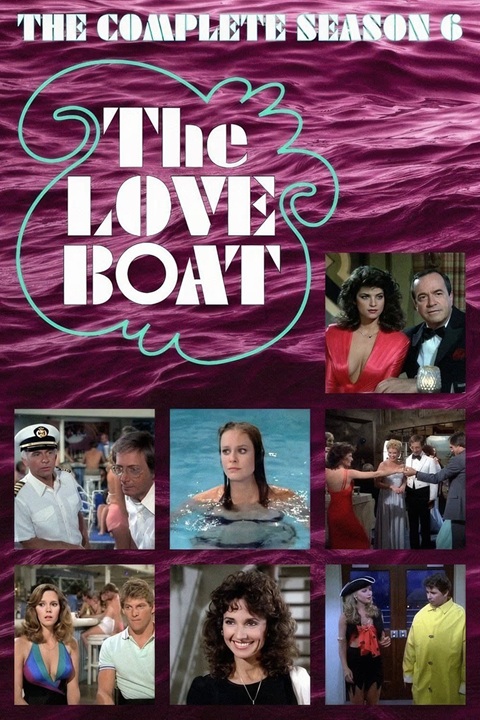
Episode 6.26 “The Professor Has Class/When The Magic Disappears/We, The Jury”
(Dir by Richard Kinon, originally aired on April 2nd, 1983)
I sent a message to my friend Jason, letting him know about this week’s episode of The Love Boat.
“This week’s episode featured a Van Patten and a Van Dyke!” I wrote.
He wrote back, “Two Dicks?”
“No, one Dick and a Barry.”
Dick Van Patten plays The Great Stellini. He’s upset that his daughter (Mary-Margaret Humes) wants to marry Joey Gardiner (Barry Van Dyke), a novice magician. The Great Stellini thinks that Joey wants to steal all of his tricks. His daughter teaches Stellini a lesson by actually disappearing during their stage show. Stellini is humiliated but he learns an important lesson about letting go and also supporting younger magicians.
Meanwhile, Anne Meara played Jerry Stiller’s former landlady. Anne was using Jerry for damaging her property. Gopher decided that a jury made up of the crew should decide the case. Huh? Why? That makes no sense. But you know what? Anne Meara and Jerry Stiller were so cute together that it didn’t really matter.
Finally, a 91 year-old professor (Sam Jaffe) was upset to discover that one of his former students (Bettye Ackerman) was going to replace him. Luckily, everyone fell in love. Sam Jaffe was one of the great character actors and it was kind of nice to see him on this show, acting opposite his wife, Bettye Ackerman. This was Jaffe’s final performance and he had a twinkle in his eye. He seemed to be having fun.
“There’s no way to get hurt in here, just enjoy yourself.” — John Blane
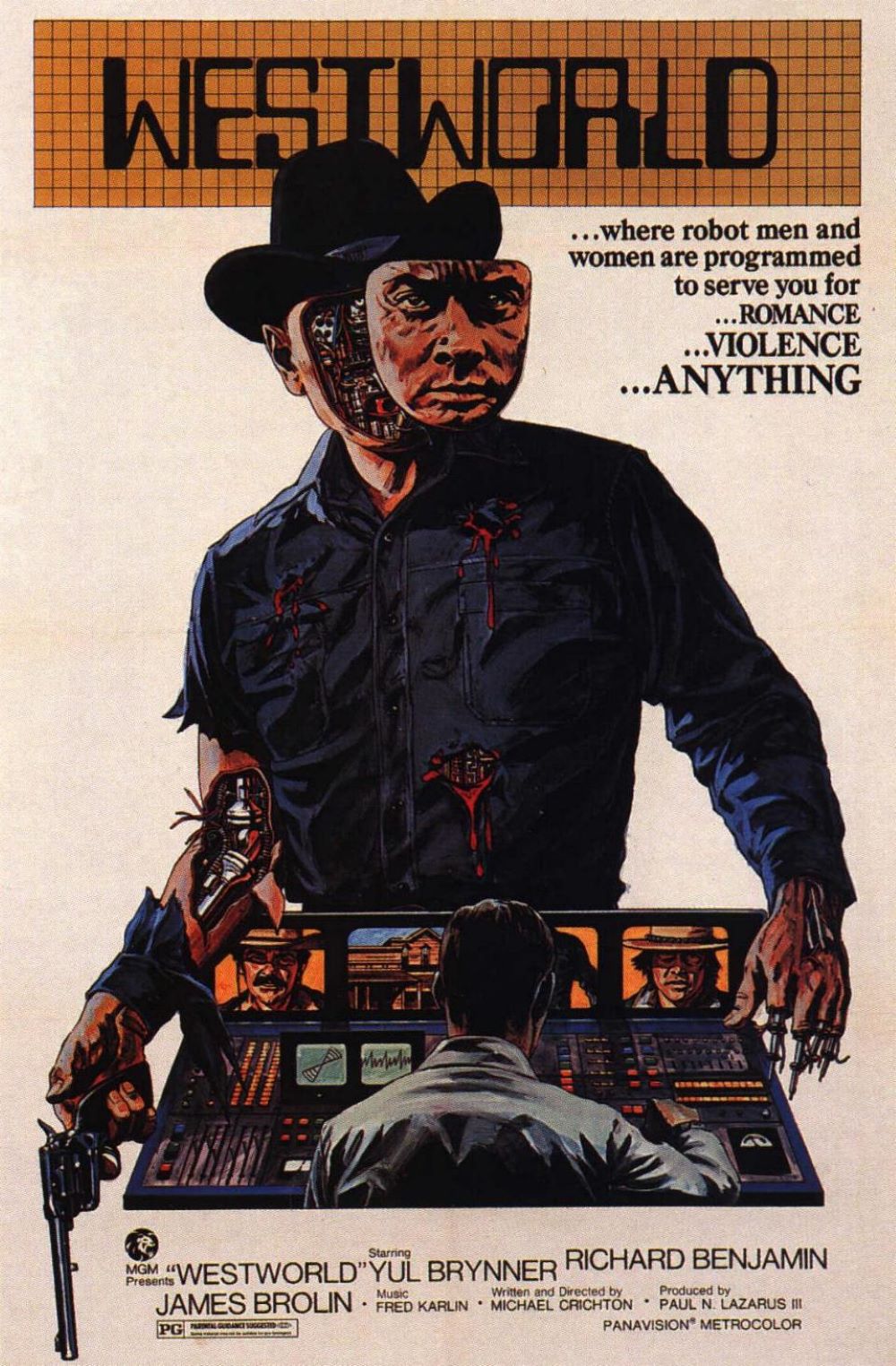
Michael Crichton’s Westworld (1973) is a pioneering sci-fi thriller that uniquely melds futuristic technology with classic Western motifs to explore the dark side of immersive fantasy. The film is set in Delos, a high-tech amusement park divided into three themed worlds—Roman, Medieval, and Western—where guests can live out their fantasies with lifelike androids programmed to serve them. The story focuses on friends Peter Martin (Richard Benjamin) and John Blaine (James Brolin), who embark on a vacation to Westworld, only to find the androids malfunctioning with deadly consequences.
One of Westworld’s greatest strengths lies in its compelling premise. The concept of a theme park filled with near-human robots designed for guests’ amusement feels both visionary and deeply relevant even decades later. It touches on early concerns about the dangers of AI, the ethics of escapism, and how technology could spiral out of control. The film’s gradual shift from playful adventure to tense horror keeps the viewer engaged, illustrating how quickly paradise can turn into a nightmare. Yul Brynner’s portrayal of the robotic Gunslinger is especially memorable, embodying a calm yet unstoppable menace that has echoed through decades of genre cinema. His near-silent, mechanical stalking of the protagonists in the film’s thrilling climax defines the archetype of the relentless android assassin.
Technologically, Westworld was groundbreaking for its era. It featured some of the first uses of computer-generated imagery to simulate the Gunslinger’s “robot vision,” providing a novel and eerie perspective that laid the groundwork for the visual language of future sci-fi films. The movie’s restrained approach to horror and suspense—which leans heavily on atmosphere and tension rather than gore—remains effective. The juxtaposition of idyllic fantasy and mechanical terror gives Westworld a unique texture that feels both nostalgic and fresh.
However, the film is not without flaws. Its pacing is uneven—while the first half indulges in leisurely world-building and character interactions, it can feel slow and unfocused, weighing down the narrative momentum. The characters, particularly Peter and John, are somewhat archetypal and underdeveloped, serving more as audience surrogates than fully fleshed-out individuals. This limits emotional investment in their plight, which could have deepened the film’s impact. Some dialogue and scenes feel dated or clichéd, something Crichton himself acknowledged by deliberately shooting certain sequences as cinematic clichés to evoke a stylized old-movie atmosphere.
The tonal shift from lighthearted theme-park romp to suspenseful thriller, while intriguing, feels abrupt and uneven in spots. The horror elements emerge forcefully in the second half but are preceded by a comparatively slow start that may test some viewers’ patience. The film’s logic around the park’s safety and the androids’ malfunctioning is also inconsistent—what begins as programmed fantasy behavior suddenly becomes lethal with little explanation or foreshadowing. These plot holes can detract from the immersion if one is seeking tightly reasoned sci-fi.
World-building is another area where Westworld shows its age; the other park zones like Romanworld and Medievalworld are barely touched on, serving more as exotic backdrops than dynamic settings. The film lightly explores AI ethics and humanity’s hubris but refrains from delving deeply into philosophical questions, which later adaptations and works inspired by the film would expand upon more thoroughly. The 1970s social attitudes reflected in the cast and scenarios can also feel outmoded to modern sensibilities.
Despite these issues, Westworld remains a cult classic and a fascinating artifact of sci-fi cinema history. Its influence is enormous, seeding ideas that blossomed into franchises like The Terminator, Jurassic Park, and the HBO Westworld series. It stands as Michael Crichton’s directorial debut and an early example of a film grappling with human-machine interaction and the consequences of technological spectacle.
Westworld is a smart, ambitious blend of sci-fi, Western, and horror that captivates with its high-concept premise, pioneering visuals, and iconic villainy. While its uneven pacing, thin character development, and occasional logical gaps reveal its age, these flaws do little to diminish its charm and significance. For genre fans, it’s an essential watch—both as a suspenseful thriller and a creative blueprint for many modern tales of technology run amok. It’s a film that showcases the thrilling promise and lurking threat of immersive fantasy, wrapped in the dust and desolation of the Wild West.
You can probably just look at the title and guess what is going on with this 2009 faith-based film.
Sarah Collins (Rebecca St. James) is pregnant and she’s thinking about getting an abortion. She doesn’t feel that she’s ready to become a mother. Her quasi-boyfriend works in the same office that she does and, at first, he seems more interested in just hanging out with the boys than actually doing anything that would indicate he would be a good father. Sarah is up for a promotion at work and, as her best friend (Andrea Logan White) is quick to point out, the bosses aren’t going to promote a woman who might put her family before her job.
On the other hand, Sarah keeps having visions of herself in the future, married and with a daughter who loves her. Sarah’s sister-in-law (Staci Keanan) talks about how much she loves being a mother. A local minister (Dick Van Patten) gently suggests that God might be trying to tell Sarah something. Sarah realizes that her best friend is hardly an unbiased observer when it comes to Sarah’s choice. Plus, the film takes place during the Christmas season. There’s happiness and joy everywhere!
As you probably guessed, this is an anti-abortion movie. That said, as far as faith-based anti-abortion movies go, it’s actually a bit more fair-minded than one might expect. Sarah struggles with her decision and the film is at least willing to take Sarah’s concerns seriously, as opposed to just portraying her as being either selfish or immature (which is the usual path that most anti-abortion films take). One character expresses regret for her own past abortion but, again, the film treats the character fairly. It may not seem like much but compared to something like Allison’sChoice, which featured Jesus Christ showing up and then breaking into tears while standing in an abortion clinic, Sarah’sChoice is downright moderate in its storytelling.
The truth of the matter is that there really aren’t that many subtle films made about abortion, on either side of the debate. Yes, pro-life films tend to be heavy-handed and too quick to villainize those who feel differently. But the same can be said of most pro-abortion films as well. Abortion is one of those issues that tends to bring out the extremists on both sides. When you see a film like Sarah’sChoice — a film in which no one is accused of committing murder and no one attempts to bomb anyone else — it’s almost a relief, even if you don’t agree with the film’s overall message.
Rebecca St. James gives a sympathetic performance as Sarah and Andrea Logan White brings so much-needed nuance to the role of her best friend. Dick Van Patten, with his friendly manner and nonjudgmental attitude, is the ideal counselor. Sarah’sChoice is not a film that is going to win any converts and I imagine that people who are far more politically-minded than me will find a lot to get annoyed about with this movie. I think that, overall, it’s well-acted and well-made. It’s a movie not a manifesto.
1972’s JoeKidd opens with the title character (played by Clint Eastwood) in jail. Joe is a New Mexico rancher and apparently, someone with a long history of getting in trouble with the law. This time, he’s been arrested for poaching and disturbing the peace. Given a choice between a fine and ten days in jail, Joe goes for the ten days. Cowardly Sheriff Mitchell (Gregory Walcott) says he’s going to put Joe to work. Joe Kidd snarls in response.
However, that’s before Luis Chama (John Saxon), a Mexican revolutionary, raids the courthouse and demands that all of his people’s ancestral land be returned to them. Local landowner Frank Harlan (Robert Duvall) forms a posse to track Chama down. Joe says that he has nothing against Chama but that changes once he discovers that Chama raided his ranch and beat up one of his ranchhands. Joe joins the posse but he soon discovers that Harlan and his men are sadists who are more interested in killing Mexicans than actually capturing Chama.
I was actually pretty excited about watching JoeKidd. Clint Eastwood, Robert Duvall, and John Saxon, three of my favorite actors in the same movie! How couldn’t I be excited? Unfortunately, neither Duvall nor Saxon are at their best in this film. Frank Harlan is a one-dimensional villain and Duvall doesn’t make much of an effort to bring any sort of unexpected nuance to the character. Duvall doesn’t give a bad performance but it’s hard not to feel that Harlan is a character who could have been played by any forty-something actor. It feels like waste to cast such a good actor in such a thin role. (Add to that, I prefer Duvall when he plays a good guy as opposed to when he plays a bad guy.) As for Saxon, this is probably one of his worst performances but his character is also rather underwritten and the film can’t seem to decide if it wants the viewer to be on his side or not. Saxon delivers his lines in an exaggerated Mexican accent that makes it difficult to take Louis Chama seriously. Gregory Sierra would have made a good Louis Chama but Saxon just seems miscast.
Fortunately, Clint Eastwood is always a badass, even in an uneven film like this. Eastwood is at his best in the early scenes, when he’s grouchy and hungover and annoyed at finding himself in the jail. He is believably outraged by Harlan’s tactics and, in typical Eastwood fashion, he delivers every pithy one-liner with just enough style to keep things interesting. That said, Eastwood is let down by a script that never really makes it clear why Joe Kidd stays with the posse once it becomes clear that he’s traveling with a bunch of sociopaths. Joe’s motivations are never really clear. In the end, he seems like he goes through a lot of trouble to protect his farmland and get revenge for one of his ranch hands (who is just beaten up), just to then desert it all once all the shooting is over.
That said, JoeKidd is a gorgeous film to look at and Joe makes creative use of a steam engine. This isn’t the film to show anyone who isn’t already an Eastwood fan. But, for those of us who are already fans of Clint, it’s enjoyable to watch him snarl, even if it is in a lesser film.
Some of the toughest criminals in America are being transported, via train, to a high security prison. For some reason, instead of using an entire train to transport the prisoners and guards, it’s decided to just put the criminals in one car attached to a normal passenger train. Did the passengers in the other cars get a warning that would be traveling with a bunch of desperate criminals? Did they at least get a discount on their tickets? Of course, Mafia kingpin Enzo Martini (Roy Scheider, slumming) engineers a takeover with the rest of the prisoners. It’s up to Sheriff Wes Blaidek (Ray Wise) and bartender Zoe Clark (Delane Matthews) to stop the prisoners.
This is a fast-moving, dumb-as-Hell action movie that’s memorable mostly for having a cast that was very much overqualified for the film. Keith Coogan, Dorian Harewood, Don Swayze, Ed O’Ross, and Sam J. Jones are all in this thing. Clint Howard plays the homicidal serial killer who lets a child live because the kid has seen Taxi Driver. Dick Van Patten plays the head of the parole board. I can understand why Roy Scheider might be selected to play a mob boss and how Clint Howard and Don Swazye ended up playing killers. But how do you look at this film’s story and think, “This need Dick Van Patten?” It’s Die Hard on a train but without the wit or the budget. The movie moves quickly, there’s plenty of train and helicopter action and it’s still good to see so many familiar and eccentric talents gathered together to bring too life one very stupid movie. It’s too bad they couldn’t find room for Joey Travolta or Joe Estevez but I guess you can’t have everything.
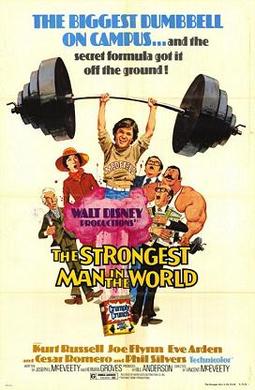
Dexter Riley (Kurt Russell) is back, again! He still hasn’t graduated from Medfield College and Medfield is still on the verge of going broke. Dean Higgins (Joe Flynn) discovers that the reason Medfield can never get out of the red is because the science class and students like Dexter are spending so much money on their experiments. The Dean fires the science professor and threatens to expel Dexter! But when Dexter’s latest experiment develops a type of milk that gives the drinker super strength, the Dean might have to change his mind.
A cereal company wants to buy the supermilk, which would get Medfield out of the hole. But a rival cereal company just wants to steal the formula for the milk so they hire disgraced businessman and gangster A.J. Arno (Cesar Romero) to once again try to thwart the best laid plans of Medfield College. Meanwhile, Dexter competes in a contest to prove that the supermilk has truly made him into the strongest man in the world.
The plot of the last Dexter Riley movie somehow manages to be even dumber than the first two and it was high time for Dexter to graduate and get on with his life but The Strongest Man In The World did make me laugh a few times. Because this entry in the series involved super strength instead of invisibility or merging with a computer, it allowed for more physical comedy and it felt less dates than the other two movies. The action is pretty much nonstop, as Dexter gets into one scrape after another and the cast is likable even if they all were getting a little old to still be playing college students. Like the other Dexter Riley films, The Strongest Man In The World is too innocent and good-natured not to enjoy on some level.
I guess Dexter finally graduated after this movie. Both he and Kurt Russell went on to better things.
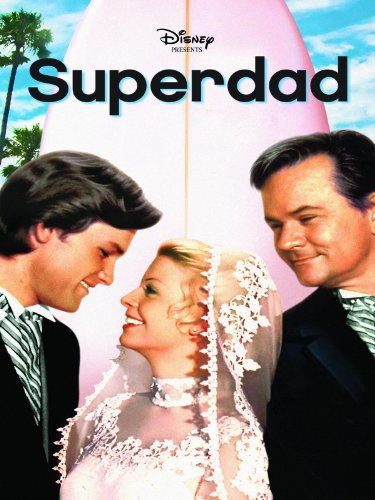
In 1973’s Superdad, Disney takes on the generation gap.
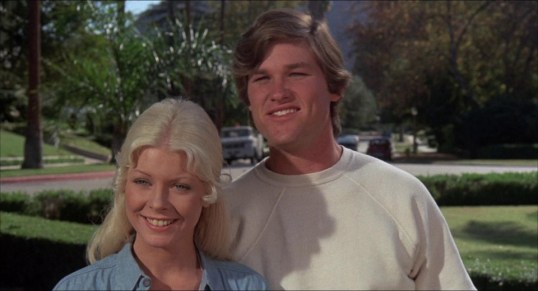
Charlie McCready (Bob Crane) just can’t understand what’s going on with his daughter, Wendy (Kathleen Cody). She’s smart, pretty, and has the potential for a great future ahead of her but all she wants to do is hang out with her friends on the beach. Eccentric Stanley Schlimmer (Bruno Kirby) drives everyone around in a souped-ambulance. Ed Begley, Jr. (who plays a character who doesn’t even get a name) joins in whenever the group sings a folk song. Wendy’s boyfriend, Bart (young and likable Kurt Russell), is a surfer and water skier. Charlie is truly convinced that this extremely clean-cut group of teenagers is going to lead his daughter astray. In fact, Wendy wants to marry Bart! Charlie attempts to hang out with Wendy, Bart, and his friends on the beach and he can’t keep up. He can’t water ski, he can’t play football, he can’t play volleyball. All he can do is scream in this weird high-pitched voice. The entire time is Bart is extremely nice to him and doesn’t even make fun of him for not being able to hit a volleyball over a net. I mean, even I can do that! But because Charlie’s not dealing well with becoming middle-aged, he decides that Bart is a threat.
(I’m going to assume that Charlie also teams up with a creepy friend and starts filming himself having threesomes with groupies, though we don’t actually see that happen in the film. The subtext is there, though!)
Charlie decides that he has to get Wendy away from this group and the best way to do that would be to trick her into thinking she’s received a scholarship to …. Yes, this is just that stupid …. a scholarship to a prestigious university. While Bart and his healthy, non-smoking, non-drinking friends are all going to City College and living at home with their parents, Wendy will be miles away at a college where she can do anything that she wants. Charlie thinks this is a great plan. One gets the feeling that Charlie, for all of his overprotectiveness, hasn’t read a newspaper in 20 years. Seriously, has he not been keeping up with what was happening on most college campuses in the late 60s and early 70s?
The main problem with this film is that Charlie is an incredible jerk. It’s one thing to be overprotective. Fathers are supposed to be overprotective of their daughters. It’s one thing to worry about his daughter not having a good deal of ambition. I can even understand him getting annoyed with Stanley because Stanley is kind of annoying. (Watching this film, it’s hard to believe that Bruno Kirby was just one year away from playing the young Clemenza in The Godfather, Part II.) But seriously, Charlie is freaking out over his daughter dating KURT RUSSELL! In this film, Kurt Russell plays a character who is always polite, mild-mannered, sensible, and remarkably understanding of Charlie’s attempts to keep him from marrying Wendy. There is one scene where Bart gets upset and he barely even raises his voice. He’s incredibly likeable and, for all of this film’s flaws, it’s still easy to see why Kurt Russell became a star.
Of course, what really makes this film a cringe-fest is that it stars Bob Crane as a family man with a secretly manipulative side and, the whole time I was watching, I kept having flashbacks to Greg Kinnear in Auto-Focus. Wendy, to make her dad really angry, gets engaged to an actual hippie named Klutch (Joby Baker) and there’s a scene in which Klutch and Charlie get into a fight in Klutch’s artist studio. Every time Klutch swung anything near Charlie’s head, I definitely cringed a bit. Red paints get spilled everywhere, though luckily it ends up on Klutch and not Charlie. Still, watching the film, I couldn’t help but think that there are worse things that could happen to someone than having their daughter marry Kurt Russell.
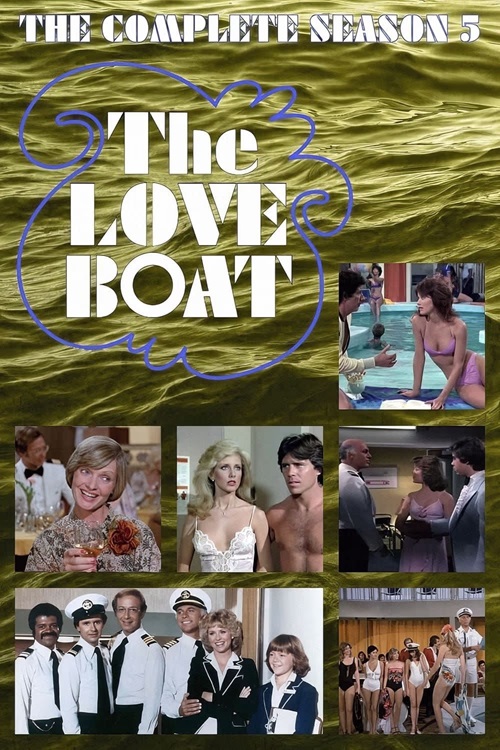
Welcome to Retro Television Reviews, a feature where we review some of our favorite and least favorite shows of the past! On Wednesdays, I will be reviewing the original Love Boat, which aired on ABC from 1977 to 1986! The series can be streamed on Paramount Plus!
Love, exciting and new …. come aboard, they’re expecting you….
Episode 5.18 “His Girls Friday/A Wife for Wilfred/The Girl Who Stood Still”
(Dir by Robert Scheerer, originally aired on February 13th, 1982)
Wilfred (Tom Smothers) is a single guy who tells the crew that he’ll pay $10,000 to whoever helps him find a wife on the cruise. The members of the crew each introduce Wilfred to a different woman and soon, Wilfred has five women following him all over the boat. However, when Isaac hears Wilfred bragging about how he conned the crew into doing all the work for him and how he was lying about the $10,000, the crew hires Marilyn (Connie Stevens), who runs the ship’s flower shop, to pretend to Wilfred’s wife.
Ha! Joke’s on Wilfred! No wait, the joke’s on the crew. Marilyn and Wilfred fall in love. Meanwhile, Julie remains single.
Meanwhile, Howard Ethan (Dick Van Patten) boards the ship with his loyal and superefficient secretary, Doris (Rue McClanahan). Doris is a great secretary but when Howard finds out that Cindy Nevins (Judy Landers) is looking for a secretarial job, he tries to figure out how to get Doris to quit so that he can hire Cindy. Maybe he and Doris could just fall in love. Myself, I wonder why people were always doing work while on The Love Boat. Isn’t a cruise supposed to be a vacation? And yet, every episode seemed to feature someone determined to spend the cruise in their cabin and getting some work done. I appreciate the spirit, I guess. I mean, I write film reviews while I’m on vacation so I guess I can relate. But still, if you’re going to pay for a luxury cruise, wouldn’t you at least want to use it as an excuse to forget about your responsibilities on the mainland?
Finally, Bess Hensinger (Vera Miles) boards the boat with her daughter, Abigail (Denise Miller). Abigail is stunned to learn that Bess invited a boy that Abigail likes to join them on the cruise. How will Jim (James Osmond) react if he discovers that Abigail has …. scoliosis!? This storyline was actually the best of the episode, if just because it was the only one where the male half of the romantic pairing didn’t come across as being totally sleazy. Jim was a genuinely nice guy and, needless to say, he didn’t care that Abigail has scoliosis. Denise Miller give an excellent performance as the insecure Abigail. As an asthmatic teenager, I always dreaded the thought of using my inhaler in front of other people so I could relate to what Abigail was going through. I may not have cared about the other two stories but I was happy things worked out for Jim and Abigail.
One good story out of three is usually not something brag about but Abigail and Jim were such a winning couple that they really did make this episode worth the trouble. Despite Wilfred and Howard, this was a good cruise.
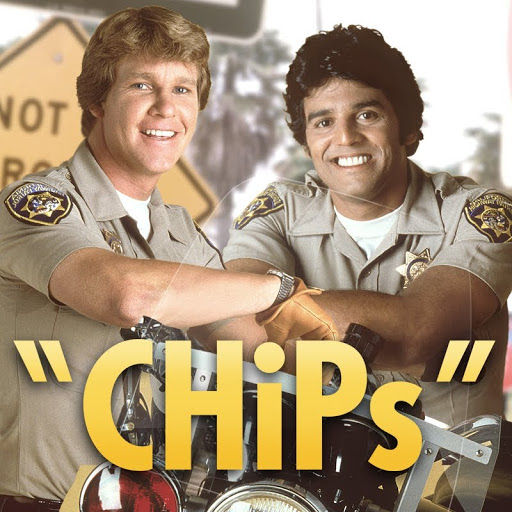
Welcome to Late Night Retro Television Reviews, a feature where we review some of our favorite and least favorite shows of the past! On Mondays, I will be reviewing CHiPs, which ran on NBC from 1977 to 1983. The entire show is currently streaming on Prime!
This week, season three begins with a classic episode!
Episode 3.1 and 3.2 “Roller Disco”
(Dir by Don Weis, originally aired on September 22nd, 1979)
It’s the roller disco episode!
From the moment that I first announced that I would be watching and reviewing CHiPs for this feature, people have been telling me about the legendary roller disco episode. Having finally reached it, I can say that it lived up to the hype. You’re not likely to see anything more 70s than the third season premiere of CHiPs.
Now, this was a two-hour episode so there were actually quite a few subplot going on, all of which were typical CHiPs storylines. In no particular order:
A kid named Mark (Bobby Rolofson) is roller skating around the beach and idolizing three criminals. Can Baker show him that the good guys always win?
The three criminals are Lita (Helena Kallianiotes), Ty (Fred Williamson), and Romo (Jim Brown). Lita sets up the targets. Ty and Romo steal their purses and their wallets and then escape on roller skates. Ty and Romo are tired of breaking the law. Lita demands that they continue to steal. Eventually, it falls to Baker and Ponch to arrest them.
Carlin (Larry Linville) and Franco (Larry Storch) continually cause accidents on the highway.
Rock star Jimmy Tyler (Leif Garrett) is so tired that he sleeps through one of those accidents. Looking to break free from his well-meaning but overbearing manager (Bill Daily), Jimmy decides to manage his own affairs while staying at Jon Baker’s apartment.
There’s a lot going on but the main plotline is Ponch trying to find celebrities to take part in the annual highway patrol fund raiser. Even with his big smile, Ponch struggles to charm the celebs. He pulls over Ed McMahon at one point but fails to recognize him until McMahon drives off. Gatraer tells Ponch that police work comes first but also tells him that he has to find celebrities. Gatraer’s been giving Ponch a hard time ever since the first season. Some things never change.
Fortunately, Jimmy feels guilty for overstaying his welcome at Baker’s apartment and he makes it up to Baker and Ponch by asking his celebrity friends to take part in the fund raiser. It’s time for a roller disco with the stars!
It all leads to this classic scene:
I recognized a few of the stars, though certainly not all of them. I recognized Victor French because I’ve been reviewing Highway to Heaven. I’ve also seen enough old sitcoms that I immediately recognized Robert Mandan, who was apparently the best roller skater in Hollywood. Melissa Sue Anderson, I knew from Happy Birthday To Me. Cindy Williams, who got two shout-outs, I knew from American Graffiti. Is it just me or did Nancy Kulp look kind of lost? Neither Melissa Sue Anderson nor Cindy Williams seemed to want to talk to her.
The roller disco actually goes on for fifteen minutes, which I appreciated. The show promised a roller disco and it delivered. It was like stepping into a time machine and traveling to the 70s. It was a great way to start season three!
Because of the holidays, this is going to be my final CHiPs review of 2024. My reviews of this show will return on January 6th!
President Skroob (Mel Brooks), the evil and incompetent leader of Planet Spaceball, has squandered all of the air on his planet and is planning on stealing the atmosphere of the planet Druida. To pull this off, he arranges for the idiotic Prince Valium (Jim J. Bullock) to marry Vespa (Daphne Zuniga), the princess of Druida. (All together now: “She doesn’t look Druish.”) Vespa and her droid, Dot Matrix (voice by Joan Rivers), flee Druida with Lord Dark Helmet (Rick Moranis) and Colonel Sandurz (George Wyner) in pursuit.
In debt to the intergalactic gangster, Pizza the Hut (voiced by Dom DeLuise), a mercenary named Lone Star (Bill Pullman) and his associate, the man-dog hypbrid Barf (John Candy), accept a contract from Vespa’s father (Dick Van Patten) to track down his daughter. They take off in their space Winnebago to bring Vespa home. Though they start only interested in money, Lone Star and Barf come to learn about love, freedom, and a mystical power known as the Schwartz. (“No, the Schwartz!”)
Back when I was growing up and just being able to have HBO made you the coolest guy on the block, Spaceballs was one of my favorite movies. I watched it every time that it came on cable. As usual with Mel Brooks, there were a lot of double entendres that went over my young head but there was also enough goofy humor that I could laugh at what was going on. I could quote all the lines. I laughed whenever Rick Moranis showed up in his Darth Vader-costume. I laughed at John Candy’s facial expressions. I laughed when Mel Brooks showed up as Yogurt, the Spaceballs version of Yoda. Pizza the Hut? That’s hilarious when you’re a kid!
I recently rewatched the film. Revisiting it was a lesson in how your memory can trick you. I could still quote most of the lines with reasonable accuracy but nothing was quite the way I remembered it. Rick Moranis and John Candy were still hilarious and, being older, I could better appreciated the frustration felt by George Wyner’s Colonel Sandurz. I also realized what a good performance Bill Pullman gave as Lone Star. While everyone else mugged for the camera, Pullman played his role straight.
I also discovered that a lot of the scenes that I remembered as being hilarious were actually just mildly amusing. Mel Brooks was always hit-and-miss as a director, the type who would toss everything and the kitchen sink into his films. Spaceballs has a lot of hilarious scenes but it’s obvious that Brooks didn’t have the same affection for the source material as he did with Young Frankenstein or Blazing Saddles or even High Anxiety. Brooks is poking fun at Star Wars because it’s popular but he doesn’t seem to have any strong feelings, one way or the other, about George Lucas’s space epic.
I still laughed, though. Even if Spaceballs wasn’t the masterpiece that I remembered it being, I still enjoyed rewatching it. The jokes that hit were funny enough to make up for the ones that missed. Even with his weaker films, Mel Brooks is a national treasure.


 Through the Shattered Lens