Catching Up With The Films of 2025: Anniversary (dir by Jan Komasa)


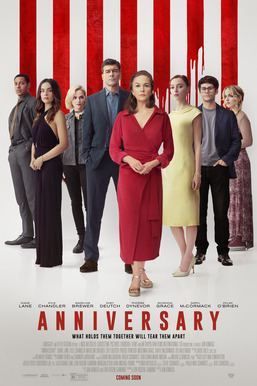
 Anniversary begins with a party.  Ellen Taylor (Diana Lane), a professor at Georgetown University, is celebrating the 25th anniversary of her marriage to Paul (Kyle Chandler), a restauranteur.  The family has gathered at Lina and Paul’s ocean-side mansion.  Daughter Cynthia (Zoey Deutch) and her husband Rob (Daryl McCormick) are environmental attorneys.  Another daughter, Anna (Madeleine Brewer), is a performance artist who is very close to the youngest child, teenage Birdie (McKenna Grace).  Finally, Josh (Dylan O’Brien) is the only son, a struggling writer who arrives with his fiancée, Liz Nettles (Phoebe Dynevor).

Ellen immediately recognizes Liz as a former student, one who wrote a dissertation advocating for a one-party state.  At the time, Ellen called out Liz’s totalitarian ideology, to the extent that Liz accused Ellen of bullying her and ended up transferring to a different college.  Now, Ellen is not happy to discover that Liz has written a book called The Change and that Josh has abandoned his own “sci-fi trilogy” to help Liz out with her projects.  Liz is polite to Ellen but, before she leaves, she gives her future mother-in-law a forced hug and says, “I’m not scared of you anymore.”

From there, the film jumps forward from year-to-year, from gathering-to-gathering.  Liz’s book is a best-seller that soon sparks a movement.  Ellen watches in horror as her neighbors start to fly Change flags (which is the American flag, with the stars in the center).  Josh goes from being awkward and dorky to being arrogant and finally threatening.  With each year, the Change becomes more powerful and more menacing, until eventually Paul can’t even stand outside at night without a drone warning him that he’s violating curfew.  Anna becomes a fugitive while Birdie tries to find her place in a rapidly changing world.  The tragedies that follow all feel inevitable.

Anniversary is definitely an uneven film.  Some of the performances are better than others.  Diane Lane, Kyle Chandler, Dylan O’Brien, and Phoebe Dynevor all give excellent performances.  If nothing else, this film shows that Dylan O’Brien may be one of the most underrated actors working today.  At the same time, Madeline Brewer goes so over-the-top that I was almost relieved when Anna had to go into hiding and Zooey Deutch is let down by a script that doesn’t seem to be quite sure what to do with her character.  There are a few moments that are a bit too heavy-handed for their own good and the viewer is sometimes left to wonder if the film has the self-awareness necessary to understand that the Taylors, with their combination of wealth and radical chic politics, are often their own worst enemies.

That said, Anniversary is definitely a film of the moment.  There are enough brilliant scenes — like a meeting with two “census takers” that gradually turns menacing — to make up for the scenes that don’t work.  It’s best moments have an undeniable power in which the viewer realizes that the film’s melodrama is far more plausible today than it would have been in a pre-COVID era.  The scene where Paul is told that he is violating curfew would seem heavy-handed if not for the fact that, in 2020, we pretty much saw the same thing happening across the country.

Some online critics have complained that The Change’s ideology is purposefully left vague but that misses the point that most successful movements actually are vague about the details.  (Historically, most American third party movements tend to fall apart as soon as they start taking actual policy positions.)  The Change becomes powerful specifically because people can view it as being whatever they want it to be.  Whereas some people might see it as a return to a “simpler” time, others will view it as the warmth of collectivism replacing the frigidity of rugged individualism.  The Change is all about vibes and paranoia, the feeling that people are being left behind by the system and the only way to solve the problem is for everyone to embrace The Change without question.  The thing that all the followers of The Change share is a belief that dissent cannot be tolerated.

Anniversary is a crudely effective film, one that shows a small act of revenge can grow into something much larger.  It was overlooked when released but it still carries a powerful punch.
Here Are The 2025 Satellite Nominations


I’m not really sure why the Satellite Awards are a still a thing but they are.  (Peanut gallery: “Jokes on you, Lisa!  You’re still writing about them!”)  Here are their 2025 film nominations.

Best Picture (Drama)
Avatar: Fire And Ash
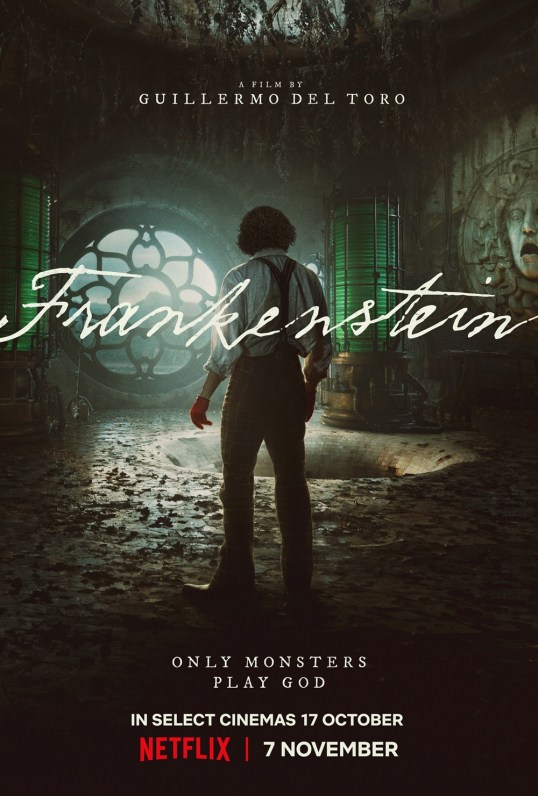
Frankenstein
Hamnet
One Battle After Another
Sinners
Sentimental Value
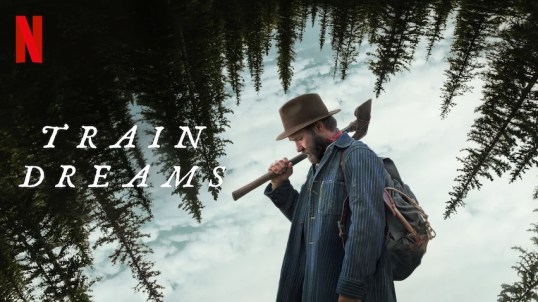
Train Dreams

Best Picture (Comedy or Musical)
Bugonia
Father Mother Sister Brother
Marty Supreme
Nouvelle Vague
Novocaine
Sorry, Baby

Best Director
Chloé Zhao – Hamnet
Guillermo del Toro – Frankenstein
Jafar Panahi – It Was Just an Accident
James Cameron – Avatar: Fire And Ash
Joachim Trier – Sentimental Value
Paul Thomas Anderson – One Battle After Another
Ryan Coogler – Sinners

Best Actor (Drama)
Joel Edgerton – Train Dreams
Leonardo DiCaprio – One Battle After Another
Michael B. Jordan – Sinners
Oscar Isaac – Frankenstein
Wagner Moura – The Secret Agent

Best Actress (Drama)
Chase Infiniti – One Battle After Another
Diane Lane – Anniversary
Jessie Buckley – Hamnet
Leonie Benesch – Late Shift
Renate Reinsve – Sentimental Value

Best Actor (Comedy or Musical)
Ethan Hawke – Blue Moon
George Clooney – Jay Kelly
Jesse Plemons – Bugonia
Liam Neeson – The Naked Gun
Timothée Chalamet – Marty Supreme

Best Actress (Comedy or Musical)
Cynthia Erivo – Wicked: For Good
Emma Stone – Bugonia
Eva Victor – Sorry, Baby
Rose Byrne – If I Had Legs I’d Kick You

Best Supporting Actor
Benicio del Toro – One Battle After Another
Jacob Elordi – Frankenstein
Paul Mescal – Hamnet
Sean Penn – One Battle After Another
Stellan Skarsgård – Sentimental Value

Best Supporting Actress
Amy Madigan – Weapons
Ariana Grande – Wicked: For Good
Elle Fanning – Sentimental Value
Inga Ibsdotter Lilleaas – Sentimental Value
Teyana Taylor – One Battle After Another
Wunmi Mosaku – Sinners

Best Original Screenplay
Eskil Vogt & Joachim Trier – Sentimental Value
Jafar Panahi – It Was Just an Accident
Noah Baumbach & Emily Mortimer – Jay Kelly
Ronald Bronstein & Josh Safdie – Marty Supreme
Ryan Coogler – Sinners

Best Adapted Screenplay
Clint Bentley & Greg Kwedar – Train Dreams
Chloé Zhao – Hamnet
Park Chan-wook, Lee Kyoung-mi, Don McKellar & Lee Ja-hye – No Other Choice
Paul Thomas Anderson – One Battle After Another
Will Tracy – Bugonia

Best Animated Feature
Arco
Elio
KPop Demon Hunters
Little Amélie or the Character of Rain
Zootopia 2

Best Documentary
2000 Meters to Andriivka
Becoming Led Zeppelin
Come See Me in the Good Light
Cover-Up
Deaf President Now!
Ocean with David Attenborough
Orwell: 2+2=5
The Alabama Solution
The Librarians
The Perfect Neighbor

Best International Film
It Was Just an Accident
Late Shift
Little Trouble Girls
No Other Choice
Sentimental Value
Sirât
The Secret Agent
The Voice of Hind Rajab

Best Cinematography
Adolpho Veloso – Train Dreams
Autumn Durald Arkapaw – Sinners
Claudio Miranda – F1: The Movie
Dan Laustsen – Frankenstein
Łukasz Żal – Hamnet
Michael Bauman – One Battle After Another

Best Editing
Affonso Gonçalves & Chloé Zhao – Hamnet
Andy Jurgensen – One Battle After Another
Kirk Baxter – A House of Dynamite
Michael P. Shawver – Sinners
Ronald Bronstein & Josh Safdie – Marty Supreme
Stephen Mirrione – F1: The Movie

Best Production Design
Avatar: Fire And Ash
Frankenstein
Hamnet
Marty Supreme
Sinners
Wicked: For Good

Best Costume Design
Kate Hawley – Frankenstein
Malgosia Turzanska – Hamnet
Miyako Bellizzi – Marty Supreme
Paul Tazewell – Wicked: For Good
Ruth E. Carter – Sinners

Best Original Score
Alexandre Desplat – Frankenstein
Hans Zimmer – F1: The Movie
Jonny Greenwood – One Battle After Another
Ludwig Göransson – Sinners
Max Richter – Hamnet
Volker Bertelmann – A House of Dynamite

Best Original Song
“Dreams as One” – Avatar: Fire And Ash
“Golden” – KPop Demon Hunters
“I Lied to You” – Sinners
“No Place Like Home” – Wicked: For Good
“The Girl in the Bubble” – Wicked: For Good
“Train Dreams” – Train Dreams

Best Makeup & Hair
Bugonia
Frankenstein
Sinners
The Smashing Machine
Tron: Ares
Wicked: For Good

Best Sound (Editing & Mixing)
Avatar: Fire And Ash
F1: The Movie
Mission: Impossible – The Final Reckoning
One Battle After Another
Sinners
Wicked: For Good

Best Visual Effects
Avatar: Fire And Ash
F1: The Movie
Frankenstein
Mission: Impossible – The Final Reckoning
Sinners
Superman

Best Ensemble
Wake Up Dead Man: A Knives Out Mystery

Brad’s “Scene of the Day” – Secretariat wins The Kentucky Derby!


Since every horse in this weekend’s Kentucky Derby is a descendant of legendary racehorse Secretariat, I thought I would share the scene from the 2010 movie where the super horse wins the first leg of the Triple Crown. It’s good stuff! 

SECRETARIAT (2010) – The greatest racehorse of all time?


I’ll admit that I’m not a huge fan of horse racing, although I will periodically go to the Oaklawn Racetrack in Hot Springs, AR, and watch them run. I did enjoy the horse racing movie SEABISCUIT (2003) when I saw it a decade or so ago, and I always enjoy driving past the beautiful horse farms in Lexington, KY, when I’m on my way to see my wife’s family in West Virginia. This weekend was the Kentucky Derby, and I saw a stat that every horse running is a descendant of the 1973 triple-crown winner, Secretariat. I thought that was pretty cool stuff. I told my wife about it, so we decided to watch the movie SECRETARIAT (2010) this morning. 

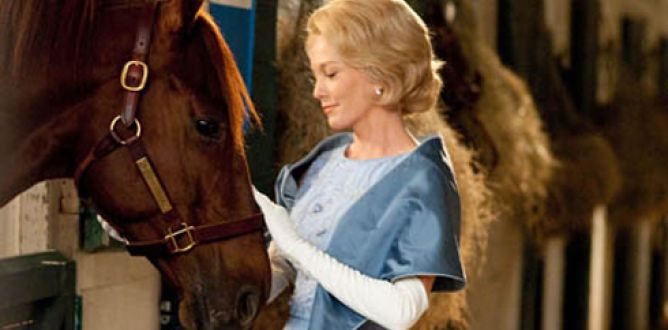
The film centers on Penny Chenery Tweedy (Diane Lane), a Boulder, CO housewife who takes over the management of her dad’s horse stables in Virginia when his health gets so bad that he can no longer handle it himself. The business is facing a lot of financial problems, and her husband just wants her to sell everything and come on back home. But Penny doesn’t want to sell, especially when the stable acquires a young colt that just may have to the right combination of speed and stamina to become a great racehorse. Wanting to see her horse get a chance to run, she hires eccentric trainer Lucien Laurin (John Malkovich) and the aggressive jockey Ron Turcotte (Otto Thorwarth) in order to give “Secretariat” a chance to reach his potential. And boy does he ever, ultimately becoming the first “Triple Crown” winner in 25 years. 

I’ll go ahead and say that I pretty much got exactly what I was expecting with SECRETARIAT. It’s a “feel-good” movie that made me happy at the end. Outside of him being a triple crown winner, I didn’t know much about Secretariat’s story, so it was fun just seeing how dominant he truly was during his legendary run in 1973. And the performances from the leads are very good. Diane Lane is beautiful and convincing as the housewife determined to give every thing she has to make Secretariat a winner. John Malkovich’s eccentric horse trainer is the kind of role he excels in, and he’s both funny and emotionally engaging. I liked Otto Thorwarth and Nelson Ellis as Secretariat’s jockey and groomer, respectively. Each of them had their individual moments to shine. I also wanted to mention how impressive the camerawork is during the racing sequences. For a film like this to be exciting, the races have to be exciting and director Randall Wallace and cinematographer Dean Semler deliver in spades. If I had any complaint about the film, it would probably be the oversimplification of some of the supporting characters. For a film based on a true story, it was odd to see the owner of Secretariat’s primary competition reduced to almost a comic book villain in his behavior. That aside, I enjoyed the film and I’m glad I watched it. 

I’ve include the trailer for SECRETARIAT below:

Hardball (2001, dir. by Brian Robbins)


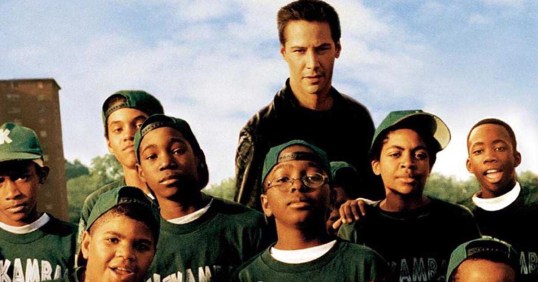
Conor O’Neill (Keanu Reeves) is a gambler who is going to be killed by his bookies unless he can pay off a $6,000 debt.  When he finds out that he can make $500 a week just for coaching a little league team in the Chicago projects, he takes the job.  He’s not planning on caring about the team but, of course, he does.  He doesn’t expect to fall in love but when he meets his team’s 5th grade teacher (Diane Lane), he does.  No one expects him to get his team to the championship but he does.  When tragedy strikes one of his players, Conor and the team have to decide whether to keep playing or to give up.

Hardball is a movie that I wanted to like because Keanu Reeves is in it and the movie tells a good, heart-warming story.  Hardball is really predictable, though, and the movie is so focused on Conor that you never really get to know most of the players on team or what winning the championship would mean to them.  I wanted to know about the members of the team, all of whom were poor, black, and living in the most dangerous neighborhood in Chicago.  (When Conor drops one of them off from practice, he’s told to duck whenever he walks by a window, just in case someone outside is shooting a gun.)  There is one really powerful scene that drives home the reality of the danger that the kids on the team live with on a daily basis but other than that, the movie is almost all about the white coach and his problems.  The team should be the heart of the movie but instead, Hardball focuses everything on Conor and whether or not he’s going to stick with coaching the team even when things get difficult. Even Conor says he’s done, everyone knows he’s not going anywhere.

The other thing that bothered me about Hardball is that, for a baseball movie, there wasn’t enough baseball.  Conor didn’t spend any time discussing strategy with his players or doing any other coaching beyond telling his players not to trash talk each other and to always do their best.  I understand that little league is not the same as major league baseball but I still would have liked to have seen more scenes of Conor actually being a coach and his players actually learning how to play the game.

Hardball‘s not all bad.  It’s got a good heart and it’s got Keanu Reeves.  I just wish it had more baseball.

Gunshy (1998, directed by Jeff Celentano)


Burned-out writer Jake Bridges (William L. Petersen, a year or two before CSI) comes home one day to discover his wife in bed with another man.  Jake, who is already suffering from an epic case of writer’s block, goes to Atlantic City and tries to drink his troubles away.  When the bitter Jake gets into a bar fight, he’s saved by Frankie (Michael Wincott).  Frankie takes Jake back to his house, where Jake meets Frankie’s girlfriend, Melissa (Diane Lane).  Jake also discovers that Frankie works as a debt collector for a local mob boss, Lange (Michael Byrne).

Frankie and Jake strike up an unexpected friendship.  Jake wants to experience what it’s like to be a real tough guy.  Frankie wants to improve his vocabulary.  Frankie agrees to take Jake with him when he makes his collections on the condition that Jake recommend a book to him.  Soon, Jake is pretending to be a gangster and Frankie is reading Moby Dick.  Frankie shows Jake how to be intimidating.  Jake explains the symbolism of Ahab’s quest to Frankie.  They become good friends, with the only possible complication being that Jake is falling in love with Melissa.

For a low-budget neonoir that, as far as I know, never even got a theatrical release before being released to video, Gunshy is surprisingly good.  The plot may sometimes be predictable but Petersen and especially Wincott give good performances and they both play off of each other well.  Diane Lane is undeniably sexy but also bring a fierce intelligence and a sense of wounded dignity to the role of Melissa.  This is a love triangle where you want things to work out for all three of the people involved.  The rest of the cast is full of familiar faces.  Keep an eye out for everyone from R. Lee Ermey to Meat Loaf.  Director Jeff Celantano keeps the story moving and proves himself to be adept at balancing scenes of violence with scenes where Frankie and Jake simply discuss their differing views of the world.

An unjustly obscure film, Gunshy is a 90s film that deserves to be rediscovered.


Film Review: Streets of Fire (dir by Walter Hill)


File this one under your mileage may vary…

Okay, so here’s the deal.  I know that this 1984 film has a strong cult following.  A few months ago, I was at the Alamo Drafthouse when they played the trailer and announced a one-night showing and the people sitting in front of me got so excited that it was kind of creepy.  I mean, I understand that there are people who absolutely love Streets of Fire but I just watched it and it didn’t really do much for me.

Now, that may not sound like a big deal because, obviously, not everyone is going to love the same movies as everyone else.  I love Black Swan but I have friends who absolutely hate it.  Arleigh and I still argue about Avatar.  Leonard and I still yell at each other about Aaron Sorkin.  Erin makes fun of me for watching The Bachelorette.  Jedadiah Leland doesn’t share my appreciation for Big Brother and the Trashfilm Guru and I may agree about Twin Peaks but we don’t necessarily agree about whether or not socialism is a good idea.  And that’s okay.  There’s nothing wrong with healthy and respectful disagreement!

But the thing is — Streets of Fire seems like the sort of film that I should love.

It’s a musical.  I love musicals!

It’s highly stylized!  I love stylish movies!

It’s from the 80s!  I love the 80s films!  (Well, most 80s films… if the opening credits are in pink neon, chances are I’ll end up liking the film…)

It takes place in a city where it never seems to stop raining.  Even though the neon-decorated sets give the location a futuristic feel, everyone in the city seems to have escaped from the 50s.  It’s the type of city where people drive vintage cars and you can tell that one guy is supposed to be a badass because he owns a convertible.  All of the bad guys ride motorcycles, wear leather jackets, and look like they should be appearing in a community theater production of Grease.

Singer Ellen Aim (Diane Lane) has been kidnapped by the Bombers, a biker gang led by Raven (Willem DaFoe).  Ellen’s manager and lover, Billy Fish (Rick Moranis), hires Tom Cody (Michael Pare) to rescue Ellen.  Little does Billy know that Cody and Ellen used to be lovers.  Cody is apparently a legendary figure in the city.  As soon as he drives into town, people starting talking about how “he’s back.”  The police see Cody and automatically tell him not to start any trouble.  Raven says that he’s not scared of Cody and everyone rolls their eyes!

It’s up to Cody to track Ellen down and rescue her from Raven and … well, that’s pretty much what he does.  I think that was part of the problem.  After all of the build-up, it’s all a bit anti-climatic.  It doesn’t take much effort for Cody to find Ellen.  After Cody escapes with Ellen, it doesn’t take Raven much effort to track down Cody.  It all leads to a fist fight but who cares?  As a viewer, you spend the entire film waiting for some sort of big scene or exciting action sequence and it never arrives.  The film was so busy being stylish that it forgot to actually come up with a compelling story.

I think it also would have helped if Tom Cody had been played by an actor who had a bit more charisma than Michael Pare.  Pare is too young and too stiff for the role.  It doesn’t help to have everyone talking about what a badass Tom Cody is when the actor playing him doesn’t seem to be quite sure what the movie’s about.  Also miscast is Diane Lane, who tries to be headstrong but just comes across as being petulant.  When Cody and Ellen get together, they all the chemistry of laundry drying on a clothesline.

On the positive side, Willem DaFoe is believably dangerous as Raven and Amy Madigan gets to play an ass-kicking mercenary named McCoy.  In fact, if McCoy had been the main character, Streets of Fire probably would have been a lot more interesting.

I guess Streets of Fire is just going to have to be one of those cult films that I just don’t get.

Playing Catch-Up With The Films of 2017: Paris Can Wait (dir by Eleanor Coppola)


Anne (Diane Lane) is the wife of Michael (Alec Baldwin).  Michael is an internationally renowned film producer.  As is established early on, their marriage is not perfect.  Michael is consumed with work and, at one point, Anne spots him deep in conversation with a young actress.  Anne’s reaction tells us all we need to know about Michael’s history as a husband.  While Michael obsesses on making the latest deal, Anne takes pictures of inanimate objects.  None of the pictures are particularly good but everyone in the movie raves about them.  I imagine that has something to do with the fact that Anne is based on Eleanor Coppola, who wrote and directed Paris Can Wait.

When the film opens, Anne and Michael are at Cannes.  Michael has spent the entire festival making deals but he’s promised Anne a Paris vacation afterward.  However, the day that they’re vacation is supposed to begin, Michael gets a call!  He’s needed in Budapest!  And Anne can’t fly because she has an ear infection…

No worries!  Their friend Jacques (Arnaud Viard) is willing to drive Anne to Paris and keep her company while she waits for Michael to return.  And so, while Michael flies off to Budapest, Anne and Jacques head off for Paris.  However, Anne soon finds herself questioning Jacques’s intentions.  Is he being flirtatious or is he just French?  When he stops off at every restaurant along the way and uses Anne’s credit card to pay the exorbitant bills, is he taking advantage of her or is he just being French?  When Anne isn’t doubting Jacques’s intentions, she’s questioning her marriage.  Is Michael really in Budapest to work on a movie or is he having an affair?

One of the good things about being rich is that you occasionally get to make a movie about how difficult it is to be rich.  That certainly seems to be the case with Paris Can Wait, which was written and directed by Eleanor Coppola, the wife of Francis Ford Coppola and the mother of Sofia and Roman Coppola.  Paris Can Wait is said to be autobiographical, which would seem to suggest that Eleanor and Francis aren’t particularly interesting human beings.

There are some positive elements to the film, of course. Diane Lane gives about as good a performance as one can when you’re playing an idealized version of a film’s director.  Also, Alec Baldwin manages to make it through the entire movie without bellowing.  In fact, Baldwin’s barely in the movie and that’s not a bad thing.  The French countryside looks beautiful but, quite frankly, it’s impossible for the French countryside not to look beautiful.  On the negative side, it just doesn’t add up to much.  You never really care whether or not Michael and Anne stay together.  You’re just thankful that you’ll never get stuck beside them on an airplane.

I think the main problem is that, as a director, Eleanor Coppola doesn’t really seem to know what she’s trying to say with her film.  For instance, I could imagine Sofia Coppola taking the exact same material and creating a movie that would be achingly poignant and full of ennui.  But, with Eleanor, it’s just another travelogue to nowhere.

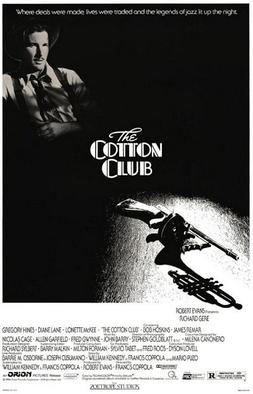
A Movie A Day #264: The Cotton Club (1984, directed by Francis Ford Coppola)


The time is the 1930s and the place is New York City.  Everyone wants to get into the Cotton Club.  Owned by British gangster Owney Madden (Bob Hoskins), the Cotton Club is a place where the stage is exclusively reserved for black performers and the audience is exclusively rich and white.  Everyone from gangsters to film stars comes to the Cotton Club.

It is at the Cotton Club that Dixie Dwyer (Richard Gere) meets everyone from Dutch Shultz (James Remar) to Gloria Swanson (Diane Venora).  Shultz hires Dixie to look after his girlfriend, Vera (Diane Lane).  Swanson arranges for Dixie to become a movie star.  Meanwhile, Dixie’s crazy brother, Vincent (Nicolas Cage), rises up through the New York underworld.  Meanwhile, dancing brothers Sandman and Clay Williams (played by real-life brothers Gregory and Maurice Hines) are stars on stage but face discrimination off, at least until Harlem gangster Bumpy Rhodes (Laurence Fishburne) comes to their aid.

The Cotton Club was a dream project of the legendary producer, Robert Evans, who was looking to make a comeback after being famously charged with cocaine trafficking in 1980.  Having commissioned a screenplay by his former Godfather collaborators, Mario Puzo and Francis Ford Coppola, Evans originally planned to direct the film himself.  At the last minute, Evans changes his mind and asked Coppola to direct the film.  After working with him on The Godfather, Coppola had sworn that he would never work with Evans again. (When he won an Oscar for The Godfather‘s screenplay, Coppola pointedly thanked everyone but Robert Evans.)  However, by 1984, a series of box office flops had damaged Coppola’s standing in Hollywood.  Needing the money, Coppola agreed to direct The Cotton Club.

Evans raised the film’s $58 million budget from a number of investors, including Roy Radin.  Roy Radin was best known for putting together Vaudeville reunions in the 70s and being accused of raping an actress in 1980.  Radin and Evans were introduced to each other by a drug dealer named Lanie Jacobs, who was hoping to remake herself as a film producer.  During the production of The Cotton Club, Radin was murdered by a contract killer who was hired by Jacobs, who apparently felt that Radin was trying to muscle her out of the film production.

While all of this was going on, Coppola fell into his familiar pattern of going overbudget and falling behind schedule.  This led to another investor filing a lawsuit against Orion Pictures and two other investors, claiming fraud and breach of contract.  When the film was finally released, it received mixed reviews, struggled at the box office, and only received two Oscar nominations.

With all of the murder and drama that was occurring offscreen, it is not surprising that the film itself was overshadowed.  The Cotton Club is a disjointed mix of gangster drama and big production numbers.  As always with post-Apocalypse Now Coppola, there are flashes of brilliance in The Cotton Club.  Some of the production numbers are impressive and visually, this movie has got style to burn.   However, among the leads, neither Richard Gere nor Diane Lane seem to be invested in their characters while the talented Hines brothers are underused.  The supporting cast is full of good character actors who are all in a search of a better script.  A few do manage to make an impression: James Remar, Bob Hoskins and Fred Gwynne as veteran gangsters, Nicolas Cage as the film’s stand-in for Mad Dog Coll, and Joe Dallesandro as Lucky Luciano.  The Cotton Club is sometimes boring and sometimes exciting but the onscreen story is never as interesting as what happened behind the scenes.


A Movie A Day #219: Wild Bill (1995, directed by Walter Hill)


The year is 1876 and the legendary Wild Bill Hickok (Jeff Bridges) sits in a saloon in Deadwood and thinks about his life (most of which is seen in high-resolution, black-and-white flashbacks).  Hickok was a renowned lawman and a sure shot, a man whose exploits made him famous across the west.  Thanks to his friend, Buffalo Bill Cody (Keith Carradine), he even appeared on the New York stage and reenacted some of his greatest gun battles.  Now, Hickok is aging.  He is 39 years old, an old man by the standards of his profession.  Though men like Charlie Prince (John Hurt) and California Joe (James Gammon) continue to spread his legend, Hickok is going blind and spends most of his time in a haze of opium and regret.

Hickok only has one true friend in Deadwood, Calamity Jane (Ellen Barkin).  He also has one true enemy, an aspiring gunslinger named Jack McCall (David Arquette).  McCall approaches Hickok and announces that he is going to kill him because of the way that Hickok treated his mother (played, in flashback, by Diane Lane).  Hickok does not do much to dissuade him.

Based on both a book and a play, Wild Bill is a talky and idiosyncratic Western from Walter Hill.  Hill is less interested in Hickok as a gunfighter than Hickok as an early celebrity.  There are gunfights but they only happen because, much like John Wayne in The Shootist, Hickok has become so famous that he cannot go anywhere without someone taking a shot at him.  Almost the entire final half of Wild Bill is set in that saloon, with Hickok and a gallery of character actors talking about the past and wondering about the future.

At times, Wild Bill gets bogged down with all the dialogue and philosophizing.  (To quote The Good, The Bad, and the Ugly: “When you have to shoot, shoot.  Don’t talk.”)  Luckily, the film is saved by an intriguing cast, led by Jeff Bridges.  In many ways, his performance was Wild Bill feels like an audition for his later performance in True Grit.  David Arquette is intensely weird as the jumpy Jack McCall and Ellen Barkin brings the film’s only underwritten role, Calamity Jane, to life.  Smaller roles are played by everyone from Bruce Dern to James Remar to Marjoe Gortner.

United Artist made the mistake of trying to sell Wild Bill as being a straight western, which led to confused audiences and a resounding flop at the box office.  Ironically, years after the release of Wild Bill, Walter Hill won an Emmy for directing the first episode of HBO’s Deadwood, an episode the featured Wild Bill cast member Keith Carradine in the role of Hickok.