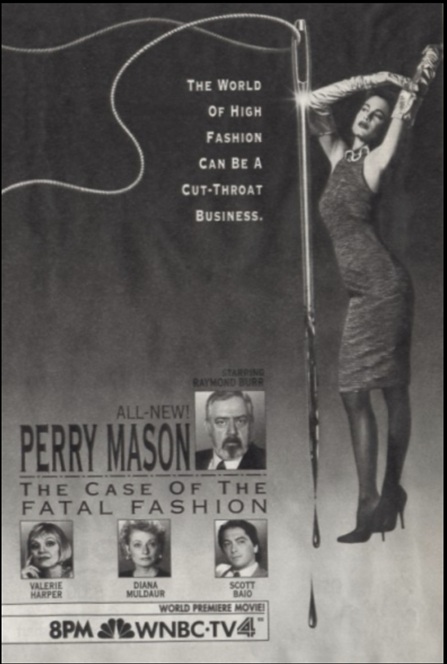
Perry Mason (Raymond Burr), Della Street (Barbara Hale), and Ken Malansky (William R. Moses) are in New York when an old friend of Perry’s, magazine editor Lauren Jeffreys (Diana Muldaur) is accused of murdering a rival editor, Dyan Draper (Valerie Harper). Dyan was infamous for writing about the personal lives of celebrities in her column so there’s a ton of possible suspects. While Ken teams up with a mobster named Tony Loomis (Robert Clohessy) to search for clues, Perry finds himself facing off against a young district attorney (Scott Baio) who is smarter than he seems.
This Perry Mason movie is unique because, for once, the prosecutor is as good an attorney as Perry. It reminded me of how, when the movies started, David Ogden Stiers always played the prosecutor and came across like someone who would probably win if he has going up against anyone other than Perry Mason. Even though I immediately thought of Bob Loblaw as soon as I saw him, Scott Baio gives a good performance as a lawyer who worships Perry and can’t wait to face him in court. For once, there’s mutual respect between the two sides.
The mystery was another one of those where I was able to guess who the killer was from the start. They had to really stretch things to get the mob involved so that Ken could team up with Tony. (Ken wanted to bring the killer to court while Tony just waned to shoot them.) Also, it was obvious that Raymond Burr was not doing well when he filmed this movie. In almost every scene, he’s either seated or leaning against something. There are only 6 more Perry Mason films featuring Burr after this one and one of those aired after he died. Burr still gives a commanding performance whenever Perry’s in court, though. Sick or not, there’s no other attorney you want on your side.
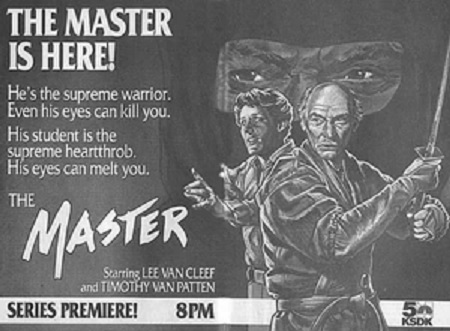
Welcome to Retro Television Reviews, a new feature where we review some of our favorite and least favorite shows of the past! On Fridays, I will be reviewing The Master, which ran on NBC from January to August of 1984. The show can be found on Tubi!
This week, Lee Van Cleef gets a chance to show off what he can do!
Episode 1.7 “Juggernaut”
(Dir by Gordon Hessler, originally aired on March 16th, 1984)
This week’s episode of The Master opens with Max’s totally groovy van driving across what appears to be farmland. Judging from the mountains in the background, it appears that they are back in California. (If they did mention their specific location during this episode, I missed it.) Last week, as you may remember, Max and McAllister were looking for McAllister’s daughter in Louisiana. Now, they’re apparently just hanging out in California again. It’s odd that McAllister left behind his life in Japan so that he could come to America to find his daughter but, now that he’s actually in America, there doesn’t really seem to be any sense of urgency when it comes to actually tracking her down.
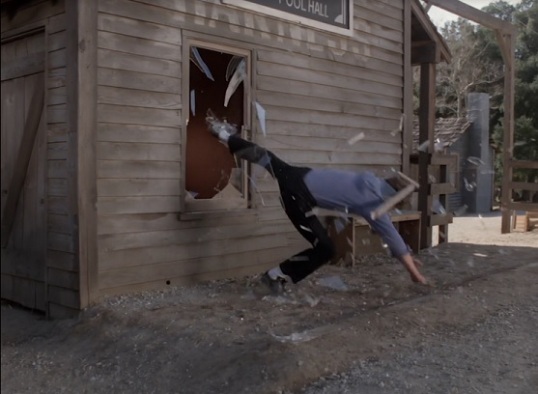
Inside the van, McAllister informs Max that he’s concerned about the way that Max is always losing his temper and starting fights. Max promises that there will be no more unprovoked fights on his part. When they stop in front of a local bar, Max says he’s going to get a beer but he also promises McAllister that he will not be getting tossed through the bar’s window.
Five minutes later:
Now, in all fairness, it isn’t totally Max’s fault that he got thrown through that window. Max went in the bar and saw Alan Kane (veteran TV and movie bad guy William Smith) harassing Cat Sinclair (Tara Buckman). When Max told Alan to back off, Alan challenged Max to a fight. Max was forced to explain that he’s not allowed to fight. Cat rolled her eyes and then Alan tossed Max through the window. Seeing that his protegee is in trouble, McAllister enters the bar, beats up Alan, and saves Max and Cat.
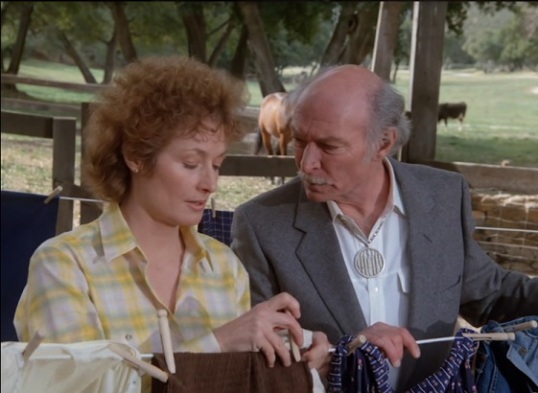
Even though Cat is not impressed with Max’s refusal to fight, she still gets in his van and allows him to give her a ride home. It turns out that Cat and her mother, Maggie (Diana Muldaur), are farmers but an evil land baron named Hellman (Stuart Whitman) is trying to intimidate them off their land. Alan works for Hellman and, because of him and his thugs, none of the farmers have been able to get their crops to market.
Both Cat and Maggie refuse to accept any help from Max and McAllister so our heroes get back in their totally happening van and try to leave town. However, when one of Hellman’s truckers runs the love van off the road, the engine is damaged and the local mechanic informs Max that it will take 48 hours to fix it. Stranded in town, Max searches for proof that Hellman’s trucker was the one who ran them off the road. Meanwhile, McAllister returns to the farm and, turning on some of that Lee Van Cleef charm, proceeds to fall in love with Maggie.
If any of this sounds familiar, it’s because, with the exception of McAllister falling in love, it’s pretty much the same thing that happened in not only the first episode but also the third episode. Max and McAllister have an uncanny talent for randomly wandering into towns that are controlled by evil businessmen. Just as the first and third episodes featured Max giving impassioned speeches about the rights of the workers, this episode features McAllister giving a speech at a meeting in a barn.
While McAllister is giving his speech, Max is getting arrested for snooping around Hellman’s property. Fortunately, McAllister puts on a fake beard and breaks him out of jail. McAllister then directs the farmers to form a convoy and to work together to get their crops to market. Though Alan attempts to set off a bunch of explosives on the way, McAllister uses a cropduster to fool Alan into setting off the explosions early. Then, Lee Van Cleef’s stunt double beats up Hellman. McAllister and Max congratulate each other on a job well done.
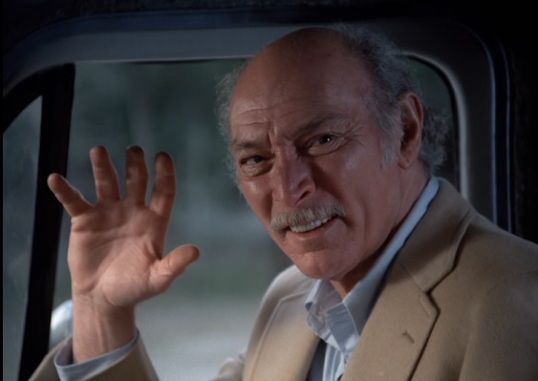
Having saved the farmers and beaten up the bad guys, it’s time for Max and McAllister to once again continue their journey across America. McAllister may love Maggie but he still needs to (eventually) find his daughter so he gets in the Chevy van and waves goodbye.
As I said before, this episode felt very familiar. It’s probably not a good sign that, after just seven episodes, The Master was pretty much repeating itself. That said, the episode did feature the great William Smith playing yet another rural bully and Stuart Whitman always made for a convincing villain. With Max sidelined by McAllister’s demand that he stop fighting, Lee Van Cleef got his moment to shine in this episode. He was obviously frail, making it all the more obvious that his fight scenes involved a stunt man, but Van Cleef still got a chance to show off some of his old school movie star charisma.
Next week: The Master steals the Crown Jewels of the United Kingdom! …. sure, why not?
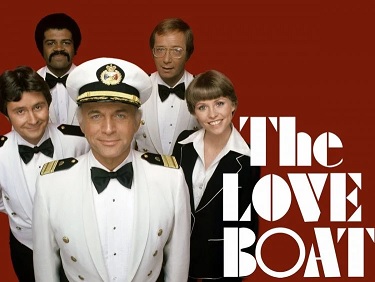
Welcome to Retro Television Reviews, a feature where we review some of our favorite and least favorite shows of the past! On Wednesdays, I will be reviewing the original Love Boat, which aired on ABC from 1977 to 1986! The series can be streamed on Paramount Plus!
This week’s cruise is just weird.
Episode 2.20 “Best of Friends/Aftermath/Dream Boat”
(Dir by George Tyne, originally aired on February 10th, 1979)
This cruise is all about excitement and letdowns.
For instance, Doc Bricker is super excited because his former mentor, Dr. Art Akers (Richard Anderson), is a passenger on the cruise. But then Bricker is letdown when he discovers that, due to a traffic accident, Dr. Akers has lost his arm and can no longer practice medicine. Bricker also discovers that Dr. Akers feels that Bricker has wasted his potential by taking a job as a cruise ship doctor. As Dr. Akers puts it, Doc Bricker should be performing surgery and working in a hospital and not wasting his time dealing with seasick debutantes. Obviously, we’re meant to feel that Dr. Akers is being unfair and Akers is definitely a jerk. At the same time, it is really hard to think of very many times that this show actually showed Dr. Bricker doing anything other than hitting on the passengers. I know that there was an episode where he delivered a baby and another where he performed surgery while at sea but, for the most part, Doc does seem to spend most of his time drinking at the bar and hanging out at the pool.
Anyway, Doc Bricker does get a chance to prove himself. He notices that Akers’s wife, Laura (Diana Muldaur), appears to be hooked on the anti-anxiety pills that she’s been taking ever since the car accident that cost her husband his arm. At first, Akers refuses to listen to Bricker but then Laura ends up stumbling around the ship in a daze and Akers is first to admit that his wife is a junkie and Doc Bricker is actually a doctor. So, I guess that’s a happy ending to that story.
Carol Gilmore (Carol Lynley) is super excited when she boards the cruise because she’s going to finally meet the man who is engaged to her best friend, Gwen (Donna Pescow). She’s also excited because a handsome passenger named Paul (Ben Murphy) hits on her as soon as he sees her. However, she’s letdown when she subsequently discovers that Paul is Gwen’s fiancé! Even after he learns that Carol is Gwen’s best friend, Paul asks Carol to meet him on the deck at midnight. Carol does so and Paul tells her that he hit on her because he was feeling nervous about getting married but that he felt terrible and ashamed as soon as he did so and that hitting on Carol only reminded him of how much he loves Gwen. Carol thinks that is the most romantic thing that she’s ever heard. Gwen is far less impressed and she dumps both her fiancé and her best friend. However, Gwen reconsiders when she later sees Paul dancing with Carol and she decides that she needs both of them in her life.
Finally, the crew is super excited when Captain Stubing is offered a job as the captain of the Lorelei, which is a legendary cruise ship. Though they don’t want to lose him, they do want Stubing to be happy so they spend the entire cruise telling the Lorelei’s owner (Hans Conreid) about what a great guy the Captain is. However, the Captain does not want to leave the Pacific Princess so he starts acting like a jerk in hope that the offer will be rescinded. When the Lorelei’s owner announces that Stubing is such a great captain that he’ll hire him even if he is a jerk, Stubing is forced to finally admit that he doesn’t want the job.
This was a weird episode. All of the stories felt as if they were only halfway written before filming started. The stuff with Gwen, Carol, and Paul felt especially strange, as there was really absolutely no reason for Gwen to change her mind about taking Paul back, beyond the fact that the story had to resolve itself somehow. The storyline about Dr. Akers was a bit more developed but Akers himself was such a jerk that it was hard to really care about him or his bitterness over Bricker having an enjoyable life. As for Captain Stubing’s storyline, it required Stubing to act in ways that were totally out-of-character for him. A Stubing who can’t speak his mind is not the Stubing that the viewers know.
Yeah, this was a weird cruise. I’m just glad everyone made it back home.
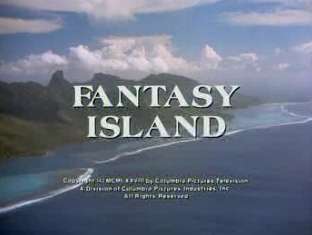
Welcome to Retro Television Reviews, a feature where we review some of our favorite and least favorite shows of the past! On Tuesdays, I will be reviewing the original Fantasy Island, which ran on ABC from 1977 to 1986. The entire show is currently streaming on Tubi!
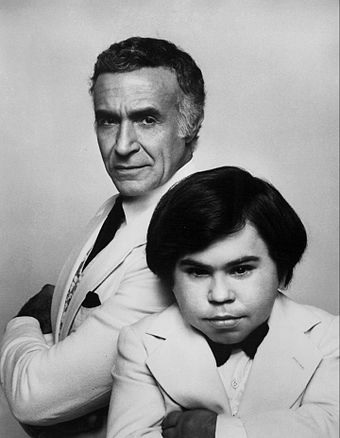
Smiles, everyone, smiles! Especially you, Tattoo!
Episode 2.16 “Photographs/Royal Flush”
(Dir by Cliff Bole, originally aired on January 27th, 1979)
After announcing the arrival of the plane, Tattoo informs Mr. Roarke that he is reading a book on hypnotism.
“Ah, it’s hypnotism now,” Roarke replies, “To what end?”
Tattoo looks at a passing native girl as the cameraman gives the viewers a close-up of her sarong-covered behind.
Okay, 1979. We see ya.
The less interesting of this week’s two fantasies involves the Fantasy Island poker tournament. (Fantasy Island reminds a bit of Hell’s Kitchen, in that there’s always some weird theme night.) Johnny Court (John Rubinstein) is an up-and-coming player whose fantasy is to play against the greatest poker player of all time, Victor Holly (John McIntire). Johnny has borrowed a good deal of money from a group of gangsters in order to enter the tournament so, if Johnny doesn’t win, guess who is getting his fingers broken?
Complicating matters is that Victor travels with his daughter, Emily (Ronne Troup). It doesn’t take long for Johnny to realize that Emily is helping Victor cheat but Johnny has also fallen in love with Emily. To save his own life, he has to defeat Emily’s father but, if he does so, that’ll mean Victor will no longer have the money necessary to support his daughter.
This fantasy wasn’t terrible but it wasn’t particularly interesting either. Rubinstein, McIntire, and Troup all gave good performances but the poker scenes were a bit draggy. Perhaps it would have been more interesting to me if I was a poker player myself. But I prefer craps, just because you get to jump up and down before rolling the dice.
The second fantasy was a bit more intruding. Nancy Weston (Michele Lee) is photographer who has just returned from a trip to Europe and Asia, where she took many pictures. When she got the pictures developed, she discovered that a mysterious girl appeared in almost all of the pictures, even though it would have been impossible for the girl to have followed her all the way from Stonehenge to Thailand without Nancy noticing. Nancy’s fantasy is to know who the girl is and why she’s following her.
The girl shows up on Fantasy Island. Her name is Allison (Elizabeth Cheshire) and, as Roarke explains, Allison is not only the daughter of a powerful psychic but she also has the power to speak to the dead as well. And it turns out that one of the dead has a message for Nancy….
This fantasy was really well-done and nicely creepy. At heart, it was a pretty basic ghost story but Michele Lee and Elizabeth Cheshire both gave good performances and some of the imagery — particularly of a white horse running in slow motion through a green field — was surprisingly effective.
All in all, one mild but well-acted fantasy and one memorably creepy fantasy came together and added up to one good episode of Fantasy Island! These are the type of episodes that we fantasize about.
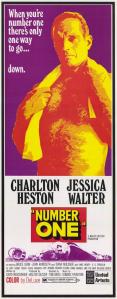
Quarterback Cat Catlan (Charlton Heston) used to be one of the greats. For fifteen years, he has been a professional football player. He probably should have retired after he led the New Orleans Saints to their first championship but, instead, the stubborn Cat kept playing. Now, he is 40 years old and struggling to keep up with the younger players. His coach (John Randolph) says that Cat has another two or three years left in him but the team doctor (G.D. Spradlin who, ten years later, played a coach in North Dallas Forty) says that one more strong hit could not only end Cat’s career but possibly his life as well. Two of former Cat’s former teammates (Bruce Dern and Bobby Troup) offer to help Cat find a job off the field but Cat tells them the same thing that he tells his long-suffering wife (Jessica Walter). He just has to win one more championship.
Number One is unique for being one of the first movies to ever take a look at the dark side of professional football. At 40, Cat is facing an uncertain future. His years of being a star have left him unprepared to deal with life in the real world. He has no real friends and a wife who no longer needs him. This would seem like a perfect role for Heston, who always excelled at playing misanthropes. Heston is convincing when he’s arguing with his wife or refusing to sign an autograph but, surprisingly, he is thoroughly unconvincing whenever he’s on the field. For all of his grunting and all the lines delivered through gritted teeth, Heston is simply not believable as a professional athlete, even one who is past his prime. (When he played the 40 year-old Cat, Heston was 46 and looked like he was 56.) Whenever Cat throws a football, he’s played by Heston in close-ups and very obviously replaced by real-life Saints quarterback Billy Kilmer for the long shots. A football film is only as good and convincing as the football action and, on that front, Number One leaves much to be desired.
This 1969 press photo displays Heston’s throwing technique.
Two final notes: For the scene in which Cat is tackled by three Dallas Cowboys (all played by actual players), Heston requested that the players actually tackle him. Heston ended up with three broken ribs.
Finally, Number One was made the cooperation of the New Orleans Saints and features several players in the cast. When Number One was filmed, the Saints were still a relatively new expansion team. Cat is described as having already led the Saints to a championship but it would actually be another 40 years before the Saints would finally make their first trip to the Super Bowl.
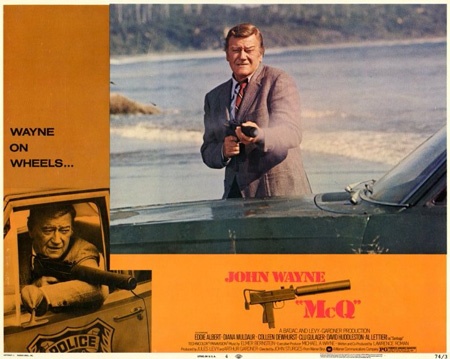
John Wayne didn’t get off his horse very often in the latter part of his career. The Duke hadn’t done a non-Western since 1969’s HELLFIGHTERS, but cop pictures were in style in the early 70s due to the success of movies like THE FRENCH CONNECTION and DIRTY HARRY. Wayne was actually offered the part of Dirty Harry Callahan and turned it down. But in 1974, Big John traded in his horse for a Pontiac Firebird in the action packed MCQ, directed by veteran John Sturges (GUNFIGHT AT THE OK CORRAL, THE MAGNIFICENT SEVEN, THE GREAT ESCAPE).
Wayne plays tough cop Lon McQ, who quits the force to investigate the murder of his former partner. He gets tangled up with drug dealers and corrupt officials, car chases and shootouts. Sound formulaic? It is, but the action scenes make up for a lame script. Duke basically plays the same character he did in most all his films, tough but tender, fair but firm. It’s kind of jarring to see Wayne in his (pretty bad) hairpiece instead of the usual cowboy hat, and tooling around the streets of Seattle in a muscle car rather than the dusty trail on his horse. He’s surrounded by a supporting cast full of familiar faces (Eddie Albert, Diana Muldaur, Colleen Dewhurst, Al Lettieri, David Huttleston, Clu Gulager), all of whom do their best with the clichéd script. MCQ plays like a TV movie of the week, which isn’t necessarily a bad thing, and fans of 70s action flicks will dig it.
John Wayne only made three more films after MCQ, including another cop movie, BRANNIGAN, and his swan song, 1976’s THE SHOOTIST, before succumbing to cancer in 1979. The Duke made much better movies then MCQ, but for a look at the star without his spurs and six-gun, it’s definitely worth watching.
(This post originally appeared, in slightly altered form, on the 2015 TCM Summer of the Stars Blogathon, hosted by Journeys in Classic Film)
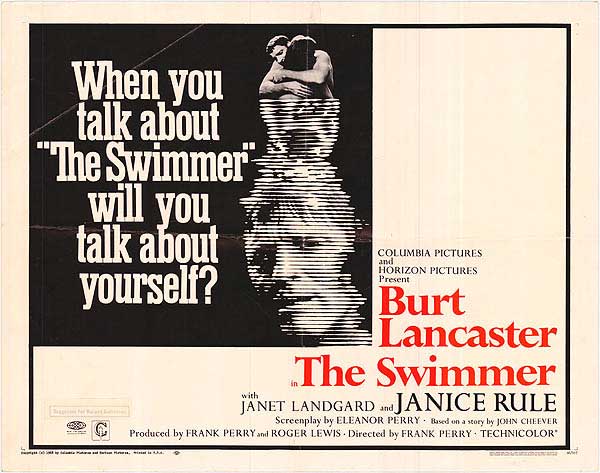
The 1968 film The Swimmer opens with Ned Merrill (Burt Lancaster) emerging from the woods that surround an affluent Connecticut suburb. He’s a tanned, middle-aged man and, because he spends the entire film wearing only a bathing suit, we can tell that he’s still in good shape for a man in his 50s. When Ned speaks, it’s with the nonstop optimism of a man who has found and claimed his part of the American Dream. In short, Ned appears to be ideal American male, living in the ideal American community.
However, it gradually starts to become apparent that all is not well with Ned. When he mysteriously shows up at a pool party being held by a group of his friends, they all seem to be shocked to see him, commenting that it’s been a while since Ned has been around. Ned, however, acts as if there’s nothing wrong and instead talks about how beautiful the day is and says that he’s heading back to his home. He’s figured out that all of his neighbor’s swimming pools form a “river” to his house and Ned’s plan is to swim home.
And that’s exactly what Ned proceeds to do, going from neighbor to neighbor and swimming through their pools. As he does so, he meets and talk to his neighbors and it becomes more and more obvious that there are secrets hidden behind his constant smile and friendly manner. As Ned gets closer and closer to his actual home, the neighbors are far less happy to see him.
At one house, he runs into Julie (Janet Landgard) who used to babysit for his daughter. Julie agrees to swim with Ned and eventually confesses that she once had a crush on him. When Ned reacts by promising to always protect and love her, Julie gets scared and runs away.
At another house, Ned comes across another pool party. A woman named Joan (played by a youngish Joan Rivers) talks to him before a friend of her warns her to stay away from Ned.
When Ned reaches the house of actress Shirley (Janice Rule), it becomes obvious that Shirley was once Ned’s mistress. They discuss their relationship and it quickly becomes apparent that Ned’s memories are totally different from Shirley’s.
And, through it all, Ned keeps swimming. Even when he’s offered a ride to his house, Ned replies that he has to swim home.
The Swimmer is a film that I had wanted to see ever since I first saw the trailer on the DVD for I Drink Your Blood. (That’s an interesting combination, no? I Drink Your Blood and The Swimmer.) I finally saw the film when it showed up on TCM one night and, when I first watched it, I have to admit that I was a little disappointed. Stylistically, the film itself is such a product of the 1960s that, even though suburban ennui and financial instability are still very relevant topics, The Swimmer felt rather dated. I mean, I love a good zoom shot as much as anyone but, often times during the 60s, they seemed to be used more for the sake of technique than the sake of story telling.
However, the second time I sat through The Swimmer, I appreciated the film a bit more. I was able to look past the stylistic flourishes of the direction and I could focus more on Burt Lancaster’s excellent lead performance. Lancaster plays Ned as the epitome of the American ideal and, as a result, his eventual collapse also mirror the collapse of that same ideal. The Swimmer is based on a short story by John Cheever and, quite honestly, the film’s story is a bit too much of a literary conceit to really work on film. That said, The Swimmer — much like the character of Ned Merrill — is an interesting failure, which is certainly more than can be said of most failures.


 Quarterback Cat Catlan (Charlton Heston) used to be one of the greats. For fifteen years, he has been a professional football player. He probably should have retired after he led the New Orleans Saints to their first championship but, instead, the stubborn Cat kept playing. Now, he is 40 years old and struggling to keep up with the younger players. His coach (John Randolph) says that Cat has another two or three years left in him but the team doctor (G.D. Spradlin who, ten years later, played a coach in North Dallas Forty) says that one more strong hit could not only end Cat’s career but possibly his life as well. Two of former Cat’s former teammates (Bruce Dern and Bobby Troup) offer to help Cat find a job off the field but Cat tells them the same thing that he tells his long-suffering wife (Jessica Walter). He just has to win one more championship.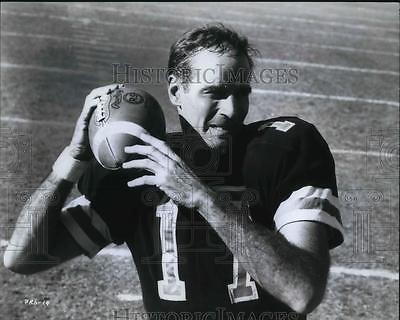

 Through the Shattered Lens