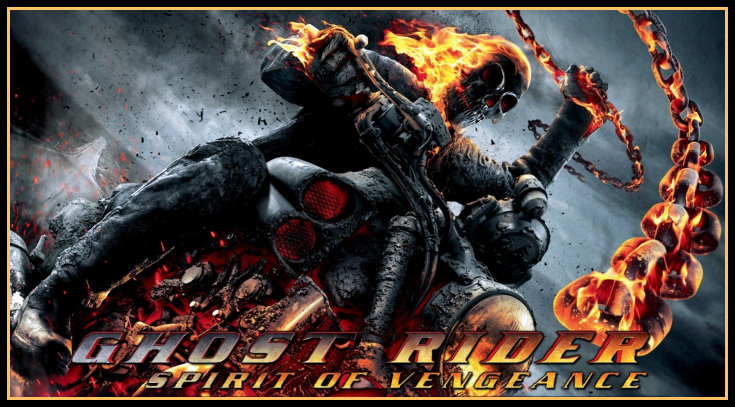
Quickie Review: Ghost Rider: Spirit of Vengeance (dir. by Neveldine/Taylor)


Ghost Rider has always been a niche character for Marvel Comics. The character was born out of an earlier Marvel character named Night Rider. After Marvel writers Roy Thomas and Gary Friedrich and artist Mike Ploog had rein-visioned the character into Ghost Rider during the early 70’s it has always remained on the extreme fringes of the Marvel Comics universe. This wouldn’t stop Sony (which owned the film rights to the character) to go ahead and adapt it for the big-screen. 2007’s Ghost Rider by Mark Johnson was the first and failed attempt to turn the character into a film franchise. It still made enough money despite a near-universal panning of the film by critics and audiences alike. This turn of profit is why Sony once again dipped into the Ghost Rider well and come up with 2012’s Ghost Rider: Spirit of Vengeance.

This “sort of” sequel ditches Mark Johnson and brings in the dynamic (and I’d say somewhat insane) directing duo of Mark Neveldine and Brian Taylor to helm the film. It brings back Nicolas Cage for the role of Johnny Blaze/Ghost Rider. Working from a script by Scott Gimple, Seth Hoffman and David S. Goyer one would think the film had nowhere else to go but up especially with the wacky and frenetic filming style by Neveldine/Taylor. To say that this sequel failed to do anything but finally give this film franchise a final nail in it coffin would be an understatement.

Ghost Rider: Spirit of Vengeance ditches pretty much most of what transpired with the first film and tries to retcon things for the sequel. I’d say this would’ve been a good idea seeing the first film was truly awful, but what the sequel ended up doing was confuse things even more. The film tries to turn the Ghost Rider persona from just a spirit of vengeance but an angelic being called the spirit of justice which had become corrupted. We get the Devil in the form of Roarke (played by Irish actor Ciaran Hinds) searching for the young boy Danny who is to be his perfect vessel.  Johnny Blaze comes into the picture after being recruited by a drunk French warrior-monk by the name of Moreau (Idris Elba whose performance was one of the lone highlights of the film) who promises to exorcise the demon from Blaze in exchange for finding and saving Danny.

This would’ve been a good premise if it had several more drafts of it worked on. Though there’s still a chance the film would’ve still sucked in the end. Even the direction from Neveldine/Taylor (Crank, Crank: High Voltage, Gamer) failed to add any heat to the proceedings. They come up with some unique camera angles and action sequences, but gone was the hyper-realistic and frenetic style they’ve become known for. Their previous films were not stuff to write to one’s film critic circles about but they at least had a sense of fun built into them even if their stories defied any sort of logic.

Even the performances by the cast seemed to be something that barely reached the level of one-dimensional. Nicolas Cage tries to channel his inner crazy by way of Bad Lieutenant: Port of Call New Orleans, but it’s too little too late to save the film which never found any sort of footing on the side of competent. Really, the only good thing worth of note was my previous mention of Idris Elba as Moreau who chews the scenery every time he shows up on the screen like it was his last meal. This performance alone wasn’t enough to save the film or even make it somewhat entertaining.

Ghost Rider: Spirit of Vengeance was not worth seeing in the theater (especially in 3D though that part of the film was actually quite well done despite being a post conversion) and I’d be willing to admit that it’s still not worth seeing on video unless it was for free. What could’ve been a restart to the series with the inclusion of Neveldine/Taylor instead gives this franchise it’s death-knell and most likely help Marvel get the rights back from Sony. Here’s to hoping that the flaming skull rider stays on the fringes of the Marvel Cinematic Universe for decades to come.

Film Review: The Woman In Black (dir. by James Watkins)


Taking place in turn-of-the-century England, The Woman In Black tells the story of Arthur Kipps (played by Daniel Radcliffe), a young lawyer who is still struggling to recover from the death of his wife four years previously.  Arthur is sent to an isolated village to settle the estate of a woman named Alice Drablow.  Despite several warnings from the superstitious townspeople, Arthur goes to Alice’s decrepit old mansion and he soon finds himself haunted by fleeting glimpses of a woman in black who seems to be in the house with him.  With each sighting of the woman in black, another child in the village commits suicide.

Despite a few genuinely disturbing scenes (mostly involving children committing suicide), The Woman In Black is, ultimately, a pretty typical PG-13 horror film.  There’s a few good, if predictable, jump scenes (most of which involve the title character popping up in the background) and there’s all the usual Insidious-style tracking shots through the creepy old house.  However, any time that it seems like the film is about to become truly disturbing or scary, it runs smack into that PG-13 rating and it has to pull back.  The end result is that the film is creepy yet oddly bland, like something you might find playing on Chiller around one in the morning.

Of course, The Woman in Black is getting a lot of attention because this is Daniel Radcliffe’s first film since the end of the Harry Potter franchise.  How does Radcliffe do in his first adult role?  Well, he’s okay.  In fact, I would say that he’s better than okay.  He’s perfectly adequate.  I think the main issue I had with Radcliffe’s performance is that he sometimes seems to be trying too hard to make sure that we understand that he’s not playing Harry Potter.  For that reason, he doesn’t shave and he spends almost the entire film with a grim expression on his face.  Radcliffe’s a good actor and I think he’ll have a long career but he’s just miscast here.  Arthur Kipps is a man who has given up on life and Radcliffe is simply too exuberant of a performer to play defeated.  Oddly enough, Ciaran Hinds (who co-stars in this film) would have made the perfect Arthur.

I did enjoy spotting the various references to other horror films that were littered throughout The Woman in Black.  While the film obviously owes its existence to the success of the Paranormal Activity films, both the film’s overall plot and isolated village setting reminded me of Mario Bava’s masterpiece, Kill, Baby, Bill.  Furthermore, the film’s somewhat effective ending reminded me of the end of Lucio Fulci’s The House By The Cemetery.  I’m not sure if any of those homages were intentional but they were still fun to spot.

As a final note, The Woman in Black is the latest PG-13 rated horror film to be advertised with annoying infrared footage of people watching the movie and screaming.   Personally, I think it might be time for a new cliché.

Trailer: Ghost Rider: Spirit of Vengeance


Ok, the first Ghost Rider wasn’t what one would call something great or even good. I’d say that in the scheme of how we judge films that one was quite awful. Yet, it also had a certain charm which made watching it on cable. Maybe not paying to see it makes it more enjoyable in a “guilty pleasure” sort of way. The fact that 2007’s Ghost Rider actually made a profit is why we have this sequel now set to come out in a couple months.

Ghost Rider: Spirit of Vengeance was suppose to be a sequel, but people involved in the project say it’s a sort of retooling/reboot. Whatever they need to do to make themselves justify this second film is ok by me as long as it’s entertaining in the end. From looking at the trailer, Ghost Rider: Spirit of Vengeance has less of the camp of the previous film and is all about action. Some of the action scenes look to be ludicrous, but cool looking and having directing-duo Neveldine/Taylor of Crank series and Gamer controlling the project means be prepared for even more over-the-top action.

If this film can be entertaining in a grindhouse way despite it’s flaws (like another early year film of Cage’s in 2011, Drive Angry) then I’d say making this second film would’ve been worth the price of admission (at least a matinee-ticket).

Trailer: John Carter (Official)


Walt Disney Pictures has finally released the first official trailer for their upcoming sci-fi, action-adventure film John Carter (film was originally titled John Carter of Mars). The film is based on the Edgar Rice Burroughs novel, A Princess of Mars, which would go one to become the first in Burroughs’ Barsoom series.

The film will star Taylor Kitsch (last seen in X-Men Origins: Wolverine as Gambit) in the title role and Lynn Collins (also from Wolverine as Silver Fox) as the aforementioned princess from the original novel. John Carter looks to be a mixture of live-action and fully-realized CGI characters who make up some of the inhabitants of Mars.

It will be interesting how Disney will market this film with little to no big stars and with a director more known for directing Pixar animated films like Finding Nemo and Wall-E in Andrew Stanton.

John Carter is set to have a March 9, 2012 release date.

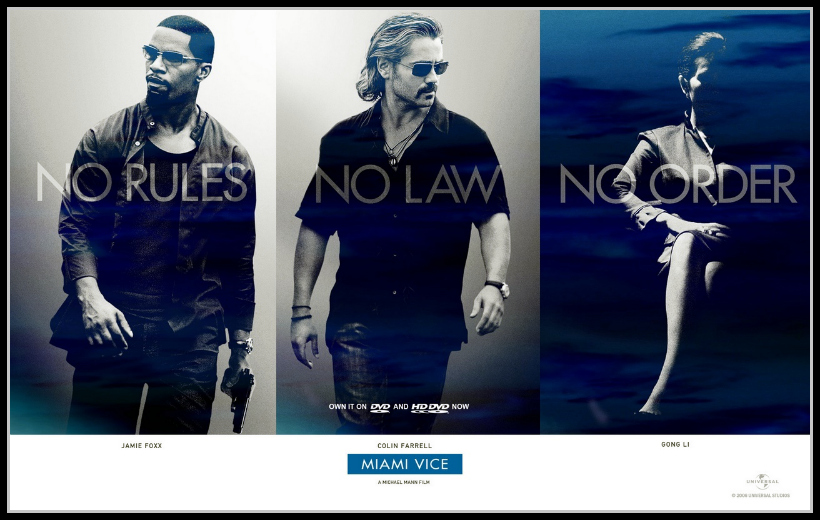
Review: Miami Vice (dir. by Michael Mann)


Michael Mann has always been in the forefront of experimenting and trying out new film techniques and styles to tell his stories. 2003’s Collateral was a veritable masterpiece of directing of a modern, urban noir. He even made Tom Cruise very believable as a sociopathic character. In 2006, Michael Mann followed up Collateral with another trip down the darkside of the law and crime. Taking a concept he made into a cultural phenomenon during the mid 80’s, Mann reinvents the show Miami Vice from the pastel colors, hedonistic and over-the-top drug-culture Miami of the 1980’s to a more down, dirty and shadowy world of the new millenium where extremes by both the cops and the criminals rule the seedy, forgotten side of the city.

Michael Mann’s films have always dealt with the extremes in its characters. Whether its James Caan’s thief character Frank in Thief, the dueling detective and thief of Al Pacino and Robert DeNiro in Heat, up to Foxx and Cruise’s taxi driver and assassin in the aforementioned Collateral. They all have had one thing in common. They’re individuals dedicated to their chosen craft. Professional in all respect and so focused to doing their job right that they’ve crossed the line to obsession. It is this obsession and how it governs everything they do which almost makes it into their own personal form of drug.

This theme continues in Mann’s film reboot of his TV series Miami Vice. The characters remain the same. There’s still the two main characters of Vice Detectives Sonny Crockett and Ricardo Tubbs. This time around these titular characters were played by Colin Farrell (in a look that echoes Gregg Allman more than Don Johnson) and Jamie Foxx. From the first moment the first scene suddenly appears all the way through to the final fade to black in the end of the film, the audience was thrust immediately into the meat of the action. Mann dispenses with the need for any sort of opening credits. In fact, the title of the film doesn’t appear until the end of the film and the same goes for the names of all involved. I thought this was a nice touch. It gave the film a stronger realism throughout.

The film’s story was a mixture of past classic episodes rolled into one two-hour long film with the episode “Smuggler’s Blues” being the main influence on the story. The glamour and glitz that were so prevalent in the original series does show up in the film, but it’s not used too much that it turned the characters of Crockett, Tubbs and the rest of the cast into caricatures. The glamour seems more of a thin veneer to hide the danger inherent in all the parties involved. These people were all dangerous from the cops to the criminals. There’s a lot of the so-called “gray areas” between what makes a cop and what makes a criminal. Mann’s always been great in blurring those lines and in showing that people on either side of the line have much more in common than they realize.

Miami Vice‘s story doesn’t leave much for back story exposition for the main leads. Michael Mann takes the minimalist approach and just introduces the characters right from the beginning with nothing to explain who they were outside of the roles they played — whether they were law-enforcement or drug dealers. The script allows for little personal backstory and instead lets the actors’ performance show just what moves, motivates and inspires these characters. Again, Jamie Foxx steals the film from his more glamorous co-star in Colin Farrell. Farrell did a fine job in making Crockett the high-risk taking and intense half of the partnership, but Foxx’s no-nonsense, focused intensity as Tubbs was the highlight performance throughout the film.

The rest of the cast do a fine job in the their roles. From Gong Li as Isabella, the drug-lord’s moll who also double’s as his organization’s brains behind the finances to Luis Tosar as the mastermind drug kingping Arcángel de Jesús Montoya. Tosar as Montoya also does a standout performance, but was in the screen for too less a time. Two other players in the film I have to make mention of were John Ortiz as Jose Yero who was Montoya’s machiavellian spymaster and Tom Towles in a small, but scary role as the leader of the Aryan Brotherhood gang hired by Yero to be his Miami enforcers. Both actors were great in their supporting role and more than held their own against their more celebrated cast mates.

This film wouldn’t be much of a police crime drama if it was all talk and no action. The action in Miami Vice comes fast and tight. Each scene was played out with a tightness and intensity which prepped the audience to the point that the violence that suddenly arrives was almost a release. Everyone knew what was coming and when the violence and action do arrive it goes in hard and fast with no use of quick edits, slow-motion sequences or fancy camera angles and tricks like most action films. Instead Michael Mann continues his theme of going for realism even in these pivotal moments in the film.

The shootouts doesn’t have the feel of artificiality. The gunshots inflicted on the people in the film were brutal, violent and quick. The camera doesn’t linger on the dead and wounded. These scenes must’ve taken only a few minutes of the film’s running time, but they were minutes that were executed with Swiss-like precision. The final showdown at an empty lot near the Miami docks was organized chaos with the scene easy to follow yet still keeping a sense of anarchy to give the whole sequence a real sense of “in the now”.

The look of the film was where Mann’s signature could be seen from beginning to end. He started using digital cameras heavily in Collateral. His decision to use digital cameras for that film also was due to a story mostly set at night. The use of digital allowed him to capture the deepest black to off-set the grays and blues of Los Angeles at night. Mann does the same for Miami Vice, but he does Collateral one better by using digital cameras from beginning to end. Digital lent abit of graininess to some scenes, but it really wasn’t as distracting as some reviewers would have you believe. In fact, it made Miami Vice seem like a tale straight out of COPS or one of those reality police shows.

Michael Mann stretches the limits of what his mind and technology could accomplish when working in concert. Mann’s direction and overall work in Miami Vice could only be described as being as focused and obsessive over the smallest detail as the characters in his films. This is a filmmaker who seem to want nothing but perfection in each scene shot.

With Miami Vice, Michael Mann has done the unthinkable and actually made a film adaptation of a TV show look like an art-film posing as a tight police drama. Everyone who have given the film a less than stellar review seem to have done so because Mann didn’t use the 80’s imagery and sensibilities from the original show. There were no pastel designer clothes and homes. There was no pet alligator and little friendly banter and joking around. Mann goes the other way and keeps the mood deadly serious. This was very apropo since the two leads led mortally dangerous lives as undercover agents who could die at the slightest mistake. The fun and jokes of the original series would’ve broken the mood and feel of this film. I, for one, am glad Mann went this route and not paid homage to the original series. This some saw as a major flaw, but I saw it as the main advantage in keeping Miami Vice from becoming a self-referential film bordering on camp.

Miami Vice was a finished product thats smart, stylish, and innovative crime drama. This was a film that people would either love despite some of the flaws, or one people would hate due to not being like the original TV series. Those who decide to skip watching Miami Vice because of the latter would miss a great film from one of this generation’s best directors. Those who do give this version of Miami Vice a chance would be rewarded with a great tale of cops and criminals and the obsession they have in their set roles.