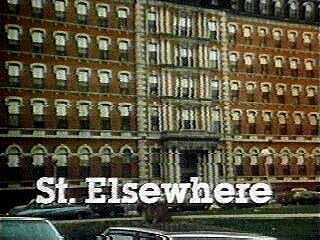
Retro Television Review: St. Elsewhere 1.4 “Cora and Arnie”


Welcome to Retro Television Reviews, a feature where we review some of our favorite and least favorite shows of the past! On Fridays, I will be reviewing St. Elsewhere, a medical show which ran on NBC from 1982 to 1988.  The show can be found on Hulu!

This week’s episode made me cry.

Episode 1.4 “Cora and Arnie”

(Dir by Mark Tinker, originally aired on November 23rd, 1982)

While orderly Luther (Eric Laneuville) practices his karate moves in the hallway and anesthesiologist Vijay (Kavi Raz) composes a letter to his family in India and Dr. Fiscus continues his sex-only relationship with Kathy Martin, four patients learn about life and death at St. Eligius.

One of them is an unnamed man (Lionel Mark Smith) who comes in with a complaint of backpain.  Fiscus examines him and discovers that the man has been shot in the back.  The man announces that he’s on parole and he doesn’t feel like going back to prison.  Fiscus offers to admit him under an assumed name but the man says he already gave his real name to the front desk.  The man tries to leave the hospital but collapses from pain and blood loss.  Later, when the man wakes up, Fiscus tells him that the bullet has been removed and he’ll be fine.  The man says he won’t be fine because he’s going to go back to prison as soon as he leaves the hospital.

Meanwhile, Kathleen McAllister, who has been in a coma ever since Andrew Reinhardt set off a bomb at a bank, finally dies.  Reinhardt, when he’s informed of the news, sneers.  He doesn’t care that she died.  He’s all about the class struggle.  (If this show was made today, he’d have thousands of followers on Bluesky.)  When Dr. Beale tries to examine him to determine if he’s mentally ill, Reinhardt spits in his face.  Reinhardt is convinced that nothing will ever happen to him but, after Kathleen dies, he’s informed that he’s being taken to prison.  As Reinhardt is rolled out of his hospital room, Kathleen’s husband (Jack Bannon) appears in the hallway and shoots him dead.

George (Bernard Behrens) and Lillian Rogers (Anne Gerety) are tourists who are visiting Boston.  When Lillian faints in her hotel room, George rushes her to the hospital.  Lillian says she’s feeling fine but she still goes through a series of tests to determine why she fainted.  In the end, the tests are inconclusive.  No one can figure out why she fainted so she’s told to just see her family doctor when she returns home.  When George and Lillian check out of the hospital, they are presented with the bill for all the tests.  George freaks out when he sees that he’s being charged …. $1,380.90!

Now, admittedly, that is $1,380.90 in 1982 money.  If George received the same bill today, it would be for $4,517.10.  Still, considering all the tests that Lillian had done, that seems remarkable cheap, even by today’s standards.  My father died in August and the majority of his medical costs were covered by insurance but his estate is still receiving bills from various hospitals, specialists, and ambulance services.  I’ve been told that the same thing happened when my mom passed away in 2008.  (Personally, I think if someone dies while in your care, you’ve forfeited your right to be paid.)  By today’s standards, having to pay less that $5,000 feels like a bargain!

Finally, and most heart-breakingly, Dr. Morrison takes care of a homeless woman named Cora (Doris Roberts), who comes into the hospital with her companion, Arnie (James Coco).  Due to a head injury, Arnie is almost childlike.  While Cora learns that a case of gangrene is going to kill her unless she gets her foot amputated, Arnie repeatedly asks, “Can we go now?”  In the end, Cora chooses not to have the surgery, leaving the hospital with Arnie.  As she explains to Dr. Morrison, someone has to take care of Arnie and she can’t do that with just one foot.  When Morrison tells Cora that she’s probably going to die in a year, Cora shrugs and says it won’t be any great loss.

OH MY GOD!  Seriously, I was in tears at the end of this episode.  The Cora and Arnie story had the potential to be a bit too schmaltzy for its own but Doris Roberts and James Coco both gave such incredibly moving performances that I couldn’t help but get emotionally involved in their plight.  And I understood why Cora made the decision that she did.  Having been rejected by both her family and society, Cora knew that there wouldn’t be anyone around to take care of her after the operation.  So, she decided to accept things the way that they were and spend her last year with the one person who didn’t judge her, Arnie.  (I’m getting teary-eyed just writing about it.)  Playing out against all the other petty dramas going on at the hospital, this storyline was emotionally devastating.

This was a powerful episode.  Watching it, I understood why St. Elsewhere is so often described as being one of the best medical shows of all time.


Retro Television Review: St. Elsewhere 1.3 “Down’s Syndrome”


Welcome to Retro Television Reviews, a feature where we review some of our favorite and least favorite shows of the past! On Fridays, I will be reviewing St. Elsewhere, a medical show which ran on NBC from 1982 to 1988.  The show can be found on Hulu!

This week, we get to know a very bad doctor.

Episode 1.3 “Down’s Syndrome”

(Dir by Mark Tinker, originally aired on November 16th, 1982)

St. Eligius is home to several doctors, some of whom are good at their job and some of whom are really, really bad.

One of the bad ones appears to be Dr. Peter White (Terrence Knox), a resident who was in the background during the previous two episodes but who was at the center for a good deal of this episode.  Peter has a terrible bedside manner, absolutely no social skills, and his knowledge of medicine appears to be subpar at best.  When a homeless man comes in and complains of pain, Peter gives him a dose of potassium that nearly kills him.  (Only the quick thinking of Dr. Ehrlich — who himself hardly appears to be the perfect doctor — keeps the patient alive.)  Dr. White seems to be overwhelmed and it certainly doesn’t help that his wife is constantly calling the hospital and demanding to speak to him about every little thing.  That said, it’s hard to have much sympathy for Dr. White.  Yes, he’s overwhelmed but his mistakes nearly kill a man.

I have to admit that, as I watched Dr. Peter White on this week’s episode, I kept thinking about some of the doctors who treated my father after he had his car accident in May.  Whenever I spoke to them, they would brusquely answer my questions, usually in technical language that reflected that it had been a long time since they talked anyone who hadn’t gone to medical school.  At the time, I made the same excuses for them that I just made for Dr. White.  They were young, they were busy, and they were overwhelmed.  After my father died, though, I stopped making excuses for them and I instead just accepted that they weren’t very good at their job.  And perhaps Dr. White should admit the same.

It doesn’t help that Dr. White is contrasted with Dr. Auschlander, a kind and elderly liver specialist who is battling cancer but who still manages to treat all of his patients with kindness and respect.  The episode made it clear that all of the residents should hope to become a doctor like Dr. Auschlander.  While Peter snaps at his patients and nearly kills a man, Auschlander takes the time to play cards with a woman who is dying.  We should all be so lucky as to have an Auschlander in our life.

Finally, Brian Whitehill (Tony Bill) and his pregnant wife, Denise (Maureen Whitehill) are informed that their baby will be born with Down’s Syndrome.  In a scene that brings to mind Icelandic eugenics, Brian suggests that Denise get an abortion but Denise refuses, especially when she learns that she’s going to have a son.  (She already has two daughters.)  A day later, Brian comes home from work and tells Denise that he’s realized that she’s right and he’s prepared to be the father of a special needs child.  Denise replies that she had the abortion earlier in the day.  Seriously, what a depressing story!  That said, I respected what the show was doing here.  The patients are just as important as the doctors.

(And while Denise is getting an abortion, Dr. Morrison is learning that he’s going to be a father and, in contrast to Brian Whitehill, joyfully cheering in the hospital stairwell.)

As with the previous episode, there was a lot going on in the background.  Dr. Beale attempted to analyze terrorist Andrew Reinhardt (Tim Robbins), who is still basically acting like an arrogant prick.  Kathleen McAllister, the victim of Reinhardt’s attack, is still in a coma.  Dr. Westphall gave a tour of the hospital to two community leaders who both suggested that St. Eligius should shut down and move its operations to a wealthier neighborhood.  Dr. Fiscus got a blow job in an elevator from Kathy Martin.  (“Going down?” Fiscus asked the next guy who got on the elevator.)  It was a busy day at the hospital!  It was a good episode, even if it didn’t really have any of the big wow moments that the previous two episodes featured.  This episode was more about following a few days in the life of a hospital and the emphasis was on the nonstop flow of patients and doctors, some of whom were doing their best and some of whom were on the verge of giving up.  In the end, the main thing I took away from this episode was that there may not be enough Aucschlanders to make up for all the Peter Whites.


Retro Television Review: St. Elsewhere 1.2 “Bypass”


Welcome to Retro Television Reviews, a new feature where we review some of our favorite and least favorite shows of the past! On Fridays, I will be reviewing St. Elsewhere, a medical show which ran on NBC from 1982 to 1988.  The show can be found on Hulu!

This week, William Daniels claims the show as his own.

Episode 1.2 “Bypass”

(Dir by Thomas Carter, originally aired on November 9th, 1982)

“Hey, it’s Tim Robbins!”

Yes, the future Oscar winner shows up in the second episode of St. Elsewhere, playing a rich kid-turned-terrorist named Andrew Reinhardt.  Reinhardt, who no doubt learned all about Marxism during his first semester away at college, set off a bomb in a bank, killing two people and putting a woman named Kathleen McCallister into a coma.  Both Reihnhardt and McCallister have been brought to St. Eligius.  While Kathleen’s husband, Stephen (Jack Bannon), sobs in the hallway, Reinhardt acts like a petulant brat in his hospital room.

With the nurses refusing to change his sheets or even give him his morphine shots, it falls to Dr. Morrison to take care of him.  Reinhardt is not at all appreciative and Morrison finds himself conflicted.  How is he supposed to give proper medical treatment to someone who he despises?  Morrison is so conflicted that he even goes to Dr. Westphall.  Westphall responds by telling a long story about a time that he fell in love with a patient.  I’m getting the feeling that Morrison feeling conflicted and Westphall telling long stories are both going to be regular features on this show.

(The correct answer to Morrison’s question about how he can take care of a bad person is as follows: It’s your job and you’re getting paid to do it.)

This episode also gave the viewer a chance to get to know Dr. Craig, the very talented but very egotistical head of surgery who is played by the great William Daniels.  Dr. Craig holds a press conference to inform reporters about the conditions of both Reinhardt and Kathleen McCallister and declares that, despite its bad reputation, “St. Eligius is the place to be!”  He then proceeds to get angry when the press is more interested in talking to the surgeon who actually saved Kathleen’s life than to him.

Dr. Craig browbeats a Mr. Broadwater (Robert Costanzo) into getting bypass surgery done.  The surgery appears to have been a success but it’s hard to ignore that Craig essentially bullied the guy into getting a major operation, one that could have killed him if the least little thing had gone wrong.  Resident Victor Ehrlich (Ed Begley, Jr.) assists in the operation and, at one point, Dr. Craig intentionally head butts him when Ehrlich cannot name all of the arteries leading into the heart.  It’s a bit aggressive but, on the plus side, Ehrlich does learn all of the names.  Afterwards, Dr. Craig brags about how his own son is following in his footsteps and tells Mr. Broadwater’s son that some day, a new Dr. Craig will operate on him.  In other words, Dr. Craig is kind of a jerk but he’s good at what he does and he’s played by William Daniels so it’s hard to hold anything against him.

There were other subplots playing out in the background, the majority of which just seemed to be there to remind us that St. Elsewhere is an ensemble show and that, just because someone isn’t a major character in this episode, that doesn’t mean they won’t be important later on.  Psychiatrist Hugh Beale (G.W. Bailey) attempted to learn how to swim and ended up taking a class with a bunch of children.  Dr. Fiscus (Howie Mandel, the least convincing doctor ever) held court in the cafeteria and claimed that the hormones used in processing food were causing children to develop earlier than ever before.  Dr. Peter White (Terrence Knox) wandered around with a bunch of X-rays and begged everyone he met to help him understand what he was (or wasn’t) seeing.  If nothing else, this episode did a good job of capturing the idea of the hospital as being a place that’s always busy.

For the most part, though, it was Dr. Craig who carried this episode.  While Morrison and Westphall ponderously considered the implications of doing their jobs, Craig was an arrogant, angry, and brilliant dynamo and William Daniels’s high-energy performance was a pleasure to watch.  Whenever the episode started to slow down, Dr. Craig would liven things up by yelling at someone.  The hospital was lucky to have Dr. Craig and St. Elsewhere was lucky to have William Daniels.

Retro Television Review: St. Elsewhere 1.1 “Pilot”


Welcome to Retro Television Reviews, a new feature where we review some of our favorite and least favorite shows of the past! On Fridays, I will be reviewing St. Elsewhere, a medical show which ran on NBC from 1982 to 1988.  The show can be found on Hulu!

When I started reviewing Homicide, Jeff suggested that I should also review St. Elsewhere because the two shows shared a similar sensibility and a lot of behind-the-scenes personnel.  (Homicide showrunner Tom Fontana started out as a writer on St. Elsewhere.)  Apparently. a few characters from St. Elsewhere would eventually cross-over to Homicide.  Since I’m planning on soon reviewing two shows that were descended from HomicideOz and The Wire — it only seemed right to also review a show that was Homicide’s ancestor.

Though the show aired largely before my time, St. Elsewhere is definitely a show that I have heard about.  Everyone who follows American pop culture has either read about or seen the show’s infamous final episode and knows about the Tommy Westphall Universe Hypothesis.  Obviously, I can’t get into it now because that would be a spoiler but we’ll discuss it when the time comes!

For now, let’s start at the beginning, with the pilot!

Episode 1.1 “Pilot”

(Dir by Thomas Carter, originally aired on October 26th, 1982)

St. Eligius is a hospital in Boston that has obviously seen better days.  From the outside, it looks old.  On the inside, the hallways have the dim and dull look of a building that hasn’t been renovated in over ten years.  As Dr. Mark Craig (William Daniels, long before he played Mr. Feeney on Boy Meets World) angrily puts it, the hospital gets no respect in Boston.  It’s seen as being a “dumping ground” for patients who can’t afford anything better.  Dr. Craig is world-renowned heart surgeon whose wealthy patients have donated what few improvements the hospital has seen over the past few years.  (“All of our clocks now read the same time!” Dr. Craig brags at one point.)  But not even Dr. Craig can change the hospital’s reputation as being secondary to Boston General.

There are actually a few good things about St. Eligius.  For one thing, a young Denzel Washington is on staff, playing resident Phillip Chandler.  Denzel doesn’t get to do much in the pilot but still, his presence fills the viewer with confidence.  St. Eligius is also home to a world-renowned liver specialist, Dr. Daniel Auschlander (played by Norman Lloyd, who also worked with Hitchcock and Orson Welles).  Auschlander has liver cancer but the hospital chief-of-staff, Dr. Donald Westphall (Ed Flanders), assures everyone that Auschlander will probably “out live us all.”  (And he was right, to an extent.  Norman Lloyd lived to be 106 years old before passing away in 2021.  Ed Flanders died, tragically by suicide, in 1995.)  St. Eligius is a teaching hospital and the residents want to make a good impression by keeping their patients alive.  That’s always a good thing.

At the same time, how secure can you feel when Howie Mandel is one of the residents?  Mandel plays Dr. Wayne Fiscus, who wears a baseball cap and acts …. well, he acts a lot like Howie Mandel.  Like Washington, Mandel doesn’t do a lot in the pilot.  He does get a subplot where he apparently has sex in the morgue with goth pathologist Cathy Martin (Barbara Whinnery) but otherwise, we don’t see him treating a patient or anything like that.  Still, it’s a bit jarring to see Howie Mandel as a doctor.  I would not necessarily want him for my doctor because he’s to be easily distracted.  Maybe he’ll change my mind as the series progresses.

Speaking of sex, Dr. Ben Samuels (David Birney) has gonorrhea and spends most of the pilot approaching doctors and nurses and informing them of his conditions and suggesting that they might want to get tested themselves.  That’s not exactly the best way to be introduced to a character but it also lets us know that this show is not just going to be about dedicated doctors who spend all of their time worrying about their patients and making amazing medical discoveries.  Instead, this show is also about doctors who get venereal diseases.  Has anyone checked on Fiscus in the morgue?

(That said, Dr. Samuels does get a scene where he saves the life of a woman who was injured in a terrorist bombing, as if the show does want to make sure that we know that he can do his job, even if he is spreading VD through the hospital.)

The majority of the episode follows Dr. Jack Morrison (David Morse), a first-year resident who has been working several 24-hour shifts and who complains, at one point, that he hasn’t seen his wife for days.  Dr. Morrison gets upset when a surgeon wants to operate on one of his patients, a 15 year-old girl named Sandy (Heather McAdams).  Morrison believes that surgeons always want to cut into somebody.  Morrison gets even more upset when Sandy’s mother requests that Sandy be transferred to Boston General, which has a reputation for being a better, more modern hospital.  In fact, Morrison is so upset and exhausted that he forgets to file a death certificate for a patient who dies during the night.  As a result, it’s believed that the patient, who has a reputation for being violent, has gone missing and is stalking the hospital.  Dr. Annie Cavanero (Cynthia Sikes) spends the entire episode looking for a dead man, which at least gives her an excuse to visit every ward and introduce the viewers to the members of the show’s ensemble cast.

Having lost my mom to cancer and now my Dad to Parkinson’s, I was hesitant about reviewing St. Elsewhere.  (Actually, I was hesitant about reviewing any medical show.)  When my Dad was in the hospital, I felt like I couldn’t get anyone to give me a straight answer about his condition and I often felt the doctors were talking down to me.  To be honest, my worst conflicts were with the nurses, one of whom told me that I would have to “lose the attitude” before she would explain why my father had been moved to the Delirium Ward.  (It didn’t help that, at the same time my Dad was in the hospital, there was a huge storm that left us without power for a week.)  At the same time, there were other doctors who were helpful.  The staff at the rehab center that my dad was sent to were also wonderful.  I have my regrets about agreeing to hospice care but the nurse who was assigned to my Dad was very empathetic and totally understanding whenever I asked her for a cigarette.  (Under normal circumstances, I don’t smoke because I have asthma but seriously, the stress was killing me.)  I’m bitter and angry about a lot of what happened but I’m also thankful for the small moments of kindness.

Watching a show set in a hospital was not easy for me but the pilot of St. Elsewhere appealed to me with its mix of melodrama and humor.  There was a quirkiness to it that I appreciated.  William Daniels made me laugh with his annoyed rant about how little respect the hospital received.  Most of all, I cared about whether or not Dr. Morrison would still be alive at the end of his shift.  David Morse’s performance won me over.  He’s the type of doctor that I would want to have.  Well, actually, I’d probably want Denzel to my doctor but Dr, Morrison could assist.  Just keep Dr. Howie Mandel away from me.  Nothing against him but he seemed to be having way too much fun at the hospital….

Most importantly, the show ended with a cat.

Next week, the drama continues at St. Elsewhere!

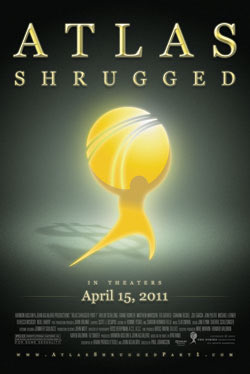
Film Review: Atlas Shrugged, Part One (dir by Paul Johansson)


The year is 2016.  A global depression has crippled the world’s economy.  While the middle class struggles to exist from day to day, the poor are getting poorer and the rich are getting richer.  Across the world, countries are nationalizing their industries, instituting price controls, and passing burdensome regulations.  Though the government officials and the academics claim that all of this is being done “in the name of the people”, it’s hard not to notice that the people are the one who are suffering as a result.  It’s also hard not to notice that most of the regulations seem to result in the bureaucrats getting not only more powerful but also wealthier.  Throughout the world, people who have started businesses or who have otherwise stood up to the government are vanishing without a trace.  In the shadows people ask, “Who is John Galt?”

Because gasoline now costs $37.00 a gallon, railroads have made a big comeback.  But the government, which claims to know what’s best and to be infallible, has done a terrible job maintaining the nation’s railways.  Dagny Taggart (Taylor Schilling), the vice president of Taggart Transcontinental Railways, is determined to rebuild the aging tracks with Rearden Metal, a new type of metal that is somehow both stronger and lighter than steel.  The inventor of the new metal is Hank Rearden (Grant Bowler).  And while that may sound like a good plan that will preserve the the nation’s supply chain, the government is angry that Rearden will not hand Rearden Metal over to them.  When Dagny’s weaselly brother, James (Matthew Marsden), announces that Taggart Railways will continue to use an inferior metal, Dagny goes into business for herself.  Despite the attempts of the government to stop them with bad publicity and excessive regulation, Dagny and Hank construct the John Galt Line.  Unfortunately, the success of the John Galt Line does not matter to Wesley Mouch (Michael Lerner, giving the film’s best performance), the former corporate lobbyist-turned-economics czar.  Mouch only sees the success of others as being a threat to his own power.

Meanwhile, people like oil tycoon Ellis Wyatt (Graham Beckel, giving the film’s second-best performance) continue to ask, “Who is John Galt?”

The first part of a trilogy of films based on the Ayn Rand novel of the same name, Atlas Shrugged Part One was released in 2011.  At that time, it received overwhelmingly negative reviews.  That, in itself, wasn’t really a shock.  There was no way that a Libertarian-themed film released at the height of the “good government” era was going to get positive reviews.  To some, it was a bigger shock that the film itself didn’t do particularly well at the box office but, again, it should have been expected.  I think Libertarians always tend to overestimate the amount of people who have 1) read Ayn Rand and 2) liked what they read.

Myself, I thought the film suffered due to its low-budget and the bland performances of Taylor Schilling and Grant Bowler in the lead roles.  At the same time, I felt that the film accomplished what it set out to do, in that it entertained the anti-government folks while annoying the MSNBC crowd.  (That said, I doubt anyone from the latter group voluntarily watched the film.)  With everything that has happened over the past seven years, it can be easy to forget just how idealized the government was in 2011.  In 2011, we were continually told that the solution to every problem could be found in a government agency populated by wonky bureaucrats.  It was like being trapped in a never-ending Aaron Sorkin fanfic.  Whatever flaws Atlas Shrugged Part One had, there was something enjoyably subversive about the film’s suggestion that the government was staffed by fools and aspiring authoritarians.  The film may have been heavy-handed when it came to portraying the greed and the stupidity of its villains but one could argue that it was no more heavy-handed than the typical Hollywood film.  It’s just, in this case, the villains of Atlas Shrugged Part One were the people who would have been the heroes of any other film.

Of course, when viewed today, Atlas Shrugged lands a bit differently.  Now that we’ve lived through the COVID era, the film’s portrayal of arrogant bureaucrats and politicians barking out orders and claiming that anyone who questions them is an enemy of the people no longer feels quite as over-the-top.  As well, it’s no longer easy to laugh off the idea of corporations working hand-in-hand with the government or the supply chain being disrupted.  The film itself still comes across as being a bit silly with its attempts to recreate the world of the rich and powerful on a very limited budget but it’s definitely more relatable today than it was in 2011.  Much of what originally felt subversive about this film now feels a bit prophetic.  If the film were released today, it would probably appeal to a mix of anti-government activist and transcontinental rail enthusiasts.  The critic wouldn’t be any nicer but it would definitely do better at the box office.

A Halloween Film Review: Seizure (1974, directed by Oliver Stone)


seizure1Everyone had to start somewhere and, long before he became one of the leading political provocateurs of American cinema, Oliver Stone was just another struggling film school grad who was looking for a chance to make a name for himself.  Like many aspiring filmmakers, Stone made his directorial debut with a low-budget horror film.

Filmed in Quebec and featuring an eclectic cast that included a soap opera star, a former Warhol superstar, a faded teen idol, a past Bond girl, and a future Bond villain, Seizure stars Jonathan Frid (of Dark Shadows fame) as Edmund Blackstone.  Edmund is a horror novelist who is described as being “a modern-day Edgar Allan Poe.”  When Edmund’s rich friends get together for the weekend, they are terrorized by three maniacs: the Queen of Evil (Martine Beswick), a mute giant called the Jackal (Henry Judd Baker), and a psychotic dwarf named The Spider (Hervé Villechaize).  

All of Edmund’s guests face the inevitability of death in a different way.  Playboy Mark Frost (Troy Donahue) is too concerned with pursuing pleasure to realize that he’s in danger.  Businessman Charlie Hughes (Joseph Sirola) gets out his wallet and tries to buy his way out of trouble.  Mikki (Mary Woronov), Charlie’s much younger wife, strips down to her underwear and runs away.  Eunice Kahn (Anne Meachem) jumps out of a window after the Spider ticks her into using an aging cream.  Eunice’s husband, philosopher Serge (Roger de Koven), faces death with stoicism.  Edmund’s brother-in-law, Gerald (Richard Cox), is a long-haired hippie who accidentally gets shot in the head by Edmund and dies saying, “You bastard!”  Edmund’s wife (Christina Pickles) tries to protect her son (Timothy Ousey) and Edmund reveals himself to be the first of the many flawed father figures who would appear in Stone’s films.

seizure_dvdreview_splash650

If not for the identity of its director, Seizure would be a forgotten film.  In fact, it seems to be a film that Stone wishes was forgotten.  He rarely mentions it in interviews and usually describes Seizure as being a “learning experience” and there’s really nothing about Seizure that would make you think the director would go on to win three Oscars.  It’s a slow and talky movie that is just occasionally weird enough to be interesting.  Seizure‘s philosophical digressions are pure Stone but otherwise, it’s hard to see any sign of the director that Stone would become in Seizure.

Still, what other movie features Jonathan Frid and Mary Woronov having a knife fight while Martine Beswick and Hervé Villechaize watch?

seizure_10

Embracing the Melodrama Part II #89: Legends of the Fall (dir by Ed Zwick)


LegendsoffallposterWhen I first started to watch the 1994 film Legends of the Fall on Encore, I was a little bit concerned when I discovered that it was directed by Ed Zwick.  After all, Zwick also directed Love and Other Drugs, which is one of the worst and most insulting films of all time.  In fact, I nearly stopped watching when I saw Zwick’s name.  But, largely because I want to finish up this series of melodramatic film reviews at some point in the near future, I decided to go ahead and watch the film.

And it turned out that Legends of the Fall is not a bad film.  I probably would have enjoyed it more if I had seen it in a movie theater as opposed to on television but, considering that it was directed by Ed Zwick, Legends of the Fall is definitely watchable.  If nothing else, it’s better than Love and Other Drugs.

Legends of the Fall tells the story of the Ludlows, a family that lives on a Montana ranch at the start of the 2oth Century.  Starting with the final days of the Indian wars and proceeding through World War I and prohibition, Legends of the Fall covers a lot of historical events but does so in a very Hollywood way, which is to say that all of the main characters dress like they’re from the past but they all have very modern social attitudes.  In this case, Col. William Ludlow (Anthony Hopkins) may be a wealthy white military veteran but he’s also totally pro-Native American.  And, of course, all the local Native Americans love him, despite the fact that he’s a representative of the institutions that have destroyed their way of life.

Anyway, Col. Ludlow has three sons.  The oldest, Alfred (Aidan Quinn), is serious and responsible. The youngest, Samuel (Henry Thomas), is naive and idealistic.  And the middle child is Tristan (Brad Pitt), who is wild and rebellious and looks like Brad Pitt.  You have to wonder how the same gene pool could produce both Aidan Quinn and Brad Pitt.

As the film begins, Samuel has returned from studying at Harvard.  With him is his fiancée, Susannah (Julia Ormond, who has really pretty hair in this movie).  Though she loves Samuel, Susannah finds herself attracted to Tristan, largely because Tristan looks like Brad Pitt.  Tristan is also attracted to Susannah but he would never betray his younger brother.  In fact, when Samuel announces that he’s enlisted in the Canadian army so that he can fight in World War I, Tristan and Alfred soon do the exact same thing.

War is Hell, which is something that Samuel discovers when he’s gunned down by a bunch of German soldiers.  Tristan responds by cutting Samuel’s heart out of his body and sending it back to Montana.  He then proceeds to go a little crazy and when we next see Tristan, he’s uniform is decorated with the scalps of dead Germans.

Meanwhile, Alfred has been wounded in battle and is sent back to Montana.  Eventually, he ends up married to Susannah.  And then Tristan comes back home and…

Well, a lot of stuff happens after Tristan returns.  In fact, you could even argue that too much happens.  Zwick obviously set out to try to make Legends of the Fall into an old school Hollywood epic but far too often, it seems like he’s mostly just copying scenes from other films.  There’s a hollowness at the center of Legends of the Fall and the end result is a film that’s visually gorgeous and thematically shallow.

And yet, you should never underestimate the importance of looking good.  Legends of the Fall is a beautiful film to look at and so is Brad Pitt.  I wouldn’t necessarily say that Brad gives a particularly good performance here because, to be honest, Tristan is such an idealized character that I doubt anyone could really make him believable.  But the Brad Pitt of 1994 looked so good and had such a strong screen presence that it didn’t matter that he wasn’t as good an actor as the Brad Pitt of 2015.  Legends of The Fall is one of those movies that can get by on pure charisma and fortunately, Brad Pitt is enough of a movie star to make the film work.

Legends of the Fall is not a great film but it’s still not a bad way to waste 120 minutes.  (Of course, the film itself lasts 133 minutes but still…)