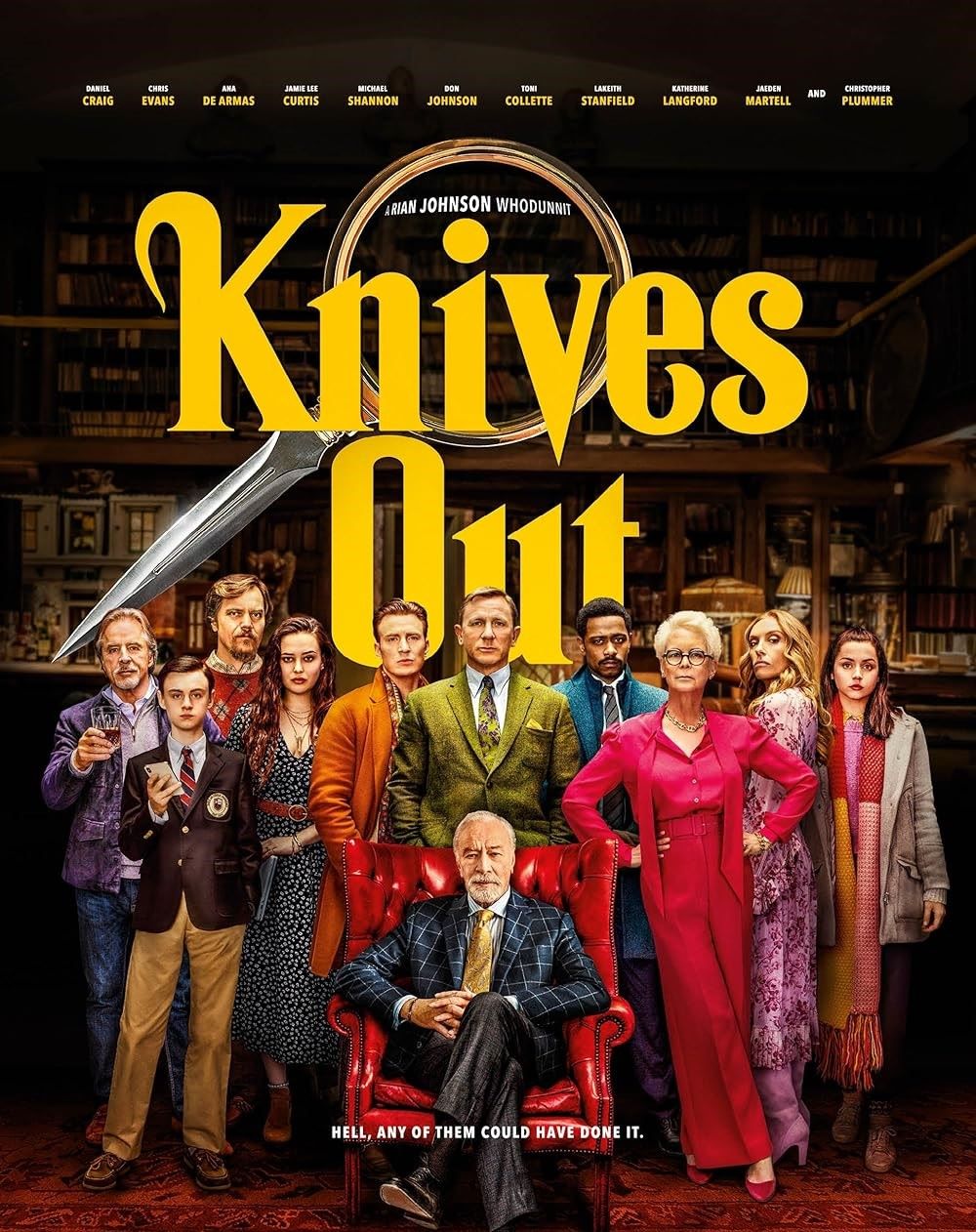
Review: Knives Out (dir. by Rian Johnson)


“The family is truly desperate. And when people get desperate, the knives come out.” — Benoit Blanc

After shaking up galaxies far, far away with Star Wars: The Last Jedi, Rian Johnson returned to solid ground in 2019 with Knives Out, a film so self-assured and inventive it practically felt like a director catching his breath while reminding the world what made him exciting in the first place. It was his first movie after that polarizing Star Wars entry, and he used the opportunity not to go bigger, but smarter—to take something intimate, character-driven, and refreshingly old-school and make it gleam again. Knives Out landed as a kind of palate cleanser for both him and the audience: a modern mystery that leaned into genre nostalgia while reinventing it with sharp humor and social bite. The result wasn’t just a change of pace—it was a confident display of craft from a filmmaker unbothered by his critics, operating with absolute control over every frame, every line, and every perfectly timed smirk.

The setup couldn’t be more classic: a wealthy family patriarch, Harlan Thrombey, turns up dead after his 85th birthday, leaving behind a tangled household of suspects, secrets, and strained smiles. His death looks like suicide, but something isn’t right. Enter Benoit Blanc, a Southern gentleman detective hired anonymously to snoop through the wreckage of lies and grievances. The scenario drips with vintage whodunit flavor, but Johnson’s genius lies in retooling that familiarity into something electrifyingly modern. The Thrombeys aren’t just eccentric millionaires—they’re avatars of American entitlement, each convinced of their own superiority while quietly dependent on the man they pretend to revere. By building his mystery around a clan that mirrors contemporary divisions of money, politics, and self-deception, Johnson injects wit and purpose into the genre without ever losing the fun of the game.

Jamie Lee Curtis plays the confident matriarch Linda, Michael Shannon the resentful son Walt, Toni Collette the spiritual grifter Joni, and Don Johnson the smirking son-in-law Richard—all of them playing heightened but recognizable shades of selfishness. Their sniping exchanges during the first act are among the film’s best sequences, packed with fast banter, political jabs, and casual hypocrisy. Johnson directs these moments like a verbal tennis match, letting personalities bounce and clash until the family’s shiny façade cracks enough for true frustrations to spill out. It’s sharp, funny, and chaotic, showing early on that no one in the Thrombey family is as self-made or self-aware as they claim to be.

Amid that colorful ensemble, the performance that most stunned audiences came from Chris Evans as Ransom Drysdale, Harlan’s playboy grandson and the family’s unapologetic black sheep. Coming off years of playing Marvel’s resolutely noble Steve Rogers, Evans dives into Ransom with visible glee, turning him into a figure of charm and mystery whose motives are never quite clear. He’s magnetic from the moment he appears—witty, cynical, a little dangerous—and Johnson clearly relishes using Evans’s clean-cut image to toy with expectations. Ransom strides into the story radiating confidence, but there’s a guarded, almost predatory intelligence behind his grin. His scenes crackle because the audience can’t quite decide where to place him: is he the rare Thrombey who sees through the family hypocrisy, or is he spinning his own kind of manipulation? That tension between self-awareness and deceit gives his every line an edge. Watching Evans in this role feels like a release for him and a thrill for viewers, a testament to both his range and Johnson’s intuitive casting.

Opposite that moral uncertainty stands Ana de Armas’s Marta Cabrera, Harlan’s kind and soft-spoken nurse who suddenly finds herself at the heart of the story. Marta grounds the entire film emotionally, her decency cutting through the Thrombeys’ arrogance like sunlight in a dusty room. She’s the migrant caretaker who everyone claims to love while casually condescending to, a detail Johnson uses to expose how often politeness masks prejudice. Marta’s inability to lie without vomiting, played initially for laughs, gradually becomes symbolic—a kind of moral honesty that makes her unique in a house ruled by deception. De Armas brings layered vulnerability to the role, balancing fear, guilt, and compassion with natural ease. Through her, Johnson turns the whodunit into something more human and emotionally resonant. She isn’t just a witness or a suspect; she’s the beating heart around which all the greed, paranoia, and privilege revolve.

Then there’s Daniel Craig’s Benoit Blanc, whose arrival shifts the film into another gear entirely. His Southern drawl—equal parts poetic and perplexing—sets the tone for what becomes one of Craig’s most playful performances. After years of portraying the stoic James Bond, he’s clearly having the time of his life as a detective who investigates with both intellect and intuition. Blanc operates less like a hard-nosed cop and more like a philosopher; he believes that solving a crime means understanding human weakness as much as evidence. His famous “donut hole” speech perfectly captures the balance Johnson strikes between earnestness and absurdity. Blanc may revel in his own melodrama, but he also brings heart to chaos, observing people’s contradictions without losing his sense of wonder. The result is a detective who’s less about revelation and more about revelation’s moral cost.

Visually, Knives Out belongs to a rare category of films that are so meticulously crafted they could be paused at any frame and still look compelling. Johnson and cinematographer Steve Yedlin transform Harlan’s mansion into a breathing character—an architectural echo chamber of secrets. The walls are lined with strange trinkets, elaborate paintings, and heavy mahogany furniture that suggest old money’s suffocating weight. There’s something both cozy and claustrophobic about the space, which mirrors the tension between family warmth and poisonous resentment. The camera glides through it with purpose, lingering on small details that gain meaning later, and the autumn-colored palette—deep reds, browns, and golds—wraps everything in an inviting melancholy. It’s as much a visual experience as it is a narrative one, and few modern mysteries feel as tactile.

Johnson’s writing keeps that sense of precision. The plot unfolds like clockwork, but the mechanics never feel mechanical. Instead, he keeps viewers off-balance by blending humor with genuine suspense. Instead of relying entirely on high-stakes twists, Johnson builds tension through empathy, giving us access to characters’ doubts and stakes rather than just their clues. The result is a mystery that keeps the audience guessing in emotional and moral dimensions, not just logical ones. Every revelation says as much about character as it does about the crime.

Underneath the quick humor and ornate mystery structure, Knives Out doubles as a satire of class and entitlement. Johnson sketches the Thrombeys as people who talk endlessly about fairness, morality, and self-reliance yet collapse into panic when their material comfort is threatened. Through them, he captures a peculiar American irony: the people most obsessed with earning their status are often those most insulated from real struggle. When the family gathers to argue over wealth and loyalty, Johnson doesn’t need to exaggerate—they expose themselves with every smug phrase and self-justified rant. It’s social commentary that’s biting but never heavy-handed because it plays out through personality instead of sermon.

Nathan Johnson’s score carries the story forward with playful precision, shifting from tension to whimsy in sync with the characters’ shifting loyalties. There’s something almost dance-like about the film’s rhythm: scenes of laughter can spiral into confession, and interrogations can dissolve into comedy without losing a beat. The editing supports that agility, cutting crisply between overlapping dialogue and close-ups that reveal just enough expression to keep us alert. Johnson’s sense of pacing feels theatrical in the best way—it’s about timing and tone rather than spectacle.

As with many of Rian Johnson’s works, contradiction fuels the story’s appeal. Knives Out is cynical about human greed but oddly hopeful about individual decency. It mocks arrogance but rewards empathy. Even when it toys with genre clichés, it does so out of affection, not scorn. Johnson clearly understands that mystery storytelling is as much about character and morality as deduction, and he uses humor and chaos as tools to explore who people become under pressure. The movie’s sophistication lies in how effortless it feels—its layers unfold smoothly, but the craft behind them is razor sharp.

The film’s ending closes with a visual that redefines power without needing words. After a story filled with deceit, pretension, and the scramble to control a legacy, it concludes on an image that says everything about perspective—who actually holds the moral high ground and how quietly dignity can win. Like the rest of the movie, it’s both playful and pointed, leaving you smiling while still turning the characters’ behavior over in your mind.

Looking back, Knives Out stands as a defining moment in Rian Johnson’s career. After the spectacle and dialogue storms of The Last Jedi, this lean, ensemble-driven mystery reaffirmed his strengths as a writer-director who thrives on structure, rhythm, and human contradictions. It’s a film that takes as much pleasure in observation as revelation, brimming with sly humor and performances that sparkle across the moral spectrum. Anchored by Ana de Armas’s poignant sincerity, Daniel Craig’s eccentric brilliance, and Chris Evans’s unpredictable charisma, it became one of the most purely enjoyable movies of its time. Witty without pretense, political without lecturing, and perfectly balanced between cynicism and heart, Knives Out remains proof that the old whodunit can still cut deep—and that Rian Johnson’s sharpest weapon is still his storytelling.

Film Review: Pain Hustlers (dir by David Yates)


I had high hopes for Pain Hustlers, largely because it featured some of my favorite actors and actresses.  Chris Evans, Emily Blunt, Andy Garcia …. how can you go wrong with that cast, right?

Unfortunately, when I watched the film, it only took a few minutes for me to lose interest.  The film opens with black-and-white interview clips of Liza Drake (Emily Blunt) and Pete Brenner (Chris Evans), in which they both claim to be the only one who can tell the true story of how a failing pharmaceutical firm became a powerhouse by bribing doctor to prescribe Fentanyl.  For lack of a better term, I refer to this as the I, Tonya approach though it perhaps would be better to name it after director Adam McKay, whose superficial but slickly made films are often mistaken for being important political statements.  It’s a style of filmmaking that may have once been exciting but now, it’s so overused that it’s come to feel a bit like a cliché.

As for the film itself, it opens with Liza working as an exotic dancer and living in a run-down motel with her daughter, Phoebe (Chloe Coleman).  A chance meeting with pharmaceutical salesman Pete Brenner leads to Liza getting a job as a sales rep despite the fact that she’s a high school drop-out who previously served time in jail for drug trafficking.  (Pete writes up a fake resume for her and lists her as being PHD, which Pete says stands for, “poor, hungry, and desperate.”)  After a rocky start, Liza is able to convince Dr. Lydell (Brian D’Arcy James) to start prescribing a powerful painkiller that was developed for cancer patients.  Of course, people get addicted to the drug and many overdose but it doesn’t matter because Liza, Pete, and Dr. Lydell are all getting rich.  The unstable head of the company, Dr. Jack Neel (Andy Garcia), is happy as long as the money keeps rolling in and as long as everyone takes off their shoes at work because he’s worried about the floors getting dirty.

As I said at the start of the review, the film attempts to take an I, Tonya-style approach to the material, mixing conflicting narrators with moments of dark humor and sudden melodrama.  Unfortunately, David Yates is exactly the wrong director for this film.  Yates is best-known for his work with the Harry Potter franchise.  Yates did a wonderful job directing the last few of the Harry Potter films but, as a director, his tendency is to be a crowd-pleaser and Pain Hustlers fails precisely because Yates always pulls back before the film can get too dark or subversive.  This is the type of film where, during the final fourth of the film, everyone starts acting in ways totally contrary to everything we’ve previously learned and seen about them so that the film can end on a traditional note of good vs evil.  Watching previously amoral characters suddenly and unconvincingly developed a conscience, I found myself thinking about Martin Scorsese’s The Wolf of Wall Street.  One reason why The Wolf of Wall Street worked is because Jordan Belfort remained an unrepentant crook through the entire film, even after all of his schemes fell apart.  Scorsese has the courage to the let the audience make up their own mind about Belfort.  Scorsese understood that suddenly having Belfort (or Henry Hill in Goodfellas or Ace Rothstein in Casino) develop a sense of right and wrong would not only feel unnatural to the character but it would also undercut the effectiveness of the story he was trying to tell.  For lack of a better term, it would feel fake.  It would feel like pandering to those who demands a cut-and-dried, easy-to-digest message.  That’s a lesson that Pain Hustlers missed, to its detriment.

It’s just not a very good film, which is a shame when you consider the amount of talent involved.  Of the cast, Chris Evans is the only one who really makes much of an impression, playing Pete as someone who might not be smart but who definitely understands how to charm enough people to get by.  Poor Emily Blunt is sabotaged by an inconsistent script while Andy Garcia is pretty much wasted as Dr. Neel.  Seriously, can we make an effort to write more decent roles for Andy Garcia?  He’s such a good actor and he keeps getting wasted in these small, pointless roles!

Pain Hustlers was a disappointment for me.  It happens.

Here’s The Trailer For The Gray Man!


Pity The Gray Man.

The trailer for this upcoming Netflix spy thriller had the misfortune to drop as the same time as the trailer for the new Mission: Impossible film.  Needless to say, The Gray Man has been a bit overshadowed, despite being directed by the Russo Brothers and starring Ryan Gosling, Chris Evans, and Ana de Armas.

As for the trailer itself, it looks like a standard Netflix action flick but, if you’ve seen The Iceman, you know that Chris Evans can be an entertainingly eccentric villain.  And I think the Russo Brothers do have the potential to be a force outside of the MCU, even if Cherry did fall a bit flat.  So, we’ll see!   

Here’s the trailer!

Chris Evans blasts off in the Lightyear Trailer


If the trailer is any indication, Disney / Pixar’s Lightyear is looking pretty good. Chris Evans (Avengers: Endgame) suits up as a younger version of Toy Story’s space hero. It looks like he’ll meet some friends along the way (even furry ones – I hope that cat isn’t a Flerken). I’m hoping that this may get Woody his own origin story as well down the line.

Lightyear is due to release in theatres for the Summer of 2022.

Rian Johnson unsheathes the Knives Out Trailer


A filmmaker is sometimes only as good as their last film. If you mentioned director Rian Johnson’s name around 2012, it was probably met with wild applause. After all, he gave us the time travelling thriller Looper, with Bruce Willis, Emily Blunt and Joseph Gordon-Levitt.

Mentioning Johnson now breeds a bit of contempt after his outing on Star Wars: The Last Jedi. The film was hit with reviews ranging from daring to awful, and most of the Star Wars fanbase don’t think of what he’s done there.

With his newest film, Knives Out, Johnson looks like he’s moving forward. The film appears to be a classic whodunit with a fantastic cast. Christopher Plummer, Chris Evans, Ana de Armas, Jamie Lee Curtis, Toni Collette, Daniel Craig, Don Johnson, Lakeith Stanfield, Michael Shannon, Katherine Langsford, and Jaeden Martell round out the cast list, which is pretty great overall. The story seems to cover the murder of a patriarch, and a family of suspects which reminds me of the classic Infocom game, Deadline.  Hoping for the best with this one.

Enjoy.

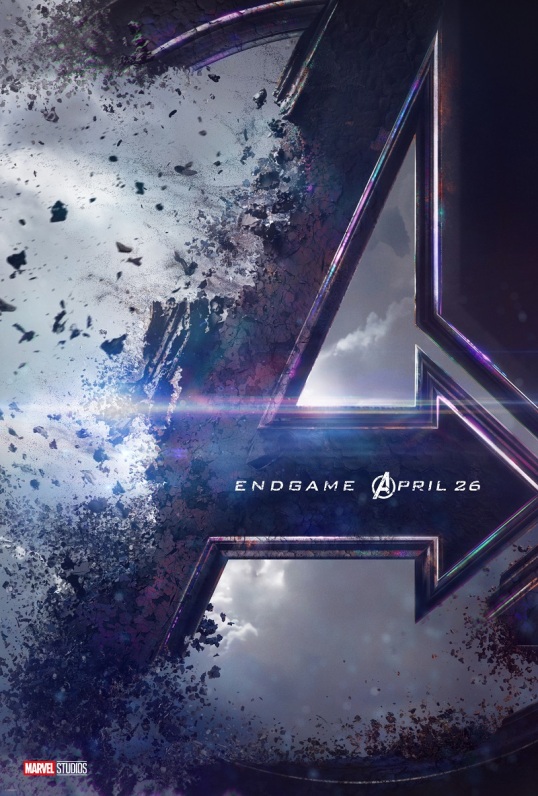
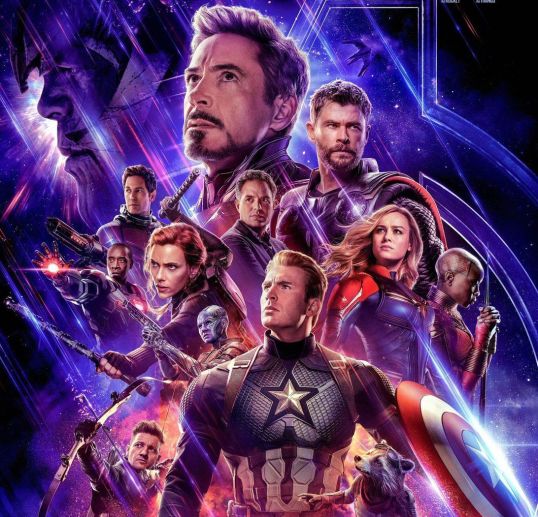
Film Review: Avengers: Endgame (dir by the Russo Brothers)


(Minor Spoilers Below!  Read at your own risk.)

So, how long does the no spoiler rule for Avengers: Endgame apply?  There’s so much that I want to say about this film but I know that I shouldn’t because, even though it had a monstrous opening weekend, there are still people out there who have not had a chance to see the film.  And while this review will have minor spoilers because, otherwise, it would be impossible to write, I’m not going to share any of the major twists or turns.

I will say this.  I saw Avengers: Endgame last night and it left me exhausted, angry, sad, exhilarated, and entertained.  It’s a gigantic film, with a plot that’s as messy and incident-filled as the cinematic universe in which it takes place.  More than just being a sequel or just the latest installment in one of the biggest franchises in cinematic history, Avengers: Endgame is a monument to the limitless depths of the human imagination.  It’s a pop cultural masterpiece, one that will make you laugh and make you cheer and, in the end, make you cry.  It’s a comic book film with unexpected emotional depth and an ending that will bring a tear to the eye of even the toughest cynic.  By all logic, Avengers: Endgame is the type of film that should collapse under its own weight but instead, it’s a film that thrives on its own epic scope.  It’s a three-hour film that’s never less than enthralling.  Even more importantly, it’s a gift to all of us who have spent the last ten years exploring the Marvel Cinematic Universe.

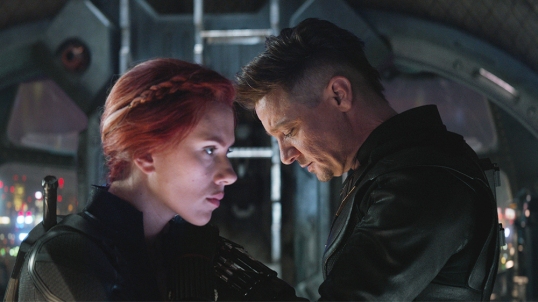
The film itself starts almost immediately after the “Snap” that ended Avengers: Infinity War and we watch as Clint Barton (Jeremy Renner, returning to the franchise after being absent in the previous film) finds himself powerless to keep his family from disintegrating.  After often being dismissed as the Avengers’s weak link, both Clint Barton and Jeremy Renner come into their own in the film.  As one of two members of the Avengers who does not have super powers, Clint serves as a everyperson character.  He’s a reminder that there’s more at stake in Endgame than just the wounded pride of a few super heroes.  When Thanos wiped out half the universe, he didn’t just wipe out Spider-Man, Doctor Strange, and Groot.  He also left very real wounds that will never be healed.

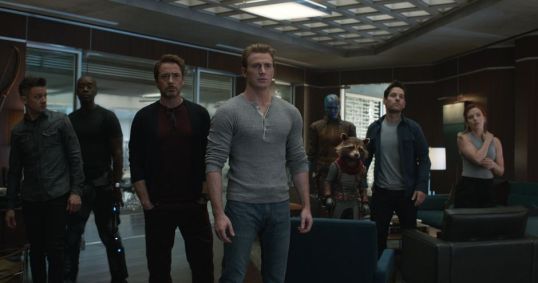
When the film jumps forward by five yeas, we discover that the world is now a much darker place.  When we see New York, the once vibrant city is now gray and deserted.  Our surviving heroes have all dealt with the Snap in their own way.  Clint is now a vigilante, killing anyone who he feels should have been wiped out by Thanos but wasn’t.  Thor (Chris Hemsworth) drinks and eats and feels sorry for himself.  Captain America (Chris Evans) attends support groups and, in one nicely done scene, listens as a man talks about his fear of entering into his first real relationship in the years since “the Snap.”  Tony Stark (Robert Downey, Jr.) is living as a recluse and is still blaming himself.  Hulk (Mark Ruffalo) is now an avuncular, huge, and very green scientist.  Only Natasha (Scarlett Johansson) remains convinced that the Snap can somehow be undone.  She’s right, of course.  But doing so will involve some unexpected sacrifices and a lot of time travel….

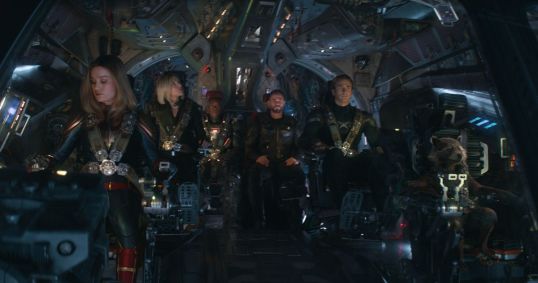
And that’s as much as I can tell you, other than to say that the film takes full advantage of both the time travel aspects (yes, there are plenty of Back to the Future jokes) and its high-powered cast.  With our heroes — which, along with the usual Avengers, also include Ant-Man (Paul Rudd) and Rocket Racoon (Bradley Cooper) — hopping through time and space, we get a chance to revisit several of the films that led up to Endgame and it’s a thousand times more effective than it has any right to be.  Yes, one could argue that the cameos from Robert Redford, Tom Hiddleston, Hayley Atwell, and others were essentially fan service but so what?  The fans have certainly earned it and the MCU has earned the chance to take a look back at what it once was and what it has since become.

Indeed, Avengers: Endgame would not work as well as it does if it hadn’t been preceded by 21 entertaining and memorable movies.  It’s not just that the MCU feels like a universe that it as alive as our own, one that is full of wonder, mystery, sadness, and love.  It’s also that we’ve spent ten years getting to know these characters and, as a result, many of them are much more than just “super heroes” to us.  When Tony Stark and Captain America argue over whether it’s even worth trying to undo the Snap, it’s an effective scene because we know the long and complicated history of their relationship.  When the Avengers mourn, we mourn with them because we know their pain.  We’ve shared their triumphs and their failures.  Tony Stark may be a guy in an iron suit but he’s also a man struggling with his own demons and guilt.  Steve Rogers may be a nearly 100 year-old super solider but he’s also every single person who has struggled to make the world a better place.  As strange as it may be to say about characters known as Iron Man, Captain America, and the Black Widow, we feel like we know each and every one of them.  We care about them.

Needless to say, the cast is huge and one of the great things about the film is that previously underused or underestimated performers — like Jeremy Renner, Scarlett Johansson, Paul Rudd, Don Cheadle, and Karen Gillan — all finally get a chance to shine.  As always, the heart of the film belongs to Chris Evans while Robert Downey, Jr. provides just enough cynicism to keep things from getting to superficially idealistic.  Chris Hemsworth and Mark Ruffalo get most of the film’s big laughs, each playing their borderline ludicrous characters with just the right combination of sincerity and humor.  Of course, Josh Brolin is back as well and he’s still perfectly evil and arrogant as Thanos.  But whereas Thanos was the focus of Infinity War, Endgame focuses on the heroes.  If Infinity War acknowledged that evil can triumph, Endgame celebrates the fact that good never surrenders.

As Endgame came to an end, I did find myself wondering what the future is going to hold for the MCU.  A part of me wonders how they’re going to top the past ten years or if it’s even possible to do so.  Several mainstays of the MCU say goodbye during Endgame and it’s hard to imagine the future films without their presence.  It’s been hinted that Captain Marvel is going to be one of the characters holding the next phase of the  MCU together and, fortunately, Brie Larson is a quite a bit better in Endgame than she was in her previous MCU film.  Hopefully, regardless of what happens in the future, Marvel and Disney will continue to entrust their characters to good directors, like the Russo Brothers, James Gunn, and Taika Waititi.  (Wisely, Disney reversed themselves and rehired James Gunn for the next Guardians of the Galaxy film.  Of course, Gunn never should have been fired in the first place….)

And that’s really all I can say about Avengers: Endgame right now, other than to recommend that you see it.  In fact, everyone in the world needs to hurry up and see it so we can finally start talking about the film without having to post spoiler warnings!

For now, I’ll just say that Avengers: Endgame is a powerful, emotional, and entertaining conclusion to one of the greatest cinematic sagas ever.

“Whatever it takes, I know I can make it through” Here’s the new trailer for Avengers: Endgame!


So, I just watched the latest trailer for Avengers: Endgame.  Here are a few of my initial thoughts:

First off, people always make jokes about how, while Thor’s a God and Captain America is basically 100 years old but still looks like Chris Evans, Jeremy Renner pretty much only brings a bow and arrow to the fight.  But you know what?  I was really happy to see Renner return, even if he does have a questionable haircut.  And I was even more happy to see that, after being underused in the previous Avengers film, it looks like Scarlett Johannson has got a decent role.

Plus, for at least some of the film, Scarlett’s a redhead again!

I loved the trailer’s use of black-and-white.  It added a sense of tragic grandeur to the whole thing.

I’m still traumatized by the end of the Infinity Wars.  Yeah, I know that everyone will probably be resurrected and that there’s no way they’d ever kill off Spider-Man for real but seriously, that was hella depressing!  “Mr. Stark, I don’t feel so good….” AGCK!

Captain Marvel shows up at the end and gets Thor’s seal of approval.  One wonder if they waited to see this weekend’s box office numbers before deciding to include that scene at the end.

Speaking of which — where’s my review of Captain Marvel?  I saw it earlier this week.  I’ll be posting it soon.

It’s hard not to notice that Thanos wasn’t in this trailer.  Of course, we did see him in the previous teaser.

Finally, I love the fact that Avengers: Endgame and Degrassi share the same tag line.  “Whatever it takes!”

Here’s the latest trailer for Avengers: Endgame!


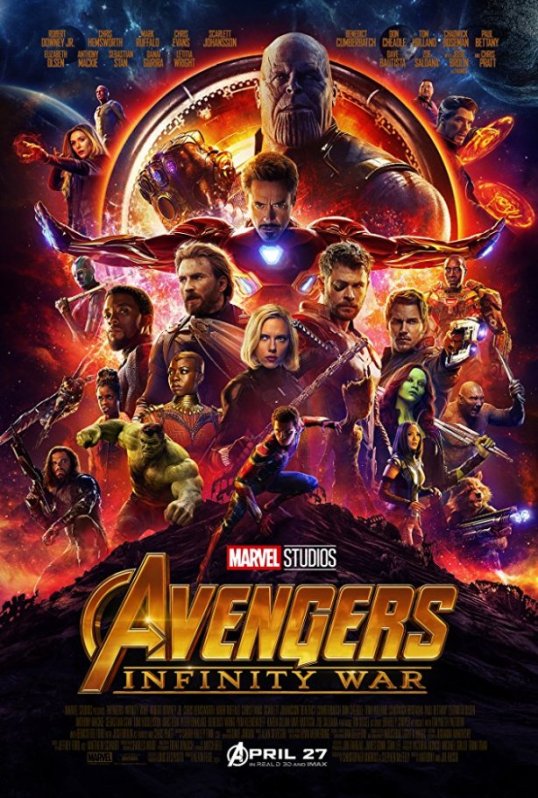
Lisa Reviews Avengers: Infinity War (dir by Joe and Anthony Russo)


(Warning: There are spoilers in this review.  They’re not necessarily huge spoilers but they’re there.  Read at your own risk.)

Avengers: Infinity War is a lot of things.  It’s big, it’s thrilling, it’s emotional, it’s colorful, it’s loud, it’s flamboyant, and, clocking in at two and a half hours, it’s occasionally a bit exhausting.  It’s overwhelming but it’s never boring.  It’s a nearly perfect example of pure cinema, where the story is less about what happens and more how it’s told. It’s a tribute to not just the Marvel Cinematic Universe but also to the audiences who have been flocking to each movie since Iron Man was first released way back in 2008.  Avengers: Infinity War is a pop art masterpiece, one that provides the first part of a climax to a saga that’s been unfolding for ten years.

In the days leading up to the release of Avengers: Infinity War, the main selling point was the assumption that this movie would feature every single character that’s been introduced as a citizen of the MCU so far.  Though the film comes close to including everyone, there are still a few characters who are notable for their absence.  Ant-Man and the Wasp are nowhere to be seen.  None of the Marvel Television characters show up, which is a shame because I’m sure Jessica Jones would have had some choice words about the potential end of the universe.  Two familiar SHIELD agents make a brief appearance, though you have to wonder where they were when New York and Wakanda were being invaded.

That said, all of the big heroes show up.  Tony Stark (Robert Downey, Jr.) flies into space with Dr. Strange (Benedict Cumberbatch) and Spider-Man (Tom Holland).  Thor (Chris Hemsworth) teams up with Rocket Racoon and Groot (voiced by Bradley Cooper and Vin Diesel, respectively).  When Wakanda is attacked, Black Panther (Chadwick Boseman), Captain America (Chris Evans), The Falcon (Anthony Mackie), White Wolf (Sebastian Stan), the Hulk (Mark Ruffalo), Rhodey (Don Cheadle), and Natasha (Scarlett Johansson) are all present to defend it.  Meanwhile, Vision (Paul Bettany) and Wanda (Elizabeth Olsen) continue to pursue their odd relationship while Peter Quill (Chris Pratt) and Gamora (Zoe Saldana) search for Gamora’s father, Thanos (Josh Brolin).

It’s a packed film and the fact that it works as well as it does is a testament to the power of perfect casting and movie star charisma.  At this point, we feel as if we know these characters.  We know that Tony Stark is going to be haunted by what happened the last time Thanos’s minions involved New York.  We know that Spider-Man is going to be desperate to prove that he belongs with the adults, just as we know that Dr. Strange isn’t going to be particularly impressed with anyone he meets.  Needless to say, some characters get more screen time than others.  Despite a good deal of the film taking place in Wakanda, Black Panther largely stays in the background.  I personally wish that both Natasha and Captain America had been given a bit more to do.  Considering just how talented both Anthony Mackie and Don Cheadle are, it’s a shame that neither one of them ever gets to do much in these films.  At the same time, Infinity Wars allows both Elizabeth Olsen and Paul Bettany to come into their own and Chris Hemsworth again shows that he may be the most underrated star in the MCU.  I’ve read a lot of criticism of certain actions taken by Peter Quill towards the end of the film but actually, it’s exactly what you would expect his character to do in the situation and, up until that moment, Chris Pratt is a welcome presence.  It’s important to have someone around who appreciates good music and who can make you laugh, especially considering that Thanos is planning to wipe out 50% of the universe’s population…

Oh yes, Thanos.  After spending years lurking in the background, Thanos finally steps forward in Infinity War.  In fact, it can be argued that Avengers: Infinity War is actually much more of a Thanos film than an Avengers film.  While our heroes are continually spending the film trying to catch up to Thanos and reacting to his latest action, Thanos is always one step ahead.  Thanos is the one who steers the narrative and, for once, you really do believe that an MCU villain views the heroes as being mere distractions.  Thanos is the one on a quest and the film follows him through every step of his search.  In fact, the film’s most emotional moments belong to Thanos.  For all the death and destruction to be found in the film’s surprisingly dark narrative, Thanos is the only character to ever shed a tear.  Like all great villains, Thanos doesn’t view himself as being evil.  Instead, Thanos speaks very sincerely of his desire to bring balance to the universe.  The scary thing about Thanos isn’t that he claims that he’s being merciful when he slaughters millions of beings.  The scary thing about Thanos is that believes it.

Thanos, you see, is a bit of an intergalactic environmentalist.  As he explains it, the universe only has a finite number of resources.  By killing half of the universe’s population, he is ensuring that the other half will be able to survive in peace and harmony.  Most people would call Thanos’s actions genocidal but Thanos would probably say that he’s merely making the difficult decisions that others don’t have the courage or intelligence to make.  It may all sound rather far-fetched and melodramatic until you consider that, just last week, bureaucrats and doctors in the UK decided it would be better to starve a sick infant to death rather than allow his parents to take him to be treated in another country.  With his mix of narcissism and absolutely belief in his own moral certitude, Thanos is a far more familiar villain than a lot of viewers might want to admit.  As opposed to the forgettable villains who have appeared in so many MCU films, Thanos is a compelling and complicated figure.  It’s interesting to note that two of the best performances of the year so far were given by actors appearing as villains in MCU films, Michael B. Jordan in Black Panther and Josh Brolin in this one.

As befits the film’s subject matter, Infinity War is a sprawling film, one that skips from world to world.  The visuals are frequently spectacular, as are the many battles.  From the opening attack on New York to the final battles in Wakanda and in space, the action is non-stop and thrilling.  (It helps that, as opposed to some of the previous MCU films, it’s always clear who is fighting who and why they’re fighting.)  For me, though, the most memorable scenes are the scenes where Thanos looks and considers the worlds that he’s destroyed.  There’s a scene where an exhausted Thanos rests on a placid planet and it’s one of the strongest images in the history of the MCU.

I’ve been told that I shouldn’t worry too much about all of the characters who are killed over the course of Infinity War.  From what I’ve been told, it’s apparently something of a tradition in Marvel comics to kill off a bunch of recognizable characters and then have them come back to life an issue or two later.  And the fact that the sequel to Infinity War has already been filmed and is set to released next year leads me to suspect that nothing’s permanent.  I mean, if all of these people are really dead, there aren’t going to be many heroes left to make any more movies about.  That said, I still got far more emotional than I probably should have at some of the unexpected demises.  Especially … well, no.  I won’t say the name.  But seriously, it was upsetting.

2018 is shaping up to be the year of Marvel.  So far, Marvel has released two of the best films of the year.  To be honest, a film as huge as Infinity War shouldn’t have worked and yet, it does.  It’s a masterpiece of pop art.*

* For a totally different response to Avengers: Infinity War, check out Ryan’s review by clicking here!

Check Out These Avengers: Infinity War Character Posters!


With the release of Avengers: Infinity War right around the corner, Marvel has released a whole new collection of character posters!  Just in case you were wondering who, from the MCU, is going to show up in Infinity War, here’s a partial reminder!

(By the way, the answer  would appear to be just about everyone who has ever appeared in an MCU film!)

Iron Man (Robert Downey, Jr)

Hulk (Mark Ruffalo)

Thor (Chris Hemsworth)

War Machine (Don Cheadle)

Black Widow (Scarlett Johansson)

Captain America (Chris Evans)

White Wolf (Sebastian Stan)

Falcon (Anthony Mackie)

Star-Lord (Chris Pratt)

Rocket and Groot (Bradley Cooper and Vin Diesel)

Gamora (Zoe Saldana)

Nebula (Karen Gillan)

Drax (Dave Bautista)

Scarlet Witch (Elizabeth Olsen)

Vision (Paul Bettany)

Black Panther (Chadwick Boseman)

Spider-Man (Tom Holland)

Doctor Strange (Benedict Cumberbatch)

Wong (Benedict Wong)

Mantis (Pom Klementieff)

Okoye (Danai Gurira)

Shuri (Letitia Wright)