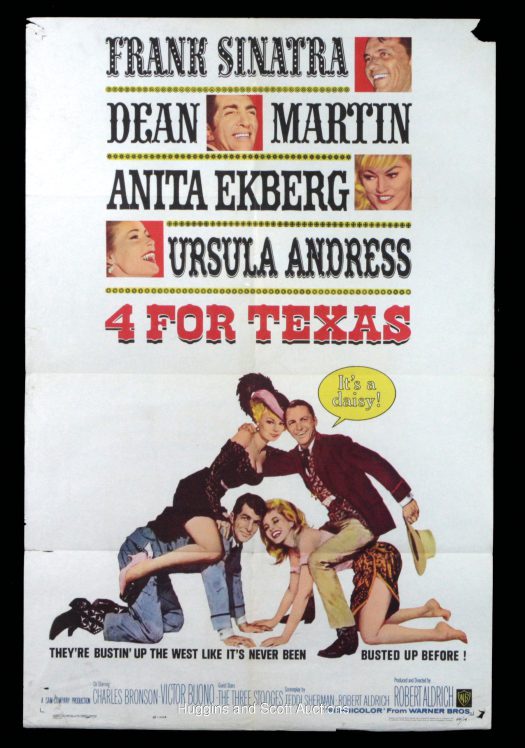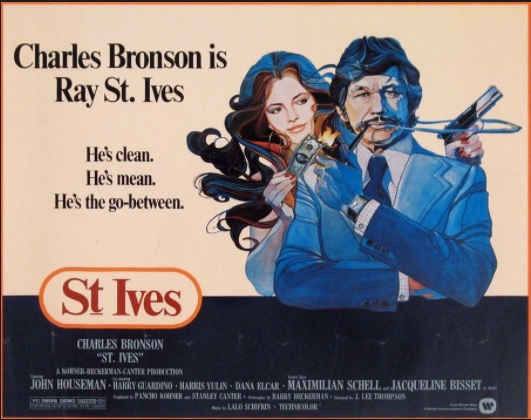
Rat Pack – 3 = FOUR FOR TEXAS (Warner Brothers 1963)


gary loggins's avatarcracked rear viewer

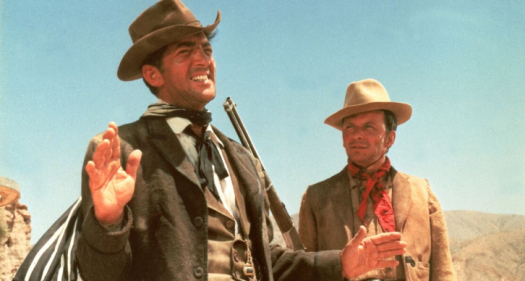
The wait is finally over, my new DirecTV receiver has arrived and is all hooked up! Unfortunately, all my DVR’d movies have vanished. And since it was filled to about 70% capacity, that’s a lot of movies! Needless to say, I’ve got to load up the ol’ DVR again. Thanks to TCM, I re-recorded one of my old favorites the other day, FOUR FOR TEXAS, an action-packed Western comedy I’ve seen about 100 times already (ok, that’s a slight exaggeration). This combines the two leaders of the Rat Pack, Frank Sinatra and Dean Martin , with the talents of director Robert Aldrich. The result is an all-star, slam-bang entertainment that is loads of fun for film fans.

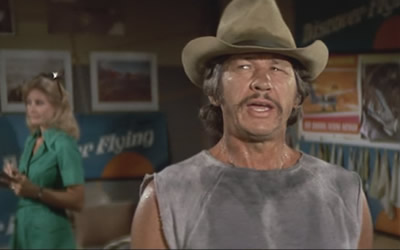
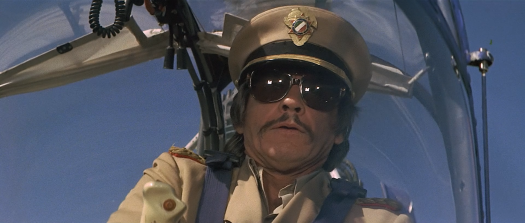
The pre-credits sequence looks like we’re about to watch a traditional Western, with a gang of outlaws led by Charles Bronson   riding out to ambush a stagecoach. But wait, that’s Frankie and Dino…

View original post 684 more words

A Movie A Day #56: The White Buffalo (1977, directed by J. Lee Thompson)


whitebuffalo1977The year is 1874 and James Otis (Charles Bronson) is traveling through the Dakota Territory.  Everywhere that James Otis goes, someone tries to shoot him.  This is because James Otis is actually the infamous Wild Bill Hickcock and everyone this side of Deadwood has a reason to want him dead.  Hickcock has returned to the territory because he is losing his eyesight and he fears that he may be dying.  Hickcock has been having nightmares about a giant albino buffalo and believes that it is his destiny to either kill it or be killed himself.
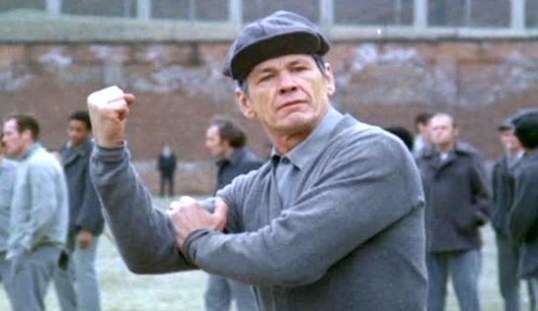
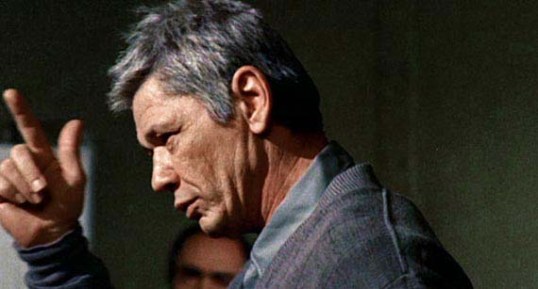
Meanwhile, a young indian chief (Will Sampson) is also seeking the White Buffalo.  The buffalo previously attacked his village and killed his son.  The chief must now get revenge or lose his power in the tribe.  He is now known as Worm.  Before the buffalo attack, his name was Crazy Horse.

Crazy Horse eventually teams up with Hickcock and a one-eyed hunter named Charlie Zane (Jack Warden).  They work out an uneasy alliance but who, of the three, will finally get the chance to kill the buffalo?

When Dino De Laurentiis produced The White Buffalo, he was hoping to combine the popularity of Jaws with the star power of Charles Bronson.  It should have been a hit but instead, The White Buffalo was one of the many flops that temporarily killed the western as a commercial genre.  (Before there was Heaven’s Gate, there was The White Buffalo.)  The reason why is obvious: while audiences loved to watch Bronson shoot muggers in New York, they were less willing to sit through a pseudo-intellectual western version of Moby Dick that featured more conversation than gunplay.  The obviously fake buffalo did not help matters.

I still like The White Buffalo, though.  Because of the movie’s cheap sets, fake snow, and some inconsistent rear projection work, The White Buffalo is sometimes so surreal that it could pass for a Spaghetti Western.  (When I saw Bronson, Sampson, and Warden huddled in a cardboard cave while it fake snowed outside, I immediately thought of Sergio Corbucci’s The Great Silence.)  Charles Bronson, always an underrated actor, gave one of his best performances as the haunted Hickcock.  The White Buffalo was, up until his small role in Sean Penn’s The Indian Runner, the last time that Bronson would allow himself to appear as anyone other than Charles Bronson on-screen.

When watching The White Buffalo, keep an eye out for several Hollywood veterans in minor roles.  Kim Novak plays a prostitute.  Stuart Whitman is a thief.  Slim Pickens drives a stagecoach.  Clint Walker’s an outlaw and Ed Lauter plays the younger brother of Gen. Custer.  The town’s undertaker is John Carradine.  The cameos don’t add up too much but it’s still good to see everyone.

A Movie A Day #23: The Valachi Papers (1972, directed by Terrence Young)


The best thing about The Valachi Papers is this:

valachi-0

That is Charles Bronson, playing real-life mob informant Joe Valachi and making a gesture that expresses the way many people feel about the world right now.  Valachi, in both the film and real life, was a bit player in the Cosa Nostra, a driver and an occasional hitman who was lucky enough to marry the daughter (played by Bronson’s real-life wife, Jill Ireland) of one of the bosses.  In prison for smuggling heroin, Valachi runs into one of those bosses, Vito Genovese (Lino Ventura).  Genovese, convinced that Valachi has broken the code of omerta, gives Valachi the kiss of death.  Valachi kisses him right back and then becomes a rat.

Valachi’s 1963 testimony to the U.S. Senate was the public’s first glimpse into life in the Mafia.  Many of the cliches that have since appeared in every mob movie or television show were the result of Valachi’s testimony and Peter Maas’s subsequent book, The Valachi Papers.  (In the “Test Dream” episode of The Sopranos, Tony can be seen holding a copy of The Valachi Papers.)

Over the years, doubts have been raised about both the validity of Valachi’s testimony and his claim that he only turned rat because Genovese put a contract on his life.  The film version of The Valachi Papers takes Valachi’s claims at face value, telling Valachi’s story in a series of flashbacks.

The Valachi Papers is often compared to another mob movie that came out in 1972, The Godfather, though there’s really not much of a comparison to be made.  Whereas The Godfather was a family saga, The Valachi Papers is much more concerned with the day-to-day operations of the Mafia.  It never comes close to matching The Godfather‘s epic feel and the cheap production values don’t help.  (Keep an eye out for the twin towers of the World Trade Center, anachronistically towering over depression-era New York City.)

Storywise, The Valachi Papers actually has more in common with Goodfellas than with The Godfather.  Like Henry Hill, Joe Valachi is not a major player.  He’s just a working man whose employer happens to be the Mafia.  Stylistically, of course, The Valachi Papers has nothing in common with Goodfellas.  If not for the violence and some the language, it would be easy to mistake The Valachi Papers for an old made-for-TV movie.

The best thing about The Valachi Papers is Charles Bronson as Joe Valachi.  When The Valachi Papers was made, Bronson was a huge draw in Europe but was still largely unknown in the United States.  It was not until Death Wish came out, two years later, that Bronson became a star.  He does a good job as Joe Valachi.  In a way, it’s the perfect role for Bronson, who was a genuine tough guy who, like Valachi, spent decades working in the trenches before eventually becoming a household name.

I don’t think Charles Bronson ever would have turned informant, though.

Not our Chuck.

the_valachi_papers_still

A Movie A Day #22: Messenger of Death (1988, directed by J. Lee Thompson)


messenger_of_deathIn rural Colorado, the three wives and all the children of Orville Beecham (Charlie Dierkop) have been murdered.  Veteran journalist Garret Smith (Charles Bronson) discovers that Orville is the son of an excommunicated Mormon fundamentalist named Willis Beecham (Jeff Corey).  Willis, who lives on a heavily armed compound, practices polygamy and wants nothing to do with the outside world.  However, Willis’s brother, Zenas (John Ireland), long ago split with Willis and set up a compound of his own.  At first, Garret suspects that Orville’s family was killed by Zenas.  As Zenas and Willis go to war, Garret discovers that there’s actually a bigger conspiracy at work, one dealing with corporate greed and water rights.  (Forget it, Bronson, it’s Chinatown.)

Messenger of Death was the 2nd to last film that veteran tough guy Charles Bronson made for Cannon Films.  Especially when compared to the other films that he made for Cannon (10 To Midnight, Kinjite, Murphy’s Law, three Death Wish sequels), Messenger of Death features Bronson in a surprisingly cerebral role.  While there is violence, very little of it is actually the result of anything that Bronson does.  For once, Charles Bronson isn’t running around with a gun and blowing away bad guys. If Death Wish‘s Paul Kersey ever did start blowing away muggers in Colorado, Garret would probably be the first to condemn him in a carefully written editorial.  The only time he fights is in self-defense and even then, it’s hand-to-hand combat.  Instead, he spends most of the film doing research and asking questions.  As a result, Messenger of Death is never as much fun as the other films that Bronson made for Cannon but it’s still interesting to see him playing a regular guy.

Flight of Fancy: Vincent Price in MASTER OF THE WORLD (AIP 1961)


gary loggins's avatarcracked rear viewer

motw1

MATSER OF THE WORLD is AIP’s answer to Disney’s 20,000 LEAGUES UNDER THE SEA . Both are based on the works of Jules Verne, and involve fanatical protagonists commanding futuristic ships (an airship in this case). The difference is in budget, as studio honchos Samuel Z. Arkoff and James Nicholson didn’t have the financial means to compete with the mighty Walt Disney. They did have Vincent Price though, and within their monetary constraints came up with an entertaining mini-epic enhanced by another solid Richard Matheson script.

motw2

Price stars as Captain Robur, who’s fantastic flying airship Albatross rules the skies of 1868. When his amplified voice bellows some scripture from a mountain (does this make Vinnie the Voice of God?), balloon enthusiasts Mr. Prudent, daughter Dorothy, and her fiancé Phillip Evans, along with government agent John Strock, investigate, only to be shot down by Robur’s rockets and taken prisons aboard his flying fortress.

View original post 419 more words

4 Shots From 4 Films: Happy Birthday Charles Bronson


4 Sots From 4 Films is just what it says it is, 4 shots from 4 of our favorite films. As opposed to the reviews and recaps that we usually post, 4 Shots From 4 Films lets the visuals do the talking. Charles Bronson was born on this date in 1921. He was successful as a character actor in the 50’s and 60’s, but broke out to became a huge fan favorite in a slew of 70’s action films. Here are 4 Shots from some of Bronson’s greatest hits:

bronson1

The Magnificent Seven (1960, director John Sturges)

bronson2

The Mechanic (1972, director Michael Winner)

bronson3

Death Wish (1974, director Michael Winner)

bronson4

The Evil That Men Do (1984, director J. Lee Thompson)

Not Quite Spaghetti: Guns For San Sebastian (1968, directed by Henri Verneuil)


bdssposLeon Alastray (Anthony Quinn) is an outlaw in 18th century Mexico who is given sanctuary and hidden from the Spanish authorities by a kindly priest, Father Joseph (Sam Jaffe).  In return, Leon agrees to escort the priest to a peasant village that is under siege from the Yaqui Indians.  During the journey, Joseph dies and when Leon arrives at the village, he is mistaken for the priest.  Even though Leon’s an atheist and a womanizer, he pretends to be a man of God and tries to broker a peace with the Yaqui’s bloodthirsty leader, Golden Lance (Jaime Fernandez).  Standing in the way is Teclo (Charles Bronson), a mestizo rebel who wants to keep the Spanish and the Yaqui at war.

Because it features a score by Ennio Morricone and co-stars Charles Bronson, Guns For San Sebastian is often mistakenly referred to as being a spaghetti western.  Instead, it was a big budget American-French co-production that was filmed, on location, in Mexico. (The majority of spaghettis were filmed in Spain.)  While revolution in Mexico was a popular backdrop for many spaghetti westerns, none of them were as sympathetic to the church or the government as Guns for San Sebastian.  If Guns For San Sebastian were a true spaghetti western, Teclo would be the hero.

Guns For San Sebastian is an above average western that starts out slow but gets better as it approaches the exciting final battle between the villagers and Yaqui.  Morricone provides another great and rousing score but the main reason to watch Guns For San Sebastian is to see Anthony Quinn and Charles Bronson, two legendary tough guys, acting opposite each other and competing to see who can be the most intimidating.  In the movie, Quinn may win but you can still see the determined presence that led to Bronson becoming an unlikely movie star in the 70s.

gs

It’s the original THE MAGNIFICENT SEVEN- or is it? (United Artists 1960)


gary loggins's avatarcracked rear viewer

mag1

There’s a large hue and cry about the upcoming remake of THE MAGNIFICENT SEVEN (and remakes in general) among classic film fans. “How dare they”, it kind of goes, “Why, that’s blasphemy!”. The truth is, Hollywood’s been cannibalizing itself since almost the beginning, and remakes have long been a staple of filmmakers. THE MAGNIFICENT SEVEN is a remake of Akira Kurasawa’s Japanese film SEVEN SAMAURI, moved to the American west by producer/director John Sturges . And while quite frankly most remakes can’t hold a candle to the originals, this 1960 action epic can stand on it’s own as one of the great Western adventures.

mag2

Sturges assembled a macho cast to tell the tale of bandits terrorizing a small Mexican village, and the seven hired guns who take on the job of defending them. Top billed is Yul Brynner as Chris, the black clad gunslinger who puts together the crew. First among them is 

View original post 641 more words

More Of Bronson’s Best: Mr. Majestyk (1974, directed by Richard Fleischer)


Mr_Majestyk_movie_posterWhat happens when you combine the great tough guy writer Elmore Leonard with the great tough guy actor Charles Bronson?

You get Mr. Majestyk, one of Bronson’s finest films.

Vince Majestyk (Bronson) may be a former U.S. Army Ranger instructor and a decorated Vietnam vet but now that he has returned home to Colorado, all he cares about is running his watermelon farm.  With a lucrative harvest approaching, Majestyk hires a group of unionized Mexican migrant workers, led by the fiery Linda Chavez (Linda Cristal), to pick his crops.  When a local criminal named Bobby Kopas (Paul Koslo) shows up and demands that Majestyk hire his drunken crew instead, Majestyk does what Bronson does best.  He gives Kopas an ass-kickin’ beat down.

After Kopas charges him with assault, the local police arrest Majestyk and, despite his request that he be allowed three days to finish harvesting his crop, Majestyk is thrown in jail.  Also in the jail is a Mafia hitman named Frank Renda (Al Lettieri).  Renda may be a tough guy but nobody’s tougher than Vince Majestyk.  When Renda’s associates attempt to hijack a prison bus, Majestyk ends up hijacking it instead.  Majestyk plans to hold Renda hostage until the police agree to give him his three days of freedom so he can get back to his farm.  Renda even offers to pay him off but Majestyk doesn’t care about his money.  He just cares about melons.

Because he was the only 1970s action star who could be believable as both a decorated combat veteran and a no-nonsense watermelon farmer, Charles Bronson is the only actor who could have brought Mr. Majestyk to life.  Before he became an actor, Bronson worked for a living.  From the age of ten until he enlisted in the Army, Bronson worked in the Pennsylvania coal mines, earning one dollar for each ton of coal that he mined.  Though Bronson was never a great actor, his legitimately working class background allowed him to bring an authenticity to a role like Vince Majestyk that most other actors would have lacked.  When Bronson says that all he cares about is bringing in the harvest on time, you believe him just as much as you believe him when he’s beating up Paul Koslo or hijacking a prison bus.

The rest of the cast is full of good 1970s actors who have never really been given their due.  Al Lettieri may be best known for playing Sollozzo in The Godfather but he also does a good job as Frank Renda.  Paul Koslo plays another one his sleazy villains here and does a great job as Bobby Kopas.

Mr. Majestyk was directed by Richard Fleischer but, with its colorful characters, working class hero, and modernized brand of frontier justice, the film is clearly the work of Elmore Leonard. Though Mr. Majestyk is credited as being based on a novel by Leonard, Leonard actually wrote the screenplay before the novel.

The combination of Elmore Leonard and Charles Bronson makes Mr. Majestyk one of the best action films of the 1970s.

majestyk_rifle


Bronson’s Best: The Stone Killer (1973, directed by Michael Winner)


Stone_killerAfter tough New York detective Lou Torrey (Charles Bronson) lands in hot water for shooting and killing a teenage cop killer, he moves to Los Angeles and gets a job with the LAPD.  Working under an unsympathetic supervisor (Norman Fell), saddled with an incompetent partner (Ralph Waite), and surrounded by paper pushing bureaucrats, Torrey still tries to uphold the law and dispense justice whenever he can.  When a heroin dealer is murdered while in Torrey’s custody, Torrey suspects that it might be a part of a larger conspiracy, involving mobster Al Vescari (Martin Balsam).

Vescari is plotting something big.  It has been nearly 40 since the “Sicilian Vespers,” the day when Lucky Luciano, Frank Costello, and Busy Siegel killed all of the original mafia dons at the same time.  Viscari has invited mafia leaders from across the country to attend a special anniversary dinner.  During the dinner, all of Vescari’s rivals will be assassinated.  To keep things a secret, Vescari will not be using any of his usual hitmen.  Instead, he has contracted a group of mentally unstable Vietnam vets, led by Lawrence (Stuart Margolin).

Charles Bronson has always been an underrated film star.  His legacy has been tarnished by the cheap films he made for Cannon and, unlike Clint Eastwood, he never got a chance to really take control of his career and reinvent his image.  But during the 1970s, not even Clint Eastwood was a more convincing action star than Charles Bronson.  Bronson may have never been a great actor but he was an authentic tough guy with a physical presence that dominated the screen.

It was during this period that Bronson made his first four movies with director Michael Winner.  Though Death Wish and The Mechanic are the best known, The Stone Killer may be the best.  Tough, gritty, and action-packed with a great car chase, The Stone Killer was filmed on location in Los Angeles and some of the best parts are just the scenes of Bronson awkwardly interacting with the local, California culture.  If you have ever wanted to see Charles Bronson deal with a bunch of hippies, this is the film to see.  The Stone Killer also has more of social conscience than the usual 70s cop film, with Bronson’s character not only condemning excessive police brutality but also his racist partner.

(Ironically, Bronson and Winner would follow The Stone Killer with Death Wish, a film that many critics condemned as being racist and which suggested that the police were not being brutal enough.)

The other thing that sets The Stone Killer apart is that it has a great cast, featuring several actors who would go on to find success on television.  Balsam, Fell, and especially Waite and Margolin are all great.  Keep an eye out for a very young John Ritter, playing one of the only cops in the film who is not portrayed as being either corrupt or incompetent.

Though it may not be as well-known as some of his other action films, The Stone Killer is one of Bronson’s best.