Retro Television Review: The Love Boat 6.29 “Fountain of Youth/Bad Luck Cabin/Uncle Daddy”


Welcome to Retro Television Reviews, a feature where we review some of our favorite and least favorite shows of the past!  On Wednesdays, I will be reviewing the original Love Boat, which aired on ABC from 1977 to 1986!  The series can be streamed on Paramount Plus!
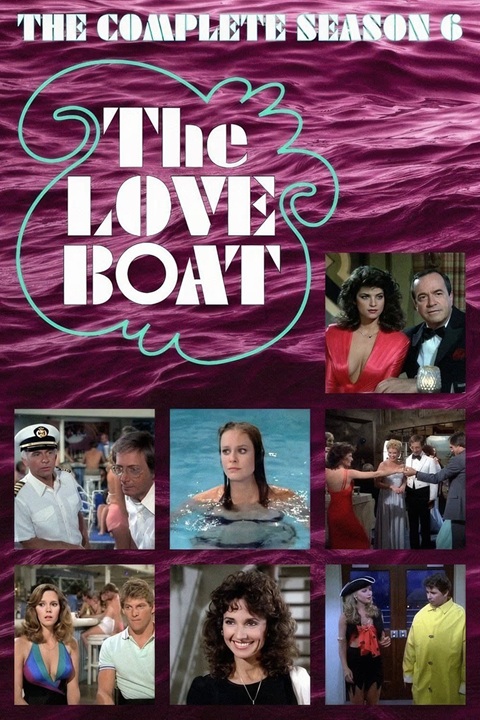
This week, the sixth season of The Love Boat comes to a close.

Episode 6.29 “Fountain of Youth/Bad Luck Cabin/Uncle Daddy”

(Dir by Robert Scheerer, originally aired on May 7th,1983)

The sixth season of The Love Boat ends on a rather silly note.

A newlywed couple (David Naughton and Lynda Goodfriend) board the ship and a coked-up Julia assigns them to a cabin that is known for being cursed.  Couples who stay in the cabin always break up.  Gopher and Julie try to make sure that the couple doesn’t fall victim to the curse.

Henry Harper (Ted McGinley), who appears to be in his 20s, boards the boat and tells elderly Dwight Schofield (David Wayne) that he’s the same Henry Harper that Dwight went to college with.  Henry claims that he’s discovered the Fountain of Youth!  Actually, this Henry Harper is the grandson of the original Henry Harper and this is all an elaborate scheme to get revenge on Dwight for cheating the first Henry Harper out of an oil well.  Dwight, however, falls for it and tries to buy the Fountain of Youth.  Grandson Henry, meanwhile, falls in love with Dwight’s granddaughter (Michele Tobin) who is all like, “I like you but I can’t be with someone from the Twilight Zone.”  Grandson Henry eventually admits the truth and all is …. forgiven?  Really?

Those two stories were pretty dumb.  Fortunately, the third story was an Isaac story and, as he always did whenever he got a chance in the spotlight, Ted Lange really delivered.  Isaac wants to marry Gayle Davis (Tracy Reed) so he can become the stepfather of Bobby Davis (Shavar Ross).  In the end, Isaac realizes that he doesn’t love Gayle and the marriage wouldn’t work.  It was a pretty simple story but Lange always did such a good job of portraying Isaac’s essential decency that it was hard not to get caught up in whether or not he was actually going to leave the Love Boat crew.  Fortunately, Isaac will still be pouring drinks during season 7.

This is not only the final Love Boat episode of Season 6 but it’s also my final Love Boat episode of 2025.  Retro Television Reviews is taking a break for the holidays so that I can focus on both the Awards Season and Christmas movies.  The Love Boat will return on January 7th, 2026.
Late Night Retro Television Review: Highway to Heaven 4.16 “Back to Oakland”


Welcome to Late Night Retro Television Reviews, a feature where we review some of our favorite and least favorite shows of the past!  On Thursdays, I will be reviewing Highway to Heaven, which aired on NBC from 1984 to 1989.  The entire show is currently streaming on Tubi and several other services!

This week, Mark rejoins the police force and discovers that things have changed since he last wore the blue.

Episode 4.16 “Back to Oakland”

(Dir by Michael Landon, originally aired on February 3rd, 1988)

Jonathan and Mark return to Mark’s old hometown of Oakland, California.  When Mark stops by his old precinct, he discovers that most of the police force is home with “blue flu,” protesting budget cuts.  Mark volunteers to return to active duty for a few days.  He’s paired up with his former partner, Frank Lawler (Kenneth Kimmins).

Mark, however, discovers that things have changed in his absence.  Cops are viewed with suspicion by the people that they are supposed to be serving.  And Frank is an unrepentant racist who expects Mark to have his back no matter what.

Jonathan, meanwhile, gets a job as a security guard at an all-black apartment complex.  “You’re the first white man to ever work here,” he’s told by the landlady (Fran Bennett).  The landlady’s son, Albert (Guy Killum), doesn’t trust white people and resists Jonathan’s attempts to reach out to him.

When Albert is caught shoplifting by Mark and Frank, Frank takes him into a back alley.  Frank removes his handcuffs and dares Albert to take a swing at him.  Mark steps out of the store just in time to see Frank shoot and kill Albert.

“He attacked me!” Frank says.

“I put cuffs on him,” Mark says.

In the end, Mark refuses to cover for Frank.  Jonathan arranges for Albert’s younger brother (Kenny Ford, Jr.) to meet with Frank’s son (Mark Sussman).  The episode ends with the two of them introducing each other.

This episode was Highway to Heaven at its most earnest and heartfelt.  I imagine there are some that would complain that this episode attempts to “both sides” the issue of racism.  Both Albert and Frank are portrayed as being obsessed their hatred of another race.  That said, only one of the two men is portrayed as being in a position to kill the other and potentially get away with it.  The scene of Mark, who has spent the entire series bragging about his time as an Oakland cop, taking a stand and telling the truth about what happened in the alley is surprisingly powerful.  Mark does the right thing and he does it without hesitation.  Is the ending of the episode a bit naive?  Perhaps.  But it’s so sincerely done that it’s hard not to appreciate the show’s intentions.

In other words, this episode was an example of what Highway to Heaven did well.  It’s not subtle but it’s so heartfelt that the viewer can’t help but be moved.

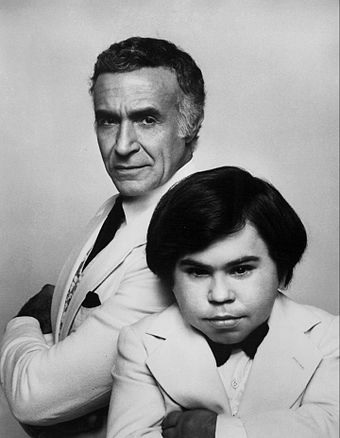
Retro Television Review: Fantasy Island 6.3 “The Perfect Gentleman/Legend”


Welcome to Retro Television Reviews, a feature where we review some of our favorite and least favorite shows of the past!  On Tuesdays, I will be reviewing the original Fantasy Island, which ran on ABC from 1977 to 1984.  Unfortunately, the show has been removed from most streaming sites.  Fortunately, I’ve got nearly every episode on my DVR.

Smiles, everyone!

Episode 6.3 “The Perfect Gentleman/Legend”

(Dir by Philip Leacock, originally aired on October 30th, 1982)

Jimmy Jordan (Paul Williams, who appeared on a lot of these type of shows) is a rock star who witnessed a mob hit at one of his concerts.  Jimmy did what anyone would do.  He called the police.  They offered to protect him if he testified but then they told him that they probably wouldn’t be able to continue to protect him afterwards.  (Uhmm …. hello?  Witness Protection Program?)  Jimmy decided to fake his own death and then go to Fantasy Island.  His fantasy?  To not get caught by the two mobsters who have been sent to make sure that he’s actually dead.

Uhmmm …. that’s weird.  Like all of that was going on Jimmy just decided to go to Fantasy Island?  And then he shows up on Fantasy Island wearing a trenchcoat over his rock star jump suit?  Weird.

Fortunately, Michelle (Leslie Easterbrook) is on the island and her fantasy is apparently to have a new butler!  Soon, Jimmy is calling himself Godfrey and helping Michelle and her family save their business while Tracer (John Davis Chandler) and Killer (Joseph Ruskin) search for him.  Needless to say, Jimmy and Michelle fall in love and leave the island together and, unless I missed something, it appears that Jimmy is planning on just being Godfrey for the rest of his life.  He even drives Michelle and her daughter to the docks so that they can all fly off to the mainland.  I guess the world is going to go on believing that Jimmy’s dead and….

This fantasy raised way too many unanswered questions and Paul Williams was convincing neither as a rock star or a butler.  This is a fantasy that called out for someone like …. oh, I don’t know.  Sonny Bono, maybe.

The other fantasy was a bit of an improvement, just because it featured the unlikely but surprisingly likable pairing of Michelle Phillips and Andy Griffith.  Phillips plays Andrea Barclay, who has a beautiful singing voice but who suffers from crippling stage fright.  Her fantasy is to successfully perform in front of the toughest crowd ever.

Really?  Roarke says, The toughest crowd?

By now, guests should realize that whenever Roarke says something like that, it means your fantasy is going to be interpreted in a bizarre way that you never expected.  Considering that, the last time that Michelle Phillips was on the show, her fantasy to be the most famous woman in the world somehow led to her becoming Lady Godiva, Andrea really should have known better.  Instead, Andrea is shocked when she finds herself in the Old West, where Judge Roy Bean (Andy Griffith) has promised the citizens of Langtry, Texas that his favorite actress and singer, Lillie Langtry (Madlyn Rhue), will be performing for them.  When Lillie leaves without singing, it’s time for Andrea to put on a mask and pretend to be Lillie as she performs in Judge Bean’s saloon.  Yeah, it’s a silly fantasy but Andy Griffith and Michelle Phillips both put their heart into their performances.  Andy Griffith does his folksy-but-intelligent routine while Michelle Phillips especially deserves a lot of credit for taking things seriously.

This episode had the same problem as last week’s.  Everything felt very familiar.  Last week, we had what seemed like the show’s hundredth boxing and dancing fantasy.  This week, we have what feels like the hundredth singing fantasy.  After five seasons, it’s obvious that the show’s writers had started to run out of ideas.

Next week …. Roddy McDowall returns to Fantasy Island!  Yay!


Retro Television Review: Fantasy Island 6.2 “Dancing Lady/The Final Round”


Welcome to Retro Television Reviews, a feature where we review some of our favorite and least favorite shows of the past!  On Tuesdays, I will be reviewing the original Fantasy Island, which ran on ABC from 1977 to 1984.  Unfortunately, the show has been removed from most streaming sites.  Fortunately, I’ve got nearly every episode on my DVR.

This week, Fantasy Island feels familiar.

Episode 6.2 “Dancing Lady/The Final Round”

(Dir by Cliff Bole, originally aired on October 23rd, 1982)

It’s another dancing and boxing episode!

I have lost track of how many Fantasy Island stories have centered around either dancing or boxing but I know that they’ve been the subject of multiple episodes every season.  The fantasies always seem to play out the same as well.  A young boxer has a shot at the championship but taking one wrong blow could end their career or even their life.  And a woman with a boring job — usually, she’s a receptionist — wants to be the world’s greatest dancer but, in the end, discovers that love is the most important thing.  Usually, the familiarity of the stories is a part of Fantasy Island‘s charm but I have to admit that I spent this entire episode wondering if I had seen it before.  The fantasies felt so familiar that, ultimately, everyone just seemed to be going through the motions.

The dancer was Kristy Lee (Lynda Goodfriend), who was given a special powder that would give her the ability to be the world’s greatest dancer.  I know what you’re thinking and no, it was not cocaine.  Instead, it was dust that had been gathered from the world’s greatest theaters and which had magical powers only when used on Fantasy Island.  Using the dust, Kristy auditioned for a spot in a musical showcase starring Ray Tucker (Ken Berry), a down-on-his-luck dancer looking to make a comeback.  Unfortunately, Kristy was so good that Ray feared she would overshadow him.  Ray had to find his confidence and Kristy had to learn that she could dance beautifully even without the magic dust because, according to Roarke, the power of love is all one needs.  (That laughter you hear is coming from every dance teacher I’ve ever had.)  The highlight of this fantasy was Ray Bolger, playing a Broadway producer who happened to be an old friend of Roarke’s.  Bolger and Ricardo Montalban, two old show business pros, seemed to really enjoy working together.  As well, Bolger’s producer had a nice scene where he and Tattoo spoke in French to each other.  It was a fun little moment and, if nothing else, it indicated that both Roarke and Tattoo have lives outside of greeting people on Fantasy Island.

The boxing story featured Al Molinaro as Max, a trainer who wanted to train someone for an exhibition match against the world champion.  Max got his chance to train the enthusiastic Tommy Rudolph (William R. Moses) but, when Max’s ex-girlfriend (Rue McClanahan) warned him that one more concussion could possibly kill Tommy, Max had to make a decision.  Would he push Tommy to keep fighting or would he thrown in the towel after Tommy took a few shots to the head?  Max, of course, did the right thing.

As I said, it was all pretty predictable and familiar.  At least Tattoo got to have some fun.  Along with speaking French, he also got to put on a bookie outfit and then take bets on the outcome of the fight.  When Roarke told Tattoo to cancel all the bets, Tattoo replied that being a bookie was his fantasy!

Hey, it made me laugh,

Retro Television Review: St. Elsewhere 1.6 “Legionnaires: Part One”


Welcome to Retro Television Reviews, a feature where we review some of our favorite and least favorite shows of the past! On Fridays, I will be reviewing St. Elsewhere, a medical show which ran on NBC from 1982 to 1988.  The show can be found on Hulu!

This week, Peter White continues to disappoint everyone.

Episode 1.6 “Legionnaires: Part One”

(Dir by Thomas Carter, originally aired on December 7th, 1982)

Dr. Peter White (Terence Knox) is perhaps the most incompetent doctor at St. Eligius.  Over the course of the first few episodes, we have watched as he’s taken advantage of his fellow residents, been rude to patients, misdiagnosed obvious medical conditions, and complained nonstop about how difficult his life is.  Dr. White is struggling to balance the punishing schedule of being a resident with also being a husband and the father to a young girl and a newborn.  He’s in over his head.

What’s interesting is that, despite all of his problems, he’s not a particularly sympathetic character and I don’t think he’s meant to be.  He’s never going to be a good doctor and he doesn’t have the courage to admit it.  Instead of finding a career for which he’s suited, he insists on being a doctor and risking the life of anyone unlucky enough to be his patient.  What makes Dr. White an especially disturbing character is that there are probably a lot of doctors in the real world who are just like him.  They’re overwhelmed and they make stupid mistakes.  I get overwhelmed sometimes too, as does everyone.  And, like everyone, I occasionally make mistakes.  However, my mistakes usually amount to something like missing a cringey typo that causes me to feel embarrassment until I get a chance to fix it.  A doctor’s mistake can lead to people dying.

This week, Dr. White attempts to give penicillin to a patient who is allergic.  Fortunately, Dr. Westphall is able to stop White from putting his patient into a coma.  Dr. White also manages to lose his hospital-issued pager and, when he’s told that it will cost him $300 to get a new one, he freaks out.  A chance meeting with a lawyer in the hospital cafeteria leads White to offer to sell out the hospital by recommending the lawyer to anyone willing to sue because they ended up with a doctor like Peter White.  White finally raises the money by donating his sperm.  The nurse at the sperm bank says that it’s really generous for a doctor to donate.  Not this doctor!

While Peter is screwing up his life, Dr. Westphall is dealing with what appears to be an outbreak of Legionnaire’s Disease in one of the wards.  Westphall wants to immediately shut down the ward.  Dr. Auschlander and board member H.J. Cummings (Christopher Guest — yes, that Christopher Guest) disagree.  However, after another young woman dies of what appears to be Legionnaire’s, Westphall orders the ward to be closed and the patients to be relocated.

Meanwhile, Kathy Martin broke up with Fiscus because she felt their fling was turning into a relationship and Dr. Cavanero dealt with a nurse who disliked her.  Neither one of those subplots did much for me, though Kathy is emerging as one of my favorite characters on this show.  Before breaking up with Fiscus, she goes to a funeral of a stranger just so he won’t be buried without someone there to mourn him.  She wears white to the funeral.  One doctor comments that she’s never seen Kathy wear white before.  Kathy’s a great character and deserves better than just being Fiscus’s girlfriend.

This episode was an improvement over the last episode I watched.  According to the title, it’s also only “Part One” so I imagine there will be some fallout over closing that ward next week.  We’ll see what happens.

Retro Television Review: Indict & Convict (dir by Boris Sagal)


Welcome to Retro Television Reviews, a feature where we review some of our favorite and least favorite shows of the past!  On Sundays, I will be reviewing the made-for-television movies that used to be a primetime mainstay.  Today’s film is 1974’s Indict & Convict!  It  can be viewed on YouTube.

There’s been a murder!

The wife of Assistant District Attorney Sam Belden (William Shatner) has been found, shot to death.  Making things especially awkward is that the body of her lover is found next to her.  Though Belden is the obvious suspect, he has an alibi for the time of the murders.  He claims that he was in Las Vegas, attending a convention.  Two gas station attendants remember seeing him filling up his car with gas at around the same time that his wife and her lover was being shot.

Attorney General Timothy Fitzgerald (Ed Flanders) is not so sure that Belden is innocent.  He instructs two of his top prosecutors to check out Belden’s story and to see if there’s enough evidence to not only indict but also to convict.  Bob Matthews (George Grizzard) is a veteran prosecutor and he’s the one who narrates the story for us.  Assisting him is Mike Belano, who is played by the always likable Reni Santoni.  Just three years before this movie aired, Santoni played Harry Callahan’s partner in Dirty Harry.  There was just something about Santoni’s friendly but determined demeanor that made him perfect the role of the supportive partner or assistant.

The film is very much a legal procedural, with the emphasis on not only the investigation but also on the strategies and the techniques that are used in the courtroom by Matthews and defense attorney DeWitt Foster (Eli Wallach).  In many ways, it feels like a forerunner to Law & Order.  Usually, I love court procedurals but Indict & Convict was a bit too slow and high-minded for its own good.  Maybe it’s because I’ve been spoiled by all of the legal shows that I’ve seen but I have to admit that I spent a good deal of Indict & Convict wanting the prosecutors to get on with it.  Flanders, Grizzard, Santoni, and Wallach were all ideally cast but the film itself sometimes got bogged down with all the debate about the best way to win a conviction.  It’s a shame because the story itself is an intriguing one and I actually enjoyed the movie’s use of spinning newspaper headlines to let us know what had happened in between scenes.  Also, as a classic film fan, I enjoyed seeing Myrna Loy as the judge.  She didn’t get to do much other than say, “Sustained” and “Overruled,” but still …. Myrna Loy!

Most people who watch this film will probably do so out of the hope of seeing some trademark Shatner overacting.  William Shatner doesn’t actually get to say much in this film.  He spends most of the running time sitting silently at the defense table.  Towards the end, he does finally get a chance to deliver a brief speech and it’s everything you could hope for.  Shatner takes dramatic pauses.  Shatner emphasizes random words.  Every line is delivered with the subtext of, “Pay attention, Emmy voters!”  Eventually, Shatner would learn the value of laughing at oneself but apparently, that lesson had not yet been learned when he did Indict & Convict.

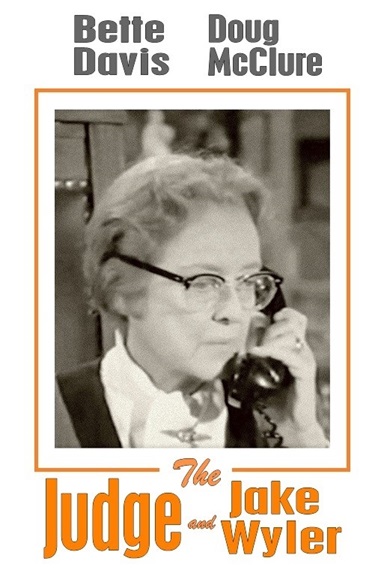
Retro Television Review: The Judge and Jake Wyler (dir by David Lowell Rich)


Welcome to Retro Television Reviews, a feature where we review some of our favorite and least favorite shows of the past!  On Sundays, I will be reviewing the made-for-television movies that used to be a primetime mainstay.  Today’s film is 1972’s The Judge and Jake Wyler!  It  can be viewed on YouTube.

Judge Meredith (Bette Davis) is a retired criminal court judge who has developed a severe case of hypochondria.  She lives in a mansion that she never leaves.  Anyone who comes to see her must be personally vacuumed by her butler before they can be allowed to stand in her presence.  She hates people who take too long to get to the point and she also has little use for people who are rude on the phone.  She especially dislikes cigarettes and refuses to have even an unlit one in her presence.

Jake Wyler (Doug McClure) is an ex-con who is currently on supervised probation.  Despite his criminal past, he’s a likable and amiable guy and, every morning, he wakes up with a new woman in his bed.  Jake enjoys tweaking authority and he always has a pack of cigarettes on him somewhere.

Together, they solve crimes!

They actually do!  The judge is dealing with retirement by running her own detective agency, one that is exclusively staffed by people that she previously sentenced to prison.  Jake does most of the leg work as far as the agency is concerned.  The Judge calls him every morning and demands to know why he’s not working harder.  Jake would rather just sleep-in but working for the judge is a part of his parole.  She could easily send him and everyone else working for her back to prison.  This sounds like a pretty unfair situation to me and the Judge is so demanding that I think it could be argued that she’s an abusive boss.  But, because this is a pilot for a TV show and the Judge is played by Bette Davis, everyone is very loyal to her.

At the start of the film, Jake reveals to Robert Dodd (Kent Smith) that his wife, Caroline (Lisabeth Hush), has been cheating on him with Frank Morrison (Gary Conway).  When Robert is later found dead in a hospital room, the official verdict is that he committed suicide.  However, his daughter, Alicia (Joan Van Ark), claims that her father was murdered.  At first, both Jake and the Judge suspect that Alicia just wants to collect a bigger life insurance settlement but it turns out that Dodd’s beneficiary wasn’t even Alicia.  The money is going to his second wife, the one who was cheating on him.  While the Judge yells at people on the phone, Jake investigates the death of Robert Dodd.

The Judge and Jake Wyler is a mix of comedy and mystery.  Jake has a way with a quip and the majority of the suspects, including John Randolph and Eric Braeden, all have their own eccentricities.  Director David Lowell Rich does a good job of keeping the action moving and the mystery itself is actually pretty interesting.  Surprisingly, the show’s only real flaw is Bette Davis, who seems to be rather bored in the role of Judge Meredith.  Even though the character seems to have been specifically written for her trademark caustic line delivery, Davis delivers her lines with little enthusiasm.  One gets the feeling that she wasn’t particularly happy about the idea of having to do a television pilot.

Davis need not have worried.  The Judge and Jake Wyler did not turn into a series.  That said, the movie is an entertaining and diverting murder mystery.

Late Night Retro Television Reviews: CHiPs 1.11 “Name Your Price”


Welcome to Late Night Retro Television Reviews, a feature where we review some of our favorite and least favorite shows of the past!  On Mondays, I will be reviewing CHiPs, which ran on NBC from 1977 to 1983.  The entire show is currently streaming on Freevee!

This week, Ponch again fails to get rich.

Episode 1.11 “Name Your Price”

(Dir by Ric Rondell, originally aired on December 8th, 1977)

This week’s episode opens on an unusually somber note for CHiPs.  It begins in a cemetery.  A woman (Jaime Lynn Bauer) is dressed in chic funeral black and appears to be attending a service.  But it soon turns out that she’s actually just making sure that everyone is so distracted by mourning that they won’t notice her stealing a Rolls Royce!

It turns out that a Rolls is not quite as easy to steal as she thought and soon, she finds herself being pursued by Ponch and Baker.  It’s a chase that leads from the highway and into the city and, to Ponch and Baker’s shock, they lose sight of the stolen car.

“How does a Rolls Royce vanish!?” Ponch asks, in shock.

Ponch is a bit distracted himself this episode.  He has been accepted as a contestant on a game show called Name Your PriceName Your Price is obviously meant to be The Price Is Right and Ponch spends the majority of the episode memorizing the price tags on appliances.  Unfortunately, Ponch does not memorize the price tag of a motorcycle and therefore, he turns out to be a bit of a bust when he appears on the show.  As Baker and his date sneak out of the studio, Ponch is humiliated as the show’s host wonders how a motorcycle cop could not know how much a motorcycle costs.

Oh, Ponch — will you ever win!?

It’s not all bad for Ponch.  He and Baker pull over a car and Ponch is excited to discover that it’s occupied by the two stars of his favorite soap opera.  (Does Ponch do anything other than watch television?)  And Ponch also gets to help out when a chicken truck is involved in a minor accident and dozens of chickens end up running around the highway.  As usual, the main emphasis of this episode is on the idea of the members of the highway patrol working together and keeping the streets safe for chickens and humans.  Yes, this episode says, the CHiPs do chase car thieves and arrest criminals.  But usually, they’re just taking care of mundane tasks and getting little thanks and little pay.

This episode was entertaining.  I enjoyed looking at the cars that were stolen.  If you’re going to commit a crime, you might as well commit it for a Rolls Royce.  And the ending with the game show was a lot more effective than the typical CHiPs ending.  Ponch has spent the first 11 episodes of this show destroying motorcycles so it’s a nice bit of humor that a motorcycle would destroy his chance to get rich.  That’s karma!

Next week, Baker and Ponch continue to keep L.A. safe!

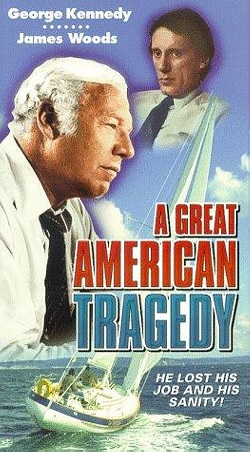
Retro Television Reviews: A Great American Tragedy (dir by J. Lee Thompson)


Welcome to Retro Television Reviews, a feature where we review some of our favorite and least favorite shows of the past!  On Sundays, I will be reviewing the made-for-television movies that used to be a primetime mainstay.  Today’s film is 1972’s A Great American Tragedy!  It  can be viewed on YouTube!

Brad Wilkes (George Kennedy) had a good career, working as an aerospace engineer.  He was able to buy a nice house.  With his wife, Gloria (Vera Miles), he was able to raise a good family.  He was even able to buy a sailboat, one that is the pride of the entire marina.  But then, one day, he’s told that the company is letting him go.

Returning to his home, Brad tells Gloria that he’s lost his job but that everything’s going to be okay because not only does he have a $10,000 pension but he’s sure he can find a new job.  “Of course, I might not be making $35,000 a year….” he says.

(Watching at home, I said, “Pfffft!  I make more than that!”  But, of course, Brad is talking about $35,000 in 1972 money, which would be the equivalent of a quarter of a million today.)

However, Brad soon discovers that getting a new job will not be as easy as he assumed.  It turns out that there are a lot of people out there looking for work and most of them are younger, cheaper, and better educated than Brad.  The bills start to pile up.  His former boss (Robert Mandan) informs Brad that his pension is going to be $7,000 less than he thought.  Brad forces himself to go down to the unemployment office so that he can collect $25 a week and then suffers the humiliation of being offered a loan by his well-meaning son-in-law (played by a youngish James Woods).  Gloria gets a job at the same clothing store where she used to shop and her lecherous boss (Kevin McCarthy) starts to hit on her.

For Brad, the final humiliation comes when he has to sell the boat.  A younger boat owner (Tony Dow, with a huge mustache) puts Brad in contact with a woman named Paula (Natalie Trundy).  Paula wants to buy the boat and, after they take it out on the water, Brad finds himself tempted to cheat on his wife.  It all gets to be too much for Brad and soon, he’s on a plane to Nevada where hopefully one good night at the craps table will be enough to pay his bills….

Watching this film, I found myself feeling very sorry for Brad while, at the same time, becoming very frustrated with him.  On the one hand, his company tossed him out after years of loyal service and then tried to screw him out of his pension.  On the other hand, Brad spent almost the entire movie in denial about how bad things actually were.  It’s one thing to be proud and it’s another to just be stubborn.  Knowing that he has next to no money, Brad still insists on throwing his annual 4th of July party and he even invites his former boss to come over and celebrate.  Brad simply cannot bring himself to admit that his old life is over but really, who can blame him?  He’s not the one who chose to be fired.

A Great American Tragedy was directed by J. Lee Thompson, who also did Cape Fear, The Guns of Navarone, the Planet of the Apes sequels, and several Charles Bronson films.  There are no fight scenes to be found in A Great American Tragedy but Thompson does get good performances from his cast and the film makes great use of George Kennedy’s likability.  The viewer remains sympathetic to Brad, even when he makes mistake after mistake.  A film about a formerly secure family suddenly discovering just how much the economy sucks, A Great American Tragedy remains just as a relevant today as when it was first made.