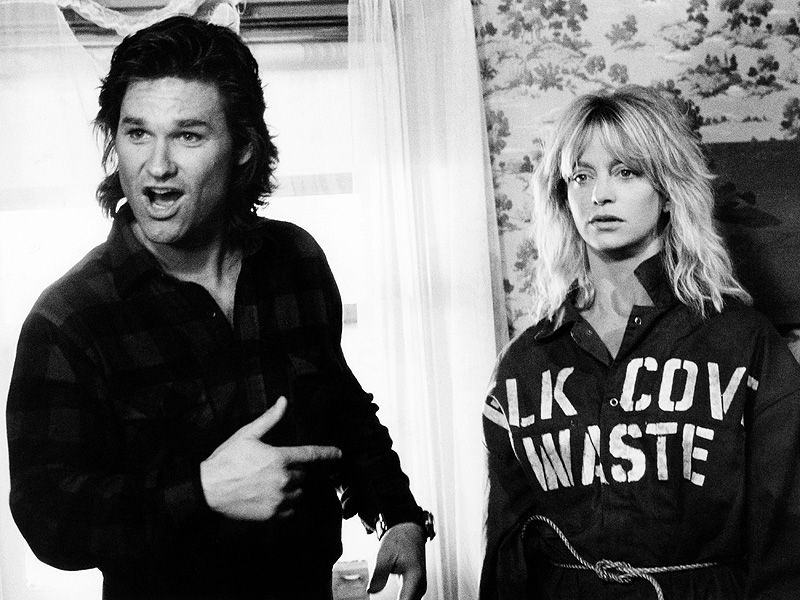
Brad reviews OVERBOARD (1987), starring Kurt Russell and Goldie Hawn!


Spoiled heiress Joanna Stayton (Goldie Hawn) hires carpenter Dean Proffitt (Kurt Russell) to remodel a closet on her yacht. Unsatisfied with his work and completely unreasonable about everything, she refuses to pay him and when he presses her for the $600, she pushes him and all of his tools overboard. Needless to say, the lady’s a “bitch” (Dean’s word) and nobody can stand her, including her husband, Grant Stayton III (Edward Herrman), and their butler Andrew (Roddy McDowell). And then something interesting happens a few days later… Joanna accidentally falls off her yacht, and when she’s fished out of the ocean, she’s still difficult to deal with, but she doesn’t have a clue who she is. Unable to identity her, the hospital puts the “amnesia lady” on the news hoping someone will recognize her. Sensing a chance to get rid of the anchor around his neck, Grant Stayton III pretends he doesn’t know her and heads out of town. This is where Dean hatches up his own plot to get revenge. He heads to the hospital and through a series of happenstances and coincidences, he’s able to convince everyone, including Joanna, now dubbed as “Annie,” that she’s his wife. He takes her home with him and makes her take care of his four wild boys, cook their food, and clean his house. Dean figures she owes it to him. But wouldn’t you know it, even though “Annie” hates it at first, over time she begins to soften towards her new life, bonds with the boys, and some sparks of love start flying between her and Dean. When she unexpectedly gets her memory back, she has to decide whether to return to her life as a spoiled heiress or stay with the man and boys she’s grown to love.

I have a soft spot in my heart for OVERBOARD, because this is a movie that my mom and I both loved, and we watched it together many times in the late 80’s and early 90’s. My mom and I didn’t often have the same taste in movies, so this was kind of “our movie.” There are a couple of other notable favorites for both me and mom, and those movies are RUTHLESS PEOPLE (1986) and LETHAL WEAPON (1987). I guarantee if I called my mom right now, interrupted her Hallmark Christmas movies, and told her I was coming over with OVERBOARD, she’d say “Come on! I’ll get something together for you to eat!” That actually sounds like a pretty good idea!

Another reason I love OVERBOARD is the fact that it stars Kurt Russell. I became a big fan of Kurt Russell during my teenage years, as I was 14 when this movie came out. A couple of years earlier, Russell starred in the films THE BEST OF TIMES (1986) and BIG TROUBLE IN LITTLE CHINA (1986), and a couple of years later he would make movies like TEQUILA SUNRISE (1988), TANGO & CASH (1989), and BACKDRAFT (1991). I wanted to watch every movie that Russell was in, and all of these films are staples of my VHS years and nostalgic favorites. In OVERBOARD, Russell starts off as a gruff, grudge-holder, but as he begins to fall for “Annie,” his natural charm and likability emerge, but so does a newfound guilt for lying to her and possibly even kidnapping her. One question for the lawyers out there, is it kidnapping when her husband had a chance to claim her and chose to abandon her instead? I’m not sure if it’s a felony or not, but I’m guessing there has to be something on the law books that doesn’t jive with what happens here. Anyway, I’ll just say that it’s best not to think of these types of pesky realities when judging this fairy tale and just go along for the ride.

Along with the Russell’s fun performance, Goldie Hawn is so perfect as the horrifically spoiled snob of an heiress who transforms into a caring substitute mother and the woman of Dean’s dreams. I know she’s great in the movie, because I can’t stand her at the beginning, but I find myself falling for her too as the movie progresses. I would not really call myself a fan of Goldie Hawn, because I haven’t spent much of my life revisiting her films, but I love her here. A couple in real life, the natural chemistry between Russell and Hawn sparkles as they fall in love on screen and only the most cold-hearted cynic isn’t pulling for them to live happily ever after as the movie closes in on its ending. As far as the supporting cast, Edward Herrmann, Katherine Helmond, Mike Hagerty, and Roddy McDowall all have good moments sprinkled throughout the film.

I do have one complaint about OVERBOARD, and that’s the “Wonders of the World Miniature Golf Course,” which is the dream business of Dean and his best friend Bad Billy Pratt (Mike Hagerty). As someone who grew up in the 70’s and 80’s playing miniature golf on the courses in Branson, MO, I would never want to play their course. Its design appears over-the-top and cheesy to me, the type of course where the scores on the holes would be determined as much by luck as by skill, which is something I find offensive. However, just like the potential kidnapping storyline, I’ve had to let my disdain for the quality of the course design go as well so I could enjoy that section of the film. I will admit this one is harder for me personally, and I still struggle with it.

Overall, OVERBOARD is not high art, and its premise is about as silly as it gets, but through a magical combination of personal 1980’s nostalgia, an appreciation for the chemistry of its stars, and a complete willingness to suspend my disbelief as we head towards an irresistibly happy ending, I still love this film. I watch it just about every year, especially if I need a pick me up as I hammer away at tax returns!
I Watched Flashing Spikes (1962, Dir. by John Ford)


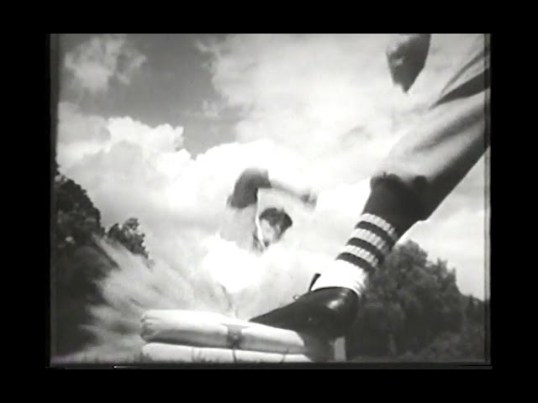
When infielder Bill Riley (Patrick Wayne) makes an error that costs his team the game, sports columnist Rex Short (Carleton Young) claims that he witnessed Bill being paid off by Slim Conway (James Stewart).  Slim is a former player who was banned from Major League Baseball after he was accused of taking a bribe from a gambler.

Most the movie is a flashback, showing how Bill first met Slim when Slim was playing for a barnstorming team of former major leaguers.  That was my favorite part of the movie.  Slim and a collection of old, worn-out men stumble out of their bus and even though they might move a little slower and they might need to stretch a little more before swinging a bat, they still show up a cocky team made up of young local players.  Even after the crowd nearly riots when they realize that Slim is one of the players, the old players keep their cool and their eye on the game.  After Bill spikes Slim while sliding into home plate, Bill apologizes.  Slim remembers the young man’s humility and, working with one of the few friends that he has left in the game, Slim helps Bill get his chance in the Majors.

Usually, when my sister yells at me to come watch something because “it’s got baseball!,” I’m prepared for it turn out to just be a movie with one scene of someone holding a bat.  I’m glad that she called me to come watch Flashing Spikes with her because it really is a good and loving celebration of my favorite game.  Even after Slim is treated so unfairly by the press, the League, and even some of the fans, he never stops loving the crack of the bats and the cheers of the crowd.  Flashing Spikes is unabashedly pro-baseball and Slim stands in for every player who was ever unfairly railroaded out of the game by scandal mongers like Rex Short.

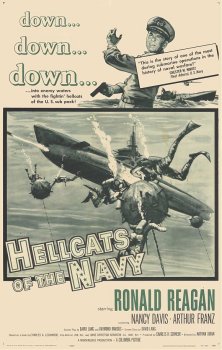
Hellcats of the Navy (1957, directed by Nathan Juran)


At the height of World War II, Commander Casey Abbott (Ronald Reagan) breaks up with nurse Helen Blair (Nancy Davis, the future first lady) and takes command of a submarine that has been tasked with mapping out Japanese mine fields.  Abbott struggles at first with commanding his submarine.  After a popular diver — and Helen’s new boyfriend — is killed during a mission, much of the crew holds Abbott responsible.  While Abbott is able to win back the respect of the crew, he still struggles with his second-in-command, Don Landon (Arthur Franz).  Landon wants to command his own submarine but when Abbott gives him a negative recommendation, Landon is forced to consider his past actions.  Landon eventually discovers just how difficult it is to be in charge.

Full of stock footage and chintzy special effects, Hellcats of the Navy was the movie that Ronald Reagan considered to be so bad that it led to him retiring from feature films and devoting himself to mastering the emerging medium of television.  Gene Hackman had his Welcome To Mooseport.  Ronald Reagan had his Hellcats of the Navy.  It’s definitely on the cheap and predictable side but, when I watched it earlier today, I discovered it wasn’t as bad as I had heard.  Reagan actually gives a pretty good performance as Abbott and the film does show that even a good commander will make mistakes.  The main problem is that it’s just not a very exciting film and a good deal of the undersea footage was clumsily lifted from other movies.

Hellcats of the Navy was the one movie that co-starred both Ronnie and Nancy and it’s worth watching for curiosity’s sake.  Nancy isn’t in much of the movie and it’s really a role that anyone could have played.  There’s not a lot of romantic chemistry between Ronnie and Nancy, they’re both too reserved for that.  This film still shows the likability and the natural authority that led to Ronald Reagan launching a second career in politics.

Just think, if Hellcats of the Navy had been a better movie, the past 45 years might have been very different.

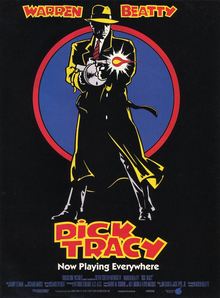
Dick Tracy (1990, directed by Warren Beatty)


The year is 1937 and “Big Boy” Caprice (Al Pacino) and his gang of flamboyant and often disfigured criminals are trying to take over the rackets.  Standing in their way is ace detective Dick Tracy (Warren Beatty), the yellow trench-wearing defender of the law.  Tracy is not only looking to take down Caprice but he and Tess Trueheart (Glenne Headly) are currently the guardians of The Kid (Charlie Korsmo), a young street kid who witnessed one of Caprice’s worst crimes.  Tracy’s investigation leads him through a rogue’s gallery of criminals and also involves Breathless Mahoney (Madonna), who has witnessed many of Caprice’s crimes but who also wants to steal Tracy’s heart from Tess.

Based on the long-running comic strip, Dick Tracy was a labor of love on the part of Warren Beatty.  Not only starring but also directing, Tracy made a film that stayed true to the look and the feel of the original comic strip (the film’s visual palette was limited to just seven colors) while also including an all-star cast the featured Madonna is an attempt to appeal to a younger audience who had probably never even heard of Dick Tracy.  When Dick Tracy was released, the majority of the publicity centered around Madonna’s participation in the film and the fact that she was dating Beatty at the time.  Madonna is actually probably the weakest element of the film.  More of a personality than an actress, Madonna is always Madonna no matter who she is playing and, in a film full of famous actors managing to be convincing as the members of Dick Tracy’s rogue gallery, Madonna feels out of place.  Michelle Pfeiffer would have been the ideal Breathless Mahoney.

It doesn’t matter, though, because the rest of the film is great.  It’s one of the few comic book films of the 90s to really hold up, mostly due to Beatty’s obvious enthusiasm for the material and the performances of everyone in the supporting cast who was not named Madonna.  Al Pacino received an Oscar nomination for playing Big Boy Caprice but equally good are Dustin Hoffman as Mumbles, William Forsythe as Flaptop, R.G. Armstong as Pruneface, and Henry Silva as Influence.  These actors all create memorable characters, even while acting under a ton of very convincing makeup.  I also liked Dick Van Dyke as the corrupt District Attorney.  Beatty knew audience would be shocked to see Van Dyke not playing a hero and both he and Van Dyke play it up for all its worth.  Beatty embraces the comic strip’s campiness while still remaining respectful to its style and the combination of Danny Elfman’s music and Stephen Sondheim’s songs provide just the right score for Dick Tracy’s adventures.  The film can be surprisingly violent at times but the same was often said about the Dick Tracy comic strip.  It wasn’t two-way wrist radios and trips to the Moon.  Dick Tracy also dealt with the most ruthless and bloodthirsty gangsters his city had to offer.

Dick Tracy was considered to be a box office disappointment when it was originally released.  (Again, you have to wonder if Beatty overestimated how many fans Dick Tracy had in 1990.)  But it holds up well and is still more entertaining than several of the more recent comic book movies that have been released.

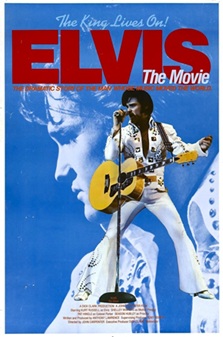
Elvis (1979, directed by John Carpenter)


Elvis, not to be confused with the later film starring Austin Butler, is a historically-interesting film for a number of reasons.

Made for television, it was the first of many biopics to be made about the King of Rock and Roll.  Seeing as how it went into production just a year after Elvis’s death and that its script was vetted and approved by Priscilla Presley herself, it’s not surprising that Elvis doesn’t really delve into the darker aspects of his life.  Elvis shoots a television, gets frustrated with his bad movies, and wonders who he can trust but we don’t see him get fat nor do we see him popping pills.  The movie ends with Elvis making his comeback in 1969, allowing a happy ending for the title character.

The film was directed by John Carpenter.  It was his first film to be released after the monster success of Halloween, though Carpenter actually started work on Elvis before Halloween was released.  Though the film’s television origins means there aren’t many examples of Carpenter’s signature style in Elvis, Carpenter does a good job recreating Elvis’s performances and, most importantly, he comes up with a film that holds your interest for three hours.

Finally, the role of Elvis is played by Kurt Russell, who was at the time still struggling to prove himself as being something more than just a Disney star.  Russell, who made his film debut kicking Elvis in the shins, throws himself into playing the role and captures the look, the swagger, and the voice of Elvis without ever descending into caricature.  His singing voice is dubbed for the performances but Russell is still convincing as the King.  It takes skill to wear that white jumpsuit without looking like you’re wearing a bad Halloween costume.  While this film showed that Russell was capable of more than just Disney films, it even more importantly launched his friendship with John Carpenter.  Escape From New York, The Thing, and Big Trouble In Little China all began with Elvis.

The movie doesn’t really tell us anything that we didn’t already know about Elvis but its entertaining and it has a big, colorful cast that include Pat Hingle as Tom Parker, Shelley Winters as Elvis’s mother, and Bing Russell (Kurt’s father) as Elvis’s father.  Priscilla is played by the beautiful Season Hubley, who married Kurt Russell shortly after filming.  (They divorced in 1983.)  Joe Mantegna, Ed Begley Jr., Ellen Travolta, and Dennis Christopher all appear in small roles and do their part to bring Elvis’s world to life.  Elvis is a fitting tribute to the King of Rock and Roll, one that gave Elvis a happy ending and started a great collaboration between a director and his star.

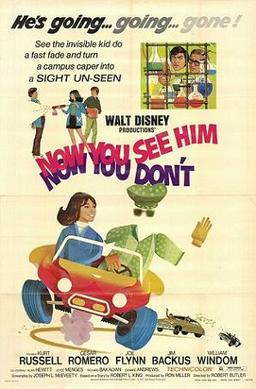
I Watched Now You See Him, Now You Don’t (1972, Dir. by Robert Butler)


Dexter Riley (Kurt Russell) is back and just in time because Medfield College is on the verge of getting closed down again.

In The Computer Wore Tennis Shoes, buying a computer was supposed to be the solution to all of Medfield’s financial problems.  I guess it didn’t work because Medfield is broke again and corrupt businessman A.J. Arnoe (Cesar Romero) is planning on canceling the school’s mortgage so that he can turn it into a casino.

There is some hope.  Dexter has accidentally created an invisibility spray.  Not only does it tun anything that it touches invisible but it also washes away with water so there’s no risk of disappearing forever.  Dexter and his friend Schuyler (Michael McGreevey) know that they can win the science fair with their invention but the science fair doesn’t want to allow small schools like Medfield to compete unless they really have something big to offer.  Dexter tells the Dean (Joe Flynn) that he has a sure winner but Dexter also refuses to reveal what it is because he doesn’t want word to leak before for the science fair.  The Dean decides to raise the money to pay off the mortgage by becoming a golfer, as one does.  Schulyer works as the Dean’s caddy while Dexter uses the invisibility spray to help the Dean cheat.  That’s a good message for a young audience, Disney!  But when Arno finds out about the spray, he wants to steal it so he can rob a bank.

This was even dumber than The Computer Wore Tennis Shoes but it was also hard to dislike it.  The comedy was too gentle, Kurt Russell and the rest of the cast were too likable, and the special effects were too amusingly cheap in that retro Disney way for it to matter that the movie didn’t make any sense.  When a bunch of college kids learn the secret of invisibility and use it to cheat at golf, you know you’re watching a Disney film.

I Watched The Computer Wore Tennis Shoes (1969, Dir. by Robert Butler)


Medfield College has a problem.  No one takes the college seriously.  Maybe if the college could win the big college quiz show, people would finally stop laughing at Medfield but the students are not academically talented.  Professor Quigley (William Schallert) thinks that the college needs to finally buy a new-fangled device called a computer.  The Dean (Joe Flynn) says that there’s no way any college can afford something as expensive as that!  Luckily, businessman and gangster A.J. Arno (Cesar Romero) is willing to donate one of his computers.  It takes several students to move the computer into the lab because the computer is huge.

Medfield finally has a computer but are the students smart enough to win that quiz show?  Popular jock Dexter Riley (Kurt Russell) happens to be in the lab during a freak thunderstorm.  When both he and the computer get struck by lightning at the same time, it leads to Dexter becoming a human computer.  He suddenly knows everything.  He can speak any language and solve any equation.  He can answer any question/  Whenever anyone shines a light into Dexter’s ear, they see circuit boards.  No one really cares that none of this makes sense.  Medfield is going to win that quiz show for sure!  But first, Dexter is going to have to escape from Arno, who fears Dexter now knows all the details about his gambling ring.

Watching this Disney film was a real eye-opener for me.  Computers are such a part of my everyday life that it was strange seeing a college making such a big deal about getting one.  The computer that Medfield got looked more like the type of computer that NASA used to go to the moon than the ones that were in my high school computer lab.  I was worried that no one seemed to care that Dexter had a circuit board in his head.  Not even Dexter seemed to care.  It was also funny to me that all he had to do was get struck by lightning while standing near a computer and suddenly, he knew how to speak every language and solve every problem.  I use a computer everyday and I can still only speak English and Spanish.  I feel like I’m getting cheated.

The whole movie was absolutely ludicrous but I did enjoy watching this movie.  It was too sweet, innocent, and good-natured not to enjoy.  There was nothing realistic about the movie but it was nice to imagine a world where everyone gets along, the bad guys are all too buffoonish to really be dangerous, and a serious knock on the head leads to thing returning to normal instead of permanent brain damage.  Kurt Russell was only 18 when he made The Computer Wore Tennis Shoes but he could already carry a movie.

Billy The Kid Versus Dracula (1966, directed by William Beaudine)


Dracula comes to the old west!

The count (John Carradine) has been traveling across the frontier, feasting on settlers and stagecoach riders.  When he comes to a town in the middle of nowhere, he poses as the uncle of saloon owner Betty Bentley (Melinda Plowman).  Using the name Mr. Underhill, Dracula hopes to make Betty into his latest bride.  Everything about Mr. Underhill indicates that he is a vampire but Betty refuses to believe it.  Even when she’s told that Mr. Underhill doesn’t cast a reflection, Betty dismisses it as just being “the old vampire test.”  Two German servants recognize her uncle as being a vampire and Betty again refuses to believe them.  Betty’s fiancé, Billy the Kid (Chuck Courtney), realizes that there is something wrong with Mr. Underhill but can he save his future wife?

The idea of vampires in the old west is one that has inspired a surprising number of movies, most of which are considerably better than Billy The Kid Versus Dracula.  In this movie, Chuck Courtney plays one of the old west’s most notorious outlaws but he’s portrayed as being one of the most upstanding members of his community.  John Carradine plays the world’s most notorious vampire but just comes across as being a grouchy old man.  Chuck Courtney is a convincing westerner but not a very interesting actor.  John Carradine sleepwalks through the role and later said Billy The Kid Versus Dracula was the only one of his many films that he actively disliked.  The movie was shot in 8 days and it looks like it.

This was also the final film of director William Beaudine, who had directed his first film 51 years earlier.  The film was released on a double feature with Beaudine’s Jesse James Meets Frankenstein’s Daughter.  Everyone ended up in the old west eventually.

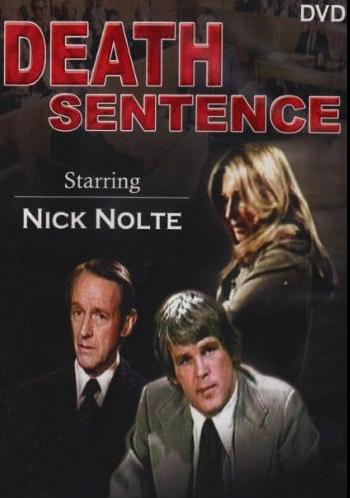
Retro Television Reviews: Death Sentence (dir by E.W. Swackhamer)


Welcome to Retro Television Reviews, a feature where we review some of our favorite and least favorite shows of the past!  On Sundays, I will be reviewing the made-for-television movies that used to be a primetime mainstay.  Today’s film is 1974’s Death Sentence!  It  can be viewed on YouTube!

There’s been a murder!

A young woman has been strangled in her own home.  The nosy neighbor (Hope Summers) testifies that the woman often argued with her woman and that she heard the woman yelling on the night of the murder.  The husband, John Healy (Nick Nolte), is found in a neighborhood bar and, when he’s brought back to his house, his drunken reaction to seeing his dead wife doesn’t do much to keep him from looking totally guilty.

However, the viewer knows that John is innocent because the viewer has already seen that the woman was murdered by Don Davies (Laurence Luckinbill), the man with whom she was having an affair.  She demanded that he leave his wife for her and Don, realizing that his cheating was about to revealed, responded by strangling her.

Don’s wife is Susan Davies (Cloris Leachman), who knows that she and Don have been going through a rough patch but who certainly had no idea that Don was cheating on her.  Shortly after the murder, Susan is called up for jury duty.  She’s placed on the jury and told that she will be an important part of a major trial.  As a result, she and the other jurors will be sequestered in a hotel….

And who is the defendant in this trial?  John, of course!

As opposed to the other members of the jury, who are ready to convict John even before the first bit of testimony is heard, Susan pays attention to what is said in the courtroom.  She listens to Lubell (Alan Oppenheimer), the prosecutor.  She listens to Tanner (William Schallert), the defense attorney.  She comes to believe that John is innocent but will she be able to hold her own against the rest of the jury?  And will she ever figure out that the murder was actually committed by her husband?

It’s an intriguing premise, even if it is a bit far-fetched.  I mean, it really is an amazing coincidence that Susan just happened to end up on the jury for a case involving a murder that was actually committed by her husband.  However, this is a made-for-television movie and, as soon as “Produced by Aaron Spelling” appears on the screen, most viewers should be savvy enough to know what they’re getting into.  Instead, the main problem with the film is that it opens by showing us who the murderer is.  Therefore, there’s really zero suspense as to who actually committed the crime.  Instead, the viewer spends the entire movie waiting for Susan to catch up.  Since the majority of the film takes place in court, it’s a very talky film but there’s no joy to be found in paying close attention to every word said and picking up on the details that will allow you to solve the crime for yourself.  This is a case where the film spoils its biggest twist and, despite good performances from Leachman and Luckinbill, it’s a bit dull.

(Nick Nolte, for his part, spends most of the movie silently sitting in the courtroom.  He’s not bad and his look of anguish is believable but it’s hardly a starring role, regardless of what the film’s video packaging might otherwise claim.)

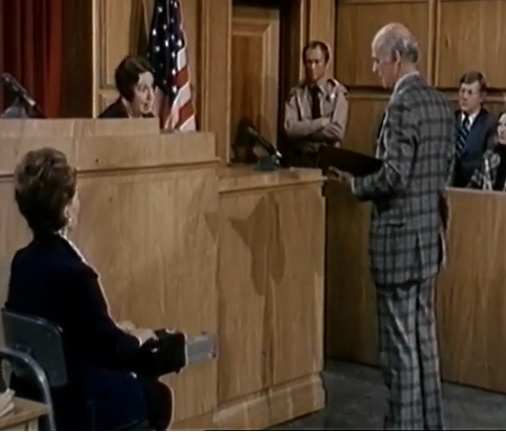
In the end, what I’ll mostly remember about Death Sentence were the atrocious fashion choices made by the prosecutor.  Seriously, would you trust a man wearing this suit?

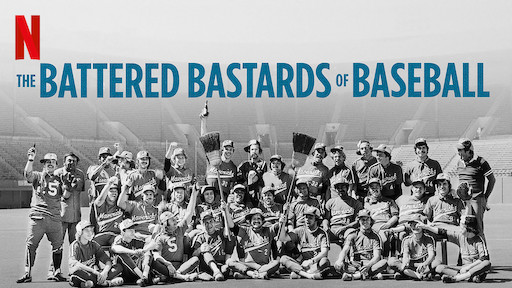
The Battered Bastards of Baseball (2014, dir. by Chapman Way and Maclain Way)


If you’re like me and you’re already missing baseball, I recommend watching a documentary called The Battered Bastards of Baseball.

In 1972, Portland, Oregon lost their minor league baseball team when the Portland Beavers abandoned the city in order to become the Spokane Indians.  At the same time, actor Bing Russell, a former minor leaguer and the father of Kurt Russell, had grown tired of Hollywood and was looking to get back into baseball.  Relocating to Portland, Russell announced that he was going to start his own independent minor league team, the Portland Mavericks.

At first, no one took the Mavericks seriously.  Because they weren’t affiliated with a major league team, the Mavericks roster was largely made up of misfits and rulebreakers, many of whom had been released from other organizations and who had been blacklisted from the major leagues.  On average, most of the Mavericks players were older than the average major leaguer.  Many of them were players who were looking for one last shot at glory and Bing refused to cut any of them because he felt that that they deserved that chance.  When the skeptical media asked Bing what the Mavericks were going to offer that other baseball teams couldn’t, he replied, “Fun.”

And he delivered.  From 1973 to 1977, the Mavericks played exciting baseball, won divisional and league titles, and, most importantly, they put on a good show.  Playing mostly for the love of the game (because Russell never had much money to spend on salaries), the Mavericks reminded people of what baseball was all about.  They pulled off amazing plays on the field while their off-field antics were legendary.  The Mavericks played baseball the way that people wanted to see baseball played, with one manager living every fan’s dream by punching an umpire.

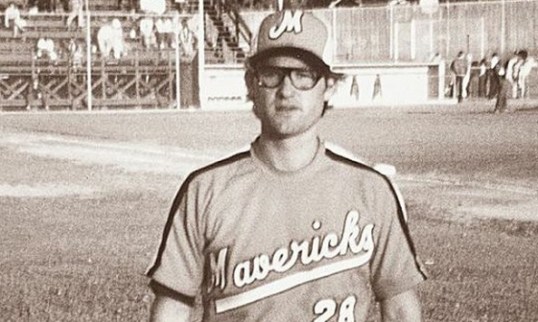
The Battered Bastards of Baseball tells the story of the Mavericks and Bing Russell.  It features archival footage of the Mavericks at play, along with interviews with people like Kurt Russell, who briefly played for the Mavericks and then served as one of their vice presidents.   The documentary pays tribute to the players who never gave up, the fans who eventually welcomed them to a new town, and most of all to the vision and determination of Bing Russell.  Even while Bing was bringing the fun back to baseball, he was also breaking down other barriers by hiring professional baseball’s first female general manager, as well as the first Asian American general manager.

Most importantly, though, The Battered Bastards of Baseball reminds us of why people love baseball in the first place.  It celebrates the game, the players, and most of all the fans.  It’s a documentary that will just leave you in a good mood.  That’s something we all could use!

Kurt Russell as a Maverick