Guilty Pleasure No. 91: No One Lives (dir. by Ryuhei Kitamura)


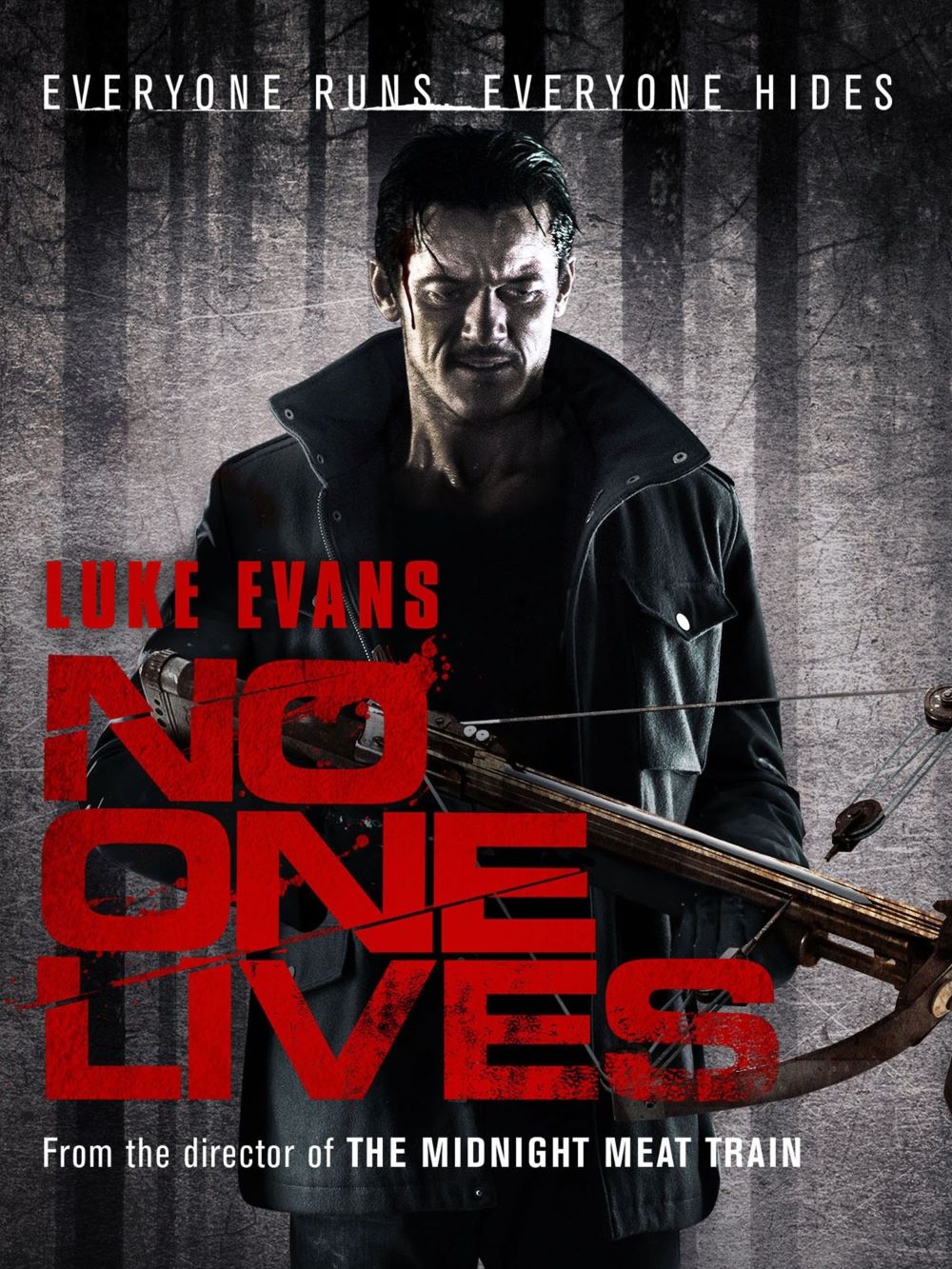
Ryuhei Kitamura’s 2012 horror film No One Lives is a gritty, brutal revenge slasher that doesn’t aim for subtlety or depth but delivers a fast-paced, high-gore thrill ride. The story follows a couple traveling cross-country who are kidnapped by a ruthless gang, only for the man to reveal himself as a deadly predator on a violent rampage. Luke Evans, playing the mysterious and merciless Driver, leads the film with a performance that blends cold calculation and terrifying violence, keeping viewers glued to the screen.

What makes No One Lives stand out is how it leans heavily into its grindhouse and exploitation roots, which proves both advantageous and limiting. The film fully embraces the hallmarks of grindhouse cinema—fast pacing, gritty visuals, excessive gore, and an amoral story stripped down to revenge-fueled violence. This raw, unapologetic approach results in an intense, no-holds-barred experience that will satisfy fans of exploitation and grindhouse styles. The practical effects are impressively executed, with creative and shocking kills that maintain impact without descending into the ridiculous. This dedication to grindhouse aesthetics gives the film a charged energy and a cult appeal, making it a pulpy, heart-pounding experience for viewers who appreciate that sleazy, nihilistic flavor.

However, the grindhouse influence also shapes the film’s limitations. The focus on spectacle and shock means character development and thematic depth take a back seat, making the story feel thin and the characters largely unrelatable except as violent archetypes. Dialogue at times drifts toward camp, and some acting choices can feel a bit amateurish, which may pull some viewers out of the otherwise tense atmosphere. The film’s relentless brutality and amoral tone also create a polarizing effect; it’s unapologetically harsh and violent, which fits the exploitation tradition, but it’s not for everyone. Those expecting traditional horror with complex narratives might find the experience shallow and exhausting.

Luke Evans’s Driver is a compelling anti-hero/monster hybrid, a character who dominates the film with his cold efficiency and unpredictable savagery. The other characters—mostly the gang members—serve as fodder for the film’s violent set pieces, with minimal background or sympathy. This suits the film’s grindhouse style, where depth is often sacrificed for thrills and shock value. The script cleverly keeps some mystery around Driver, maintaining suspense about his origins and intentions, which helps to sustain interest amid the unrelenting carnage.

The film’s grindhouse and exploitation roots also explain its tone and style: it revels in zaniness and excess, the gore is gratuitous but skillfully done, and the revenges feel morally ambiguous and raw. The film doesn’t try to justify or soften its violence; it embraces the lawlessness and nihilism typical of exploitation cinema. While this results in a tight, entertaining 86-minute rush of thrills, it also means the film lacks subtlety or emotional resonance. The style is both a badge of authenticity for genre fans and a barrier to wider appeal.

No One Lives offers a high-energy, blood-soaked horror experience that fully embraces its grindhouse and exploitation influences. It is crafted with a strong focus on unapologetic violence, tight pacing, and a captivating anti-hero in Luke Evans’s Driver. This stylized approach gives the film its raw, relentless intensity that fans of exploitation cinema will appreciate. However, this allegiance to grindhouse aesthetics also means the film prioritizes style and spectacle over emotional depth and narrative complexity. While the movie is an engaging and brutal thrill ride for those who enjoy extreme horror, its minimal character development and abrasive tone might feel one-dimensional or grating for viewers seeking more meaningful storytelling. Overall, it succeeds as a wild, gritty exploitation flick but doesn’t aim to be more than that, making it ideal for audiences who like their horror unrefined and full throttle.

Previous Guilty Pleasures

  1. Half-Baked
  2. Save The Last Dance
  3. Every Rose Has Its Thorns
  4. The Jeremy Kyle Show
  5. Invasion USA
  6. The Golden Child
  7. Final Destination 2
  8. Paparazzi
  9. The Principal
  10. The Substitute
  11. Terror In The Family
  12. Pandorum
  13. Lambada
  14. Fear
  15. Cocktail
  16. Keep Off The Grass
  17. Girls, Girls, Girls
  18. Class
  19. Tart
  20. King Kong vs. Godzilla
  21. Hawk the Slayer
  22. Battle Beyond the Stars
  23. Meridian
  24. Walk of Shame
  25. From Justin To Kelly
  26. Project Greenlight
  27. Sex Decoy: Love Stings
  28. Swimfan
  29. On the Line
  30. Wolfen
  31. Hail Caesar!
  32. It’s So Cold In The D
  33. In the Mix
  34. Healed By Grace
  35. Valley of the Dolls
  36. The Legend of Billie Jean
  37. Death Wish
  38. Shipping Wars
  39. Ghost Whisperer
  40. Parking Wars
  41. The Dead Are After Me
  42. Harper’s Island
  43. The Resurrection of Gavin Stone
  44. Paranormal State
  45. Utopia
  46. Bar Rescue
  47. The Powers of Matthew Star
  48. Spiker
  49. Heavenly Bodies
  50. Maid in Manhattan
  51. Rage and Honor
  52. Saved By The Bell 3. 21 “No Hope With Dope”
  53. Happy Gilmore
  54. Solarbabies
  55. The Dawn of Correction
  56. Once You Understand
  57. The Voyeurs 
  58. Robot Jox
  59. Teen Wolf
  60. The Running Man
  61. Double Dragon
  62. Backtrack
  63. Julie and Jack
  64. Karate Warrior
  65. Invaders From Mars
  66. Cloverfield
  67. Aerobicide 
  68. Blood Harvest
  69. Shocking Dark
  70. Face The Truth
  71. Submerged
  72. The Canyons
  73. Days of Thunder
  74. Van Helsing
  75. The Night Comes for Us
  76. Code of Silence
  77. Captain Ron
  78. Armageddon
  79. Kate’s Secret
  80. Point Break
  81. The Replacements
  82. The Shadow
  83. Meteor
  84. Last Action Hero
  85. Attack of the Killer Tomatoes
  86. The Horror at 37,000 Feet
  87. The ‘Burbs
  88. Lifeforce
  89. Highschool of the Dead
  90. Ice Station Zebra

The Films of 2024: The Bikeriders (dir by Jeff Nichols)


Taking place in the late 60s and the early 70s, The Bikeriders tells the story of The Vandals Motorcycle Club.

The Vandals were founded by Johnny (Tom Hardy), a truck driver who got the idea for starting his own motorcycle gang after catching a late night broadcast of The Wild One.  Under Johnny’s strong leadership, the Vandals quickly grow and soon, branches are opening up across the country.  Of the many members of the Vandals, the most charismatic is Benny (Austin Butler), a quiet and enigmatic man who loves his motorcycle and who seems to have the worst luck when it comes to crashing and getting caught by the police.  If Johnny epitomizes the leadership needed to successfully start a motorcycle club in the first place, Benny epitomizes the coolness of being a rebel and doing your own thing.  Everyone in the club wants to be like Benny, even if the majority of them have more in common with the simple-minded Cockroach (Emory Cohen) or the eccentric Zipco (Michael Shannon).  The fatalistic Johnny knows that he can’t remain in charge forever and he views Benny as his heir apparent.  However, Benny’s feelings about the whole thing are far more difficult to decipher.  As the Vandals themselves grow increasingly more violent and hostile and as lowbrow criminals like The Kid (Toby Wallace) step up to challenge Johnny’s power, both Benny and Johnny are forced to confront the reality of what The Vandals have become.

Watching The Bikeriders is a frustrating experience, especially for those of us who have enjoy director Jeff Nichols’s other films.  It’s a good movie but it never quite becomes the great movie that it so obviously wants to be.  On the plus side, both Austin Butler and Tom Hardy give excellent performance as Benny and Johnny.  Both characters serve as archetypes for a uniquely American style of masculinity and Hardy and Butler bring them to life as both symbols and as human beings.  Tom Hardy, especially, captures the tragic dignity of a man who knows that his fate has already been set.  Wisely, Butler and Hardy both underplay their characters.  Neither Johnny nor Benny are the types to normally show their emotions, which makes their rare moments of vulnerability all the more powerful. If nothing else, The Bikeriders serves as a reminder that both Butler and Hardy are legitimate movie stars, along with being excellent actors.

Unfortunately, the film suffers due to an awkward framing device, in which Benny’s wife, Kathy (Jodie Comer), is interviewed by photographer and writer Danny Lyon (Mike Faist).  Kathy serves as the audience surrogate.  We learn about the Vandals through her eyes and she’s the one explains to us all of the ins-and-outs of Vandal culture.  Unfortunately, Kathy is a bit of an underwritten character and her relationship with Benny never feels convincing.  Unlike Hardy and Butler, Jodie Comer never lets you forget that she’s a performer giving a performance.  Much like Meryl Streep in The Laundromat and Don’t Look Up, Comer gives the type of bad and mannered performance that could really only come from an otherwise good actress.  Whenever the viewer starts to get emotionally involved with the story, director Jeff Nichols cuts back to Lyon staring reverently at Kathy while Kathy prattles on in dialogue that tries so hard to sound authentic that it ultimately makes the whole thing feel artificial.

Just as he did in Take Shelter and Mud, Nichols attempts to capture the unique mythology of the Midwest in The Bikeriders.  Occasionally, he succeeds.  The scene where Benny outruns the cops, just to discover that his motorcycle has run out of gas, serves as evidence of just how good a director Jeff Nichols can be.  But, in the end, The Bikeriders is never quite as strong, moving, or insightful about outlaw culture as it wants to be.  It’s a good film but it’s hard not to feel that it could have been so much more.

Guilty Pleasure No. 37: Death Wish (dir by Eli Roth)


Is it finally safe to honestly review Death Wish?

You may remember that this film, a remake of the 70s vigilante classic, came out last March and critics literally went insane attacking it.  That it got negative reviews wasn’t necessarily a shock because the movie was directed by Eli Roth and he’s never been a favorite of mainstream critics.  Still, it was hard not to be taken aback but just how enraged the majority of the critics appeared to be.  Seriously, from the reviews, you would have thought that Death Wish was not just a bad movie but a crime against nature.

Of course, a lot of that was due to the timing of the film’s release.  The film was released less than a month after the shootings at Stoneman Douglas High School in Florida.  At the time the film first came out, the country was in the midst of a daily diet of anti-second amendment rallies and David Hogg.  Many critics accused Death Wish of being a commercial for the NRA.  Others branded the film as being right-wing propaganda.  In fact, the criticism was so harsh that it was hard not to feel that the critics were essentially taking Death Wish far more seriously than it took itself.

If anything, Death Wish is a big, glossy, and rather silly movie.  Bruce Willis stars as Dr. Paul Kersey.  Paul is a peace-loving man.  We know this because he refuses to get into a fight with a belligerent parent at a soccer game.  He’s also an emergency room doctor, the type who pronounces a policeman dead and then rushes off to try to save the life of whoever shot him.  No one in the movie suspects that Paul would ever become a vigilante but we know that there’s no way he can’t eventually end up walking the streets with a loaded gun because he’s played by Bruce Willis.  When Paul backs down from the fight at the soccer game, Willis delivers his dialogue with so much self-loathing that we just know that, once Paul gets back home, he’s going to lock himself in the basement and start yelling at the walls, Stepfather-style.

Eventually, criminals break into Paul’s house and shoot both his wife (Elisabeth Shue) and his daughter (Camila Morrone).  His wife dies.  His daughter ends up in a coma.  Paul spends a day or two in shock and then he promptly gets a gun and starts shooting criminals.  Eventually, this brings him into conflict with the same criminals who attacked his family!  Meanwhile, two detectives (Dean Norris and Kimberly Elise) look at all the dead bodies piling up around them and just shrug it off.  At one crime scene, Norris is happy to grab a slice of pizza.

And really, that’s it.  It sounds simple because it is simple.  There is absolutely no narrative complexity to be found in Death Wish, which is why, in its own cheerfully crude way, the film totally works.  In real life, of course, vigilante justice is not the solution and the death penalty is often unfairly applied but, from the moment the opening titles splash across the screen, Death Wish makes clear that it has no interest in real-life and, throughout its brisk running time, it literally seems to be ridiculing anyone in the audience who might be worried about the moral ramifications of a citizen gunning down a drug dealer.

Death Wish is a big extravagant comic book.  It takes Paul one scene to go from being a meek doctor to being an expert marksman and, when Paul dispatches one criminal by dropping a car on him, Roth lays on the gore so thick that he almost seems to be daring us to take his film seriously.  By that same token, Paul kills a lot of people but at least they’re all really, really bad.  In fact, the criminals are so evil that you can’t help but suspect that Roth is poking a little bit of fun at the conventions of the vigilante genre.  Even the fact that Willis wanders through the entire film with the same grim expression on his face feels like an inside joke between the director and his audience.

The critics were right when they called Death Wish a fantasy but they were wrong to frame that as somehow being a flaw.  It’s a cartoonishly violent and deeply silly film and yet, at the same time it’s impossible not to cheer a little when Paul reveals that he’s been hiding a machine gun under his coffee table.  It’s an effective film.  Eli Roth delivers exactly what you would expect from a film about Bruce Willis killing criminals in Chicago.  It may not be a great film but it works.

Previous Guilty Pleasures

  1. Half-Baked
  2. Save The Last Dance
  3. Every Rose Has Its Thorns
  4. The Jeremy Kyle Show
  5. Invasion USA
  6. The Golden Child
  7. Final Destination 2
  8. Paparazzi
  9. The Principal
  10. The Substitute
  11. Terror In The Family
  12. Pandorum
  13. Lambada
  14. Fear
  15. Cocktail
  16. Keep Off The Grass
  17. Girls, Girls, Girls
  18. Class
  19. Tart
  20. King Kong vs. Godzilla
  21. Hawk the Slayer
  22. Battle Beyond the Stars
  23. Meridian
  24. Walk of Shame
  25. From Justin To Kelly
  26. Project Greenlight
  27. Sex Decoy: Love Stings
  28. Swimfan
  29. On the Line
  30. Wolfen
  31. Hail Caesar!
  32. It’s So Cold In The D
  33. In the Mix
  34. Healed By Grace
  35. Valley of the Dolls
  36. The Legend of Billie Jean

Playing Catch-Up: The Nice Guys (dir by Shane Black)


the-nice-guys

Last night, along with seeing Trainspotting at the Alamo Drafthouse and watching The BFG at home, I also rewatched The Nice Guys.

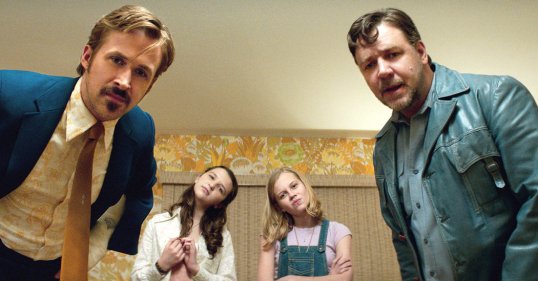
Now, I saw The Nice Guys when it was first released last May and I absolutely loved it.  However, before I started rewatching it, I was a little worried .  I remembered that The Nice Guys was a stylish and often hilarious action film, one that featured a great comedic turn from Ryan Gosling and a performance from Russell Crowe that showed why he deserves to make a comeback as a leading man.  I also remembered that, for all of its graphic violence and often profane dialogue, The Nice Guys was also an unexpectedly sweet-natured movie.  I loved not only the rapport shared between Gosling and Crowe but also the relationship between Gosling and Angourie Rice, the actress playing his daughter.  In fact, I remembered enjoying The Nice Guys so much that I was worried that it wouldn’t hold up to a second viewing.

It often happens when you love a film the first time that you see it.  On a second viewing, you start to notice all the little flaws that you didn’t notice the first time.  Lines that you remembered as being brilliant are no longer impressive, largely because you know they’re coming.  All too often, the films that blow you away fail to hold up over time.

(Anyone tried to rewatch Inherent Vice lately?)

But you know what?

The Nice Guys is not one of those films.  I watched the film for a second time and I loved it even more than the first time.

The Nice Guys takes place in Los Angeles in 1977.  It’s a time of wide lapels, leisure suits, tacky interior design, porno chic, and concerns that the L.A. air is so full of smog that not even bumble bees are willing to fly around in it.  Ryan Gosling is Holland March, a well-meaning if somewhat sleazy private investigator who has been hired to track down a porn star named Misty Mountains.  Of course, Holland know that Misty is dead.  Everyone knows that she’s dead.  She died in a car crash, one that made all the headlines.  But Misty’s aunt swears that she saw Misty after Misty’s supposed death.

Holland thinks that Misty’s aunt may have mistaken her niece for Amelia Kutner (Margaret Qualley), the daughter of Judith Kutner (Kim Basinger, whose presence is meant to remind audiences of L.A. Confidential), an official at the Justice Department who has been leading a crusade against pornography.  Holland starts to search for Amelia which leads to Amelia paying Jackson Healy (Russell Crowe) to intimidate Holland.

Who is Jackson Healy?  Well, he’s not a licensed private investigator, though he’d certainly like to be.  Instead, he’s a professional enforcer.  If you pay him enough money, he’ll beat people up for you.  Usually, he beats up stalkers and ex-boyfriends.  When he discovers that Holland is a private investigator, Jackson is intrigued.  Jackson would like to be a private investigator.  Of course, that doesn’t stop Jackson from breaking Holland’s arm.  Jackson’s a professional, after all.  As Jackson leaves Holland’s house, he runs into Holly (Angourie Rice), Holland’s twelve year-old daughter.  She gives him a bottle of Yoohoo.

Later, Jackson is confronted by two men.  Keith David plays Older Guy and he’s intimidating because he’s Keith David.  His partner is a giggly sociopath played by Beau Knapp.  For reasons that are too much fun for me to spoil, he is known as Blue Face.  The two men demand to know where Amelia is.  After Jackson manages to chase them off with a shotgun, he teams up with Holland to try to track down Amelia and find out what’s going on…

Got all that?

The mystery — which eventually expands to involve everything from porn to political protest to the Detroit auto industry — is deliberately and overly complex but at the same time, it’s actually rather clever.  And, as I can now say after rewatching the film, it actually holds up quite well.  But, to be honest, the mystery is not as important as the whip smart dialogue, the frequently over the top action, and the chemistry between Gosling, Crowe, and Rice.  As good as the action may be, the film’s best scenes are simply the ones that feature the three leads talking to each other.

(Upon discovering that Jackson both broke her father’s arm and that he beats people up for a living, Holly immediately asks how much it would cost to have one of her friends beat up.)

And you know what?  As played by Gosling and Crowe, they really are the nice guys.  Holland tries to be cynical but, for the most part, he’s just an overprotective father.  Jackson may beat people up for a living but he’s not a sadist.  He’s a lot like the film, violent but with a good heart.

The Nice Guys is full of wonderful set pieces, like when Gosling, Crowe, and Rice infiltrate a sleazy 70s party or the film’s explosive finale.  For me though, I love the little details and the quieter moments.  I love the fact that even one of the worst people in the movie responds postively to having someone innocently hold his hand.

(I also love that Matt Bomer shows up, playing a totally terrifying hitman.  It’s a small role but Bomer does so much with it.)

It’s a shame that The Nice Guys came out as early in the year as it did.  It’s also a shame that it didn’t do better at the box office.  The Oscars could use a little action and a little comedy this year, don’t you think?

Film Review: The Gift (dir by Joel Edgerton)


The_Gift_2015_Film_Poster1

Because of the nature of The Gift, this post is going to contain minor spoilers.  There’s no way to talk about what makes the film work so brilliantly without giving away a few plot points.  Such is the nature of the beast and all that.  So, if you don’t want to deal with spoilers, allow me just to say this: Go see The Gift.  See it tonight.  See it tomorrow.  See it this weekend.  But, definitely — go see it!

(And if anyone tells you that The Gift is not worth seeing than that person is not really your friend and you need to start hanging out with a better class of people.)

Ryan has already reviewed The Gift and, having watched the film earlier today, I agree with everything that he had to say.  That’s why I am happy to add my voice to his and encourage you to see The Gift.  With this week pretty much dominated by ruminations on the colossal failure of The Fantastic Four and the upcoming weekend guaranteed to be dominated by the release of both Straight Outta Compton and The Man From UNCLE, there’s a definite risk that The Gift is going to get lost in the shuffle.

And that’s unfortunate.  Much like the thematically similar UnfriendedThe Gift comes disguised as a conventional thriller but, once you start to unwrap it, you discover that there are layers and layers of subtext and The Gift is actually one of the best and most thought-provoking films of the year.

Like many great Lifetime films, The Gift opens with a married couple living a deceptively wonderful life.  Simon (Jason Bateman) is friendly and charming and appears to be on the verge of getting a big promotion at work.  He and his wife, Robyn (Rebecca Hall), appears to be happy and in love.  They have also got a friendly dog named Mr. Bojangles and they’ve just moved into a beautiful new house.  After spending the last few years in Chicago, they’ve relocated to Simon’s home state of California.  They’re looking forward to starting a family.  Everything’s perfect.

And then, while out shopping for furniture, they run into Gordo (Joel Edgerton).  Gordo explains that he went to high school with Simon.  (At first, Simon swears to his wife that he doesn’t even remember Gordo but that soon proves to be false.)  The socially awkward Gordo starts to send Simon and Robyn progressively more and more extravagant gifts.  After Simon tells Robyn that Gordon was known as Weirdo in high school, Robyn starts to feel sorry for Gordo and insists that Simon try to be friendly towards him.  Simon, however, remains weary of Gordo and his intentions.  At first, it seems like Simon is just being cautious but, as the film unfolds, we discover that Simon has his own reasons for wanting to avoid his old classmate.

The more Gordo tries to insert himself into Simon and Robyn’s life, the more we start to see the cracks behind their “perfect” marriage.  Robyn, it turns out, had previously suffered a miscarriage and has a history of abusing prescription medicine.  Meanwhile, it’s revealed that, behind Simon’s fast smile, there lies a condescending control freak.  (Gordo mentions that Simon ran for senior class president on a “Simon says” platform.)

There’s more to Simon and Gordo’s relationship than either one of them is initially willing to admit.  In high school, Simon was a bully and Gordo was his number one victim.  That Gordo wants revenge on Simon should not be surprising.  That’s obvious from the trailer.  No, the genius of the film is to be found in the way that it subtly reveals that, as an adult, Simon is still as much of a jerk and a bully as he was in high school.  He’s just gotten a lot better at hiding it. The same traits that made Simon a bully in high school have helped him to find material success in the real world.   When Gordo reeneters his life, Simon can no longer hide who he really is.  Gordo is not just his former victim.  Gordo is proof of what lies underneath Simon’s perfect facade.  When Robyn finally convinces Simon to apologize to Gordo, Simon cannot do so convincingly because he’s not so much sorry as he’s just inconvenienced.  When Gordo refuses to accept the apology, Simon’s mask falls away and he reveals his true nature, setting up the film’s devastating conclusion.

(I’m not going to spoil how the film ends but I will tell you that it left me breathless and stunned.  It’s not a happy ending but it is absolutely the right ending for the story that’s being told.  As both the film’s director and writer, Joel Edgerton deserves a lot of credit for staying true to the movie’s theme.)

Rebecca Hall is well-cast as Robyn but, ultimately, the film is dominated by the performances of Jason Bateman and Joel Edgerton.  (Interestingly enough, both Bateman and Edgerton are made up so that they superficially resemble each other, allowing Gordo to literally become the personification of Simon’s ugly side.)  Edgerton transforms Gordo into a character who is both scary and pathetic at the same time.  Meanwhile, Jason Bateman — oh, where to begin?  For the longest time, it’s been impossible for me to look at Bateman without flashing back to that scene in Juno where he hit on Ellen Page.  Now, however, I don’t think I’ll ever be able to look at Jason Bateman without hearing him yell, “Accept my apology!”  Jason Bateman has played a lot of less-than-sympathetic characters but Simon … well, Simon may be the worst.  As an actor, Jason Bateman deserves a lot of credit for not shying away from revealing the truth about Simon.  It takes courage to play such an unlikable character and talent to make that character compelling even when the viewer can’t stand him.

The Gift is an excellent and thought-provoking thriller, the type of film that will both make you jump with fright (I screamed during a certain shower scene and that’s all I’ll say about that) and leave you with much to think about after the end credits roll.

It’s a film that you need to see now.

Film Review: Southpaw (dir by Antoine Fuqua)


Southpaw_poster

Southpaw features Jake Gyllenhaal as a boxer who loses his wife, his daughter, his career, his self-respect, his car, his house, his manager, his friends, and nearly his life.  But then, about 70 minutes into the film, he gets a chance to get it all back.  Well, almost all of it.  His wife is dead so he can’t get her back but there are hints that he might get together with a helpful social worker after the end credits role.

There was really only one reason why I was interested in seeing Southpaw and that’s because it starred Jake Gyllenhaal.  Last year, Gyllenhaal gave the performance of his career in Nighcrawler.  Gyllenhaal was so brilliant that you just knew the Academy was going to prove itself clueless by not nominating him.  And that’s exactly what happened.  Gyllenhaal was snubbed and, as a result, the Academy now owes him a nomination.  When the trailer for Southpaw first appeared and we saw Gyllenhaal as muscular and bloody, a lot of us assumed that Southpaw would be the film that would get him that nomination.

And Jake Gyllenhaal does do a pretty good job in Southpaw.  He’s one of the main reasons for seeing the film.  It’s interesting to compare Gyllenhaal’s hyperactive performance and sickly appearance in Nightcrawler with his work as boxer Billy Hope in Southpaw.  Billy is a professional brawler and you believe it when you look at him.  Not only is he huge and muscular but he’s got a face that has obviously been punched more than a few times.  When he speaks, he isn’t the hyper articulate con man of Nightcrawler and Love and Other Drugs.  Instead, he stares at the ground as he mumbles and struggles to put together the simplest of thoughts.  It’s a good performance but, at the same time, it lacks the element of surprise that Gyllenhaal has brought to his best roles in the past.  You watched both Donnie Darko and Nightcrawler and you knew that only Gyllenhaal could have brought those roles to life.  Billy Hope, however, is a far less interesting character and you could imagine any number of actors playing the role.  (Reportedly, Southpaw was actually written with Eminem in mind and you really can see him playing the role.)

And really, the entire film is a lot like Billy Hope.  It does its job but there’s nothing all that interesting about it.  Southpaw‘s biggest surprise comes about 20 minutes into the film when Billy’s loving wife, Maureen (Rachel McAdams), is shot and killed and you already knew that was going to happen from the film’s trailer.  After Maureen’s death, Billy starts using alcohol and drugs and, as a result, he loses custody of his daughter, Leila (12 year-old Oona Laurence, giving a great performance).  Because this is a sports film, Billy has to hit rock bottom before, with the help of a grizzled and haunted trainer (Forest Whitaker), he can get a chance to win back both the championship and his daughter.  Director Antoine Fuqua obviously know how to tell these type of testosterone-drenched stories but there’s not a single moment in Southpaw that you won’t see coming from miles away.

And don’t get me wrong.  Unlike some other films that I was less than overwhelmed by, I can actually understand why some people in the theater applauded at the end of Southpaw.  It’s an effective film, even if it does run on for a little bit too long.  It tells a heartfelt story.  It’s a crowd pleaser and I’m sure that a lot of people will enjoy it.  But, for me, it was just too predictable.  I like it when movies catch me off guard and that’s something that Southpaw never came close to doing.

A quick sidenote: Southpaw features the final score composed by the late James Horner and the film is dedicated to his memory.  If you see the movie, be sure to stick around for the dedication so that you can put your hands together for a cinematic and musical legend.