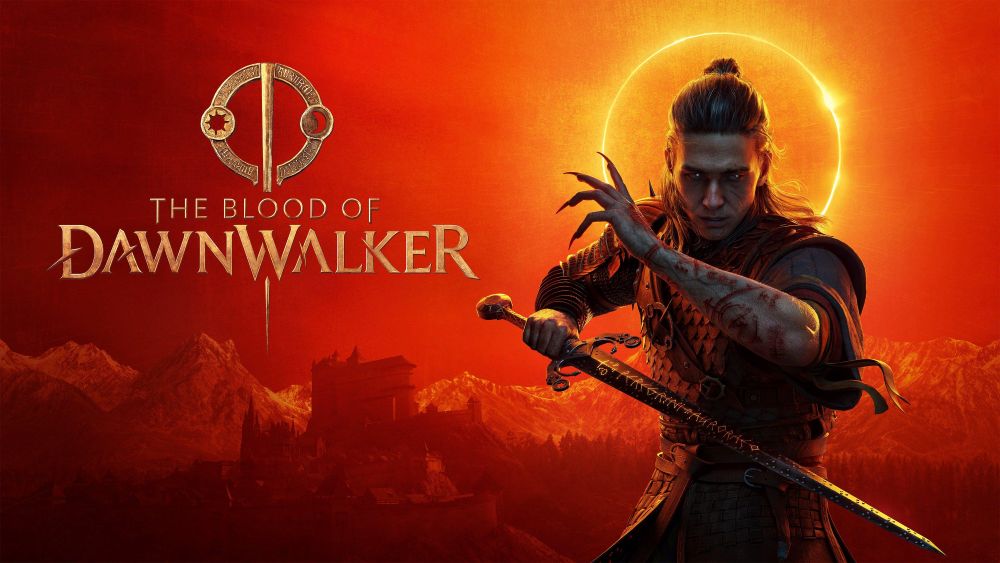
“Lord, please grant me the strength to resist this damn thirst… Grant me the will to keep the beast at bay.” — Coen
The Blood of Dawnwalker is a strong first showing from Rebel Wolves: a dark-fantasy action RPG that uses its vampire premise as the foundation for combat, exploration, role-playing, and player choice rather than as a simple visual hook. It is moody, bloody, occasionally demanding, and clearly made by a team that understands why players enjoy wandering through a richly imagined fantasy world and stumbling into trouble on their own terms.
Rebel Wolves comes into this project with a pedigree that is hard to ignore. The Polish studio includes several former top creatives from CD Projekt Red, the developer best known for The Witcher series and Cyberpunk 2077. Co-founder and game director Konrad Tomaszkiewicz directed The Witcher 3: Wild Hunt and held senior production and directing roles on Cyberpunk 2077, while other key Rebel Wolves figures—including narrative director Jakub Szamałek, art director Bartłomiej Gaweł, design director Daniel Sadowski, and creative director Mateusz Tomaszkiewicz—also have experience across The Witcher and Cyberpunk projects. That background does not mean The Blood of Dawnwalker is simply another Witcher, but you can absolutely see the shared interest in morally messy quests, local legends, dense world-building, and player-led approaches to problems.
The setting is one of the game’s greatest strengths. The Blood of Dawnwalker takes place in the fictional Vale Sangora, a dark medieval valley positioned in a 14th-century Europe devastated by plague, fear, political collapse, and religious unease. It is the kind of setting where villagers whisper about curses, old forests feel genuinely hostile, abandoned ruins suggest much older civilizations beneath the current order, and every noble house or holy institution seems to be concealing something ugly. Rather than relying only on the usual medieval-fantasy shorthand of castles, taverns, and bandits, Rebel Wolves grounds the setting in a more distinctive historical and cultural blend.
The world-building draws on local myths, folklore, legends, archetypes, and archaeological discoveries associated with Southeastern and Central Europe, especially Romania, Hungary, and Poland. Vale Sangora is not meant to be a direct recreation of any one real place, but the regional influence gives it a different texture from fantasy worlds modeled primarily on England, France, or generic “medieval Europe.” The atmosphere leans into Carpathian landscapes, mountain settlements, burial traditions, old sacred sites, folk monsters, regional superstition, and the tension between Christian authority and older beliefs that never fully disappeared. It gives the game a sense of place. You are not just moving through another interchangeable fantasy map; you are exploring a region where history, religion, folklore, and the supernatural seem permanently tangled together.
At the center of everything is Coen, a young man who exists between two states. By day, he is human. By night, he transforms into a vampire-like being called a Dawnwalker. That central duality is not merely part of the story or a convenient excuse for some special moves. It changes how you play the game, how you navigate locations, what abilities you have access to, and how you approach encounters. The day-and-night structure is easily the best thing about The Blood of Dawnwalker, because it keeps the game from becoming mechanically repetitive.
During the day, Coen plays more like a tough but vulnerable medieval warrior with access to unsettling occult magic. Human combat revolves around swordplay, and Rebel Wolves has put a surprising amount of thought into making that combat flexible for different kinds of players. If you prefer a simpler action-RPG setup, the game includes Omniattack and Omniblock options, allowing you to focus on timing, movement, and general survival without constantly managing directional inputs. If you want something more technical, you can use directional attacks and directional blocks, choosing which side to strike or defend from while reading an enemy’s position and responses.
That more hands-on combat style can make a fight feel like a proper duel instead of a button-mashing brawl. Blocking an incoming strike from the correct direction, parrying at the right moment, and following with a counterattack gives human Coen a satisfying grounded quality. He is capable, but he is not invincible. You need to pay attention to spacing, defense, stamina, and the number of enemies surrounding you. In a genre full of heroes who can flatten entire rooms without slowing down, there is something refreshing about the daytime game making you respect a sword fight.
Coen’s daytime magic adds another useful layer. His human abilities are tied to runes carved into his skin, turning scars into magical tools. Because his vampiric transformation heals those marks at night, this style of magic is specifically associated with his daylight form. That is a clever bit of design because it prevents daytime Coen from feeling like the lesser, restricted version of the protagonist. He has his own advantages and his own way of interacting with the world. Some magic is built for combat, but the more interesting powers support investigation and exploration. Compel Soul, for example, allows Coen to communicate with the dead, opening up possibilities for gathering information, investigating mysteries, and finding answers that living characters may not be willing or able to provide.
The nighttime half of the game delivers the vampire power fantasy, but it does so in a way that changes the rhythm rather than simply making Coen stronger. Once darkness falls, Coen gains vampiric abilities that favor speed, aggression, stealth, and vertical movement. His claws become central to combat, offering a more brutal and immediate alternative to the controlled, weapon-based swordplay of the day. Nighttime fights can feel much more predatory. You are quicker, more mobile, and better equipped to overwhelm isolated enemies, but there is also a constant undertone of hunger and self-control.
Blood is not just a healing item with gothic packaging. Feeding is tied to Coen’s condition, and managing bloodlust is part of the vampire experience. You can draw blood from different sources, and the choice can matter both mechanically and morally. Feeding may help sustain Coen, but it also makes the player consider what kind of person—or creature—he is becoming. If his hunger becomes too severe, he can become weakened or lose control, creating the possibility of consequences beyond a routine game-over screen. It is a more interesting use of vampirism than simply giving the player red eyes and a damage boost.
The other major nighttime advantage is movement. Coen can use Shadowstep, a short-distance teleporting ability that opens up fast escapes, surprise attacks, rooftop routes, stealthier paths, and alternate ways through guarded spaces. This is where the game’s two identities really begin to click. A location that seems straightforward during the day may reveal a completely different set of opportunities after dark. Walls, balconies, broken towers, rooftops, scaffolding, cliffs, and high windows become potential routes instead of mere scenery. At night, the game lets you think less like a knight walking through a gate and more like a supernatural predator looking for the path no one else can use.
The RPG side of The Blood of Dawnwalker is equally important, because the game does not treat dialogue as a brief pause between fights. Conversations can shape how characters view Coen, what information he receives, which opportunities become available, and how a given conflict develops. Your choices determine whether Coen comes across as diplomatic, threatening, manipulative, compassionate, secretive, ruthless, or simply desperate. That gives conversations a genuine role-playing function. You are not only picking the response that earns a reward or advances a marker; you are deciding how Coen handles people in a world that already fears monsters and has plenty of reason not to trust strangers.
Those choices carry beyond individual scenes. A side quest can be solved through violence, investigation, negotiation, stealth, supernatural ability, or a decision to walk away and deal with something else. The same applies to major story missions. A locked fortress, guarded estate, religious site, village dispute, or monster problem might offer more than one entry point and more than one resolution. You may learn useful information in a conversation, use your daylight magic to uncover a clue, wait for nightfall to find a new route, take the direct combat approach, or commit to a choice that changes the fate of a character or local community. The game’s best role-playing ideas come from allowing those systems to overlap rather than separating “dialogue choices,” “combat,” and “exploration” into isolated parts of the experience.
That design philosophy extends to quests and the larger structure of the game. The Blood of Dawnwalker uses a 30-day-and-night timeframe, but it does not appear to be a harsh real-time countdown that forces players to sprint through the main story. Time is treated as a resource. It advances when Coen commits to important actions, missions, or major choices, rather than simply because the player spent too long exploring an abandoned mine or checking every corner of a village. Before spending time, the game indicates the cost, letting players decide whether an opportunity is worth pursuing.
This makes the game’s narrative mechanics more meaningful than the usual good-versus-evil decision wheel. You cannot necessarily see every story thread, solve every problem, help every character, or complete every quest in one run. The order in which you pursue objectives matters, conversations can send situations in different directions, and choices made during side content can influence the broader experience. A main quest may be approached differently depending on what you learned elsewhere, who you allied with, which characters remain available, and whether you arrive as human Coen by day or vampire Coen by night.
The game’s multiple endings are a natural consequence of that structure. Rather than feeling like an arbitrary final selection screen, different endings grow out of the cumulative choices you make throughout the adventure: how you resolve key quests, how you handle relationships, what paths you prioritize, what consequences you accept, and how you use—or resist—Coen’s vampiric nature. That makes replay value feel built into the narrative rather than added afterward. A second playthrough is not just an excuse to choose a different dialogue line at the end; it is a chance to take alternate quest routes, make different alliances, pursue missed story threads, try new solutions, and see how those decisions reshape the road toward a different conclusion.
The biggest compliment I can give The Blood of Dawnwalker is that its mechanics and setting reinforce each other. The 14th-century landscape of Vale Sangora is not just a place to fight monsters; it is a setting built to make monsters feel plausible. In a world shaped by plague, rural isolation, ancient ruins, fragile faith, folklore, and social desperation, stories of vampires, curses, spirits, and hidden things in the dark do not feel like random fantasy decoration. They feel like natural extensions of how people might interpret a brutal and frightening world.
There are still a few potential sticking points. Players looking for a breezy, simple action game may find the more deliberate sword mechanics demanding, especially if they opt into directional offense and defense. The time-management framework may also create anxiety for people who dislike the idea of missing quests or content. The bloodlust system will depend heavily on balance: it needs to create real tension without becoming repetitive busywork. Still, those are the risks of a game trying to do something more ambitious than handing the player another enormous map full of icons.
Overall, The Blood of Dawnwalker succeeds because it has a real point of view. Rebel Wolves has taken a familiar fantasy subject—vampires—and tied it to an unusually specific cultural and historical atmosphere, then built its RPG systems around the tension between humanity and monstrosity. Daytime Coen is a sword-wielding investigator marked by ritual magic; nighttime Coen is a fast, lethal hunter with new routes through the world and dangerous urges to manage. Add in consequential conversations, flexible quest solutions, branching story paths, and multiple endings, and the game becomes much more than a vampire action RPG. It is a role-playing experience designed to make each player’s version of Coen—and each journey through Vale Sangora—feel meaningfully different.

