AMV Of The Day: Crazy In The Night (Gakkou no Kaidan)


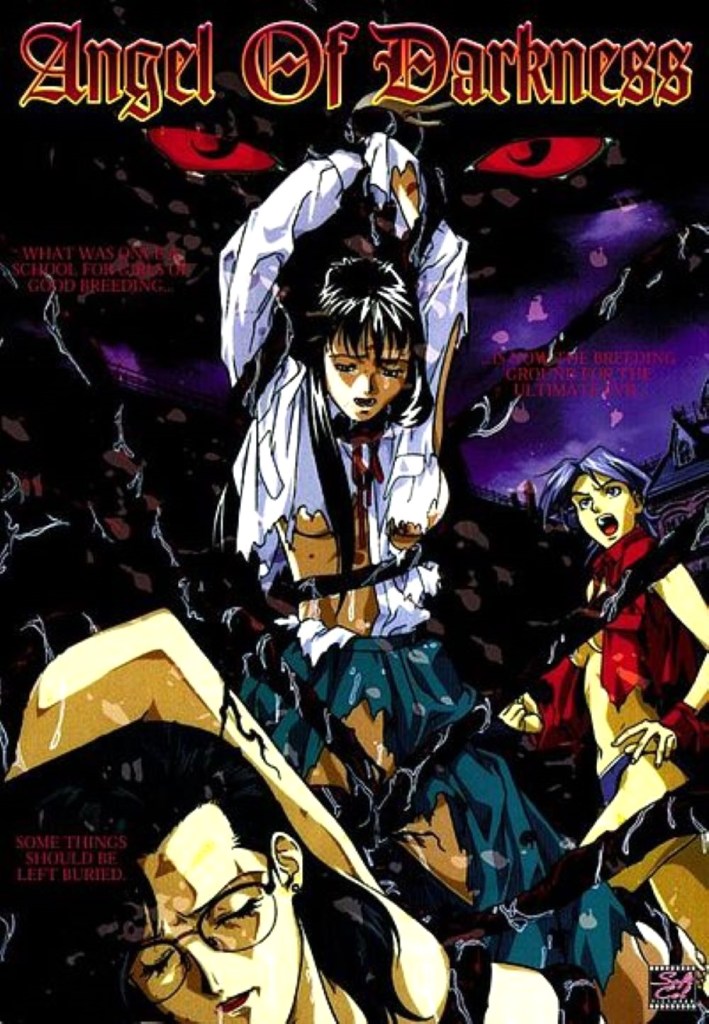
As the third day of Horrorthon draws to a close, how about an AMV?

Song: Crazy In The Night by Kim Carnes

AnimeGakkou no Kaidan

Creator: rspectcopyrightmyass (As always, please be sure to check out this creator’s channel)

Past AMVs of the Day

AMV Of The Day: Don’t Stop Believing (Various)


An AMV set to Journey?  How can I not share it?

Song: Don’t Stop Believing by Journey

Anime-Dance in the Vampire Bund, -Spice and Wolf ,-Fullmetal Alchemist Brotherhood, -Durarara, -Toradora, -Attack on Titan, -Soul Eater ,-A Certain Scientific Railgun S, -Vampire Knight, -Higurashi When They Cry, -Deadman Wonderland, -Bleach, -Death Note, -Shuffle, -Maid Sama, -Free!, -B Gata H Kei, -Black Butler, -Nana, -Rosario Vampire -,demon king daimao, -yoko you’re my star

Creator: Katherine Dickinson (KatiePandas)

Past AMVs of the Day

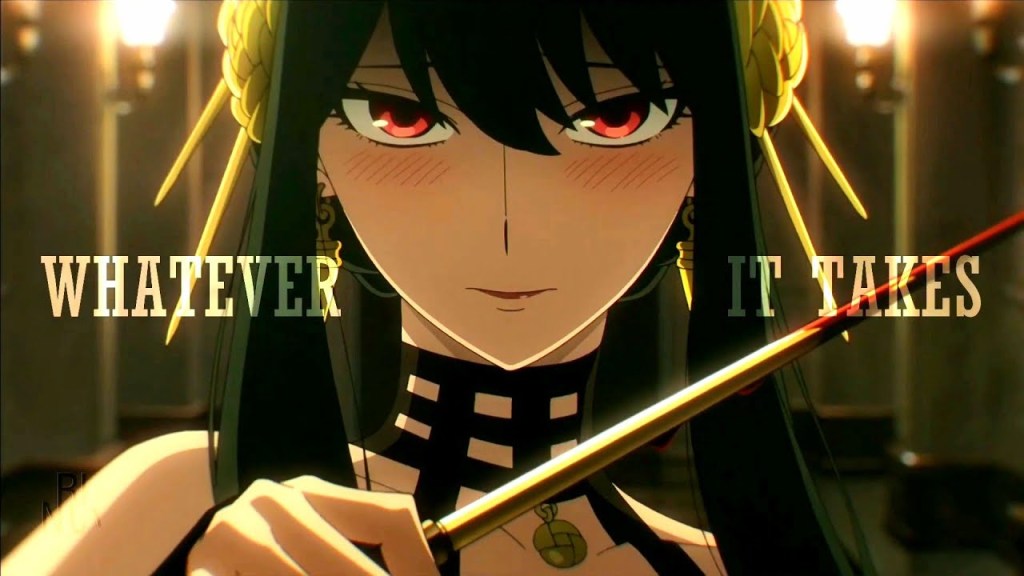
AMV of the Day: Whatever It Takes (Spy x Family)


It is hard to say that when the anime series Spy x Family premiered in 2022 that it was a surprise hit. The manga it was adapted from (still ongoing) was and is still one of the popular manga currently in publication. It was a series that was going to be a hit even if it had been half-assed.

The latest AMV of the Day comes courtesy of azure ryn and combines Imagine Dragons’ “Whatever It Takes” with scenes from Spy x Family that highlights the balance of Loid Forger trying to balance his super-spy agent work with the fake family he has created as cover for his current assignment. The song really emphasizes the serious side of the series (the series itself is mostly the hijinks of the three characters that forms the Forger Family).

SongWhatever It Takes by Imagine Dragons

AnimeSpy x Family

Creatorazure ryn

Past AMVs of the Day

4 Shots from 4 Anime: Isekai Edition


Continuing my current focus on the isekai corner of the anime fandom I present four shots from four isekai anime series that is currently still airing with new seasons. All started out strong and gaining new fans.

Some have pointed out that the quality in later seasons have dipped for some, but those who invested their time to watch these series have stuck with the four series. With the dearth of mid to bad isekai series coming out year after year it’s just due time for the genre to go out with a whimper, but until that happens…“Isekai is dead! Long live the isekai!”

Overlord (Ōbārōdo) by Kugane Maruyama
The Rising of the Shield Hero (Tate no Yūsha no Nariagari) by Aneko Yusagi
That Time I Got Reincarnated as a Slime (Tensei Shitara Suraimu Datta Ken) by Fuse
The Eminence in Shadow (Kage no Jitsuryokusha ni Naritakute!) by Daisuke Aizawa

AMV of the Day: Eye of the Storm (Gate: Thus the Japanese Self-Defense Force Fought…)


My latest pick for AMV of the Day comes courtesy of creator WarLuxAMVs with his editing work using scenes from the isekai series Gate: Thus the Japanese Self-Defense Force Fought… (a series that was profiled years ago as an anime recommendation).

It focuses heavily on the character Rory Mercury who, despite her appearance, turns out to be the most powerful character in the whole series and is also the source of much hijinks involving the main protagonist, Yoji Itami. As the videos shows, she’s quite bloodthirsty in equal amounts to being the gothic lolita type. She’s also quite adept at wielding her massive halberd with ease.

WarLuxAMVs does a very good job in syncing up the action scenes with the WattWhite song “Eye of the Storm” and if there’s one description that fits Rory Mercury when she’s going about her apostle duties then being the “eye of the storm” fits her like a black satin and lace glove.

Song: Eye of the Storm by WattWhite

Anime: Gate: Thus the Japanese Self-Defense Force Fought…

CreatorWarLuxAMVs

Past AMVs of the Day

Anime You Should Be Watching: Farming Life In Another World (Isekai Nonbiri Nouka)


The last anime I recommended was the mature and very dark MONSTER. It’s time to lighten and chill things down a bit with my next recommendation. This series is one of my recent favorites that I’ve re-watched several times since the 12-episode season came out January 2024. The series I am talking about is Farming Life In Another World (Isekai Nonbiri Nouka).

The series is quite light-hearted and almost a fantasy version of farming life sims like Stardew Valley. Like many isekai (trans. another world), Farming Life In Another World is about a random person (usually from Japan) who has been transported to another world either through the mistake of some multiversal god/goddess or through the machinations of a certain truck-kun.

What or who is a truck-kun? Well, I’m glad you asked. Truck-kun is literally a truck that has become the go-to implement in sending a poor person from our would and into another by running them over while they are not looking. If there was ever a perfect example of why we should always look both ways before crossing the street it is that truck-kun is always out there lurking, waiting for the right time to pounce and claim another victim. Except, truck-kun wasn’t the culprit this time around but health problems from literally being overworked to death that sends out protagonist reincarnating to another world.

So, back to Farming Life In Another World, our protagonist has been accidentally taken to another world by God and apologizes to our main character for the unfortunate turn his life had taken by sending him to this new world. God’s generosity he asks Hikaru for one wish to make his life easier on this new world and Hikaru, in his past-life as an overworked, middle-aged office worker from Japan, asks for long-life and a chance to live a quiet and arboreal life this second time around. With his new found abilities and the Omnipotent Farming Tool to help fulfill Hikaru’s wish, God sends him off to this new world, dropping him off in the Forest of Death where Farming Life In Another World begins in earnest.

This anime is definitely one of the lighthearted ones with a bit of the fan-service thrown in to add to the comedic aspect of the story being told. Farming Life In Another World was adapted from the light novel of the same name by author Kinosuke Naito. The source material made more use of Hiraku’s endless stamina courtesy of God by having him literally sleep with every female that joins the village he ends up building in the middle of the Forest of Death. The anime lightens up on this aspect of the light novel and turns it into a running joke in that he gets nervous and tries to forget the fact that every female (from vampires, killer angels to all types of elves) want to have sex with him. The anime adaptation is the PG-version of what was a very raunchy light novel.

Yet, despite the apparent change in tone with the anime adaptation compared to the light novel source material, Farming Life In Another World does actually work as a slice-of-life comedy isekai. Fans of the light novel may cry that the changes from the sex comedy that was the light novel was too much of a change for fans who have never read the light novel will not miss anything. What they will get instead is a lighthearted series that eases new fans to anime into a new genre of the medium that has dominated the industry for the past decade or so.

Just like any adaptation of a written source material there will always be those who complain that the adaptation should be slavishly faithful to the original material. Yet, I always say that even if the adaptation has made drastic changes to the source material it doesn’t change the fact that the original still exists to be enjoyed. Sure, the ecchi and heavy fanservice of the light novel has been changed to be more PG-rated but it doesn’t detract from the fun and chill vibes of the anime version.

Farming Life In Another World works, in my opinion, because it does minimize the more raunchier side of the story to concentrate on the day-to-day and slice-of-life tone of the source material. The anime focuses on the world building and comedy side of Hiraku’s journey with his companions as they build what amounts to as an advanced and powerful village in the middle of what his new world considers the most dangerous area in the world. He does this with the help from Rurushi Ru (vampire mage) and Tia (angel aka the Annihilation Angel) who start off as frenemies but turn into close friends and friendly rivals (the show hinted at Hiraku marrying both which is a compromise the show makes to the source material).

Isekai is a genre in anime that has been very prevalent each new season for the past decade or so. Some would say that this genre has been the bane of the anime industry since we see knock-offs after knock-offs every year with most being bad (though some I would consider bad but enjoyable enough to be guilty pleasures). Yet, the genre has produced some of the best series in that same time frame. They’re not the majority, but they’re there enough in number to wash the taste of the awful ones.

Does Farming Life In Another World count as one of the best in genre? I say no, but it doesn’t have to be one of the best. It just had to be the best in what it had to be and that’s a slice-of-life comedy with some clever world building that would make any one who is a fan of sims games giddy. While we don’t get the raunchy and fanservice heavy anime adaptation of the light novel (if one wanted to know what such a version would look like I suggest they watch 1980’s sex comedies like Porky’s or Revenge of the Nerds).

Plus, the anime has a banger of an opening song.

“Flower Ring” by Shino Shimoji and Aya Suzaki

Faming Life In Another World Series Trailer

AMV of the Day: Gods (Solo Leveling)


Latest AMV of the Day comes courtesy of AMV creator ABOKAI and its all about Jin-woo of the anime series Solo Leveling. I know some anime purists don’t like watching anime adaptations of Korean manwha (South Korean version of Japanese manga). I can take it or leave it since there’s not many examples of such adaptations though I have read quite a few Korean webtoons that were expanded into more official manwha.

Solo Leveling is one of the better Korean manwha and its follows the long-standing and well-utilized power fantasy of Japanese shonen manga. Jin-woo is one such MC whose rise from lowly nobody to OP main character was best shown in the one of the main fight sequences in the first season of Solo Leveling.

ABOKAI does a great job of editing the fight sequences to match the energy of the song by South Korean kpop girl group NewJeans. The song itself, titled GODS, was the anthem for the League of Legends World 2023.

Solo Leveling just premiered its second season and this AMV just a good way to remember just how action-packed this series is.

Song: GODS by NewJeans (뉴진스)

Anime: Solo Leveling

Creator: ABOKAI

Past AMVs of the Day

Anime You Should Be Watching: MONSTER


“For you, all lives are created equal. That’s why I came back to life. But you’ve finally come to realize it now, haven’t you? Only one thing is equal for all, and that is death.” — Johan Liebert

Naoki Urasawa’s MONSTER stands as one of the most accomplished psychological thrillers not just in manga, but in modern storytelling as a whole. Widely regarded as one of the greatest mangaka, Urasawa has built a reputation for crafting deeply human narratives that transcend genre boundaries. While his works span science fiction (20th Century Boys), sports (Happy!), and beyond, MONSTER represents perhaps his most fully realized exploration of morality, identity, and the fragile line between good and evil. Both the original manga (1998–2001) and its anime adaptation (2004–2005) serve as masterclasses in long-form storytelling, though each medium offers a slightly different experience in how these themes are conveyed.

At its core, MONSTER is a story about moral responsibility and the consequences of choice. Dr. Kenzo Tenma’s fateful decision to save the life of a young boy—who would grow up to become the enigmatic and terrifying Johan Liebert—forms the backbone of the narrative. What begins as an ethical stand against institutional corruption evolves into a haunting question: can a single act of good inadvertently unleash unimaginable evil? Urasawa refuses to offer easy answers. Instead, he constructs a world where morality is rarely absolute, and where even the most well-intentioned actions can ripple outward in unforeseen ways.

Johan himself is less a conventional antagonist and more an embodiment of philosophical dread. He represents the void—the idea that human identity can be hollowed out, shaped, or even erased entirely. Throughout the series, Urasawa interrogates whether evil is innate or constructed. Is Johan born a “monster,” or is he the product of trauma, manipulation, and systemic failure? This ambiguity is central to the story’s power. Unlike many thrillers that seek to explain or rationalize their villains, MONSTER leans into discomfort, suggesting that some truths may be fundamentally unknowable.

Another key theme is the search for identity, particularly in the aftermath of trauma. Characters across the narrative grapple with fractured pasts, false names, and reconstructed selves. Nina Fortner (Anna Liebert) serves as a compelling counterpoint to Johan—someone who has endured similar horrors but struggles toward healing rather than destruction. Through her and others, Urasawa presents identity not as something fixed, but as something constantly negotiated. Memory, in this context, becomes both a burden and a battleground. To remember is to risk pain; to forget is to risk losing oneself entirely.

The manga’s strength lies in how patiently and meticulously it develops these ideas. Urasawa’s paneling, pacing, and use of silence create a reading experience that feels almost surgical in its precision. He allows tension to build gradually, often dedicating entire chapters to side characters whose lives intersect with the central narrative in unexpected ways. These detours are not distractions but essential threads that reinforce the story’s thematic tapestry. They emphasize that MONSTER is not just about Tenma and Johan, but about a broader human landscape shaped by fear, ideology, and history—particularly the lingering shadows of post-Cold War Europe.

When Madhouse adapted MONSTER into an anime, the primary challenge was translating this deliberate pacing and narrative density into a different medium without losing its essence. Many adaptations of complex manga falter by condensing material or prioritizing spectacle over substance. MONSTER, however, takes the opposite approach. Spanning 74 episodes, the anime commits itself to a remarkably faithful retelling, often recreating scenes from the manga with near shot-for-shot accuracy.

This fidelity is both the anime’s greatest strength and, depending on the viewer, a potential limitation. On one hand, it preserves the integrity of Urasawa’s storytelling. The slow-burn pacing remains intact, allowing tension and atmosphere to develop organically. The anime resists the temptation to sensationalize its material, maintaining the grounded, almost clinical tone that defines the manga. On the other hand, this adherence means that the anime inherits the same demands it places on its audience. It requires patience, attention, and a willingness to sit with ambiguity—qualities that are increasingly rare in more fast-paced, contemporary anime.

Where the anime distinguishes itself is in its use of audiovisual elements to enhance the story’s emotional and psychological impact. The soundtrack, composed by Kuniaki Haishima, is particularly effective in reinforcing the series’ eerie, unsettling tone. Subtle musical cues and ambient sound design heighten tension in ways that static panels cannot. Silence, too, is used masterfully—moments of quiet often feel heavier and more oppressive when experienced in real time.

Voice acting further deepens character portrayal, especially in Johan’s case. His calm, almost hypnotic delivery adds an additional layer of menace that complements the manga’s more interpretive presentation. Similarly, Tenma’s internal conflict becomes more immediate and visceral when expressed through performance rather than internal monologue. These elements collectively make the anime a more immersive sensory experience, even as it mirrors the manga’s narrative structure.

Visually, the adaptation remains grounded and realistic, avoiding the exaggerated stylistic flourishes common in other anime. This restraint works in its favor, reinforcing the story’s mature tone. The European settings are depicted with care and authenticity, contributing to a sense of place that is crucial to the narrative. While the animation itself may not be as dynamic or visually striking as other series, it is consistently purposeful, prioritizing mood and clarity over spectacle.

In comparing the two, it becomes clear that the manga and anime function less as competing versions and more as complementary experiences. The manga offers a slightly more intimate engagement, allowing readers to control pacing and linger on specific panels or moments. Its visual storytelling invites interpretation, particularly in how it frames Johan’s presence—or absence—within a scene. The anime, by contrast, provides a more guided experience, using sound, timing, and performance to shape the viewer’s emotional response.

Ultimately, the success of the MONSTER anime lies in its restraint. Rather than attempting to reinterpret or modernize the source material, it recognizes the strength of Urasawa’s original vision and commits to preserving it. This makes it one of the rare adaptations that can stand alongside its source as an equal, rather than merely a derivative work.

MONSTER endures because it refuses to offer comfort. It challenges its audience to confront unsettling questions about human nature, morality, and the structures that shape our lives. Whether experienced through the manga or the anime, it remains a deeply affecting work—one that lingers long after its final moments. The anime may not surpass the manga in every respect, but it honors it with a level of care and seriousness that is all too rare, solidifying MONSTER as a benchmark for what adaptations can and should strive to be.

AMV of the Day: Down The Road (Cowboy Bebop)


Here’s our first AMV of the Day of 2025.  I’m hoping we can devote a bit more time anime this year then we have in the past.  Afterall, when this site started way back in 2009, anime was one of its main focuses.

Song: Down The Road by C2C

Anime: Cowboy Bebop

Creator:Wolfy Omegiggity   (As always, if you enjoyed this video, we encourage you to subscribe to the creator’s channel and give them lots of likes and nice comments)

Past AMVs of the Day

AMV of the Day: Lullaby (Corpse Party)


How about ending the week with an AMV of the Day?

Song: Lullaby by Receptor feat. K.I.R.A.

Anime: Corpse Party

Creator: AnimeAMVnightcore  (As always, if you enjoyed this video, we encourage you to subscribe to the creator’s channel and give them lots of likes and nice comments)

Past AMVs of the Day