I guess the question right now is whether or not Wicked: For Good will receive a Best Picture nomination. Tradition would seem to dictate that, like The Lord of the Rings films and the Dune films, Wicked: For Good would get a nomination to go along with the first part of the story. However, the reviews of Wicked: For Good have not been particularly good.
That said, those reviews have not had much effect when it comes to the film’s box office. And that’s why I think, despite bad reviews, Wicked: For Good will be nominated. I don’t think it’s going be quite the Oscar powerhouse that some were expecting but it will still, at the very least, be nominated. It’s too big to fail at this point.
Today, for obvious and tragic reasons, people everywhere have been thinking about their favorite Gene Hackman performances. Hackman was an actor who always brought his all, even when he was appearing in a lesser film. I think you could ask five different people for their five favorite Hackman performances and they would all give five different answers. His performance as Lex Luthor in Superman and Superman II has always been one of my favorites. Others will undoubtedly cite his award-winning performance as Popeye Doyle in The French Connection or his great work as Norman Dale in Hoosiers or his work in classic neo-noirs like The Conversation and Night Moves. Let’s not forget his most unexpectedly great turn, as the blind man in Young Frankenstein. Hackman gave so many great performances that some of them were for films that are not even remembered today.
Twice In A Lifetime is one of those forgotten films but I think it features one of Hackman’s best performances. He plays Harry Mackenzie, a steelworker who is married to Kate (Ellen Burstyn, made up to look frumpy) and who has two daughters (Amy Madigan and Ally Sheedy). Harry is the type of everyman that Hackman excelled at playing. He’s a hard worker, a good family man, and a good friend. What no one, not even Harry realizes, is that he’s also having a midlife crisis. On his 50th birthday, he goes out to the neighborhood bar with his buddies and falls for the new barmaid, Audrey (Ann-Margaret). Harry ends up leaving his wife for Audrey, pursuing the spark that his marriage no longer gives him. The movie follows Harry and Kate and their daughters as they adjust to their new lives and they plan for the younger daughter’s wedding.
Twice In A Lifetime was one of many 80s films that dealt with divorce and it has the same flaws that afflicted many of them. These films, which were often made by middle-aged directors who had just gone through their own divorces, rarely played fair when it came to depicting why the marriage failed. Twice In A Lifetime stacks the odds in Harry’s favor just by suggesting that Ann-Margaret would end up working at a bar frequented by steelworkers. Harry has to choose between his plain and boring wife and Ann-Margaret. That’s going to be a difficult choice! The twist that Harry’s decision was ultimately the right thing for Kate doesn’t feel earned.
But damn if Gene Hackman isn’t great in this film. Even though he was one of the most recognizable actors in the movie, Hackman is totally believable as both a steelworker and a man who worries that he’s destroyed his family. It’s not just one moment or scene that makes this a great performance. It’s the entire performance as a whole, with Hackman portraying all of Harry’s conflicted emotions both before and after leaving his family. Hackman gives a performance that is more honest than the film’s script or direction. The movie believes Harry did the right thing but Hackman shows us that Harry himself isn’t so sure. Hackman captures the middle-aged malaise of a man wondering if his life is as good as it gets. When the movie works, it is almost totally due to the emotional authenticity of Hackman’s performance. Twice in a Lifetime may be a forgotten film but it’s also proof of how great an actor Gene Hackman really was. There will never be another one like him.
It will always fascinate me that Stephen King, one of the most popular writers in the world and one of the legitimate masters of horror, also has one of the least inspiring accounts on twitter.
Seriously, he may be the most popular author in the world but he tweets like a retiree who has just discovered the internet. Go over to his twitter account and you won’t find memorable descriptions of small town hypocrisy. You won’t find scenes of shocking psychological insight. You won’t find moments of unexpected but laugh-out-loud dark humor. Instead, you’ll find a combination of dad jokes, boomer nostalgia, and an unseemly obsession with wishing death on any public figure who is to the right of Bernie Sanders. It’s odd because no one can deny that King’s a good storyteller. At his best, Stephen King is responsible for some of the best horror novels ever written. Everyone who is a horror fan owes him a debt of gratitude for the work that he’s done promoting the genre. At his worst, he’s your uncle who retweets the article without reading it first.
Of course, someone can be great at one thing an terrible at something else. I can dance but I certainly can’t sing. Stephen King can write a best seller but a good tweet is beyond him. That’s the dual nature of existence, I suppose. That’s certainly one of the themes at the heart of both Stephen King’s The Dark Half and the subsequent film adaptation from George Romero.
Filmed in 1990 but not released for three years due to the bankruptcy of the studio that produced it, The Dark Half tells the story of Thad Beaumont and George Stark (both played by Timothy Hutton). Thad is a professor who writes “serious” literature under his real name and violent, pulpy fiction under the name of George Stark. No one reads Thad’s books but they love George Stark and his stories about the master criminal and assassin, Alexis Machine. (Alexis Machine? George Stark may be a good writer but he sucks at coming up with names.) After a demented fan (played, with creepy intensity, by Robert Joy) attempts to blackmail him by threatening to reveal that he’s George Stark, Thad decides to go public on his own. His agent even arranges for a fake funeral so that Thad can bury George once and for all.
Soon, however, Thad’s associates are turning up dead. It seems as if everyone associated with the funeral is now being targeted. Sheriff Alan Pangborn (Michael Rooker) suspects that Thad is the murderer. However, the murderer is actually George Stark, who has come to life and is seeking revenge. Of course, George has more problems than just being buried. His body is decaying and he’s got a bunch of angry sparrows after him. The Sparrows Are Flying Again, we’re told over and over. Seeking to cure his affliction and to get those birds to leave him alone, Stark targets Thad’s wife (Amy Madigan) and their children.
The Dark Half has its moments, as I think we would expect of any film based on a Stephen King novel and directed by George Stark. Some of the deaths are memorably nasty. Hutton is believably neurotic as Thad and cartoonishly evil as Stark and, in both cases, it works well. Rooker may be an unconventional pick for the role but he does a good job as Pangborn and Amy Madigan brings some unexpected energy to the thankless role of being the threatened wife.
But, in the end, The Dark Half never really seems to live up to its potential. In the book, Thad was a recovering alcoholic and it was obvious that George Stark was a metaphor for Thad’s addiction. That element is largely abandoned in the movie and, as a result, George goes from being the literal representation of Thad’s demons to just being another overly loquacious movie serial killer. Despite having a few creepy scenes, the film itself is never as disturbing as it should be. For all the blood, the horror still feels a bit watered down. Take away the sparrows and this could just as easily be a straight-forward action film where the hero has to rescue his family from a smug kidnapper. Comparing this film to Romero’s Martinis all the proof you need that Romero was best-served by working outside the mainstream than by trying to be a part of it.
Add to that, I got sick of the sparrows. Yes, both the film and the book explain why the sparrows are important but “The Sparrows Are Flying Again” almost sounds like something you’d find in something written in a deliberate attempt to parody King’s style. It’s a phrase that’s intriguingly enigmatic the first time that you hear it, annoying the third time, and boring the fifth time.
The Dark Half was a bit of a disappointment but that’s okay. For King fans, there will always be Carrie. (I would probably watch The Shining but apparently, King still hasn’t forgiven Stanley Kubrick for improving on the novel.) And, for us Romero fans, we’ll always have Night of the Living Dead, Martin, Dawn of the Dead, and the original Crazies. And, for fans of George Stark, I’m sure someone else will pick up the story of Alexis Machine. It’s hard to keep a good character down.
“This is Lawrence. This is Lawrence, Kansas. Is anybody there? Anybody at all?”
The words of Joe Huxley (John Lithgow) hang over the ending of The Day After, a 1983 film that imagines what the aftermath of a nuclear war would be like not on the East or the West Coasts but instead in the rural heartland of America. Huxley is a professor at the University of Kansas and, as he explains early on in the film, Kansas would be an automatic target in any nuclear war because it houses a number of missile silos. When he explains that, it’s in an almost joking tone, largely because the missiles haven’t been launched yet. Instead, the only thing we’ve heard are a few barely noticed news stories about growing tensions between America and Russia. About halfway through The Day After, the bombs go off and there are suddenly no more jokes to be made.
When the bombs drop over Kansas, we watch as cities and field and people burst into flames. In a matter of minutes, several thousands are killed. I’m almost ashamed to admit that I was probably more upset by the image of a horse being vaporized than I was by the death of poor Bruce Gallatin (Jeff East), the college student who was planning on marrying Denise Dahlberg (Lori Lethin). I guess it’s because horses — really, all animals — have nothing to do with the conflicts between nations. Humans are the ones who take the time to build bigger and better weapons and The Day After is one of the few films about war that’s willing to acknowledge that, when humans fight, it’s not just humans that die.
The bombing sequence is lengthy and I have to admit that I was a bit distracted by the fact that I recognized some of the footage from other movies. A scene of panicked people running through a building was taken from Two-Minute Warning. A scene of a building exploding and a construction worker being consumed by flames was lifted from Meteor. As well, there’s some stock footage which should be familiar to anyone who has ever seen a documentary about the early days of the Cold War. Still, despite that, it’s an effective sequence simply because it’s so relentless. Some of the film’s most likable characters are vaporized before our eyes. Steve Guttenberg, of all people, is seen ducking into a store.
Guttenberg plays Stephen Klein, a pre-med student who manages to survive the initial attack and takes shelter with the Dahlberg family at their ranch. At first, it’s a bit distracting to see Steve Guttenberg in a very serious and very grim film about the nuclear apocalypse but he does a good job. The sight of him losing both his teeth and his hair carries a punch precisely because he is reliably goofy Steve Guttenberg.
If the film has a star, it’s probably Jason Robards, the doctor who witnesses the initial blast from the safety of his car and then treats the dying in Lawrence, Kansas. He does so, despite the fact that he doesn’t know if his wife, son, and daughter are even still alive. He continues to do so until he also falls ill with radiation poisoning. Knowing that he’s dying, he heads home just to discover that there is no home to return to.
Home is reccuring theme throughout The Day After. Everyone wants to return to their home but everyone’s home has been wiped out. “This is my home,” Jim Dahlberg (John Cullum) tries to explain before he’s attacked by a group of feral nomads. Home no longer exists and trying to pretend like life can go back to the way it once was is an often fatal mistake.
Real happy film, right? Yeah, this isn’t exactly a film that you watch for fun. I have to admit that I made a joke about how I wouldn’t want to die while wearing the unfortunate blue jumpsuit that Jason Robards’s daughter chooses to wear on the day of the nuclear attack and I felt guilty immediately. (Well, not that guilty. Seriously, it was a terrible fashion choice.) The Day After is a film that gives audiences zero hope by design. It was made at a time when it was generally assumed that nuclear was inevitable and it was designed to scare the Hell out of everyone watching. And while I can’t attest to how audience may have reacted in 1983, I can say that, in 2020, it’s still a powerful and disturbing film.
“Is anybody there? Anybody at all?” Joe Huxley asks and by the end of the film, the answer doesn’t matter. The damage has already been done.
Okay, so here’s the deal. I know that this 1984 film has a strong cult following. A few months ago, I was at the Alamo Drafthouse when they played the trailer and announced a one-night showing and the people sitting in front of me got so excited that it was kind of creepy. I mean, I understand that there are people who absolutely love Streets of Fire but I just watched it and it didn’t really do much for me.
Now, that may not sound like a big deal because, obviously, not everyone is going to love the same movies as everyone else. I love Black Swan but I have friends who absolutely hate it. Arleigh and I still argue about Avatar. Leonard and I still yell at each other about Aaron Sorkin. Erin makes fun of me for watching The Bachelorette. Jedadiah Leland doesn’t share my appreciation for Big Brother and the Trashfilm Guru and I may agree about Twin Peaks but we don’t necessarily agree about whether or not socialism is a good idea. And that’s okay. There’s nothing wrong with healthy and respectful disagreement!
But the thing is — Streets of Fire seems like the sort of film that I should love.
It’s a musical. I love musicals!
It’s highly stylized! I love stylish movies!
It’s from the 80s! I love the 80s films! (Well, most 80s films… if the opening credits are in pink neon, chances are I’ll end up liking the film…)
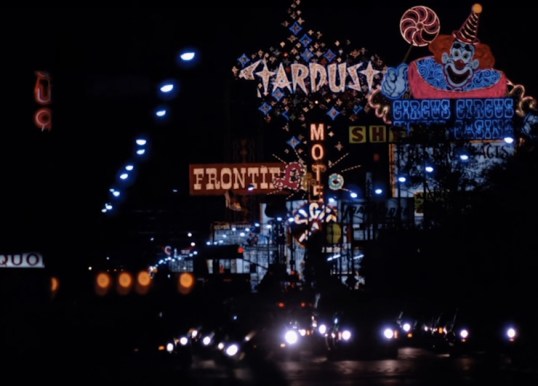
It takes place in a city where it never seems to stop raining. Even though the neon-decorated sets give the location a futuristic feel, everyone in the city seems to have escaped from the 50s. It’s the type of city where people drive vintage cars and you can tell that one guy is supposed to be a badass because he owns a convertible. All of the bad guys ride motorcycles, wear leather jackets, and look like they should be appearing in a community theater production of Grease.
Singer Ellen Aim (Diane Lane) has been kidnapped by the Bombers, a biker gang led by Raven (Willem DaFoe). Ellen’s manager and lover, Billy Fish (Rick Moranis), hires Tom Cody (Michael Pare) to rescue Ellen. Little does Billy know that Cody and Ellen used to be lovers. Cody is apparently a legendary figure in the city. As soon as he drives into town, people starting talking about how “he’s back.” The police see Cody and automatically tell him not to start any trouble. Raven says that he’s not scared of Cody and everyone rolls their eyes!
It’s up to Cody to track Ellen down and rescue her from Raven and … well, that’s pretty much what he does. I think that was part of the problem. After all of the build-up, it’s all a bit anti-climatic. It doesn’t take much effort for Cody to find Ellen. After Cody escapes with Ellen, it doesn’t take Raven much effort to track down Cody. It all leads to a fist fight but who cares? As a viewer, you spend the entire film waiting for some sort of big scene or exciting action sequence and it never arrives. The film was so busy being stylish that it forgot to actually come up with a compelling story.
I think it also would have helped if Tom Cody had been played by an actor who had a bit more charisma than Michael Pare. Pare is too young and too stiff for the role. It doesn’t help to have everyone talking about what a badass Tom Cody is when the actor playing him doesn’t seem to be quite sure what the movie’s about. Also miscast is Diane Lane, who tries to be headstrong but just comes across as being petulant. When Cody and Ellen get together, they all the chemistry of laundry drying on a clothesline.
On the positive side, Willem DaFoe is believably dangerous as Raven and Amy Madigan gets to play an ass-kicking mercenary named McCoy. In fact, if McCoy had been the main character, Streets of Fire probably would have been a lot more interesting.
I guess Streets of Fire is just going to have to be one of those cult films that I just don’t get.
“The one constant through all the years, Ray, has been baseball. America has rolled by like an army of steamrollers. It has been erased like a blackboard, rebuilt and erased again. But baseball has marked the time.” — Terence Mann
I have always been a fan of baseball. I would say that baseball has been the one thing which has always remained constant for me throughout the years. Other sports may be flashier, faster and more violent, but baseball I’ve always equated as part of America’s national identity. This is why 1989’s Field Of Dreams by Phil Alden Robinson continues to resonate for me and for legions of baseball fans everywhere.
The film is based off of the W.P. Kinsella’s novel, Shoeless Joe, and tells the story of one Ray Kinsella and his titular field of dreams. It’s a film which sees Ray not just building a baseball field in his field of corn despite financial problems bringing him and his family closer to losing everything, but it also sees him traveling across the country to find a reclusive writer in Terence Mann (J.D. Salinger in the novel). It’s afilm which offers an insight to what makes baseball and the American identity so intertwined as the film finally offers Ray a chance to finally realize that the very baseball field he has built in his cornfield has granted many a second chance to realize their dream. For this film that dream is to be able to play baseball once more and this second chance becomes important to the ghosts of baseball’s past who have fallen from baseball’s grace through a scandal which had them banned from the game they love.
I’ve never been a big Kevin Costner fan, but his work in this film as Ray Kinsella showed me why people saw in him talent as an actor and not just a pretty face up on the screen. His real-life love for baseball shows in his performance as Ray whose own love for baseball becomes a personal journey for redemption and reunion with a father who also shared his love for the sport. The performances by Amy Madigan as Ray’s supportive wife was quite good and allowed the character not to be eclipsed by Costner’s excellent work as Ray. Even James Earl Jones as the writer Terence Mann gives the film a level of gravitas which just added to the film’s intimate yet epic nature. But it’s the breakout performance by Ray Liotta as the ghost of baseball great Shoeless Joe Jackson. Liotta’s screentime was limited to mostly in the latter part of the film, but his presence dominated every moment he was on the screen.
Field of Dreams has been called just a good baseball film by some, but for many people who have seen and loved it see it as more than just a film about baseball. It’s a film that shows Americana at it’s best and most nostalgic. Shows how one sport has become such a positive influence on the relationship between children and their fathers. It’s a film that dares to show genuine affection and love to the idea of letting someone follow their dream despite many outside influences and obstacles trying to get in their way. There’s a reason the film was nominated for an Oscar Best Picture. Even voters who are so used to rewarding films that look at the darker and more depressing side of the human condition could see the inherent quality in a film which looks at the brighter and more hopeful side of the equation.