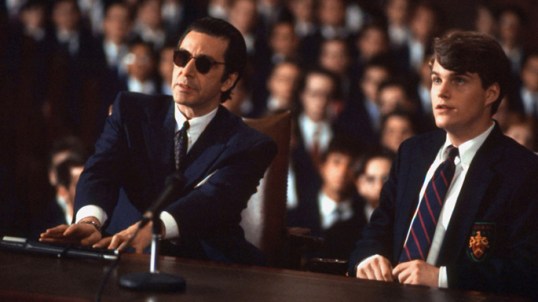
Back to School #48: Scent of a Woman (dir by Martin Brest)


scent_of_a_woman_1992_685x385

Along with my current series of 80 Back to School reviews (48 down, 32 to go!), another one of my long time goals has been to watch and review every single film to ever be nominated for the best picture.  So, imagine how happy I was to discover that by watching the 1992 film Scent of a Woman, I could make progress towards completing two goals at once!  Not only was Scent of A Woman nominated for best picture of the year (losing to Unforgiven) but it also features a major subplot about life and discipline at an exclusive New England prep school!  Even better, it’s been showing up on Showtime fairly regularly for the past month or so.

“Wow,” I thought as my boyfriend and I sat down to watch this movie, “could life get any easier?  Or better?”

And then we watched the film.

You know how occasionally you watch a film just because you’ve heard that it was nominated (or perhaps even won) an Oscar or because it has an oddly high rating over at the imdb or maybe because someone said, “Roger Ebert loved this film so, if you don’t watch and love it, that means that, by that standard of the current online film community, you really don’t love movies?”  And then you watch the movie and you’re just like, “What the Hell?”

Well, that was kind of my reaction to Scent of a Woman.

Look, the film’s not all bad.  It has a few good performances.  It looks great.  It’s certainly better than Gigli, the film that director Martin Brest is perhaps best remembered for.  It features a great scene where Al Pacino (playing a blind man) dances the tango with a woman that he’s just met.  (Then again, I have a notorious weakness for dance scenes…)  It’s not so much that the film is bad as much as it’s just that the movie itself is not particularly good.

Charlie Simms (Chris O’Donnell) is a scholarship student at an exclusive prep school in Massachusetts.  Much like Brendan Fraser in School Ties, 1992’s other prep school melodrama, Charlie is a poor kid attending the school on a scholarship.  While his rich friends prepare to go home for the Thanksgiving weekend, Charlie knows that there’s no way that he can afford to fly back to Oregon.  In order to raise the money so that he can at least go back home for Christmas (how poor is this kid’s family!?), Charlie gets a temporary job for the weekend.  His job?  To look after Lt. Col. Frank Slade (Al Pacino), who is blind and yells a lot.

Anyway, as you can probably guess, Frank convinces Charlie to drive him to New York and they have all of the adventures that usually happen whenever a naive teenager spends the weekend with a suicidal blind man.  Frank bellows a lot and tells about how, through his sense of smell, he can always tell when there’s a beautiful woman nearby.  Frank also yells a lot.  Did I already mention that?  Because, seriously, he yells a lot.

Charlie has other problems than just Frank.  It seems that a rather mild prank was pulled on the headmaster (James Rebhorn) of Charlie’s school.  As a result, a bucket of paint was poured down on both the headmaster and his new car!  Now, the headmaster is looking for those responsible.  He just needs two witnesses.  He’s already gotten one student to confess.  And now, he’s blackmailing Charlie with a letter of recommendation to Harvard.  All Charlie has to do is name names and his future is set…

Will Charlie name names and sacrifice his honor just to get into a college that could assure him a great life?  Or will Frank convince Charlie that honor is the only thing that matters?  And finally, will the film end with a big hearing in front of the entire school in which the headmaster attempts to badger Charlie, just to be interrupted by a sudden appearance from bellowing Frank Slade?

Will it!?

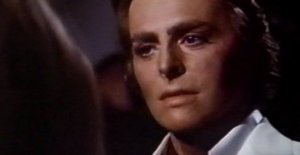
You can probably already guess and, since we have a no spoiler policy here at the Lens, I’ll just assume that you guessed right.  (Or you could just look at the picture at the top of this review…)

The prep school subplot pretty much just adds to the film’s already excessive running time.  But it is interesting to watch because the other student — the one who names names — is played by a very young Philip Seymour Hoffman.  (Or as he’s credited here, Philip S. Hoffman.)  This was one of Hoffman’s first screen roles and he gives a memorable performance as an unlikable character.  If you were to have seen Scent of a Woman in 1992, you would not have guessed that Philip Seymour Hoffman would eventually be an Oscar winner but you would know that he was a very talented character actor.

Otherwise, Scent of a Woman is a fairly forgettable movie.  If I hadn’t known ahead of time that it was nominated for best picture, I never would have been able to guess.  I’m not enough of an expert to be able to name every good 1992 film that was not nominated to make room for Scent of a Woman but I imagine that when that year’s Oscar nominations were announced, there were quite a few people left scratching their heads.
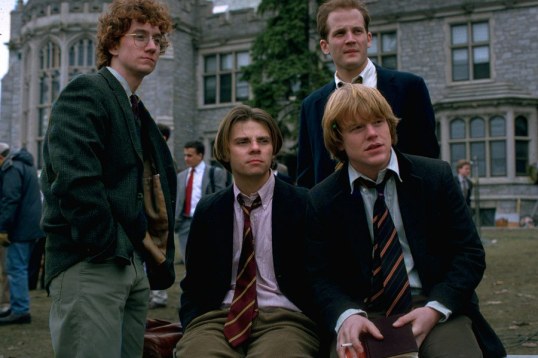
Can you figure out which one grew up to be Philip Seymour Hoffman?
Can you figure out which one grew up to be Philip Seymour Hoffman?
Trailer: Despicable Me 2 (Official)


DespicableMe2Finally, we have the first official full trailer for the sequel to 2010’s surprise animated hit Despicable Me. The first two trailers were more teasers and sort of more like Minion-centric showcases.

This official trailer now brings back the rest of the cast and actually gives us an idea as to what could be the story for the sequel. It looks like Gru has been recruited by an Anti-Villain League to take on a new villain. Oh, there’s more Minion hilarities to be seen as well.

MINIONS.

Despicable Me 2 is set for a July 3, 2013 release date.

Scenes I Love: The Shootout from Michael Mann’s “Heat”.


The shootout in Michael Mann’s “Heat” (1995) remains one of the best ever filmed, in my opinion. Mann himself even tried topping it in Miami Vice (which is good in it’s own right), but this scene (which occurs some minutes in) is so loved, Rockstar Games actually developed a mission in Grand Theft Auto 4 to mimic it.

A group of bank robbers, led by Neal McCauley (Robert DeNiro) finally take down their score, only to find that the police squad out to get them has been tipped off. The video starts as the robbery begins. Vincent Hanna (Al Pacino), along with his team arrive just as the crew is coming out of the bank with the money. The rest is mayhem, with the gunfire sounds echoing all around. Elliot Goldenthal’s score for the piece sets the tone for the robbery, a piece called Force Marker (along with Brian Eno).

What I wouldn’t give to catch this in a theatre somewhere. Enjoy.

Lisa Marie’s Grindhouse Trailers: The Supersized Richard Lynch Edition!


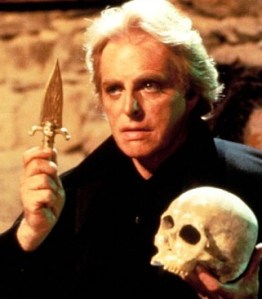
On June 20th, it was announced that the body of veteran character actor Richard Lynch had been found at his home.  Richard Lynch was never a household name but, if you’re a fan of exploitation and grindhouse cinema, you’ve probably seen him at least a few times.  He was the tall, blonde actor with the scarred face who was alway either killing people or having them killed.  Richard Lynch was one of those actors who, as soon as he showed up on-screen, you knew he was the bad guy. 

As an actor, Lynch always brought something special to even the simplest of his roles.  He was always the villain who you knew would probably easily kill the hero if the two of them ever met in the real world.  He was so good at being bad that you often couldn’t help but root for him. 

I first became aware of Richard Lynch when I bought a movie called Premonition on DVD.  This atmospheric 1976 film featured Richard Lynch in the role of a villainous yet oddly sympathetic carnival clown-turned-kidnapper.  When Lynch was on-screen, I literally could not look away.  Even better, the DVD included an interview with the now white-haired Richard Lynch in which he discussed his career.  Imagine my surprise to discover that this rather creepy and scary-looking actor was actually a very articulate and witty man.

A few days after I saw Premonition, I watched another 1976 film on DVD.  This one was Larry Cohen’s Gold Told Me To and, to my surprise, it also featured Richard Lynch. This time, he was cast as an alien messiah who inspired all sorts of mayhem in New York City.  From that moment on, Richard Lynch was one of my favorite of the old exploitation actors. 

After Richard Lynch’s body was found, there were several news stories that mentioned his passing.  Almost all of those stories repeated the story that Lynch’s distinctive facial scars were the result of him setting himself on fire as the result of bad LSD trip in 1967.  A few mentioned that he was a longtime friend of Al Pacino’s.  Most of them took a rather dismissive attitude towards the majority of Lynch’s films.

Over at the A.V. Club, a respectful article was posted and it was quickly followed by a bunch of snarky comments from the usual gang of toadsuckers, the majority of whom didn’t seem to know who Richard Lynch was (presumably because he never guest starred on Arrested Development).

In fact, it seemed like the only place that Richard Lynch got the proper amount of respect was on twitter.  And that’s a shame because an actor like Richard Lynch deserved a lot more.

The sad thing is that actors like Richard Lynch are rarely appreciated because elitist (and wannabe elitist) filmgoers and critics are rarely willing to admit that it does take a certain amount of talent to be an effective and memorable villain.  As an actor, Richard Lynch appeared in some good films and he also appeared in a lot of very bad films but he always gave a good performance.  Unlike so many other actors, he never used subpar material as an excuse to give a subpar performance.  Regardless of the films he found himself in, he always gave it his best and that’s why this super-sized edition of Lisa Marie’s Favorite Grindhouse and Exploitation Trailers is dedicated to Richard Lynch.

1) God Told Me To (1976)

Arguably, this film from director Larry Cohen was the best movie that Richard Lynch ever appeared in.  Though he doesn’t get a lot of screen time in either the film or the trailer, he easily dominates both, if just for the fact that Lynch plays the God of the title.

2) Deathsport (1978)

Richard Lynch vs. David Carradine.

3) The Sword and The Sorcerer (1982)

Though I haven’t seen it, this film is a favorite of many of my fellow contributors here at the Shattered Lens.

4) Cut and Run (1985)

This film was directed by Ruggero Deodato and apparently, it gained a certain amount of fame after it was banned in several countries.  I’ve seen it on DVD and all I can say is that this is one of the most misleading trailers ever made.  However, this film also features one of Richard Lynch’s most intimidating performances.

5) Savage Dawn (1985)

For some reason, I doubt that the character being played by Richard Lynch is a real priest.

6) Invasion USA (1985)

Judging from the response to Richard Lynch’s death on twitter, this Chuck Norris movie might be the film that he’s best known for.

7) The Barbarians (1987)

This film, which appears to feature Richard Lynch in full villain mode, was also directed by Ruggero Deodato.

8) Bad Dreams (1988)

Richard Lynch is all sorts of creepy in this trailer.  Knowing about his own true life story makes this trailer all the more odd to watch.

9) Trancers 2 (1992)

Helen Hunt’s in this?

10) Werewolf (1996)

This one looks like fun, to be honest.

11) Wedding Slashers (2006)

“Til death do us part…”

12) Mil Mascaras Vs. The Aztec Mummy (2006)

Finally, let’s finish things up with the trailer for this Mexican film in which Richard Lynch was cast as the President of the United States.

Richard Lynch, R.I.P.

What could have been: The Godfather


I don’t know about you but I love to play the game of “What if.”  You know how it works.  What if so-and-so had directed such-and-such movie?  Would we still love that movie as much?  Would so-and-so be a star today?  Or would the movie have failed because the director was right to reject so-and-so during preproduction?

I guess that’s why I love the picture below.  Taken from one of Francis Ford Coppola’s notebooks, it’s a page where he jotted down a few possibilities to play the roles of Don Vito, Michael, Sonny, and Tom Hagen in The Godfather.  It’s a fascinating collection of names, some of which are very familiar and some of which most definitely are not.  As I look at this list, it’s hard not wonder what if someone like Scott Marlowe had played Michael Corleone?  Would he had then become known as one of the great actors of his generation and would Al Pacino then be fated to just be an unknown name sitting on a famous list?

(This page, just in case you happen to be in the neighborhood , is displayed at the Coppola Winery in California.)

The production of the Godfather — from the casting to the final edit — is something of an obsession of mine.  It’s amazing the amount of names — obscure, famous, and infamous — that were mentioned in connection with this film.  Below is a list of everyone that I’ve seen mentioned as either a potential director or a potential cast member of The Godfather.  Consider this my contribution to the game of What If….?

Director: Aram Avankian, Peter Bogdonavich, Richard Brooks, Costa-Gravas, Sidney J. Furie, Norman Jewison, Elia Kazan, Steve Kestin, Sergio Leone, Arthur Penn, Otto Preminger, Franklin J. Schaffner, Peter Yates, Fred Zinnemann

Don Vito Corleone (played by Marlon Brando): Melvin Belli, Ernest Borgnine, Joseph Callelia, Lee. J. Cobb, Richard Conte, Frank De Kova, Burt Lancaster, John Marley, Laurence Olivier, Carlo Ponti, Anthony Quinn, Edward G. Robinson, George C. Scott, Frank Sinatra, Rod Steiger, Danny Thomas, Raf Vallone,  Orson Welles

Michael Corleone (played by Al Pacino): John Aprea, Warren Beatty, Robert Blake, Charles Bronson*, James Caan, David Carradine, Robert De Niro, Alain Delon, Peter Fonda, Art Genovese, Dustin Hoffman, Christopher Jones, Tommy Lee Jones, Tony Lo Bianco, Michael Margotta, Scott Marlowe, Sal Mineo, Jack Nicholson, Ryan O’Neal, Michael Parks, Robert Redford, Burt Reynolds, Richard Romanus, Gianni Russo, Martin Sheen, Rod Steiger**, Dean Stockwell

Sonny Corleone (played by James Caan): Lou Antonio, Paul Banteo, Robert Blake, John Brascia, Carmine Caridi, Robert De Niro, Peter Falk, Harry Guardino, Ben Gazzara, Don Gordon, Al Letteiri, Tony LoBianco, Scott Marlowe, Tony Musante, Anthony Perkins, Burt Reynolds***, Adam Roarke, Gianni Russo, John Saxon, Johnny Sette, Rudy Solari, Robert Viharo, Anthony Zerbe

Tom Hagen (played by Robert Duvall): James Caan, John Cassavettes, Bruce Dern, Peter Donat, Keir Dullea, Peter Falk, Steve McQueen, Richard Mulligan, Paul Newman, Jack Nicholson, Ben Piazza, Barry Primus, Martin Sheen, Dean Stockwell, Roy Thinnes, Rudy Vallee****, Robert Vaughn, Jerry Van Dyke, Anthony Zerbe

Kay Adams (played by Diane Keaton): Anne Archer, Karen Black, Susan Blakeley, Genevieve Bujold, Jill Clayburgh, Blythe Danner, Mia Farrow, Veronica Hamel, Ali MacGraw, Jennifer O’Neill, Michelle Phillips, Jennifer Salt, Cybill Shepherd, Trish Van Devere

Fredo Corleone (played by John Cazale): Robert Blake, Richard Dreyfuss, Sal Mineo, Austin Pendleton

Connie Corleone (played by Talia Shire): Julie Gregg, Penny Marshall, Maria Tucci, Brenda Vaccaro, Kathleen Widdoes

Johnny Fontane (played by Al Martino): Frankie Avalon, Vic Damone*****, Eddie Fisher, Buddy Greco, Bobby Vinton, Frank Sinatra, Jr.

Carlo Rizzi (played by Gianni Russo): Robert De Niro, Alex Karras, John Ryan******, Sylvester Stallone

Virgil “The Turk” Sollozzo (played by Al Letteiri): Franco Nero

Lucas Brasi (played by Lenny Montana): Timothy Carey, Richard Castellano

Moe Greene (played by Alex Rocco): William Devane

Mama Corleone (played by Morgana King): Anne Bancroft, Alida Valli

Appollonia (played by Simonetta Steffanelli): Olivia Hussey

Paulie Gatto (played by John Martino): Robert De Niro*******, Sylvester Stallone

—-

* Charles Bronson, who was in his mid-40s, was suggested for the role of Michael by the then-chairman of Paramount Pictures, Charlie Bluhdorn.

** By all accounts, Rod Steiger – who was then close to 50 – lobbied very hard to be given the role of Michael Corleone.

*** Some sources claim that Burt Reynolds was cast as Sonny but Brando refused to work with him.  However, for a lot of reasons, I think this is just an cinematic urban legend.

**** Despite being in his 60s at the time, singer Rudy Vallee lobbied for the role of the 35 year-old Tom Hagen.  Supposedly, another singer — Elvis Presley — lobbied for the role as well but that just seems so out there that I couldn’t bring myself to include it with the “official” list.

***** Vic Damone was originally cast as Johnny Fontane but dropped out once shooting began and announced that the project was bad for Italian Americans.  He was replaced by Al Martino.

****** John P. Ryan was originally cast as Carlo Rizzi but was fired and replaced with Gianni Russo.  Ryan went on to play the distraught father in Larry Cohen’s It’s Alive.  Russo went on to co-star in Laserblast.

******* Robert De Niro was originally cast in this role but dropped out to replace Al Pacino in The Gang That Couldn’t Shoot Straight.  Pacino, incidentally, had to drop out of that film because he was given the role of Michael in The Godfather.

Film Review: Dog Day Afternoon (dir. by Sidney Lumet)


Last night, as part of my continuing mission to see every film ever nominated for best picture, I watched Sidney Lumet’s Dog Day AfternoonDog Day Afternoon was released in 1975.  Though nominated for best picture, it lost to One Flew Over the Cuckoo’s Nest.

In Dog Day Afternoon, Al Pacino plays Sonny, a nervous Viet Nam vet who, along with the dim-witted and possibly crazy Sal (John Cazale), attempts to rob a bank.  Unfortunately for him, Sonny doesn’t really know what he’s doing and literally within minutes of him first drawing his gun, the bank is surrounded by cops.  The robbery quickly descends into a hostage situation.  As Pacino negotiates with a NYC police detective (Charles Durning), a crowd of onlookers gathers around the bank and starts to cheer with every defiant word that comes out of Sonny’s mouth.  Sonny discovers he likes his new-found fame.  In the film’s most famous scene, he stands outside the bank and leads the crowd in a chant of “Attica!  Attica!”   Eventually, Durning learns that Pacino’s motive for robbing the bank was to steal enough money for his suicidal lover (Chris Sarandon) to get a sex change operation.  However, now that the robbery has failed, Pacino has a new plan.  He demands a flight out of the country.  Meanwhile, the hostages inside the bank start to form their own odd kinship with the two bank robbers and Durning finds himself being challenged by the F.B.I., who have a much more drastic plan for how to end the situation.

Dog Day Afternoon is a remarkable film, a dark comedy of desperation and human nature that, by the final scene, reaches a certain tragic grandeur.  Sidney Lumet (who made his directorial debut in 1957 with 12 Angry Men and whose most recent film, Before the Devil Knows Your Dead, was released 51 years later) was one of the most important (if underrated) filmmakers of the 1970s and he proves it here.  From the opening montage of New York City looking so wonderfully sordid at the height of the grindhouse era to Pacino’s bumbling initial attempt to rob the bank to the film’s violent and abrupt conclusion, Lumet captures your attention and, much like Al Pacino in this movie, he holds it hostage until the movie ends. 

Dog Day Afternoon is probably one of the best acted films that I’ve ever seen.  This is one of those films where every role — regardless of how large or how small — fills like an actual human being.  By the end of the film, you feel as if you know the bank managers and the tellers almost as well as you know Pacino, Durning, Sarandon, and Cazale.  Pacino is simply amazing here, giving a nervous, jittery performance as a character who manages to be both selfish and selfless at the same time.  Durning, meanwhile, is hilarious as the frazzled detective who finds himself steadily overwhelmed by the circus around him.  Much as you can’t help but root for Pacino no matter how self-absorbed he might act, you can’t help but sympathize with During, even if he is a member of the establishment.  As Pacino’s transsexual lover, Sarandon plays his role with a fragile dignity that prevents the role from becoming a stereotype.  However, for me, the film truly belongs to John Cazale who is both scary and oddly child-like as Sal.  As seen below, Cazale improvised one of the best lines in the movie when he replies to Pacino’s question regarding to which country Cazale wants to make his escape.

Now, this is going to be difficult for me to admit but, as thrilling as it was to watch Pacino shout, “Attica!  Attica!,” I honestly had no idea why that phrase was the one he chose to use to work up the crowd.  In fact, if I had written this review right after seeing (or while watching) the film last night, I probably would have doubled embarrassed myself by claiming that Pacino was shouting “Ateka.”  However, for once, I decided to be a responsible reviewer and I actually did some research as opposed to just going with my first conclusion.  So, as a result of this film, I can now say that I know about the Attica Prison Riots of 1971.

But what’s truly significant about that “Attica” chant is that it’s the only part of this film (beyond a few fashion choices) that feels dated.  As I watched the movie, it was easy for me to imagine myself jumping on twitter and seeing “#Attica” as a trending topic.  We’ve all seen the famous “Attica!” scene in countless compilations but what’s often forgotten is how that sequence ends.  When Pacino, obviously a bit star struck by all the attention, goes outside and start chanting a second time, he is suddenly tackled from behind by one of the bystanders who has decided to play hero.  And as Pacino goes down to the ground, the same crowd that was previously cheering him now cheers for the new object of their affection.  If nothing else, Dog Day Afternoon showed why sometimes we all need to escape to Wyoming.

What Lisa Watched Last Night: The Golden Globe Awards


Last night, I watched the annual Golden Globe Awards show.

Why Was I Watching It?

Well, I wasn’t watching it because I was expecting to see the best films and tv shows of the last year recognized.  The Golden Globes are notorious for being odd and anyone who takes them too seriously needs to relax a little.  The appeal of the Golden Globes is that 1) it recognizes both television and film in the same ceremony which means you get to see unexpected sights like Jim Parsons, Robert De Niro, Johnny Depp, and the cast of Glee all in the same auditorium, 2) drinks are served throughout the ceremony which means that everyone’s pretty drunk by the end of it, and 3) you can make fun of what everyone’s wearing.

What’s It About?

As the show’s host, Ricky Gervais pointed out while commenting on the odd nomination of The Tourist for Best Picture (Comedy), the show is mostly about the shadowy members of the Hollywood Foreign Press Association getting a chance to hang out with people like Angelina Jolie and Johnny Depp.  And who can blame them, really?  Quite honestly, if it meant I might get a chance to spend a night with Johnny Depp (or, I’ll admit it, Angelia Jolie), I’m more than willing to love The Tourist too.

What Worked

Oh my God, it was such an odd three hours.  While the winners were kinda predictable and boring (how excited can you get — at this point — to see The Social Network win awards) and showed the typical tendency towards embracing the safe over the unpredictable, Ricky Gervais kept things lively.  He hosted with an attitude that basically said, “My career doesn’t need your approval so fuck off, Hollywood.”  It also pretty much guaranteed that Gervais will never host the Oscars.  My favorite Gervais moment came early when he made the comment about secretly gay Scientologists (an obvious reference to Tom Cruise and maybe John Travolta).  The way the audience gasped pretty much told you all you needed to know as far as the truth behind the joke was concerned. 

Robert De Niro won the DeMille Award and gave a speech that revealed that he’s actually a human being and apparently, a somewhat bitter one at that.  Also, I simply have to mention that Robert De Niro is aging really well.  As opposed to…oh, I don’t know…Al Pacino, maybe?

Melissa Leo is one of my favorites actresses and it was nice to see her rewarded for The Fighter but her speech did go on and on and the only thing that saved the moment was that some genius in the control booth decided to cut to Helena Bonham Carter who had the coolest “What the fuck?” look on her face.

Angelina Jolie’s green dress was quite simply to die for and I want it because it’s the same color as my right eye.  So, I’ll repeat the offer that I made earlier on twitter: whoever gets me this dress (by whatever means) can watch while I try it on and take it off.  (That’s a joke, by the way!  Seriously though, I so want that dress.  Except, of course, I’d want to have Hello Kitty on it somewhere…)

Natalie Portman won best actress in a drama and, out of all the awards given last night, that’s really the only one I agreed with.  When Portman’s name was announced, my twitter friend Jason Tarwater asked if I was doing cartwheels.  Well, I didn’t do cartwheels but I did attempt to do a pirouette and wow, that was a mistake because I so twisted my ankle the wrong way and ended up in really intense pain.  So, I missed Natalie’s speech but I bet it was great.

I do like the way that the Golden Globes divide their awards into a drama and a comedy section.  It’s a smart idea, I think.

What Didn’t Work?

I’m not going to complain about The Social Network winning most of the awards.  It’s not a bad film, at all.  It’s just not the great movie that so many critics are insisting that it is.  At this point, I’m not so much anti-Social Network as much as I’m just bored with it.

Al Pacino’s a great actor but seriously, I hit mute any time he wins an award.  And, seriously, would it kill him to wash his hair or something before he shows up for an awards ceremony?

Justin Bieber came out and gave an award or something and I’m sorry — he’s creepy.  I mean, like David Archuletta creepy.  Plus, I always have to go to Wikipedia to find out whether the i or the e comes first whenever I’m trying to type out the name “Bieber”.  I mean, I’m only 25 and this little punk and his fans are making me feel like an old woman complaining about “kids today.”  NOT COOL, BIEBER!

Aaron Sorkin won for his overrated screenplay and I guess he’s aware that he’s got an image problem because he tried so hard to be gracious but it was kinda like when James Cameron tried to be gracious while promoting Avatar.  It just didn’t work.   The more humble Sorkin tried to be, the more he came across like a prick.  The final insult came when he thanked the best actress nominees for being “smart” women as if that’s such an unusual thing to be.  I’m assuming this was Sorkin’s attempt to show that he’s not a sexist pig but it just came across as condescending and fake.  It’s interesting to contrast Sorkin’s speech with David Fincher’s speech.  Fincher was far more gracious and, quite frankly, the only reason that Sorkin’s screenplay came close to working was because, as a director, Fincher kept things visually interesting so you didn’t really spend too much time thinking about how every single character in the entire freakin’ movie sounded exactly like Aaron Sorkin.  Seriously, does Sorkin know anyone who doesn’t talk like him? 

Was it just me or did producer Scott Rudin — while accepting best picture for The Social Network — almost seem as if he had to be reminded to thank Fincher?  It’s interesting that, for all the acclaim Social Network and Sorkin have gotten, Fincher has often come close to being forgotten.  Could it be because Sorkin is a card-carrying member of the Hollywood establishment while Fincher, much like Fighter’s David O. Russell and Black Swan’s Darren Aronofsky, is not?

Finally, the first winner of the night was Christian Bale.  Was he deliberately trying to channel Colin Farrell last night or was it just an accident?  Regardless, when it comes Colin Farrell, I prefer the real thing.

“Oh my God! Just Like Me” Moment

“I’ll show you a pair of golden globes!”

Lessons Learned

As excited as I’ll be if Natalie Portman wins an Oscar for best actress, I will force myself not to dance.


A Quickie With Lisa Marie: I Knew It Was You: Rediscovering John Cazale (dir. by Richard Shepard)


Despite only appearing in 5 films and dying 8 years before I was born, John Cazale is one of my favorite actors.  You might not recognize his name but, if you love the films of the 70s, you know who John Cazale is because he appeared in some of the most iconic films of the decade.  Though he’s probably best known for playing poor Fredo in first two Godfather films, Cazale also appeared in The Conversation, Dog Day Afternoon, and The Deer Hunter.  All five of his films were Oscar-nominated for best picture and three of them won.  All five are, in their own individual ways, classics of modern cinema and, though he was never more than a supporting player, Cazale gave performances of such unexpected emotional depth that he elevated each of these films just by his very presence.  Tragically, Cazale died at the age of 42 of lung cancer.  At the time, he had just finished filming The Deer Hunter and he was engaged to marry an up-and-coming actress named Meryl Streep.

I Knew It Was You is a documentary that both attempts to tell the story of Cazale’s life as well as pay tribute to him an actor.  While it fails somewhat to do the former, it succeeds flawlessly as a tribute.  The film is filled with footage of Cazale’s legendary performances and watching these clips, you’re struck by not only Cazale’s talent but his courage as well.  As more than one person comments during the documentary, it takes a lot of guts to so completely inhabit a role like The Godfather’s Fredo Corleone.  While other actors might be tempted to overplay a character like Fredo (essentially winking at the audience as if to say, “I’m not a weakling like this guy,”) Cazale was willing to completely inhabit his characters, brining to life both the good and the bad of their personalities.  Watching the clips, you realize that Cazale, as an actor, really was becoming stronger and stronger with each performance.  On a sadder note, this documentary make it  painfully obvious just how sick Cazale was in The Deer Hunter.  The contrast between the nervous, lumbering Cazale of Dog Day Hunter and his gaunt, unbearably sad appearance in The Deer Hunter is simply heart breaking.

The documentary is full of interviews with actors and directors who either worked with or were inspired by John Cazale and you’re immediately struck by the affection that they all still obviously feel for him even 30 years after his death.  Among those interviewed are Steve Buscemi, Al Pacino, Meryl Streep, Robert De Niro, Francis Ford Coppola, Sidney Lumet, Sam Rockwell, and Richard Dreyfuss.  (I thought I knew every bit of Godfather trivia but I learned something new from this film when I found out that Richard Dreyfuss came close to being Fredo before Coppola saw Cazale in a play.)   Perhaps most interesting are the interviews where actors like Pacino, De Niro, and Gene Hackman talk about how acting opposite John Cazale caused them to give better performances than they might have otherwise.  If nothing else, it’s a good reminder that a classic film is, more often than not, a collaborative effort.

Where this documentary drops the ball is in detailing who Cazale was as a person.  Though everyone’s affection for him is obvious, we learn little about what drove the man who was so sad and tragic as Fredo Corleone.  Cazale’s upbringing is covered in about 2 minutes of flashy graphics and his untimely death (and his struggle to complete his Deer Hunter role) is also covered a bit too quickly.  There’s a fascinating and inspiring story there but this documentary only hints at it.  For reasons I still can’t figure out, this thing only lasts 40 minutes.  Even just an extra 15 minutes would have been helpful.

Hollywood director Brett Ratner is also interviewed and I imagine this probably has something to do with the fact that Ratner co-produced this documentary.  So, I guess Ratner is a Cazale fan and good for him but it’s still kinda jarring to see him there with directors like Lumet and actors like Pacino and De Niro.  Ratner, to be honest, is the only one of the people interviewed who actually comes across as having nothing of value to say.  Which isn’t all that surprising when you consider that Ratner is pretty much the golden child of bland, mainstream filmmaking right now.

Still, even if it never reaches the heights of Werner’s Herzog’s My Best Fiend, I still have to recommend I Knew It Was You as a touching tribute to a truly great actor.  As a bonus, the DVD contains two short films featuring a very young and intense John Cazale.  Watching him, you can’t help but mourn that he wasn’t in more movies but you’re so thankful for the legendary performances that he was able to give us.