Jim Jarmusch’s The Dead Don’t Dieis a film that definitely grew on me. When I first watched it, I thought it was intriguing but perhaps a bit too cutesy and enamored with itself. However, I later came to realize that Jarmusch actually found the perfect tone for his look at our zombie-saturated culture.
In the scenes below, Bill Murray, Chloe Sevigny, and the wonderful Adam Driver all deal with the inevitability of doom that comes with being a character in a zombie film.
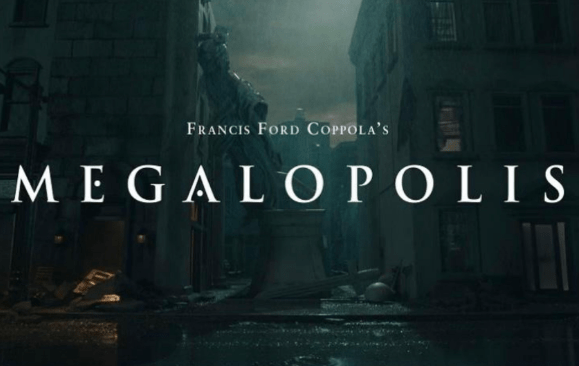
It’s hard to know where to really start with Megalopolis.
Directed, written, produced, and financed by Francis Ford Coppola, Megalopolis takes place in an alternate version of the United States of America. In this alternative world, New York is called New Rome and it is dominated by a handful of wealthy families. Former District Attorney Franklyn Cicero (Giancarlo Esposito) has been elected mayor. Everyone seems to hate Cicero and the character tends to come across as being a bit whiny so you really do have to wonder how he got elected in the first place.
Cicero is obsessed with the powerful Crassus-Catallina family, which is headed by banker Hamilton Crassus III (Jon Voight). Hamilton’s nephew is Cesar Catallina (Adam Driver), a brilliant architect who won a Nobel Prize for inventing a type of invisible material. Ever since Cesar’s wife vanished under mysterious circumstances, a cloud of scandal has hung over Cesar’s name and with that scandal has come popularity with both the masses and the tabloid press. When Cesar was tried for murder, the prosecutor was Franklin Cicero. Cesar was acquitted but he now spends his time drinking and mourning his wife. Cesar also has the power to stop time for everyone but him. Why he has this power and how he came to possess it is never made clear, though Cesar compares it to the way that a great painter or writer can capture one moment for eternity.
Cesar is driven through the rainy streets of New York by his chauffeur, Fundi Romaine (Laurence Fishburne). Fundi also serves as the film’s narrator, ruminating about how the Roman Empire eventually became a victim of its own decadence. Just in case the viewer somehow doesn’t pick up on the fact that the movie is comparing modern America to ancient Rome, Fundi informs us of this fact. Thanks, Fundi!
After Cesar publicly denounces Cicero’s plans to turn New Rome into a casino, Cicero’s daughter Julia (Nathalie Emmanuel) decides to take a break from decadent partying to follow Cesar around and try to discover whether or not he actually murdered his wife. Julia discovers that Cesar is not only still mourning his wife but she also witnesses him stopping time. Soon, Julia is working for Cesar’s design firm. At some point, she and Cesar become lovers.
Meanwhile, Cesar’s former lover, Wow Platinum (Aubrey Plaza), has married Crassus and is plotting to take control of his bank. Working with Wow is Cesar’s buffoonish cousin, Clodio Pulcher (Shia LaBeouf), who organizes the angry citizens of New Rome into a mob that threatens the safety and power of both Cicero and Cesar. “Make Rome Great Again,” a sign reads at one of Clodio’s rallies, just in case anyone was missing Coppola’s point.
Clodio is obsessed with destroying Cesar. First, he frames Cesar for deflowering New Rome’s vestal virgin, the singer Vesta Sweetwater (Grace VanderWaal). Then, he sends a 12 year-old assassin after Cesar. Cesar fears that he’s lost his ability to stop time. Julia falls more and more in love with him. Cicero gets booed everywhere he goes and, after his fixer (Dustin Hoffman) is mysteriously killed, he finds himself helpless against Clodio’s mob. Can Cesar be convinced to abandon his self-pity long enough to stand up to Clodio?
And what about the Russian spy satellite that just crashed into New Rome? Who will rebuild the city?
And …. well, let’s just say that there’s a lot going on in New Rome.
Francis Ford Coppola originally came up with the idea for Megalopolis in 1977 and he spent decades trying to bring the film to the big screen. Eventually, Coppola ended up producing and financing the film himself. From 2023 to the the day of the film’s Cannes premiere, the trade papers were full of stories about how difficult the production had been, with the underlying theme being that everything was Francis Ford Coppola’s fault and that the movie would be an unmitigated disaster. (In the coverage found in both Variety and The Hollywood Reporter, there seemed to be a good deal of hostility directed at Coppola’s decision to work outside of the Hollywood system.) Disgruntled members of the crew complained that Coppola was an undisciplined director who spent most of the production high. A half-baked attempt to generate a #MeToo scandal around the film made it obvious that Coppola had burned a lot of bridges with both Hollywood and the media. The film was released to critical derision and poor box office returns. Coppola is 85 years old and it’s entirely possible that Megalopolis will be his final film.
Critics be damned, I liked the majority of Megalopolis. Though the film may be thematically and narratively incoherent, it is a feast for the eyes and it’s hard not to respect the fact that, in this age of overwhelming conformity, Coppola brought his own unique vision to the screen. There are a few moments of genuinely macabre beauty to be found in the film. When the Russian satellite crashes into New York, we don’t see the impact but, on the city walls, we do see the shadows of people screaming in fear. When a drunk Cesar is driven through New Rome, he sees gigantic statues stepping off of their bases and slumping to the ground, exhausted with being on display. Coppola films New Rome like a beautiful, open-air prison. It’s an amazing view but don’t even think about trying to escape. The scenes in New Rome’s Coliseum are filled with an epic yet seedy grandeur. At times, the film’s scenes seem to be almost randomly assembled, leaving us to wonder if we’re seeing the past, the present, or maybe just something that Cesar is imagining in his head.
What is the film actually about? It’s not always easy to say. Even in his best films, Coppola has had a tendency to be self-indulgent. Sometimes, that self-indulgence pays off. Though few would admit it now, The Godfather Part II is one of the most self-indulgent films ever made. But it’s also brilliant so it doesn’t matter. However, with Megalopolis, it’s hard not to feel that this film was such a passion project for Coppola that he didn’t stop to consider whether or not he really had anything new to say. Megalopolis is hardly the first film to compare the supposed decline of America to the fall of the Roman Empire. As much as I enjoyed the film’s visuals, I cringed at the film’s ending. One can only imagine how a past Coppola collaborator like John Milius would have reacted to a bunch of children reciting a pledge to take care of the “one Earth.”
It’s a random film, one in which plot points are raised and often quickly abandoned. At one point, Cesar starts to recite Hamlet’s famous “to be or not to be” soliloquy. The cast is huge and everyone seems to be acting in a different movie. Surprisingly enough, neither Esposito nor Adam Driver are particularly believable in their roles, though I think that has more to do with the film’s loose narrative structure than anything else. Shia LaBeouf is convincingly feral as Clodio while Jon Voight seems to be having fun as the wealthy and crude Crassus. The best performance in the film comes from Aubrey Plaza, who plays her role like a vampish femme fatale who has somehow found herself in a science fiction story. Plaza holds nothing back with her performance and she actually manages to bring some genuine human emotion to Coppola’s surreal epic.
Megalopolis is a monument to self-indulgence but it’s always watchable. Coppola may not know what he’s trying to say but he captures the surreal beauty that comes from getting trapped in one’s own imagination. Megalopolis is not a film for everyone but I’m glad it exists. At a time when artistic freedom seems to be under constant attack, it’s hard not to be happy that Coppola did things his way.
ALERT! They took down their whiny trailer because all those bad reviews from Christmas Past were FAKE! Francis listen, I get it- everyone likes attention or whatever, but you playing the I’m so Put-Upon card is really really really ANNOYING! Cut it out! Paisan, you’ve had a great career and made BANK- BE HAPPY.
Welcome all, I’m going to review the “Megalopolis” trailer and just so you know – this was directed by a GENIUS. Really, that’s in the trailer and not just for a little while; they give a middle-finger to anyone who didn’t like a Coppola film for a solid 44 seconds! If you don’t think this movie is genius, too bad moron- it’s awesome, you’re a filthy plebe!
From what I can glean from the trailer, Cesar Catilina (Adam Driver) is tired of New York decadence; so, he wants to make a new city that’s way fancier and weirder. I’ve played Sim City before; so, maybe it’s got like a lot of happy faces when the plumbing works and sad faces if there’s not enough power? Without question, that was a fun game and if you didn’t enjoy it – you are part of the great unwashed!
This trailer has A LOT of scowling. Cesar Catilina scowls A LOT in the trailer and no one can scowl like Adam Driver. He was born to scowl!!!! Cesar appears to be a magical city planner who wants to make a better city that is vaguely or overtly communist- it is difficult to discern. If it’s anything like real communism, Francis will like it a lot theoretically without any consequences.
I have the distinct impression that this movie is more like a painting; it is visually stunning but with no plot. If you don’t like the film, remember you’re a petite bourgeois rube who brushes his teeth with his fingers. This film seems like “The Darjeeling Limited”- really pretty and Jason Schwatzman was in that film too and it revolved around finding good … tea??? I originally wrote it as “The Darjeeling UNLIMITED” now that would’ve been a film- Think of all the tea we could’ve watched them drink! Remember kids, you only rent Darjeeling Tea!!!
If you want a film where if you say you liked it, you’re 12% more sophisticated- “Megalopolis” is for you! For me, after this trailer, I think I’m going watch something with Dwayne “THE ROCK” Johnson in it. Maybe he’ll do a “Rampage 2”?
In conclusion, this film is GENIUS and the director is a GENIUS and if you don’t think so, I’m going to register you as a pederast and put garbage on your lawn!
Everyone’s popping up with movies! First Scorsese, then Fincher, and now Mann. It looks like Michael Mann (Heat, Collateral) is back with Ferrari! Adam Driver stars as Enzo Ferrari, who would turn his love of cars into something legendary. While I’m hoping to see a ’61 GT California somewhere in the mix, this looks interesting. Ferrari also stars Penelope Cruz, Hugh Jackman, Shailene Woodley, Patrick Dempsey and Sarah Gadon. The film is written by Troy Kennedy Martin (Kelly’s Heroes) with the screenplay also by Mann.
In 65, Adam Driver plays the first human to discover Earth! Unfortunately, for him and his daughter, the Earth is still populated by dinosaurs! Not surprisingly, this is from Scott Beck and Bryan Woods, who also wrote the script for A Quiet Place.
Earlier today, the trailer for Noah Baumbach’s upcoming White Noise dropped. This film, which is an adaptation of Don DeLillo’s novel, is expected to receive a major awards season push from Netflix. It’s a film that not only reunited Baumbach with Marriage Story‘s Adam Driver but which also co-stars Greta Gerwig, who has yet to receive an acting nomination despite directing two films that have been nominated for Best Picture. It’ll be curious to see how Baumbach does with White Noise. DeLillo is one of our most acclaimed novelists but other filmmakers have often struggled to capture the essence of his prose on film.
Little by little, the Oscar race is starting to become just a little bit clearer. It’s still early, of course. Really, it’s way too early to say anything for sure. But it’s also hard to deny that certain films are now much more in the conversation than others.
The biggest development this month was the announcement that Martin Scorsese’s Killers of the Flower Moon will not be released until 2023. That takes it out of Oscar contention …. for now. (For those who may have forgotten, it was originally announced, halfway through 2013, that The Wolf of Wall Street would not be ready until sometimes in 2014. Everyone dutifully updated their Oscar predictions, striking The Wolf of Wall Street from their lists of likely best picture nominees. Then, at the last minute, Scorsese announced that the film actually would be ready for 2013. If something similar happens this year, Killers of the Flower Moon will go right back to being a huge contender because it’s Scorsese and he’s one of the best, regardless of what certain Marvel fans would have you believe.) With Scorsese apparently out, it would now appear that Steven Spielberg is going to be the only member of the old guard with a film in the Oscar race. Considering that many people believe that Spielberg’s West Side Story was snubbed last year when it only took home one Oscar (out of a total of sever nominations), The Fabelmans seems like it will be a major contender. Admittedly, my hope that David Lynch will earn an acting nomination for playing John Ford in The Fabelmans may be a longshot but it can not be denied that it would be a cool development.
As for the other contenders, Top Gun: Maverick, Elvis, and Everything Everywhere All At Once all seem poised to ride a combination of critical acclaim and box office success into the Oscar race. Todd Field has finally returned with Tar. The Whale has the potential to be a comeback vehicle for the always likable Brendan Fraser. She Said, Till, and Women Talking all stand to take advantage of the current political climate. And Babylon will presumably give Hollywood a chance to celebrate itself.
The Oscar picture is still a bit cloudy but, with so many major festival on the horizon, those clouds should be parting soon.
We talk a lot about which performers and directors have been snubbed at Oscar time.
For movie lovers, that’s an important subject. We all know that great actors like Peter O’Toole, Cary Grant, Albert Finney, and far too many others all went to their grave with several nominations but not a single competitive Oscar to their name. Just two years ago, Kirk Douglas died at the age of 103 without having ever won a competitive Oscar. And certainly, over the past two years, we have been made far more aware of the fact that everyone is going to die someday. We always talk about how certain actors are overdue for their first Oscar but sometimes we forget that being overdue doesn’t always translate into an eventual win. Sometimes, it translates into people watching a movie on TCM and saying, “How did that person never win an Oscar?”
With that in mind, here are 6 performers who I sincerely hope will have won their first Oscar by the time that 2032 rolls around:
Bradley Cooper
Seriously, if you look up overdue in the dictionary, there’s a chance that Bradley Cooper would be used as the example. He’s been nominated so many times and he has yet to win, though I do get the feeling that he may have come close a few times. He deserved a nomination this year for Nightmare Alley and, if his role had been bigger, you could probably argue that he deserved one for Licorice Pizza as well. One gets the feeling that Cooper is taken for granted, in the way that many effortlessly good performers are. Maybe his upcoming biopic of Leonard Bernstein will finally do the trick.
2. Rachel Sennott
Rachel Sennott’s performance in Shiva Baby was one of the best of 2021 and it’s one for which she deserved to be nominated. It’s impossible to imagine that film working without her performance. Hopefully, it’ll lead to more worthy roles for her.
3. Chaske Spencer
Chaske Spenser gave one of the best performances of 2021 in Wild Indian. Though the film may not have been widely seen, Spenser’s performance was powerful and unforgettable and, much as in the case of Sennott, I hope it leads to more worthy roles for him.
4. Ann Dowd
It’s hard to believe that Ann Dowd hasn’t even received an Oscar nomination yet. Her performance in Mass was one of the best of 2021. In a role that others probably would have used as an excuse to overact and show-off, Dowd gave a quietly devastating and emotionally honest performance. Perhaps because Dowd disappears so effortlessly into her role, the Academy took her work for granted. Perhaps the film’s subject matter was simply too grim for the voters. Regardless of why the Academy didn’t respond to Mass, Dowd deserves an Oscar.
5. Adam Driver
It’ll happen soon. And I bet this former Marine will give the best acceptance speech of the night.
6. Scarlett Johansson
Much as with Driver, it’ll happen soon. Picking up both a lead and supporting nomination in 2020 was definitely a good start.
I can’t wait to see all six of these performers win their first Oscar! Don’t disappoint me, Academy!
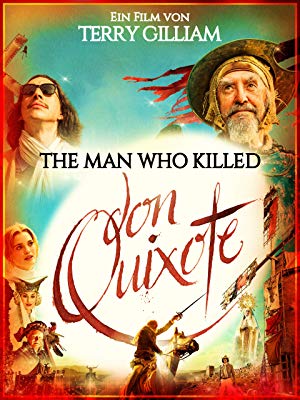
For many years, The Man Who Killed Don Quixote was a film best known for not having been made.
In the past, we’ve used the Icarus Files as a way to write about filmmakers who flew too close to the sun of their own ambition and who plunged down to the sea as a result. However, in the case of The Man Who Killed Don Quixote, the sun is not director Terry Gilliam’s ambition. Instead, the sun is a combination of shady financiers, natural disasters, and film industry silliness that seemed to all conspire to keep Gilliam from making his film. And yet, unlike the real Icarus, Gilliam insisted on continuing to fly, regardless of how many times he crashed into the ocean.
Terry Gilliam first started to talk about adapting Migel de Cervantes’s Don Quixote into a film in the late 80s. The tale of a Spanish nobleman who becomes convinced that he’s fighting giants when he’s actually only jousting with windmills, Don Quixote sounded like an obvious project for Gilliam. Gilliam’s films have always dealt with the power and importance of imagination. However, it’s often forgotten that Gilliam’s protagonists are often both saved and eventually destroyed by fantasy. (One need only think about the end of Time Bandits, in which the young main character goes on the journey of a lifetime but then watches as his parents blow up in front of him.) It’s easy to forget that Don Quixote dies at the end of Cervantes’s tale, having regained his sanity and having announced that his niece will be disinherited if she marries a man who has ever read a book about chivalry.
From 1990 to 1997, Gilliam started pre-production on his version of Don Quixote several times, just for the production to be canceled. Sometimes, this was due to Gilliam not being able to get the budget that he felt would be necessary to bring his vision to life. Frustrated with the Hollywood studio system, Gilliam wanted to raise the money for and make his movie in Europe but this turned out to lead to a whole new set of financial and regulatory complications.
Filming finally started on the film in 2000, with Jean Rochefort playing a former film actor who thinks that he’s Don Quixote and Johnny Depp playing the director who fills the role of Sancho Panza. Unfortunately, as shown in the poignant documentary Lost in La Mancha, the production seemed to be almost cursed from the start. The footage from the first day of shooting was unusable, due to planes flying overhead. The 2nd day of shooting was ruined by a flash flood that swept away much of the set. Jean Rochefort injured himself and, despite his best efforts to act through the pain, he had to step away from the role. Filming was suspended in 2000 and, for the next 16 years, Gilliam tried to find a way to get the stalled film started up again. Many actors came and went, including Robert Duvall and, most promisingly, John Hurt. Hurt agreed to play the role of Quixote but, just when it seemed that the film was finally going to go into production, Hurt passed away from pancreatic cancer. A few months later, the original Quixote, Jean Rochefort, also passed away. The film went back into limbo.
Finally, in 2016, a producer named Paulo Branco offered to fund the film. Pre-production started up again, this time with Adam Driver in the Sancho Panza role and Michael Palin playing Quixote. However, the project was soon once again stalled, as Branco wanted creative control of the film. When Branco slashed both the budget of the film and Palin’s already reduced salary, Gilliam denounced Branco’s actions. Branco suspended production but, by this point, Gilliam had already hooked up with another set of producers. Jonathan Pryce replaced Michael Palin as Don Quixote and, finally, Terry Gilliam’s The Man Who Killed Don Quixote was filmed!
Once filming was complete, however, Paulo Branco popped up yet again. Claiming that he owned the rights to the story and not Terry Gilliam, he sued to keep the film from being distributed. The courts ruled in Branco’s favor but Gilliam countered that he hadn’t used one frame of footage that had been shot while Branco was serving as producer and that, while Branco had the rights to his version of The Man Who Killed Don Quixote, he did not have the rights to Gilliam’s. While the lawyers argued, Amazon Studios withdrew from an agreement to distribute the film. Once the case was finally settled, The Man Who Killed Don Quixote was finally given a haphazard release in a few countries, often in edited form.
And that’s a shame because The Man Who Killed Don Quixote is a delight. It’s a film that is both playful and snarky, a celebration of imagination that also serves as a satire of Hollywood narcissism. Adam Driver plays Toby Grummett, a director who returns to a Spanish village to direct an big-budget, epic adaptation of Don Quixote. Ten years earlier, as a student filmmaker, Grummett shot a previous adaptation of Don Quixote in the same village. When he tracks down the old shoemaker (Jonathan Pryce), who starred in his student film, he discovers that the shoemaker thinks that he is Quixote and that he’s become something of a tourist attraction.
And from there, the film follows Don Quixote as he takes Toby on a quest to fight giants and protect the helpless and to live a life of chilvary. Along the way, Toby finds himself getting caught up in Quixote’s elaborate fantasy world. It leads to a lot of comedy but there’s also something rather poignant about the old shoemaker’s attempts to be a hero and Toby rediscovering the love of fantasy and the imagination that he had when he was a film student. And yet, it would be a mistake to assume that this film is simply a light-hearted fantasy. The laughs are tinged with melancholy. The enemies that Quixote and Toby meet are not just imaginary giants. This a film that mixes comedy and tragedy in a way that few other films have the courage to do so.
As is typical with Gilliam’s later films, it bites off a bit more than it can chew but it’s still hard not to get caught up in it. Driver and Pryce are both wonderfully cast and the film’s satire of the film business carries a sting to it. Watching the film, it becomes apparent that Gilliam sees himself as being both Quixote and Toby. The film’s ending seems to be Gilliam’s defiant message that he will always choose to fight the giants.

 Through the Shattered Lens