Welcome to Retro Television Reviews, a feature where we review some of our favorite and least favorite shows of the past! On Wednesdays, I will be reviewing the original Love Boat, which aired on ABC from 1977 to 1986! The series can be streamed on Paramount Plus!
And love won’t hurt anymore….
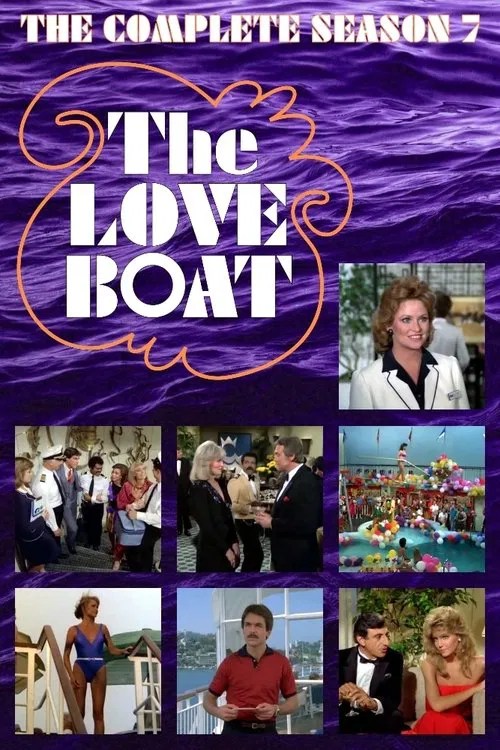
Episode 7.13 “The Misunderstanding/Love Below Decks/The End Is Near”
(Dir by Robert Scheerer, originally aired on December 10, 1983)
There’s all sorts of misunderstandings on this week’s cruise.
Karen Stevens (Morgan Brittany) is convinced that her mother, film star Nancy Fairchild (Clair Trevor), didn’t want her or love her. Nancy appeals to Karen’s husband (James Houghton) to help bring about a reconciliation. Karen apparently did her research because there’s something about the Pacific Princess that always helps retired film stars to either find love or fix their familial relationships.
“Dutch” Boden (Vic Tayback) is the rough and plain-spoken ship’s engineer. He thinks that Ellen Kirkwood (Arlene Dahl) is the Captain’s girlfriend. Instead, Ellen is the widow of one of Stubing’s old friends. Stubing worries that Dutch is bothering Ellen. Instead, Dutch and Ellen are falling in love. This is one of the rare episodes where we get to see how the crew lives on the below decks. Their cabins are really small!
Finally, newlywed Felix (Lou Richards) and Andrea (Delta Burke) are worried that the world is going to end. When the world doesn’t end at the appointed time, Felix fears that maybe he based his calculations on Eastern Time. Since the Love Boat was on the Pacific Coast, that would have meant the world would have ended three hours before Felix expected. Maybe Felix’s problem is that he doesn’t understand time zones. I’m the same way. They confuse the heck out of me.
This week’s cruise was a little bland. The guest cast was charming but two of the stories felt very familiar. But I did like the storyline with the paranoid newlyweds. Lou Richards and Delta Burke really threw themselves into their somewhat ludicrous characters. I laugh more than I thought I would.
This was a pleasant if not extremely memorable cruise.
2020’s Hard Luck Love Story tells the tale of a man named Jesse (Michael Dorman).
Jesse is a drifter, heading from town to town and staying in cheap motels. He plays the guitar and sings to himself. He goes to pool halls and hustles people out of their money, earing him the enmity of a heavily tattooed redneck named Rollo (Dermot Mulroney). He drinks when he’s alone. He drinks when he’s with other people. On the one hand, he’s a pool hustler who makes his living by cheating other people. On the other hand, he’s the type who will hug strangers and give them all of his money. Jesse’s not really a bad guy but he’s someone who, as fate would have it, seems to live in a world that’s dominated by frequently bad people. When Jesse has enough money to afford some beer and some cocaine, he calls his ex-girlfriend, Carly (Sophia Bush), to his hotel. Over the course of a night, we get to know them. Neither one is quite who we originally assumed. Jesse makes a lot of mistakes and he has a talent for angering even the people who try to help him but it’s impossible not to like him. Some of that is due to Michael Dorman’s charismatic performance. Even more of it is because everyone has known someone like Jesse, the well-meaning guy who just has a talent for screwing up.
Hard Luck Love Story is a piece of Americana, one that captures the atmosphere of small towns struggling to survive, dive bars full of broken dreams, and rain-slicked nights when it seems like just about anything can happen. It captures life on the fringes with empathy and a sense of humor. Jesse and Carly may be the heart of the story but the film is full of interesting characters, the types who you could only find in the small cities of Middle America. I particularly liked Zach (Brian Sacca), the bearded cop who goes from being intimidating to being likable in his own dorky way.
Eric Roberts has a small role in this film. He plays Skip, an associate of Carly’s. Roberts doesn’t have a lot of screentime but he makes the most of it. There’s a tendency to be dismissive of the roles that Roberts does nowadays. In his autobiography, Roberts is himself fairly dismissive of a lot of them. But, in Hard Luck Love Song, he gets a chance to create an actual character and he definitely makes an impression. He’s not just Eric Roberts doing a cameo. Instead, he’s very much a part of the film’s world.
Hard Luck Love Song is an engrossing trip through the parts of America that tend to get overlooked by other films. The film is based on an alt-country song and it hits all the right notes.
Previous Eric Roberts Films That We Have Reviewed:
“May they believe. And may they laugh at their passions. For what they call passion is not really the energy of the soul, but merely friction between the soul and the outside world.” — the Stalker
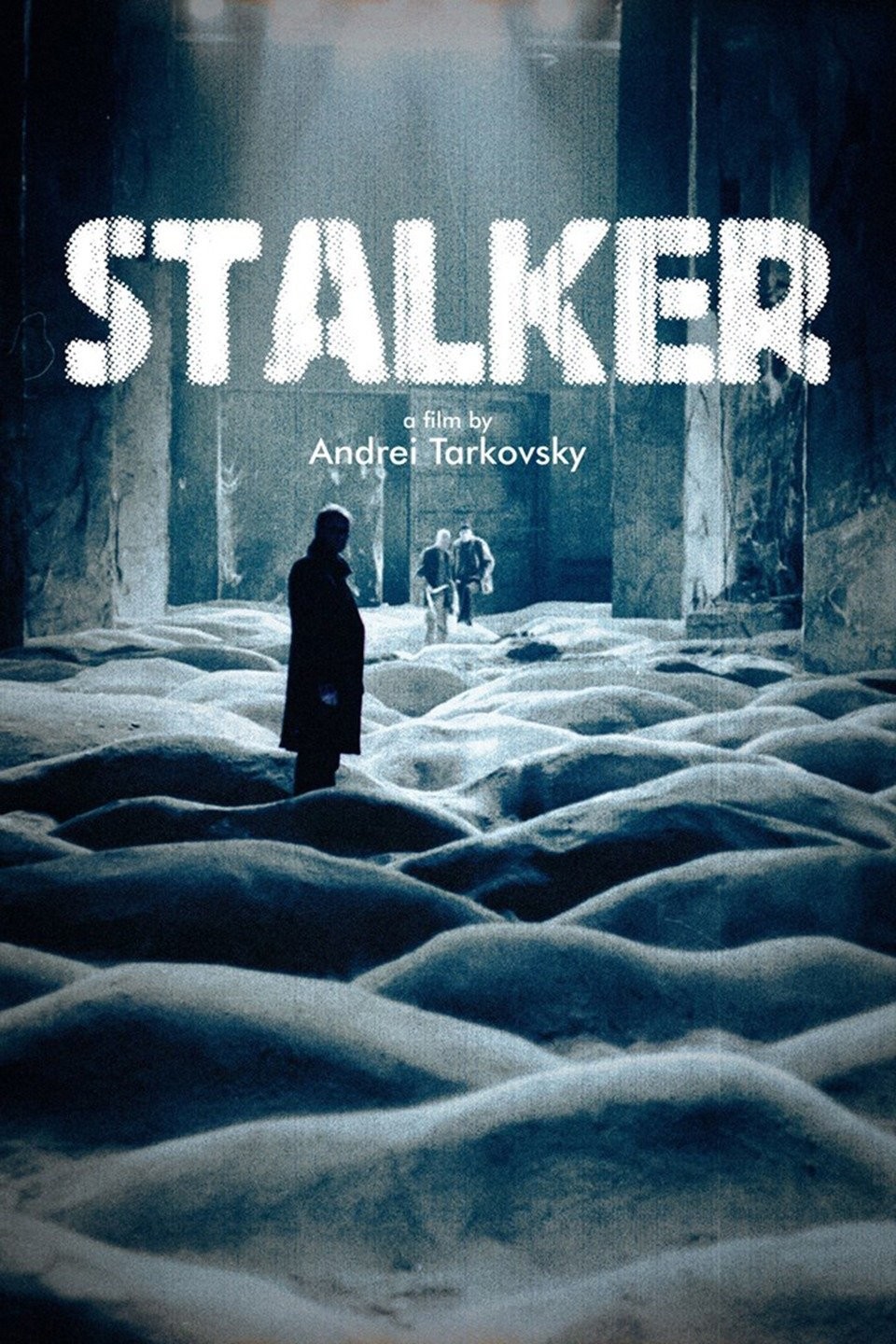
Stalker is one of those films that feels less like a story you’re watching and more like a place you’re slowly drowning in. Directed by Andrei Tarkovsky in 1979, it’s a slow‑burn sci‑fi parable that spends most of its runtime trudging through damp, ruined spaces while three men argue about faith, desire, and whether any of it really matters. It’s not a movie you “get” on first watch; it’s the kind that lingers in your head for days, nudging you to rethink what you thought you wanted from life, and from cinema itself.
The basic setup sounds like genre bread‑and‑butter: a mysterious forbidden area called “The Zone” is guarded by the state, and only a few people—called “stalkers”—can safely guide visitors through it to a fabled Room that can grant a person’s deepest wish. Our guide is simply called the Stalker, played by Alexander Kaidanovsky with a mixture of haunted reverence and exhausted humility. He leads two men into the Zone: a jaded Writer who’s lost his inspiration and a cynical Scientist, each with their own idea of what they’re hoping to find. The tension in Stalker doesn’t really come from the physical danger of the Zone, though it’s full of traps and inexplicable phenomena; it comes from watching these three slowly peel open their own lies to themselves.
Tarkovsky’s visual strategy is almost perversely patient. He lingers on long, static shots of corroded metal, flooded tunnels, and overgrown railway tracks, while the camera glides in smooth, hypnotic movements that feel both weightless and heavy. The Zone is shot in a washed‑out sepia‑like palette, which makes it look like a half‑remembered dream or a charcoal sketch of a ruined world. The real world outside the Zone, in contrast, is the one that’s actually in sepia, while the Zone itself briefly shifts into color. This flip is a quiet but brutal joke: the thing everyone fears and wants to escape from—the decaying, post‑industrial wasteland—is actually more vivid and alive than the “safe” world, which feels duller, flatter, and spiritually dead. The longer you stay inside Stalker, the more you start to suspect that the Zone is less a physical location and more a mirror for the characters’ inner lives.
The central idea driving the film is the Room: the chamber that supposedly grants desires. The Writer and the Scientist have different theories about what the Room is doing. The Writer thinks it can expose the truth of what people really want, not what they claim to want. The Scientist rattles off more technical explanations, wondering if the Room is some kind of psychic field or natural anomaly. The Stalker, meanwhile, approaches it with a kind of religious awe; he believes the Room is a kind of judgment, a place where the universe reaches inside and shows you the core of your being. The film deliberately keeps the mechanics vague, so the focus stays on the question of human desire itself. It asks, in a very quiet way: what if the thing you want most is the thing that would actually destroy you—or worse, is the thing you’re too afraid to admit?
This is where the echoes of Dune start to creep in, even if Tarkovsky never admits it directly. Frank Herbert’s Dune is built around similar ideas: a mystical, hostile landscape (Arrakis) that tests and reshapes whoever tries to cross it, and a system of belief that promises transcendence if you’re willing to face the full, terrifying complexity of yourself. Both stories center on a guide figure—Stalker in the Zone, Paul Atreides in the Fremen’s desert—who leads outsiders into a place that follows its own rules and punishes arrogance. In Dune, the desert is a kind of crucible for destiny; in Stalker, the Zone is a crucible for the soul. The difference is that Herbert leans into prophecy and chosen‑one narrative, while Tarkovsky keeps the prophecy hazy and even mocks the men who fetishize it. The Zone doesn’t care about “chosen” people; it just quietly reflects what’s already there.
The payoff of Stalker is also the opposite of a heroic fantasy. In Dune, the protagonist’s journey to the heart of the desert culminates in a decisive, mythic confrontation that rewrites the future of an empire. In Stalker, the group actually reaches the Room, but the film refuses a conventional resolution. Instead, they argue about whether they’re even capable of deserving what they desire. The Scientist, who claims he wants to protect humanity from the Room’s power, is exposed as someone who fears losing control of his own fate. The Writer, who thinks he wants “truth” or “inspiration,” is quietly terrified that the Room might reveal how shallow his motives really are. The Stalker, in his idealism, is the closest to pure faith, but that faith is also fragile, constantly battered by the cynicism of the men he’s guiding. The Room doesn’t magically fix anyone; it just sits there, neutral, until the characters decide if they’re willing to confront the consequences of their own hearts.
Another way Stalker feels Dune‑adjacent is in its treatment of desire as a kind of test. Both works suggest that the deepest desires of human beings are not just personal wishes but political and moral statements. In Dune, the messianic fantasies of the Fremen and the machinations of the Empire reveal how easily spiritual yearning can be weaponized. In Stalker, the possibility of the Room is already politicized by the state that tries to seal it off, and by the figures who claim to want to “use” it for the greater good. The film’s closest hint at Herbert‑style mythology is in the legend of Porcupine, the Stalker’s mentor who supposedly used the Room to wish for riches and then hanged himself out of guilt. That story, told by the Writer, suggests that the Room doesn’t just grant desire—it interprets it, exposing the gap between what people say they want and what they secretly crave. It’s a more intimate, less epic version of the Bene Gesserit’s manipulation of destiny.
Philosophically, Stalker is far more pessimistic about human nature than Dune ever is. Herbert’s universe is full of grand schemes, hidden lineages, and cosmic prophecies; Tarkovsky’s world is modest, shabby, and claustrophobic. The film’s conversations are long, meandering, and sometimes self‑indulgent, but they also reveal the quiet desperation of people who feel spiritually stuck. The Writer confesses he’s tired of being celebrated for his work, the Scientist quietly fears being obsolete, and the Stalker agonizes over whether his faith is just a delusion that keeps him from a normal life. Their journey through the Zone is framed as a kind of pilgrimage, but the film undercuts the idea that pilgrimage guarantees enlightenment. The final scenes, returning to the Stalker’s home and his sickly daughter, complicate the idea of “fulfillment” even further. The Zone may have changed them, but it doesn’t heal them in the way a simpler hero’s‑journey narrative would pretend it does.
Tarkovsky’s approach to pacing and atmosphere also feels like a spiritual cousin to the way later sci‑fi filmmakers try to balance spectacle with contemplation. Directors like Denis Villeneuve, who has openly admired Stalker, use long, slow shots and carefully composed landscapes to give weight to inner psychological states. Dune (2021) and Dune: Part Twoborrow from Tarkovsky’s bag of tricks—long silences, oppressive sound design, and an almost religious reverence for the environment—but they still wrap that atmosphere around a more conventional plot and character arc. Stalker, by contrast, barely clings to plot at all. It’s closer to a walking meditation, where the real action is happening in the pauses between lines of dialogue, in the way the camera hovers over a puddle or a rusted pipe as if it’s discovering something sacred in the mundane.
In the end, Stalker feels less like a straightforward sci‑fi film and more like a religious parable wearing the costume of genre. It asks the same questions that Dune subtly raises—what do we truly want, what are we willing to sacrifice for it, and how much do we actually understand ourselves—but it answers them with hesitation, doubt, and a kind of exhausted tenderness. The Zone isn’t a promised land; it’s a confession booth. The Room isn’t a magic button; it’s a mirror. And the Stalker himself isn’t a fearless explorer, but a broken man who keeps leading others into the dark because he can’t stop believing that, somewhere in that darkness, there might be a flicker of grace that could make it all worth it. If Dune is about the myth of destiny, Stalker is about the fragile, uncertain labor of faith in a world that keeps looking more like a ruined factory than a cathedral.
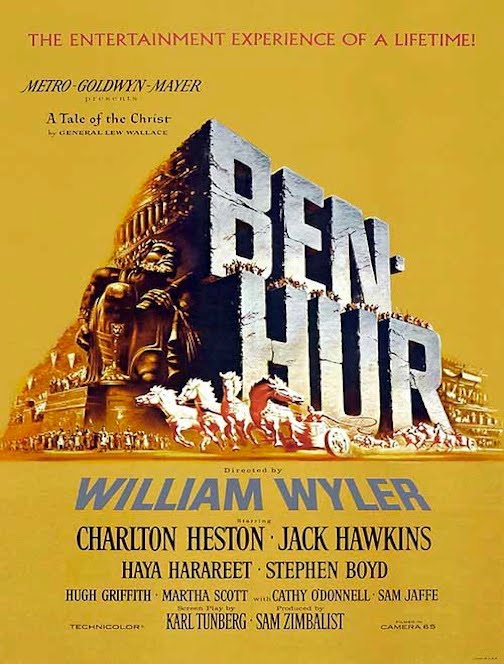
Today’s scene that I love comes from 1959’s Ben-Hur. The chariot race was one of the great action sequences of its era and its influence is still felt to this day. Rumor has it that Mario Bava was among the crew that helped to shoot the chariot race. Personally, I choose to believe that even if I can’t prove it!
4 Shots From 4 Films is just what it says it is, 4 shots from 4 of our favorite films. As opposed to the reviews and recaps that we usually post, 4 Shots From 4 Films lets the visuals do the talking!
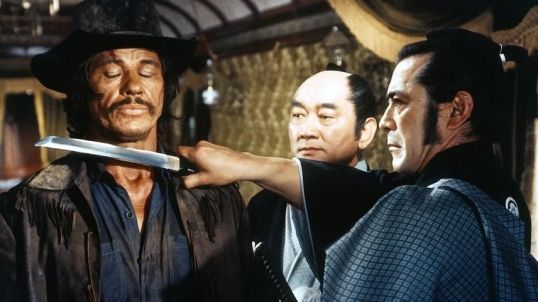
106 years ago today, the great Japanese actor Toshiro Mifune was born in Qingdao, Shandong, China, which was under Japanese occupation at the time. After working as a photographer and as an assistant cameraman, Mifune made his acting debut in 1947, playing a bank robber in Snow Trail.
Mifune would go on to become an international superstar, appearing in hundreds of films before his death in 1997. Sixteen of those films would be directed by Akira Kurosawa and Mifune’s performances in Kurosawa’s yakuza and samurai films would go on to inspire actors the world over. When Sergio Leone adapted Yojimbo into A Fistful of Dollars, Clint Eastwood based his performance on Mifune’s performance in the original. George Lucas would later create the character of Obi-Wan Kenobi with Mifune in mind.
In honor of the man and his career, here are
4 Shots From 4 Films
Drunken Angel (1948, directed by Akira Kurosawa)
Throne of Blood (1957, directed by Akira Kurosawa)
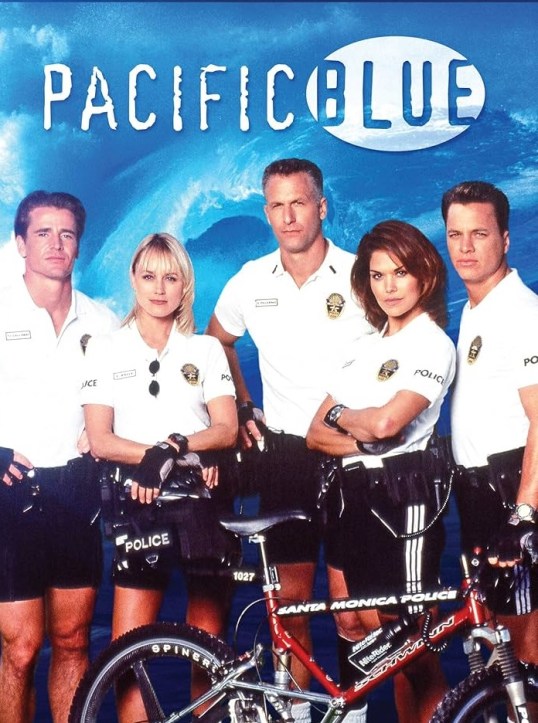
Welcome to Late Night Retro Television Reviews, a feature where we review some of our favorite and least favorite shows of the past! On Tuesdays, I will be reviewing Pacific Blue, a cop show that aired from 1996 to 2000 on the USA Network! It’s currently streaming everywhere, though I’m watching it on Tubi.
This week, Chris has a crisis.
Episode 3.19 “Heat of the Moment”
(Dir by Terrence H. Winkless, originally aired on March 22nd, 1989)
Chris and TC respond to reports of a robbery occurring at a jewelry store. One of the robbers, carrying a shotgun, makes a run for it. TC goes after him. The other robber is easily captured and handcuffed by Chris. Chris calls for backup and then leaves the store to help TC, despite the owner of the store begging her to stay. As soon as Chris leaves, it is revealed that a third robber was hiding in the backroom. He proceeds to beat up the owner and then free his partner. Meanwhile, the other robber manages to escape from Chris and TC. When Chris returns to the store, she is shocked to learn about the third robber.
Chris is also shocked that anyone could think that she made the wrong decision. She didn’t know there was another robber in the store. As she explains it, TC was out there, chasing a guy with a shotgun. She made the right decision! Not everyone agrees and soon, Chris starts to wonder if maybe her relationship with TC clouded her judgment.
Uhmm …. yeah, Chris, that’s pretty much what happened. I mean, Chris basically abandoned an innocent woman to two psychotic criminals just because she was worried about TC. It would have taken Chris just a few seconds to check the backroom. Add to that, the owner was obviously terrified and begged Chris not to leave. Chris’s response was to be rude. Even if there hadn’t been a third robber, Chris still left the owner alone with the second robber and didn’t bother to secure the crime scene.
This is another episode of Pacific Blue where the viewer is expected to not dwell on the fact that Chris is terrible at her job. Chris being bad at her job has pretty much been her defining characteristic. Even before she started sleeping with TC, Chris was regularly rude to crime victims and frequently violated the constitutional rights of the people she arrested. She also spent a lot of time complaining nonstop about going from being a Navy pilot to being a bicycle cop. By any standard, Chris should have been fired a long time ago. She certainly should have been fired for not checking the backroom of that jewelry store.
But this is Pacific Blue. And, on Pacific Blue, no one with a badge is ever held accountable for screwing up. The bike patrol captures the main robber and his girlfriend. Chris shoots and kills the other robbers. And she decides that maybe she and TC should just be honest about their relationship.
“I know this week has been tough on you,” Chris tells TC.
Actually, you know who this week was hard on? The poor jewelry store owner who got beaten up because Chris is terrible at her job!
Ugh. Bicyclists just think the world revolves around them.
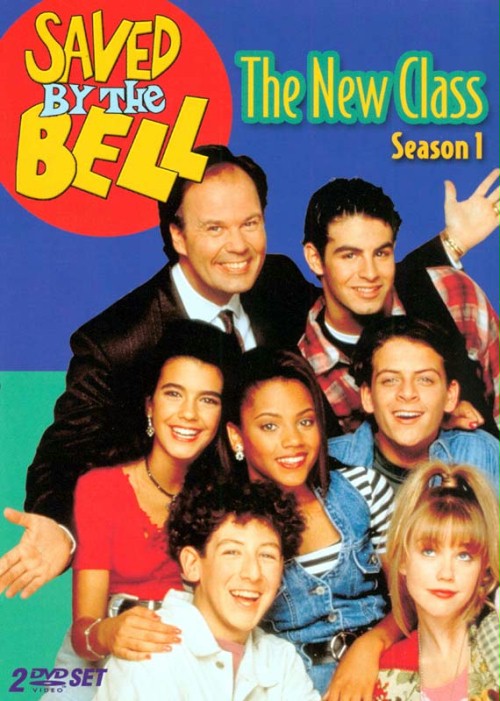
Welcome to Retro Television Reviews, a feature where we review some of our favorite and least favorite shows of the past! On Tuesdays, I will be reviewing Saved By The Bell: The New Class, which ran on NBC from 1993 to 2o00. The show is currently on Prime.
Can the gang convince Megan’s father not to improve her life?
Episode 1.9 “Good-Bye Megan”
(Dir by Don Barnhart, originally aired on November 6th, 1993)
Megan is frustrated by the fact that, unlike her, the rest of the gang at Bayside has no plans for the future. She even imagines coming to the 20-year reunion in her medical scrubs (complete with facemask) and discovering that Tommy is a mechanic, Lindsay is a waitress, Vicki is still watching soap operas, Weasel plays video games for a living, and Scott is a lifeguard.
In other words, Megan is a snob. In her fantasy, it doesn’t matter that it’s been previously established that Tommy is actually a very good auto mechanic and that he could probably make a lot of money fixing other people’s cars. It doesn’t matter that Lindsay is married to Tommy and appears to be very happy. It doesn’t matter that Scott also appears to be good at his job (and the world does need lifeguards) and that Weasel is apparently now some sort of video game celebrity. All that matters is that Megan is a doctor and they’re …. not.
Like, seriously, what type of petty person even has a fantasy like that? Are all of her friends supposed to become doctors? The fantasy is inspired by her friends just wanting to enjoy their high school years so, to me, it seems like Megan is just jealous that other people are having a good time while she spends her nights studying. I certainly wouldn’t want Megan to be my doctor. She’d probably judge me for caring more about movies than lectures.
Megan’s father (Richard Lawson) is a judge who is able to pull some strings and get Megan accepted to exclusive Willowbrook Academy. Megan is superexcited about leaving her dumb friends behind but then she meets with two Willowbrook girls and discovers that they are too snobby for her–
Really? Because I think this episode already established that no one is a bigger snob than Megan.
Megan changes her mind about going to Willowbrook. She wants to stay at Bayside with her loser friends. When her father comes to Bayside to give a speech about his life as a judge, Megan’s friends try to convince him that Bayside is a wealthy school, just like Willowbrook. It’s pretty dumb — for one thing, it’s already been established that the judge knows all of Megan’s friends so why would he suddenly believe that Tommy D was a sophisticated entrepreneur-in-the-making — but it works. The judge is so moved by the gang’s attempts to lie to him that he allows Megan to stay at Bayside.
Yay, I guess.
This first season is pointless. There’s no continuity from one episode to the next. One episode ended with Megan and Scott walking off with each other while the audience went, “Wooooo!” Another episode has Scott trying to break up Lindsay and Tommy. Now, suddenly Tommy and Scott are best friends. Weasel had a crush on Megan but now he doesn’t. It’s a mess but, on the plus side, most of these people will be gone once season 2 begins.
As for season one, we’ve only got four more episodes to go!
 And love won’t hurt anymore….




 Through the Shattered Lens