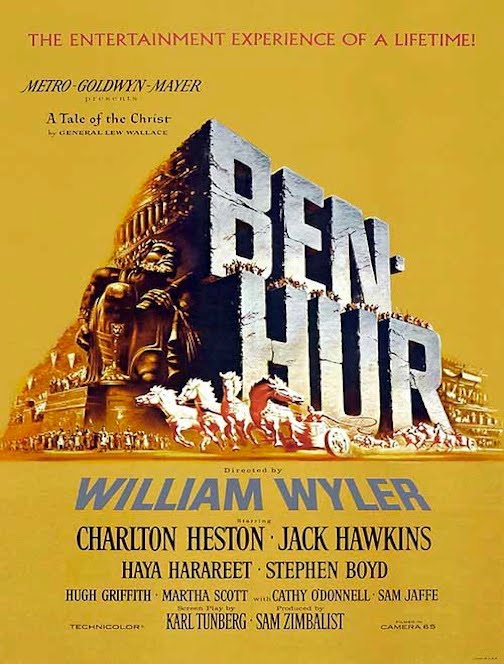
Today’s scene that I love comes from 1959’s Ben-Hur. The chariot race was one of the great action sequences of its era and its influence is still felt to this day. Rumor has it that Mario Bava was among the crew that helped to shoot the chariot race. Personally, I choose to believe that even if I can’t prove it!
4 Shots From 4 Films is just what it says it is, 4 shots from 4 of our favorite films. As opposed to the reviews and recaps that we usually post, 4 Shots From 4 Films lets the visuals do the talking!
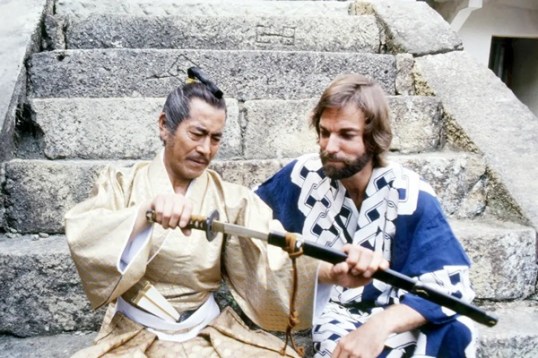
106 years ago today, the great Japanese actor Toshiro Mifune was born in Qingdao, Shandong, China, which was under Japanese occupation at the time. After working as a photographer and as an assistant cameraman, Mifune made his acting debut in 1947, playing a bank robber in Snow Trail.
Mifune would go on to become an international superstar, appearing in hundreds of films before his death in 1997. Sixteen of those films would be directed by Akira Kurosawa and Mifune’s performances in Kurosawa’s yakuza and samurai films would go on to inspire actors the world over. When Sergio Leone adapted Yojimbo into A Fistful of Dollars, Clint Eastwood based his performance on Mifune’s performance in the original. George Lucas would later create the character of Obi-Wan Kenobi with Mifune in mind.
In honor of the man and his career, here are
4 Shots From 4 Films
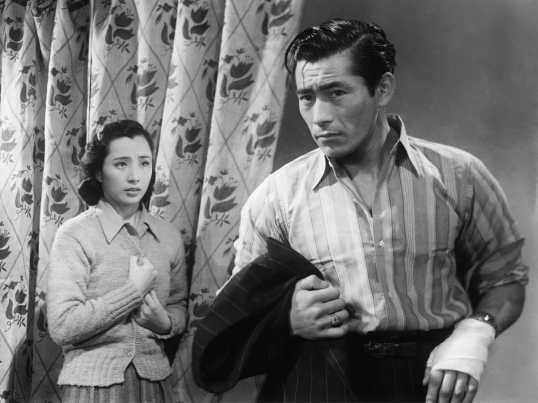
Drunken Angel (1948, directed by Akira Kurosawa)
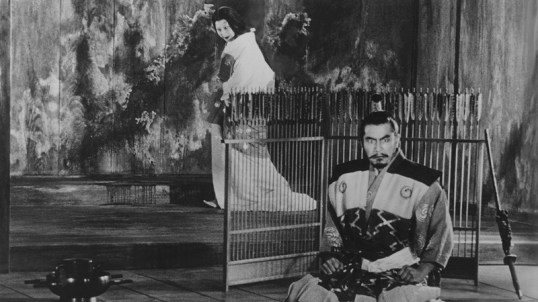
Throne of Blood (1957, directed by Akira Kurosawa)
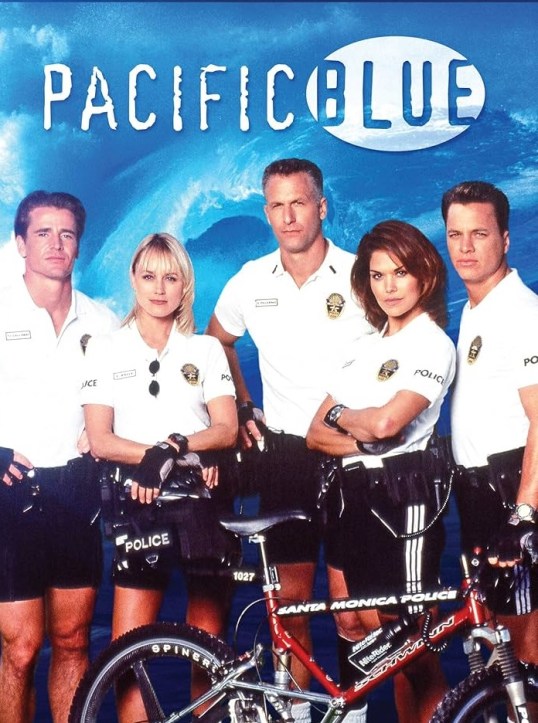
Welcome to Late Night Retro Television Reviews, a feature where we review some of our favorite and least favorite shows of the past! On Tuesdays, I will be reviewing Pacific Blue, a cop show that aired from 1996 to 2000 on the USA Network! It’s currently streaming everywhere, though I’m watching it on Tubi.
This week, Chris has a crisis.
Episode 3.19 “Heat of the Moment”
(Dir by Terrence H. Winkless, originally aired on March 22nd, 1989)
Chris and TC respond to reports of a robbery occurring at a jewelry store. One of the robbers, carrying a shotgun, makes a run for it. TC goes after him. The other robber is easily captured and handcuffed by Chris. Chris calls for backup and then leaves the store to help TC, despite the owner of the store begging her to stay. As soon as Chris leaves, it is revealed that a third robber was hiding in the backroom. He proceeds to beat up the owner and then free his partner. Meanwhile, the other robber manages to escape from Chris and TC. When Chris returns to the store, she is shocked to learn about the third robber.
Chris is also shocked that anyone could think that she made the wrong decision. She didn’t know there was another robber in the store. As she explains it, TC was out there, chasing a guy with a shotgun. She made the right decision! Not everyone agrees and soon, Chris starts to wonder if maybe her relationship with TC clouded her judgment.
Uhmm …. yeah, Chris, that’s pretty much what happened. I mean, Chris basically abandoned an innocent woman to two psychotic criminals just because she was worried about TC. It would have taken Chris just a few seconds to check the backroom. Add to that, the owner was obviously terrified and begged Chris not to leave. Chris’s response was to be rude. Even if there hadn’t been a third robber, Chris still left the owner alone with the second robber and didn’t bother to secure the crime scene.
This is another episode of Pacific Blue where the viewer is expected to not dwell on the fact that Chris is terrible at her job. Chris being bad at her job has pretty much been her defining characteristic. Even before she started sleeping with TC, Chris was regularly rude to crime victims and frequently violated the constitutional rights of the people she arrested. She also spent a lot of time complaining nonstop about going from being a Navy pilot to being a bicycle cop. By any standard, Chris should have been fired a long time ago. She certainly should have been fired for not checking the backroom of that jewelry store.
But this is Pacific Blue. And, on Pacific Blue, no one with a badge is ever held accountable for screwing up. The bike patrol captures the main robber and his girlfriend. Chris shoots and kills the other robbers. And she decides that maybe she and TC should just be honest about their relationship.
“I know this week has been tough on you,” Chris tells TC.
Actually, you know who this week was hard on? The poor jewelry store owner who got beaten up because Chris is terrible at her job!
Ugh. Bicyclists just think the world revolves around them.
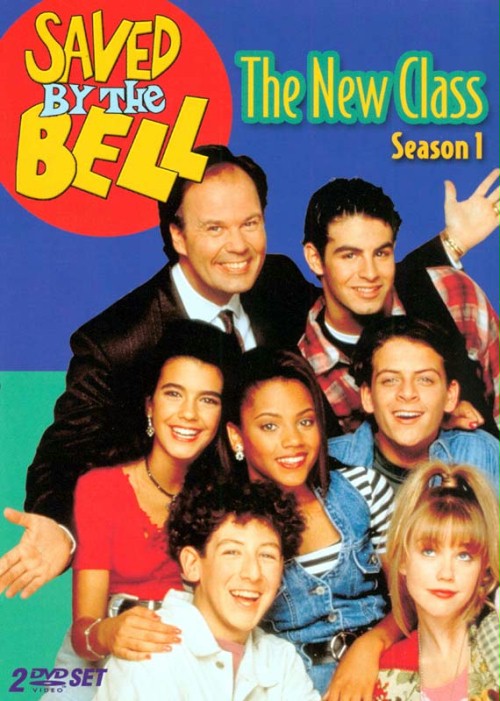
Welcome to Retro Television Reviews, a feature where we review some of our favorite and least favorite shows of the past! On Tuesdays, I will be reviewing Saved By The Bell: The New Class, which ran on NBC from 1993 to 2o00. The show is currently on Prime.
Can the gang convince Megan’s father not to improve her life?
Episode 1.9 “Good-Bye Megan”
(Dir by Don Barnhart, originally aired on November 6th, 1993)
Megan is frustrated by the fact that, unlike her, the rest of the gang at Bayside has no plans for the future. She even imagines coming to the 20-year reunion in her medical scrubs (complete with facemask) and discovering that Tommy is a mechanic, Lindsay is a waitress, Vicki is still watching soap operas, Weasel plays video games for a living, and Scott is a lifeguard.
In other words, Megan is a snob. In her fantasy, it doesn’t matter that it’s been previously established that Tommy is actually a very good auto mechanic and that he could probably make a lot of money fixing other people’s cars. It doesn’t matter that Lindsay is married to Tommy and appears to be very happy. It doesn’t matter that Scott also appears to be good at his job (and the world does need lifeguards) and that Weasel is apparently now some sort of video game celebrity. All that matters is that Megan is a doctor and they’re …. not.
Like, seriously, what type of petty person even has a fantasy like that? Are all of her friends supposed to become doctors? The fantasy is inspired by her friends just wanting to enjoy their high school years so, to me, it seems like Megan is just jealous that other people are having a good time while she spends her nights studying. I certainly wouldn’t want Megan to be my doctor. She’d probably judge me for caring more about movies than lectures.
Megan’s father (Richard Lawson) is a judge who is able to pull some strings and get Megan accepted to exclusive Willowbrook Academy. Megan is superexcited about leaving her dumb friends behind but then she meets with two Willowbrook girls and discovers that they are too snobby for her–
Really? Because I think this episode already established that no one is a bigger snob than Megan.
Megan changes her mind about going to Willowbrook. She wants to stay at Bayside with her loser friends. When her father comes to Bayside to give a speech about his life as a judge, Megan’s friends try to convince him that Bayside is a wealthy school, just like Willowbrook. It’s pretty dumb — for one thing, it’s already been established that the judge knows all of Megan’s friends so why would he suddenly believe that Tommy D was a sophisticated entrepreneur-in-the-making — but it works. The judge is so moved by the gang’s attempts to lie to him that he allows Megan to stay at Bayside.
Yay, I guess.
This first season is pointless. There’s no continuity from one episode to the next. One episode ended with Megan and Scott walking off with each other while the audience went, “Wooooo!” Another episode has Scott trying to break up Lindsay and Tommy. Now, suddenly Tommy and Scott are best friends. Weasel had a crush on Megan but now he doesn’t. It’s a mess but, on the plus side, most of these people will be gone once season 2 begins.
As for season one, we’ve only got four more episodes to go!
In December of 2021, I was nearly attacked in a Target.
This was nearly two years into the COVID pandemic and the world was slowly reopening. (Since I live in Texas, my world reopened earlier than everyone else’s. Despite the predictions of folks up north, who were almost gleeful in their predictions that Texas would be wiped out by people coughing on each other at football games, we survived.) In 2020, my sisters and I couldn’t really celebrate Christmas the way we usually did because everything was closed. In 2021, we were l0oking forward to making up for lost time.
What I was not looking forward to was wearing a mask. Due to an ambitious politician named Clay Jenkins who was hoping to ride the COVID pandemic into the governor’s mansion, Dallas County still had a mask mandate. The mandate was unenforceable due to Governor Abbott’s executive order but still, a lot of people in Dallas were masking up. Sitting in the parking lot of Target, I told my three older sisters that I was not going to wear a mask inside the store. I have asthma. Having to wear a mask was more than just an inconvenience for me. Wearing a mask made it difficult for me to breathe and, given that more and more health authorities were starting to admit that masks didn’t make any difference as far as the spread of the disease was concerned, I didn’t see why I should have to unnecessarily suffer. My sisters said that they understood and that they would have my back if anyone said anything to me about my maskless state. “But no one will,” my sister Megan assured me.
As soon as I stepped into the store, I heard it.
“GET A MASK ON HER!”
It wasn’t a store manager or a cop or any other sort of authority figure yelling. It was an overweight, middle-aged woman riding around the store on her little scooter. Apparently, she spotted me as soon as I entered the store and immediately started driving herself in my direction, yelling the entire time. I couldn’t really understand the majority of what she yelled but I did manage to make out words like “Mask,” “kill all of us,” “selfish,” and a few others that I can’t repeat during Lent.
Again, because of Lent, I can’t tell you what my older sister Melissa said in response to her. My sisters, all three of whom had been masked up, removed their masks in solidarity. I wish I could say that the entire store applauded but most people were just trying to avoid looking at the fat banshee on her scooter.
Even after my sisters removed their masks, the woman continued to focus her anger on me, still yelling as I walked past her. (I attempted to smile politely at her, which did not help the situation.) Eventually, her voice faded away. She either left the store or found someone else to yell at.
I tell this story to illustrate one point. The COVID pandemic was a very strange time. One can both acknowledge the very real tragedy of COVID while also acknowledging that quite a few people fell down the doom rabbit hole and allowed themselves to be driven mad by the constant drumbeat of government officials, members of the media, and other commentators telling us that everyone was going to die unless we wore masks and maintained a distance of 6 feet from each other. Due to the COVID pandemic, businesses were forced to shut down. People lost their jobs. Families were not allowed to comfort each other. In many states, students were not allowed to go to school. To doubt any element of the government’s response to COVID meant running the risk of being listed as a “conspiracy theorist.” Blue states started to gleefully keep track of how many died in red states. Red states started to keep track of how many civil liberties were suspended by the blue states. (We all should have been keeping track of their number of politicians who violated their own mandates and simply shrugged off the outrage.) We were constantly told that we were in a war against the virus but if felt more as if the country was actually at war with itself and a lot of people seemed to be happy with that.
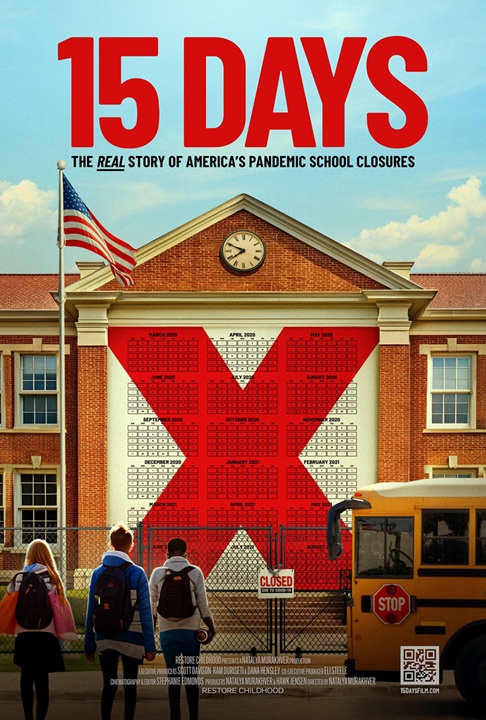
The documentary 15 Days opens with clips from a zoom meeting, in which Jane Fonda, Randi Weingarten, and a host of others discuss the pandemic as an opportunity to bring about social change. The documentary goes on to document how the school shutdowns went from being “15 days to slow the spread,” to nearly two years of remote learning. Parents discuss going from trusting the government and wanting to do the right thing to the growing disillusionment of realizing that “15 Days to Slow The Spread” was, from the start, an empty slogan. Epidemiologists who opposed the school closings discuss being censored and dismissed as “fringe extremists.” Student athletes talk about losing out on college scholarships. We learn about the struggles of doing remote learning. We learn how some students merely disappeared from the system.
As you probably already guessed, 15 Days has a political agenda and, as such, it won’t be for everyone. Certain parts of it were certainly not for me. (Personally, I think the film lets the Trump administration off too easily when it comes to the federal government’s COVID response.) But that doesn’t change the fact that 15 Days shows just how much damage was done to an entire generation by the senseless and largely partisan-driven decision to shut down the schools in so many states. In between clips of people claiming that “kids are resilient,” we get interviews with actual kids who lost two years of not just education but also social development to the shutdowns. The contrast between what we were told was happening with remote learning and what actually happened is stark. The director, a disillusioned and self-described “progressive Democrat” named Natalya Murakhver compares America during the pandemic to the totalitarian government that her family fled when she was a child and it’s hard not to feel that she has a point.
You may or may not agree with the film’s politics but, with each passing day, it becomes more and more obvious how screwed up the federal government’s response to the COVID pandemic truly was. Documentaries like this are important because right now, the gaslighting we’re seeing about what really happened in 2020 and 2021 is incredible. Neighbors turned against neighbor (or shopper, as they case may be). And an entire generation lost two of the most important developmental years of their lives.
When Charlotte (Jessica Morris) meets a younger man named Chris (Philip McElroy), she is both flattered and amused when he asks her out. “You’re a little young for me,” Charlotte says. However, Charlotte’s friend, Maddie (Akari Endo), insists that Charlotte really does need to get out more so Charlotte meets up with Chris for drinks. One things leads to another and soon, Charlotte is having sex with Chris in her classroom!
(Charlotte is an English teacher, along with being a struggling romance novelist.)
The next day, as Charlotte teachers her class, she is shocked when Chris shows up. “What are you doing here?” Charlotte asks. Chris reveals that he’s a new student and Charlotte is now his English teacher!
2018’s The Wrong Teacher is one of the many “Wrong” films that David DeCoteau directed for Lifetime. This one follows the usual pattern. Chris isn’t ready to let go of his one night of passion with the teacher. When he discovers that Charlotte is getting back together with her ex-boyfriend (Jason-Shane Scott), he snaps. Soon, people are getting shot and hit with baseball bats and videos of Chris and Charlotte going at it in the classroom are showing up on the school’s twitter page. Vivica A. Fox is alarmed that Charlotte could be so foolish. Charlotte declares, “You messed with the wrong teacher!” Thanks to some last minute strangeness that sees Charlotte adopting a Southern accent, The Wrong Teacher is enjoyably over the top.
As for Eric Roberts, he plays the assistant principal. He’s a bit burned-out. He’s easily annoyed. He doesn’t want any scandalous behavior in his school. He’s Eric Roberts and he makes the most of his three scenes. Eric even stands up and walks in this movie. He only does that when he’s particularly invested in a role. The Wrong Teacher? More like The Right Vice Principal.
Previous Eric Roberts Films That We Have Reviewed:
“Every one of us relies on water from the wells, because mankind has polluted all the lakes and rivers. But do you know why the well water is pure? It’s because the trees of the wastelands purify it! And you plan to burn the trees down? You must not burn down the toxic jungle!” — Nausicaä
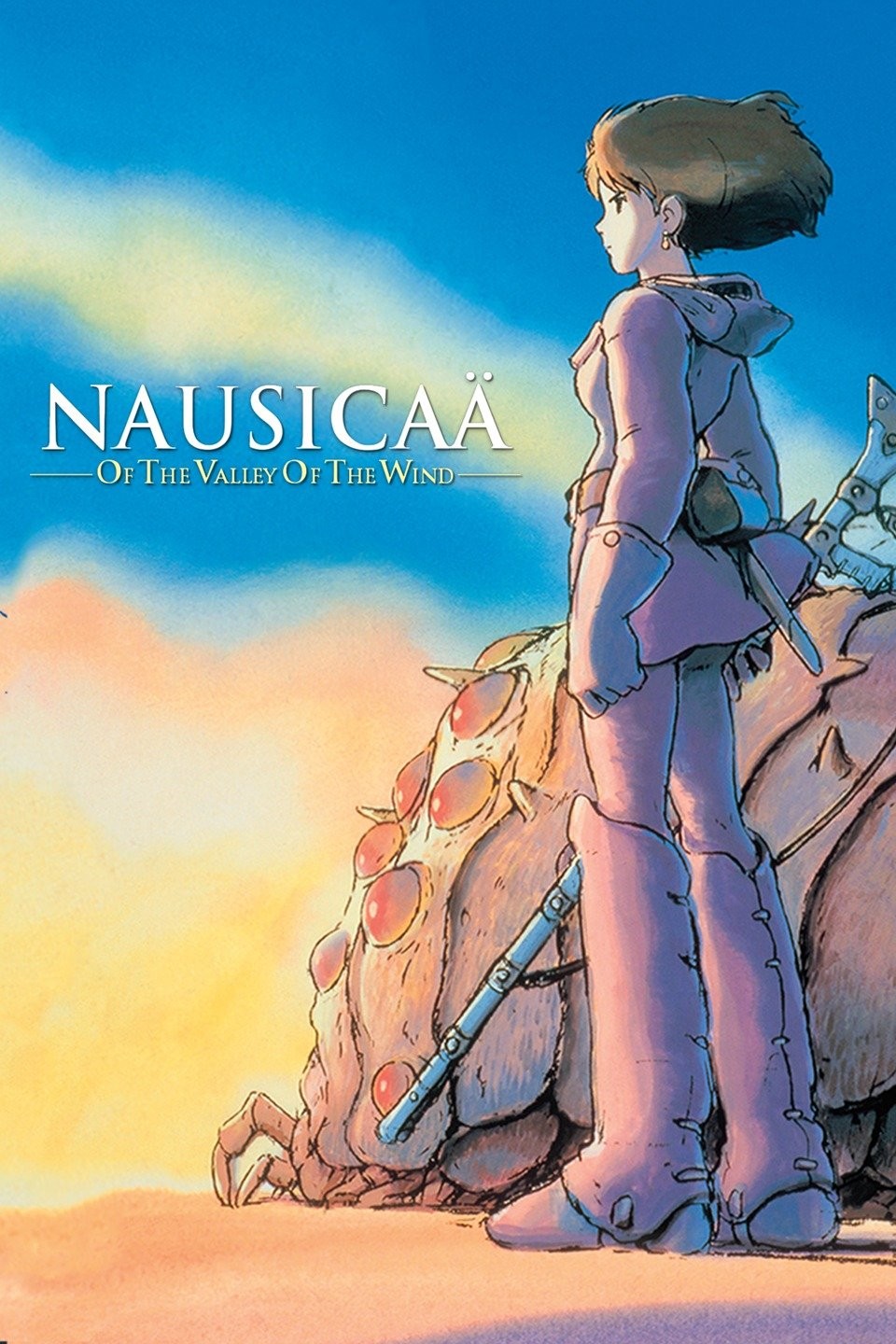
Nausicaä of the Valley of the Wind stands out as Hayao Miyazaki’s groundbreaking 1984 anime film that blends epic adventure with profound environmental and anti-war messages. This post-apocalyptic tale, adapted from his own manga, follows a young princess fighting to bridge humanity and nature in a toxic world overrun by giant insects.
Imagine an Earth a thousand years after humanity’s self-inflicted apocalypse called the Seven Days of Fire, where massive God Warriors wiped out civilization and left behind the Sea of Corruption—a sprawling, poisonous jungle teeming with mutated bugs like the massive, trilobite Ohmu. In this harsh landscape, pockets of survivors cling to life, and the idyllic Valley of the Wind thrives thanks to constant sea breezes that keep the toxic spores at bay, powering windmills for their farms. Enter Nausicaä, the 16-year-old princess and ace glider pilot, who’s not your typical royal—she dives into the jungle without fear, collects spores, and chats with insects like they’re old pals. Right from the opening, when she calms a raging Ohmu with flash bombs after it chases her mentor Lord Yupa, you know she’s special: brave, empathetic, and way ahead of her people in understanding that the Fukai (the jungle’s name) isn’t just a killer but maybe Earth’s way of healing itself.
The plot kicks into high gear when a hulking Tolmekian airship crashes in the Valley, swarmed by insects and spilling fungi that threaten the crops. Nausicaä rushes in, saving a dying Pejite princess named Lastelle, who begs her to destroy the cargo—a calcified embryo of one of those ancient God Warriors. Too late; Tolmekian forces invade under the steely Princess Kushana, who assassinates Nausicaä’s dad, King Jhil, and claims the embryo to hatch it as a weapon against the Fukai. Kushana’s plan? Revive the beast, burn the jungle, and reclaim the planet for humans, no matter the cost. Nausicaä gets dragged along as a hostage, but chaos ensues: Pejite Prince Asbel (Lastelle’s brother) attacks the convoy in revenge, leading to crashes and a wild glider chase where Nausicaä saves him, only for them to plunge through the jungle floor into a hidden miracle—an underground world of pure water and soil where the Fukai’s roots are actually detoxifying the planet.
Back in the Valley, villagers revolt against the Tolmekians guarding the hatching Warrior, but things spiral when Pejite survivors reveal they lured the Ohmu stampede to the Valley using a tortured baby Ohmu as bait—payback for Tolmekia destroying their city. Nausicaä escapes Pejite captivity (with help from Asbel’s mom and sympathizers), hijacks the baby Ohmu carriers, and races to stop the horde. In one of the film’s most gut-wrenching scenes, she confronts the enraged Ohmu sea, gets trampled to death (or so it seems), her blue-stained dress making her look like a martyr. But the insects heal her with their golden tentacles, lifting her like a messiah in a field of gold, fulfilling a prophecy and halting the rampage just as the premature God Warrior melts down after a couple of blasts. Tolmekians bail, Pejites join the Valley rebuild, and a clean shoot sprouts under the Fukai—hope amid ruin.
What makes Nausicaä of the Valley of the Wind pop off visually is Miyazaki’s hand-drawn mastery, even on Topcraft’s tight nine-month schedule with a million-dollar budget. The gliders (especially her sleek Möwe) slice through skies with fluid grace, Ohmu herds churn like living tsunamis, and the Fukai’s spores shimmer in surreal blues and golds—equal parts beautiful and deadly. Action pops without feeling gratuitous: dogfights buzz with tension, sword clashes ring true (Nausicaä’s gladiator-style fights against armored goons are badass), and that underground reveal flips the script with bioluminescent wonder. Joe Hisaishi’s debut score nails it—haunting flutes for Nausicaä’s flights, pounding percussion for stampedes, and that ethereal title theme sung by Narumi Yasuda that sticks in your head. It’s proto-Ghibli polish before Ghibli existed, proving Miyazaki’s detail obsession (he redrew frames himself).
Nausicaä of the Valley of the Wind isn’t just pretty; it’s a thematic powerhouse that demands attention in our climate-anxious era. At its core, it’s an eco-fable flipping the “man vs. nature” trope: the Fukai isn’t evil—it’s purifying humanity’s mess from industrial hubris, echoing real-world pollution like Minamata Bay that inspired Miyazaki. Nausicaä embodies harmony, tending a secret clean garden proving spores thrive without toxins, and her big revelation underground shows patience over destruction wins. It shares striking parallels with Frank Herbert’s Dune, where both stories unfold in post-apocalyptic or barren landscapes where survival hinges on mastering harsh environments—the Sea of Corruption’s toxic sprawl mirrors Arrakis’s endless dunes, both teeming with misunderstood “monsters” central to their ecosystems. Nausicaä glides over spore-filled jungles much like Paul Atreides rides sandworms, learning to respect rather than conquer these forces; her calming of the Ohmu herd parallels the Fremen’s symbiotic bond with Shai-Hulud, where outsiders must earn nature’s trust through ritual and empathy. The Fukai purifies Earth’s poisoned soil over generations, just as the spice melange ties Arrakis’s fate to galactic power, forcing characters to confront interdependence over exploitation.
Leadership and prophecy drive the parallels deeper: Nausicaä, the blue-clad princess fulfilling a cryptic prophecy through self-sacrifice, embodies the Kwisatz Haderach archetype in Paul, both reluctant saviors burdened by destiny amid warring factions. Tolmekian invaders seeking God Warriors evoke Harkonnen aggressors hungry for spice dominance, while Pejite’s desperate tactics reflect Fremen guerrilla warfare—cycles of revenge where ecology becomes a weapon. Miyazaki drew direct inspiration from Dune, infusing anti-colonial vibes: Nausicaä’s diplomacy rejects imperial conquest, urging coexistence, akin to Herbert’s critique of messiahs sparking holy wars.
Anti-war vibes hit hard too—no pure villains, just cycles of fear and revenge: Tolmekia’s aggression mirrors Pejite’s desperation, both blind to coexistence. Kushana’s not a cartoon baddie; she’s pragmatic, scarred by loss, and her arc hints at redemption. Buddhism creeps in via greed, delusion, and ill will fueling conflict, with Nausicaä’s self-sacrifice as enlightened compassion. Influences like Tolkien and Le Guin shine through, but Miyazaki makes it uniquely hopeful: life’s interconnected, redemption’s possible if we listen.
Nausicaä herself is the heart, a rare female lead who’s warrior, scientist, diplomat—feminine empathy meets masculine grit without preachiness. She leads by diving into danger (ripping off her mask to prove clean air, tackling Pejite goons), inspiring loyalty because she’d never ask what she won’t do. Sidekicks shine: fox-squirrel Teto’s adorable comic relief, Yupa’s wise wanderer vibe, Mito’s gruff loyalty, Obaba’s prophecy-dropping mysticism. Asbel adds rival-turned-ally spark, Kushana steel-spined foil. Voices (Sumi Shimamoto’s Nausicaä especially) convey emotion perfectly; Disney’s 2005 dub (Alison Lohman, Patrick Stewart, Uma Thurman) holds up too, sans the botched 80s Warriors of the Wind edit Miyazaki hated.
Legacy-wise, this flick birthed Studio Ghibli—Miyazaki and Takahata founded it post-success, grossing ¥1.48 billion in Japan alone. Critically adored (91% Rotten Tomatoes, top animated film polls), it influenced games (Panzer Dragoon), Star Wars nods, and eco-anime forever. The manga dives deeper (darker, more conflicted Nausicaä over 12 years), but the film stands alone as pure, idealistic storytelling.
So why is Nausicaä of the Valley of the Wind a must-watch? In a world choking on plastic oceans and endless wars, it slaps you with urgency: destroy nature, destroy ourselves; choose empathy, find salvation. These Dune echoes make it a killer companion for sci-fi fans, blending Miyazaki’s hopeful twist on Herbert’s tragedy to prove timeless ideas thrive across media. It’s thrilling adventure—no slow bits, every frame earns its runtime—with heart that lingers, urging coexistence over conquest. Miyazaki’s optimism shines: even post-apocalypse, one person’s vision sparks change. Skip it, miss anime’s soul laid bare; watch it, level up your worldview. Perfect for sci-fi fans, eco-warriors, or anyone craving stories that stick. Dive in—you’ll emerge healed, like Nausicaä from the Ohmu sea.
Today’s song of the day was not specifically written for the Kill Bill soundtrack but that’s still the film that I’ll always associate it with. Here is Tomoyasu Hotei and Battle Without Honor or Humanity.

 Through the Shattered Lens