Icarus File No. 24: Express to Terror (dir by Dan Curtis)


The year was 1979 and Fred Silverman, the president of NBC, had an idea.

How about a television series in which each week’s episode would depict a different group of passengers going on a trip?  The passengers would all be dealing with their own stories, some of which would be dramatic and some of which would be humorous.  With any luck, some of them might even fall in love over the course of their journey!

To keep the audience interested, the show would also feature a cast of regular characters, the crew.  Edward Andrews would play the captain, a sensible and by-the-book type.  Robert Alda played Doc, the doctor who was also a bon vivant.  Patrick Collins was the goofy purser.  Nita Talbot played Rose, the perky director of entertainment.  Michael DeLano was the bartender who always had the best advice for the passengers….

Does this sound familiar?

If you think that it sounds like Fred Silverman just ripped off The Love Boat …. well, you’re wrong.  The Love Boat took place on a boat.  Supertrain took place on a train.

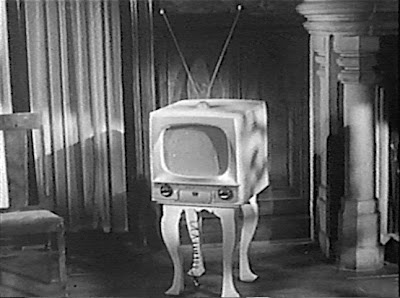
At the time that Supertrain went into production, it was the most expensive television production of all time.  Before the pilot film was even shot, NBC had spent ten million dollars on the Supertrain sets.  Not only was a fake train built but two models were also constructed for the shots of the train moving through the countryside.  At the time, the assumption was that the costs would be easily covered by the money that NBC stood to make from broadcasting the 1980 Summer Olympics.  Unfortunately, Jimmy Carter decided that the U.S. would be boycotting the Olympics as a way to protest Russia’s invasion of Afghanistan.  The only thing that kept NBC from going bankrupt was that the BBC was apparently run by someone even more incompetent than Fred Silverman.  The BBC paid $25,oo per episode for the rights to air Supertrain in the UK.  Supertrain proved to be such a disaster that the BBC never actually aired the episodes that they had purchased.

1979’s Express to Terror was the pilot to Supertrain.  (It was later released in some territories as a stand-alone film.)  Directed by horror impresario Dan Curtis (who was also brought in to produce the series), Express to Terror opens with an apparently drunk Keenan Wynn playing the role of railway baron Winfield Root.   Winfield loudly announces to a group of nervous investors that he has created ” an atom-powered steam turbine machine capable of crossing this country in 36 hours!”  A few months later, Supertrain sets off from New York to Los Angeles.

The main thing that one notices about the train is that it’s incredibly tacky.  For all the money that Winfield Root (not to mention NBC) poured into the thing, it looks awful.  The cabins are bland and also seem to be constantly shaking as the train rumbles over its tracks.  Whereas The Love Boat featured glorious shots of passengers enjoying themselves on an open-air deck, Express to Terror features a lot of shots of passengers trying to squeeze their way through narrow and crowded hallways.  There’s a disco car, which sounds like fun but actually looks like a prom being held in a locker room.  There’s a swimming pool but you can’t really lay out by it because it’s on a train.  Winfield is among the passengers and he continually refers to the train as being “Supertrain” in conversation, which just sounds dumb.  “The next person who stops Supertrain,” he announces “will be walking to L.A!”

The main drama features Steve Lawrence as Mike Post, a Hollywood agent with a gambling problem who thinks that someone on the train is trying to kill him.  Actually, the assassin is after a different Mike Post (Don Stroud) but that Mike Post is a criminal who, after entering the witness protection program, changed his name to Jack Fisk.  The criminal Post is hoping that the agent Post will be killed by mistake.  The criminal Mike Post has a girlfriend named Cindy (Char Fontane) who falls in love with the agent Mike Post.  Fred Williamson appears as a football player-turned-assassin.  George Hamilton plays a Hollywood executive.  Don Meredith is the alcoholic best friend of the agent Mike Post.  Stella Stevens is on the train as a diva.  So is Vicki Lawrence, playing a naive innocent.

Express to Terror tries to mix comedy and drama but it doesn’t really work because the “Good” Mike Post doesn’t really seem to be worth all the trouble.  Steve Lawrence gives a mind-numbingly bad performance in the role and, as a result, “Good” Mike Post really isn’t any more sympathetic than “Bad” Mike Post.  The main problem is that “Good” Mike Post comes across as being a coward and there’s only so much time that you can watch a coward act cowardly before you lose sympathy for him.  Being scared is one thing.  Being so dumb that accidentally gets your fingerprints on a knife that’s just been used to kill a man is another thing.

As for the members of the crew — the captain, the doctor, the bartender, and such, they take a back seat to the drama of the two Mike Posts.  It’s a bit odd because no one on the train — not even Winfield Root — seems to be that upset by the fact that one of their passengers is murdered while the train is going through a tunnel.  You would think that everyone would be worried about the future of Supertrain at that point.  A murder is not good for publicity but Winfield Root is oddly unconcerned about it.  I swear, light rail people are almost as heartless as bicyclists!

Of course, the worst thing about Express to Terror is that it promises terror but it doesn’t deliver.  When I see a the word “terror” in a film directed by Dan Curtis, I expect a little terror!  Other than Steve Lawrence’s overacting, there really wasn’t anything particularly terrifying about Express to Terror.

As for Supertrain, it ran for nine episodes and was promptly canceled.  Fred Silverman left NBC and spent the rest of his career as an independent producer.  Supertrain’s tracks got too close to the sun and they nearly took down a network.

Previous Icarus Files:

  1. Cloud Atlas
  2. Maximum Overdrive
  3. Glass
  4. Captive State
  5. Mother!
  6. The Man Who Killed Don Quixote
  7. Last Days
  8. Plan 9 From Outer Space
  9. The Last Movie
  10. 88
  11. The Bonfire of the Vanities
  12. Birdemic
  13. Birdemic 2: The Resurrection 
  14. Last Exit To Brooklyn
  15. Glen or Glenda
  16. The Assassination of Trotsky
  17. Che!
  18. Brewster McCloud
  19. American Traitor: The Trial of Axis Sally
  20. Tough Guys Don’t Dance
  21. Reach Me
  22. Revolution
  23. The Last Tycoon

Horror On TV: The Curse of Degrassi (dir by Stefan Brogren)


Can you believe it?  The first day of Horrorthon is nearly over!  I’ve got tears in my mismatched eyes.

You may remember, from previous horrorthons, that I like to end each day in October by sharing a classic example of televised horror.  Much as with the the horror movies that I share at the start of each day, it should be remembered that I’m a bit at the whim of YouTube here.  If YouTube decides to yank down a video after I share it on this site, there’s nothing that I can do about it.  That’s why I encourage everyone to watch these now!  Don’t wait until 2035.  Who knows if YouTube will even still be a thing in 2035?

Let’s start things off with The Curse of Degrassi!

This is a special episode of my favorite TV show of all, Degrassi: The Next Generation!  Originally airing on October 28th, 2008, The Curse of Degrassi features Degrassi’s then-main mean girl, Holy J Sinclair (Charlotte Arnold), getting possessed by the vengeful spirit of deceased school shooter, Rick Murray (Ephraim Ellis).  Chaos follows!  Fortunately, Spinner (Shane Kippel) is around to save the day.  As any true Degrassi fan can tell you, only Spinner has a chance against the forces of the undead.

Enjoy The Curse of Degrassi.  As we say around these parts, “It goes there, eh?”

Doctor Who — The Daleks (1963-1964, directed by Christopher Barry and Richard Martin)


It’s easy to forget that Doctor Who was originally meant to be an educational show for children.

When the BBC’s Head of Drama, Sydney Newman, first developed Doctor Who, he envisioned it as being a show in which an eccentric old man known as the Doctor and his granddaughter, Susan, would travel to past eras and meet actual historical figures and witness great events firsthand.  Accompanying them would be two teachers, Ian Chesterton and Barbara Wright, who would make sure the kids at home understood what they were watching.  While Newman allowed that, in order to keep the kids watching, there would be occasional episodes that would focus more an adventure than learning, he also said that the show would not feature any “bug-eyed monsters.”

The first serial, An Unearthly Child, stayed true to Newman’s concept.  After stumbling across the TARDIS while investigating the homelife of their newest pupil, Ian and Barbara found themselves traveling to pre-historic times with The Doctor and Susan.  Susan was played by Carole Ann Ford while Ian and Barbara were played by William Russell and Jacqueline Hill.  Playing the role of the Doctor was veteran actor William Hartnell.  Hartnell was 55 years old when he first played the Doctor but he looked and came across as being much older.  He played the Doctor as being a crotchety old man, one who resented being saddled with two new companions and who could be quite rude to those he considered to be his inferior.  This was early in the series so there was no talk of Time Lords or anything else that Doctor Who fans now take for granted.   Susan even took credit for naming The TARDIS, the Doctor’s time machine that, on the outside, appeared to be a blue police call box.

An Unearthly Child introduced the UK to the Doctor.  It got respectable ratings and reviews.  Viewed today, it’s also pretty boring and it’s easy to see the limitations in Newman’s original concept.  Hartnell plays the Doctor as being so ill-tempered that it was a surprise that he didn’t just jettison Ian and Barbara into space.  (I used to watch Doctor Who on PBS with my father.  The first episodes that we got were the Tom Baker years, followed by the Peter Davison and the Jon Pertwee episodes.  It was only then that PBS started showing the Hartnell episodes.  To go from Baker, Davison, and Pertwee to the grouchy Hartnell was indeed jarring.)  If the show had continued in the style of An Unearthly Child, it probably would not have lasted for more than two series.

Fortunately, the second serial changed everything.

Written by Terry Nation and originally called The Mutants, the second serial introduced The Daleks, the shrill-voiced cyborgs whose cries of “Exterminate!  Exterminate!” made them almost as popular as The Doctor himself.  Squid-like creatures who lived in tank-like robotic shells and who spoke in electronic voices, the Daleks lived on the planet Skaro.  Centuries of nuclear war against the Thals had left the Daleks mutated and trapped in their shells but they were still obsessed with exterminating all of the Thals and eventually conquering the universe.  With their robotic exteriors, the Daleks were bulky and often moved awkwardly.  (The recurring joke is that all the Doctor has to do to escape the Daleks is find a staircase.)  But because the Daleks were so relentless and so determine to exterminate everyone who wasn’t a Dalek, they were still intimidating.  Writer Terry Nation based the Daleks on the Nazis, a comparison that was undoubtedly easy for British audiences in 1963, less than 20 years after the end of World War II, to see.

A seven-episode serial, The Daleks premiered on December 21st, 1963 and ran through February 1st, 1964.  While the serial was airing, word spread about The Daleks.  The first episode was watched by six million viewers.  The seventh and final episode was watched by ten million.  Four million people were brought to the show by The Daleks.  Sydney Newman may not have wanted bug-eyed monsters on Doctor Who but no one could argue with ratings like that.  While the First and the Second Doctor would still have a few strictly historical adventures, The Daleks paved the way for the future of the series.  The Daleks would return many times.  The cavemen from An Unearthly Child were never seen again.

The Daleks opens with TARDIS materializing on the planet that will later be identified as Skaro.  The Doctor and Susan want to explore.  Ian and Barbara are upset because they want to go back to 1963.  (Ian and Barbara always annoyed me but, of all the companions on the original series. they probably did have the most realistic reaction to being swept up in the Doctor’s adventures.)  The Doctor flat-out lies about needing to get mercury to repair the TARDIS and uses it as an excuse to explore a nearby city.  Soon, The Doctor, Ian, and Barbara are the prisoners of the Daleks while Susan meets the peaceful Thals in the forest.  The Daleks and the Thals have been at war for centuries and it has destroyed their world.  The Doctor tries to broker a peace, which just leads to the Daleks killing even more Thals.  The Doctor can be excused because this was his first meeting with the Daleks.  The Thals should have known better than to trust the people who specifically decided to become cyborgs because they didn’t want to ever have to stop fighting.

Seen today, The Daleks holds up fairly well.  At seven episodes, it runs a bit long and, for those of us who grew up with Tom Baker and Peter Davison in the lead role, William Hartnell’s Doctor takes some getting used to.  The nonstop bickering between The Doctor and Ian gets old quickly.  The Thals are almost too naive to be believed.

But the Daleks themselves remain a brilliant creation and, even when seen in grainy, black-and-white, it is easy to understand why they became a phenomenon.  Their relentless determination to destroy and exterminate make them intimidating but what really stands out about the Daleks is how forthright they are about what they want.  It’s not just that the Daleks want to exterminate you.  It’s that they’ll tell you that they want to exterminate you, as if it’s the most reasonable desire that any creature could have.  (One reason why The Thals are so unsympathetic is that they keep falling for Dalek tricks, despite the Daleks being pretty honest about their hatred of the Thals.)  From the minute that the Daleks make their first appearance, cornering Barbara in their city, they give Doctor Who a jolt of energy that it very much needed.

This serial ends with The Doctor convinced that the Daleks have been destroyed and will no longer be a threat.  Of course, The Doctor had never been so wrong.  The Daleks would return and Doctor Who would never be the same.


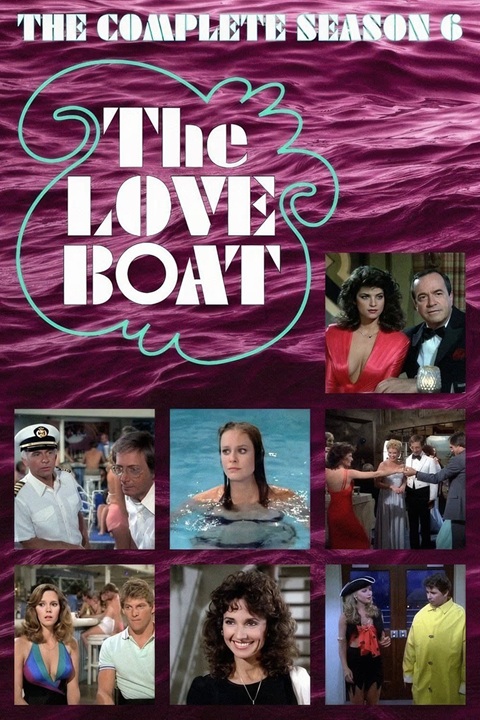
Retro Television Review: The Love Boat 6.20 “The Zinging Valentine/The Very Temporary Secretary/Final Score”


Welcome to Retro Television Reviews, a feature where we review some of our favorite and least favorite shows of the past!  On Wednesdays, I will be reviewing the original Love Boat, which aired on ABC from 1977 to 1986!  The series can be streamed on Paramount Plus!

Set a course for adventure, your mind on a new romance!

Episode 6.20 “The Zinging Valentine/The Very Temporary Secretary/Final Score”

(Dir by Richard Kinon, originally aired on February 12th, 1983)

It’s a Valentine’s Day cruise!

A football player (John Amos) tries to romance an intellectual college professor (Jayne Kennedy) who doesn’t care about sports.  The professor is impressed when the player reveals that he’s written a book.  But she’s shocked when she reads it and discovers how much time the player spent scoring off-the-field.

The head of a temp agency (Don Adams) comes on the boat to inform a magazine editor (Fannie Flagg) that he hasn’t been able to find a secretary for her.  But, when he meets her, Adams pretends to be the secretary, even though he doesn’t know how to take dictation or type.

Don Most is a cocky jerk who is informed by a singing telegram girl (Suzie Scott) that his girlfriend is dumping him.  Most gets upset.  Scott goes to look for him so she can apologize but — uh oh!  The ship sets sail!  Scott is stuck on the boat but, believe it or not!, she and Don Most eventually end up falling in love.

This was a sweet, uncomplicated, and likably lightweight episode.  At its best, The Love Boat was the epitome of television comfort food.  It’s a show that you watch because you know exactly what’s going to happen and you also know that everyone is going to get a happy ending.  This episode features likable guest stars (and yes, I’m including Don Adams, who was a lot more likable here than he was on Check It Out) and all the romance that you could hope for.  Personally, I loved that the ship was decorated for Valentine’s Day.  All of those hearts?  They totally made me want to take a cruise next February.  (Hint, hint….)

This episode also featured scenes in which all of the guest stars interacted with each other and discussed their problems.  I don’t think I’ve ever seen that on The Love Boat before.  Usually, the guest stars only interact with the people in their stories.  Instead, for this episode, we got scenes of Jayne Kennedy telling Fannie Flagg about how much she liked her magazine.  Suzie Scott told Kennedy and Flagg about how tough it was having to delivers singing messages for people.  Seeing Don Most, John Amos, and Don Adams sitting in the Pirate’s Cove and discussing their problems while Isaac watched was surprisingly entertaining.  In this episode, the boat felt truly alive and active.  It seemed like a genuinely fun cruise and a reminder that the Love Boat offers something for everyone.

This was a likable episode.  I enjoyed it.  Listen, just because I love horror movies, that doesn’t mean I can’t love my weekly cruise on the Love Boat!

6 Things That I Am Looking Forward To In October


Welcome to October!  October is a big month here at the Shattered Lens.  It’s the month when we devote the majority of our time to the horror genre.  It’s time for our annual Horrorthon!  Last year, we had a record number of Horrorthon posts.  I’d love to break that record this year but mostly. I just want this year’s Horrothon to be fun for both our writers and our readers!

Here’s what I’m looking forward to in October!

  1. Guillermo Del Toro’s Frankenstein — I think I was one of the few people who unreservedly loved Del Toro’s version of Nightmare Alley and I’m very much looking forward to seeing what he does with Mary Shelley’s classic tale.  Oscar Isaac as Victor Frankenstein just feels like perfect casting.
  2. The Horror Movies On TCM — TCM never lets me down in October.  I can’t wait to binge all of the classic horror that will be aired this month.
  3. Nouvelle Vague — Richard Linklater’s tribute to the French New Wave is scheduled to be released in theaters on October 31st and then on Netflix two weeks later.  While I was a bit disappointed with last year’s Hit Man, I still look forward to every new Linklater film.  Speaking of which….
  4. Blue Moon — Linklater’s other 2025 film is scheduled for an October 17th release.  Ethan Hawke is said to be brilliant in this film.
  5. After The Hunt — I’m not really a huge fan of director Luca Guadagnino and I’ll probably never forgive him not only his Suspiria remake but also his uncharitable words about the original.  That said, After The Hunt has gotten such mixed reviews that I’m intrigued.  Julia Roberts is said to give one of her best performances in the film but the film’s storyline has been criticized.  Whenever critics give a negative review to a politically-charged film, I feel almost duty-bound to watch the film and decide for myself.
  6. Halloween — It’s my favorite holiday!  I can’t wait to see all the decorations, all the parties, and all the costumes!

October’s going to be a great month and those of us at TSL can’t wait to celebrate it with you!  What are you looking forward to in October?

Late Night Retro Television Review: Pacific Blue 2.22 “Rumpelstiltskin”


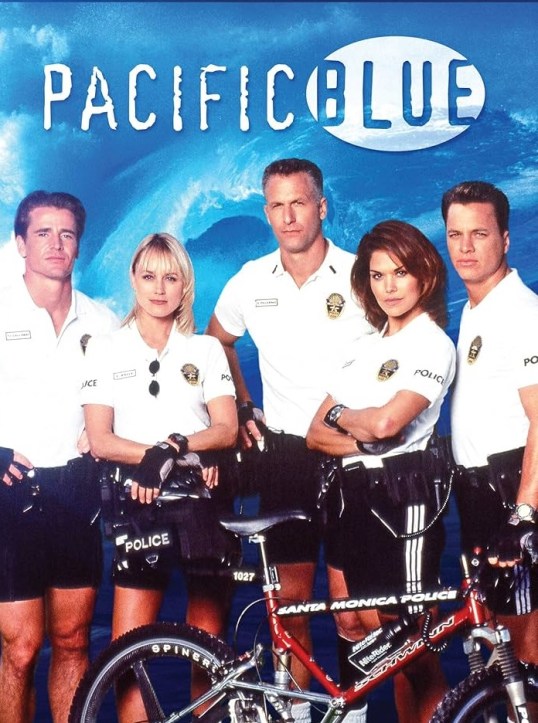
Welcome to Late Night Retro Television Reviews, a feature where we review some of our favorite and least favorite shows of the past! On Tuesdays, I will be reviewing Pacific Blue, a cop show that aired from 1996 to 2000 on the USA Network!  It’s currently streaming everywhere, though I’m watching it on Tubi.

This week, the second season ends.

Episode 2.22 “Rumpelstiltskin”

(Dir by John B. Moranville, originally aired on April 20th, 1997)

Rumpelstiltskin.  That’s the nickname that FBI agent Tim Stone (David Lee Smith) has given to expert counterfeiter Laszlo Parkes (Josh Richman).  Laszlo and his three associates — Sheila (Heidi Lenhart, who was Jenny Garrison on California Dreams), Lana (Diana Barrington), and Bree (Jennifer Sky) — are passing the fake money all around Santa Monica.  Laszlo is planning on scoring a big drug deal.  Meanwhile, Bree and her boyfriend (Tim Griffin) are planning on taking out Laszlo.

Agent Stone requests that Cory and Chris be assigned to work with him.  It soon become apparent that Stone has more in mind than just work.  Chris likes Stone but Stone like Cory.  When Chris find out that Stone and Cory slept together, she throws a fit.   I’ve noticed that Chris really only has to modes on Pacific Blue.  Either she’s disturbingly robotic and unconcerned with civil liberties or she’s getting mad about something and threatening to go all-Fatal Attraction on somebody.  I’ve also noticed that the show’s writers are incapable of imagining Chris or Cory in a situation where they don’t end up falling for whoever they’re working with.

The funniest part of this episode was when word came in of a shoot-out so all the cops jumped on their bicycles and rode over to the scene.  Seriously, a guy was taking fire and instead of jumping in a car and speeding over there, everyone decided to ride their bicycles.  Somehow, the bike cops were able to take down the mob and also arrest Laszlo.  I always wonder how they get people to the jail after they arrest them.  Do they chain them to the bicycle or something?

After the shoot out, Tim and Cory enjoyed a romantic sunset and Tim promised that he would return soon.

And so ended the second season!

Wow, the second season sucked.  Here we are, about to start season 3, and I’m still struggling to tell everyone apart.  Chris and Cory still don’t have a personality.  Everyone still looks silly on their bicycles.  This show grows more pointless with each episode.

Next week …. we’ll start season 3!

Retro Television Review: Fantasy Island 7.12 “The High Cost of Loving/To Fly With Eagles”


Welcome to Retro Television Reviews, a feature where we review some of our favorite and least favorite shows of the past!  On Tuesdays, I will be reviewing the original Fantasy Island, which ran on ABC from 1977 to 1984.  Unfortunately, the show has been removed from most streaming sites.  Fortunately, I’ve got nearly every episode on my DVR.

The Island just hasn’t been the same without Tattoo.

Episode 7.12 “The High Cost Of Loving/To Fly With Eagles”

(Dir by Jerome Courtland, originally aired on January 21st, 1984)

Craig Bradshaw (Doug McClure) is an aging pilot and daredevil who comes to the Island because he wants to compete in one final competition before he gets too old to keep going up in the air.  His girlfriend (Christine Belford) doesn’t want him to keep risking his life.  In the end, Craig finally comes to peace with the idea of getting older and he also gets engaged.

This fantasy felt pretty familiar.  A lot of people have come to the Island over the years with the hope of winning one final competition.  Actually, that’s probably one of the more realistic recurring fantasies that this show employs.  Who wouldn’t want one last chance to win?  If I went to Fantasy Island, I’d probably want to return to my high school years and compete in another speech and debate or drama competition.  As for this specific fantasy, it’s always difficult for me to take Doug McClure seriously and this episode was no different.

As for the other fantasy …. yeesh!  Lynn Redgrave plays Kristen Robbins, a former advertising exec who was fired when she refused her boss’s sexual advances.  Instead of suing the guy, Kristen comes to Fantasy Island and tells Mr. Roarke that her fantasy is to fall in love and get married and start a family because that means she will never be sexually harassed again.  (For a 40-something veteran of the advertising world, Kristen is incredibly naive.)

Kristen meets Paul Horner (Alex Cord) and it’s love at first sight.  Paul is actually on the Island to interview Kristen for a job with his firm but instead, they have a night of passion.  The next morning, Paul tells Kristen that, before they had sex, he recommended her for a job in which she would be working with him in Hawaii!

Kristen asks Roarke to change her fantasy.  She now wants to get that job and work in Hawaii.  Roarke reluctantly agrees.  Kristen does get the job but the company decides that Kristen will be their sole representative in Hawaii and Paul will remain in New York.  Kristen asks Mr. Roarke to change her fantasy once again.  She doesn’t want the job, she just wants Paul.  (Keep in mind that she’s known for Paul for one day.)  Paul overhears and pretends to be a cad so that Kristen will take the job.

Now convinced that Paul is a compulsive womanizer, Kristen tells Roarke to change her fantasy back to taking the job.  Roarke tells Kristen she needs to make up her own damn mind and then tells her that Paul was only pretending to be a womanizing jerk.  In the end, Kristen decides to take the job and marry Paul.  Paul decides to continue working in New York.  As they leave the Island, they assure Mr. Roarke that they’ll make it work.

Yeah, good luck with that.

This fantasy irked me.  Kristen lost her job because she refuses to sleep with her boss.  I would rather have seen her get a revenge fantasy than a love fantasy.  At the very least, Roarke could have introduced her to a good lawyer.  Instead, we got a fantasy in which the main theme was that women are irresponsible and can’t make up their own mind.

This was not my favorite trip to the Island.

Scenes That I Love: Tony Soprano Dreams Of A House In The Sopranos


With our annual Horrorthon starting tomorrow, I thought that this would be an appropriate time to share a creepy scene that I love from The Sopranos.

The Sopranos was well-known for its dream sequences. For me, this dream from the season 4’s Calling All Cars is one of the best and scariest of the series. It’s full of menace and ominous atmosphere, from the minute we see Tony being led to the house by the deceased Ralphie. And then, when that mysterious shadow appears on the staircase — AGCK!

Late Night Retro Television Review: CHiPs 4.15 “Ponch’s Angels: Part Two”


Welcome to Late Night Retro Television Reviews, a feature where we review some of our favorite and least favorite shows of the past!  On Mondays, I will be reviewing CHiPs, which ran on NBC from 1977 to 1983.  The entire show is currently streaming on Prime!

This week, Ponch continues to train Melanie and Paula.

Episode 4.15 “Ponch’s Angels: Part Two”

(Dir by John Florea, originally aired on March 1st, 1981)

We pick up where we stopped last week.  A man and his girlfriend are stealing purses and wallets at the marina.  Three escaped convicts are in a deserted house and digging for buried treasure.  Ponch and Jon are having to train two new motorcycle cops, Paula (Barbara Stock) and Melanie (Trisha Townsend).  When last we checked in, Ponch was kissing Melanie.  This episode opens with Ponch telling Melanie that they can never kiss again.

Ponch and Baker continue to train Paula and Melanie.  Ponch decides to switch with Baker.  He trains Paula while Baker works with Melanie.  But then almost the entire highway patrol comes down with the flu and, when Baker is put in charge while Getraer recovers at home, Ponch finds himself to work with both Paula and Melanie.  Once again, it’s all on Ponch because it’s The Ponch Show!

It’s all a bit exhausting to try to keep up with, to be honest.  Ponch and Baker spend this episode wondering whether or not women actually could handle being motorcycle cops.  Baker especially seems to be confused at the idea of a woman driving a motorcycle.  One gets the feeling that Ponch is just mad because he knows he’ll get fired if he tries to make a move on either woman.  Almost this entire episode is made up of Ponch trying to keep track of who is riding with who.

Luckily, Paula and Melanie prove themselves by catching the purse snatchers and also helping to catch the escaped convicts.  Good for them!  At the end of the opposite, they toss their motorcycle helmets in the air and leap for joy.  The picture freezes while Ponch and Baker have a good laugh.

I was not surprised to read that this episode was meant to be a backdoor pilot for a Paula/Melanie show.  Stock and Townsend were both likable and they acted well opposite each other so I could actually imagine them starring in a fairly entertaining series.  It didn’t happen, though.  Maybe the network felt that Ponch and Jon didn’t need the competition.

This was an okay episode of The Ponch Show.

Retro Television Review: Miami Vice 4.22 “Mirror Image”


Welcome to Retro Television Reviews, a feature where we review some of our favorite and least favorite shows of the past!  On Mondays, I will be reviewing Miami Vice, which ran on NBC from 1984 to 1989.  The entire show can be purchased on Prime!

This week, season 4 comes to a close.

Episode 4.22 “Mirror Image”

(Dir by Richard Compton, originally aired on May 6th, 1988)

Trying to recover from the assassination of his wife, Sonny Crockett throws himself back into his Sonny Burnett persona.  As this episode starts, Sonny has managed to get close to a ruthless drug dealer named Gutierrez (Antonio Fargas).  When Guiterrez blows up a boat that is full of rival drug dealers, the Vice Squad assumes that Gutierrez died in the explosion.  They also assume that Sonny was lost as well.

They are incorrect.  Gutierrez got off the boat before the bomb went off and somehow, Sonny was able to survive being blown up without suffering any sort of physical injuries.  However, mentally, he wakes up with amnesia.  When Gutierrez’s doctor tells Sonny that he’s a drug dealer and this his last name is “Burnett,” Sonny believes him.

In Ft. Lauderdale, Sonny quickly moves up in the organization of drug lord Miguel Manolo (Tony Azito).  Now believing himself to be a criminal, Sonny has no hesitation about murdering anyone who he views as being a threat.  He kills Gutierrez in cold blood about halfway through the episode.  At the end of the episode, he shoots a corrupt detective (Chris Cooper) in cold blood.  Tubbs, who has been investigating Manolo, witnesses that final murder.  “SONNY!” he yells as Sonny escapes in a speedboat and season 4 comes to an end.

Season 4 was truly uneven, featuring some terrible episodes and also some episodes that were good but not particularly memorable.  Before I started this season, I read that it was considered to be the worst of Miami Vice‘s five seasons and, having now watched every episode, I can see why.  Sonny marrying Caitlin never made any sense.  Most of the villains were either generic or ludicrous.  Most of the episodes just didn’t have the style that made the first three seasons so memorable.  Even worse than the boring episodes were the ones that tried too hard to be quirky.  Trudy going into space was definitely not a great idea.  With all that in mind, this final episode was great.  The action was stylish, Don Johnson actually seemed invested in the story for once, and Phillip Michael Thomas got to show off his own skills as an actor.  If only the entire season had been this good!

As well, I should mention that, along with Chris Cooper as a bad cop, this episode also featured Julia Roberts as Manolo’s girlfriend.  Roberts didn’t really get to do much but, even in a small role, her screen presence was obvious.  It’s not a surprise she became a star.

Next week …. we’ll start the final season of Miami Vice!