Lisa Marie’s Week In Television: 12/21/25 — 12/27/25


A Charlie Brown Christmas (Apple TV+)

It wasn’t such a bad little tree.  You can read Erin’s thoughts on this classic here.

Equal Justice With Judge Eboni K. Williams (Tubi)

I watched an episode on Sunday.  A woman was suing her former friend for smelling like marijuana when they got pulled over for failing to use their turn signal in Texas.  The patrolman searched their car, found even more weed, and issued both of them citations.  The woman felt that the friend should pay her ticket because the patrolman wouldn’t have searched the car if she hadn’t smelled like weed.  The friend pointed out that the patrolman wouldn’t have stopped the car in the first place if the woman has used her turn signal.  Personally, I didn’t think the woman really had a case because it was her car and she knew the marijuana was there even before she was pulled over.  Judge Williams partially agreed, ruling that the friend should only have to pay half of the woman’s ticket as opposed to the entire ticket.

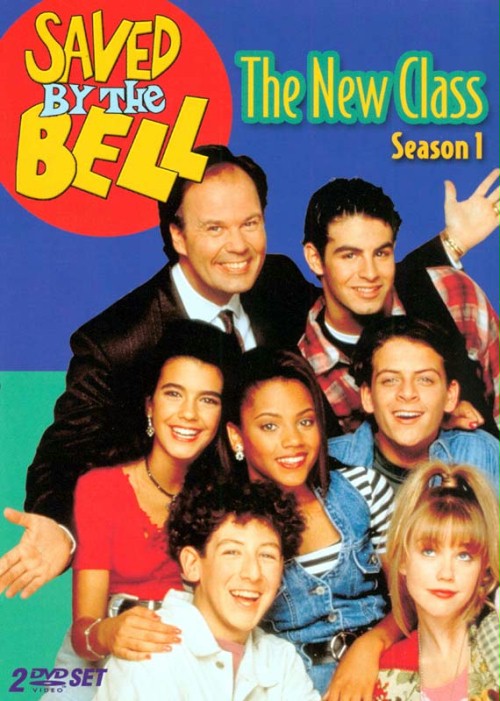
Saved By The Bell: The New Class (Prime)

This continues to be my go-to cure for insomnia.

The Simpsons (Disney+)

I watched two Christmas episodes.  In one, Bart got caught shoplifting.  That one made me cry.  The second one featured Gil moving in with The Simpsons.  “Eggs a la Harold Stassen, because they’re always running.”  That made me laugh.

Review: Fallout (Season 2, Episode 2 “The Golden Rule”)


“Empathy is like mud. You lose your boots in that stuff. Folks been screaming for two hundred years.” — The Ghoul

Fallout season 2, episode 2, titled “The Golden Rule,” eases the series back into its wasteland rhythm with a blend of tense character moments and signature post-apocalyptic absurdity. It’s not the flashiest hour, but it builds tension steadily through moral dilemmas and faction intrigue, rewarding patient viewers with hints of bigger conflicts ahead.

The episode weaves a tapestry of power struggles and ethical compromises across its split storylines. Maximus navigates the Brotherhood’s ruthless internal games, Lucy and the Ghoul debate the cost of mercy in a brutal world, and Norman from Vault 31 leads survivors peeling back more of the pre-war conspiracy’s ugly layers. At its core, it’s about testing how long personal codes hold up when survival demands compromise, forcing characters to confront who they’re really fighting for.

Maximus’s thread packs the most immediate emotional wallop, trapping him in a brutal boxing tournament that’s equal parts ritual and execution. What starts as a show of unity ends with him forced to kill a fellow Knight under the roar of the crowd, stripping away any lingering loyalty to the Brotherhood. His face after the win—drained and distant—captures the hollowness of victory in a machine that chews up its own, turning a grunt’s ambition into quiet tragedy.

The arrival of one of the new faces, Kumail Nanjiani as the slick Paladin Xander Harkness from the Commonwealth, shakes things up right after the fight. His cocky demeanor and whispers of a brewing civil war ripple through the ranks, pulling Maximus from personal survival into something that feels like the edge of a larger schism. It’s a clever escalation that promises fireworks without tipping its hand too soon.

Meanwhile, Lucy and the Ghoul’s road trip revisits old ground, which could feel like treading water if not for the sharp dialogue and escalating stakes. Their clash over stopping to help screams familiar—they clash over optimism versus cynicism, split paths briefly, then reconvene out of necessity—but it deepens their mismatched partnership. A hospital pitstop turns sinister fast, revealing ties to a slaver faction straight out of the game’s lore, where good intentions lead straight into ambush territory.

The Ghoul’s rant about empathy weighing you down like dead weight lands with his usual bite, but Lucy’s frustration with his cryptic warnings flips the script, painting his toughness as half selfishness. Their chemistry carries it, turning repetition into a believable cycle of two scarred people circling trust. And that massive radscorpion brawl? Pure adrenaline-fueled chaos, a hulking nightmare that embodies the wasteland’s random cruelty and gives the duo a shared “not today” win.

Shifting underground, Norman delivers pitch-black satire as he guides cryogenically thawed junior executives who wake up clueless and entitled in the apocalypse. They’re all petty squabbles and status games amid the ruins, a perfect skewer of corporate rot that outlasted the bombs. His scramble for leadership mixes fumbling comedy with a poignant glimpse of awe at the surface world, humanizing the bunker farce while his companions gripe like it’s a bad vacation.

Elsewhere, the pre-war corporate angle simmers darkly, with hints that ongoing “work” stems from a deliberate architecture of doom. It’s subtler than the surface mayhem, but it reinforces the show’s thesis: the end times weren’t random fallout, but a branded catastrophe whose machinery still grinds on.

Pacing strikes a deliberate balance, advancing multiple fronts without rushing payoffs, which suits the serialized vibe but might test newcomers. It prioritizes atmosphere over non-stop action, letting ironic humor—like deadly fights dressed as bonding or doomsday treated as HR drama—bridge the quieter beats. The result feels immersive, like wandering the game’s open world rather than railroading through quests.

Visually and tonally, the episode nails Fallout‘s essence: gritty practical effects, cluttered retro-futurism, and violence that shocks without overkill. Costumes evoke lived-in lore, from power armor gleam to faction garb, while the humor undercuts horror just enough to keep it addictive.

In the end, Fallout season 2, episode 2 is sturdy groundwork that shines in its character crucibles and world-deepening touches. Maximus’s ring of fire and Norman’s Vault meltdown stand tallest, while the road warriors deliver sparks amid echoes. The radscorpion frenzy injects raw thrill, priming the pump for faction clashes ahead. Not a lone-wolf classic, but a smart piece in a sprawling puzzle—fairly balanced, casually compelling, and true to the franchise’s warped heart.

Christmas with THE ANDY GRIFFITH SHOW: S1, Ep11 – “Christmas Story”


As a tax accountant, I get pretty stressed every year from the months of January through April 15th. To help relieve that stress, I like to watch my favorite movies and TV shows on my 3rd computer screen at night and on the weekends. I don’t necessarily pay much attention to them but just having them playing so I can look over and see my favorite scenes helps me feel better. A few years ago, I ended up watching all eight seasons of THE ANDY GRIFFITH SHOW three times during tax season. There’s just something about hanging out in Mayberry that makes me happy. Today, I thought it would be fun to revisit the one and only Christmas episode of the show.

“Christmas Story” centers on Ben Weaver (Will Wright), a crotchety old scrooge of a businessman, who catches local moonshiner Sam Muggins (Sam Edwards) pedaling his illegal liquor on Christmas Eve. Ben takes Sam, and the jug full of evidence, into Sheriff Andy Taylor’s (Andy Griffith) office, where he insists that Andy and his deputy Barney Fife (Don Knotts) lock Sam up even though it’s Christmas. Andy, who’s trying to keep the peace with the important and politically connected Ben Weaver, and who still wants to have the holiday gathering he had planned with his own family, comes up with a solution. He arrests Sam’s wife and kids as “accessories” so they can spend Christmas together at the jail, and then he deputizes his girlfriend Ellie (Elinor Donahue), his son Opie (Ron Howard), and Aunt Bee (Frances Bavier) to help watch over the prisoners. Before long, the jail has turned into a Christmas party, complete with food, laughter, and singing. Everyone is enjoying themselves…everyone, that is, except Ben Weaver.

“Christmas Story” is such a good example of why I love the Christmas season and THE ANDY GRIFFITH SHOW. As the show plays out, the crotchety Ben Weaver spends most of his time spying through the windows of the sheriff’s station as everyone, including the prisoners, is having the best time. He’s clearly lonely, but his pride won’t allow him to admit that what he really wants is to be inside with the rest of them. After trying to get himself arrested a couple of times, the ever-perceptive Andy figures out what Ben is up to. He arrests him, but before he takes him to jail, he lets him stop by his store to pick up a few presents for the others. By the time of the feel-good ending, Ben Weaver has gone from bitter and lonely to generous and happy, all because Andy took the time to see past his gruff exterior.

Other than the satisfying emotional arc for Ben Weaver, there were a few other things that stood out to me while watching “Christmas Story.” First, this was the 1st season of the series, so Andy Griffith was still playing Andy Taylor much more broadly. He would eventually play his character almost completely straight to give something for Don Knotts’ standout character of Barney Fife to play against. Second, the opening scene where Andy and Barney are going through the Christmas cards that they have received, specifically one from the Hubacher Brothers who are all in the state prison, is a comic masterpiece. I laughed out loud when Barney paid off the scene with the following line while viewing the picture of three smiling brothers behind bars… “Yeah, I think it’s just wonderful that they’re all together at Christmas.” Finally, when Andy plays the guitar and duets with Ellie to “Away in a Manger,” it’s just a perfect moment, one that brings up nostalgic feelings of singing the song at church or with my own family around the holidays.

At the end of the day, “Christmas Story,” like the entire series itself, isn’t really a realistic representation of the world around us. Rather, it’s a representation of a world more like we want it to be. In Mayberry, decent people do thoughtful things for other people, for no other reason than the fact that they genuinely care. And in Mayberry, the most bitter man in town, can recognize his weaknesses and turn his life around when he’s shown a little understanding and compassion. This episode provides hope for a better future for its characters, which makes it a perfect episode to watch during the Christmas season. In some ways, isn’t that what Christmas is all about?

Holiday Scenes That I Love: Festivus Dinner From Seinfeld (NBC, 1997)


Again, Happy Festivus!

This scene is from The Strike episode of Seinfeld.  Believe it or not, it is based on a true story.  Scriptwriter Dan O’Keefe, who wrote this episode, grew up celebrating Festivus, a holiday that was created by his father.  In the real Festivus, the aluminum pole was replaced by a clock that O’Keefe’s father would put in a bag and nail to a wall.  To quote O’Keefe:

“The real symbol of the holiday was a clock that my dad put in a bag and nailed to the wall every year…I don’t know why, I don’t know what it means, he would never tell me. He would always say, ‘That’s not for you to know.'”

Enjoy!

Song of the Day: I Dreamed I Saw Jack Nance Last Night by Dumb Numbers


Eraserhead (1977, dir by David Lynch)

Today would have been the 82nd birthday of Jack Nance, the talented but troubled actor who was a favorite of David Lynch’s and who died under mysterious circumstances in 1996.  Born in Massachusetts but raised in Texas, Nance first won acclaim as a star of the stage show, Tom Paine.  The director of Tom Paine later received a fellowship to the American Film Institute where he met a young director named David Lynch and recommended that Lynch cast Nance as the lead character in his film, Eraserhead.  Lynch and Nance were kindred spirits, two all-American eccentrics with their own unique view of the world.  Lynch went to use Nance in almost every film that he made up until Nance’s death.  Nance would also appear in small roles in films from other directors, usually cast as quirky and obsessive characters.  Outside of his role in Eraserhead, Nance is probably best known for playing Pete Martell on Twin Peaks.  Pete’s discovery of Laura Palmer’s body launched the entire saga.

Twin Peaks 1.1 — The Pilot (dir by David Lynch)

 In honor of Jack’s talent and legacy, here is today’s song of the day!

Lisa Marie’s Week In Television: 12/14/25 — 12/20/25


Flight of the Conchords (HBOMax)

Murray books Bret and Jermaine for a concert at “Central Park,” but he insists that they tour first to prepare for it.  Bret continually causes havoc that Murray blames on Jermaine.  In the end, it turns out that the concert is at a central park not The Central Park.  Jeff and I watched that classic episode on Wednesday.  It made me cry a little.

Frasier (Prime)

Jeff and I watched three episodes of the original 90s version of Frasier on Tuesday.  The first episode featured Frasier getting into a war of words with a columnist who wrote a column about why hated Frasier’s radio show.  It almost led to an actual physical fight before the police intervened on the behest of Martin Crane.  (John Mahoney was a treasure!)

The second episode was “The Candidate,” in which Frasier endorses Phil Patterson for Congress, just to discover that Phil Patterson is convinced that he was abducted by aliens and taken into outer space.  The scene where a stunned Frasier attempted to record a commercial for Patteson (“the sane choice”) made me laugh so much that I almost fell off the couch.

Finally, we ended with a Christmas episode!  Frasier wants to get his young son a Christmas gift that will make him think.  Martin argues that Frasier should get him a gift that he’ll have fun with.  Frasier and Niles have to go to a mall.  The closing scene, with Martin revealing that he had purchased the gift that Frasier’s son actually wanted, made me cry.

What a great cast this show had!  Watching these three episodes, I was reminded why the revival didn’t work.  As good as a job as Kelsey Grammer did in the revival, no one wants to think of Frasier moving back to Boston and no longer having anything to do with his family in Seattle.

The Office (Peacock)

On Tuesday, Jeff and I watched several classic episodes of The Office.  We started with season 2’s Christmas Party.  Then, we watched Season 4’s Did I Stutter, followed by Season 6’s Scott’s Tots, and we followed it all up with Season 3’s The Convict and A Benihana Christmas.  I know I’ve been pretty critical of the direction that The Office eventually ended up going.  But the first three seasons were about as good as any sitcom that has ever aired and seasons 4-6, while uneven overall, still produced some classic episodes.  I will always enjoy the Christmas episodes, no matter how much that annoying actress from A Benihana Christmas whines about it.

Saved By The Bell: The Next Class (Prime)

Saved By The Bell: The Next Class continues to be my preferred background noise for when I’m struggling to get some sleep.

Seinfeld (Netflix)

On Tuesday, Jeff and I watched two Christmas episodes of this classic 90s sitcom.  We started with the episode where Elain was dating a communist and Kramer got fired from his department store Santa job because he was spreading propaganda.  Meanwhile, Jerry’s high school rival resurfaced and demanded a rematch on a race that Jerry won after getting a head start.  I loved this episode!  Everything from Jerry and George pretending to randomly run into each other at the coffee shop to the race at the end to the little kid yelling, “Hey, this guy’s a commie!”

We followed that episode with the Festivus episode.  I love the scene where Jerry Stiller (as George’s father) casually talks about seeing someone else grab the doll that he was planning to buy for his dolls.  “As I rained blows upon him, I realized there had to be a better way!”  Also, I totally would have wanted to be Submarine Captain too.  Free sub?  Give me my ticket!

Review: Fallout (Season 2, Episode 1 “The Innovator”)


“Control is not control unless it’s absolute.” — Robert House

Episode 1 of Fallout Season 2 eases us back into the irradiated chaos with a deliberate pace that prioritizes atmosphere over non-stop action, reminding everyone why this show’s wasteland feels so lived-in and unpredictable. Titled something along the lines of a nod to foresight amid apocalypse, it shifts the spotlight toward the glittering promise of New Vegas while weaving in threads from the vaults and the open road, all without feeling like it’s just recapping old ground. The result is a premiere that builds quiet dread and dark laughs in equal measure, setting up a season that promises to dig deeper into the franchise’s corporate nightmares and personal vendettas.

Right from the jump, the episode grabs attention with a slick demonstration of pre-war tech gone horribly right—or wrong, depending on your perspective. Justin Theroux as Robert House commands the screen as a slick-suited mogul, his magnetic performance dripping with oily charisma and precise menace as he demos a mind-control gadget on skeptical workers, his unhinged glee peaking in a catastrophic head-explosion that hilariously exposes tech’s lethal limits. It’s peak Fallout absurdity: blending high-tech horror with retro-futurist flair, like if a 1950s infomercial took a fatal detour into Black Mirror territory. This opener not only hooks you visually but plants seeds for how old-world ambition fuels the post-apoc mess, tying neatly into the larger puzzle of who pulled the triggers on those bombs.

The core trio gets prime real estate here, each storyline humming with tension that advances their arcs without rushing the reveals. Lucy (Ella Purnell), still clinging to her vault-bred optimism, teams up with The Ghoul (Walton Goggins) for a Mojave trek that’s equal parts banter and brutality. Their pit stop at a rundown motel turns into a classic role-playing moment—talks fail, bullets fly, and suddenly you’re knee-deep in the kind of chaotic shootout that screams video game roots, but with character stakes that make the gore hit different. The Ghoul’s gleeful savagery clashes beautifully with Lucy’s reluctant humanity, sharpening their odd-couple dynamic into the show’s emotional engine, where every kill or quip peels back layers of trauma and growth.

Meanwhile, flashbacks to the days before the flash illuminate the cowboy’s (Walton Goggins) haunted past, dropping him into a high-stakes conspiracy involving energy breakthroughs and power grabs that could rewrite history. These segments pulse with moral ambiguity, showing how one man’s vision—or hubris—shapes the ruins we roam today, all delivered through sharp dialogue and tense standoffs that avoid info-dumps. It’s a smart way to expand the lore, making the pre-war era feel as treacherous and satirical as the wasteland, while hinting at butterfly effects that ripple straight to the present-day action.

Back underground in Vault 31, Norm (Moisés Arias) faces a grueling isolation game, rationed and rationed until desperation breeds rebellion. Pacing a sterile corridor lined with frozen execs, he grapples with the cold calculus of survival versus unleashing corporate ghosts, culminating in a choice that’s as chilling as it is inevitable. This thread underscores the series’ knack for turning confined spaces into pressure cookers, where ideology and instinct collide, and it mirrors the surface-level horrors in a way that unifies the episode’s split timelines. No capes or saviors here—just raw human (or post-human) frailty amid institutional rot.

What elevates this opener beyond fan service is its thematic cohesion: progress as the ultimate wasteland monster, whether it’s mind-bending devices in hidden labs, faction wars over scraps of the old world, or vaults masquerading as utopias. The production design shines, from neon-drenched ruins evoking casino glamour turned grim to grotesque experiments that nod to the games’ darkest quests without aping them beat-for-beat. Humor lands in the margins—snarky one-liners amid mayhem, visual gags like branded apocalypse merch—keeping the bleakness palatable and true to the source material’s satirical bite.

Pacing-wise, it unfolds like a slow-burn fuse: the front half reacquaints us with players and places, building investment through intimate beats, while the back ramps up with visceral twists that leave you hungry for more. A few moments drag if you’re craving instant explosions, but that’s by design—this isn’t a rollercoaster start; it’s a deliberate march toward war, factions aligning, and secrets cracking open. Lucy’s pursuit of family truth intersects with tech terrors in ways that feel organic and ominous, promising escalations that blend personal drama with world-shaking stakes.

Visually and sonically, Fallout Season 2 flexes harder, with practical effects that make every mutant skirmish or gadget malfunction pop off the screen, backed by a score that mixes twangy guitars with synth dread for that signature retro-punk vibe. Layered atop that is the inspired use of 1950s-era music—crooning ballads and peppy tunes playing ironically over carnage and corporate horror—anchoring the show’s aesthetic in its ironic nostalgia for a “better” past that led to ruin. The leads ooze chemistry, stealing scenes with micro-expressions that convey volumes, while supporting turns add layers of menace and mirth. It’s not flawless—the multi-threaded structure demands attention, and some setups tease bigger payoffs down the line—but as a launchpad, it nails the balance of homage, innovation, and binge bait.

Ultimately, this episode thrives on Fallout’s core irony: in a world built on fallout from unchecked ambition, our survivors scrape by with grit, guns, and grudging alliances. It honors the games’ sprawl while carving its own path through New Vegas’ shadows, teasing faction intrigue, tech horrors, and moral quagmires that could redefine the Mojave. If Season 1 proved the concept, Episode 1 of Season 2 whispers that the real radiation burns are just heating up—grab your Pip-Boy, because this wasteland’s about to get a whole lot wilder.

Review: Fallout (Season 1)


“War never changes. You look out at this Wasteland, looks like chaos. But here’s always somebody behind the wheel.” — The Ghoul

Fallout’s first season lands like a mini-nuke: messy around the edges, but undeniably powerful and surprisingly fun. It’s one of those adaptations that feels comfortable being both a love letter to the games and its own weird, often hilarious beast.

Set a couple of centuries after nuclear war, Fallout drops viewers into a retro-futurist wasteland where 1950s aesthetics collide with irradiated horror and corporate evil turned up to eleven. The show splits its focus between three main threads: Lucy, a bright-eyed vault dweller forced to leave her underground utopia; Maximus, an eager but insecure squire in the Brotherhood of Steel; and The Ghoul, a bounty hunter whose past life as a pre-war actor slowly bleeds through his charred exterior. The decision to juggle these perspectives is smart, because each storyline scratches a different itch: Lucy carries the emotional core and fish-out-of-water comedy, Maximus gives the militaristic, power-armor fantasy with a side of satire, and The Ghoul supplies the hard-boiled noir edge and moral ambiguity. The result is a season that rarely feels static; even when one plotline stalls a bit, another kicks in with fresh energy.

The tone is one of the show’s biggest strengths. Fallout leans hard into pitch-black humor without ever completely undercutting the stakes, which is harder to pull off than it looks. Limbs fly, heads explode, dogs get eaten, and yet the show keeps finding a way to make you laugh at the absurdity without turning the apocalypse into a joke. The violence is graphic and frequent, but it usually serves a purpose: to remind you that this world is brutal, even when the characters are cracking wise or bartering over chems. If the games felt like wandering into a deranged theme park built on the ruins of civilization, the series captures that same feeling of “this is horrible, but also kind of hilarious.” That balance, more than any specific lore reference, is what makes it feel like Fallout rather than just another grimdark sci-fi show.

Performance-wise, the casting is pretty inspired. Ella Purnell plays Lucy with this mix of optimism, naivety, and stubborn decency that could easily have been grating, but instead becomes the emotional anchor of the whole season. She brings just enough steel to the character that her idealism feels like a choice, not a default setting. Aaron Moten’s Maximus is a slower burn, and early on he risks fading into the background as “generic soldier guy,” but the more the show digs into Brotherhood politics, insecurity, and the pressure to be “worthy” of power armor, the more interesting he becomes. Walton Goggins, though, more or less walks away with the show. As The Ghoul, he’s vicious, funny, and weirdly tragic, and the flashbacks to his pre-war life give the season some of its most compelling dramatic beats. There’s a sense of continuity in his performance between the slick actor he was and the monster he becomes that keeps the character from feeling like a one-note cowboy caricature.

Visually, Fallout looks a lot better than a streaming adaptation of a video game has any right to. The production design leans into practical sets and tactile props where possible, and it pays off. Power armor has real heft, the vaults look lived-in rather than just glossy sci-fi hallways, and the wasteland feels like a place where people actually scrape out a living instead of just a CGI backdrop. The show has fun with the franchise’s iconography—Nuka-Cola, Pip-Boys, Vault-Tec branding, goofy radios—but it rarely pauses to point and wink too hard. The design team clearly understands that Fallout is basically “atomic-age corporate optimism weaponized into apocalypse,” and that theme is baked into everything from costumes to billboards rotting in the sand. Even the creature designs, like the mutated critters and ghouls, walk that line between unsettling and cartoonishly over-the-top, which fits the overall tone.

On the writing side, the structure of the season feels very much like an RPG campaign. Episodes often play like individual “quests” that build toward a bigger mystery: Lucy stumbling into a bizarre settlement, Maximus dealing with Brotherhood politics, The Ghoul chasing a lead that intersects with both of them. That quest-chain structure gives the first half of the season a propulsive, almost episodic energy, and it’s one reason the show is so watchable. At the same time, this approach has trade-offs. Sometimes character development feels a bit checkpoint-driven—people change because the story needs them to for the next “quest,” rather than as a smooth emotional progression. You can occasionally see the writers nudging the pieces into place, especially as the season barrels toward the finale.

Fallout sits in an interesting sweet spot when lined up against another prestige video game adaptation like HBO’s The Last of Us. Instead of treating the games as a sacred script that must be recreated line for line, it treats the Fallout universe as a shared sandbox—a tone, a style, a set of rules—rather than a fixed storyline that must be obeyed. Where The Last of Us is largely a faithful retelling of Joel and Ellie’s journey, Fallout seems far more interested in asking, “What else can happen in this world?” instead of “How do we restage that iconic mission?” It borrows the franchise’s black-comedy vibe, retro-futurist Americana, and corporate dystopia, then builds mostly original plots and character arcs on top.

That choice immediately gives the writers room to play. They’re not constantly checking themselves against specific missions, boss fights, or famous cutscenes; they’re free to jump around the timeline, invent new factions or townships, and reframe old ideas in ways that a beat-for-beat adaptation could never manage without sparking outrage. This approach also lets Fallout add to the lore instead of just reanimating it in live action. Because it’s not locked into recreating a particular protagonist’s path, the show can explore corners of the wasteland that were only hinted at in the games, complicate existing factions, or take big swings with backstory and world history. That kind of freedom inevitably creates some continuity friction for hardcore fans, but it also keeps the series from feeling like a lavish, expensive recap of something players already experienced with a controller in hand. Where The Last of Us excels by deepening and humanizing a story many already know, Fallout thrives by expanding its universe sideways, treating the source material as a toolbox rather than a template—and that makes it feel more like a genuine new chapter in the franchise than a live-action checklist.

Thematically, the show has more on its mind than explosions and fan-service, which is nice. Fallout keeps circling back to questions about corporate power, the illusion of safety, and how far people will go to preserve their own little slice of control. Vault-Tec’s smiling fascism is a blunt but effective metaphor for real-world systems that promise protection while quietly planning for everyone’s demise. The Brotherhood of Steel, meanwhile, becomes a vehicle for exploring militarized religion, hierarchy, and the dream of “owning” technology and knowledge. None of this is subtle, but Fallout isn’t a subtle franchise to begin with, and the series has enough self-awareness to let its satire stay sharp without slowing everything down for speeches. When it hits, it feels like the writers are asking, “Who gets to decide what’s worth saving when everything’s already gone?”

Where the season stumbles most is consistency. The pacing isn’t always smooth; some mid-season episodes are stacked with memorable set pieces and character moments, while others feel like they’re mostly there to set up endgame twists. The finale, in particular, is likely to be divisive. On one hand, it ties several plot threads together, drops a couple of bold lore swings, and sets up future seasons with a few big, crowd-pleasing reveals. On the other hand, it rushes emotional payoffs and leans heavily on explaining rather than letting certain developments breathe. The shift in tone in the last episode is noticeable enough that some viewers may feel like they suddenly switched to a slightly different show. It’s not a deal-breaker, but it does mean the season ends with more “wow, that was a lot” than a clean emotional landing.

As an adaptation, this freedom-to-expand strategy pays off by appealing to longtime fans and welcoming newcomers without getting bogged down in purist debates. Fans of the games will catch tons of details, locations, and tonal echoes that feel like affectionate nods rather than empty easter eggs. At the same time, the show isn’t just re-skinning existing game plots, which is a good call. It feels like a side story in the same universe rather than a strict retelling. That said, the lore choices late in the season—especially around the broader timeline and certain factions—are bound to spark arguments. If someone is deeply attached to the canon of the older games, some of the retcons and reinterpretations might play like a slap in the face. If someone is more relaxed about canon and just wants an entertaining, coherent story in that world, the show will probably land much better.

The writing of individual scenes shows a lot of care, especially in the way humor and dread coexist. Some of the best moments aren’t the big action beats but the small conversations: a strange, tense chat in a ruined diner, a piece of pre-war media resurfacing at the worst possible time, or a casual bit of wasteland banter that suddenly turns threatening. The dialogue sometimes leans too modern for the retro setting, but the rhythm feels natural enough that it rarely jars. When the show is firing on all cylinders, it nails that specific Fallout flavor: characters staring at incomprehensible horror and responding with a joke, a shrug, or a desperate sales pitch.

If there’s one area where the season could improve going forward, it’s in fleshing out the secondary cast and giving certain arcs more emotional weight. Some supporting characters are memorable and sharply drawn, while others feel like they exist mainly to be lore-delivery devices or cannon fodder. The world feels rich enough that it can absolutely sustain more side stories and slower, character-focused detours. A little more breathing room for relationships—whether friendships, rivalries, or romances—would help the big twists land harder and keep the show from occasionally feeling like it’s sprinting from spectacle to spectacle.

Overall, Fallout’s first season is a strong, confident debut that understands what made the games stand out without being slavishly beholden to them. It’s funny, brutal, stylish, and surprisingly character-driven for a show that spends so much time reveling in bloodshed and nuclear kitsch. The missteps in pacing and the polarizing choices in the finale keep it from being flawless, but they also signal a series willing to take risks rather than play it safe. For viewers who enjoy genre TV with personality, and for gamers who have been burned by adaptations before, this season is absolutely worth the trip into the wasteland. It doesn’t just survive the jump to live action; it stomps into it in full power armor, flaws and all.

On Strike for Christmas (Dir Robert Iscove), Review by Case Wright


On Strike for Christmas was fun because I got to live tweet it with Lisa and that’s always a blast. The story is straight forward- Joy (Daphne Zuniga), a SAHM, is fed up with being unappreciated for her hard work in prepping for Christmas; so, she goes full-commie and strikes/organizes the other moms to fall into the perils of communism by unionizing the moms to stop all Christmas prep! Honestly, I could’ve reviewed this film for Horrorthon based upon the Marxist plot line!

I want to stay as positive as I can because it’s Christmastime but the film took a WEIRD left turn! First, the grandmother, the mom, the dad, AND the two sons were really close in age; so, you had serious teen mom vibe. Second, it was obvious that ALL of the actors had the hots for each other! It was like infamous Folgers ad (see below ).

If you are unfamiliar with the Folgers ad above, the plot is that a brother returns from Africa and the actors couldn’t help but show their attraction for one another. The same distracting event happened in this film too and not just once or twice – no no no – the sexual tension in this film was like Madmen season 1 levels and in nearly every scene.

There was one scene where the mom dressed up and the son gushed on how hot she was and it was very uncomfortable. I swear, find someone who looks at you like these actors looked at each other!!!

There were some funny parts to the film; such as, the obligatory trope that the boys and dad tried to make cookies and it’s a disaster. However, it really felt like the family had a lot of problems before this because the mom proceeded to not only go on strike, but to talk to journalists about all of her family were just POSs. I mean really if you’re already at the point where you feel comfortable going to the press about what garbage people your husband is and your son’s, the marriage is already over. And in her case, it certainly was awkward at Valentine’s Day when her dad and sons/boyfriends gave her chocolate all at the same time!!! I can only imagine what the hallmark card would look like!!!

Lisa noticed that the mom wasn’t just going on strike herself, but she proceeded to break up every family in the town. Joy needs to be stopped! I mean, it’s bad enough that she’s led all these poor people down the path of socialism and communism, which is just painful for me, but she’s also splitting up all these families!

Maybe that’s what happened in Russia? It was all just a big kerfuffle over cookies and icing and the next thing you know – nukes are pointed right at the good old US of A!!!

It should be noted that eventually the strike does end and the families try to pick up the pieces of their shattered lives. I think that was very insensitive of Joy because she always had her son/boyfriend’s number to fall back on during those cold winter nights!!!