Baffled! is an entertaining little made-for-TV movie from 1973. Leonard Nimoy plays a race car driver who suddenly starts to have psychic visions of a woman who lives in what appears to be a gothic manor. The woman is in some sort of danger. Nimoy, of course, would rather just race cars but a parapsychologist (Susan Hampshire) convinces him that he has to figure out what his visions mean.
Now, to be honest, Baffled! is not a particularly scary movie. Some of Nimoy’s visions are spooky but there’s nothing in this movie that’s going to give you nightmares. Though it may not be horrifying, Baffled! is a lot of fun. Apparently, it was meant to be a pilot for a TV series. If it had been picked up, I guess Nimoy and Hampshire would have been helping out a new guest star every week. Nimoy seems to be having a lot of fun playing a psychic race car driver and he and Susan Hampshire have a really sweet and enjoyable chemistry.
Listen, it’s John Carpenter. As a month, October pretty much belongs to John Carpenter and there’s never a more appropriate time to share a music video for one of his songs. Interestingly enough, Night is one of Carpenter’s rare compositions that is not also a part of a soundtrack.
It certainly sounds like it belongs in a movie though, right?
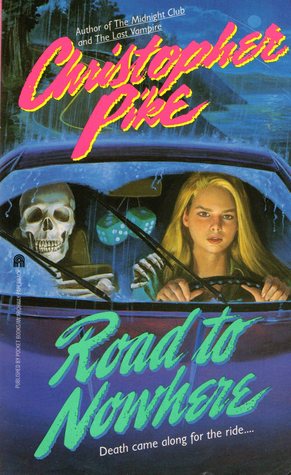
To be honest, I ordered a copy of this 1993 YA novel from Half-Price Books strictly because of the cover. I mean, there were several old Christopher Pike books to chose from but that image of the young woman driving her car with the skeleton sitting beside her just leaped out at me. I think a lot of it had to do with the fuzzy dice hanging from the rear view mirror. I’ve got a St. Patrick medal hanging from my mirror but if I wasn’t half-Irish and if I hadn’t been raised Catholic, I definitely would have the dice….
Well, actually, I probably wouldn’t have anything hanging from my mirror. Seriously, those big dice look like they’re going to get in the way. I mean, she’s already driving in the rain and she’s got a skeleton sitting next to her. Does she need the distraction of giant dice? No wonder death is coming along the ride….
Anyway, the book itself is about an 18 year-old named Teresa. Teresa is an aspiring songwriter and singer. She just broke up with her boyfriend Bill. The book takes place on the night that she was planning to lose her virginity to Bill but now that she’s single and miserable, she figures that she might as well just drive to the Bay area. Teresa also decides to pick up two hitchhikers because apparently, she’s never read a scary book or seen a horror movie before.
The hitchhikers are named — look, I’m not joking — Freedom Jack and Poppy Corn. Freedom Jack and Poppy Corn are also heading to the Bay and they have all sorts of interesting stories to tell about yet another couple, John and Candy. Now, to be honest, I wouldn’t pick up hitchhikers in the first place. I don’t care how lonely I am. I don’t care how much its raining. I don’t care how late at night it is. I’m not picking you if you’re standing on the side of the road. But even if I did pick up a pair of hitchhikers, I would probably kick them out of the car as soon as they started telling me a story about a doomed couple who are obviously the hitchhikers in a past life. Somehow, Teresa doesn’t immediately catch onto the fact that Freedom Jack and Poppy Fresh are actually John and Candy despite the fact that it’s incredibly obvious. (John = Jack. Candy = Poppy Corn. I mean, come on….) Then again, Teresa doesn’t seem to be the smart in general.
Anyway, Teresa’s journey with the two hitchhikers leads to her stopping off at both a castle and a church and losing her virginity. The journey continues without anywhere seeming to get anywhere because they’re on a road to nowhere and this is one of those Christopher Pike books where nothing is what it actually seems to be. There’s a lot of twists but they’re all somewhat predictable twists. If you’ve read any of Christopher Pike’s other books, you’ll be able to guess what’s going on in The Road to Nowhere. In the end, everyone has come to peace with their past and chosen their future. While the stories of Teresa and Bill and John and Candy contain moments of deep darkness, Road to Nowhere , especially when compared to Pike books like The Immortaland Die Softly, is actually rather optimistic about the ability of people to move on and find some sort of peace.
Finally, let’s give the book some credit for coming up with names like Freedom Jack and Poppy Corn. That, in itself, is an accomplishment worth celebrating. Still, I wish the cover had more accurately reflected the content of the book.
No, not in Miami. Not Jacksonville. Not Ft. Lauderdale. Certainly not Orlando. No, this film takes place off the back roads of Florida, where people are honest country folk and some folks live in a houseboat and you should always be careful when walking around the bayous because there might be some alligators lurkin’ about. Of course, in this part of Florida, they call them gators. Anyone who says alligator obviously thinks they’re too good for downhome country living.
Anyway, it turns out that there’s more to worry about in Florida then just alligators. There’s also the chance that your houseboat might get struck by a meteor. And then, everyone on the houseboat might be transformed into a zombie and, after they’ve eaten all the alligators, they might start eating all the humans.
When a sudden zombie outbreak occurs, you have to hope that you’ll get a good law enforcement response. Unfortunately, law enforcement in these parts means an elderly sheriff and a bearded deputy who is always trying to catch a peek of the local women skinny dipping. The sheriff, by the way, is played by Buster Crabbe. In the 20s and 30s, Crabbe was an champion swimmer who won Olympic medals and went on to play Tarzan, Flash Gordon, and Buck Rogers. At the height of his popularity, he was known as “the King of the Serials.” In The Alien Dead, the 70-something Crabbe plays Sheriff Kowalski and, if nothing else, it seems like he was enjoying himself. Really, that’s important thing when it comes to a movie like this.
The Alien Dead is an extremely-cheap looking film and, with the exception of Crabbe, none of the actors appear to have done much before or after appearing in The Alien Dead. There are some scenes that are so dark that it’s next to impossible to actually tell what’s going on. Despite being a rather short film, the pace is still slow and there are certain scenes that seem to drag on forever. There’s a lot of perfectly valid criticisms that one can make about The Alien Dead.
But you know what?
I like the film.
Seriously, in a strange way, the film actually does work. Yes, the acting is pretty bad and the dialogue is often rather clunky and the plot doesn’t make sense and blah blah blah. Those are all true facts. But, there are isolated moments where The Alien Dead achieves a dream-like intensity. For instance, there’s a lengthy scene where the zombies attack and all of the action is shown in slow motion. I realize that may have been done to pad the film’s running time but strangely enough, it works. Even more oddly, the film’s cheap gore effects add to the movie’s already dream-like feel. Finally, if nothing else, the film captures the humid atmosphere of the Florida bayou. Watching the film, you can feel the sweat and hear the buzzing of mosquitos. At its best, The Alien Dead works as a piece of outsider art.
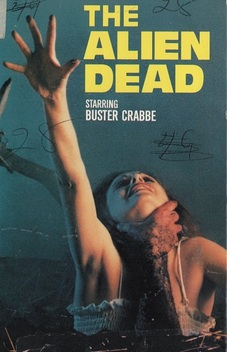
Finally, The Alien Dead is one of those films that had been released and re-released a few times on video. As you can see below, one of those releases was apparently inspired by the success of Evil Dead.
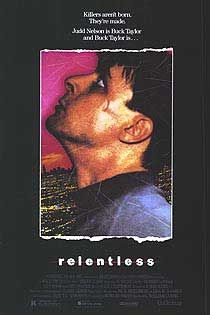
Buck Taylor (Judd Nelson) is the son of an LAPD cop who has never gotten over the bitterness he feels over being rejected by the force himself. Determined to get revenge on a world that refuses to look beyond the dark circles under his eyes, Buck becomes a serial killer. He picks his victims at random from the phone book. Because his father was a cop and he studied to join the force, Buck knows all the tricks of the trade.
Pursuing Buck are two cops. Bill Malloy (Robert Loggia) is a veteran detective who is supposed to be laid back though Robert Loggia was one of those actors who never seemed like he had been laid back a day in his life. Malloy’s new partner is Sam Dietz (Leo Rossi). Dietz has just transferred to Los Angeles from New York and he’s having a hard time adjusting. Everyone is just too laid back.
When Buck starts to target the two cops who are investigating him, the case gets personal and relentless.
Relentless is a movie that I’ve been meaning to review for five years now. In the past, I’ve always been deterred by the fact that reviewing Relentless would mean rewatching Relentless. But, having just spent two weeks watching all of the Witchcraft films, I now feel like I can handle anything. Relentless is a movie that I always remember as being better than it actually is. The murders are creepy but Judd Nelson gives such a one-note performance as the killer that it’s impossible to believe that he could have gotten away with them. As played by Nelson, Buck Taylor is such an obvious serial killer that I’m surprised that he wasn’t already in jail, having been accused of every single unsolved murder on the books. There’s nothing compelling about this killer and films like this pretty much live and … ahem … die based on the quality of their villain.
Why do I always remember Relentless as being better than it is? Most of the credit for that probably goes to Leo Rossi, an underappreciated character actor who gives such a good performance as Sam Dietz that he makes the entire movie better. Rossi even got a brief franchise out of his performance in Relentless, as Dietz returned for three sequels. Robert Loggia is also good as Malloy and it’s unfortunate that the movie doesn’t do as much with the character as it could have.
Rossi and Loggia aside, Relentless doesn’t live up to its potential. But it was still popular enough to launch a direct-to-video franchise. Tomorrow: Relentless 2.
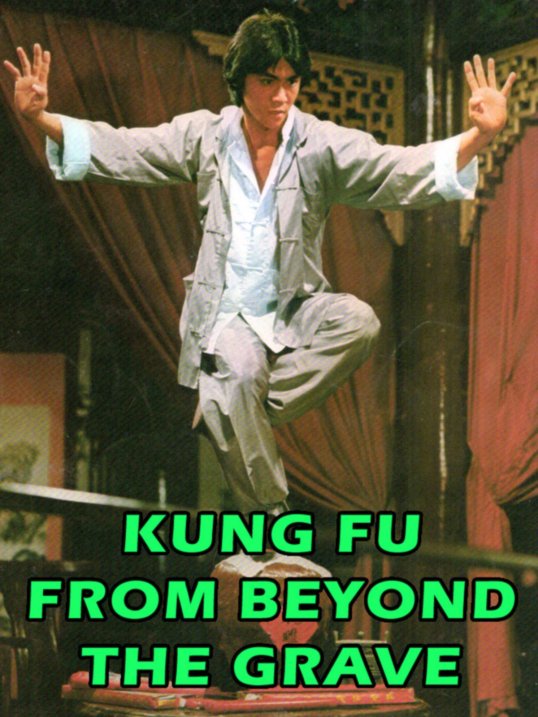
I watched the 1982 film, Kung Fu From Beyond The Grave, on Prime earlier today. It was an enjoyable film from Hong Kong. It starred many of the same people who appeared in Kung Fu Zombieand both films had a similar attitude, mixing horror and family drama with martial arts and juvenile comedy and topping it all off with a random vampire. As I said, it was fun to watch and I was certainly never bored.
That said, I would be lying if I said I actually understood everything that happened in the film.
That’s not really the fault of the filmmakers or, at least, I don’t think it is. The version that I watched was badly dubbed into English and it was obvious that, during the film’s trip from Hong Kong to the grindhouse theaters of New York City, some pretty heavy editing was done. That’s pretty much par for the course when it comes to the martial arts films of the 70s. In fact, for many Americans, a good deal of the appeal of these films is the fact that the plots are often incoherent. Who needs a detailed plot when you’ve got so many great fight scenes, right?
The film opens with a narrator explaining that, every couple of months, the Gates of Hell are opened and the dead can wander the Earth. (The film — or at least the dubbed version of the film — seems to be pretty sure that everyone who dies ends up in Hell.) Chun Sing (Billy Chong, star of Kung Fu Zombie) is visited by his dead father, who informs Chun that he was killed by an evil wizard (Chin-Lai Sung) who works for a local crime lord named Kam Tai Fu (Lieh Lo). Chun now has to avenge his father’s death and what I liked about this film is that, much as with Kung Fu Zombie, it suggested that Chun is a bit annoyed to be bothered with it. One gets the feeling that Chun was perfectly fine with not knowing who was responsible for his father’s death but, now that the annoying old man has wandered through the Gates of Hell, Chun is now obligated to do something about it.
Unfortunately, it’s not going to be easy to revenge because Kam’s wizard is not only an expert martial artist but he’s also capable of summoning super natural help. In this case, that help comes in the form of a vampire. What is Chun to do!? Wait a minute — the Gates of Hell are still open! Why not just get some friendly ghosts to help him take on Kam, the wizard, and the vampire!?
And that’s really pretty much the movie for you. For 87 minutes, people yell at each other, people fight, vampires pop up, and occasionally a large group of pasty ghosts appear and swarm on their enemies. There’s also a subplot about people getting their hearts ripped out of their bodies while visiting the local brothel which …. well, I know it had something to do with Kam’s wizard but I’m not really sure why it needed to be done. Still, the scenes of heart theft add to the film’s already chaotic atmosphere. They just seem to belong.
Which one is better, Kung Fu Zombie or Kung Fu From Beyond the Grave? The fight scenes were actually better in Kung Fu From Beyond the Grave but Kung Fu Zombie had a far more clever sense of humor. I personally would have to give the victory to Kung Fu Zombie. That said, they’re both wonderfully berserk films and if you want to add a little martial arts to your Halloween horror, these two films make the perfect double feature! And they’re both on Prime so ….. enjoy!
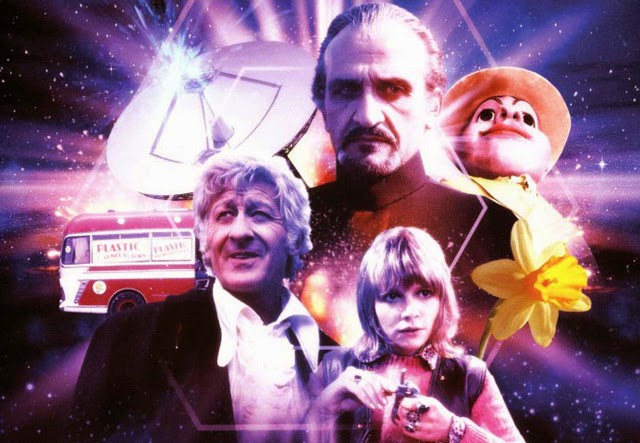
In 1971, for the entire month of January, children across the UK were terrified of the Autons.
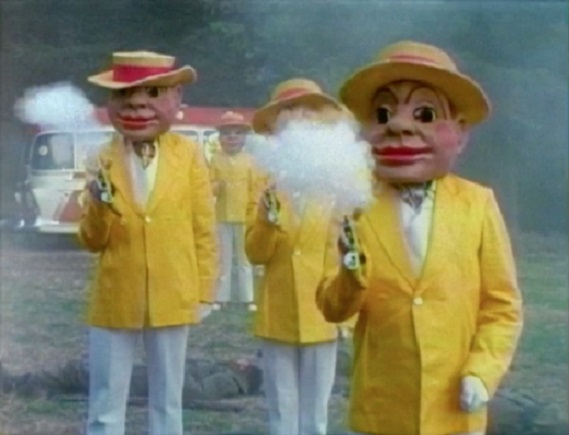
That was because Doctor Who began its eighth season with a four-part story called The Terror of the Autons. Previously seen in Spearhead From Space, the Autons were plastic aliens who could disguise themselves as anything. That mannequin in the store? It might be an Auton. That strange looking man handing out flowers? Might be an Auton. Your favorite plastic doll? It might be an Auton waiting to kill you in your sleep.
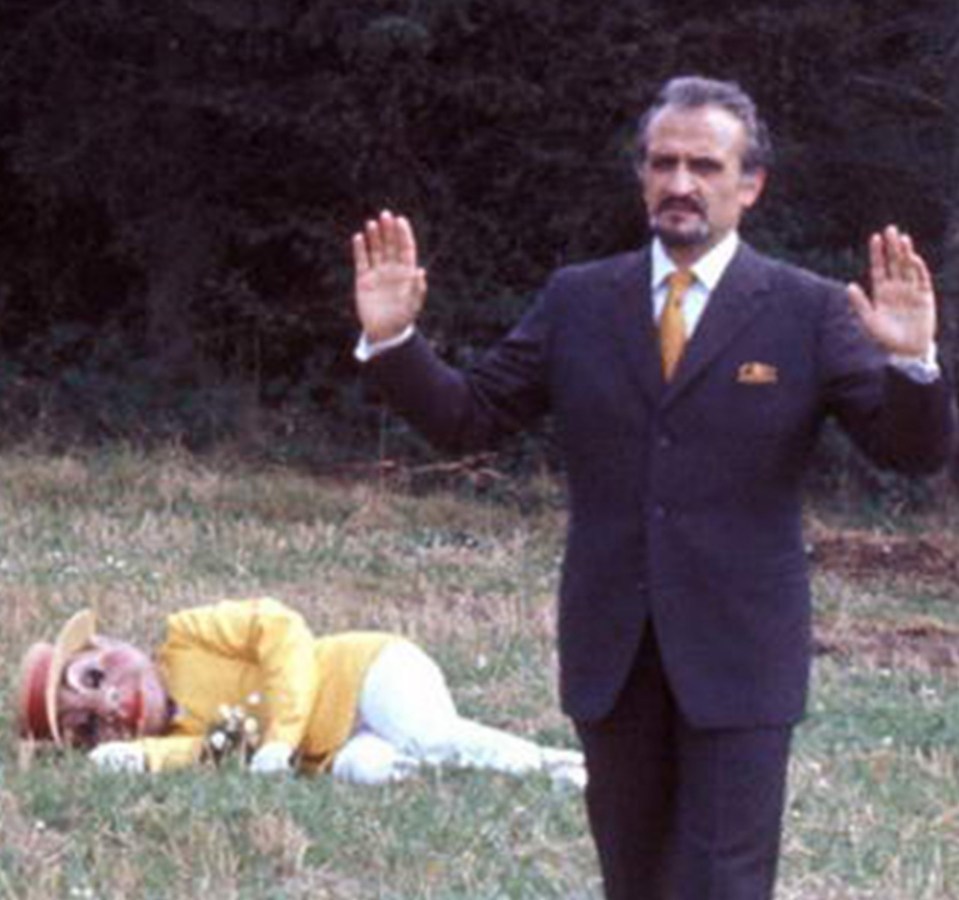
In this case, the Autons had returned to Earth because of the machinations of the Doctor’s greatest foe, The Master. This serial featured the first appearance of The Master, with the Roger Delgado playing the role and becoming the series’s most popular villain since the Daleks. (This serial also featured the first appearance of Katy Manning as Jo Grant, who went on to become popular for entirely different reasons.) But as evil as The Master was, it was the Autons who reportedly kept viewers awake at night. Even after The Doctor (played, at that time, by Jon Pertwee) defeated them for a second time, you could never be sure whether that mannequin was harmless or if it was an Auton stalking you whenever your back was turned.
For modern viewers, it can seem strange to hear that people were ever scared by Doctor Who. But the Autons are an exception. The Autons are actually creepy.
The Master doesn’t seem to be too scared of them, though.
The Terror of the Autons would go on to be the first episode of Doctor Who to be cited in the House of Lords, when it was listed as a recent programme that might have a dangerous effect on the minds of the people watching. But who knows? Was that Lord Beaverbrook or was it…?
Oh, the high hopes I had for You Should Have Left.
Not only was this horror film reuniting one of my favorite actors with the man who directed him in one of his best performances but it also featured what appeared to be the perfect casting of Amanda Seyfried as Kevin Bacon’s daughter. When I heard that the film featured Bacon trying to protect his family from an evil spirit, I was totally ready to watch a film that would feature ghosts trying to grab Amanda while Kevin yelled, “Leave me daughter alone!”
Of course, then I found out that Kevin Bacon and Amanda Seyfried were not playing father and daughter. They were playing husband and wife. And listen, I love Kevin Bacon. I think he’s a great actor and he seems like a nice guy and I always appreciate the fact that he’s willing to make fun of himself and his up-and-down career. But seriously, Kevin Bacon is 28 years older than Amanda Seyfried and hearing that they would not only be playing husband and wife but that they would also be playing the parents of a young girl …. well, I wasn’t expecting much.
To the film’s credit, it doesn’t attempt to ignore the age difference between Bacon and Seyfried. This isn’t like one of those films where Michael Douglas is married to someone who just graduated from high school and everyone just shrugs it off as if there isn’t anything weird about it. Instead, the age difference is a major plot point of the movie. Kevin Bacon plays Theo, a retired, wealthy banker. Amanda Seyfried plays Susanna, an actress. From the start of the film, Theo obviously feels insecure about whether or not his much younger wife loves him. When he has trouble gaining access to a film set where she’s acting, he gets a bit paranoid. When he finds out that she was filming a love scene, he gets even more paranoid. Throughout the film, Theo worries that Susanna is gong to leave him for a younger man.
Meanwhile, Susanna struggles with how to explain to their daughter why no one likes Theo. It turns out that Susanna is Theo’s second wife. Theo’s first wife drowned in a bathtub. Theo was accused of murdering her but he was subsequently acquitted. As Susanna explains what happened, it becomes a bit obvious that she has her own doubts about her husband and his innocence.
When they receive an invitation to stay at a house in Wales, both Theo and Susanna assume that the other one arranged it. Actually, neither one of them arranged it! Still, it’s a really nice house and it seems like the perfect place for them to repair their strained marriage and work on their trust issues …. except for the fact that there’s obviously somebody or something inside the house with them!
Now, really, You Should Have Left should have worked. As I said before, I like Kevin Bacon and I think Amanda Seyfried is a far better actress than she’s actually given credit for being. Add to that, You Should Have Left was directed by David Koepp, who previously directed Bacon in Stir of Echoes. Remember how good that movie was? And yet, while You Should Have Left has a few creepy moments, it ultimately falls flat. What happened?
I think some of the problem is that, regardless of how much you may like the actors playing them, nether Theo nor Suzanna is a particularly compelling character. Theo, in particular, keeps a meditation journal. Stir of Echoes Kevin Bacon would have kicked the ass of You Should Have Left Kevin Bacon. Seriously, the minute you break out the meditation journal, that’s the minute I stop taking you seriously as a protagonist. The film also cheated a bit when it came to the issue of whether or not Theo murdered his wife. Instead of saying yes or no, the film tried to keep things ambiguous and it just didn’t feel right.
In the end, the film just didn’t work. The pacing was off. The visual style was bland. For all the build-up, there was nothing particularly interesting about the house’s secret. For all the talent involved, the film just fell flat.