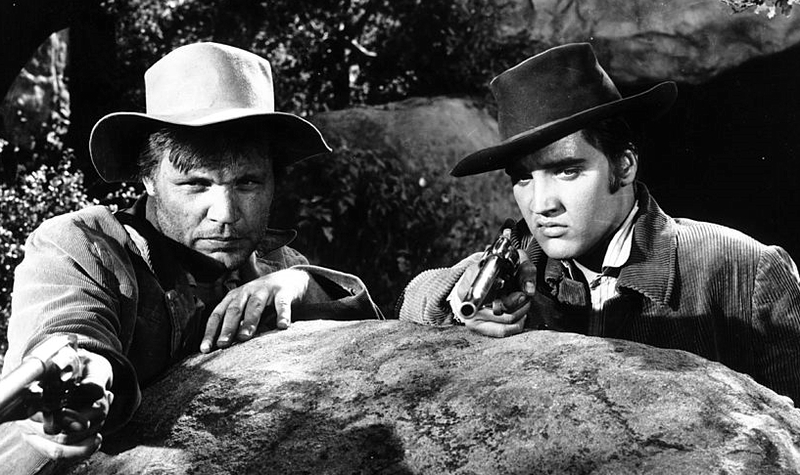
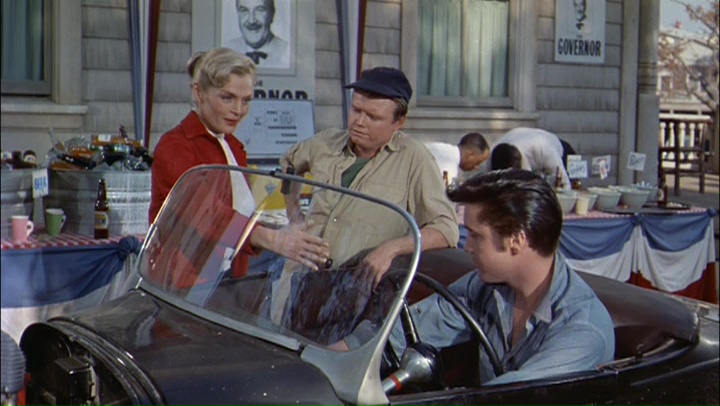
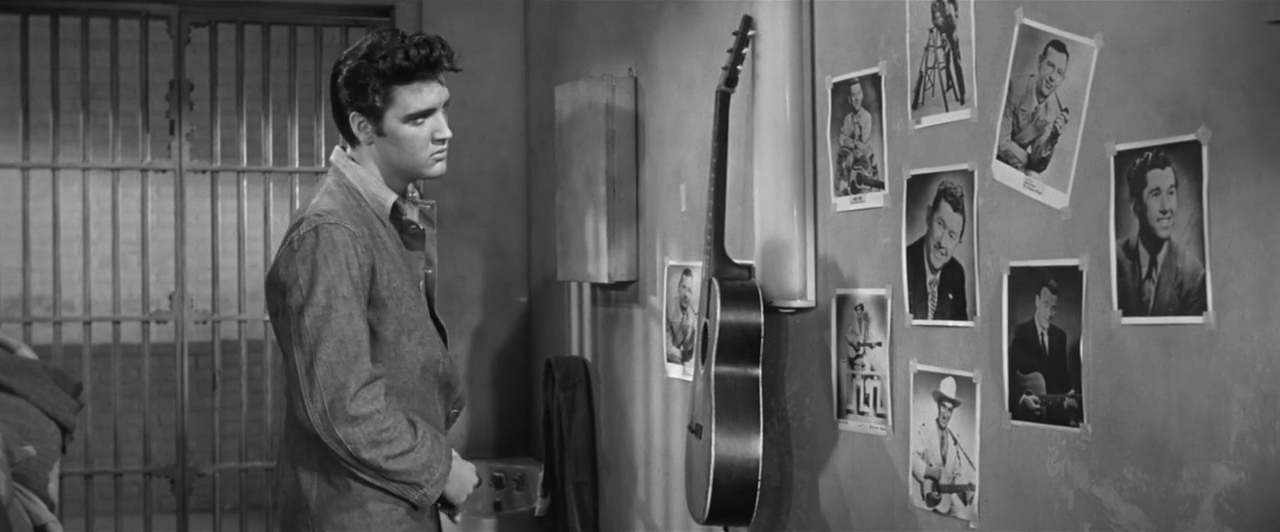
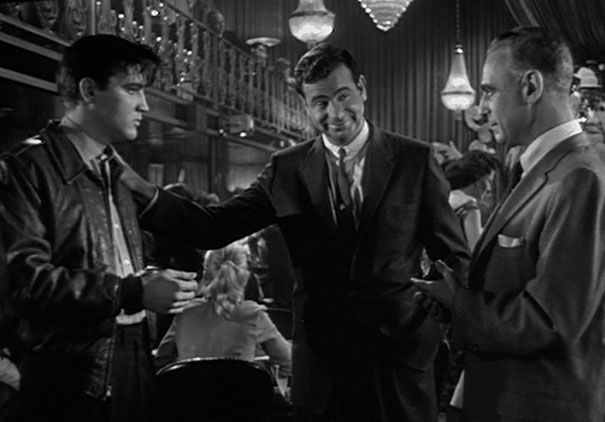
4 Shots From 4 Films is just what it says it is, 4 shots from 4 of our favorite films. As opposed to the reviews and recaps that we usually post, 4 Shots From 4 Films lets the visuals do the talking.
Today is not just David Bowie’s birthday. It’s also Elvis’s! If he was still with us, Elvis Presley would be 85 years old today.
During his lifetime, Elvis was as well-known for his movies as his music. Elvis, who admired James Dean and Marlon Brando and wanted to be known as a serious actor, hated the majority of his films. After 1960’s G.I. Blues, almost all of Elvis’s films were musical comedies that provided him with little opportunity to show off his dramatic skills. Elvis preferred his first four films, Love Me Tender, Loving You, Jailhouse Rock, and King Creole, all of which gave him a chance to not just sing but to do some serious acting as well.
In honor Elvis’s birthday, here are 4 shots from those 4 films.
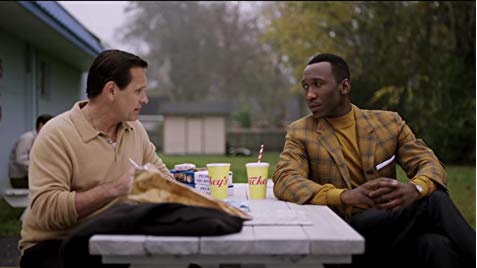
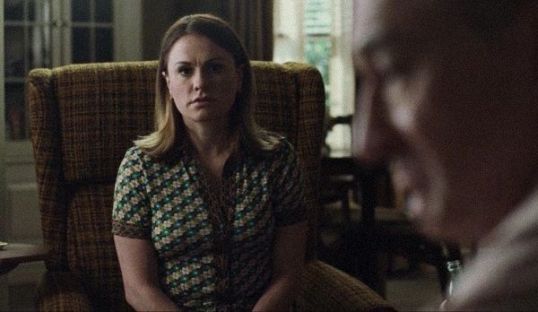
Set in 1962, the 2018 film Green Book tells the story of two men.
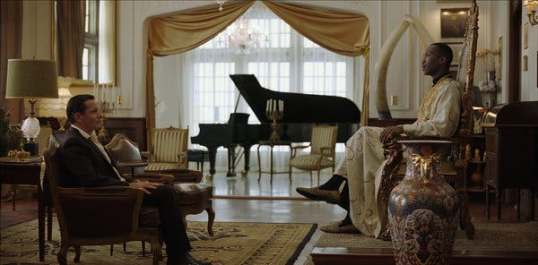
Dr. Don Shirley (Mahershala Ali) is a world-acclaimed pianist who lives a regal life. How regal is Dr. Shirley’s life? He’s got a throne in his living room! Being both black and gay, Shirley knows that he’s destined to always be on the outside of American society but he refuses to allow anyone to take away his dignity or devalue his intelligence. Shirley is scheduled to do a concert tour in the Midwest and the Deep South and his record company knows that he’s going to need protection during his trip. For that matter, he’s also going to need a driver.
Tony Lip (Viggo Mortensen) is actually named Frank Vallelgona but everyone calls him Tony Lip because he can talk his way out of almost any situation. He’s a casually prejudiced Italian who lives in the Bronx. He’s a professional bouncer and he can drive a car too! He’s in desperate need of money and he doesn’t want to have to go to work for the Mafia. When Shirley’s record company contacts him about spending two months as Shirley’s driver and bodyguard, it could be the solution to all of his financial problems.
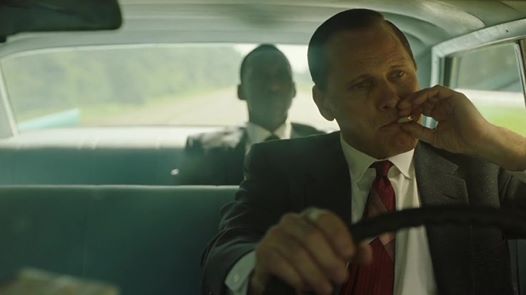
Soon, Tony is driving Shirley through the South. Tony smokes in the car and Shirley snaps at him. Shirley doesn’t appreciate fried chicken so Tony convinces him to try it. Tony punches a cop and ends up in jail so Shirley calls his friend Bobby Kennedy. Eventually, Tony and Shirley even become friends and together….
THEY SOLVE CRIMES!
No, not really. Instead, Tony encourages Shirley to loosen up and enjoy life a little bit more. Meanwhile, Shirley teaches Tony how to write a decent letter to his wife. Tony introduces Shirley to rock and roll. Shirley introduces Tony to high society. At the end of the film, we’re told that, in real life, Shirley and Tony remained friends until the end of their days.
It’s a crowd-pleasing ending. It’s also one that’s been described as being inaccurate. While it is true that Tony Lip (who later had a career as a character actor in gangster films) did drive Don Shirley around the South during his 1962 concert tour, Shirley’s family maintained that Shirley never considered him to be a friend but instead just viewed him as being an employee. At the time of the film’s initial release, it was also pointed out that, while the script was co-written by Tony Lip’s son, no one bothered to reach out to Don Shirley’s family during the production.
When Green Book was nominated for best picture, a lot of observers assumed that the controversy over its accuracy would keep the film from winning the top prize. The fact that Peter Farrelly was not nominated for best director was also seen as an indicator that Green Book was not a serious contender. Of course, to the shock (and, it must be said, anger) of many, Green Book did win the Oscar for Best Picture, defeating Roma, BlackKklansman, Black Panther, A Star is Born, The Favourite, Vice, and Bohemian Rhapsody. During the days immediately after the Oscars, there was a definite feeling of embarrassment in the air. No one, it seemed, could quite accept that — out of all the films released in 2018 — the Academy had declared Green Book to the best.
Why was Green Book such an unpopular winner? Setting aside the controversy over the film’s historical accuracy (or lack thereof), Green Book is just a painfully conventional movie. At a time when many directors were testing the limits of narrative and taking cinema in new and different directions, Green Book was a film that was almost defiantly old-fashioned and predictable. At a time when filmmakers were being praised for their willingness to keep audiences off-balance, Peter Farrelly crafted about as blatant a crowd pleaser as had ever been released. Not since Alan Arkin shouted, “Argo fuck yourself!,” had a film been so obvious about its desire to be loved. Even the film’s best scenes have a generic quality to them. You never find yourself thinking, “Only a cinematic visionary like Peter Farrelly could have made a film like Green Book!”
Beyond that, Green Book is another film that deals with the issue of race in America in the safest and most anodyne way possible. Tony Lip starts out as prejudiced. Then he spends two months driving around a black man and suddenly, he’s not prejudiced anymore. This the type of approach that may drive intersectional film critics crazy on twitter but audiences tend to like it because it leaves them feeling good about the state of the world. “Yes,” the film says, “things aren’t perfect but all we have to do is spend two months in a car together and everything will be okay.”
The first time I watched Green Book, I thought it was blandly pleasant, predictable and a bit forgettable. I also thought it was well-acted. Last night, I rewatched the film for this review and …. well, my feelings pretty much remain the same. Sometimes, a conventional film will benefit from the intimacy of the small screen but that’s not the case with Green Book. If anything, watching this film in my living room (as opposed to in a theater with a gigantic screen) made me realize that, when I first saw Green Book, I was perhaps a bit too kind in my evaluation of the film’s lead performances. Viggo Mortensen and Mahershala Ali are good, charismatic actors and that natural charisma serves them well in Green Book. But neither one of them really gives that interesting of a performance. Despite their roles being based on real people, they’re both playing cliches and, as a result, you never really go emotionally involved with either one of them.
I can understand why Green Book won best picture. It’s competently made, conventionally liberal, and full of good intentions. Given that the Academy uses rank-choiced voting, it’s probable that Green Book won not because it was everyone’s favorite movie but because it was everyone’s 2nd or 3rd choice. Hopefully, this year, the Academy will pick something a little bit more interesting for its top prize.
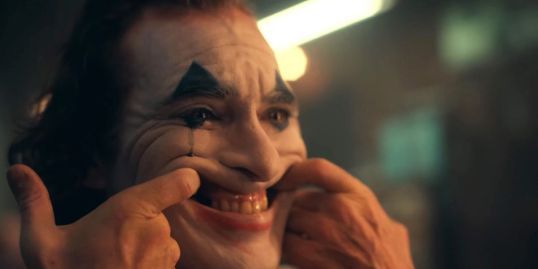
Todd Phillips did not pick up a DGA nomination but fear not Joker fans. The film did pick a nomination from the PGA.
Uncut Gems has now been snubbed by the SAG, the DGA, and the PGA so I’m going to assume that it’s Oscar chances are pretty much dead. It was one of my favorite films of the year but, at the same time, I can also understand why some people might not share my feelings.
JoJo Rabbit, on the other hand, has been nominated by the DGA, PGA, and the SAG so it’s definitely a stronger contender than some have been giving it credit for being.
Anyway, here are the 2019 Director’s Guild nominations!
Outstanding Directorial Achievement in Feature Film
Bong Joon Ho, Parasite
Sam Mendes, 1917
Martin Scorsese, The Irishman
Quentin Tarantino, Once Upon a Time in Hollywood
Taika Waititi, Jojo Rabbit
Outstanding Directorial Achievement of a First-Time Feature Film Director
Mati Diop, Atlantics
Alma Har’el, Honey Boy
Melina Matsoukas, Queen & Slim
Joe Talbot, The Last Black Man in San Francisco
Tyler Nilson and Michael Schwartz, The Peanut Butter Falcon
The time is the future and the world has seen better days. As a result of solar flares and war, Earth has been reduced to a barren wasteland where only the strong survive. Making things even worse is that a plague has broken out and is threatening to wipe out what remains of the world’s population.
A cyborg named Pearl Prophet (Dayle Haddon) has been sent to New York to retrieve the information on how to cure the plague from a computer system. Now that she has the information, it’s all a matter of safely returning to the Center for Disease Control in Atlanta, Georgia. She’s being pursued by the evil Fender (Vincent Klyn), a pirate who says that he loves the new world and who wants to be the one to decide who does and who does not get the cure. When a mercenary named Gibson (Jean-Claude Van Damme) offers to protect her on her journey back to Atlanta, Pearl declines. She says that Gibson is not strong enough to defeat Fender and that she’ll take her chances with the pirates. (Pragmatically, Pearl says that her allies in Atlanta can kill Fender themselves.)
However, Gibson is not willing to take no for an answer. Gibson is less concerned with saving humanity and more concerned with avenging the death of his lover, who was murdered by Fender. Working with Nady (Deborah Richter), another sole survivor of one of Fender’s massacres, Gibson sets out to track down and destroy the pirate.
When Cyborg started, I was really looking forward to watching Jean-Claude Van Damme play a cyborg but it turned out that Van Damme was playing a human. I thought that Fender might be a cyborg but he’s also just a human. There’s only one cyborg in this film and she’s often superfluous to the action. I imagine that this movie was called Cyborg in order to capitalize on the popularity of movies like Terminator and Robocop but Cyborg actually has more in common with the Mad Max films. Van Damme is a haunted loner, just like Max Rockatansky, while Fender and his crew feel as if they could have stepped out of the Road Warrior. Even the lengthy scene where Gibson is crucified in the desert feels tailor-made for Mad Max and Mel Gibson’s habit of playing characters who undergo lengthy torture scenes. (And is it coincidence that Mel Gibson and Jean-Claude Van Damme’s haunted hero both share the same last name?)
Jean-Claude Van Damme, with his pun-worthy name and his reputation for bad behavior off-screen, never got much respect but he was one of the best of the Arnold Schwarzenegger imitators of the 80s and 90s. He was a genuine athlete and he was a far better actor than someone like Steven Seagal. When Van Damme was under contract with Cannon Films, he was offered his choice of starring in three films: Delta Force 2, American Ninja 3, and Cyborg. He chose Cyborg, playing a role that was originally envisioned for Chuck Norris. As a film, Cyborg will never win any points for originality but the fight scenes are kinetic and exciting and, even more importantly, this is a movie that lets Van Damme be Van Damme. There are no attempts at character development or any sort of self-aware winking at the audience. Instead, Van Damme shows up and fights. Matching Van Damme blow for blow is the imposing Vincent Klyn, whose opening monologue (“I like the death! I like the misery! I like this world!”) is a classic of its own.
Cyborg would be followed by two sequels, which were largely unrelated to the first film. Jean-Claude Van Damme would not return for either of them.
The Producer’s Guild of America announced their nominations for the best of 2019 today. The PGA, in general, is a pretty reliable precursor of what’s going to get nominated for best picture. Getting a PGA nomination does not, of course, mean that a film is automatically guaranteed to be nominated for an Oscar. But it certainly doesn’t hurt!
With that in mind, here are the PGA nominees for 2019:
PRODUCERS GUILD OF AMERICA AWARDS 2020 The Darryl F. Zanuck Award for Outstanding Producer of Theatrical Motion Pictures
1917
Producers: Sam Mendes, Pippa Harris, Jayne‐Ann Tenggren, Callum McDougall
Ford v Ferrari
Producers: Peter Chernin & Jenno Topping, James Mangold
The Irishman
Producers: Jane Rosenthal & Robert De Niro, Emma Tillinger Koskoff & Martin Scorsese
Joker
Producers: Todd Phillips & Bradley Cooper, Emma Tillinger Koskoff
Knives Out
Producers: Rian Johnson, Ram Bergman
Little Women
Producer: Amy Pascal
Marriage Story
Producers: Noah Baumbach, David Heyman
Once Upon a Time in… Hollywood
Producers: David Heyman, Shannon McIntosh, Quentin Tarantino
Parasite
Producers: Kwak Sin Ae, Bong Joon Ho
The Award for Outstanding Producer of Animated Theatrical Motion Pictures
Abominable
Producer: Suzanne Buirgy
Frozen II
Producer: Peter Del Vecho
How to Train Your Dragon: The Hidden World
Producers: Bradford Lewis, Bonnie Arnold
Missing Link
Producers: Arianne Sutner, Travis Knight
Toy Story 4
Producers: Mark Nielsen, Jonas Rivera
I’m sad to see that Uncut Gems was not nominated. It has now missed out on the SAG, the DGA, and the PGA so, despite how much I like the film, it’s probably not going to be nominated. I know, I know. It’s amazing that the Academy would not nominate what I personally think they should nominate but incredibly enough, it happens.
That said, all of you Joker and Little Women fans should be happy. Though both films failed to pick up a DGA nomination today, the PGA should keep them both in the conversation.
The Oscar nominations will be announced on Monday!
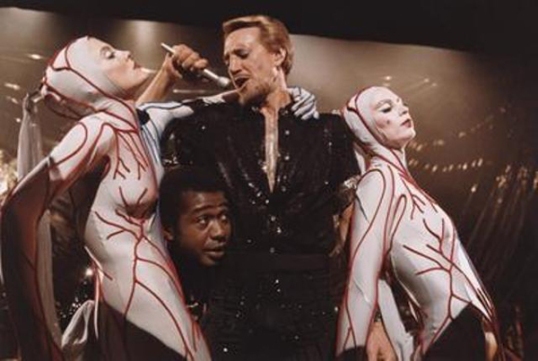
So sings Joe Gideon (Roy Scheider) at the end of the 1979 film, All That Jazz. And he’s right! It’s hardly a spoiler to tell you that All That Jazz ends with Joe Gideon in a body bag. It’s not just that Gideon spends a good deal of the film flirting with the Angel of the Death (Jessica Lange). It’s also that, by the time the film ends, we’ve spent a little over two hours watching Joe engage in non-stop self-destruction. Joe is a director and a choreographer who is so in love with both death and show business that his greatest triumph comes from choreographing his own death.
Joe wakes up every morning, pops a handful of pills, stares at himself in the mirror and says, “It’s showtime!” He spends his day choreographing a Broadway play. He spends his nights editing his latest film, a biopic about Lenny Bruce called The Stand-Up. He’s particularly obsessed with a long monologue that Lenny (played by Cliff Gorman) delivers about the inevitability of death. When he’s not choreographing or editing, he’s smoking, drinking, and cheating on his girlfriend (Ann Reinking). It’s obvious that he’s still in love with his ex-wife (Leland Palmer) and that she loves him too but she’s also too smart to allow herself to get fully sucked back into his self-destructive orbit. He loves his daughter (Erzsébet Földi) and yet still ignores her when she begs him not to die.
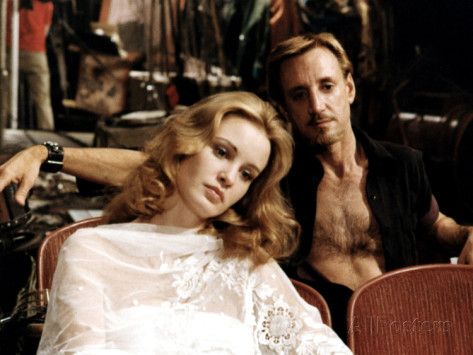
Joe and the Angel of Death
When Joe has a heart attack and ends up in the hospital, he doesn’t change his behavior. Instead, he and the Angel of Death take a look back at his youth, which was spent hanging out in strip clubs and desperately trying to become a star. Joe Gideon, we see, has always know that he’s going to die early so he’s pushed himself to accomplish everything that he can in what little time he has.
As a result of his drive and his refusal to love anyone but himself, Gideon is widely recognized as being an artistic genius. However, as O’Connor Flood (Ben Vereen, essentially playing Sammy Davis, Jr.) puts it, “This cat allowed himself to be adored, but not loved. And his success in show business was matched by failure in his personal relationship bag, now – that’s where he really bombed. And he came to believe that show business, work, love, his whole life, even himself and all that jazz, was bullshit. He became numero uno game player – uh, to the point where he didn’t know where the games ended, and the reality began. Like, for this cat, the only reality – is death, man. Ladies and gentlemen, let me lay on you a so-so entertainer, not much of a humanitarian, and this cat was never nobody’s friend. In his final appearance on the great stage of life – uh, you can applaud if you want to – Mr. Joe Gideon!”
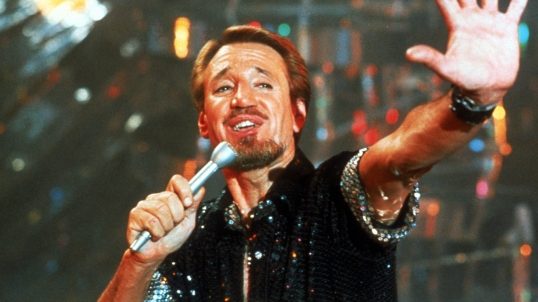
Now, of course, Connor doesn’t really say all that. Gideon just imagines Connor saying that before the two of them launch into the film’s final musical number, Bye Bye Life. It should be a totally depressing moment but actually, it’s exhilarating to watch. It’s totally over-the-top, self-indulgent, and equally parts sincere and cynical. It’s a Bob Fosse production all the way and, as a result, All that Jazz is probably about as fun as a movie about the death of a pathological narcissist can be. This is a film that will not only leave you thinking about mortality but it will also make you dance.
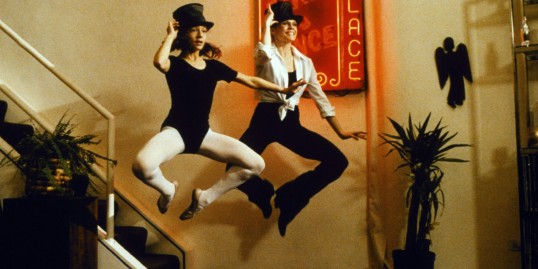
All That Jazz was Bob Fosse’s next-to-last film (he followed it up with the even darker Star 80) and it’s also his most openly autobiography. Roy Scheider may be playing Joe Gideon but he’s made-up to look exactly like Bob Fosse. Like Joe Gideon, Bob Fosse had a heart attack while trying to direct a Broadway show and a film at the same time. Gideon’s girlfriend is played by Fosse’s real-life girlfriend. The character of Gideon’s ex-wife is clearly meant to be a stand-in for Gwen Verdon, Fosse’s real-life ex-wife. When the film’s venal Broadway producers make plans to replace the incapacitated Gideon, Fosse is obviously getting back at some of the producers that he had to deal with while putting together Chicago. It’s a confessional film, one in which Fosse admits to his faults while also reminding you of his talent. Thank God for that talent, too. All that Jazz is self-indulgent but you simply can’t look away.
It helps that Gideon is played by Roy Scheider. Originally, Scheider’s Jaws co-star Richard Dreyfuss was cast in the role but he left during rehearsals. Dreyfuss, talented actor that he was, would have been all-wrong for the role of Gideon. One can imagine a hyperactive Dreyfuss playing Gideon but one can’t imagine actually feeling much sympathy for him. Scheider, on the other hand, brings a world-weary self-awareness to the role. He plays Gideon as a man who loves his talent but who hates himself. Scheider’s Joe Gideon is under no illusions about who he is or how people feel about him. When Fosse’s own instincts threatens to make the film unbearably pretentious, Scheider’s down-to-Earth screen presence keeps things grounded.
I love All That Jazz. (Admittedly, a good deal of that love is probably connected to my own dance background. I’ve known my share of aspiring Joe Gideons, even if none of them had his — or Bob Fosse’s — talent or drive.) It’s not for everyone, of course. Any musical that features actual footage of open heart surgery is going to have its detractors. For the record, Stanley Kubrick called All That Jazz “the best film I think I’ve ever seen.” It won the Palme d’Or at Cannes and it was nominated for Best Picture, though it ultimately lost to the far more conventional Kramer vs. Kramer.
All that Jazz would be the last of Fosse’s film to receive a best picture nomination. (Fosse directed five features. 3 of them were nominated for Best Picture, with the other two being Cabaret and Lenny.) 8 years after filming his cinematic doppelganger dying during heart surgery, Fosse would die of a heart attack. Gwen Verdon was at his side.
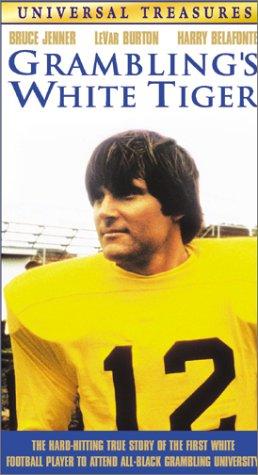
The year is 1968 and Jim Gregory (played by Caitlyn Jenner, back when she was still credited as Bruce) is a hotshot high school quarterback who has just been offered a scholarship to play at Grambling University. With their star quarterback in his final year, Grambling needs a good backup. Meanwhile, Jim dreams of playing in the NFL and is excited to play for a program that’s known for producing professional football players. Grambling’s legendary head coach, Eddie Robinson (Harry Belafonte), is eager for Jim to join the team.
The only problem is that Grambling is a historically black college and Jim Gregory is very much white. In fact, Jim will not only be the first white player to ever join the Grambling Tigers but he will also be the only white student enrolled at the school. From the minute that Jim arrives on campus, he discovers that he’s not wanted. The rest of the team sees him as an interloper and they resent that he took a scholarship that could have gone to a black player. Meanwhile, the local whites distrust Jim because he’s a student at a black college.
Based on a true story, this is a football film that doesn’t feature much football. Jim doesn’t get to play in a game until the very end of the season and, even then, he’s only on the field for a few minutes. He doesn’t win the game or even lead a scoring drive. Instead of focusing on the usual sports movie clichés, Grambling’s White Tiger instead explores Jim experiencing, for the first time, what it’s like to be a minority. Jim eventually wins over his teammates through his hard work but he still remains an outsider for the entire film. When he goes into town, a saleswoman and her boss initially offer him a discount on a pair of boots until they discover that he plays football not for Louisiana Tech but instead for Grambling. When he first meets the parents of his new girlfriend, he’s told that an interracial relationship will never last and is advised to move on. When the funeral of Martin Luther King is broadcast on television, all Jim’s teammates walk out of the room one-by-one until Jim is left sitting alone.
In typical made-for-network-TV fashion, Grambling’s White Tiger explores important issues without delving into them too deeply. (For instance, the fact that Jim’s spot on the team is potentially coming at the expense of a black student is an intriguing issue that is mentioned at the start of the film but never really dwelled upon.) Harry Belafonte is perfect as the stern but compassionate Coach Robinson while LeVar Burton is likable as the only member of the team to initially welcome Jim. Jenner, however, is thoroughly miscast and several years too old to play a college freshman. As an actor, Jenner is stiff and awkward but the true story of Jim Gregory is interesting enough that the film will hold the attention of any football fans in the audience.
Yes, it’s true. Long before the creator of The Marvelous Mrs. Maisel was even born, Lenny Bruce was a real comedian who was challenging the status quo and going to jail for using words in his routine that were, at the time, considered to be so obscene that they couldn’t even be uttered in public. Today, of course, we hear those words and they’re so commonplace that we barely even notice. But, in the 50s and the early 60s, it was not uncommon for Lenny Bruce to get arrested in the middle of his act. Club owners could literally be fined for allowing Lenny Bruce to perform on their stage. At the height of his fame, it was a struggle for Lenny to find anyone willing to even consider booking him.
Whether it was his intention or not, Lenny Bruce became one of the first great warriors for the 1st amendment. It made him famous and a hero to many. Many people also believe that the pressure of being under constant legal threat led to his death from a drug overdose in 1966. Lenny Bruce was only 40 years old when he died but he inspired generations of comedians who came after him. It can be argued that modern comedy started with Lenny Bruce.
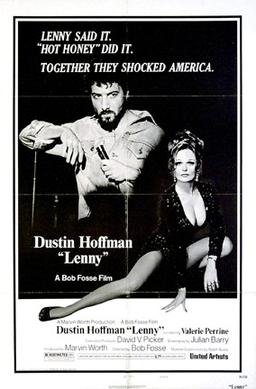
Directed by Bob Fosse and based on a play by Julian Barry, 1974’s Lenny takes a look at Lenny Bruce’s life, comedy, legal battles, and eventual death. As he would later do in the thematically similar Star 80, Fosse takes a mockumentary approach to telling his story. Clips of Lenny Bruce (played by Dustin Hoffman) performing are mixed in with “interviews” with actors playing the people who knew him while he was alive. Because the story is told out of chronological order, scenes of a young and enthusiastic Lenny are often immediately followed by scenes of a burned-out and bitter Lenny reading from the transcripts of his trial during his stand-up. Fosse never forgets to show us the audience listening as Lenny does his act. Most of them laugh at Bruce’s increasingly outrageous comments but, to his credit, Fosse never hesitates to show us the people who aren’t laughing. Lenny Bruce, the film tells us, was too honest to ever be universally embraced.
The film doesn’t hesitate to portray Lenny Bruce’s dark side. For much of the film, Lenny is not exactly a likable character. Even before his first arrest, Lenny comes across as being a narcissist who is cruelly manipulative of his first wife, stripper Honey Harlow (Valerine Perrine). As opposed to the somewhat dashing Lenny of The Marvelous Mrs. Maisel, Dustin Hoffman’s Lenny Bruce comes across as someone who you would not necessarily want to be left alone with. The film’s Lenny is a hero on stage and frequently a hypocrite in his private life but that seems to be the point of the movie. Lenny argues that one of the reasons why Lenny Bruce could so perfectly call out society for being fucked up was because he was pretty fucked up himself.
As with all of his films, Lenny is as much about Bob Fosse as it is about Lenny Bruce. As a director, Fosse often seems to be more interested in Bruce’s early days, when he was performing in low-rent strip clubs and trying to impress aging vaudevillians, than in Bruce’s later days as a celebrity. (The world in which the young Lenny Bruce struggled was a world that Fosse knew well and its aesthetic was one to which he frequently returned in his films and stage productions.) It’s also easy to see parallels between Lenny’s uneasy relationship with Honey and Bob Fosse’s own legendary partnership with Gwen Verdon. The film’s grainy black-and-white cinematography captures not only the rough edges of Lenny’s life but also perhaps Fosse’s as well. Just as Lenny Bruce performed confessional stand-up comedy, Lenny feels like confessional filmmaking.
Of course, it’s not always a pleasant film to watch. Dustin Hoffman does a very good job of capturing Lenny Bruce’s drive but he doesn’t really have the natural comedic timing necessary to be totally convincing as a stand-up comedian. (The film sometimes seems to forget that, as much as Lenny Bruce was admired for his first amendment activism, he was also considered to be a very funny stand-up.) Still, it’s a valuable film to watch. It’s a document of history, a reminder of a time when you actually could get arrested for saying the “wrong” thing. Some people would say that we’re returning to those times and it’s easy to imagine that the real Lenny Bruce (as opposed to the idealized version of him) would not be welcome to perform on most college campuses today. One can only imagine how modern audiences would react to a part of Lenny’s stand-up where he repeats several racial slurs over and over again. (If Lenny Bruce had lived to get a twitter account, he would be getting cancelled every week.) Lenny‘s vehement celebration of freedom of speech is probably more relevant in 2020 than it was in even 1974.
Lenny received several Oscar nominations, including best picture. However, 1974 was also the year of both The Godfather, Part II and Chinatown so Lenny failed to win a single Oscar.
(Interestingly enough, Fosse’s previous film, Cabaret, was also prevented from winning the award for best picture by the first Godfather, though Fosse did win best director over Francis Ford Coppola. Five years after the release of Lenny, Fosse would make All That Jazz, which was partially based on his own health struggles that he suffered with during the filming Lenny. In All That Jazz, Cliff Gorman — who starred in the stage production of Lenny — is frequently heard reciting a Lenny Bruce-style monologue about death. Fosse’s All That Jazz would again compete with a Francis Ford Coppola production at the Oscars. However, Kramer vs Kramer — starring Lenny‘s Dustin Hoffman — defeated both All That Jazz and Apocalypse Now for the big prize. 22 years later, Chicago, which was based on Fosse’s legendary stage production and which featuring the song that gave All That Jazz it’s name — would itself win best picture.)
Watching the Golden Globes is always an odd experience.
First off, there’s the mix of TV awards with movie awards. For someone like me, who spends most of January thinking about the Oscars, it’s always somewhat annoying to have to sit through all of the television awards before even getting to the first film award. The Emmys are over so it’s not like winning a Golden Globe is going to give Chernobyl or Fleabag the boost necessary to win a real award.
(Especially since those two shows already deservedly cleaned up at the Emmys….)
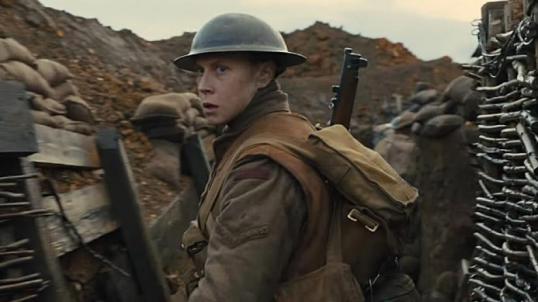
When it comes to the Globes, we care about the movies. I was happy with the majority of the film awards. I was especially happy to see the underrated Missing Link pick up the award for Best Animated Film. I was glad that Once Upon A Time In Hollywood was named Best Comedy, even though I think it’s debatable whether or not the film was actually a comedy. I’m sorry Eddie Murphy didn’t win for Dolemite Is My Name but, at the same time, Taron Egerton gave an outstanding performance in Rocketman. I haven’t seen 1917 yet so I’m not going to comment on whether it should have won Best Drama or whether Sam Mendes deserved to defeat Scorsese and Tarantino. That said, upset victories are always fun.
Of course, this morning, most of the Golden Globe coverage is not centered on 1917 defeating both The Irishman and Marriage Story for Best Drama. Instead, almost everyone is talking about Ricky Gervais. It says something about the vapidness of pop cultural criticism in the age of social media that Gervais was apparently “too mean” for some people.
The fake self-flagellating "let's have Gervais 'roast' people LOL" thing has turned into THE grossest faux-populist spectacle outside The Razzies (and Razzies are shit.)
Posh Brit reheating leftover 4chan dunks on marginalized people whose wealth is supposed to make it "okay"
— Bob Chipman 😁 bobchipman.bsky.social (@the_moviebob) January 6, 2020
Some people seem to like Gervais because he doesn't care? Apathy is so boring. The best films are passionate and give a damn. It's ok to care. pic.twitter.com/TxJSx40arB
The #GoldenGlobes mood was already sober thanks to an impeachment, threat of war with Iran and Australian bush fires. The last thing anyone needed was Ricky Gervais there, telling them they sucked. https://t.co/58PAMOikhu
When it comes to a show like the Golden Globes, the host sets the tone. For instance, when Tina Fey and Amy Poehler hosted, they set a tone that basically said: “Look at us and all of our famous friends!” It’s a friendly tone where everyone tells everyone else how great they are. When Ricky Gervais hosts, the tone of the evening is usually a lot more awkward because no one is quite sure what Gervais is going to say and, being the Brit who created The Office, it’s not like Gervais is going to suffer if no one in Hollywood ever returns another one of his calls. Both approaches have their strengths and their weaknesses. There have been some years when I’ve been in the mood for the Fey/Poehler approach. This year, with its promise of 11 months of wealthy celebrities trying to tell everyone else how to vote and probably getting angry because people in Iowa don’t care about funding Amtrak, I was in the mood for someone willing to shake things up and say, “Get over yourselves.” In other words, I was in the mood for RIcky Gervais.
During Gervais’s opening monologue, he touched on several topics that everyone should have known he was going to touch on. He said that Epstein didn’t kill himself and then accused everyone in the room of being his friend. He told the assembled that Ronan Farrow was coming for all of them. He told everyone that no one wanted to hear their political opinions because they had no idea what it was like to live in the real world and that they had less schooling than Greta Thunberg.
And whether you think any of that is funny or not is up to you. Humor is subjective. Personally, I think that the most important thing that a comedian can do is ridicule people who think that they’re above ridicule. I also think that any belief or ideology that’s worth anything will be able to survive being the subject of a joke. Many of my followers on twitter were not amused that Ricky Gervais made a joke about Greta Thunberg but so what? If what she’s doing is truly worthwhile, it’ll be able to survive someone making a joke about her skipping school.
Besides, Gervais made a few good points. Jeffrey Epstein didn’t kill himself and a lot of famous people did hang out with him, even after he was first arrested. The majority of Hollywood did work with Harvey Weinstein, even though apparently his behavior wasn’t exactly a secet. There are many self-proclaimed “woke” celebrities who do work for terrible companies. (And let’s not even get into the people who refuse to criticize China.) And when it comes to politics, Patricia Arquette proved Gervais’s point to be correct during her acceptance speech.
(The audience, I noticed, was surprisingly lukewarm to Arquette’s anti-war speech. There was some applause but still, one got the feeling that the room’s reaction was largely, “Oh God, Patricia’s talking politics again.” Personally, I was more impressed with Joaquin Phoenix’s speech, if just because it may have been inarticulate but it was also sincere. Of course, as soon as he said that celebs didn’t need private jets, the music started.)
Good points or not, you could tell that the audience was often not sure how to react to Gervais’s comments. Tom Hanks looked shocked, though I think that has more to do with Hanks being the most impossibly wholesome film star working today than with what Gervais saying. (Seriously, if anything bad ever comes out about Tom Hanks, my entire belief system will crash.) Others, though, had that “OMG — WHAT’S HAPPENING!?” look on their face. It reminded me a bit of the 2013 Country Music Awards, when Carrie Underwood made a joke about the Obamacare website crashing and the audience clearly didn’t know whether or not it was safe to laugh.
(Of course, the same people who loved it when the CMAs made fun of Obamacare weren’t amused when future ceremonies featured jokes about Trump. So often, people’s attitude towards humor seems to be, “I love it when you make jokes about the other side but if you make a joke about me, you’re the worst person who ever lived.” Eventually, Gervais will tweet out an anti-Trump joke and the people who love him now will suddenly hate him and the people who currently hate him will go back to retweeting him. What a vapid time to be alive.)
Anyway, last night’s Golden Globes ceremony was a typical awards show ceremony and no one will remember a thing about it in a week. The Globes are pretty much there to tide us over until the Oscar nominations are announced. They did their job and life goes on.





 Through the Shattered Lens