Lisa Reviews An Oscar Nominee: East Lynne (dir by Frank Lloyd)


In the history of the Academy Awards, East Lynne is a curiosity.

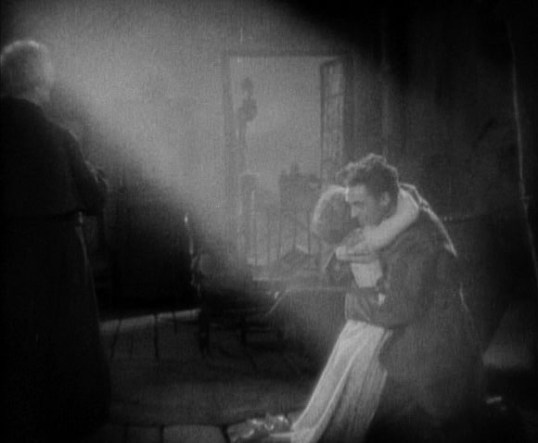
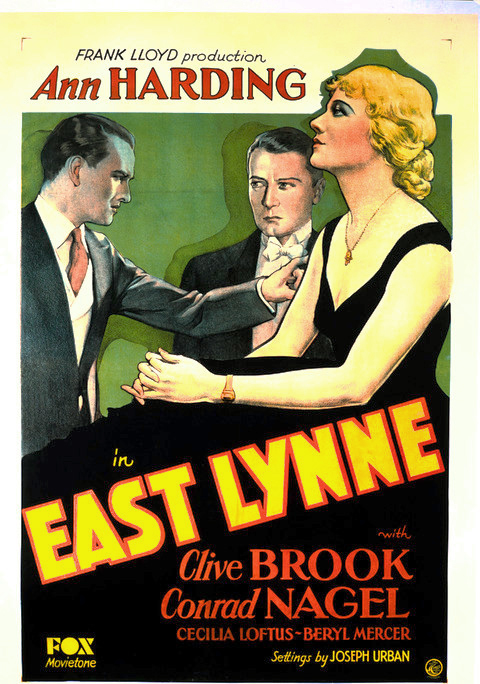
Released in 1931, East Lynne was one of the five films to be nominated for Best Picture at the fourth annual Academy Awards.  Best Picture was the only nomination that East Lynne received, which of course leaves you to wonder just what exactly was so good about it.  Why was it nominated as opposed to something like A Free Soul, which received nominations for Best Actress and Director and which won the Best Actor Oscar for Lionel Barrymore?  East Lynne was a success at the box office but so were The Public Enemy, Little Caesar, and Scarface.  None of those classic gangster films made much of an impression with the Academy but all of them are better remembered today than East Lynne.

One reason why East Lynne has fallen into obscurity is because it’s not an easy film to see.  There is only one complete print of East Lynne still in existence.  It’s housed at the UCLA’s Instructional Media Lab but it can only be viewed by appointment.  There are, however, a few bootleg copies on DVD.  The picture is grainy.  The sound is inconsistent.  Even worse, the bootleg is missing the last 12 minutes of the film.  Still, for those of us who don’t live near UCLA, that bootleg copy is the only convenient way to watch East Lynne.

That’s how I watched it.  (I also looked up how the film ended so I know where the story eventually led, despite those missing 12 minutes.)  Having now seen the film, I can now say that it makes even less sense that the film was nominated because it’s pretty bad.  I can only imagine that it received its nomination as a result of Fox Film Corporation (which would later merge with 20th Century Pictures to be come 20th Century Fox) demanding that its employees vote for it.

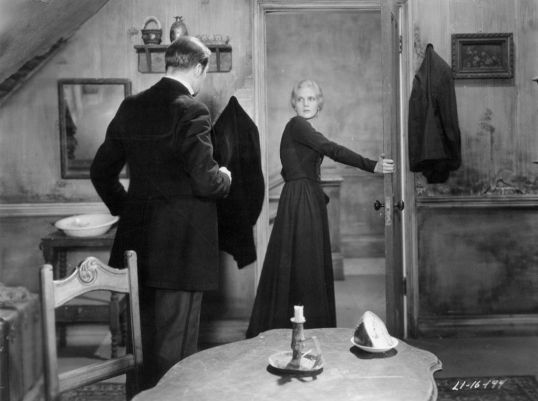
Based on a Victorian novel that had already been filmed several times during the silent era, East Lynne tells the story of Lady Isabella (Ann Harding), a British noblewoman who marries a stuffy attorney named Robert Carlyle (Conrad Nagel).  From the beginning it’s an awkward marriage.  Isabella is sociable and popular and wants to enjoy life.  Carlyle is a humorless jerk.  Not even the fact that they live in a nice mansion called East Lynne provides much comfort.

When Isabella accepts a kiss from a cad named Captain William Levinson (Clive Brook), Isabella’s sister-in-law uses it to drive a wedge between Isabella and Carlyle.  Carlyle, being a jerk, kicks Isabella out of the house and takes custody of their child.  Now viewed as being a figure of scandal, Isabella goes abroad with Levinson.  (Since this is a pre-code film, going abroad amounts to going to a then-racy show in Vienna.)  However, through a series of improbable events, Levinson ends up dead and Isabella ends up very slowly going blind.  However, Isabella is determined to see her child just once more before losing her sight so it’s up to her to convince a maid to sneak her back into East Lynne late at night….

And then the bootleg version of the film ends!  Now, I did my research and I discovered — here’s your SPOILER ALERT — that the film apparently ends with a blind Isabella stumbling over a cliff and her husband realizing too late that maybe he was kind of a jerk.  I’m kind of sorry that I didn’t get to see that.  I may have to book a flight to UCLA.

Anyway, from what I did see, East Lynne is a creaky old film.  This is one of those films where you can tell that the cast was still adjusting to the new sound era.  Ann Harding’s screen presence is a bit too insubstantial to keep the film’s melodramatic story grounded and neither Conrad Nagel nor Clive Brook seem to be worth all of the trouble that Isabella goes through.  Frank Lloyd’s direction is painfully slow and stagy, though things do pick up briefly when the action moves to Vienna.  Worst of all, the film is pretty much on Carlyle’s side.  He’s a jerk, the movie says, but Isabella should have made more of an effort to keep him happy.  Welcome to 1931!

East Lynne lost the best picture race to Cimarron, which was another fairly forgettable film.  Though there were plenty of good films to choose from in 1931, it doesn’t appear that the Academy nominated any of them.  Of course, that wouldn’t be the last time that would happen.
 

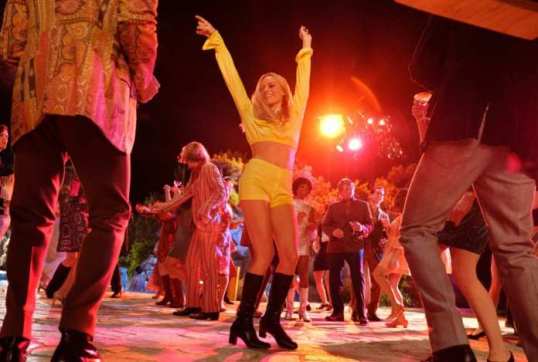
The Casting Society of America Honors Once Upon A Time In Hollywood


The Academy does not have a category to honor Best Casting.  They really should, though.

Until the Academy gets their act together, the Casting Society of America will have to do the job.  Here are their picks for the best of 2019:

BIG BUDGET – DRAMA
Once Upon A Time…In Hollywood – Victoria Thomas

BIG BUDGET – COMEDY
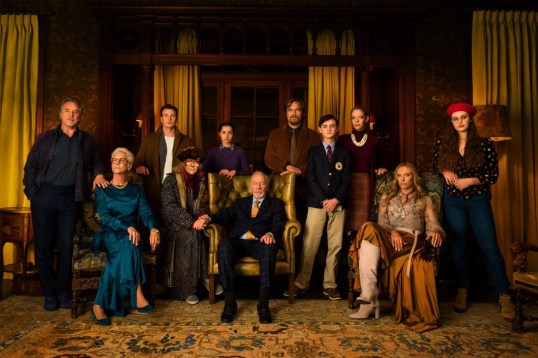
Knives Out – Mary Vernieu, Angela Peri (Location Casting), Bret Howe (Associate)

STUDIO OR INDEPENDENT – COMEDY
Jojo Rabbit – Des Hamilton

STUDIO OR INDEPENDENT – DRAMA
Marriage Story – Francine Maisler, Douglas Aibel, Kathy Driscoll-Mohler (Associate)

LOW BUDGET – COMEDY OR DRAMA
The Last Black Man in San Francisco – Julia Kim, Nina Henninger (Location Casting),
Sarah Kliban (Associate)

MICRO BUDGET – COMEDY OR DRAMA
Skin in the Game – Matthew Lessall

ANIMATION
(tie) The Lion King – Sarah Halley Finn, Jason B. Stamey (Associate)
and Toy Story 4 – Kevin Reher, Natalie Lyon

THE ZEITGEIST AWARD
Star Wars: The Rise of Skywalker – Nina Gold, April Webster, Alyssa Weisberg,
Angela Young (Associate)

TELEVISION PILOT AND FIRST SEASON – COMEDY
“Russian Doll” – Christine Kromer, Andrew Femenella (Associate)

TELEVISION PILOT AND FIRST SEASON – DRAMA
“Pose” – Alexa L. Fogel, Kathryn Zamora-Benson (Associate), Caitlin D. Jones
(Associate)

TELEVISION SERIES COMEDY
“The Marvelous Mrs. Maisel” – Cindy Tolan, Juliette Ménager (Location Casting),
Anne Davison (Associate)

TELEVISION SERIES – DRAMA
“Game of Thrones” – Nina Gold, Robert Sterne, Carla Stronge (Location Casting)

LIMITED SERIES
“When They See Us” – Aisha Coley, Billy Hopkins (Location Casting), Ashley Ingram
(Location Casting)

FILM – NON-THEATRICAL RELEASE
To All the Boys I’ve Loved Before – Tamara-Lee Notcutt, Tiffany Mak (Location
Casting), Alexis Allen (Associate)

LIVE TELEVISION PERFORMANCE, VARIETY OR SKETCH COMEDY
“Live in Front of a Studio Audience: ‘All in the Family’ and ‘The Jeffersons’” – Marc
Hirschfeld, Geralyn Flood, Katrina Wandel George (Associate)

CHILDREN’S PILOT AND SERIES (LIVE ACTION)
“Andi Mack” – Amber Horn, Danielle Aufiero, Steven Tylor O’Connor (Associate)

TELEVISION ANIMATION
“Big Mouth” – Julie Ashton-Barson

REALITY SERIES
“Queer Eye” – Gretchen Palek, Danielle Gervais, Ally Capriotti Grant, Quinn Fegan,
Pamela Vallarelli

SHORT FILM
Skin – Jessica Sherman

SHORT FORM SERIES
“It’s Bruno!” – Bess Fifer

NEW YORK BROADWAY THEATRE – COMEDY OR DRAMA
To Kill a Mockingbird – Daniel Swee

NEW YORK BROADWAY THEATRE – MUSICAL
Hadestown – Duncan Stewart, Benton Whitley

NEW YORK BROADWAY THEATRE – REVIVAL, COMEDY OR DRAMA
The Waverly Gallery – David Caparelliotis, Lauren Port

NEW YORK BROADWAY THEATRE – REVIVAL, MUSICAL
Oklahoma! – Adam Caldwell, Will Cantler

NEW YORK THEATRE – COMEDY OR MUSICAL
Fiddler on the Roof in Yiddish (Fidler Afn Dakh) – Jamibeth Margolis

NEW YORK THEATRE – DRAMA
Daddy – Judy Henderson, Nick Peciaro (Associate)

REGIONAL THEATRE
In the Heights (Westport Country Playhouse) – Tara Rubin, Claire Burke

LOS ANGELES THEATRE
Sweat – Heidi Levitt, Billy Hopkins (NY Casting), Ashley Ingram (NY Casting), Marin
Hope (Associate)

SPECIAL THEATRICAL PERFORMANCE
Annie – Margery Simkin, Michael Donovan, Beth Lipari, Richie Ferris (Associate)

THEATRE TOURS
Hamilton – Bethany Knox, Lauren Harris (Associate)

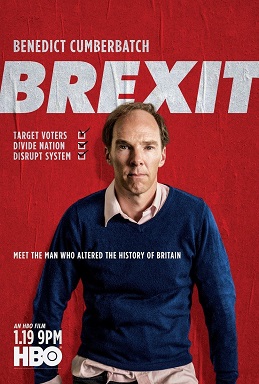
Brexit: The Uncivil War (2019, directed by Toby Haynes)


It’s finally happening.

Nearly four years after a narrow majority voted in favor of leaving the European Union, the UK is finally doing so.  The success of Brexit not only took the world by surprise but it shocked much of the UK as well.  I didn’t expect the Leave Campaign to win.  My relatives in the UK, all of whom voted to leave, never expected to win.  The British media establishment certainly didn’t expect Leave to win and their anguished reaction largely mirrored the reaction of their American counterparts when, a few months later, Donald Trump defeated Hillary Clinton.

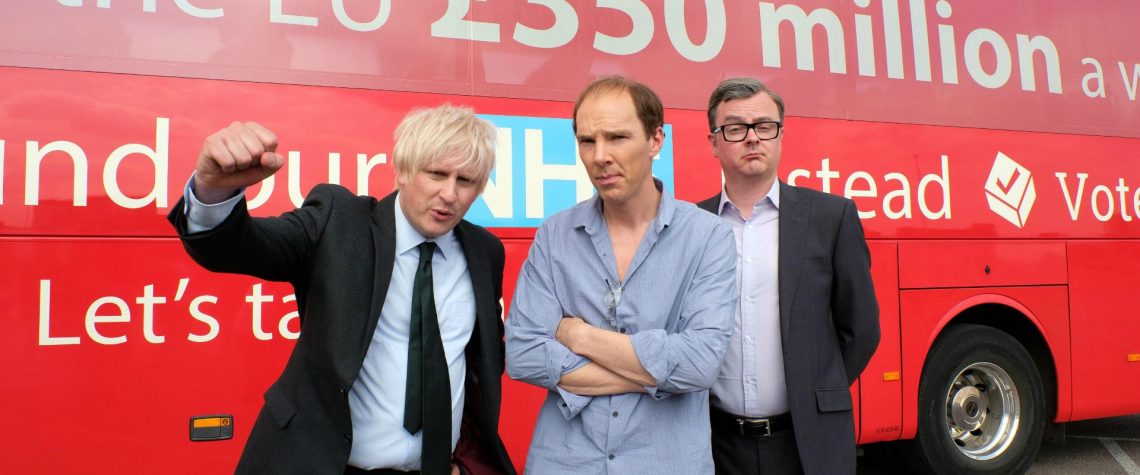
One person who was probably not, in any way, shocked by Leave’s victory was Dominic Cummings, who was the lead political strategist for the Vote Leave campaign.  At least that’s the impression that one gets from watching Benedict Cumberbatch play Cummings in Brexit: The Uncivil War.  

This television film originally aired on Channel 4 and subsequently, it made its American premiere on HBO.  Featuring sharp direction from Toby Hayes and an even sharper script by playwright James Graham, Brexit presents fictionalized accounts of both the Vote Leave Campaign and the Britain Stronger In Europe Campaign, which is led by Craig Oliver (Rory Kinnear).  As the film shows, while the conventional wisdom was that Leave didn’t have a chance, Cummings instinctively grasped what others were missing.  Cummings understood that people across the UK were angry because they felt that they had lost control of their own lives.  They were sick of being told that a bureaucrat in Belgium knew what was better for the UK than the people who actually lived there and who took more pride in being British than in being European.  While Oliver and the Remain campaign relied on the traditional politics that had always worked in the past, Cummings used new techniques (like social media databases) to reach out to people who might not have always voted but whose posts and tweets indicated that they might be open to Leave’s message.

Towards the end of the film, one of Oliver’s focus groups descends into chaos and a woman memorably cries, “I’m sick of feeling like nothing, like I have nothing! Like I know nothing. Like I am nothing. I’m sick of it!”  and, for the first time, Oliver realizes that Leave could win.  By that point, it’s too late.  With Leave’s strength growing every day, the British political establishment has descended into chaos.  Boris Johnson (Richard Goulding) and Michael Grove (Oliver Maltman) both throw their support behind Leave.  After the assassination of Jo Cox, Cummings and Oliver meet for a drink and, in a scene that ranks up there with the famous De Niro/Pacino meeting in Heat, they discuss what will happen if Leave wins.

The meeting between Oliver and Cummings never happened but the accuracy of the majority of the film has been verified by those who were involved in both campaigns.  (Oliver himself served as a consultant to the filmmakers.)  This is the film to see if you want to understand not only why Leave won but also why so many commentators were caught by surprise.  Though it was written by a Remainer and, in one of the film’s few missteps, Nigel Farage is portrayed as being a cartoonishly vapid twit, Brexit is one of the few examinations of the vote to understand why Leave’s “Take Back Control” slogan resonated with so many voters.  Though Brexit may be ultimately sympathetic to the Remain position, it refuses to dismiss the concerns of those who voted for Leave or to commit the sin of painting those voters as merely being uneducated or afraid of progress.  If the Remain campaign had made as much of an effort to understand those voters as the film about the campaign does, the vote may have gone a different way.

(Instead, much of Remain’s supporters reacted to defeat by 1) demonizing the voters and 2) demanding a second referendum so that the same voters could presumably get it right the second time around.  For four years, they said that the UK leaving the EU would be the end of western civilization and that the sky would fall.  As of right now, the sky is exactly where it has always been.)

When this film was produced, Theresa May was still in Number 10 Downing Street and there were real doubts as to whether Brexit would ever happen.  The film is book-ended by fictional scenes in which Cummings is interviewed during a public inquiry.  In these scenes, which were meant to be taking place in what was then the near future of 2020, Cummings insinuates that Brexit is still on hold.  In the real world, though, Brexit is finally happening and Dominic Cummings is currently the Chief Special Adviser to Prime Minister Boris Johnson.


The Irishman and The Lion King Are Honored By The Visual Effects Society


Here are the winners from last night’s meeting of the Visual Effects Society!

Outstanding Visual Effects in a Photoreal Feature
The Lion King
(Robert Legato, Tom Peitzman, Adam Valdez, Andrew R. Jones)

Outstanding Supporting Visual Effects in a Photoreal Feature
The Irishman
(Pablo Helman, Mitchell Ferm, Jill Brooks, Leandro Estebecorena, Jeff Brink)

Outstanding Visual Effects in an Animated Feature
Missing Link
(Brad Schiff, Travis Knight, Steve Emerson, Benoit Dubuc)

Outstanding Visual Effects in a Photoreal Episode
The Mandalorian; “The Child”
(Richard Bluff, Abbigail Keller, Jason Porter, Hayden Jones, Roy K. Cancion)

Outstanding Supporting Visual Effects in a Photoreal Episode
Chernobyl; “1:23:45”
(Max Dennison, Lindsay McFarlane, Clare Cheetham, Paul Jones, Claudius Christian Rauch)

Outstanding Visual Effects in a Real-Time Project
Control
(Janne Pulkkinen, Elmeri Raitanen, Matti Hämäläinen, James Tottman)

Outstanding Visual Effects in a Commercial
“Hennessy: The Seven Worlds”
(Carsten Keller, Selcuk Ergen, Kiril Mirkov, William Laban)

Outstanding Visual Effects in a Special Venue Project
Star Wars: Rise of the Resistance
(Jason Bayever, Patrick Kearney, Carol Norton, Bill George)

Outstanding Animated Character in a Photoreal Feature
Alita: Battle Angel; Alita
(Michael Cozens, Mark Haenga, Olivier Lesaint, Dejan Momcilovic)

Outstanding Animated Character in an Animated Feature
Missing Link; Susan
(Rachelle Lambden, Brenda Baumgarten, Morgan Hay, Benoit Dubuc)

Outstanding Animated Character in an Episode or Real-Time Project
Stranger Things 3; Tom/Bruce Monster
(Joseph Dubé-Arsenault, Antoine Barthod, Frederick Gagnon, Xavier Lafarge)

Outstanding Animated Character in a Commercial
“Cyberpunk 2077”; Dex
(Jonas Ekman, Jonas Skoog, Marek Madej, Grzegorz Chojnacki)

Outstanding Created Environment in a Photoreal Feature
The Lion King; The Pridelands
(Marco Rolandi, Luca Bonatti, Jules Bodenstein, Filippo Preti)

Outstanding Created Environment in an Animated Feature
Toy Story 4; Antiques Mall
(Hosuk Chang, Andrew Finley, Alison Leaf, Philip Shoebottom)

Outstanding Created Environment in an Episode, Commercial, or Real-Time Project
Game of Thrones; The Iron Throne; Red Keep Plaza
(Carlos Patrick DeLeon, Alonso Bocanegra Martinez, Marcela Silva, Benjamin Ross)

Outstanding Virtual Cinematography in a CG Project
The Lion King
(Robert Legato, Caleb Deschanel, Ben Grossmann, AJ Sciutto)

Outstanding Model in a Photoreal or Animated Project
The Mandalorian; The Sin; The Razorcrest
(Doug Chiang, Jay Machado, John Goodson, Landis Fields IV)

Outstanding Effects Simulations in a Photoreal Feature
Star Wars: The Rise of Skywalker
(Don Wong, Thibault Gauriau, Goncalo Cababca, François-Maxence Desplanques)

Outstanding Effects Simulations in an Animated Feature
Frozen 2
(Erin V. Ramos, Scott Townsend, Thomas Wickes, Rattanin Sirinaruemarn)

Outstanding Effects Simulations in an Episode, Commercial, or Real-Time Project
Stranger Things 3; “Melting Tom/Bruce”
(Nathan Arbuckle, Christian Gaumond, James Dong, Aleksandr Starkov)

Outstanding Compositing in a Feature
The Irishman
(Nelson Sepulveda, Vincent Papaix, Benjamin O’Brien, Christopher Doerhoff)

Outstanding Compositing in an Episode
Game of Thrones; “The Long Night”; “Dragon Ground Battle”
(Mark Richardson, Darren Christie, Nathan Abbot, Owen Longstaff)

Outstanding Compositing in a Commercial
“Hennessy: The Seven Worlds”
(Rod Norman, Guillaume Weiss, Alexander Kulikov, Alessandro Granella)

Outstanding Special (Practical) Effects in a Photoreal or Animated Project
The Dark Crystal: Age of Resistance; “She Knows All the Secrets”
(Sean Mathiesen, Jon Savage, Toby Froud, Phil Harvey)

Outstanding Visual Effects in a Student Project
The Beauty
(Marc Angele, Aleksandra Todorovic, Pascal Schelbli, Noel Winzen)

Ghosts of Sundance Past #3: Crown Heights (dir by Matt Ruskin)


The 2017 film, Crown Heights, tells the story of two friends and a miscarriage of justice.

In 1980, a 19 year-old Trinidadian named Colin Warner (Lakeith Stanfield) is arrested in the Crown Heights neighborhood of Brooklyn.  Taken down to the police station, Colin is told that he has been arrested for the murder of Marvin Grant, a man who he has never heard of.  When Colin says that he is innocencent, he’s informed that eyewitnesses saw him at the scene of the crime.  Though he continues to protest his innocence, Colin is transferred to a jail where he is to await his trial.

From the start, it’s obvious that Colin didn’t have anything to do with the shooting of Marvin Grant.  What’s messed up is that the people prosecuting him know it as well.  When another prisoner tell the detectives the name of the man who actually committed the murder, his statement is ignored because he refuses to name his source.  When one of the prosecution’s witnesses testifies that he saw someone other than Colin fire the gun, the prosecutor “corrects” his witnesses’s testimony in open court. After the jury returns a guilty of verdict for Colin and another man, the judge says that he can’t be sure whether or not Colin is guilty but that he can only follow the law.  And the law says that, as an adult convicted of a crime, Colin is going to spend the rest of his life in prison.  No one in the legal establishment cares that Colin is obviously not guilty.  He’s a young black man with a minor criminal history and, by convicting him, the police can close one homicide investigation and move on to the next one.

In prison, Colin finds himself isolated, both literally and figuratively.  When he refuses to get involved with any of the prison gangs, the other prisoners shun him and he finds himself being targeted.  When a prison guard pushes Colin until Colin finally snaps and throws a punch, Colin ends up spending two years in solitary confinement.

Meanwhile, on the outside, Colin’s best friend, Carl King (Nnamdi Asomugha), attempts to prove that his friend is innocent.  That proves to be even more difficult than Carl initially expects.  No one is interested in reopening a closed case and Carl can’t even afford a good attorney to help him pursue Colin’s appeal.  Still, Carl never gives up.  He even trains to become a process server so that he can have an excuse to hang out at the court house and hopefully meet a lawyer who will be willing to take on Colin’s case.  Amazingly, that’s exactly what happens.

Of course, by this point, Colin Warner has been in prison for 20 years….

Based on a true story, Crown Heights was a hit at the 2017 Sundance Film Festival, winning the Audience Award for the U.S. Dramatic Film competition.  Watching the film, you can easily see why it was such a crowd pleaser.  Not only does the film deal with serious issues of race and economic disparity but, when watching the film, it’s impossible not to be moved by the strength of Carl and Colin’s friendship.  Despite all of the difficulties that are placed in front of him, Carl never gives up in his quest to prove Colin’s innocence and get him out of prison.  The film works as both a cry for freedom and a celebration of friendship.

The film’s execution is not quite as strong as its message.  Matt Ruskin’s direction occasionally veer towards made-for-TV (or, at the very least, made-for-HBO) territory and the film’s constant switching back and forth between Colin in prison and Carl searching for witnesses sometimes seems to prevent either storyline for really maintaining a consistent momentum.  20 years is a long time to cover in just 90 minutes and sometimes, it’s hard not to feel as if important parts of the story have been left out or, at the very least, glossed over.  That said, it’s a heartfelt film and it’s blessed with two wonderful lead performances from Lakeith Stanfield and Nnamdi Asomugha.

Crown Heights is not a perfect film but the story and the performances are powerful enough to make you think and to leave you moved.

Here Are The Costume Designers Guild Winners!


Mindy Kaling hosted the ceremony, which sounds like it was to die for.

Excellence in Contemporary Film

  • A Beautiful Day in the Neighborhood – Arjun Bhasin
  • Hustlers – Mitchell Travers
  • WINNER – Knives Out – Jenny Eagan
  • The Laundromat – Ellen Mirojnick
  • Queen & Slim – Shiona Turini

Excellence in Period Film

  • Dolemite is My Name – Ruth E. Carter
  • Downton Abbey – Anna Mary Scott Robbins
  • WINNER – Jojo Rabbit – Mayes C. Rubeo
  • Once Upon a Time in Hollywood – Arianne Phillips
  • Rocketman – Julian Day

Excellence in Sci-Fi / Fantasy Film

  • Aladdin – Michael Wilkinson
  • Avengers: Endgame – Judianna Makovsky
  • Captain Marvel – Sanja M. Hays
  • WINNER – Maleficent: Mistress of Evil – Ellen Mirojnick
  • Star Wars: The Rise of Skywalker – Michael Kaplan

Excellence in Contemporary Television

  • Big Little Lies: “She Knows” – Alix Friedberg
  • Fleabag: “2.1” – Ray Holman
  • Killing Eve: “Desperate Times” – Charlotte Mitchell
  • Russian Doll: “Superiority Complex” – Jennifer Rogien
  • WINNER – Schitt’s Creek: “The Dress” – Debra Hanson

Excellence in Period Television

  • Chernobyl: “Please Remain Calm” – Odile Dicks-Mireaux
  • The Crown: “Cri De Coeur” – Amy Roberts
  • Fosse/Verdon: “Life is a Cabaret” – Melissa Toth & Joseph La Corte
  • GLOW: “Freaky Tuesday” – Beth Morgan
  • WINNER – The Marvelous Mrs. Maisel: “It’s Comedy or Cabbage” – Donna Zakowska

Excellence in Sci-Fi / Fantasy Television

  • Carnival Row: “Aisling” – Joyce Schure
  • WINNER – Game of Thrones: “The Iron Throne” – Michele Clapton
  • The Handmaid’s Tale: “Household” – Natalie Bronfman
  • A Series of Unfortunate Events: “Penultimate Peril: Part 2” – Cynthia Summers
  • Watchmen: “It’s Summer and We’re Running Out of Ice” – Sharen Davis

Excellence in Variety, Reality-Competition, Live Television

  • Dancing with the Stars: “First Elimination” – Daniella Gschwendtner & Steven Norman Lee
  • The Late Late Show with James Corden: “Crosswalk the Musical: Aladdin” – Lauren Shapiro
  • WINNER – The Masked Singer: “Season Finale: And the Winner Takes It All and Takes It Off” – Marina Toybina
  • RuPaul’s Drag Race: “Whatcha Unpackin?” – Zaldy for RuPaul
  • Saturday Night Live: “Sandra Oh / Tame Impala” – Tom Broecker & Eric Justian

Excellence in Short Form Design

  • Katy Perry: “Small Talk” music video – Phoenix Mellow
  • Kohler Verdera Voice Smart Mirror: “Mirror, Mirror” commercial – Ami Goodheart
  • Lil Nas X: “Old Town Road” music video – Catherine Hahn
  • Madonna: “God Control” music video – B. Åkerlund
  • WINNER – United Airlines: “Star Wars Wing Walker” commercial – Christopher Lawrence

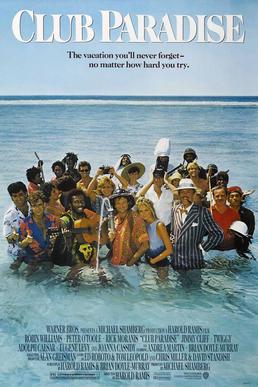
Club Paradise (1986, directed by Harold Ramis)


I think I was nine or ten years old when I first saw Club Paradise on HBO.  I remember thinking it was pretty funny.

I recently rewatched Club Paradise and I discovered that ten year old me had terrible taste in movies.

Robin Williams plays Jack Moniker, a Chicago fireman who gets blown out of a building while rescuing a dog.  Living off of his disability payments, he retires to the island of St. Nicholas, which is basically Jamaica but with less weed.  Jack and reggae musician Ernest Reed (Jimmy Cliff) open up their own Club Med-style resort, Club Paradise.  Jack doesn’t know much about the resort business but he does know how to put together a good brochure.  Almost the entire cast of SCTV shows up at Club Paradise, looking for a tropical vacation.  Things quickly go wrong because Jack doesn’t know how to run a resort and there’s also an evil developer (played by Brian Doyle-Murray) who wants Club Paradise to fail so that he can get the land.

Club Paradise has got a huge and impressive cast, the majority of whom probably signed on because they were looking forward to a paid Caribbean vacation.  Peter O’Toole plays the British-appointed governor of St. Nicholas.  Twiggy plays Jack’s girlfriend.  Joanna Cassidy plays a reporter and Adolph Caesar is cast in the role of St. Nicolas’s corrupt prime minister.  Because the film was directed by Harold Ramis, it is full of Ramis’s co-stars from SCTV.  Andrea Martin tries to get her husband to enjoy the islands as much as she’s enjoying them.  Joe Flaherty is the crazed pilot who flies people to the resort.  Rick Moranis and Eugene Levy play two nerdy friends who are both named Barry and who are only interested in scoring weed, getting laid, and working on their tan.  Rick Moranis and Eugene Levy playing nerds?  It’s a shock, I know.

There’s enough funny people in Club Paradise to ensure that there are a few isolated laughs.  Not surprisingly, the movie comes to life whenever Moranis and Levy are onscreen.  (If I had to guess, I imagine they were the reason why ten year-old me liked this movie so much.)  Needless to say, Jimmy Cliff also provides a killer soundtrack.  But Club Paradise ultimately doesn’t work because the script is too disjointed and it feels more like an uneven collection of skits than an actual film.  It’s impossible to tell whether we’re supposed to think of Club Paradise as being the worst resort ever or if we’re supposed to be worried that the bad guys will shut it down.  For a movie like this, you need a strong central presence to hold things together.  Unfortunately, Robin Williams’s style of comedy is too aggressive for the role of Jack.  The role was originally written for Bill Murray and it shows.  Most of Jack’s lines sound like things you would expect Bill Murray to say in his trademark laid back fashion and it is easy to imagine Murray redeeming some of Club Paradise‘s weaker scenes simply by attitude alone.  Instead, Robin Williams is so frantic that you never buy he could be happy living a laid back life on a Caribbean island.  As played by Williams, Jack often comes across as being unreasonably angry at everyone staying at Club Paradise and it’s hard to care whether or not he manages to save his resort or not.

Club Paradise was a bomb at the box office.  Harry Shearer, who was originally credited with working on the screenplay, hated the movie so much that he requested his name be removed from the credits.  (Instead, credit is given to Edward Roboto.)  As a result of the film’s failure, it would be 7 years before Harold Ramis would get to direct another movie.  Fortunately, that movie was Groundhog Day and this time, Ramis was able to get Bill Murray.

4 Shots From 4 Films: Special W.C. Fields Edition!


4 Shots From 4 Films is just what it says it is, 4 shots from 4 of our favorite films. As opposed to the reviews and recaps that we usually post, 4 Shots From 4 Films lets the visuals do the talking!

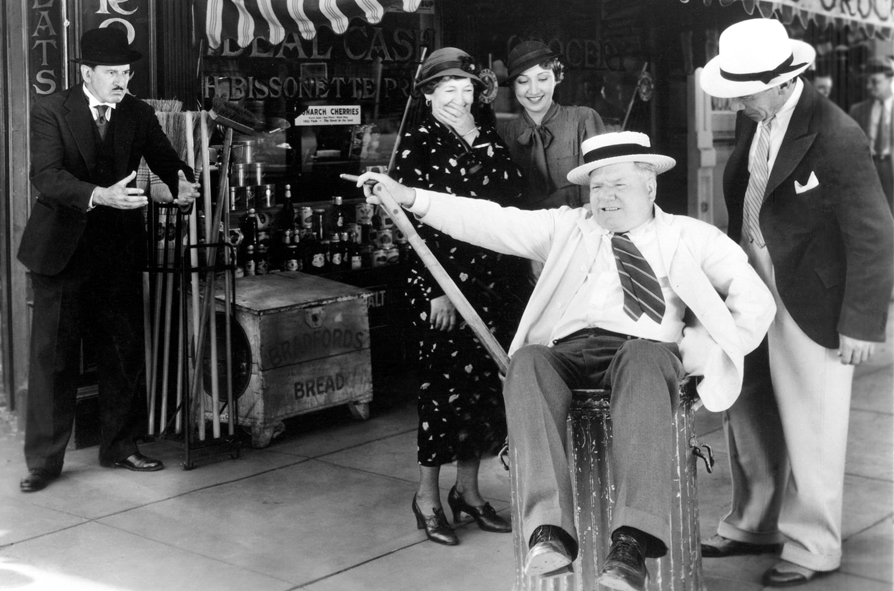
It was 140 years ago today that the greatest curmudgeon of them all, W.C. Fields, was born in Darby, Pennsylvania.  The world would never be the same.

In honor of a man who knew how to enjoy a stiff drink and who made a good living pretending to not like dogs and children, here are

4 Shots From 4 Films

It’s A Gift (1934, directed by Norman McCleod)

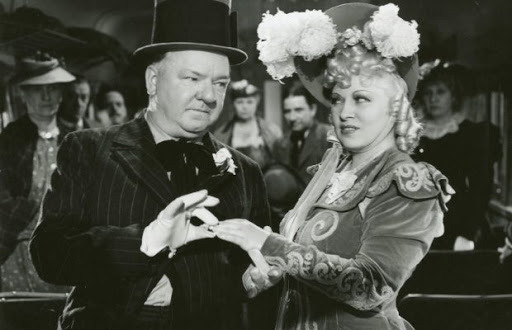
My Little Chickadee (1940, directed by Edward Cline)

The Bank Dick (1940, directed by Edward Cline)

Never Give A Sucker An Even Break (1941, directed by Edward Cline)

Lisa Reviews An Oscar Nominee: 7th Heaven (dir by Frank Borzage)


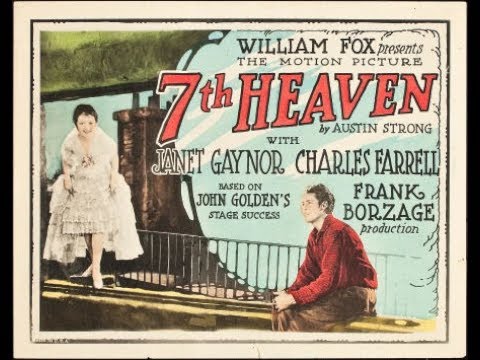
The 1927 melodrama 7th Heaven tells the story of two people in Paris.

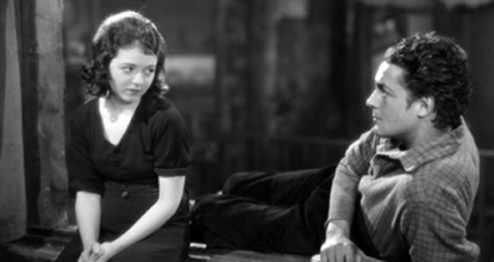
Chico (Charles Farrell) works in the sewers but lives by the stairs.  Though he spends all of his days under the street and dealing with literally the worst that the world has to offer, Chico remains an optimist.  After all, he has his small apartment, which sits atop seven flights of stairs.  He has his dreams, which involve eventually getting promoted to being a street cleaner.  He doesn’t have much religious faith, which concerns Father Chevillon (Emile Chautard) but who knows?  Maybe something can happen to change that….

Diane (Janet Gaynor) is a desperately sad young woman who lives in squalor with her older sister, the cruel Nana (Gladys Brockwell).  When we first see Diane, she’s lying on the floor while being whipped by Nana and that’s pretty much the way her life goes for the first fourth of the movie.  Nana treats Diane less like a sister and more like a slave, sending her out to steal food and buy absinthe.  Diane and Nana’s father has made a good deal of money overseas but when he sees how they’re living in Paris, he rejects both of them.

How bad of a sister is Nana?  She’s so bad that, when she’s eventually arrested by the Paris police, she points out her sister on the street and demands that they arrest her as well.  Fortunately, Chico just happens to present at the scene.  Having already protected Diane from Nana’s abuse once before, Chico steps forward and announces that Diane is his wife!  The police ask Chico if he’s sure and then remind him that, if it’s found that he’s lying, both he and Diane could go to prison.  Chico, however, insists that it is true.

To keep the deception going, Chico allows Diane to move in with him.  When Father Chevillon arranges for Chico to get promoted to street cleaner, he also requests that Chico keep an eye on Diane.  Chico agrees and slowly but surely, the two of them fall in love.  Chico’s apartment, sitting atop 7 flights of stairs, becomes their 7th heaven.

However, World War I looms in the distance.  With all of Chico’s friends and coworkers receiving their draft notices and being sent to fight, Chico and Diane knew that it’s only a matter of time before the same thing happens to Chico….

As in so many other silent films, the shadow of World War I looms over every minute of 7th Heaven.  In the 20s, the Great War was still the main trauma that has shaped most viewer’s lives and one can imagine those viewers watching 7th Heaven and falling in love with the characters of Chico and Diane, all the while knowing that their happiness is only temporary.  If the 1st hour of 7th Heaven is a romantic mix of melodrama and comedy, the 2nd hour becomes a rather grim war film.  Even separated by war, Chico and Diane remain soulmates.  When Diane is told that Chico has been listed as having been killed in action, she knows that it’s not true because she can still feel their connection.  And yet, the final fourth of the film is so stylized and the final shot is both so beautiful and yet so artificial that the audience is left to wonder whether Diane is correct or if she’s simply dreaming what she (and, undoubtedly, the many other members of the audience who had also lost loved ones in the war) wishes to be true.

7th Heaven is a deliriously romantic film and watching it actually requires a bit less of an adjustment on the part of modern audiences than other silent films.  Director Frank Borzage keeps the action moving quickly and, even more importantly, Janet Gaynor and Charles Farrell both give sincere and naturalistic performances.  Never do they resort to the type of theatrical overacting that was featured in so many other silent films.  Instead, you watch the film and you truly believe that you are watching two people fall in love.  You’re happy when they’re happy and when tragedy strikes, you cry for them.  Their love is your love and their sadness is your sadness.

7th Heaven was one of the first films to even be nominated for Best Picture.  While Gaynor won Best Actress and Frank Borzage won Best Director, the award for Best Picture went to another World War I romance, Wings.

Ghosts of Sundance Past #2: The Report (dir by Scott Z. Burns)


Remember The Report?

The Report premiered at last year’s Sundance Film Festival, where it was a hit with the critics who saw it.  Amazon acquired the distribution rights and, for the first part of 2019, The Report was one of those films that was regularly discussed as being a potential Oscar nominee.  Not only was it based on a true story but it starred Adam Driver and Annette Bening.  There are several online film critics and award bloggers who are convinced that any film featuring Annette Bening will automatically be an Oscar contender, despite the fact that it rarely seems to work out that way.

Certainly, that ended up being the case with The Report.  Despite all of the hype from Sundance, The Report kind of fizzled when it was finally released.  That it didn’t do much business at the box office makes sense because it was only given a limited release and everyone knew that it would soon be available to stream on Prime.  But even after it was made available on Prime, The Report never really seemed to make much of a dent in the public consciousness.  When the Oscar nominations were announced, The Report was not mentioned once.  Adam Driver did receive a nomination for Best Actor but it was for Marriage Story.

What happened to The Report?  It may have been too low-key for audiences (and, let’s be honest, critics) who have come to expect even a movie about a Senate committee to be experimental and overly stylized.  It could be that, even though the film was critical of the CIA and the War on Terror, it wasn’t angry enough for the same people who thought Adam McKay’s Vice was a brilliantly conceived work of political cinema.  A more realistic explanation is probably that, in this hyper political age, people didn’t want to watch a 2-hour movie about a senate staffer.  Instead, people wanted an escape from all that.

It’s understandable but it’s also a shame because The Report is a very good film.  I mean, I usually hate films like this but I was surprised by how much I liked it.

The Report deals with the efforts of Senate staffer Daniel Jones (Adam Driver) and the members of the Senate Intelligence Committee to investigate the CIA’s use of torture in the aftermath of 9-11.  Skipping back and forth through time, the film shows us how Jones was first assigned to lead an investigation into the CIA’s activities in 2005 and how, over the course of seven years, Jones puts together not one but two reports that absolutely nobody wants released.  Along the way, Jones goes from being a generally idealistic and optimistic staffer to eventually becoming the type of paranoid and obsessive man who meets with reporters in underground garages and who considers leaking classified information.  Daniel has what he believes to be proof that using torture is not only unethical but also counter-productive but, as he discovers, even the members of his own political party aren’t particularly interested in releasing his report.  Adam Driver gives a memorably intense performance of Daniel, playing him as someone whose obsession with his report sometimes threatens to push him over the edge and transform him from being a crusader to being a zealot.

Annette Bening plays Daniel’s boss, Sen. Dianne Feinstein.  It’s interesting casting and, to be honest, it doesn’t quite work.  I almost feel like it would have been better for the film to have either kept Feinstein off-screen or to have at least minimized her role.  The problem is that Dianne Feinstein is a widely-known figure and it’s jarring to see Annette Bening, another well-known figure (at least among film fans), in the role.  Bening plays Feinstein as being a ethical and serious-minded stateswoman and she does what she can with what the film gives her but, at the same time, it’s still kind of a boring performance.  The film presents Feinstein, a not uncontroversial figure, in a positive light and I’m sure some, on both the Right and the Left would say that it’s perhaps a bit too positive.  One gets the feeling that Feinstein’s main role in the film is to assure us that the system works but we just have to take one look at Adam Driver losing his mind to realize that it doesn’t.

That misstep aside, The Report still works far better than I was expecting it too.  Taking obvious inspiration from All The President’s Men, Scott Z. Burns directs the film as if it were a thriller and the deeper that Adam Driver gets into his research, the darker and more shadowy Washington D.C. seems to become.  Even though the film clearly has an agenda, Burns gives the other side a chance to make their case without presenting them as being cartoonish villains.  In other words, this is the opposite of an Aaron Sorkin or Adam McKay-style diatribe.  Instead, this is an intelligent movie about intelligent people.  It’s a film that makes some of the same points as many other similarly liberal films but it makes them without taking cheap shots or resorting to a heavy hand. Long after Vice has been forgotten, The Report will be remembered.

And, if you haven’t seen it yet, it’s on Prime!