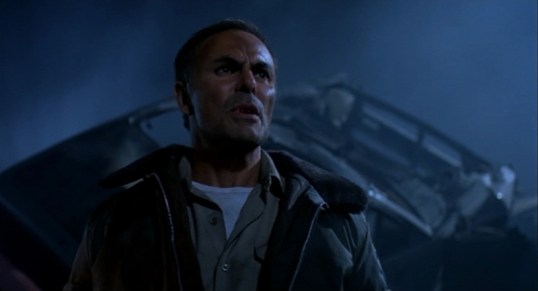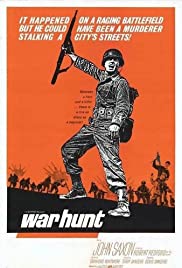
War Hunt (1962, directed by Denis Sanders)


In the last days of the Korean War, Pvt. Roy Loomis (Robert Redford) is assigned to an infantry unit that’s serving on the front lines.  Loomis is an idealist who believes in always doing the right thing and who believes that he’s truly fighting for the American way of life in Korea.  The company’s commander (Charles Aidman) is more cynical.  As he explains it, the job of the soldiers is not to win the war.  Their job is to stall the advance of the enemy long enough to let the politicians and the diplomats get what they want out of a peace settlement.  The soldiers are merely there to be sacrificed.

Loomis soon finds himself in conflict with Pvt. Endore (John Saxon).  Endore spends his night sneaking around behind enemy lines, killing soldiers, and gathering intelligence.  No one goes with Endore on these missions and Endore makes it clear that he doesn’t want to have anything to do with the other solders in the unit.  Because Endore usually returns with valuable intelligence, he’s allowed to do what he wants but it becomes clear that gathering intelligence is not what motivates Endore.  Endore loves war and killing.  In the United States, he would probably be on death row.  In Korea, at the height of the war, he’s a valuable asset.

Charlie (Tommy Matsuda) is an orphan boy who has been adopted as the company’s mascot.  Both Loomis and Endore have a bond with Charlie.  Loomis wants Charlie to go to an orphanage after the war so that he can hopefully be adopted and maybe brought over the United States.  Endore, however, plans to stay in Korea even after the war ends and he wants to keep Charlie with him.  He wants to turn Charlie into as efficient a killing machine as he is.

This low-budget but effective anti-war film may be best known for featuring Robert Redford in his first starring role but the film is stolen by John Saxon, who is frighteningly intense as Endore.  Endore is so in love with war that he continues to fight it even after the Armistice is declared.  Saxon plays him like a cool and calculating predator, a natural born killer.  He’s an introvert who rarely speaks to the other members of the company.  Even though he helps them by killing the enemy before the enemy can kill them, it’s clear that Endore doesn’t really care about the other members of the unit.  He just cares about killing.  He’s close to Charlie because Charlie is too young to realize just how dangerous Endore actually is.

Along with Saxon and Redford, War Hunt also features early performances from Tom Skerritt, Sydney Pollack, and Francis Ford Coppola.  (Coppola, who goes uncredited, plays an ambulance driver.)  Pollack and Redford met while they were both acting in this film and Pollack would go on to direct Redford in several more films.  One of those films, The Electric Horseman, would reunite Redford and Saxon.  Again, they would play adversaries.

Last night, when I heard John Saxon had died, I tried to pick his best performance.  I know that most people know him from his horror work and his role in Enter the Dragon.  Those are all good performances but, for me, Saxon was at his absolute best in War Hunt.
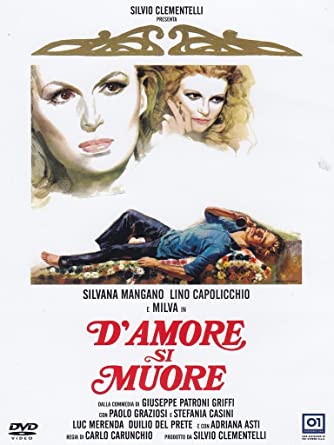
 

Song of the Day: For Love One Can Die by Ennio Morricone


Today’s song of the day comes from a 1972 Italian film called D’amore si muore.  I haven’t seen this film and I really don’t know much about it.  As far as I can tell, it appears that it might not even be available here in the U.S.  If anything, the film appears to be best-known for Ennio Morricone’s theme music.

From Morricone, here is a beautiful composition called For Love One Can Die:

Previous Entries In Our Tribute To Morricone:

  1. Deborah’s Theme (Once Upon A Time In America)
  2. Violaznioe Violenza (Hitch-Hike)
  3. Come Un Madrigale (Four Flies on Grey Velvet)
  4. Il Grande Silenzio (The Great Silence)
  5. The Strength of the Righteous (The Untouchables)
  6. So Alone (What Have You Done To Solange?)
  7. The Main Theme From The Mission (The Mission)
  8. The Return (Days of Heaven)
  9. Man With A Harmonic (Once Upon A Time In The West)
  10. The Ecstasy of Gold (The Good, The Bad, and the Ugly)
  11. The Main Theme From The Good, The Bad, and the Ugly (The Good, The Bad, and the Ugly)
  12. Regan’s Theme (The Exorcist II: The Heretic)
  13. Desolation (The Thing)
  14. The Legend of the Pianist (The Legend of 1900)
  15. Theme From Frantic (Frantic)
  16. La Lucertola (Lizard In A Woman’s Skin)
  17. Spasmodicamente (Spasmo)
  18. The Theme From The Stendhal Syndrome (The Stendhal Syndrome)
  19. My Name Is Nobody (My Name Is Nobody)
  20. Piume di Cristallo (The Bird With The Crystal Plumage)

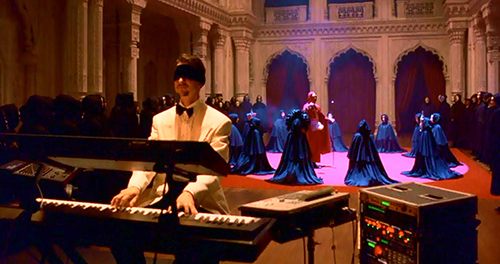
Scene That I Love: Tom Cruise Crashes The Party in Eyes Wide Shut


Eye Wide Shut (1999, directed by Stanley Kubrick)

Stanley Kubrick would have been 92 years old today!

In honor of this visionary and his career, here is a wonderfully creepy scene from his final film, 1999’s Eyes Wide Shut.  Like so many of Kubrick’s films, it took a while for people to really appreciate Eyes Wide Shut.  It’s an odd and, at times, frustrating film but still a film touched by genius.

In this scene, Tom Cruise discovers that it’s not quite as easy to crash a super secret party as he thought it would be.

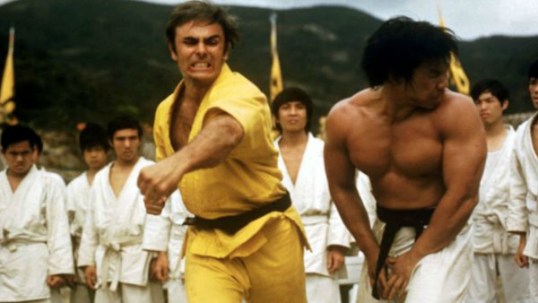
4 Shots From 4 Films: Special John Saxon Edition


4 Shots From 4 Films is just what it says it is, 4 shots from 4 of our favorite films. As opposed to the reviews and recaps that we usually post, 4 Shots From 4 Films lets the visuals do the talking!

Rest in Peace, the great and iconic John Saxon.

Here are….

4 Shots From 4 Films

Evil Eye (1963, dir by Mario Bava)

Enter the Dragon (1973, dir by Robert Clouse)

A Nightmare on Elm Street 3: Dream Warriors (1987, dir by Chuck Russell)

Hellmaster (1992, dir by Douglas Schulze)

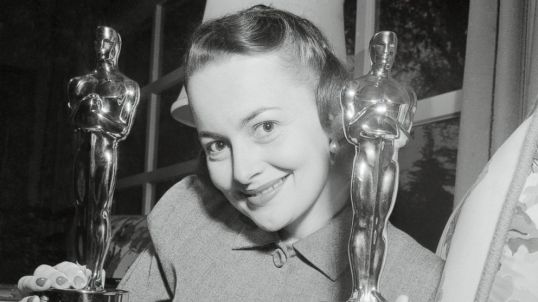
Rest In Peace, Olivia De Havilland


I woke up today to the news that Olivia De Havilland, the last of the great Golden Age stars, had died.  She was 104 years old and she spent all of those years as the epitome of a type of grace and class that we really don’t see much nowadays.  Her famous feud with her sister Joan Fontaine aside, it’s impossible to imagine an actress like Olivia de Havilland getting caught up in a silly twitter fight.

Here she is with one of her most frequent co-stars, Errol Flynn.  This short but sweet scene is from The Adventures of Robin Hood.

Olivia de Havilland, R.I.P.

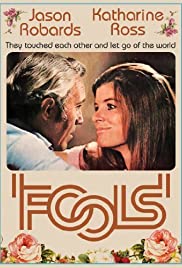
Fools (1970, directed by Tom Gries)


What the Hell, 1970?

In this self-conciously hip and with-it portrait of life in San Francisco at the tail end of the hippie era, Jason Robards plays Matthew South, a veteran B-movie actor who is fed up with everyday life and who is prone to long monologues about how the machines are taking over.  (Just imagine how Matthew would feel about the world today.)  When Matthew gets into an argument with two people in a park, Anais Appleton (Katharine Ross) comes to his rescue and soon, they’re in the middle of a falling in love montage.  Actually, there are several falling in love montages and they’re almost all scored by Kenny Rogers and the First Edition.  It’s easy listening with a hippie tinge.

Fools follows Matthew and Anais as they wander around San Francisco and have several strange encounters, none of which make much sense.  For instance, there’s a scene where two FBI agents suddenly burst into the room and then admit that they’re at the wrong address.  Why is that scene there?  What does it mean?  Later, Matthew and Anais go to a dentist and they listen to a patient try to seduce her psychiatrist (who is played by Mako).  Why is that scene there?  What does any of it mean?  Everywhere that Matthew and Anais go, they see evidence that society is dumb and that the answer to all life’s problems is a love song from Kenny Rogers.  Matthew never stops talking and Anais never stops looking pretty (she’s Katharine Ross after all) but neither ever becomes a strong enough character to ground Fools in any sort of reality.  It’s a movie that preaches nonconformity while so closely imitating A Thousand Clowns and Petulia that the entire thing feels like plagiarism.

Anais has a husband, an emotionally distant lawyer named David (Scott Hylands).  David isn’t prepared to let Anais leave him, no matter how tired she is of their marriage.  He hires a detective to follow Anais around.  It all leads to an act of violence that doesn’t fit the mood of anything that’s happened before.  Cue another falling love montage before the end credits role.

Fools is one of those films that probably would never have been made without the success of Easy Rider.  Everyone wanted a piece of the counterculture in 1970 and Fools tries so hard that it’s painful to watch.  Of course, neither Matthew nor Anais are really hippies.  They do eventually come across some hippies playacting in the street.  One of them is played by future David Lynch mainstay Jack Nance so that’s pretty cool.  Otherwise, Fools deserves to stay in 1970.


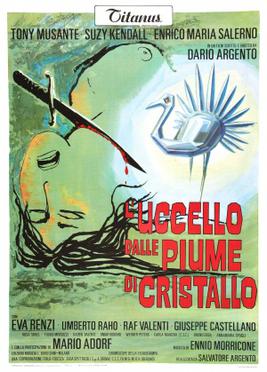
Song of the Day: Piume di Cristallo by Ennio Morricone


Today’s song of the day comes from the soundtrack of Dario Argento’s 1970 film, The Bird With The Crystal Plumage.  Not only was this film Argento’s first as a director but it was also his first collaboration with the great Ennio Morricone.

From Ennio Morricone, here is a piece of music that perfectly matches the creepy and twisty feel of Argento’s first film.  Here is Piume di Cristallo:

Previous Entries In Our Tribute To Morricone:

  1. Deborah’s Theme (Once Upon A Time In America)
  2. Violaznioe Violenza (Hitch-Hike)
  3. Come Un Madrigale (Four Flies on Grey Velvet)
  4. Il Grande Silenzio (The Great Silence)
  5. The Strength of the Righteous (The Untouchables)
  6. So Alone (What Have You Done To Solange?)
  7. The Main Theme From The Mission (The Mission)
  8. The Return (Days of Heaven)
  9. Man With A Harmonic (Once Upon A Time In The West)
  10. The Ecstasy of Gold (The Good, The Bad, and the Ugly)
  11. The Main Theme From The Good, The Bad, and the Ugly (The Good, The Bad, and the Ugly)
  12. Regan’s Theme (The Exorcist II: The Heretic)
  13. Desolation (The Thing)
  14. The Legend of the Pianist (The Legend of 1900)
  15. Theme From Frantic (Frantic)
  16. La Lucertola (Lizard In A Woman’s Skin)
  17. Spasmodicamente (Spasmo)
  18. The Theme From The Stendhal Syndrome (The Stendhal Syndrome)
  19. My Name Is Nobody (My Name Is Nobody)

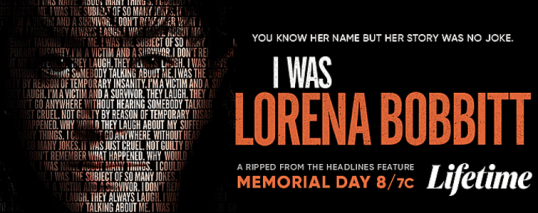
Lifetime Film Review: I Was Lorena Bobbitt (dir by Danishka Esterhazy)


In 1993, a woman named Lorena Bobbitt made national news when she used a kitchen knife to chop off her husband’s penis, which she then tossed into a field, where it was later found and reattached.  During Lorena’s trial, both the defense and the prosecution conceded that John Wayne Bobbitt (and what a name, right?) was an abusive and selfish husband who probably deserved a lot worse than just losing his penis for a few hours.  Lorena, meanwhile, was portrayed as being a crazed psycho, with many claiming that she was motivated not by years of abuse but instead by jealousy.  After spending months at the center of a media freakshow, Lorena was eventually found not guilty by reason of temporary insanity.  John Wayne Bobbitt was subsequently acquitted on charges that he had raped Lorena the night that she castrated him.

Subsequently, John Wayne Bobbitt held a number of jobs, was charged with more crimes, and had a brief career as an adult film actor.  Lorena attempted to stay out of the spotlight, reverted to using her birth name of Gallo, and was only briefly in the news in 1997 when she was arrested for striking her mother.

However, this previous Memorial Day, Lorena Gallo returned to the public eye as the host of I Was Lorena Bobbitt.  One of Lifetime’s “ripped from the headlines” features, the film’s format is similar to 2017’s I Am Elizabeth Smart, which featured the real Elizabeth Smart talking about her kidnapping along with dramatized scenes feature Alana Boden in the title role.  I Was Lorena Bobbitt features scenes of Lorena (played by Dani Montalvo) both before and after what the film refers to as being “the incident.”  We watch as she first meets John Wayne Bobbitt (Luke Humphrey) and how she is initially charmed by the handsome marine just to discover, after their marriage, that he’s actually a porn-addicted, abusive monster.  The real Lorena appears on-screen to provide context for what we’ve just seen.  For instance, when the movie’s Lorena gives her statement to the police, the real Lorena appears and explains that the reason why the statement was so awkward was because she was still struggling to learn how to express herself in English.  The film makes the very good and too often overlooked point that Lorena’s statement was subsequently used to paint her as being a psychopath by reporters who should have understood that not only was Lorena in shock but she was also being forced to describe a very personal experience in a language in which she wasn’t fluent.

Unfortunately, despite those few moments that do provide some valuable context to what really happened that night and afterwards, I Was Lorena Bobbitt is still a bit of a mess.  The filmmakers tell the story out of chronological order, mixing in flashbacks with flashforwards and, while I can understand why they made that narrative choice, it doesn’t really add much to the story.  In fact, it gets a bit distracting as we try to keep track of where we are in Lorena’s story.  Luke Humphrey gives a properly loathsome performance as John and Dani Montalvo gives a good performance as the young Lorena but the actual Lorena is not a particularly compelling narrator.  One gets the feeling that the film would have worked better if the real Lorena had stayed off-screen.

In the end, despite its flaws, I Was Lorena Bobbitt deserves credit for examining the real issues underneath a story that feels as if it was tailor-made to appeal to America’s tabloid sensibility.  The film shows how Lorena was gaslighted and brainwashed into believing that the abuse she suffered was her fault.  It shows how an abuser can be charming when he feels that he needs to be and it also show how Lorena was more vilified for her actions than John was for his.  It’s a film with an important message, even if the execution is sometimes lacking.

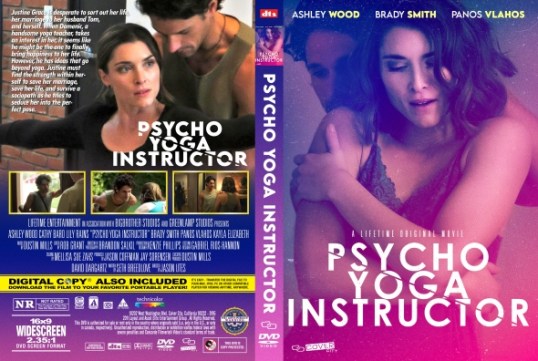
Lifetime Film Review: Psycho Yoga Instructor (dir by Brian Herzlinger)


Oh hell yeah!

This Lifetime film had me as soon as I saw the title.  Psycho Yoga Instructor?  Seriously, is that not the most brilliant title of all time?  Apparently, this film was originally called The Perfect Pose and that’s an okay title.  I mean, “perfect” is always a good word to use in a title.  But you know what’s an even better word to use?  Psycho!

Plus, the fact that the title promised not just a psycho but a psycho yoga instructor made me even more excited to see the film.  There’s been countless Lifetime film about yoga instructors who ended up getting stalked.  But this film’s title shakes things up.  This time, it’s the yoga instructor who is the stalker!

Anyway, Psycho Yoga Instructor tells the story of Justine (Ashley Wood).  Justine is married to Tom (Brady Smith), who is the type of guy who stays at work late and then, when he gets home, doesn’t even bother to join his wife in bed.  Instead, he collapses on the couch, where she inevitably finds him the next morning.  Justine is eager to adopt a baby.  Tom barely seems to care.  Justine is haunted by nightmares in which she’s drowning in the tub and, instead of trying to save her, Tom takes a call from work.

Justine’s best friend, Ginnie (Lily Rains), thinks that Tom is cheating on Justine.  She also thinks that Justine should come to her yoga class and ogle the hot yoga instructor, Dominic (Panos Vlahos).  Justine is reasonably sure that Tom is not cheating but she still decides that yoga might help her deal with some of her stress.

Dominic, it turns out, is a very good yoga instructor.  He’s got wild hair and he spends a lot of time talking about toxins and the barriers that people set up to their own happiness.  He takes an interest in Justine and soon, he’s even coming to Justine’s house to give her one-and-one lessons.  Justine thinks that Dominic is helping her get in touch with what she really wants out of life.  Dominic, meanwhile, spends most of his time staring down Justine’s shirt.  Like, seriously, Dom — eyes up!

Tom starts to get jealous and with good reason.  Justine is having all sorts of dreams about Dominic and, for the most part, they never end well for Tom.  Still, it’s just yoga, right?  And Dominic’s not any more quirky than the typical yoga guy, right?  Wrong.  It turns out that Dominic is more than just a somewhat spacey hot guy.  He’s also a …. PSYCHO YOGA INSTRUCTOR!

Admittedly, it does take a while to get around to the psycho part of Psycho Yoga Instructor but I still liked the film.  The character of Dominic was so hilariously vapid and Panos Vlahos seemed to be having so much fun smirking and talking about toxins that it was impossible not to enjoy his performance.  Justine’s recurring dreams were also well-shot and genuinely creepy.  The one where Justine was under water while her husband laughed at her especially got to me.  The film was as cheerfully trashy as you would hope that a film with a title like Psycho Yoga Instructor would be.  In the end, that’s what really matters.

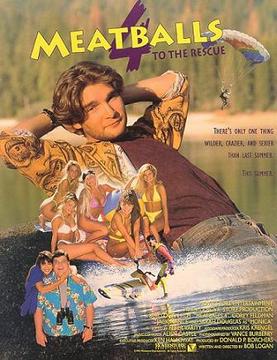
Cinemax Friday: Meatballs IV (1992, directed by Bob Logan)


Neil (Jack Nance … yes, Eraserhead Jack Nance) owns a summer camp where he teaches people how to water ski.  Unfortunately, it’s been a while since Neil’s been a success.  The camp is old and run down and Neil is just too good-hearted to enforce any discipline on his campers or his counselors.  The evil Monica Shavetts (Sarah Douglas) owns the water ski camp on the other side of the lake and she is determined to put Neil out of business.  Fortunately, Neil does have one ace up his sleeve.  One of his former campers, Ricky Wade (Corey Feldman), has gone to become one of the top water skiers in the world and he has returned to help Neil save the camp!

Meatballs IV covers all the usual summer camp hijinks.  The fat kid learns how to believe in himself.  The female counselors all appear in topless.  There’s a shower scene, of course, and there’s also a lot of humor centering around flatulence.  When you’re 11 years old, this movie is pretty cool.  Of course, saving the camp means winning a competition against the evil camp.  At least Sarah Douglas appears to be relishing her evil role.  There is one funny joke where Corey Feldman attempts to hit on a girl by telling her, “I was in Goonies.”  I guess even back then, Feldman knew which one of his movies people would actually remember.

Jack Nance is his usual eccentric self in the role of Neil but he doesn’t get to do much.  Sadly, it was while he was in upstate New York making this film that his then-wife, Kelly Van Dyke, committed suicide in Los Angeles.  Reportedly, Nance had been on the phone consoling her and trying to talk her down.  Unfortunately, a lightning storm knocked out the phones in the middle of Nance’s conversation with Kelly and she hung herself immediately afterwards.  For many of us, Jack Nance would be the main reason we would sit through something like Meatballs IV but knowing that story makes it difficult to watch him in this film.  Both Jack Nance and his wife deserved better.

Meatballs IV started out as a movie called Happy Campers, which was intended to be a low-budget rip-off of the original Meatballs.  Then, someone realized that an even better idea than ripping off a successful film would simply be to change your movie’s title and turn it into a sequel.  Meatballs IV tells the same basic story as the original Meatballs, with a bunch of plucky outsiders proving themselves over the summer.  The main difference is that Meatballs IV has a lot more T&A than the original film and that the first film has Bill Murray as a camp counselor while this one has to settle for Corey Feldman.  It’s not that Feldman’s bad in the role, of course.  Despite what happened to his career in the 90s and beyond, Corey Feldman has always been capable of giving good performances, even if he often didn’t.  (I can’t really blame him.  Would you make much of an effort if you were appearing something like Dream A Little Dream 2?)  It’s just that Corey Feldman is no Bill Murray.  When Ricky first shows up at the camp, he energizes the campers by doing an elaborate dance routine, which he ends by shouting, “Elvis has left the building!”  It has the same energy as that episode of The Simpsons where Homer is hired to voice Poochie on Itchy & Scratchy.  It feels desperate, like the film is trying too hard to convince us that Ricky Wade is as cool as everyone says he is.  If you have to work that hard to convince people that you’re cool, then you’re probably not.