Horror on the Lens: Dr. Jekyll and Mr. Hyde (dir by John S. Robertson)


394px-Dr_Jekyll_and_Mr_Hyde_1920_poster

Ever since the birth of film, Robert Louis Stevenson’s Dr. Jekyll and Mr. Hyde has been a popular subject for adaptation.  Not only does the classic story of a good doctor who unleashes his evil instinct via potion serve as a potent metaphor for everything from sexual repression to drug addiction, but the dual role of Dr. Jekyll and Mr. Hyde has provides an excellent opportunity for an actor to show off.

The first film adaptation of Dr. Jekyll and Mr. Hyde is believed to have been made in 1908.  Two more version followed in 1912 and 1913 and then, suddenly, 1920 saw three different film versions.

The best known of the 1920 version is our film for today.  This version is best remembered for John Barrymore’s powerful performance in the title role but it also holds up remarkably well as a work of cinematic horror.

Daddy’s Girl (1996, directed by Martin Kitrosser)


Daddy’s Girl is a forgotten film today but I swear that there was a two-month period in 1997 when it showed up every weekend on late night Cinemax and Showtime.  Like many former late night cable mainstays, Daddy’s Girl never developed enough of a cult following to justify getting a DVD release so, if you want to see it, you either have to have a working VCR or the ability to search YouTube.

I’m surprised this film doesn’t have a following because it features two thing that were every popular on cable in the 90s, William Katt and an evil child.  This time, William Katt plays Don, a toy designer who can’t get anyone to buy his creations.  Because he’s struggling, his wife (Michele Greene) is having to support the family.  Despite the fact that they’re not in great financial shape, they still decided to adopt 11 year-old Jodi (Gabrielle Boni).  Jodi loves Don and he spoils her every chance that he gets.  Jodi hates everyone else and tries to kill all of them.

What sets Daddy’s Girl apart from other crazy kid movies is just how far Jodi will go to kill anyone who might get between her and her adopted father.  Don’t even think about recommending that Jodi go to a special school because Jodi will knock you off a ladder and then push over a bookcase so that it lands on top you!  Don’t try to investigate her past because Jodi knows how to use a meat tenderizer as a deadly weapon!  Even if you’re at the hospital as a result of Jodi’s actions, she’ll just go down there and pull the plug herself!  And Jodie won’t just kill you.  She’ll make a joke about it after she does it!  Jodi is full of one liners.  Is this kid a comedian or a killer?  You’ll die laughing!

It’s hard to believe that no one would catch on to what Jodi is doing and I think the movie overestimates the physical strength of a typical 11 year-old girl but Daddy’s Girl isn’t bad.  William Katt was one of the better actors to regularly appear in direct-to-video thrillers like this one and Gabrielle Boni is a trip as the clingy and crazy Jodi.  Direct-to-video mainstays Mimi Craven and Whip Hubley also make welcome appearances.  Daddy’s Girl is an enjoyable take on The Bad Seed.

Scenes That I Love: The Preying Mantis Scene From Dracula 3D


Dracula 3D (2012, dir by Dario Argento)

Dario Argento’s 2021 film, Dracula 3D, doesn’t get the respect that it deserves. I guess that’s to be expected, as people are pretty much obsessed with criticizing Dario and his later films. Personally, I think it’s an enjoyable and unique version of the legend. Thomas Kretschmann is a credible Dracula. Rutger Hauer was a great Van Helsing. The whole thing is wonderfully over-the-top and stylish.

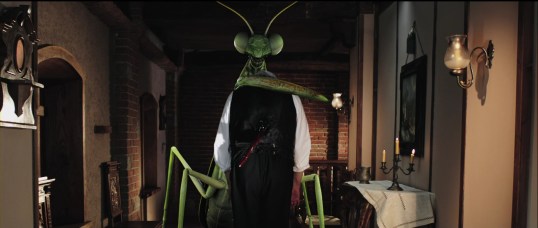
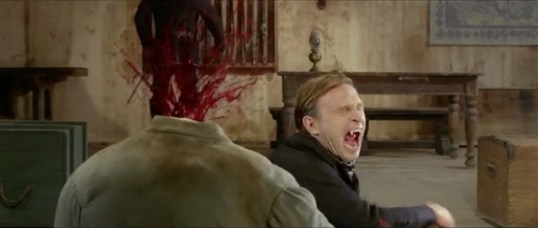
Plus, to my knowledge, this is the only Dracula film in which the Count turns into a preying mantis and beheads someone. Don’t believe me? Here is today’s horror scene that I love:

4 Shots From 4 Dracula Films


4 Shots From 4 Films is just what it says it is, 4 shots from 4 of our favorite films. As opposed to the reviews and recaps that we usually post, 4 Shots From 4 Films lets the visuals do the talking!

Today, let us take just a few moments to pay tribute to one of the icons of Halloween.  He was born into nobility but he never let that stop him from visiting the village at night and getting a taste of the common life.  I’m talking, of course, about the original royal influencer, Count Dracula!  Everyone knows Dracula.  Everyone wants to either be with or even be Dracula.  It’s no wonder that he’s been the subject of so many biopics.

In honor of the Count’s legacy, here are….

4 Shots From 4 Dracula Films

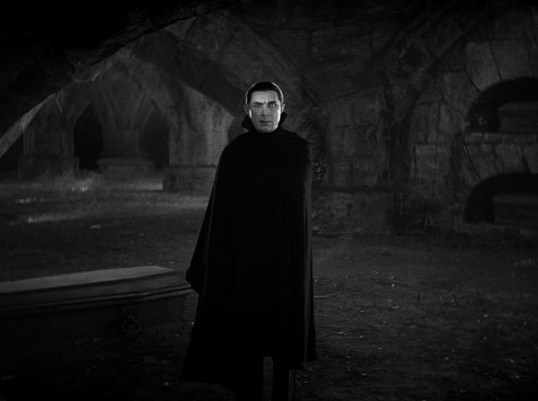
Dracula (1931, starring Bela Lugosi as the Count, Dir by Tod Browning, DP: Karl Freund)

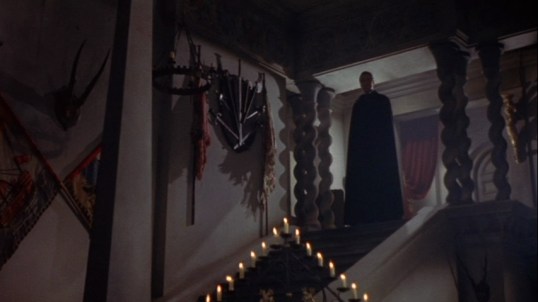
Horror of Dracula (1958, starring Christopher Lee as the Count, Dir by Terence Fisher, DP: Jack Asher)

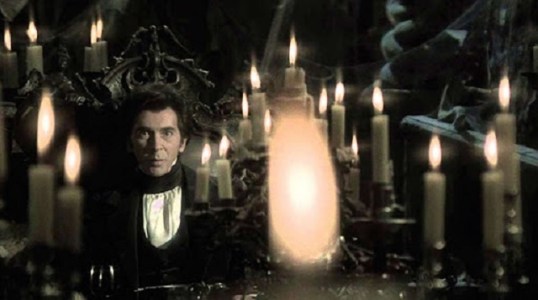
Dracula (1979, starring Frank Langella as the Count, Dir by John Badham, DP: Gilbert Taylor)

Dracula 3D (2012, starring Thomas Kretschman at the Count, dir by Dario Argento, DP: Luciano Tovoli)

Horror on the Lens: Nosferatu (dir by F.W. Murnau)


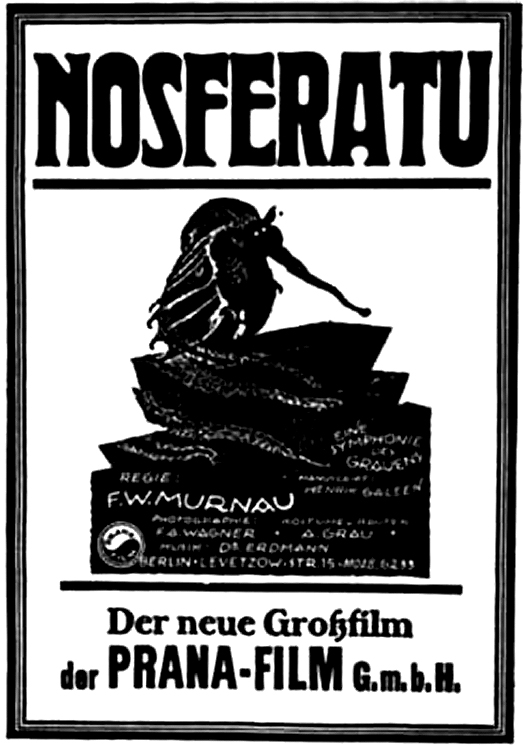
Today’s Horror on the Lens is a classic film that really needs no introduction!  Released in 1922, the German silent film Nosferatu remains one of the greatest vampire films ever made.  It’s a film that we share every October and I’m happy to do so again this year!

Enjoy!

Cleaning Out The DVR: Seven Days In Utopia (dir by Matt Russell)


Last night, as a part of our attempt to make some space on the DVR so that I can record every upcoming episode of The Bachelorette and she can record the World Series, Erin and I watched the 2011 film, Seven Days In Utopia.

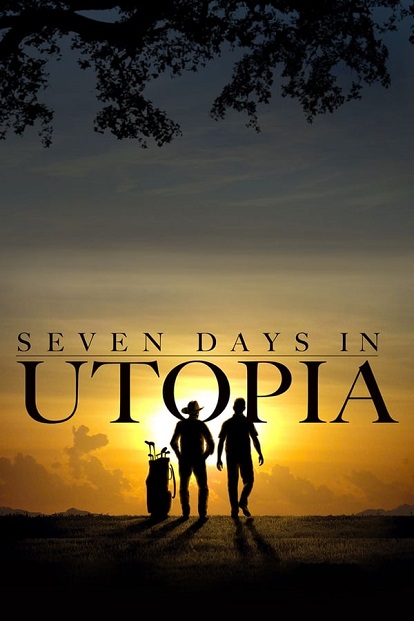
Seven Days In Utopia is a Texas-set (and Texas-filmed) movie about a young pro golfer named Luke Chisholm (played by Lucas Black) who has a very public meltdown while in the middle of a tournament. Feeling that his career is pretty much over, Luke jumps in his car and goes speeding around Southwest Texas. Because he’s not pay attention to the road (which, I’ll be honest, occasionally happens when you’re driving through rural Texas.), he almost doesn’t notice the cow standing in front of his car. Fortunately, Luke swerves and avoids the cow. Unfortunately, he crashes through a fence.

The fence belongs to Johnny Crawford (Robert Duvall), a friendly rancher who — coincidence of coincidences — also happens to be a former pro golfer! With Luke’s car temporarily out-of-commission, he’s stuck in Utopia for at least seven days. Johnny offers to spend those days teaching Luke everything that he needs to know about golf and about life. Luke agrees, because what else are you going to do when you’re stranded in Uvalde County?

Seven Days In Utopia is one of the few films in my lifetime to have been released with G rating and it pretty much earns that G-rating by being the most inoffensive film ever made. Seven Days in Utopia is almost aggressive in its pleasantness. Johnny is very nice. Luke is very nice. Just about everyone that Luke plays against is pretty nice. Everyone in town is pretty nice, even if they do give Luke a hard time about being a “city boy.” Deborah Ann Woll plays the nice waitress at the local diner, with whom Luke has a very pleasant romance. Woll and Black make for a cute couple and they have a nice chemistry. They’re all very pleasant.

Seven Days In Utopia is one of those films that you end up watching when you need something to watch with an older relative who doesn’t understand why “all the movies nowadays have to use all that language!” It’s an old-fashioned movie. That, in itself, is hardly a problem for me. I like old movies and, despite my love of horror as a genre, I can also appreciate movies that are not meant to traumatize the audience. For that matter, I like Lucas Black and I like Deborah Ann Woll. As for Robert Duvall — I mean, My God, he’s one of the last of the great character actors. He’s Boo Radley and Tom Hagen, for God’s sake! Of course, I love Robert Duvall and Duvall really is probably the only actor who could make an idealized character like Johnny Crawford into a real human being. That said, Seven Days In Utopia is also a rather slow film. The pacing will make you feel all seven of those days and the lessons that Johnny teaches to Lucas aren’t particularly profound once you look beyond the fact that they’re being taught by legitimate great actor Robert Duvall. It’s an nice film and the scenery is pretty but, while watching it, it’s hard not to miss the anarchistic spirit of golfers like Shooter McGavin and Happy Gilmore.

Here’s The Trailer For The Black Phone!


Not all horror comes out in October!

In fact, just yesterday, a trailer dropped for a horror film that will be coming out in February!  So, happy Valentine’s Day, I guess.

Anyway, the trailer is for The Black Phone, which is the latest film from Scott Derrickson.  It’s a return to his horror roots after his detour into the MCU.  It appears to be about a kidnapping and the kidnapper is Willy Wonka!  Oh, wait a minute …. that’s Ethan Hawke.

The trailer looks kind of creepy.  Derrickson’s Sinister is still one of the scariest films of the past ten years.  Plus, Ethan Hawke should get all the roles that seem like they were originally written for Johnny Depp.  So, I’ll give this one a shot when it comes out next year.

Here’s the trailer:

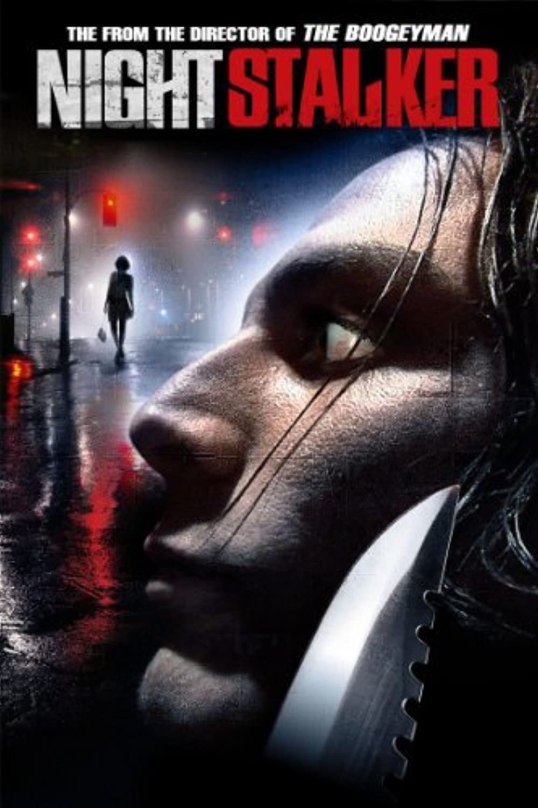
The TSL’s Grindhouse: Nightstalker (dir by Ulli Lommel)


The 2009 film, Nightstalker, opens with a drifter named Richard Ramirez (Adolph Cortez) lying on his back in what appears to be an alley.  He’s obviously been beaten.  He appears to be only half-conscious.  As he lays there in that filthy alley, we’re treated to several negative-filtered flashbacks of Ramirez shooting people.  This is followed by a series of blurry shot that were apparently filmed by someone driving down a street in Los Angeles.  Discordant music plays on the soundtrack.  If you listen carefully, you can hear someone mumbling in the background but good luck figuring out what they’re actually saying.  This is a low-budge film and sound quality was not a concern.

Of course, none of this should come as a surprise to anyone who is familiar with the unique aesthetic of director Ulli Lommel.  As I wrote in my review of Son of Sam, Lommel started his career as an association of Rainer Werner Fassbinder’s before he eventually came to America, got involved in the New York art scene, and made a handful of decent films.  Unfortunately, after he divorced the heiress who was responsible for funding the majority of his early films, Lommel spent the rest of his career making zero-budget, direct-to-video films about serial killers, like Richard “Night Stalker” Ramirez.  Lommel always claimed that there was a political subtext to his serial killer films and I don’t doubt that he was being honest.  You have to be sincerely committed to make a film as inept as Nightstalker.  At the same time, it’s not easy to figure out just what exactly it was that Lommel thought he was trying to say.

Nightstalker is undoubtedly one of the worst of Lommel’s serial killer films.  Usually, I try to make sure that all of my reviews include at least 500 words but it’s really difficult to think of much to say about Nightstalker.  The film is frequently out-of-focus.  The sound quality is atrocious.  The actor who plays the Nightstalker comes across more like a male model than a homeless serial killer who was known for having bad teeth and disagreeable odor.  Because there’s already been multiple films and documentaries made about Richard Ramirez, the Lommel version fails to add anything new to the story.  Instead, the film is a collection of scenes of Ramirez aimlessly wandering around Los Angeles, sucking on a lollipop and occasionally flashing back to his abusive El Paso childhood.  The film moves slowly and Ramirez’s inner monologue is vacuous.  The real Ramirez’s thoughts were probably pretty vacuous as well so give Lommel some credit for not trying make the the guy more interesting than he actually was.

Watching the film, you do get the feeling that Lommel was sincrely trying to say something about being on the fringes of society in America.  Lommel’s true crime films often implied that American serial killers were the direct result of American culture and its obsession with violence and wealth.  As I said, I think Lommel did think that he was making an artistic and political statement with these films, in much the same way that Lucio Fulci insisted that The New York Ripper was actually a critique of capitalism.  (Oh, if only Lommel had possessed just an ounce of Fulci’s talent….)  Son of Sam, for instance, actually does have a few moments where Lommel’s hallucinatory approach is somewhat effective.  But Nightstalker shows the limits of Lommel’s zero budget, semi-improvised approach.  It’s a chore to sit through and it’s a shame that, due to the continuing infamy of the mercifully late Richard Ramirez (Netflix aired a documentary about him earlier this year that had him trending on twitter), this is probably one of Lommel’s most-viewed films.  Hell, I watched it.  But I think this is going to be my last Lommel true crime film for a while.

Halloween, after all, is meant to be a joyous time.

Open House (1987, directed by Jag Mundhra)


A disturbed man named Harry starts calling Dr. David Kelly (Joseph Bottoms), a radio psychiatrist who is already being sued as a result of one of his patients killing herself on the air.  Harry eats dog food and hates real estate agents  because they keep trying to sell the houses in which he’s illegally squatting.  The police even suspect that Harry may in fact be responsible for several recent realtor murders.  When David mentions that his girlfriend, Lisa (Adrienne Barbeau), just happens to be a real estate agent, it looks like she might be Harry might have a new target!

Open House is from the same group of producers who gave the world Terror on Tour.  Like Terror on Tour, it’s a pretty lousy film but at least Terror on Tour had a killer clown and a loud soundtrack.  Open House has a bland synth soundtrack and a killer who could just as easily been a generic criminal of the week on an 80s cop show.  Rick Hunter would have just blown this psycho away and said, “Works for me.”  Because David needs to be redeemed for that patient who killed herself as a result of his bad advice, he gets a chance to encourage Harry to talk about his feelings.  It leads to a very long monologue.

The main appeal of the film is that it features the beautiful Adrienne Barbeau but she doesn’t get to do much other than get menaced by Harry.  Barbeau supposedly only accepted the roll so that she could use her paycheck to pay for her son’s tuition fees so at least something good came out of this film.

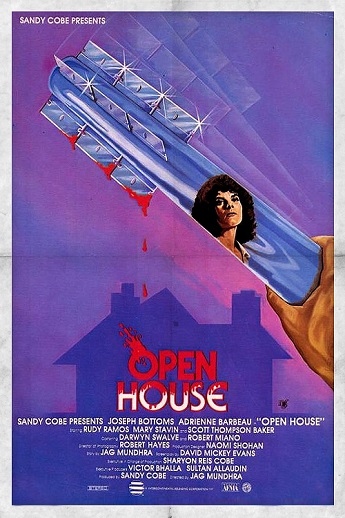
Open House is one of those films that I can remember being displayed prominently at the local video store that we used to visit when I was a kid.  It was a popular rental, because it had a cool cover and the back of the box promised much more blood and gore than the film delivered.  I can’t remember how old I was when I rented it but I do remember worrying about my mother figuring out what type of movie I had selected.  I need not have worried because Open House was about as tame as they come.

Open House has never gotten anything more than a VHS release but it’s there on YouTube for anyone who wants to track it down.  I rewatched it knowing that it was a boring film but I had forgotten just how boring.  When it comes to this Open House, lock the door and throw away the key.

Horror Scenes That I Love: Udo Kier’s Final Speech In Flesh For Frankenstein


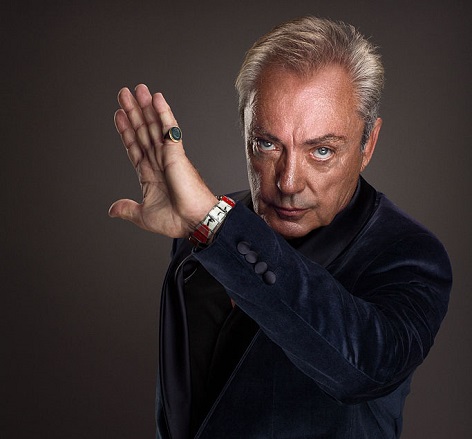
Today is Udo Kier’s birthday!

Kier is 77 years old. This German actor has over 260 film credits to his name, having worked with everyone from Dario Argento to Paul Morrissey to Gus Van Sant to Alexander Payne to Rob Zombie to Lars von Trier. Though he’s appeared in every genre of film, he’s best remembered for his horror appearances. In fact, his career got a major boost when he was cast in two horror films that were produced by Andy Warhol. (As with all things Warhol, there’s more than a little debate as to how much Andy was actually involved.) In 1973, Kier played Baron Von Frankenstein in Flesh For Frankenstein. In 1974, he played Dracula in Blood for Dracula. Both films were deliberately over-the-top in both their gore and their performances and they helped launch Udo Kier on the path to cult stardom. Take, for example, the scene below. This is from Flesh for Frankentein. Kier’s Baron meets his end but not before giving a lengthy monologue. One thing to keep in mind is that this film was originally released in 3D so, while Kier was giving his speech, the Baron’s organs were hanging out over the audiences.

(If you have a hard time with gore, I would not suggest watching this scene.)

Happy birthday, Udo Kier! Thank you for putting your heart into ever role!