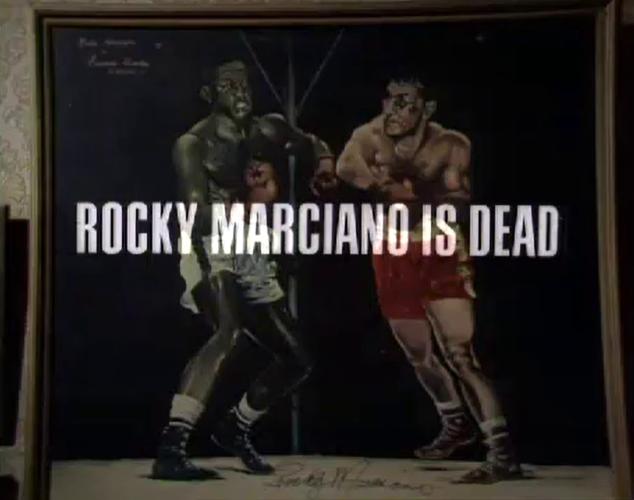
Rocky Marciano Is Dead (1976, directed by Graham Evans)


Harry Marcus (Ron Moody) was once a welterweight boxing champion but that was a long time ago.  Now, Harry is an old man who lives in small London apartment.  His daughter (Yvonne Bonnamy) visits him weekly.  Sometimes, he talks to Sonny (Jeffrey Kissoon), the squatter who is living in the abandoned apartment next to his.  Harry still likes to go back to his old gym and relive the glory days of both boxing and England.  Harry feels that those days are long gone but after he witnesses Sonny fight off a group of muggers, Harry becomes convinced that Sonny could be the next great boxer.

Harry wants to train Sonny but Sonny and his wife (Lesley Dunlop) both think boxing is barbaric.  It’s not until Harry explains that, historically, boxing has been used by the oppressed and marginalized to pull themselves out of poverty that Sonny steps into the ring.  Sonny has the talent but does Harry still have the connections to get Sonny a fight?

Rocky Marciano Is Dead was aired as a part of the BBC’s Play For Today anthology series.  It aired at the same time that Rocky was first setting box office records in the States.  Harry has a lot in common with Mickey Goldmill, the trainer played by Burgess Meredith in the first three Rocky films.  Like Mickey, he’s a former boxer who is trying to make a champ out of someone who is not sure if he has what it takes.  Rocky took place in the slums of Philadelphia while Rocky Marciano Is Dead takes place in a London that is full of abandoned buildings, gangs, and angry graffiti.  This is the London that, one year later, would inspire Johnny Rotten to sing that there was “no future in England’s dreaming.”  Not surprisingly, Rocky Marciano Is Dead is a much darker and cynical look at boxing than Rocky.  Harry is trying to recapture a past that may have never existed.

Along with providing a look at London on the cusp of the Punk Revolution, Rocky Marciano Is Dead is an acting showcase for Ron Moody.  Moody is in almost every scene, as Harry goes from being bitter to hopeful to disillusioned.  Moody makes it clear that Harry sees Sonny as something more than just a good boxer.  To Harry, Sonny is a chance to return to the time when both England and boxing were great.  If he can make Sonny a champ, Harry will be a champ too.  Harry’s mistake is not considering that Sonny might have plans of his own.  Moody was a born performer, as effective on television as in film.  He was also a perennial contender for the role of the Doctor on Doctor Who.  He was even offered the part in 1969 but turned it down, a move that he always said he regretted.  After a long career full of memorable performances in dramas, comedies, and musicals, he died in 2015 at the age of 91.  He gives a good performance in Rocky Marciano Is Dead, making Harry into something more than just an angry old man.

Rocky Marciano Is Dead can be viewed on YouTube.

The TSL’s Grindhouse: Polk County Pot Plane (dir by Jim West)


Oosh and Doosh, the stars of Polk County Pot Plane

First released in 1977, Polk County Pot Plane tells the story of Oosh (Don Watson) and Doosh (Bobby Watson), two brothers who have the long hair, country accents, and full beards of two guys who made most of their life decisions at a Lynard Skynard concert and who haven’t looked back since.

Oosh and Doosh spend most of their time hanging out in the mountains of Northern Georgia.  They pass the time drinking beer, smoking weed, and driving too fast.  Oosh and Doosh do have a job, of course.  The Dixie Mafia pays them to help unload all of the marijuana that is transported on a plane that regularly lands in the mountains.  The plane is nicknamed Big Bird and it even gets its own credit at the start of the film.

The opening credits also inform us that the pilot of Big Bird was played by an actor named Big Jim.

At the start of the film, Oosh and Doosh are unloading the plane but, unbeknownst to them, the cops have followed them out to the landing area.  When the cops finally make their presence known, Big Jim and the plane are able to escape but Oosh, Doosh, and two other hippies are arrested (and their RV practically destroyed) after a long chase.

With Oosh and Doosh in the county jail, the word goes out to all the drug kingpins, which is to say that there is a lengthy montage of people picking up the phone and explaining the situation over and over again.  Eventually, a helicopter lands on top of the jail and Oosh and Doosh are able to make their escape.  The helicopter flies over Georgia with Oosh and Doosh literally clinging onto the bottom of it.

This scene was filmed without stunt people.  That really is Don and Bobby Watson hanging onto that helicopter and the scene is also makes it clear that the helicopter really was flying high above a small town with the two actors dangling underneath.  If either Don and Bobby Watson had lost their grip, they would have basically plunged to their death.  On the one hand, you might wonder how the Watsons were convinced to risk their lives for a film called Polk County Pot Plane.  On the other hand, the scene is a hundred times more effective than one might expect precisely because the risk was real.

In fact, not a single professional stunt person was used in Polk Count Pot Plane.  All of the stunts were done by the members of the cast, the majority of whom appear to have been amateurs.  The sheriff who locks up Oosh and Doosh apparently was an actual sheriff.  Big Jim actually was a pilot.  While there isn’t much information available about the Watson brothers, their country stoner vibe feels authentic from the start.  For almost the entire cast, this was their first and only film.  What they lacked in experience, they made up for in authenticity.

There’s not much of a plot to Polk County Pot Plane, though it was reportedly based on a true story.  Oosh and Doosh get out of jail and find themselves being ordered to transport more drugs.  They also rip-off their bosses and, in the end, there’s an attempt to steal the plane itself.  For the most part, the film exists so that the police can chase Oosh and Doosh and several cars can be destroyed in the process.  The minute that we see a group of people trying to transport a house from one location to another, we know that someone’s going to end driving through it and destroying the whole thing.  That’s the type of movie that Polk County Pot Plane is.  It’s low-budget, it doesn’t always make a lot of sense, and it’s definitely amateurish.

And yet, it’s also entertaining and rather likeable.  The amateur vibe helps.  Because the Watson brothers appears to have essentially been playing themselves, the film at times has a documentary vibe.  For all of the silly comedy and the mumbled lines (with the Watsons especially sounding like King of the Hill‘s Boomhauer at times), it’s hard not to feel that this film probably gets close to the truth of what it was like to smuggle marijuana in the Deep South during the 1970s.  The combination of car crashes and the film’ s stoner vibe becomes rather fascinating.

Polk County Pot Plane was also released under the title In Hot Pursuit.  It can be found in several Mill Creek box sets and on YouTube!

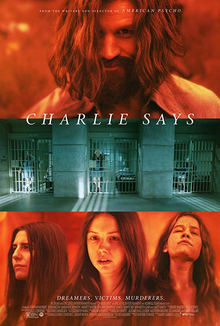
Cleaning Out The DVR: Charlie Says (dir by Mary Harron)


Why does one join a cult?

That’s a question that’s been raised by a lot of different people over the past few years.  Some people claim that MAGA is a cult.  Others claim that Wokeism is a cult.  One need only go on twitter to discover cults devoted to celebrities.  There was a crazy woman named Emma who literally spent 8 years searching twitter for any critical reference to Garrett Hedlund so that she could personally attack whoever made the comment.  I once made a rather mild joke about Jennifer Lawrence’s habit of falling at award shows and, almost immediately, I started getting angry replies from people who had J Law as their profile pick.  Once upon a time, the Beliebers ruled the twitter wastelands.  Then it was the One Direction stans.  Now, people have to be very careful about what they say about Taylor Swift and Timothee Chalamet.  What makes people devote their lives to blindly defending celebrities and politicians who don’t even know (or care) that they’re alive?

In the HBO docuseries, The Vow, Mark Vicente (a former leader of the NXIVM cult) declared that “Nobody joins a cult!”  His point was that no one willingly joins a cult.  Instead, they get involved because they’re looking for something that is missing in their lives and, sometimes, this leaves them vulnerable to being manipulated by whoever is in charge of the cult.  Vicente’s argument was that it could happen to anyone.  The subtext, of course, was that Vicente was saying, “It even happened to me and look how smart I am!”

(It’s the same thing that one tends to hear from former members of Scientology.  “Sure, all of the stuff about Xenu didn’t make any sense and the average child would have seen through it but I fell for it so that means anyone could have fallen for it!”)

My own personal opinion is that most people join cults because they’re incredibly dumb and don’t have the confidence necessary to think for themselves.  That may sound harsh but I really do think that this is a case where it’s helpful to remember the law of parsimony.  It’s tempting to come up with all sorts of complex theories to try to explain why people join cults but the simplest answer is that people joins cult because they’re dumb.  I think sometimes we spend so much time exploring the lives of those who join cults that we tend to forget that the majority of people are smart enough not to.

This was something that I found myself thinking about as I watched the 2018 film, Charlie Says.  Charlie Says is one of the many recent films to explore how a grubby ex-con named Charles Manson (Matt Smith) was able to brainwash a group of hippies and turn them into his own personal army of murderers.  Charlie Says opens with Leslie Van Houten (Hannah Murray), Patricia Krenwinkel (Sosie Bacon), and Susan Atkins (Marianne Rendon) already in prison for the Tate-LaBianca murders.  A social worker named Karlene Faith (Merritt Weavers) is assigned to teach them college classes but Karlene is more concerned with trying to break the mental-hold that Manson continues to have over the three women.

The film is full of flashbacks to life at the Spahn Ranch with Charles Manson.  All of the expected details are included.  Charles Manson plays his guitar and talks about letting go of one’s ego.  A dazed Tex Watson (Chace Crawford) wanders around in the background, eager to prove that he truly is a member of the Family.  Blind George Spahn gets a handjob from Squeaky Fromme.  The women search through dumpsters for food.  The orgies give way to violence as Manson realizes that he’s never going to be a rock star.  Everyone at Spahn Ranch is happy until they aren’t.

Both the film and Karlene speculate as to how Charles Manson managed to brainwash the women who lived at the Ranch.  The film suggests that it was a combination of drugs, Manson’s own skills as a con man, and the fact that most of Manson’s followers were so eager to escape the patriarchal system under which they grew up that they didn’t realize that they had wandered right into another.  Of course, it could also be that Manson’s followers were just extremely stupid.  One thing that I have discovered from reading about Manson is that, while there was many people who decided to follow him, there were even more who took one look at him and Spahn ranch and who, much like Brad Pitt in Once Upon A Time In Hollywood, left as quickly as they could.

(One of the more interesting things about the online reaction to Once Upon A Time In Hollywood were the complaints that the film’s finale was misogynistic due to the violent deaths of the Manson followers.  Personally, I’m against the death penalty.  I view it as a classic example of putting too much trust in the government.  However, knowing what was done to Sharon Tate, I had no problem with Leonardo DiCaprio setting Susan Atkins on fire with his flame thrower.)

Mary Harron has directed many good films, including I Shot Andy Warhol, American Psycho, The Notorious Bettie Page, and The Anna Nicole Story.  Unfortunately, Charlie Says often feels like it’s meant to be a parody of all the other films about Charles Manson.  Some of that may have been unavoidable.  The horrific nature of their crimes has often overshadowed the fact that Manson and the Family were a ludicrous group of people.  Take out the crimes and they were essentially the real-life version of those dumbass commune dwellers in Easy Rider, the one who were trying to grow food in the desert.  Indeed, one of the smartest thing that Tarantino did with Once Upon A Time In Hollywood was that he used Manson and the Family sparingly.  As Charlie Says shows, the more time that a film spends with Manson, the more difficult it is to feel that the members of the Family are worth much consideration.  For the most part, the film follows Leslie Van Houten as she goes from being an insecure teenager to being a brainwashed murderer but, despite a strong performance from Hannah Murray, it doesn’t offer up much insight (beyond her own stupidity) as to how and why Leslie was so easily seduced into life at the ranch.

On the plus side, Matt Smith does a good job as Charles Manson, playing him as being a natural born con man.  As played by Smith, Manson is someone who knows how to use his hippie image to his advantage and who also knows how to read people.  The question about Manson has always been whether he believed all of his Helter Skelter nonsense or if he was just a criminal mercenary.  (The author Ed Sanders, who wrote The Family and spent years researching Manson, was of the opinion that Manson was far more well-connected with the leaders of Los Angeles’s organized crime scene that his hippie image might have suggested.)  Charlie Says suggests that Manson was a con man who ultimately made the mistake of believing his own con.

As far as Manson films go, Charlie Says doesn’t add much that hasn’t already been said.  Personally, I could do without anymore Manson films.  There’s nothing left to be learned from his horrific crimes.  Allow Once Upon A Time In Hollywood to be the last word on what the Family was and how they deserved to go out.

Here’s The Trailer For The Little Mermaid


Last night, along with giving out awards, the Oscars premiered the trailer for The Little Mermaid.  This is the latest Disney live action remake of a classic animated film.  Someday, Disney will do animated remakes of all of their live action MCU films and Twitter will totally freak out.

Anyway, here’s the trailer.

Monday Live Tweet Alert: Join Us For Shotgun and Dave!


As some of our regular readers undoubtedly know, I am involved in hosting a few weekly live tweets on twitter.  I host #FridayNightFlix every Friday, I co-host #ScarySocial on Saturday, and I am one of the five hosts of #MondayActionMovie!  Every week, we get together.  We watch a movie.  We tweet our way through it.

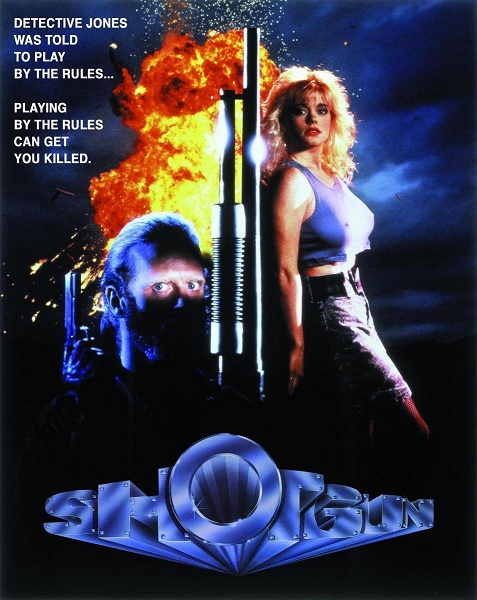
Tonight, for #MondayActionMovie, the film will be 1989’s Shotgun!  Selected and hosted by @BunnyHero, Shotgun probably features a gun! The movie starts at 8 pm et and it is available on YouTube.


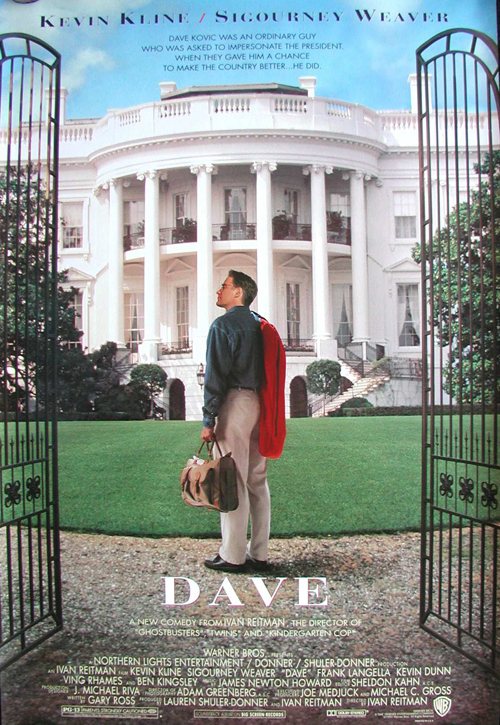
Following #MondayActionMovie, Brad and Sierra will be hosting the #MondayMuggers live tweet.  Tonight’s movie, starting at 10 pm et, will be 1993’s Dave, starring Kevin Kline, Sigourney Weaver, and Frank Langella!  Follow Brad and Sierra on twitter for a viewing link!


It should make for a night of intense viewing and I invite all of you to join in.  If you want to join the live tweets, just hop onto twitter, start Shotgun at 8 pm et, and use the #MondayActionMovie hashtag!  Then, at 10 pm et, switch over to prime, start Dave and use the #MondayMuggers hashtag!  The live tweet community is a friendly group and welcoming of newcomers so don’t be shy.

Enjoy!

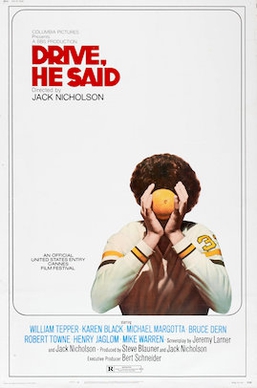
Film Review: Drive, He Said (dir by Jack Nicholson)


First released in 1971, Drive, He Said tells the story of two college roommates.

Hector (William Tepper) is a star basketball player who everyone expects to turn pro.  His intense coach (Bruce Dern) is always yelling at him to stop fooling around on the court but Hector is more interested in fooling around elsewhere as he’s having an affair with Olive (Karen Black), the wife of a self-styled “hip” philosophy professor named Richard (Robert Towne).

Gabriel (Michael Margotta) is Hector’s best friend.  They live together, even though Hector’s coach thinks that Gabriel is a bad influence.  Gabriel is a self-styled campus radical.  He has a devoted group of followers who will do just about anything that he tells them to do.  Gabriel is big into guerilla theater and symbolic protests.  Nothing he does seems to add up too much but, unlike Hector, he’s good at giving speeches.

Together, they worry about the draft!

Of course, they’re both worrying about two different types of drafts.  Hector is worried about the NBA draft and whether he should enter it.  He’s been playing basketball for as long as he can remember.  The only thing that he’s really good at is playing basketball.  And yet, Hector isn’t sure if he wants to spend the rest of his life taking orders from his coaches and devoting every minute to playing the game.  However, Hector’s worked himself into a corner.  When one NBA official asks him what he’s going to do if he’s not drafted, Hector admits that he doesn’t know.  When asked what his major is, Hector replies, “Greek.”

Gabriel, on the other hand, is worried about being drafted into the military and being sent to Vietnam.  Gabriel considers himself to be a revolutionary but it soon becomes clear that he really doesn’t have much of a plan for how to start his revolution.  Indeed, the film suggests that his activism is more about his own insecurity over his own sexuality than anything else.  Gabriel particularly seems to be obsessed with Hector’s affair with Olive.  While Hector reaches new highs on the court, Gabriel comes closer and closer to having a psychotic break.

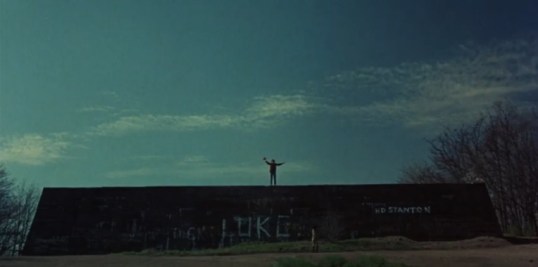
Director Jack Nicholson found a way to work in shout out to his friend, Harry Dean Stanton

Drive, He Said was one of the many “campus rebellion” films that were released in the early 70s and, much like Getting Straight, it’s definitely a product of its time.  Today, it it’s known for anything, it’s for being the directorial debut of actor Jack Nicholson.  (Nicholson has said that, before he was cast in Easy Rider, he was actually planning on abandoning acting and pursuing a career as a director.)  The film features many of the flaws the are typically present in directorial debuts.  The pacing is terrible, with some scenes ending too quickly while others seem to go on forever.  At times, the film feels a bit overstylized as Nicholson mixes jump cuts, odd camera angles, and slow motion to little effect. It’s very much a film about men, so much so that the film’s ultra-masculinity almost verges on self-parody.

And yet, there are moments of isolated brilliance to be found in Drive, He Said.  Some of the shots are genuinely impressive and the army induction scene shows that Nicholson could direct comedy, even if he does let the scene drag on for a bit too long.  Though Nicholson doesn’t appear in the film, his approach to the story features his trademark cynicism and sense of fatalism.  Though he was often associated with the counterculture, Nicholson was more a member of the Beat generation than of the hippies.  As such, Drive, He Said has more in common with Jack Kerouac than Abbie Hoffman.  Drive, He Said is definitely an anti-establishment film but, at the same time, it doesn’t make the mistake of glorifying Gabriel or his followers.  Gabriel, with his constant demand that everyone join him in his ill-defined revolution, is almost as overbearing as basketball coach and, towards the end of the film, he commits an act of violence that leaves no doubt that his “revolution” is all about his own self-gratification.  The film is less a polemic and more a portrait of people trying to find their identity during a time of political and cultural upheaval.

The film’s biggest flaw is that neither William Tepper or Michael Margotta really have the charisma necessary to carry a movie, especially one in which even the main characters often do unlikable things.  Tepper is dull while Margotta overacts and, at times, comes across as if he’s trying too hard to imitate his director.  It falls to the film’s supporting cast to provide the energy that Tepper and Margotta lack.  Fortunately, Bruce Dern and Karen Black are both perfectly cast.  Bruce Dern seems to be having a blast as the fanatical basketball coach while Karen Black brings a fierce intelligence to the role of Oliva, an intelligence that one gets the feeling wasn’t really in the original script.  Considering how misogynistic every other character in the film is, it’s impossible not to cheer when Olive announces, “I’m not going with anybody, anywhere.”

(For whatever reason, there was a definite strain of misogyny that seemed to run through the majority of the late 60s and early 70s counterculture films.  Just consider the amount of time Getting Straight devoted to Elliott Gould shouting at Candice Bergen.)

Drive, He Said is flawed but interesting.  As a director, Nicholson understood how to frame a shot but he wasn’t quite sure how to tell a cohesive story.  That said, the film itself is a definite time capsule of a very specific cultural moment.

Scenes That I Love: Luca Brasi Is Just Happy To Be At The Wedding


97 years ago, on this date, Lenny Montana was born in Brooklyn, New York.

Montana started out as a boxer and a wrestler.  He eventually ended up working as a bouncer and a bodyguard for the leadership of the Colombo Crime Family.  However, Montana achieved his immortality as a result of veteran tough guy actor Timothy Carey turning down the role of Luca Brasi in The Godfather.  Brasi was the Corleone Family’s most feared enforcer and Carey, who had made a career out of playing psychos, was one of the most feared men in Hollywood, one who was rumored to have pulled a gun on more than a few directors.  (For the record, Stanley Kubrick loved him.)  When Carey turned down the role in favor of doing a television series, Francis Ford Coppola offered the role to Lenny Montana.  Montana may not have had Carey’s screen acting experience but he brought real-life authenticity to the role.  When Michael says that Luca Brasi is a “very scary man,” one look at Lenny Montana confirms it.  Unfailingly loyal to the family and willing to do anything for the Don, Luca Brasi represents the Family’s strength.  When Luca Brasi is killed, you know that the old era of the Corleones is ending as well.  Without Luca, the Corleones are in deep trouble.

My favorite Luca Brasi scene comes at the beginning of the film.  Surprised to be invited to Connie’s wedding, Luca wants to thank the Don personally.  Nervous about acting opposite Marlon Brando, Montana flubbed his lines.  The scene, with the flub, was kept in the film and it served to humanize both Luca and Don Corleone.  (The Don’s smile was due to the fact that Marlon Brando was having trouble not laughing.)  It’s a nice little scene, one that reminds us that even gangsters are human.

A Few Thoughts On The 95th Oscar Ceremony


This year’s Oscar ceremony was all about the Slap.

Don’t get me wrong.  No one got slapped during the ceremony.  No one got yelled at.  There wasn’t any major controversy at all, beyond the question of whether Everything Everywhere All At Once actually deserved all of those Oscars.  Most of the awards speeches were nice.  Ke Huy Quan was a highlight, calling his story “an American dream.”  Much as when Gary Oldman praised America upon winning his Oscar for Best Actor, you could tell the audience at the ceremony wasn’t sure how to react to unironic praise of America but I can promise you that his speech touched the hearts of almost everyone watching.  Compared to previous ceremonies, there wasn’t a lot of political blathering and the orchestra did its job and kept people from rambling on for too long.  Obviously, the Academy learned its lesson from the Soderbergh Oscars and that guy who wouldn’t shut up about his octopus.

That said, from the start, it was obvious that The Slap and preventing another incident was on everyone’s mind.  As opposed to last year’s Oscars, the entire ceremony felt tightly controlled.  Jimmy Kimmel kept his jokes light and only poked fun at people who didn’t show for the ceremony, like James Cameron and Tom Cruise.  Amongst the presenters, there was a definite lack of comedians or, really, anyone who might threaten to go off script and say something controversial.  The show was carefully constructed to keep anything shocking from happening and, as a result, it was a bit dull.  For all the drama and controversy that surrounded the Slap, it was probably one of the few truly spontaneous moments that we’ve seen on the Oscars.  Certainly, more people talked about the Slap last year than are going to be talking the ceremony this year.

This year was safe and boring, though it was never as downright dull as the Soderbergh Oscars.  Most of the victories felt inevitable.  I guess the biggest upset was Jamie Lee Curtis winning Best Supporting Actress over Angela Bassett.  (Though I appreciated that Curtis epitomized everything that normal people hate about the IRS, I was rooting for Kerry Condon.)  There was a brief moment of excitement when it seemed like All Quiet On The Western Front might upset Everything Everywhere All At Once but that ended up as soon as All Quiet lost the Adapted Screenplay Oscar to Women Talking.

As far as the speeches go, Ke Huy Quan won the evening by giving a genuine, heartfelt acceptance speech.  The Daniels got to give three acceptance speeches and they both seemed to get just a little bit more impressed with themselves with each speech.  (A lot of people are going to have their knives out when the Daniels get around to making their third film.)  EEAAO‘s editor went on for a bit too long, which is actually kind of a funny thing for an editor to do.  Michelle Yeoh’s speech was classy and should be used as a guide who ever wonders what to say when accepting an award.

I was kind of dreading the prospect of Jimmy Kimmel hosting but I thought he did a good job.  Other than throwing in a few heavy-handed political jabs towards the end, Kimmel struck the right tone for the show.  Jimmy certainly seemed to have a better handle on things than Amy Schumer, Wanda Sykes, and Regina Hall did last year.  Of course, unlike those three, Kimmel didn’t have to deal with any nominees walking on stage and striking a presenter.

As far as the musical performances go, the performance of RRR‘s nominated song was a lot of fun and I also thought Lady Gaga did a wonderful job with her song.  The other performances didn’t do much for me, though none of them were particularly bad.  They were just kind of safe.  The fact that EEAAO got a nomination for that song should have been everyone’s first clue that the Academy was going to love the movie.

The ceremony this year was controlled and boring and, most importantly, it’s now over.  Now, we can start talking about what’s going to win in 2024!

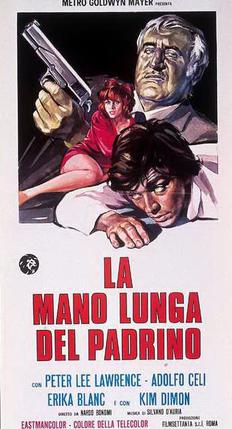
Film Review: Long Arm of the Godfather (dir by Nardo Bonomi)


Like all good Italian crime films, 1972’s Long Arm of the Godfather opens with an absurdly over-the-top act of violence.  In this case, a young gangster names Vincenzo (Peter Lee Lawrence) masterminds the hijacking of a delivery of Italian army weapons.  It’s gangsters versus soldiers as a ludicrous amount of bullets are fired and even a few grenades are tossed through the air.  The violence goes on for so long that actually starts to feel as if the film has become self-aware and is parodying the expectations of the audience.  The film seems to be saying, “You want violence?  Take this!”

That said, Vincenzo eventually does get away with a truck of weapons.  He’s suppose to deliver the truck to Don Carmelo (Adolfo Celi, who is probably best-known for playing James Bond’s nemesis in Thunderball) but Vincenzo has other ideas.  After running Carmelo off the road, Vincenzo drives off on his own.  His plan is to sell the weapons and use the money to start a new life with prostitute girlfriend, Sabina (Erika Blanc).  Unfortunately, because Vincenzo doesn’t have any money, he can’t pay anyone to help him unload the truck.  Eventually, he deals with that problem by stealing and selling Sabina’s jewelry.  Understandably, Sabina is not happy about this but Vincenzo has an even bigger problem to deal with.

It turns out that Don Carmelo is still alive.  Even when Vincenzo and Sabina leave Italy for North Africa and attempt to make a deal to sell the weapons to a group of terrorists, Don Carmelo and his men are following close behind.  It all leads to even more violence and an appropriately fatalistic ending.  The film’s ultimate message is that there is no escape from a life of crime.  There is no way to avoid the long of arm of the godfather.

Perhaps the most interesting thing about the film is that all of the characters pretty much hate each other even before the inevitable betrayals begin.  Don Carmelo appears to dislike all of his men and most of his men appear to dislike him to.  Even the people who help Vincenzo make little secret of the fact that they can’t stand to be around him.  The main exception to all of this mutual dislike is Vincenzo himself.  Vincenzo appears to sincerely like (if not quite love) Sabina.  Sabina, on the other hand, spends the majority of the film talking about how everything is Vincenzo’s fault.  She knows that Vincenzo is in over his head but, at the same time, she also knows that there’s a chance Vincenzo could make a lot of money so she sticks with him.  As for Vincenzo, he’s an eternal optimist, trying to find hope even when its clear that there’s none left.  Vincenzo may be clever but he’s not particularly smart and that is destined to be his eventual downfall.

Long Arm of the Godfather is an unapologetically pulpy thriller, one in which both the violence and the melodrama are frequently over the top.  It’s a film that will be appreciated by fans of hard-boiled crime fiction and Italian exploitation films.  Celi is properly intimidating as Don Carmelo while Peter Lee Lawrence gives a charismatic performance as Vincenzo.  Tragically, Lawrence would die two years after starring in Long Arm of the Godfather, a victim of a brain tumor that went undetected until it was too late.  He was 30 years old and, had he lived, he undoubtedly would have been a big star in European cinema.  Fortuntely, one can still watch him in a film like this and see hints of what could have been.

Here Are Your Oscar Winners


Best Picture — Everything Everywhere All At Once

Best Director — The Daniels, Everything Everywhere All At Once

Best Actor — Brendan Fraser, The Whale

Best Actress — Michelle Yeoh, Everything Everywhere All At Once

Best Supporting Actor — Ke Huy Quan, Everything Everywhere All At Once

Best Supporting Actress — Jamie Lee Curtis, Everything Everywhere All At Once

Best Adapted Screenplay — Women Talking

Best Original Screenplay — Everything Everywhere All At Once

Best Animated Feature Film — Guillermo Del Toro’s Pinocchio

Best International Film — All Quiet On The Western Front

Best Documentary Feature Film — Nalvany

Best Live Action Short — An Irish Goodbye

Best Animated Short — The Boy, The Mole, The Fox, and The Horse

Best Documentary Short — The Elephant Whisperers

Best Original Score — All Quiet On The Western Front

Best Original Song — RRR

Best Cinematography — All Quiet On The Western Front

Best Costume Design — Black Panther: Wakanda Forever

Best Editing — Everything Everywhere All At Once

Best Makeup and Hairstyling — The Whale

Best Production Design — All Quiet On The Western Front

Best Sound — Top Gun: Maverick

Best Visual Effects — Avatar: The Way of Water