Review: Platoon (dir. by Oliver Stone)


“We been kicking other peoples asses for so long, I figured it’s time we got ours kicked.” — Sgt. Elias

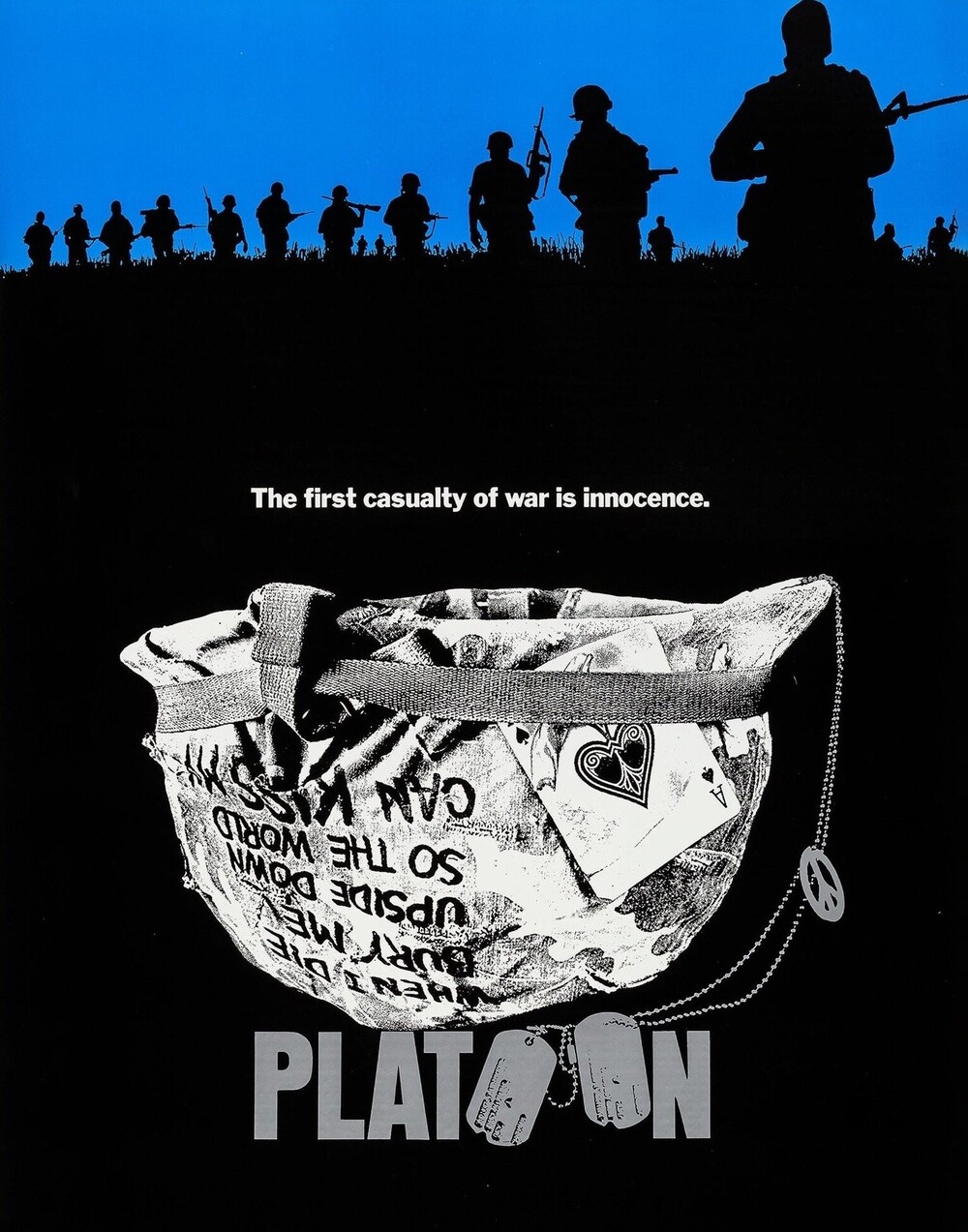
Platoon is one of those war movies that still feels raw, mean, and strangely alive decades later. It is not just a Vietnam movie about combat; it is a movie about confusion, fear, moral collapse, and what happens when young people are dropped into a nightmare with no real sense of why they are there.

What makes Platoon hit so hard is that it never feels polished in a comforting way. Oliver Stone keeps the film close to the mud, sweat, and panic of the battlefield, but he also spends plenty of time on the uglier stuff that happens between firefights: the resentment, the paranoia, the bullying, and the way men start forming little kingdoms inside a war zone. That is where the movie gets its power. The bullets matter, but so do the silences and side glances, because those moments show how war breaks people down before it even kills them.

Charlie Sheen’s Chris Taylor is a smart choice for the center of the film because he starts out as a kind of blank witness. He is young, idealistic in a vague way, and clearly not prepared for what he has walked into. That makes him easy to identify with, but it also makes him useful as a lens for everything around him. We learn the rules of this miserable little ecosystem as he does. Through Chris, the audience is pulled into the same sense of helpless observation that seems to define the whole experience of the platoon.

Stone’s screenplay makes that connection even stronger because he wrote it himself, drawing on his own experience as a young man who volunteered to go to Vietnam instead of being drafted. That detail gives Chris Taylor’s story a personal charge, since Chris feels less like a fictional stand-in and more like Stone working through his own memory and guilt. It adds another layer to the film’s emotional weight, because the perspective feels lived-in rather than invented for dramatic effect.

The film’s real muscle comes from the conflict between Sergeant Elias and Sergeant Barnes, played with complete commitment by Willem Dafoe and Tom Berenger. Elias feels like the last thread of conscience in a collapsing world. Barnes, by contrast, is the kind of man war can easily turn into a weapon: hard, cold, frightening, and convinced that brutality is just realism with the sentiment stripped out. Their conflict gives the movie a mythic quality without draining away its grit. It is not subtle in the usual sense, but it does not need to be. Stone wants these figures to feel bigger than life because that is how they register to a terrified kid in the jungle.

One of the best things about Platoon is how it balances chaos with purpose. A lot of war films either try to turn combat into spectacle or turn it into a lecture. Platoon mostly avoids both traps. The action is ugly, disorienting, and often difficult to follow in exactly the right way. You do not watch these battles and admire the choreography as much as you feel the confusion of everyone inside them. The filmmaking keeps you from getting too comfortable, which is exactly the point. War here is not heroic; it is exhausting, degrading, and terrifying.

That sense of exhaustion matters because the movie understands that war is not made up of only the big moments people remember. It is made up of waiting, heat, boredom, fear, and the slow erosion of judgment. Platoon is at its best when it lingers on that middle ground. The soldiers are not always in immediate danger, but they are always under pressure. That constant tension is what makes the movie feel so oppressive. Even when nothing explodes, it still feels like something bad is about to happen.

Stone also deserves credit for making a Vietnam movie that feels personal without becoming self-congratulatory. You can feel that this comes from experience, but the film never becomes some smug “I was there” statement. Instead, it channels memory into mood, character, and atmosphere. That gives the movie a lived-in authenticity that a lot of war films chase but never quite reach. It feels like a film made by someone trying to tell the truth about a memory that never stopped hurting.

There is also something brutally effective about the way Platoon presents morality as unstable rather than cleanly divided. The movie does not really pretend that everyone is either noble or evil. Instead, it shows how stress, fear, resentment, and power can shove people toward terrible choices. That is a big reason the film still works. It understands that war does not just expose character; it distorts it. Men do things they would never do anywhere else, and the movie keeps asking what is left of a person after that kind of damage.

Still, Platoon is not perfect, and part of its reputation comes from how forcefully it makes its points. Some viewers may find it a little heavy-handed at times, especially in the way it frames innocence, corruption, and betrayal. It is not exactly a subtle film, and it does occasionally aim for emotional impact with both fists. But honestly, that intensity is part of its identity. The movie is not trying to be cool or detached. It wants to wound you a little, and for this material, that approach makes sense.

The performances help keep the film from tipping over into empty grandstanding. Dafoe brings a wounded humanity to Elias that makes him feel like more than just a symbol. Berenger gives Barnes a dangerous stillness that is often more frightening than outright aggression. Sheen, meanwhile, does the important work of holding the center without overpowering the film. He is not the flashiest presence, but he does not need to be. His job is to absorb the madness, and that gives the audience a place to stand inside it.

What lingers most after Platoon is not any single battle scene, but the feeling that the whole movie is about a collapse of trust. Trust in leaders, trust in comrades, trust in the idea that there is some larger meaning to all this suffering. The film strips those things away layer by layer until all that is left is survival and the hope that maybe, somehow, the nightmare will end. That is a bleak place to sit for two hours, but it is also why the film remains so effective. It does not romanticize the experience. It forces you to sit with its mess.

The movie also has a strong visual identity. The jungle is not just background; it feels like an active pressure on every scene. The humidity, the darkness, the mud, and the smoke all help create a world that seems hostile even when nobody is shooting. That physical texture is a huge part of the movie’s success. You can almost feel the environment draining the people inside it. It is less like watching a battle than like watching human beings slowly get swallowed by a swamp of fear and violence.

If there is a reason Platoon still gets talked about so often, it is because it captures a very specific kind of war movie truth: the enemy is not only out there. Sometimes the real damage comes from within the unit, within the chain of command, within the soldier’s own mind. That is a grim idea, but Platoon never feels empty or cynical for saying it. It feels honest. And honesty, in a movie like this, goes a long way.

In the end, Platoon is powerful because it refuses to let war look clean, noble, or emotionally tidy. It is messy, relentless, and often hard to watch, but that is exactly why it matters. It is one of the defining Vietnam films for a reason, and even with its blunt edges, it earns that status through sheer force of feeling, strong performances, and a bleak sense of truth that never really lets up.
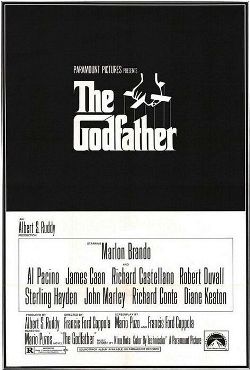
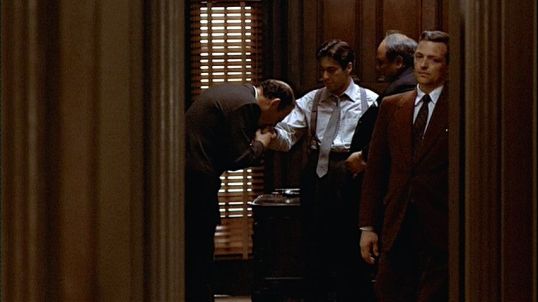
Scene That I Love: Vito Corleone and Johnny Fontane in The Godfather


In honor of Francis Ford Coppola’s birthday, today’s scene that I love comes from The Godfather.

In this scene, a self-pitying Johnny Fontane (Al Martino) discusses his career problems with Marlon Brando’s Vito Corleone.  Johnny is losing his voice.  Johnny is up for a role in a big movie but he worries that the producer will never allow him to appear in the film.  Johnny says he doesn’t know what to do and he sheds a tear….

….and that’s not a smart thing to do when you’re talking to Don Corleone.

This scene contains some of the best moments of The Godfather.  Al Martino was a professional singer with little acting experience.  (While Johnny Fontane was a major character in Mario Puzo’s book, he only appeared in two scenes in the film version.  Coppola later said that he thought the Johnny Fontane chapters were so poorly written that he would have turned down the film if he had to include too much of the character.)  In order to get an effective performance out of Martino, Brando did not warn him that he would actually be slapping him.  During one take, Brando got so aggressive that he knocked off Martino’s toupee and caused Robert Duvall to start laughing.  It was all worth it, though.  Martino was thoroughly convincing as Johnny Fontane and Marlon Brando won (but did not accept) his second Oscar for Best Actor.  Coppola did not win Best Director for The Godfather (1972 was a competitive year) but he made up for it 1974 when he was honored for The Godfather Part II.

4 Shots From 4 Films: Special Francis Ford Coppola Edition


4 (or more) Shots From 4 (or more) Films is just what it says it is, 4 (or more) shots from 4 (or more) of our favorite films. As opposed to the reviews and recaps that we usually post, 4 (or more) Shots From 4 (or more) Films lets the visuals do the talking.

Today is Francis Ford Coppola’s birthday! Coppola is a bit of a controversial figure among some film scholars. While everyone agrees that, with the first two Godfathers, he directed two of the greatest films of all time (and some people would include Apocalypse Now on that list as well) and that he was one of the most important directors of the 70s, his post-Apocalypse Now career is often held up as a cautionary tale. Some say that Coppola’s career suffered because of his own excessive behavior and spending. Others argue that he was treated unfairly by a film industry that resented his refusal to compromise his vision and ambitions. Personally, my natural instinct is to always side with the artist over the executives and that’s certainly the case with Coppola. Coppola has only completed five films since the start of this current century and three of them were not widely released. Say what you will about the films themselves, that still doesn’t seem right. For the record, I liked Megalopolis when I saw it but I don’t remember much about it now.

Regardless of how one views his latter career, Coppola is responsible for some of the best and most important films ever made. And today, on his birthday, it’s time for….

4 Shots From 4 Francis Ford Coppola Films

The Godfather (1972, dir by Francis Ford Coppola, DP: Gordon Willis)
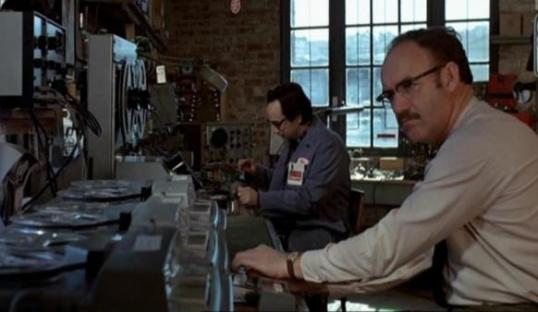
The Conversation (1974, dir by Francis Ford Coppola, DP: Bill Butler)
The Godfather Part II (1974, dir by Francis Ford Coppola, DP: Gordon Willis)
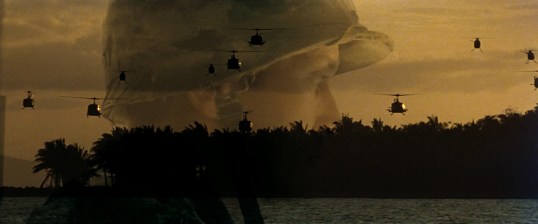
Apocalypse Now (1979, dir by Francis Ford Coppola, DP: Vittorio Storaro)

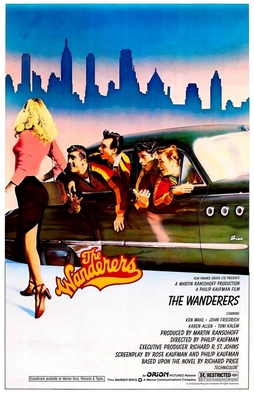
The Wanderers (1979, directed by Philip L. Kaufman)


In 1963, teenage Richie Gennaro (Ken Wahl) may not be much of a high school student but he’s the coolest kid on his block.  He’s the leader of the Wanderers, an Italian-American street gang.  Among his friends are the neurotic Joey (John Friedrich), Turkey (Alan Rosenberg), and Perry (Tony Ganios — yes, Meat from Porky’s), who has just moved to the Bronx but whose height and ability to fight makes him a key member of the Wanderers.  Richie dating Despie (Toni Kalem), the daughter of the local mob boss (Dolph Sweet).  However, when Richie meets Nina (Karen Allen), he wonders if there’s something more out there than just spending the rest of his days in the Bronx.

Based on a novel by Richard Price, The Wanderers has always been overshadowed by 1979’s other big gang movie, The Warriors.  That’s too bad because they’re both great films.  Walter Hill has always said that he envisioned The Warriors as being set in the near-future.  The Wanderers, on the other hand, is very much a film about the past.  An episodic movie that is more about capturing a time and a place as opposed to telling a traditional story, The Wanderers portrays 1963 with a mix of nostalgia and realism.  The soundtrack is heavy with early rock and roll.  There’s a scene where Richie sees a group of adults crying as they watch the coverage of John F. Kennedy’s assassination.  Nina listens to Bob Dylan at a coffeehouse and the local mob boss is a fan of The Hustler.  But for Richie and his friends, adulthood is something to be put off for as long as possible.  Life is about wearing their jackets, giving each other a hard time, trying to get lucky, trying not get slapped upside their heads by their parents, and preparing for the big football game against a rival gang.  When a Marine recruiter tricks the members of one gang into enlisting, it’s a big deal to Richie because he no longer has to worry about being harassed by them.  Those of us watching, however, know that Vietnam is in thee future.  Scenes of Richie and Joey joking around are combined with moments of sudden violence.  For the most part, the Wanderers and their neighborhood rivals are amiable rivals but, take a wrong turn, and you might find yourself being chased by the viscous Ducky Boys.  For Richie, his life revolves around being a Wanderer but nothing can last forever and the film ends with a celebration that feels like a last hurrah for a changing world.  Some will escape The Bronx and find a new world with new possibilities and new freedoms.  There’s a particularly interesting subtext to the friendship of Perry and Joey, with the film ending on a subtle note that suggests that there’s more to their relationship than just being members of the same gang.

The end result is one of the best coming-of-age stories out there.  Ken Wahl, John Friedrich, Alan Rosenberg, and Tony Ganios all give excellent performances as the main Wanderers.  Karen Allen and Toni Kalem are perfectly cast as the two women who represent Richie’s possible future.  (The strip poker scene is a highlight.)  Kalem’s Despie represents the Bronx while Allen’s Nina represents the world outside and the film treats both of them with respect.  At first, Despite might seem like a stereotype but she soon proves herself to be more aware of what’s actually going on around her than anyone realized.  Richie may like Nina but it’s hard to imagine him ever being truly happy away from his home.

The Wanderers deserves more attention than it has received over the years.  It’s funny, touching, and sometimes scary.  (The Ducky Boys, despite their name, will haunt you.)  Wander over and watch it.

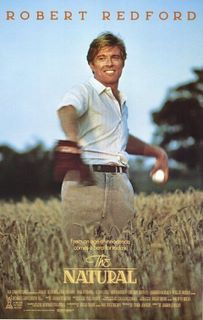
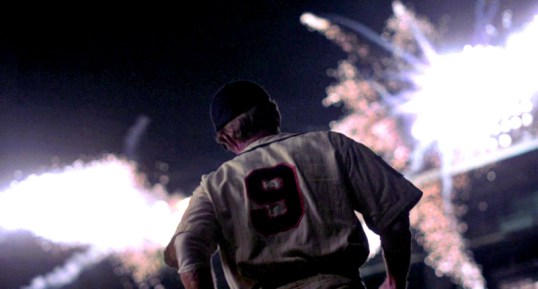
I Finally Watched The Natural (1984, Dir. by Barry Levinson)


Earlier today, I finally watched The Natural.

As a baseball fan, it feels like heresy to admit that it took me this long to watch The Natural.  I had seen plenty of scenes from the film.  I knew the music because there’s no way you can watch as much as baseball as I do without hearing it at least a few times every scene.  I knew about Wonderboy and the big home run and how Roy Hobbs came out of nowhere to lead the perennially last-place New York Knights to the championship series but I had never actually watched the entire film from beginning to end.

Until this afternoon.

When the movie started, I was worried.  Robert Redford plays Roy Hobbs, an outstanding hitter whose promising career appears to be over when a mysterious woman (Barbara Hersey) shoots him in the gut.  At the start of the movie, Roy and his girlfriend Iris (Glenn Close) are supposed to be teenagers but Redford was nearly 50 and Glenn Close was close to 40.  The whole point of the first part of the movie is that Roy and Iris are young and they have their whole future ahead of them but the actors were both clearly middle-aged.  There was a scene where Roy strikes out the best batter in the league (Joe Don Baker) and the batter kept calling Roy a kid but Redford looked like he was older than Baker.

The good thing is that you only have to buy Redford as being a teenager for about 15 minutes.  After he gets shot, Roy stops playing for several years.  By the time Roy makes it to the major leagues, he’s supposed to be older than everyone else.  No one gives Roy much of a chance when he’s first signed to the New York Knights.  The other players (including Michael Madsen) don’t respect him and the manager (Wilford Brimley) refuses to play him.  But when Roy Hobbs finally does get a chance to swing his home-made bat, he hits homer after homer.  Roy is a natural, the next great player even if he is at an age when most players retire.  A journalist (Robert Duvall) tries to uncover his background.  A seductress (Kim Basinger) tries to lead him astray.  A gambler (Darren McGavin) and the team’s owner (Robert Prosky) try to get him to throw the big game.  Anyone who has watched a baseball game knows how it ends because we’ve all heard the music and seen that clip.  But even if everyone knows how the story concludes, it’s impossible not to cheer when Roy gets a hit and to feel bad when he takes a strike.  Redford may have been old for a baseball player but he looked good out there, swinging that bat and throwing that ball.

I loved The Natural.  It’s extremely sentimental movie.  Sometimes, it feels old-fashioned.  That’s perfect for baseball, though.  Baseball is a sentimental, old-fashioned game and the story of Roy Hobbs is what baseball is all about.  The Knights are behind for most of the season.  Roy hits a slump.  But neither he nor the team ever give up because they know that baseball is a game of endurance.  It’s not like football, where you just have to win 9 games to make it to the playoffs.  Baseball is about never giving up, no matter what the score is.  Even the movie’s supernatural aspects — the sudden storms, a lightning bolt hitting a tree and creating Wonderboy, and even Glenn Close looking like an angel in the stands — work because baseball is a mystical sport.  It’s the closest thing we have to a spiritual sport.

You couldn’t make a movie like The Natural about football or basketball.  Only the game of baseball could have given us The Natural.

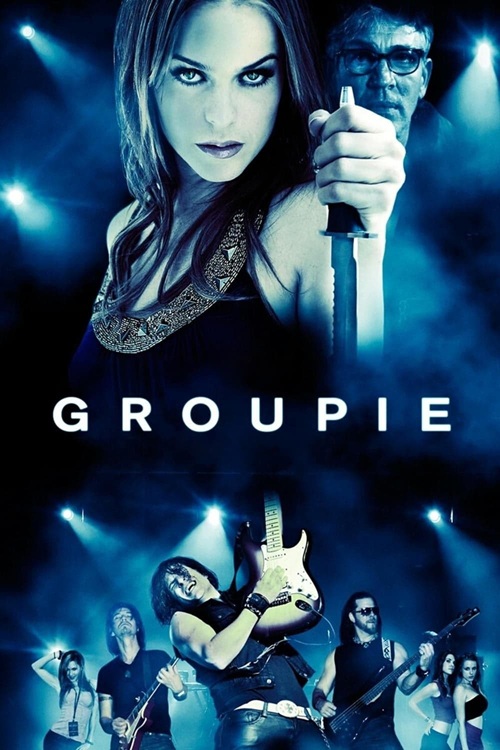
The Eric Roberts Collection: Groupie (dir by Mark L. Lester)


2010’a Groupie tells the story of the Dark Knights.

The Dark Knights are a legendary band with devoted fans.  I’m not sure why because, from what we hear of their music, they really suck.  I don’t mean that they suck in a funny deliberate way, like Spinal Tap.  I mean, they literally suck.  Maybe some of their popularity has to do with their habit of setting their lead singer on fire during their performances.

Unfortunately, during one performance, the fire gets out of control.  There’s a panic in the club.  A 16 year-old fan is stomped to death.  A year later, The Dark Knights are ready to launch their comeback tour.  And they’ve got a new groupie, Riley (Taryn Manning)!  Riley likes to make death masks.  Well, I guess everyone needs a hobby.  Riley is also the sister of the fan who was stomped to death.  She’s looking for revenge against the Dark Knights and their manager, Angus (Eric Roberts).

That this film appears to be based on a real-life tragedy (i.e. the Station Nightclub Fire) gives the whole film are rather icky sheen.  Also adding to the film’s oddness is how straight-forward it is.  Riley shows up.  A mysterious killer strikes.  Riley appears to be the killer and, hey — she is the killer!  There’s no real attempt to create any sort of suspense or misdirection as to who the killer may be.  That said, Taryn Manning is entertainingly unhinged and director Mark L. Lester keeps the action moving quickly.

As far as Eric Roberts is concerned, he plays a pretty sleazy character but he does so with good humor.  Indeed, it’s hard not to have sympathy for Angus. While the band is busy setting things on fire, he’s the one who keeps the tour bus moving.

Previous Eric Roberts Films That We Have Reviewed:

  1. Paul’s Case (1980)
  2. Star 80 (1983)
  3. Runaway Train (1985)
  4. To Heal A Nation (1988)
  5. Best of the Best (1989)
  6. Blood Red (1989)
  7. The Ambulance (1990)
  8. The Lost Capone (1990)
  9. Best of the Best II (1993)
  10. Love, Cheat, & Steal (1993)
  11. Voyage (1993)
  12. Love Is A Gun (1994)
  13. Sensation (1994)
  14. Dark Angel (1996)
  15. Doctor Who (1996)
  16. Most Wanted (1997)
  17. The Alternate (2000)
  18. Mercy Streets (2000)
  19. Tripfall (2000)
  20. Raptor (2001)
  21. Rough Air: Danger on Flight 534 (2001)
  22. Strange Frequency (2001)
  23. Wolves of Wall Street (2002)
  24. Border Blues (2004)
  25. Mr. Brightside (2004)
  26. Six: The Mark Unleased (2004)
  27. We Belong Together (2005)
  28. Hey You (2006)
  29. Depth Charge (2008)
  30. Amazing Racer (2009)
  31. The Chaos Experiment (2009)
  32. In The Blink of an Eye (2009)
  33. Bed & Breakfast (2010)
  34. Enemies Among Us (2010)
  35. The Expendables (2010) 
  36. Sharktopus (2010)
  37. Beyond The Trophy (2012)
  38. The Dead Want Women (2012)
  39. Deadline (2012)
  40. The Mark (2012)
  41. Miss Atomic Bomb (2012)
  42. The Night Never Sleeps (2012)
  43. Assault on Wall Street (2013)
  44. Bonnie And Clyde: Justified (2013)
  45. Lovelace (2013)
  46. The Mark: Redemption (2013)
  47. The Perfect Summer (2013)
  48. Revelation Road: The Beginning of the End (2013)
  49. Revelation Road 2: The Sea of Glass and Fire (2013)
  50. Self-Storage (2013)
  51. Sink Hole (2013)
  52. A Talking Cat!?! (2013)
  53. This Is Our Time (2013)
  54. Bigfoot vs DB Cooper (2014)
  55. Doc Holliday’s Revenge (2014)
  56. Eternity: The Movie (2014)
  57. Inherent Vice (2014)
  58. Road to the Open (2014)
  59. Rumors of War (2014)
  60. So This Is Christmas (2014)
  61. Amityville Death House (2015)
  62. Deadly Sanctuary (2015)
  63. A Fatal Obsession (2015)
  64. Las Vegas Story (2015)
  65. Sorority Slaughterhouse (2015)
  66. Stalked By My Doctor (2015)
  67. Enemy Within (2016)
  68. Hunting Season (2016)
  69. Joker’s Poltergeist (2016)
  70. Prayer Never Fails (2016)
  71. Stalked By My Doctor: The Return (2016)
  72. The Wrong Roommate (2016)
  73. Dark Image (2017)
  74. The Demonic Dead (2017)
  75. Black Wake (2018)
  76. Frank and Ava (2018)
  77. Stalked By My Doctor: Patient’s Revenge (2018)
  78. The Wrong Teacher (2018)
  79. Clinton Island (2019)
  80. Monster Island (2019)
  81. The Reliant (2019)
  82. The Savant (2019)
  83. Seven Deadly Sins (2019)
  84. Stalked By My Doctor: A Sleepwalker’s Nightmare (2019)
  85. The Wrong Mommy (2019)
  86. Exodus of a Prodigal Son (2020)
  87. Free Lunch Express (2020)
  88. Hard Luck Love Song (2020)
  89. Her Deadly Groom (2020)
  90. Top Gunner (2020)
  91. Deadly Nightshade (2021)
  92. The Elevator (2021)
  93. Just What The Doctor Ordered (2021)
  94. Killer Advice (2021)
  95. Megaboa (2021)
  96. Night Night (2021)
  97. The Poltergeist Diaries (2021)
  98. The Rebels of PT-218 (2021)
  99. Red Prophecies (2021)
  100. A Town Called Parable (2021)
  101. The Wrong Mr. Right (2021)
  102. Bleach (2022)
  103. Dawn (2022)
  104. My Dinner With Eric (2022)
  105. 69 Parts (2022)
  106. The Rideshare Killer (2022)
  107. The Wrong High School Sweetheart (2022)
  108. The Company We Keep (2023)
  109. D.C. Down (2023)
  110. If I Can’t Have You (2023)
  111. Aftermath (2024)
  112. Bad Substitute (2024)
  113. Devil’s Knight (2024)
  114. Insane Like Me? (2024)
  115. Space Sharks (2024)
  116. The Wrong Life Coach (2024)
  117. Broken Church (2025)
  118. Shakey Grounds (2025)
  119. When It Rains In L.A. (2025)

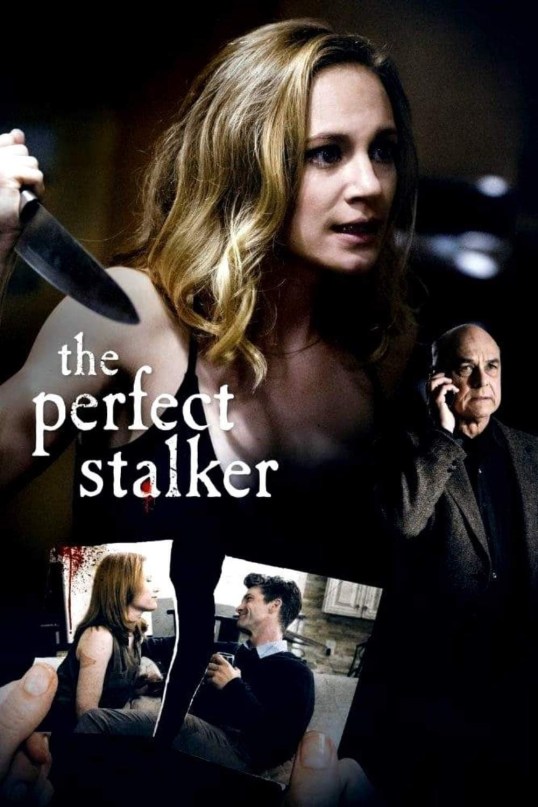
Join #MondayMania For The Perfect Stalker!


Hi, everyone!  Tonight, on twitter, I will be hosting one of my favorite films for #MondayMania!  Join us for 2016’s The Perfect Stalker!

You can find the movie on Prime and Tubi and then you can join us on twitter at 9 pm central time!  (That’s 10 pm for you folks on the East Coast.)  See you then!

Scene That I Love: Billy Dee Williams in The Empire Strikes Back


Happy birthday to the one and only, Billy Dee Williams!

I remember the first time I watched The Empire Strikes Back, I was shocked when Lando betrayed his friend Han Solo.  Luckily, Lando was able to later redeem himself but the Cloud City betrayal scene remains one of the best moments in the original Star Wars trilogy.


4 Shots From 4 Films: Special Barry Levinson Edition


4 (or more) Shots From 4 (or more) Films is just what it says it is, 4 (or more) shots from 4 (or more) of our favorite films. As opposed to the reviews and recaps that we usually post, 4 (or more) Shots From 4 (or more) Films lets the visuals do the talking.

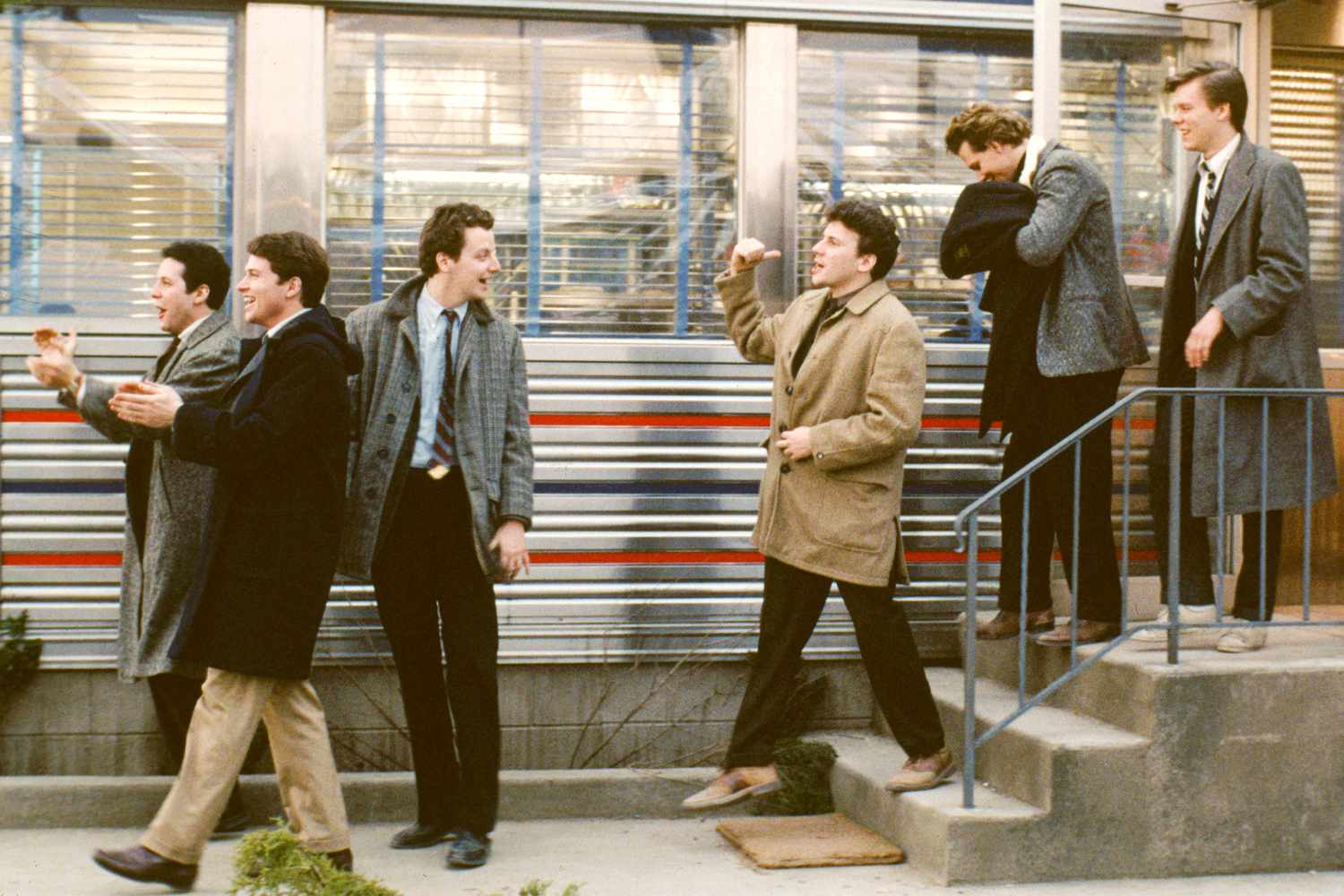
Happy birthday to Baltimore’s own Barry Levinson!

4 Shots From 4 Barry Levison Films

Diner (1982, directed by Barry Levinson, DP: Peter Sova)
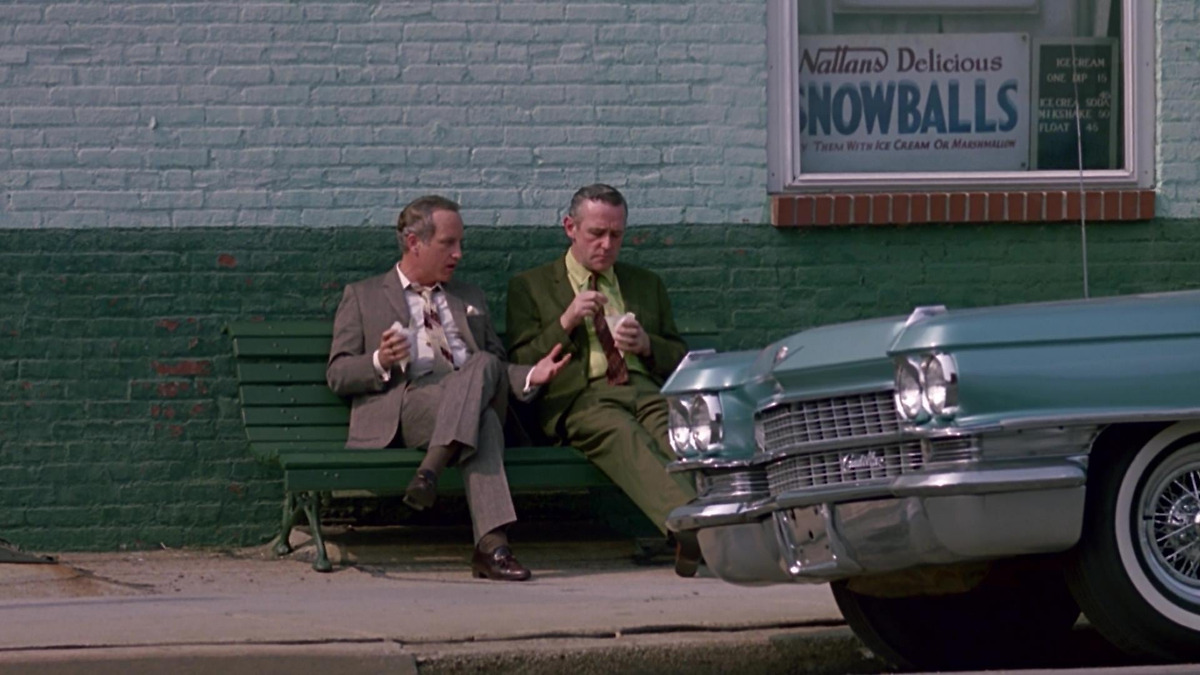
Tin Men (1987, directed by Barry Levinson, DP: Peter Sova)
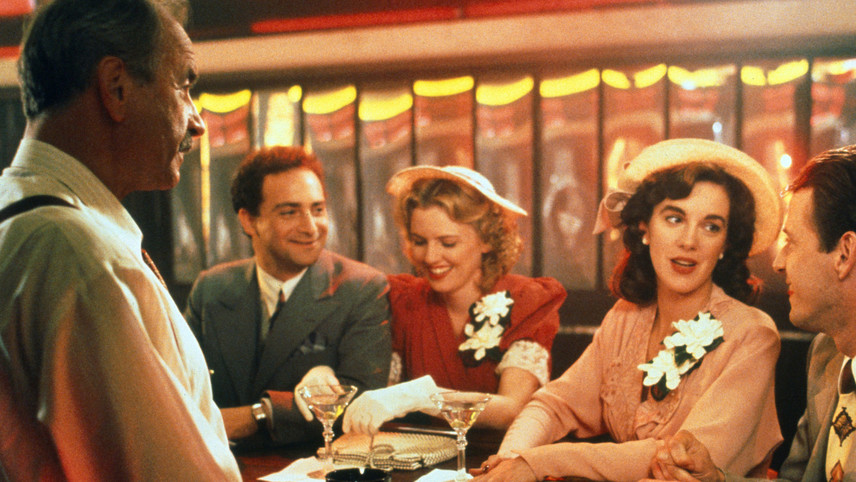
Avalon (1990, directed by Barry Levinson, DP: Allen Daviau)
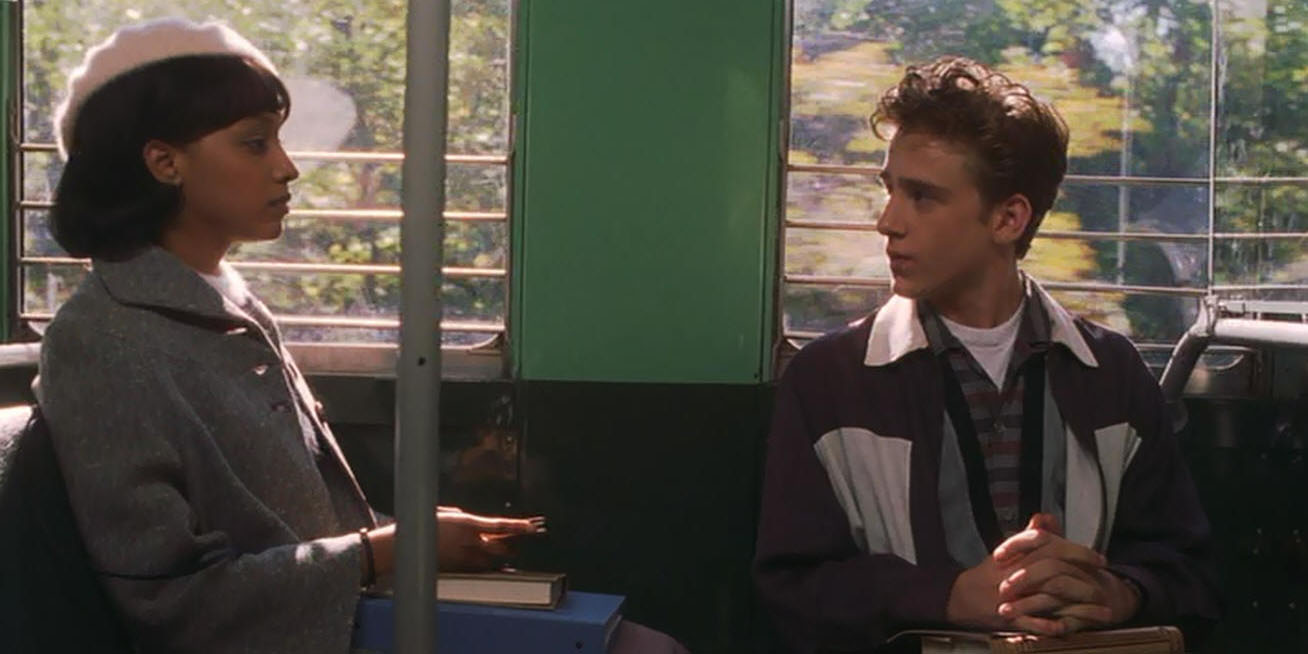
Liberty Heights (1999, directed by Barry Levison, DP: Christopher Doyle)


Monday Live Tweet Alert: Join Us For The Hitman!


As some of our regular readers undoubtedly know, I am involved in hosting a few weekly live tweets on twitter and occasionally Mastodon.  I host #FridayNightFlix every Friday, I co-host #ScarySocial on Saturday, and I am one of the five hosts of Mastodon’s #MondayActionMovie!  Every week, we get together.  We watch a movie.  We snark our way through it.

Tonight, for #MondayActionMovie, the film will be 1991’s The Hitman!

It should make for a night of fun viewing and I invite all of you to join in.  If you want to join the live tweets, just hop onto Mastodon, find the movie on YouTube and hit play at 8 pm et, and use the #MondayActionMovie hashtag!  The  watch party community is a friendly group and welcoming of newcomers so don’t be shy.   

See you soon!